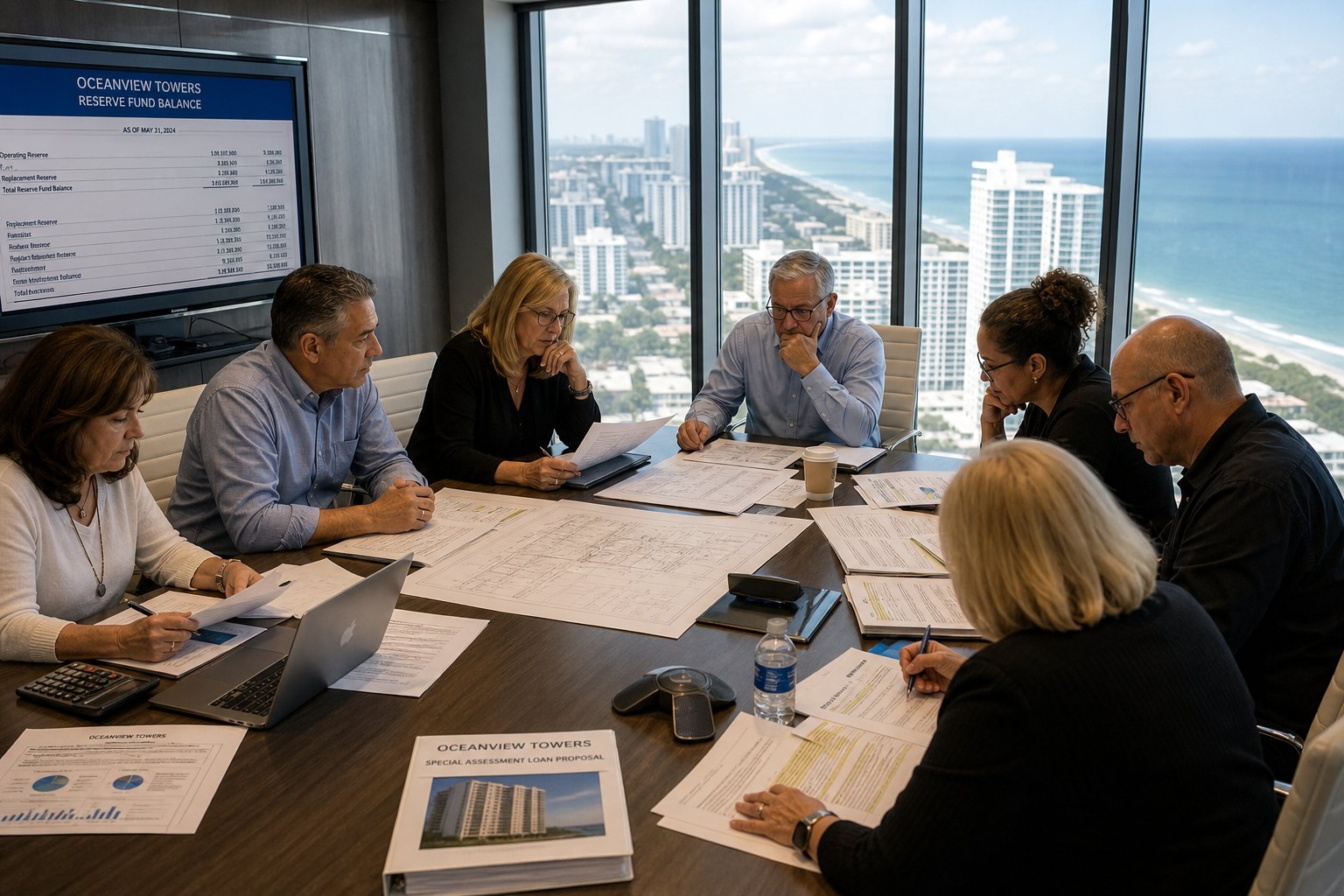
Shifting the Financial Burden of Renovating: 7 Critical Secrets for Condo Boards, Property Owners, and HOA Stability
Aging high-rise residential infrastructure, escalating coastal insurance premiums, and stringent post-Champlain Towers legislative mandates have plunged thousands of condominium associations and property owners into unprecedented fiscal crisis. Developing innovative frameworks for shifting the financial burden of renovating has evolved from an optional accounting exercise into an urgent structural necessity for preserving housing affordability and preventing mass owner foreclosures. Across vulnerable coastal corridors and aging urban centers, homeowner associations face multi-million-dollar repair mandates for reinforced concrete spalling remediation, post-tension cable replacement, curtain wall waterproofing, and roof replacements. When underfunded condominium boards attempt to fund these emergency structural rehabilitations through massive, single-installment special assessments, fixed-income retirees and working families are frequently forced to abandon their homes. Adopting diversified financing mechanisms, commercial association loans, municipal revolving clean energy financing, and long-term milestone capital planning provides a lifeline that preserves physical building integrity without bankrupting individual property owners.
The Regulatory and Structural Catalysts Behind Escalating Renovation Costs
For decades, condominium boards across the nation deferred routine capital maintenance, artificially suppressing monthly association dues to placate unit owners. However, a convergence of legislative reforms, building safety codes, and climate-induced material degradation has brought an abrupt end to deferred maintenance practices.
Mandatory Milestone Inspections and Structural Integrity Reserve Studies (SIRS)
In the wake of catastrophic structural failures in aging coastal residential towers, state legislatures have enacted rigorous structural safety laws. For example, Florida’s landmark Senate Bills 4-D and 154 mandate that residential condominium buildings three storeys or higher must complete formal milestone structural inspections once reaching twenty-five to thirty years of age, repeated every ten years thereafter.
Elimination of Board Reserve Waivers
Historically, condominium owners could hold an annual vote to waive or reduce statutory reserve funding, using the savings to keep monthly association dues artificially low. Modern legislation has largely eliminated the ability of boards to waive reserve contributions for critical structural components, including:
- Roof systems and structural load-bearing framing.
- Elevated concrete slabs, balconies, and post-tension cable assemblies.
- Exterior waterproofing, elastomeric painting, and expansion joints.
- Primary electrical distribution gear, fire suppression risers, and plumbing stacks.
Associations must now commission comprehensive Structural Integrity Reserve Studies conducted by licensed professional engineers or architects. If reserves are depleted, boards are legally obligated to fund the deficit immediately, creating sudden, astronomical financial demands on unit owners.
Marine Atmospheric Exposure and Concrete Spalling Dynamics
Coastal residential buildings endure relentless environmental exposure to airborne saline spray, driving moisture, and extreme solar ultraviolet radiation. Over decades, microscopic chloride ions penetrate porous exterior stucco and concrete matrix layers through capillary action. When chloride concentrations reach the internal structural steel rebar, an electrochemical oxidation reaction occurs. Corroding steel expands up to six to ten times its original physical volume, generating immense internal tensile pressures (exceeding four thousand pounds per square inch) that fracture and shatter the surrounding concrete. This destructive phenomenon—known as concrete spalling—compromises structural load-bearing capacity, requiring specialized hydro-demolition, corrosion inhibitor treatment, and structural patching costing millions of dollars across large high-rise footprints.
The Human Impact of Crushing Lump-Sum Special Assessments
When condominium associations lack sufficient reserve capital to fund multi-million-dollar structural remediation contracts, boards are often forced to levy emergency special assessments.
Special Assessment Shock and Forced Displacements
In many high-rise towers, special assessments frequently range from forty thousand to over two hundred thousand dollars per individual residential unit. For seniors living on fixed social security pensions or middle-income families, securing six-figure cash sums within thirty to sixty days is virtually impossible.
Foreclosure Mechanisms and Association Liens
Under condominium statutes, an unpaid special assessment constitutes an automatic legal lien on the owner’s unit. If the assessment remains delinquent, the association possesses statutory authority to initiate foreclosure proceedings, seizing the residential unit and evicting the homeowner. This dynamic disproportionately displaces long-term residents and elderly retirees who purchased their properties decades ago, accelerating neighborhood gentrification and eroding community stability.
The Downward Spiral: Uninsurability and Collapsed Resale Equity
When a condominium community becomes mired in public assessment disputes and uncompleted structural repairs, private property insurance carriers refuse to renew master hazard policies. Uninsured or structurally compromised buildings are promptly blacklisted by major mortgage underwriters (including Fannie Mae and Freddie Mac). Once conventional mortgage lenders refuse to back unit sales, potential buyers must pay entirely in cash, causing individual property market values to plummet by thirty to fifty percent and destroying decades of accumulated homeowner equity.
Financial Mechanism Comparison Matrix
| Capital Funding Strategy | Time to Access Capital | Immediate Cost Impact on Unit Owners | Interest / Financing Surcharge | Long-Term Solvency Rating |
|---|---|---|---|---|
| Lump-Sum Special Assessment | 30 to 90 Days | Severe shock ($30k – $150k+ cash due) | Zero interest (Direct cash call) | Low (Triggers defaults, foreclosures, and lawsuits) |
| Commercial Bank HOA Loan | 60 to 120 Days | Low to Moderate (Amortized over 10–20 years) | Commercial prime rate + margin | High (Preserves liquidity; stabilizes property values) |
| Municipal PACE Financing | 90 to 150 Days | Low (Repaid via annual property tax bill) | Fixed competitive municipal rate | High (Financing tied to property, not personal credit) |
| Fully Funded Reserve Structure | Gradual (Years) | Highly predictable (Predictable monthly dues) | Zero (Earns interest on deposits) | Ideal (Gold standard for financial predictability) |
| Phased Structural Repair Cycles | Staggered over time | Moderate (Spreads cash calls across fiscal years) | Escalates construction labor mobilization | Moderate (Must balance engineering safety limits) |
Strategies for Shifting the Financial Burden of Renovating
To safeguard owners and preserve property values, progressive condominium boards and municipal leaders are deploying innovative structural financing models that distribute heavy repair expenditures over long-term amortization schedules.
Commercial Association-Level Term Loans and Lines of Credit
Rather than levying sudden six-figure cash assessments against individual residents, forward-thinking boards secure commercial master loans directly through specialized financial institutions:
- The Borrower Entity: The condominium association itself secures the commercial loan, utilizing its statutory assessment revenue stream and association reserve accounts as loan collateral, rather than mortgaging individual private deeds.
- Extended Amortization: Master commercial renovation loans spread repayment across ten, fifteen, or twenty-year terms, converting a paralyzing seventy-five-thousand-dollar lump-sum assessment into a predictable, manageable monthly payment of a few hundred dollars per unit.
- Transferability on Resale: When a homeowner sells their unit, the remaining loan obligation remains with the association and transfers seamlessly to the incoming buyer through future monthly maintenance fees, ensuring current owners pay only for the structural benefits they actually consume while living in the building.
Utilizing Commercial Property Assessed Clean Energy (C-PACE) Financing
Property Assessed Clean Energy (PACE) programs represent an underutilized mechanism for funding qualifying building envelope improvements:
- Qualifying Structural Scopes: PACE financing covers capital improvements that enhance energy efficiency, water conservation, or natural disaster storm resilience—such as impact-resistant window wall systems, new high-efficiency insulated cool roofs, and modernized HVAC chiller plants.
- Tax Roll Assessment: PACE funding is disbursed by private institutional capital and repaid through a dedicated annual non-ad valorem assessment added directly to the parcel’s property tax bill. Because PACE financing attaches to the real property itself rather than personal credit, approval criteria focus on building equity rather than individual owner income verification.
Establishing Public-Private Revolving Loan Funds and Government Subsidies
Municipalities and county governments are beginning to recognize that condominium structural decay represents a broad community affordable housing crisis. Progressive civic leaders are piloting low-interest or zero-interest revolving loan funds funded by municipal infrastructure bonds. These programs provide emergency credit lines to underfunded associations, enabling boards to execute mandated life-safety structural repairs immediately while allowing low-income residents to repay their share through flexible, income-contingent deferred loans.
Phased Engineering Contracts and Milestone Execution
Where structural life safety permits, licensed forensic engineering firms can establish prioritized, multi-phase repair schedules. Phase-one scopes target urgent structural concrete spalling and critical waterproofing failures, while phase-two scopes (such as aesthetic hallway refurbishments, elevator cosmetic modernizations, and pool deck retiling) are deferred across subsequent fiscal cycles. Staggering capital expenditures allows reserve accounts to replenish organically, smoothing out sudden capital calls.
Proactive Governance: Building Long-Term Reserve Health
Navigating structural renovations without causing financial devastation requires a cultural shift toward proactive, transparent community association governance.
Routine Reserve Study Commissioning and Inflation Adjustments
Boards must commission updated reserve studies every three years, ensuring replacement cost projections reflect true market inflation for construction labor, concrete aggregates, and roofing materials. Proactively raising monthly reserve contributions by minor incremental percentages each year prevents massive, catastrophic assessment surprises down the road.
Transparent Community Communication and Democratic Town Halls
Assessment fatigue and board mistrust thrive in environments where financial decisions are made behind closed doors. Successful boards host open informational workshops led by independent structural engineers, construction project managers, and banking specialists. Presenting photographic evidence of structural concrete decay alongside clear financial financing comparisons builds broad community trust, neutralizing adversarial legal disputes and unifying the building behind necessary safety investments.
Frequently Asked Questions About Shifting the Financial Burden of Renovating
Can a condo board force unit owners to pay a massive special assessment immediately?
Yes, under standard condominium declarations and state statutes, boards hold fiduciary authority to pass emergency assessments for structural maintenance without requiring an owner vote, attaching liens to non-paying units.
How does an association-level bank loan protect individual homeowners?
An association loan secures commercial financing at the corporate level and spreads repayment over ten to twenty years, allowing owners to pay for major renovations through small monthly installments rather than crippling lump sums.
What happens if an owner cannot afford to pay their mandatory special assessment?
If an assessment remains unpaid, the association files a legal assessment lien against the unit, which can ultimately lead to foreclosure and forced eviction under state condominium statutes.
Are structural assessments and reserve contributions tax-deductible for primary homeowners?
Generally, assessments that fund long-term capital structural improvements are not deductible from ordinary income; however, they can be added to the property’s cost basis, potentially reducing capital gains taxes when the home is sold.
Can PACE financing be used to fund condominium concrete restoration?
PACE funding typically covers building envelope improvements that improve energy efficiency or storm resilience (like impact windows and roofing), but can be paired with conventional bank loans to finance comprehensive structural restorations.
Why did older condominium buildings fail to save enough money in their reserve funds?
Historically, state laws permitted unit owners to vote annually to waive or reduce statutory reserve funding, which many associations did to keep monthly maintenance dues artificially low.
Conclusion
The era of deferring essential high-rise maintenance and neglecting structural reserve accounts has permanently ended. Securing the physical safety of aging residential communities while shifting the financial burden of renovating away from vulnerable individual homeowners is an urgent moral, structural, and legal responsibility. By moving beyond catastrophic lump-sum cash assessments in favor of modern financial tools—such as long-term commercial association loans, municipal PACE programs, prioritized phased engineering contracts, and transparent reserve planning—condominium communities can fund vital structural repairs sustainably. Investing in proactive structural stewardship and innovative capital financing protects human life, safeguards homeowner equity, and ensures our shared residential buildings remain safe, resilient, and affordable for generations to come.