AC Installation Made Simple: How to Get Efficient, Reliable Home Cooling
A successful AC installation is much more than placing an air conditioner outside a house and connecting it to a thermostat. A properly designed cooling system needs to match the home’s cooling requirements, existing ductwork or distribution system, electrical capacity, climate, and comfort goals. Equipment efficiency matters, but sizing, installation quality, airflow, refrigerant commissioning, drainage, controls, and maintenance can be equally important to real world performance. Understanding these elements helps homeowners compare HVAC proposals, avoid common mistakes, and choose a cooling system capable of providing dependable comfort for years to come.
What Is AC Installation?
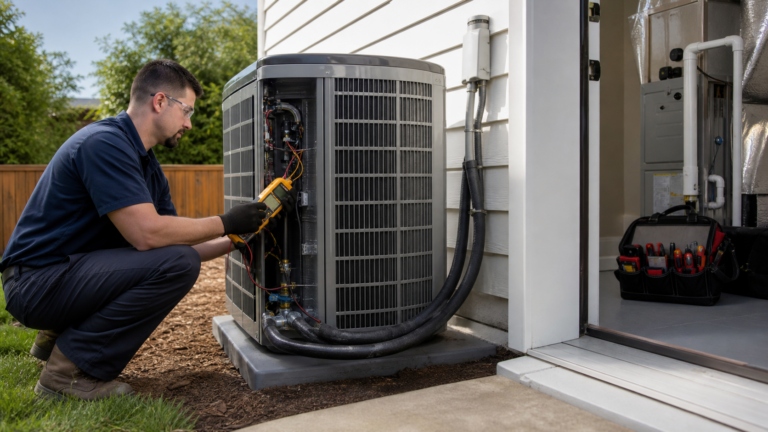
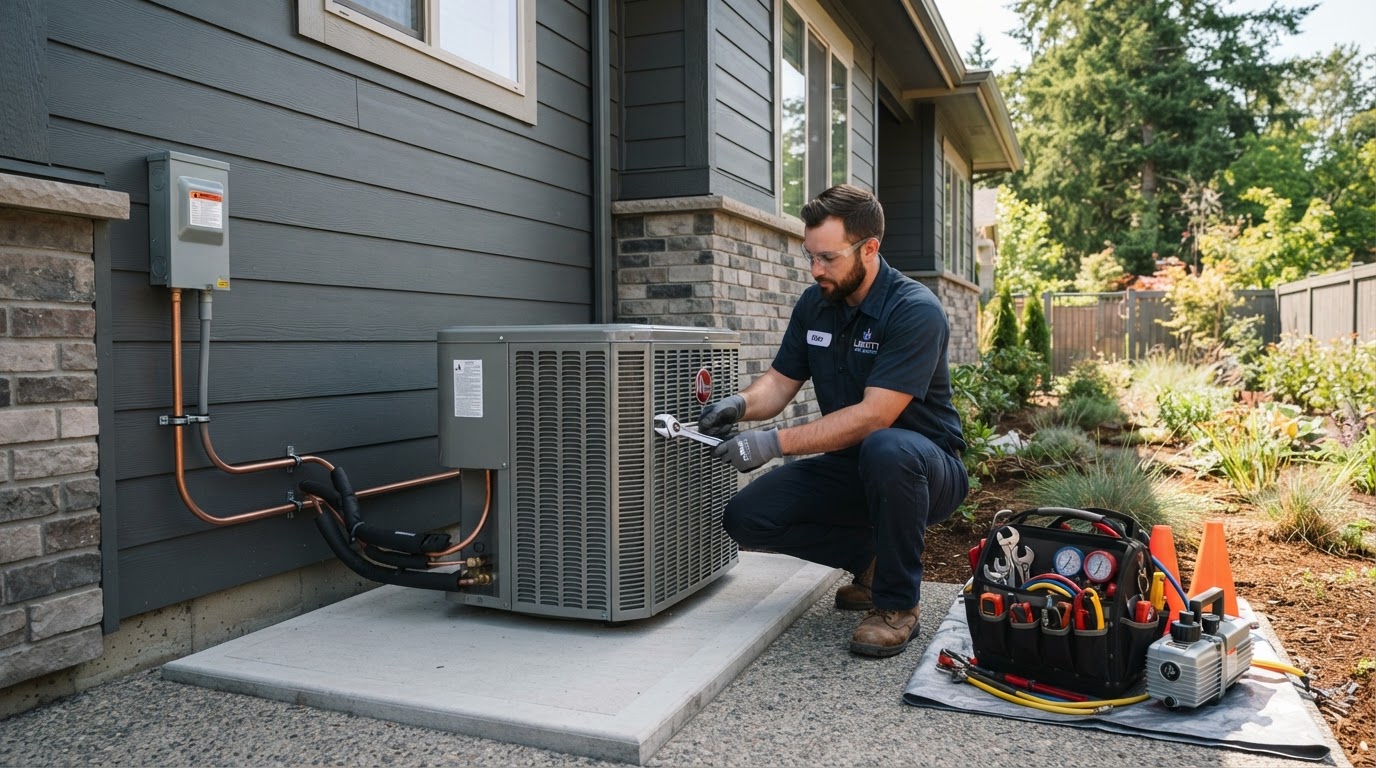
AC installation is the process of selecting, positioning, connecting, commissioning, and testing air conditioning equipment for a building. Depending on the system, this can involve an outdoor condenser, indoor evaporator coil, air handler or furnace, refrigerant piping, ductwork, condensate drainage, electrical connections, thermostat, and associated controls.
For a ductless system, indoor air handling units are typically connected to outdoor equipment through refrigerant lines, power or communication wiring, and condensate drainage.
Professional installation also includes confirming that the system operates according to equipment specifications and applicable requirements.
Why AC Installation Quality Matters
Air conditioning equipment is part of a complete system. Even highly efficient equipment can perform poorly if it is incorrectly sized or installed.
Problems involving airflow, duct leakage, refrigerant charge, drainage, controls, or electrical connections can affect comfort and operation. Installation quality should therefore receive as much attention as the equipment brand and published efficiency rating.
A contractor should consider the building as a whole rather than simply replacing existing equipment with another unit of the same nominal capacity.
What Happens During an AC Installation?
The exact process depends on whether the project involves new construction, replacement equipment, central air conditioning, a heat pump, or a ductless system.
A typical residential project may involve:
• Evaluating cooling requirements
• Inspecting existing HVAC equipment and ductwork
• Confirming equipment compatibility
• Checking electrical requirements
• Removing old equipment where necessary
• Preparing indoor and outdoor installation locations
• Installing refrigerant and drainage components
• Completing approved electrical connections
• Installing or configuring controls
• Testing airflow and system operation
• Commissioning the equipment according to manufacturer procedures
The contractor should also explain basic operation and maintenance requirements before completing the project.
7 Powerful AC Installation Tips for Better Comfort
Homeowners do not need to become HVAC technicians to make better purchasing decisions. Understanding these seven areas can make it easier to evaluate contractors, equipment, and installation proposals.
1. Start AC Installation With Proper System Sizing
Air conditioner capacity needs to correspond with the cooling load of the building. Bigger equipment is not automatically better.
An oversized system may cool a space quickly but can experience shorter operating cycles under some conditions. Improper sizing can affect comfort, humidity control, efficiency, equipment operation, and wear.
An undersized system may struggle to maintain the desired temperature during demanding conditions.
How Professionals Determine Cooling Requirements
Professional HVAC design commonly considers factors such as:
• Building dimensions
• Local climate
• Insulation
• Window type and area
• Window orientation
• Air leakage
• Shading
• Number and characteristics of exterior surfaces
• Internal heat sources
• Duct system conditions
In the United States, recognized industry procedures such as Air Conditioning Contractors of America Manual J are commonly used for residential load calculations.
Why Replacing Like for Like Can Be a Mistake
The capacity of an existing unit does not prove that the original equipment was sized correctly.
The building may also have changed. New insulation, replacement windows, additions, air sealing, or other renovations can change cooling requirements.
A qualified contractor can assess current conditions instead of assuming the existing equipment capacity should automatically be duplicated.
2. Choose the Right Type of AC Installation
Residential cooling systems are available in several configurations. The most appropriate option depends on the building, climate, infrastructure, budget, and desired features.
Central split systems remain common in houses with suitable ductwork. Ductless systems can be useful when installing conventional ducts would be difficult. Heat pumps can provide both cooling and heating using the refrigeration cycle.
Central Air Conditioning
A conventional split air conditioner generally combines indoor and outdoor equipment. The indoor coil absorbs heat from circulating air, while the outdoor equipment transfers that heat outside.
Existing ductwork can make central air a practical option, provided the duct system is appropriately designed and in suitable condition.
Ductless Mini Split Systems
Ductless equipment distributes conditioned air directly from indoor units rather than relying on conventional central ductwork.
These systems can work well for additions, older properties without ducts, individual zones, and other specialized applications.
Equipment selection still requires appropriate load calculations and placement. Installing more capacity than necessary does not inherently improve comfort.
Heat Pump Systems
A heat pump operates as an air conditioner during cooling operation and can reverse its refrigeration cycle to provide heating.
Whether a heat pump is a suitable choice depends on the climate, equipment performance characteristics, electricity costs, building efficiency, available backup systems where needed, and local energy considerations.
Modern heat pump capabilities differ substantially between models, so decisions should be based on documented performance for relevant outdoor temperatures.
3. Compare AC Installation Efficiency Ratings
Efficiency ratings provide standardized ways to compare equipment performance, but homeowners should understand what those ratings represent.
In the United States, residential air conditioning and heat pump equipment is subject to federal efficiency standards. Current equipment may display seasonal efficiency metrics such as SEER2, depending on system type and applicable requirements.
Higher rated equipment can consume less electricity for a comparable amount of cooling under the standardized conditions represented by the rating. Actual household energy use still depends on climate, thermostat settings, installation, building characteristics, maintenance, and operating patterns.
Look at the Complete Matched System
Efficiency should be evaluated for the combination of indoor and outdoor equipment rather than for an individual component in isolation.
Manufacturers test and rate specific combinations. A contractor should be able to identify the indoor and outdoor models proposed for the project and provide relevant efficiency information.
Consider ENERGY STAR Qualified Equipment
ENERGY STAR provides efficiency criteria for qualifying products in the United States. Homeowners comparing equipment can use the program as one source of standardized efficiency information.
Eligibility criteria change over time, so current ENERGY STAR and manufacturer information should be consulted when making a purchase.
Efficiency should not be considered independently from sizing and installation quality.
4. Inspect Ductwork Before AC Installation
New equipment cannot fully compensate for a poorly functioning air distribution system.
Existing ductwork should be inspected when central air equipment is being installed. Problems can include leakage, damaged sections, disconnected joints, inappropriate sizing, restricted returns, and inadequate insulation in unconditioned locations.
Why Airflow Matters
Airflow through the indoor equipment needs to fall within appropriate operating requirements. Restricted or inappropriate airflow can affect cooling performance and equipment operation.
Filters, ducts, registers, coils, and blower settings all play a role.
Professional commissioning should verify relevant operating conditions instead of assuming the duct system performs correctly because air is coming from the registers.
Should Old Ducts Be Replaced?
Not necessarily. Duct replacement should be based on condition and design rather than age alone.
Some systems may only need targeted repairs or sealing. Others may require more extensive modifications when ducts are damaged, inaccessible, improperly sized, or poorly configured.
A contractor should explain why duct modifications are recommended and how they relate to system requirements.
5. Select the Best Location for AC Installation
Equipment location can affect serviceability, airflow, noise, drainage, and overall installation quality.
Outdoor equipment generally needs adequate clearance around it according to manufacturer specifications. Restricting airflow with landscaping, stored objects, fencing, or other obstructions can interfere with heat transfer.
The unit should also be installed on an appropriate supporting surface according to applicable instructions and requirements.
Protect Outdoor Equipment Without Blocking It
Homeowners sometimes attempt to hide condensers behind dense shrubs or decorative screens. While improving appearance may be desirable, the equipment still needs sufficient airflow and service access.
Follow the manufacturer’s required clearances rather than applying a universal spacing rule.
Think About Noise and Service Access
Modern air conditioners can vary considerably in sound characteristics. Placement relative to bedrooms, patios, neighboring properties, and windows can therefore matter.
Technicians also need reasonable access for future inspection and service.
A location that conceals equipment perfectly but makes maintenance difficult may create unnecessary complications later.
Indoor Equipment Placement
Indoor components also require sufficient access. Filters, drain systems, electrical components, coils, and other serviceable parts should not become inaccessible after construction is completed.
When equipment is installed in an attic, crawl space, closet, or other constrained area, local requirements can affect access, working space, drainage protection, and related details.
6. Use Qualified Professionals for AC Installation
Air conditioning work can involve high voltage electricity, refrigerants, condensate drainage, structural penetrations, and specialized commissioning procedures.
In the United States, technicians who service equipment in ways that could release regulated refrigerants must meet applicable Environmental Protection Agency certification requirements. Refrigerant handling is regulated and should not be treated as an ordinary homeowner task.
State and local licensing requirements for HVAC contractors can also apply.
What to Look for in an HVAC Contractor
Before hiring a company, consider:
• Required state or local licensing
• Appropriate insurance
• Experience with the proposed equipment
• Written load calculations where appropriate
• Detailed written estimates
• Manufacturer training or qualifications where relevant
• Warranty information
• Permit handling
• Commissioning procedures
• Recent references or established customer history
Requirements vary by jurisdiction, so verify licensing through the appropriate government authority when possible.
Ask for a Detailed Proposal
An HVAC proposal should make it possible to determine what you are purchasing.
Useful information includes equipment model numbers, capacity, efficiency ratings, thermostat or controls, modifications to ducts or electrical systems, warranty terms, removal of existing equipment, permit responsibilities, and total project cost.
A vague quote based only on a single price makes meaningful comparisons more difficult.
Avoid Choosing Solely by Equipment Brand
Recognized manufacturers produce equipment with different features, price levels, and performance characteristics. Brand reputation can matter, but it is only part of the decision.
Correct equipment selection, contractor competence, local parts availability, warranty support, and installation quality can be equally significant.
7. Make Commissioning Part of AC Installation
Installation is not complete simply because cold air comes from a register.
Commissioning involves checking the system to confirm it is operating as intended. The exact procedures vary based on equipment and manufacturer requirements.
Potential checks can include electrical operation, temperature performance, airflow, controls, refrigerant system measurements, drainage, and other equipment specific parameters.
Refrigerant Charge Must Be Correct
Refrigerant is essential to the cooling cycle. Incorrect refrigerant charge can affect equipment performance and operation.
Charge procedures vary with equipment, line configuration, metering device, outdoor conditions, and manufacturer specifications.
Because refrigerant handling requires specialized equipment and may be subject to regulations, this portion of installation belongs with appropriately qualified technicians.
Test Condensate Drainage
Air conditioners remove moisture from indoor air during normal cooling operation. That moisture must drain correctly.
Poor drainage can cause water damage or system shutdowns. Depending on equipment location and applicable requirements, secondary drainage or overflow protection may be necessary.
The installer should verify condensate management before completing the job.
Configure the Thermostat Correctly
Smart and programmable thermostats offer useful features, but the thermostat needs to be compatible with the HVAC equipment.
Configuration can affect staging, fan behavior, heat pump operation, auxiliary heat, and other functions.
The contractor should configure the controls and explain everyday operation to the homeowner.
How Much Does AC Installation Cost?
There is no accurate universal price for residential AC installation. Costs vary by system type, equipment capacity, efficiency, region, labor rates, building configuration, and the amount of supporting work required.
Replacing compatible equipment in an accessible location can be a different project from adding central cooling to a house without suitable ducts or electrical infrastructure.
Factors Affecting AC Installation Cost
Important cost variables include:
• Cooling capacity
• Equipment efficiency
• Central, ductless, or heat pump configuration
• Number of zones
• Duct modifications
• Electrical upgrades
• Refrigerant piping requirements
• Accessibility
• Condensate drainage
• Thermostat and controls
• Permits and inspections
• Removal and disposal of existing equipment
• Local labor rates
Comparing itemized proposals from qualified contractors provides more useful information than relying on generic national price estimates.
Does Higher Efficiency Always Save Money?
Higher efficiency can reduce cooling electricity consumption compared with less efficient equipment under comparable conditions, but financial savings depend on more than the efficiency rating.
Climate, electricity prices, annual cooling demand, equipment cost, maintenance, installation quality, and how long the homeowner keeps the system all influence potential savings.
Ask contractors to explain efficiency options using assumptions relevant to your location and home instead of relying on guaranteed savings claims.
AC Installation Permits and Code Requirements
HVAC installations can require permits and inspections depending on jurisdiction and scope of work. Electrical, mechanical, structural, and energy requirements may apply.
Permit processes exist in part to help ensure work complies with applicable codes and safety requirements.
Who Obtains the Permit?
Responsibility differs by location and contractual arrangement. In many professional projects, the HVAC contractor handles required permits, but homeowners should confirm this in writing.
Do not assume a permit is unnecessary simply because the project replaces equipment in the same location.
Check Local Requirements
Building codes and licensing requirements differ between jurisdictions and can change over time.
The appropriate local building department or authority having jurisdiction is the best source for current permit and inspection requirements.
AC Installation and Indoor Air Quality
Air conditioning can help control temperature and, during suitable operation, remove moisture from indoor air. It should not be marketed as a complete solution for every indoor air quality concern.
Ventilation, filtration, humidity, pollutant sources, air sealing, and building moisture conditions can all affect indoor air quality.
Choose the Correct Air Filter
Filters should provide appropriate filtration without creating excessive resistance for the system.
A higher filtration rating is not automatically appropriate for every existing HVAC system. The filter, ductwork, and blower need to work together within allowable operating conditions.
Ask the contractor what filtration options are suitable for the installed system.
Address Humidity at Its Source
If a home experiences persistent high humidity or moisture problems, investigate the underlying causes.
Air conditioning can remove moisture while operating, but leaks, groundwater, ventilation issues, oversized cooling equipment, or building envelope problems may require separate corrective measures.
Common AC Installation Mistakes to Avoid
Poor decisions during installation can create problems long after contractors leave the property.
One common mistake is selecting equipment according to square footage alone. Floor area is important, but cooling loads depend on many additional building characteristics.
Another mistake is ignoring existing ducts when replacing central equipment.
Additional issues can include improper drainage, incompatible indoor and outdoor components, inadequate clearances, poorly located thermostats, and failing to commission the completed system.
Do Not Skip the Load Calculation
Rules of thumb can be useful for preliminary discussions but should not replace appropriate design procedures for final equipment selection.
A load calculation provides a stronger technical basis for sizing.
Avoid DIY Refrigerant Work
Some parts of home improvement lend themselves to do it yourself work, but refrigerant systems present environmental, technical, and safety concerns.
In the United States, federal regulations govern refrigerant handling and technician certification for covered activities. Electrical work may also be regulated by local authorities.
Use appropriately qualified professionals for regulated or hazardous portions of the project.
How to Prepare Your Home for AC Installation
A small amount of preparation can make the installation process easier.
Clear reasonable access to indoor HVAC equipment, the outdoor installation area, electrical panels, thermostats, and other locations the technicians need to reach.
Move fragile or valuable belongings away from work areas and discuss how floors, furniture, and landscaping will be protected.
Ask Questions Before Work Begins
Confirm the project scope before equipment arrives.
Ask who will supervise the work, how long the project is expected to take, whether cooling will be unavailable during installation, and whether additional work could change the agreed price.
Written change procedures can reduce misunderstandings if hidden problems are discovered.
Keep Your Installation Documents
After completion, retain:
• Equipment model and serial numbers
• Installation invoice
• Permit and inspection records
• Warranty documentation
• Load calculation where provided
• Commissioning information
• Contractor contact information
• Maintenance instructions
These records can be useful for warranty service, future repairs, and eventual equipment replacement.
Maintaining a New AC System
Good maintenance begins soon after installation.
Check filters at intervals appropriate for your home, filter type, system, and manufacturer guidance. Replace or clean them as required.
Keep outdoor equipment clear of debris and avoid obstructing required airflow.
Schedule Appropriate HVAC Service
Professional service can identify issues involving electrical components, drainage, coils, controls, airflow, and other equipment components.
Maintenance frequency should follow equipment manufacturer recommendations and warranty requirements.
Monitor Performance Between Visits
Pay attention to unusual sounds, repeated shutdowns, unexpected water, unusual odors, reduced airflow, or declining comfort.
A sudden change does not necessarily indicate major equipment failure, but investigating abnormalities early can help prevent continued operation with an unresolved problem.
Frequently Asked Questions
How long does AC installation take?
Installation time depends on the system and property. A straightforward replacement may be faster than a project requiring new ducts, electrical upgrades, multiple zones, or structural work.
How much does AC installation cost?
Costs vary by capacity, efficiency, system type, labor market, ductwork, electrical requirements, permits, and installation complexity. Obtain itemized local estimates for reliable pricing.
Does AC installation require a permit?
Many jurisdictions require permits for some HVAC replacements or new installations. Check with the local building authority and confirm permit responsibility with your contractor.
What size AC unit does my house need?
Proper capacity should be determined from the building’s cooling load rather than square footage alone. A professional load calculation accounts for climate, insulation, windows, orientation, and other factors.
Can I complete AC installation myself?
Complete installation can involve regulated refrigerant work, electricity, drainage, and code requirements. Professional installation by appropriately qualified technicians is generally the safer and more compliant approach.
What should I check after AC installation?
Confirm comfortable operation, appropriate airflow, working controls, proper drainage, equipment documentation, warranties, permits where required, and completion of the contractor’s commissioning process.
Conclusion
A dependable AC installation starts with accurate sizing and ends with careful testing and commissioning. Equipment efficiency is important, but ductwork, airflow, refrigerant procedures, electrical requirements, drainage, controls, and contractor quality also affect real world results. Comparing detailed proposals and following manufacturer and local requirements can help homeowners choose a cooling system that delivers efficient, reliable comfort for their property.