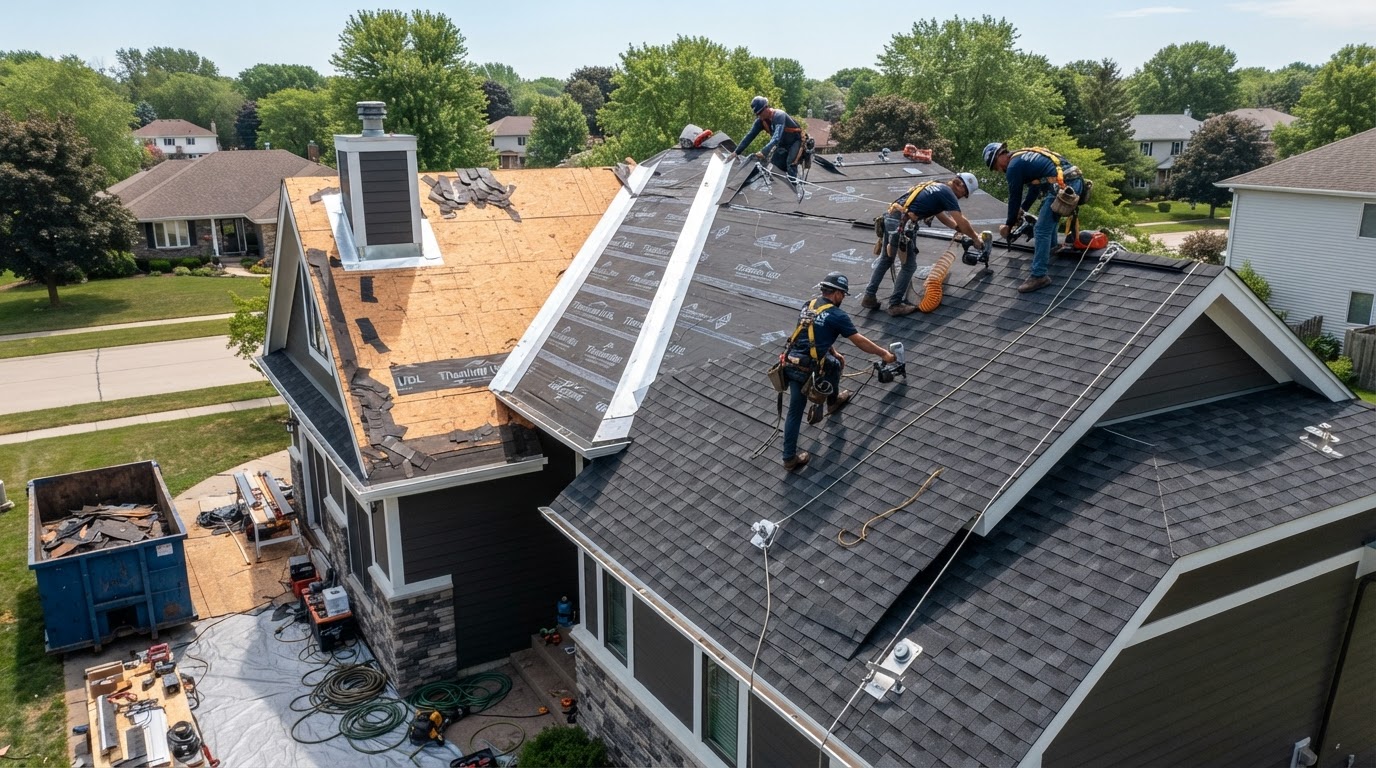
Roof Replacement Explained: How to Plan a Durable, High Value Roofing Project
A successful roof replacement involves far more than selecting attractive shingles and removing an old roof covering. The roofing system must manage water, withstand local weather conditions, integrate correctly with flashing and roof penetrations, and comply with applicable building requirements. Deck condition, ventilation, underlayment, ice protection where required, material compatibility, contractor workmanship, and manufacturer specifications can all influence long term performance. Understanding the complete process gives homeowners a stronger basis for evaluating damage, choosing materials, comparing estimates, and avoiding shortcuts that can create expensive problems later.
What Is Roof Replacement?
Roof replacement is the process of replacing some or all of an existing roof covering and addressing necessary components of the roofing assembly.
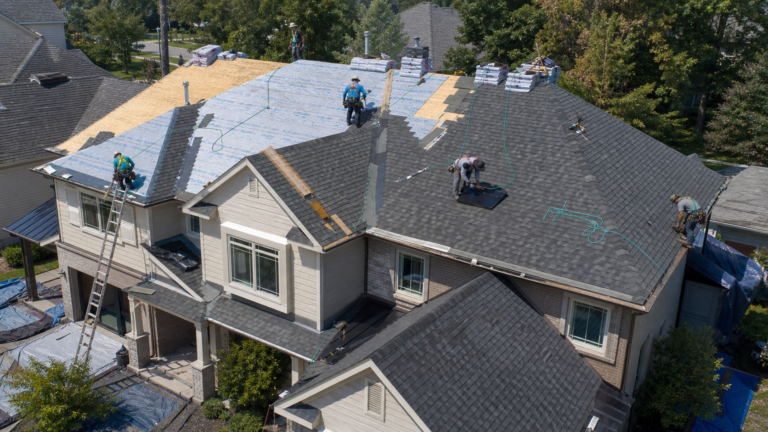
For a typical steep slope residential roof, this can involve removing existing shingles, examining the roof deck, repairing damaged decking, installing required underlayment, replacing or integrating flashing, installing the new roof covering, and completing ventilation and penetration details.
The exact scope varies according to the roof system and property.
Roof Replacement Versus Roof Repair
A repair addresses a specific problem while leaving most of the existing roofing system in place. Replacement renews a much larger portion of the roof covering or entire system.
Neither solution is automatically better.
Localized wind damage, a damaged flashing detail, or a limited leak may be repairable when the surrounding roof remains serviceable. Widespread deterioration, extensive storm damage, or multiple systemic problems may make replacement more appropriate.
A qualified inspection can help distinguish between these situations.
Roof Replacement Versus Roof Overlay
Some projects may allow a new roof covering to be installed over an existing layer. This is commonly called an overlay or reroof without complete tear off.
Whether that approach is permitted or advisable depends on local codes, existing roof condition, number of existing layers, manufacturer requirements, structural considerations, and roofing material.
Complete removal provides an important advantage because contractors can directly inspect the roof deck and concealed conditions.
7 Powerful Roof Replacement Tips for Homeowners
A new roof can represent a significant investment. These seven principles can help property owners focus on decisions that directly affect performance and project value.
1. Confirm That Roof Replacement Is Necessary
Roof age by itself is not enough to determine whether replacement is required. Different roofing materials, climates, installation methods, and exposures produce different service lives.
Condition is generally more informative than a universal age rule.
Signs That May Indicate Roof Replacement
Conditions worth professional evaluation include:
• Widespread missing or damaged shingles
• Extensive cracking or material deterioration
• Recurring leaks in different locations
• Significant storm damage
• Large areas of coating or membrane failure
• Widespread corrosion on metal roofing
• Deteriorated flashing throughout the roof
• Extensive deck damage discovered during inspection
One damaged shingle does not necessarily justify replacing an entire roof. Similarly, a roof can require major work even when it looks acceptable from the ground.
Inspect Interior Areas Too
Some roofing problems become visible from inside the building.
Where safely accessible, attic observations can reveal water stains, damaged sheathing, damp insulation, daylight at unintended openings, or signs of condensation.
Roof Leaks Need Accurate Diagnosis
Water appearing on a ceiling does not identify the exact exterior entry point.
Water can travel along rafters, sheathing, pipes, or other building components before becoming visible indoors.
Repair or replacement decisions should address the source rather than just the location of the interior stain.
2. Choose Roof Replacement Materials for Your Property
The best roofing material depends on roof slope, climate, building design, local requirements, budget, maintenance expectations, and structural conditions.
Homeowners should compare complete roofing systems rather than appearance alone.
Asphalt Shingles
Asphalt shingles are widely used on residential steep slope roofs in North America.
Products vary by design, wind rating, warranty, impact related classifications where applicable, color, and installation requirements.
Architectural or dimensional shingles can provide greater visual depth than traditional three tab products, although individual product specifications should determine performance comparisons.
Metal Roofing
Residential metal roofing includes standing seam systems and various metal shingle, panel, and tile profiles.
Potential advantages can include long service potential and resistance to certain weather exposures when the system is appropriately designed and installed.
Metal type, protective coating, panel design, fasteners, flashing, underlayment, and workmanship all matter.
Coastal and corrosive environments can require specific materials and finishes.
Tile Roofing
Clay and concrete tiles offer distinctive architectural appearance and can be appropriate for long term roofing systems.
They are significantly different from lightweight shingle products and can impose greater structural loads.
A building must be suitable for the chosen system. Structural evaluation may be necessary when changing from a lighter roof covering to a substantially heavier product.
Slate Roofing
Natural slate can provide a distinctive and durable roof when appropriately specified and installed.
It is heavy, requires specialized workmanship, and represents a substantially different project from ordinary asphalt shingle replacement.
Roof structure and attachment details should be evaluated for the system being considered.
Synthetic Roofing Products
Composite and synthetic roofing materials are available in products designed to resemble slate, wood shakes, and other traditional surfaces.
Because formulations and performance vary, review manufacturer specifications, evaluation reports where applicable, fire classifications, wind related data, installation instructions, and warranty conditions for the exact product.
3. Include the Entire Roofing System in Roof Replacement
Visible shingles or panels are only the outermost portion of a roofing assembly.
A dependable project requires attention to the components underneath and around that covering.
Inspect the Roof Deck
The roof deck provides the substrate supporting roofing materials.
During a tear off, contractors should evaluate accessible decking for deterioration, damage, unsuitable gaps, or other conditions inconsistent with installation requirements.
Damaged decking should be addressed before it is concealed beneath the replacement roof.
Use Appropriate Underlayment
Roofing underlayment provides a secondary layer beneath the primary roof covering.
Different systems may use asphalt saturated felt, synthetic underlayments, self adhering membranes, or combinations of materials.
The correct selection and placement depend on roof covering, manufacturer specifications, climate, slope, and code requirements.
Understand Ice Barrier Requirements
In climates susceptible to ice dams, building codes may require protective materials at roof edges and other locations.
Exact requirements depend on local adopted codes and climate.
Contractors should identify applicable requirements instead of assuming every jurisdiction uses identical details.
Do Not Overlook Flashing
Flashing directs water away from vulnerable roof transitions.
Important areas can include:
• Chimneys
• Plumbing vents
• Skylights
• Sidewalls
• Roof valleys
• Dormers
• Roof to wall intersections
• Other penetrations
Old flashing should be evaluated as part of the project. Reusing existing flashing is not automatically appropriate simply because it appears intact from a distance.
4. Evaluate Roof Ventilation During Replacement
Attic ventilation is commonly misunderstood.
A properly designed system can help manage heat and moisture in certain attic assemblies, but adding more vents indiscriminately is not necessarily better.
The correct strategy depends on roof construction, insulation, air sealing, climate, and whether the roof assembly is vented or unvented.
Intake and Exhaust Ventilation
Traditional vented attics commonly use intake openings near lower roof areas and exhaust openings higher in the assembly.
These openings need to work together.
Installing an exhaust product without adequate intake can prevent the system from operating as intended.
Keep Insulation From Blocking Vents
In vented roof assemblies, insulation should not obstruct necessary airflow at eaves or soffits.
Baffles or other details may be used where appropriate to preserve ventilation pathways.
Consider Air Sealing Along With Ventilation
Warm or humid indoor air entering an attic through ceiling penetrations can contribute to moisture problems in some climates.
Air sealing at appropriate boundaries and properly installed insulation can therefore be important parts of roof and attic performance.
A roofing contractor may identify concerns, while more complicated building envelope problems can require additional expertise.
5. Hire a Qualified Roof Replacement Contractor
Installation quality can determine whether expensive materials perform as intended.
Contractor requirements differ between states and municipalities, so homeowners should verify applicable licensing or registration with the appropriate authority.
What to Look for in a Roofing Contractor
Consider:
• Required licensing or registration
• Appropriate insurance
• Experience with the chosen roof system
• Detailed written estimates
• Local references
• Manufacturer qualifications where relevant
• Written workmanship warranty
• Permit procedures
• Safety practices
• Clear cleanup responsibilities
A professional contractor should be willing to identify the exact roofing products being proposed.
Verify Insurance
Request current documentation and understand what coverage the contractor maintains.
Requirements differ by location and business structure, but applicable workers compensation and liability coverage are important subjects to discuss.
Avoid Choosing on Price Alone
A lower estimate can represent legitimate savings, but two roofing proposals may include very different scopes.
One contractor might include complete tear off, flashing replacement, premium underlayment, permit fees, and extensive cleanup while another excludes some of those items.
Compare scope before comparing totals.
Be Cautious With High Pressure Sales
A roof is a technical building component and an expensive purchase.
Homeowners should have adequate opportunity to review the contract, product details, payment terms, warranties, and required disclosures.
After major storms, be particularly careful when dealing with unfamiliar contractors arriving unsolicited.
6. Understand Roof Replacement Costs Before Signing
There is no universal roof replacement price that applies reliably to every home.
Pricing depends on roof area, geometry, slope, height, material, tear off requirements, decking condition, flashing complexity, local labor rates, access, disposal, and code requirements.
Major Roof Replacement Cost Factors
Common variables include:
• Roof size
• Number of stories
• Roof pitch
• Valleys and dormers
• Material selection
• Existing layers
• Tear off and disposal
• Deck repairs
• Flashing replacement
• Ventilation modifications
• Skylights and penetrations
• Local labor rates
• Permit and inspection requirements
The condition of concealed decking may not be known until the existing roofing has been removed.
Address Hidden Damage in the Contract
A written agreement should explain how unexpected decking repairs or other concealed conditions will be priced.
For example, the contractor may specify a unit price for replacement decking subject to actual quantities.
This reduces uncertainty if deterioration is discovered during tear off.
Compare Total Project Value
Do not evaluate a quote solely by the price of shingles.
Review the complete assembly, workmanship, contractor experience, warranty terms, cleanup, ventilation, flashing, underlayment, and future service support.
7. Understand Roof Replacement Warranties
Roofing projects can involve more than one type of warranty.
Manufacturer warranties generally relate to roofing products under specified terms, while contractors may provide separate workmanship warranties covering their installation.
Read Manufacturer Warranty Conditions
Warranty coverage varies by manufacturer and product.
Review:
• Coverage period
• What defects are covered
• Exclusions
• Transfer provisions
• Installation requirements
• Ventilation requirements where applicable
• Registration requirements
• Proration provisions
• Labor coverage, if any
Marketing descriptions should not replace reading the actual warranty document.
Understand the Workmanship Warranty
Ask the contractor what installation problems are covered, how long coverage lasts, how claims are reported, and whether there are important exclusions.
Keep a copy of the signed contract and warranty documents.
How the Roof Replacement Process Works
Understanding the typical sequence can help homeowners prepare for construction.
Procedures differ according to roof type, but most residential replacements follow a logical progression.
Property and Site Preparation
Before removal begins, contractors may protect landscaping, siding, windows, driveways, and other vulnerable property.
Roofing work generates substantial debris.
Vehicles should generally be moved to a safe location if requested by the contractor, and access routes should remain clear.
Removing Existing Roofing
During a tear off project, existing roof covering and applicable underlayment are removed to expose the deck.
This stage creates the opportunity to identify concealed damage.
Repairing the Deck
Unsuitable roof decking should be repaired in accordance with code and roofing manufacturer requirements before the new system is installed.
The amount of repair can vary considerably from initial estimates when damage was previously hidden.
Installing Underlayment and Flashing
Once the substrate is ready, required underlayments, edge components, flashing, and other system elements are installed according to specifications.
Sequence matters because components need to overlap and integrate in ways that direct water outward.
Installing the Roof Covering
Shingles, panels, tiles, or other materials are then installed following manufacturer instructions and applicable building requirements.
Fastener type, location, spacing, exposure, and other details vary by system.
Final Inspection and Cleanup
The contractor should inspect completed work and remove jobsite debris.
Depending on the jurisdiction, a government inspection may also be required.
Homeowners should review completed work, documentation, warranties, and any outstanding items before closing out the project.
Roof Replacement Permits and Building Codes
Many jurisdictions require permits for roofing projects, although requirements differ by location and project scope.
Local building departments determine which adopted codes and amendments apply.
Who Gets the Roofing Permit?
Professional roofing contractors often manage permitting, but contractual responsibility should be established before construction begins.
Ask whether permit and inspection fees are included in the estimate.
Why Roofing Codes Matter
Codes can address issues such as roofing layers, underlayment, flashing, ice barriers, ventilation, attachment, wind resistance, and materials.
Areas subject to hurricanes, wildfires, heavy snow, or other regional hazards may have additional requirements.
Current local rules should always take priority over generic online guidance.
Roof Replacement and Severe Weather
Climate should influence material selection and installation.
Different regions expose roofs to different combinations of wind, hail, intense sunlight, snow, ice, rain, salt air, and wildfire.
Wind Resistance
Roofing products and assemblies can have specified wind related performance or installation requirements.
Actual resistance depends on the entire system, including deck attachment, underlayment, edge details, fasteners, roof covering, and installation.
Hail Considerations
Some roofing materials carry documented impact classifications.
An impact rating does not mean a roof cannot be damaged by hail. Storm intensity, hail size, wind, material condition, and other factors affect actual outcomes.
Wildfire Exposure
Roof covering fire classification can be particularly important in wildfire prone locations.
However, overall building vulnerability also involves gutters, vents, eaves, decks, vegetation, and surrounding combustible materials.
Use local fire authority guidance and applicable building requirements when planning work in wildfire hazard areas.
Roof Replacement and Energy Efficiency
A new roof can influence building energy performance, but claims of guaranteed savings deserve caution.
Roof color, solar reflectance, insulation, attic ventilation, air sealing, climate, HVAC performance, and building orientation can all affect energy consumption.
What Is a Cool Roof?
Cool roofing products are designed to reflect more solar energy and release absorbed heat effectively relative to some conventional roofing products.
Benefits depend strongly on climate and building conditions.
Programs such as ENERGY STAR should be checked for current requirements because product categories and federal program specifications can change.
Insulation Deserves Attention
Replacing a roof can be a useful time to evaluate accessible insulation and building envelope conditions, although the appropriate strategy depends on roof assembly design.
Do not add insulation in a way that blocks required ventilation or creates unintended moisture conditions.
For complicated assemblies, building science expertise may be appropriate.
When Is the Best Time for Roof Replacement?
Roofing can be installed during different seasons when product requirements, safety conditions, and weather allow.
The ideal period depends heavily on local climate and roofing material.
Weather Matters More Than the Calendar
Rain, snow, high winds, temperature extremes, and wet surfaces can disrupt roofing work.
Some products have temperature dependent installation requirements.
Contractors should follow manufacturer instructions rather than forcing installation under unsuitable conditions simply to meet a schedule.
Plan Before an Emergency
When possible, begin evaluating contractors before a deteriorated roof develops a major leak.
Planned projects generally provide more time to compare materials, warranties, scheduling, and proposals than emergency work during widespread storm damage.
Should You Replace Gutters During Roof Replacement?
Not necessarily.
Existing gutters that remain functional and appropriately installed may not need replacement simply because the roof is being renewed.
However, roof replacement is a useful opportunity to inspect them.
Coordinate Roofing and Gutter Work
Damaged fascia, gutter attachments, roof edge flashing, and drainage details can overlap with roofing work.
If both systems require replacement, coordinating contractors can reduce conflicts and duplicated effort.
Ensure Proper Roof Drainage
Water should leave the roof and be directed appropriately away from vulnerable building areas.
A new roof does not correct poor site drainage or a malfunctioning gutter system automatically.
Skylights and Roof Replacement
Existing skylights deserve attention because their flashing integrates directly with the roofing system.
Their condition, age, compatibility, and manufacturer’s flashing requirements should be evaluated.
Should Skylights Be Replaced at the Same Time?
Not always.
A serviceable skylight compatible with the new roofing system may remain appropriate, while a deteriorated or problematic unit might be more economical to address when the surrounding roofing is already removed.
Discuss the options before work starts.
Use Compatible Flashing Systems
Many skylight manufacturers provide specific flashing kits for particular roof coverings and slopes.
Following those requirements can improve water management and may be relevant to warranty coverage.
Roof Replacement Safety
Roof work carries serious fall and injury risks.
Professional roofers use safety systems suited to the job and applicable occupational requirements.
Homeowners Should Stay Clear of Work Zones
Falling tools, shingles, nails, and debris can create hazards around the building.
Keep children and pets away from construction areas and follow contractor instructions regarding safe entrances.
Roofing Nails and Debris
Contractors commonly use cleanup methods such as magnets to collect loose nails, but homeowners should still use care around the property immediately after construction.
Discuss final cleanup expectations in the contract before work begins.
Common Roof Replacement Mistakes
Focusing only on visible roofing material is a major mistake. A roof performs as a system.
Other avoidable problems include ignoring flashing, failing to address damaged decking, mixing incompatible components, inadequate ventilation evaluation, and accepting a vague proposal.
Do Not Ignore Manufacturer Instructions
Roofing manufacturers specify how their products should be stored, fastened, installed, ventilated, and integrated with accessories.
Departing from those requirements can affect performance and warranty coverage.
Do Not Assume Every Leak Requires Replacement
Roof leaks deserve prompt attention, but replacement is not always the only reasonable solution.
An accurate inspection can help identify whether targeted repair remains practical.
Preparing Your Home for Roof Replacement
Ask the contractor what needs to be moved before work begins.
Vibration from roofing operations can affect unsecured items in attics or on walls, and debris may fall around the property’s perimeter.
Move vulnerable outdoor furniture, vehicles, and decorations as directed.
Communicate With Neighbors
Roofing creates temporary noise and activity.
Informing nearby residents of the expected schedule can help them prepare.
Secure Important Documentation
At project completion, keep records including:
• Signed contract
• Paid invoices
• Permit documentation
• Inspection records
• Material information
• Product warranties
• Workmanship warranty
• Contractor contact details
• Photographs of completed work
These documents can be useful for future service, insurance matters, or property transactions.
Frequently Asked Questions
How do I know when roof replacement is necessary?
Widespread deterioration, recurring leaks, extensive storm damage, or systemic roofing failure can indicate replacement is appropriate. A professional inspection can determine whether repair remains practical.
How much does roof replacement cost?
Cost depends on roof size, slope, materials, tear off, decking repairs, flashing, labor, permits, and location. Detailed local estimates provide the most useful pricing.
How long does roof replacement take?
Project length depends on roof size, complexity, material, crew size, weather, inspections, and hidden repairs. Contractors should provide a schedule based on the specific property.
Can roof replacement be done over old shingles?
Sometimes, where codes, roof condition, manufacturer specifications, and structural conditions allow it. Complete tear off provides better access for deck inspection.
Does roof replacement require a permit?
Many jurisdictions require roofing permits, but rules vary. Confirm current requirements with the local building authority and your contractor before work starts.
Does homeowners insurance pay for roof replacement?
Coverage depends on the policy and cause of damage. Insurance may cover certain sudden covered events but generally does not function as routine maintenance coverage; review your policy and claim with the insurer.
Conclusion
A durable roof replacement depends on far more than the visible roofing material. Deck condition, water management, flashing, underlayment, ventilation, code compliance, product compatibility, and contractor workmanship all contribute to the finished system. By comparing detailed proposals and documented product requirements instead of price alone, homeowners can make a better informed investment in one of their property’s most important protective components.