Artificial Grass: Costs, Benefits, Installation and What to Know Before Buying
Choosing artificial grass can create a consistently green outdoor surface while reducing routine jobs such as mowing, fertilising and watering a natural lawn, but the best results depend heavily on product quality, ground preparation, drainage and professional installation. Synthetic turf is available in different fibre materials, pile heights, densities and backing systems for gardens, pets, balconies and commercial spaces. It is not maintenance free, and buyers should also consider surface temperature, environmental impacts, cleaning, lifespan and eventual disposal before deciding whether artificial turf suits their property.
A high quality synthetic lawn can look convincing when viewed as part of a well designed garden. Poor preparation, on the other hand, can result in standing water, visible seams, uneven areas or edges that begin to move.
The surface you see is only part of the installation.
The sub base, drainage, joints, perimeter details and ground conditions underneath can have a major influence on long term performance.
This guide explains seven key benefits, potential disadvantages, costs, installation, drainage, pet suitability and how to choose the right artificial lawn.
What Is Artificial Grass?
Artificial grass is a manufactured surface designed to provide the appearance and functionality of turf without growing natural grass.
Modern landscape turf usually consists of synthetic fibres attached to a backing system.
Depending on the product, fibres may use polyethylene, polypropylene, nylon or combinations of materials. The backing provides structural support and can incorporate drainage features.
How Is Synthetic Grass Made?
Manufacturers produce polymer fibres and form them into shapes intended to resemble grass blades.
These fibres are tufted into a backing. Additional layers or coatings may then secure the fibres and provide structural stability.
Products often combine multiple blade colours and textured thatch fibres to create a more natural appearance.
Artificial Turf Versus Natural Grass
Natural grass is a living ecosystem that requires soil, water, nutrients, mowing and other maintenance.
Synthetic turf replaces living vegetation with a manufactured surface.
The two options have different strengths.
Natural lawns can provide ecological and cooling benefits, while synthetic products can provide consistent appearance and eliminate mowing.
Why Artificial Grass Quality Varies
Two lawns that look similar in a small photograph may perform very differently.
Quality can be influenced by:
• Fibre material
• Fibre shape
• Pile height
• Stitch rate
• Density
• Backing construction
• Drainage design
• UV stability
• Manufacturing quality
• Intended application
Installation quality can be just as important as the turf itself.
7 Powerful Benefits of Artificial Grass
Synthetic lawns appeal primarily to people seeking consistency and reduced conventional lawn maintenance.
1. No Routine Mowing
Artificial turf does not grow.
That eliminates regular lawn mowing and the associated need to maintain a mower.
This can be particularly useful for small urban gardens where storing lawn equipment is inconvenient.
2. Reduced Irrigation for the Lawn Surface
Synthetic grass does not require irrigation to stay green.
Water can still be needed occasionally for cleaning and, depending on the environment, cooling or rinsing.
Landscaped plants surrounding the synthetic lawn will also retain their own watering requirements.
3. Consistent Appearance
Natural grass changes with season, weather, soil and use.
Artificial turf provides comparatively consistent colour and coverage.
It can therefore appeal to homeowners who prioritize a uniform visual finish throughout the year.
4. No Lawn Fertiliser
The synthetic surface does not need fertiliser for growth.
This removes one maintenance task and the associated product use.
It does not eliminate garden maintenance around planting beds and other landscape areas.
5. Useful in Difficult Growing Areas
Some gardens struggle to maintain natural grass because of heavy foot traffic, poor soil or other site conditions.
Synthetic turf can provide ground coverage where maintaining living grass is challenging.
Deep shade can still encourage moisture and organic buildup on artificial surfaces, so cleaning and drainage remain important.
6. Can Support Pet Use
Certain products and installation systems are suitable for dogs and other household pets.
A pet appropriate system should provide effective drainage and allow routine cleaning.
Odour control depends substantially on hygiene, drainage and installation details rather than marketing labels alone.
7. Broad Design Flexibility
Artificial turf can be cut to fit many landscape shapes.
It can be used alongside paving, decking, pathways and planted areas.
Some products are also designed for balconies, roof terraces or other applications where a conventional lawn would be impractical, subject to structural and drainage considerations.
Potential Disadvantages of Artificial Grass
A balanced buying decision requires understanding limitations.
Surface Heat
Synthetic surfaces can become significantly warmer in direct sunlight than some natural vegetated surfaces.
Temperature depends on material, colour, ambient conditions and solar exposure.
This deserves particular attention where children or pets may have direct skin or paw contact with hot turf.
Environmental Considerations
Artificial turf is manufactured primarily from synthetic materials and does not provide the same habitat, soil interaction or cooling characteristics as living grass.
Its environmental footprint includes manufacture, transportation, maintenance and end of life disposal.
Natural lawns also have environmental impacts through water use, mowing and fertiliser depending on how they are managed.
End of Life Disposal
Synthetic turf does not last indefinitely.
Recycling options depend on product construction and local infrastructure.
Ask suppliers what realistically happens to removed turf in your area rather than accepting generic recyclable claims.
Artificial Grass Is Low Maintenance, Not Maintenance Free
Leaves, dirt, animal waste and organic matter still accumulate.
The lawn may require brushing, rinsing and periodic deeper cleaning.
Neglect can reduce appearance and contribute to drainage or odour problems.
Types of Artificial Grass
Products should be selected by intended use rather than appearance alone.
Landscape Artificial Turf
Landscape turf is designed for residential and commercial aesthetic applications.
It often balances softness, visual realism and durability.
Pile height and density vary substantially.
Pet Friendly Artificial Grass
Pet focused systems generally emphasize drainage and cleanability.
Installation should avoid conditions that trap urine beneath the turf.
Some systems use specific infill or base arrangements intended to simplify maintenance.
Sports Turf
Synthetic sports surfaces are engineered around the needs of particular activities.
They are not necessarily appropriate for residential gardens.
Performance, infill and maintenance requirements differ according to sport.
Balcony and Terrace Turf
Artificial lawn can be installed over certain hard surfaces if water can drain appropriately.
The system should not block existing drainage outlets.
Choosing Artificial Grass for Different Applications
Start by identifying:
• Expected foot traffic
• Pet use
• Children
• Sun exposure
• Existing ground
• Drainage
• Desired softness
• Maintenance expectations
A decorative low traffic lawn and a heavily used family garden require different priorities.
Artificial Grass Pile Height Explained
Pile height refers broadly to the height of the synthetic grass fibres.
Shorter Pile
Shorter products can be easier to brush and may maintain an upright appearance with less fibre movement.
They can suit particular decorative or high use applications depending on construction.
Medium Pile
Many residential products fall into a moderate pile range because it can balance appearance and maintenance.
Pile height alone does not determine quality.
Longer Pile
Long fibres can create a lush appearance.
However, they may flatten more visibly under traffic and can require brushing to restore presentation.
Is Longer Artificial Grass Better?
No.
A dense, well constructed shorter product may outperform a poorly made longer one.
Compare fibre quality, density, backing and intended usage instead of using pile height as the sole quality measure.
Understanding Artificial Grass Density
Density affects how full a synthetic lawn looks and feels.
Stitch Rate
Stitch rate describes aspects of how fibres are tufted into the backing.
Manufacturers may report specifications differently.
Compare products using consistent measurement methods.
Face Weight
Some markets use face weight to describe the amount of yarn within a defined surface area.
Higher values can indicate more fibre but do not independently prove durability or overall quality.
Fibre Shape
Manufacturers use different blade profiles to influence resilience, softness and appearance.
Ask for physical samples because specification sheets cannot fully communicate how turf feels.
Artificial Grass Drainage
Drainage is one of the most important parts of synthetic lawn performance.
Perforated Backing
Many products use holes or other drainage designs that allow water to pass through the backing.
The supporting layers underneath must then allow that water to continue draining.
Sub Base Drainage
A permeable sub base can facilitate movement of water away from the surface.
Exact construction depends on soil, climate and site conditions.
Existing Drainage Problems
Synthetic turf does not automatically solve a poorly drained garden.
If water already collects because of unsuitable levels or underlying soil conditions, those issues should be assessed before installation.
Artificial Grass Installation on Poorly Drained Ground
A competent installer should investigate why water accumulates.
Solutions might involve changing levels, constructing an appropriate sub base or improving drainage infrastructure where necessary.
Simply covering standing water problems with synthetic turf can hide rather than correct them.
Artificial Grass Installation Process
Installation methods vary by site, but residential ground installations generally require several stages.
Step 1: Remove Existing Surface
Existing vegetation and inappropriate surface material are removed to the depth required for the planned construction.
Utilities and underground services must be considered before excavation.
Step 2: Establish Levels
The finished lawn should direct water appropriately rather than toward vulnerable building areas.
Levels must account for surrounding patios, doors, paths and drainage.
Step 3: Construct the Sub Base
Suitable aggregate may be installed and compacted to produce a stable, draining base.
Material selection depends on site requirements.
Step 4: Prepare the Surface Layer
A finer layer may be used to help create an even final surface depending on the installation system.
Proper compaction is important.
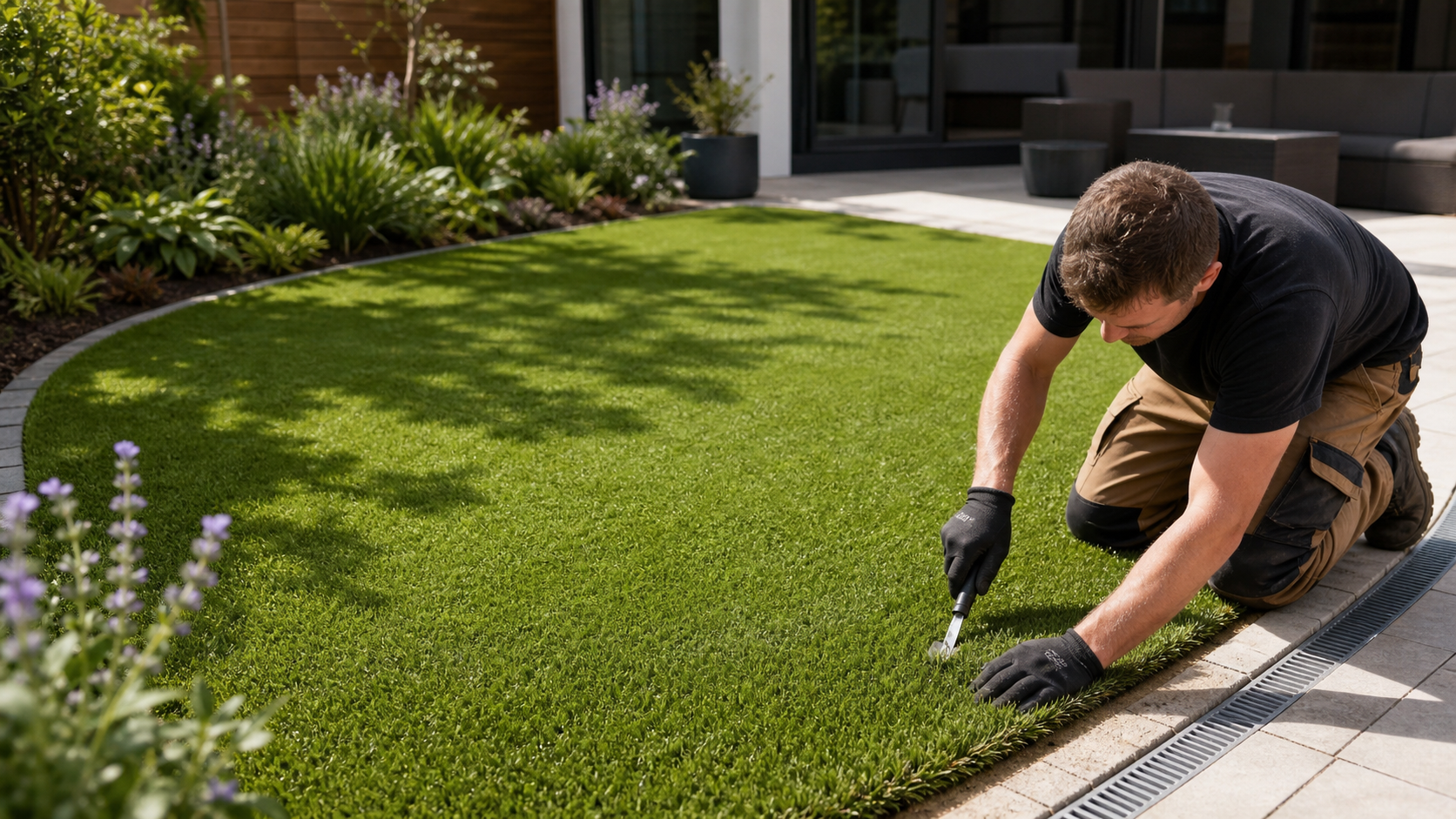
Step 5: Lay and Join the Turf
Turf rolls are positioned with attention to fibre direction.
Where more than one roll is required, seams need accurate cutting and joining.
Step 6: Finish the Edges
Perimeter fixing prevents movement and helps create clean transitions.
The appropriate method depends on the edging material and installation system.
Why Professional Artificial Grass Installation Matters
Errors beneath the turf can be difficult to correct after installation.
Professional work is particularly valuable where a garden has significant drainage issues, complicated levels, numerous seams or elaborate edging.
Request a written explanation of the proposed base construction rather than comparing turf prices alone.
Can Artificial Grass Be Installed on Concrete?
Yes, artificial turf can sometimes be installed on existing hard surfaces when conditions are suitable.
Check the Concrete Condition
Large cracks, uneven areas and drainage issues should be assessed first.
Covering defects does not necessarily make them disappear.
Maintain Drainage
Water needs a route out of the area.
An impermeable hard surface with poor falls can trap water beneath the turf.
Shock Pad Layers
Some installations use an underlay or shock pad for comfort and other performance characteristics.
Suitability depends on product and intended use.
Artificial Grass for Dogs and Pets
Pet ownership changes maintenance requirements.
Drainage Matters
Urine needs to pass through the turf and away from the surface.
A poorly draining base can contribute to persistent odours.
Remove Solid Waste Promptly
Pick up pet waste as you would on a natural lawn.
Clean affected areas according to the turf manufacturer’s recommendations.
Use Suitable Cleaners
Avoid chemicals that can damage fibres, backing or surrounding landscaping.
Pet safe cleaning products should still be used according to instructions.
Preventing Odours in Pet Artificial Grass
Odour problems commonly involve insufficient cleaning, poor drainage or contamination trapped within the installation.
Regular rinsing and appropriate cleaning can help.
If odours become persistent, investigate the underlying cause instead of repeatedly applying fragrances that only mask it.
Artificial Grass for Children
Families should consider softness alongside other practical factors.
Surface Temperature
Check turf temperature before children play barefoot during strong sunshine.
Synthetic surfaces can become hot.
Shade and timing of use may help manage exposure during extreme conditions.
Shock Absorption
Where critical fall height performance is required around play equipment, the complete surfacing system must be selected for that purpose.
Ordinary landscape turf alone should not be assumed to provide certified impact protection.
Product Safety Information
Ask suppliers for relevant product testing and documentation applicable in your jurisdiction.
Avoid relying on vague statements such as completely non toxic without supporting information.
How Much Does Artificial Grass Cost?
Artificial grass costs depend on more than the surface material.
Turf Quality
Different yarn systems, backing materials, densities and warranties affect product prices.
Premium appearance does not automatically equal superior durability, so compare technical specifications.
Ground Preparation
Excavation and base construction can represent a substantial portion of the project.
A site with poor levels or drainage may cost more to prepare.
Garden Shape
Curves, narrow sections and complicated layouts increase cutting and waste.
Multiple rolls may also require more seams.
Access
Limited access can increase labor because excavated material and aggregates need to be moved manually.
Getting an Accurate Artificial Grass Quote
Ask contractors to separate important project elements, including:
• Turf product
• Excavation
• Waste removal
• Sub base construction
• Drainage work
• Edging
• Joining
• Installation
• Optional underlay
Comparing full installation specifications is more useful than comparing price per unit area alone.
How Long Does Artificial Grass Last?
There is no universal lifespan.
Durability depends on product construction, UV exposure, traffic, installation, maintenance and climate.
Manufacturer warranties can provide useful information but should be read carefully.
A long warranty may include exclusions or declining coverage over time.
Ask what happens when fibres flatten, backing fails or other deterioration appears and whether those conditions are actually covered.
Maintaining Artificial Grass
Routine maintenance helps preserve appearance and function.
Remove Leaves and Debris
Organic material can accumulate between fibres.
Use methods recommended by the turf manufacturer.
Regular cleaning is especially useful near trees and shrubs.
Brush Flattened Areas
High traffic zones can flatten over time.
Appropriate brushing against the fibre direction can help restore appearance where the manufacturer recommends it.
Address Weeds
Weeds can occasionally appear around edges, through accumulated surface debris or in other vulnerable locations.
A correctly installed base can reduce problems but cannot guarantee that weeds will never occur.
Deep Cleaning Artificial Grass
Cleaning frequency depends on traffic, pets, vegetation and environmental conditions.
Use compatible equipment and products.
Aggressive solvents, inappropriate chemicals or excessive heat can damage synthetic fibres.
Artificial Grass and Weeds
Synthetic turf can substantially reduce conventional lawn weeds, but claims of completely weed free surfaces are unrealistic.
Seeds can land on top and germinate in accumulated organic material.
Growth can also occur around perimeter edges.
Good preparation, clean edges and routine debris removal can minimize the issue.
Where weed control products are considered, confirm compatibility with the turf and surrounding plants.
Artificial Grass and the Environment
Environmental comparisons should consider the complete lifecycle.
Potential Benefits
Synthetic lawns can reduce irrigation and eliminate mowing of the turf area.
They also eliminate lawn fertilizer and certain lawn care products on that surface.
Environmental Tradeoffs
Artificial turf uses manufactured materials, can contribute to surface heating and does not provide the ecological functions of living grass.
Manufacturing and eventual disposal also carry impacts.
Consider Alternatives
Not every difficult lawn needs to be replaced with synthetic turf.
Native planting, ground cover, gravel, permeable hard landscaping or a smaller natural lawn can provide alternatives depending on location.
Is Artificial Grass Environmentally Friendly?
It cannot accurately be described as universally environmentally friendly or environmentally harmful without considering the context and full lifecycle.
Water use, maintenance, materials, biodiversity, climate and disposal all matter.
Evaluate the priorities relevant to your property.
Common Artificial Grass Installation Mistakes
Several installation errors can produce poor long term results.
Inadequate Base Preparation
An unstable base can produce dips and uneven areas.
Surface quality begins below the turf.
Poor Drainage
Water should not remain trapped beneath the system.
Drainage needs to be planned before installation.
Visible Joins
Incorrect fibre orientation or poor seam cutting can make joins obvious.
Installers should plan roll layout carefully.
Weak Edge Fixing
Loose edges can shift or lift.
The appropriate perimeter system depends on the site and materials.
Artificial Grass Direction Matters
Synthetic grass fibres have a natural lay direction.
Adjacent rolls should normally be aligned consistently according to installation guidance.
Viewing direction can also affect how light reflects from the fibres and therefore how the colour appears.
How to Choose the Best Artificial Grass
Samples are extremely useful.
View them outdoors under actual daylight rather than only inside a showroom.
Compare Appearance
Look for realistic colour variation and texture.
The most vivid green product is not necessarily the most natural looking.
Test the Feel
Walk on samples where possible.
Consider softness, resilience and how easily the pile returns after pressure.
Review Technical Information
Check:
• Intended use
• Fibre composition
• Pile height
• Density
• Backing
• Drainage
• UV stability claims
• Warranty
• Relevant testing
Ask the supplier to explain specifications you do not understand.
Choosing an Artificial Grass Installer
Evaluate installers as carefully as the turf.
Ask for details of sub base materials, drainage strategy, seam methods, edging and workmanship warranty.
An excellent product can perform badly when installed over an unsuitable foundation.
Frequently Asked Questions
Is artificial grass worth installing?
It can be worthwhile for households prioritising a consistent green surface and reduced mowing, but cost, heat, maintenance and environmental tradeoffs should be considered.
Does artificial grass need maintenance?
Yes. It requires debris removal, brushing and cleaning, with additional hygiene maintenance often needed in gardens used by pets.
Can dogs use artificial grass?
Yes, suitable systems can work for dogs when drainage and cleaning are properly managed. Pet use should be considered during product and base selection.
Does artificial grass drain in heavy rain?
Quality turf can drain effectively when its backing and underlying base are correctly designed. Existing site drainage problems can still cause standing water.
How long does artificial grass last?
Lifespan varies according to product quality, foot traffic, UV exposure, climate, installation and maintenance, so universal durability guarantees are unreliable.
Can artificial grass be installed over concrete?
It can be installed over suitable hard surfaces, but the condition, drainage, levels and intended use should be assessed before installation.
Conclusion
Artificial grass can provide a neat, consistently green surface while eliminating mowing and reducing irrigation requirements for the lawn area. Successful installations depend on more than choosing realistic looking turf because drainage, ground preparation, seams and edge details strongly influence long term performance. Compare products by construction, intended use, safety information and warranty while considering heat and environmental tradeoffs. With the right product, suitable site preparation and regular cleaning, synthetic turf can be a practical landscaping option for many gardens, pet areas and difficult growing spaces.