Alb Vestment: Meaning, History and Use in Christian Worship Guide
The alb vestment is one of the most recognizable garments used in Christian liturgical worship. Traditionally appearing as a long white robe with sleeves and extending toward the ankles, it has been worn for centuries by clergy and other ministers in several Western Christian traditions. Its simple appearance carries historical, practical and symbolic importance, while its use also helps distinguish liturgical clothing from ordinary dress. Although specific customs vary among churches and denominations, the alb continues to serve as an important foundational garment during worship.
What Is an Alb Vestment?
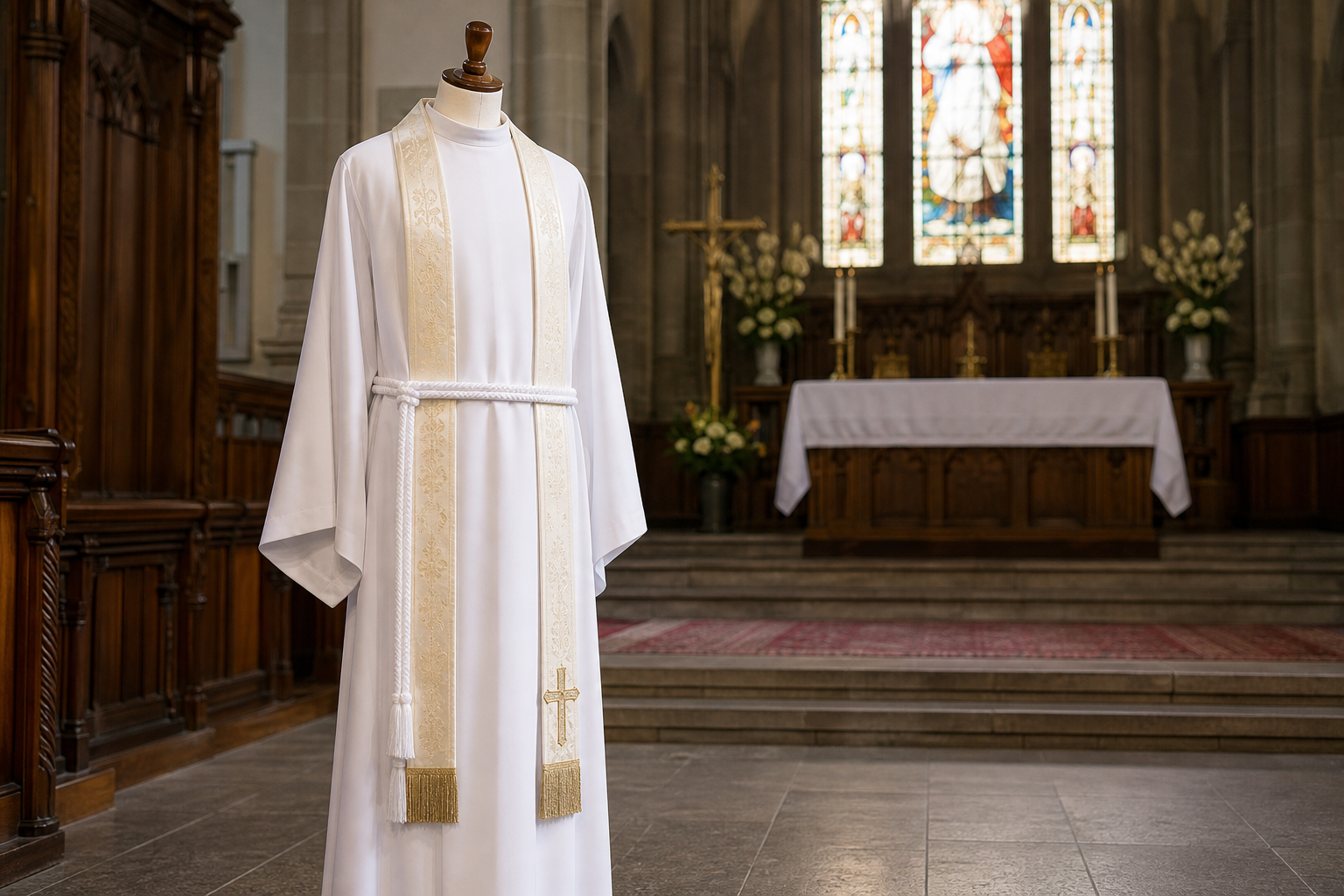
An alb vestment is a long white liturgical garment worn during Christian worship.
The name comes from the Latin word albus, meaning white. Historically, the garment developed from long tunic style clothing associated with the Roman world and gradually became part of Christian liturgical dress.
The alb normally reaches close to the ankles and has long sleeves.
In Roman Catholic practice, the General Instruction of the Roman Missal identifies the alb as the sacred garment common to ordained and instituted ministers. It is normally worn with a cincture around the waist unless the garment is designed to fit without one.
The alb can also serve as a base garment beneath other vestments.
For example, a priest celebrating Mass typically wears the chasuble over the alb and stole, while a deacon may wear the dalmatic over the alb and stole.
Why Is the Alb Vestment White?
White is the defining visual characteristic of the alb.
The garment’s name itself is connected with whiteness, and over time the colour developed strong religious symbolism.
Symbolism of White in Christian Worship
White commonly carries associations with purity, baptism and new life in Christian traditions.
The alb has therefore often been understood as a reminder of baptismal clothing and Christian identity.
Several church traditions associate white garments with baptism, where a newly baptized person may be symbolically clothed in white.
This helps explain why the alb is more than simply a practical robe.
It can represent participation in Christian worship as well as the spiritual meaning connected with baptism.
Simplicity Is Part of Its Character
Compared with highly decorated outer vestments, the alb is usually simple.
Its purpose is not primarily to display rank or elaborate decoration.
Instead, its white appearance creates a consistent liturgical foundation over which other vestments may be worn.
This simplicity is one reason the alb can be used by different types of ministers.
The Historical Origins of the Alb Vestment
The alb has a long history.
Its form is commonly traced to long tunic style garments used in the Roman world.
The Textile Research Centre in Leiden describes the alb as deriving from the Roman long sleeved tunica alba. It later became an ecclesiastical vestment in several Western churches.
From Ordinary Clothing to Liturgical Dress
Early Christian communities did not begin by creating completely new ceremonial clothing.
Instead, some garments used in worship developed from styles of clothing that already existed in society.
As general fashion changed, garments retained for worship became visually distinctive.
Over centuries, the alb became established as part of formal Christian liturgical clothing.
Medieval Development
By the medieval period, the alb had become firmly established among clergy.
Historical forms could include decorative embroidery, lace or applied panels.
Some traditional albs were much more ornate than the simple modern versions commonly seen today.
The Catholic Encyclopedia notes that the basic shape remained relatively stable for many centuries even though decoration and details changed.
Modern Forms
Modern albs vary considerably in design.
Some are very plain, while others include modest lace or embroidered details.
Contemporary versions may also use fabrics that are easier to maintain than traditional linen.
The core design, however, remains recognizable as a long white robe intended for liturgical use.
Who Wears an Alb Vestment?
The answer depends partly on church tradition.
In Roman Catholic liturgy, the alb is associated with ordained and instituted ministers, while approved practices can also allow various lay ministers to wear an alb.
The General Instruction of the Roman Missal states that in the dioceses of the United States, acolytes, altar servers, lectors and other lay ministers may wear the alb or other appropriate attire.
Priests
Priests commonly wear the alb as part of their vesting for Mass.
The alb serves as the foundational white garment, with other vestments placed over it.
A priest celebrating Mass normally wears:
• Alb
• Stole
• Chasuble
Depending on the form of the alb, a cincture and amice may also be used.
Deacons
Deacons also commonly wear an alb.
Their traditional liturgical clothing can include:
• Alb
• Diaconal stole
• Dalmatic
The stole is worn differently by a deacon than by a priest.
Altar Servers and Other Ministers
In some churches, altar servers and other authorized lay ministers may also wear albs.
Practices vary according to denomination, diocese, parish and local liturgical custom.
Because of these differences, the alb should not automatically be interpreted as proof that the wearer is a priest.
How Is an Alb Vestment Worn?
The alb is usually worn over ordinary clothing or another appropriate base layer.
It should generally provide enough coverage that normal clothing does not distract from the liturgical appearance.
The Role of the Cincture
A cincture is a cord or belt placed around the waist.
In Roman Catholic practice, the alb is normally tied with a cincture unless the design fits appropriately without one.
The cincture helps gather the robe and control excess fabric.
It can also contribute to a more orderly appearance.
The Role of the Amice
An amice is a separate garment that may be worn around the neck and shoulders beneath the alb.
According to the General Instruction of the Roman Missal, an amice should be used when the alb does not completely cover ordinary clothing around the neck.
Not every alb requires one.
Modern designs may have collars or necklines that provide sufficient coverage.
Outer Vestments
The alb often functions as the first visible layer beneath other liturgical garments.
A priest may wear a stole and chasuble over it.
A deacon may wear a stole and dalmatic.
These outer garments can reflect the office of the minister and the nature of the celebration.
Alb Vestment Versus Cassock
The alb and cassock are sometimes confused, but they are different garments.
A cassock is generally a close fitting clerical garment that may be worn as ordinary clerical dress or as a base garment.
An alb is specifically a long white liturgical garment.
Main Differences
A traditional cassock is often black, although other colours may be used depending on office and tradition.
An alb is normally white.
A cassock generally fits more closely to the body, while an alb tends to have a looser robe like shape.
In many traditions, a cassock may be worn beneath other clothing or vestments.
The alb itself can be part of the actual liturgical vesting sequence.
Alb Vestment Versus Surplice
The surplice is another white church garment that can look similar to an alb.
However, the two garments are not identical.
Length
The alb is usually full length and extends toward the ankles.
The surplice is generally shorter.
Fit
An alb often has long sleeves and may be gathered at the waist with a cincture.
A surplice is commonly loose fitting and normally worn over a cassock.
Liturgical Role
The Roman Catholic General Instruction specifically states that the alb may not simply be replaced with a surplice in situations where a chasuble or dalmatic is prescribed.
This shows that the two garments serve distinct liturgical functions.
Alb Vestment Versus Chasuble
The alb and chasuble belong to different layers of liturgical clothing.
The alb is the long white base vestment.
The chasuble is the outer vestment normally worn by a priest during Mass.
Visual Difference
An alb resembles a long sleeved robe.
A chasuble is a wider outer garment that falls over the shoulders and body.
The chasuble can appear in different liturgical colours depending on the occasion and tradition.
Order of Dressing
The alb comes first.
The stole is placed over it, followed by the chasuble for a priest celebrating Mass.
This layering helps explain why the alb is regarded as a foundational garment.
Materials Used for Alb Vestments
Historically, linen was strongly associated with the alb.
Modern garments, however, may use several different fabrics.
The General Instruction allows both traditional and suitable regional or artificial fabrics when they are considered appropriate for sacred use.
Linen
Linen has a long historical association with albs.
It provides a traditional appearance and can feel relatively breathable.
However, linen wrinkles easily and may require careful ironing.
Cotton
Cotton can provide a softer feel and may be easier to maintain.
It can also work well in warmer climates depending on fabric weight.
Polyester Blends
Many contemporary albs use polyester or mixed fabrics.
For example, commercially available clergy albs may combine polyester and cotton to improve durability and maintenance.
Blended fabrics can also reduce wrinkling.
Choosing Material Carefully
Fabric should be selected according to:
• Climate
• Frequency of use
• Comfort
• Ease of cleaning
• Appearance
• Church tradition
• Local liturgical expectations
No single material is ideal for every setting.
How Should an Alb Vestment Fit?
Proper fit helps maintain comfort and dignity during worship.
An alb that is too long can create a tripping risk.
One that is too short may appear poorly fitted.
Length
The traditional alb reaches close to the ankles.
It should generally be long enough to create a full robe appearance without dragging excessively on the floor.
Sleeve Length
Sleeves should allow comfortable movement.
They should not interfere with handling books, sacred vessels or other liturgical objects.
Shoulder Fit
The shoulder area should sit comfortably without restricting movement.
This is especially important during services that involve repeated movement.
Waist Fit
When a cincture is used, extra fabric can be gathered neatly at the waist.
Modern fitted albs may be designed to sit correctly without a cincture.
Consider Footwear When Measuring
Alb length should be considered with the footwear normally worn during worship.
This helps prevent the hem from being too short or too long.
Traditional and Modern Alb Vestment Styles
Although the overall form remains stable, several styles exist.
Traditional Alb
Traditional versions may be made from linen and worn with a separate cincture.
Some include decorative lace around the hem or sleeves.
Plain Alb
A plain alb emphasizes simplicity.
These designs are common where minimal decoration is preferred.
Fitted Alb
A fitted alb can include shaping that reduces the need for a separate belt.
Some commercial designs also include zippers or adjustable fastenings.
Cassock Alb
A cassock alb combines features of the cassock and traditional alb.
It usually has a more structured shape while maintaining a full length white appearance.
This style is used in some Christian traditions as a practical alternative.
The Symbolism of the Alb Vestment
Liturgical garments can carry meaning beyond their physical function.
The alb is often associated with several interconnected themes.
Baptism
The strongest symbolic connection is often baptism.
White clothing has long been associated with baptismal identity in Christian practice.
For this reason, the alb can remind worshippers of baptism and belonging to the Christian community.
Purity
White is also widely associated with purity.
This symbolism should not be interpreted as a claim that the wearer is personally without fault.
Instead, it operates as a broader spiritual symbol within worship.
Shared Ministry
Because the alb can be worn by different ministers, it can also reflect common participation in liturgical service.
The garment itself does not necessarily identify rank.
Other vestments, such as the stole, dalmatic or chasuble, provide clearer distinctions between specific ministries.
Alb Vestments Across Christian Traditions
The alb is particularly associated with Western Christianity, but it is not limited to a single denomination.
The Textile Research Centre notes its presence among Roman Catholics, Anglicans, Lutherans and Methodists.
Roman Catholic Tradition
The alb plays a defined role in the Roman Catholic Mass.
Official liturgical instructions describe how it should be worn and how it relates to other vestments.
Anglican Traditions
Many Anglican churches also use albs, especially in Eucharistic worship.
Exact practice can differ depending on churchmanship and local tradition.
Lutheran Churches
Some Lutheran clergy and ministers wear albs during worship.
As in other traditions, local customs influence details.
Methodist Use
Certain Methodist communities also use the alb as liturgical clothing.
United Methodist guidance has historically recognized the alb as a garment used by clergy and sometimes by lay participants in worship.
Decorative Elements on Alb Vestments
Although many albs are plain, decorative traditions have existed for centuries.
Lace
Lace became especially associated with some later Western forms.
It might appear at the hem, sleeves or lower portion of the garment.
Embroidery
Some albs include embroidered crosses or other restrained Christian symbols.
Apparel Panels
Historically, decorative panels known as apparels could be attached to certain areas of the garment.
The Textile Research Centre notes that such panels could appear near the hem, cuffs or neckline.
Avoiding Excess Decoration
In Roman Catholic guidance, the dignity of vestments is not supposed to depend simply on lavish ornamentation.
Material and design are considered important elements of beauty.
This supports the idea that an alb can remain visually simple while still being suitable for formal worship.
Caring for an Alb Vestment
Proper care helps preserve both appearance and fabric.
Always follow the instructions provided for the specific material.
Washing
Cotton, linen and synthetic blends may require different washing methods.
Check whether the garment is machine washable or requires professional cleaning.
Ironing
Traditional linen may wrinkle significantly and often needs pressing.
Synthetic blends generally require less ironing.
Use an appropriate temperature to avoid damaging fabric or decorative elements.
Storage
Store the alb in a clean and dry environment.
A hanger can help reduce creasing.
Avoid damp locations because moisture can damage fabric and create odours.
Check Before Every Service
Before wearing an alb, inspect:
• Collar
• Sleeves
• Hem
• Fastenings
• Embroidery
• Cincture
• General cleanliness
Regular inspection can prevent small problems from becoming more difficult repairs.
How to Choose an Alb Vestment
Choosing an alb depends on practical and liturgical considerations.
Start With Church Requirements
Different denominations and local congregations may have their own expectations.
Confirm what style is appropriate before purchasing.
Consider Climate
A heavy fabric may become uncomfortable in a warm church.
A lightweight breathable fabric may be better for hotter environments.
Think About Frequency of Use
Someone who wears an alb several times each week may prioritize easy cleaning and durability.
A garment used only occasionally may have different requirements.
Consider Movement
The wearer should be able to walk, sit, kneel and raise the arms comfortably.
The garment should not restrict normal liturgical actions.
Prioritize Proper Size
Do not select size based solely on ordinary clothing measurements.
Alb manufacturers often use height, chest, sleeve length and garment length.
Where possible, follow the sizing guide for the specific design.
Why Alb Vestment Quality Matters
Quality does not necessarily mean expensive decoration.
A well made alb should provide proper coverage, comfortable movement and enough durability for repeated use.
Stitching
Seams should withstand regular movement.
Areas around sleeves and closures deserve particular attention.
Fabric Weight
Fabric should not be so heavy that it becomes uncomfortable.
At the same time, very thin material can sometimes become overly transparent.
Practical Construction
Features such as zippers, buttons or adjustable closures should work smoothly.
The final choice should balance appearance with actual liturgical use.
Common Mistakes When Choosing an Alb Vestment
Several practical mistakes can make an otherwise appropriate garment inconvenient.
Choosing the Wrong Length
An alb dragging on the floor can become hazardous.
An excessively short one may not provide the intended traditional appearance.
Ignoring Fabric Requirements
A beautiful fabric may become impractical if it requires more maintenance than the wearer can reasonably provide.
Confusing It With Other Vestments
The alb is not the same as a cassock, surplice or chasuble.
Understanding the difference helps buyers select the correct garment.
Choosing Decoration Over Function
Decorative details should not interfere with movement, laundering or proper liturgical use.
Ignoring Local Church Practice
Always check local requirements.
A style appropriate in one church may not be customary in another.
Frequently Asked Questions
What is an alb vestment?
An alb vestment is a long white liturgical robe worn by clergy and other authorized ministers in several Western Christian traditions.
Why is an alb vestment white?
The name comes from the Latin word for white, and the colour is traditionally associated with baptism, purity and Christian liturgical symbolism.
Who can wear an alb vestment?
Priests, deacons and other ministers may wear albs depending on denomination and local church rules. In some settings, altar servers and lay ministers also wear them.
Is an alb the same as a cassock?
No. A cassock is generally a closer fitting clerical garment, while an alb is a long white liturgical robe worn during worship.
Is a cincture required with an alb vestment?
In Roman Catholic practice, a cincture is normally used unless the alb is designed to fit properly without one.
What material is best for an alb vestment?
Linen, cotton and polyester blends are common. The best choice depends on climate, comfort, maintenance requirements and local liturgical practice.
Conclusion
The alb vestment remains one of the most enduring garments in Western Christian worship, combining a simple white design with centuries of liturgical tradition. Its history, symbolism and practical use explain why it continues to be worn by clergy and other ministers today. Understanding its fit, materials, accessories and relationship to other vestments helps churches and wearers choose and use the garment appropriately.