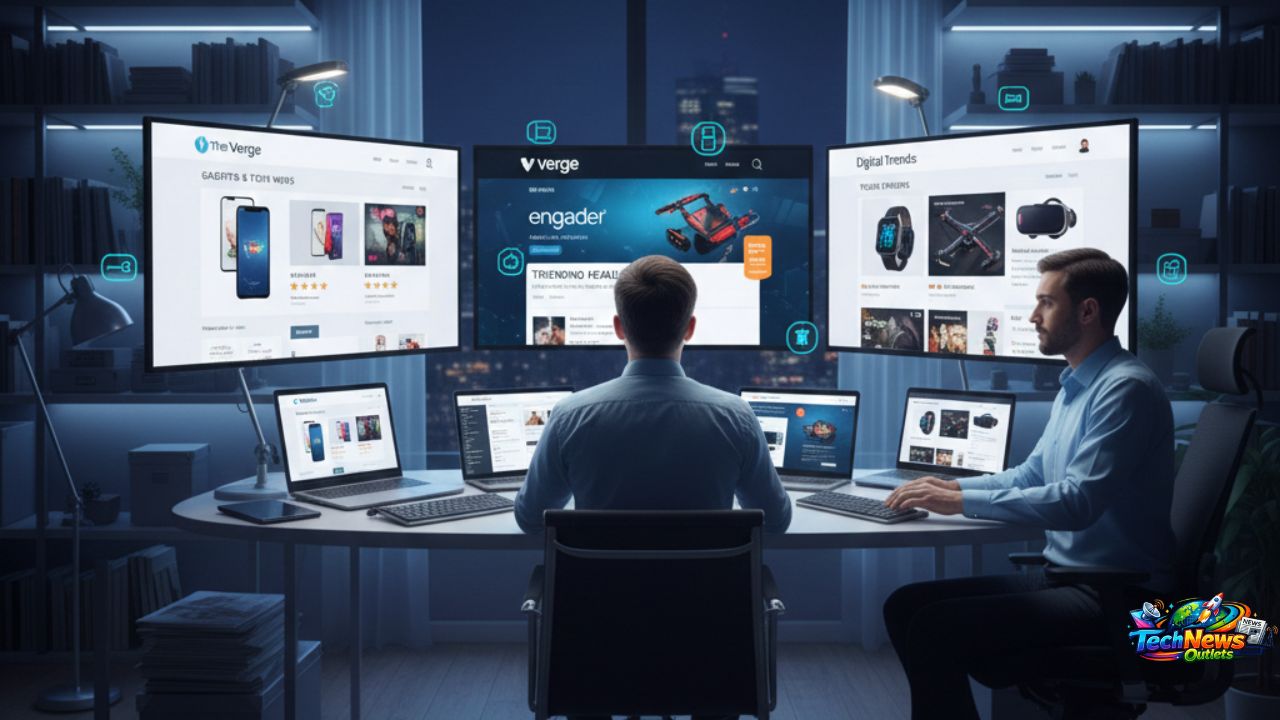
The Verge vs Engadget vs Digital Trends: Best for Gadget News?
Gadget news can mean three different things: (1) launch-day headlines, (2) hands-on impressions, and (3) buying guidance when you’re ready to spend money. The Verge, Engadget, and Digital Trends all cover consumer tech—but they do it with different strengths.
This guide compares them so you can follow the best outlet for your goals (or combine two without information overload). For more options, browse our Gadgets & Consumer Tech category or the main tech news outlets hub.
Quick answer: which one should you follow?
Pick based on your goal:
• Want launch coverage + culture + reviews? Choose The Verge.
• Want hands-on impressions and gadget-first reporting? Choose Engadget.
• Want approachable coverage with buying guidance? Choose Digital Trends.
Best 2-source combo for most readers: The Verge (headlines) + Engadget (hands-on). Add Digital Trends when you want more buying guidance.
How to compare gadget news outlets
Use these criteria:
1) Speed: how quickly it covers launches
2) Hands-on quality: early impressions and product experience
3) Review depth: pros/cons and testing detail
4) Buying guidance: comparisons and what-to-buy recommendations
5) Style: culture-focused vs practical/lifestyle coverage
The Verge: best for launch coverage, reviews, and consumer-tech culture
The Verge is often the best “headline layer” for consumer tech. It covers big product launches, platform moves, and reviews—often with a culture angle that helps you understand why a device matters beyond specs.
Strengths
• Strong launch coverage and big consumer-tech stories
• Reviews with good context and narrative clarity
• Great for understanding trends and why products matter
• Easy to follow daily without feeling too technical
Limitations
• Not designed to be a testing-heavy lab review site
• If you want very early hands-on impressions, pair it with Engadget
Best for
Readers who want launch coverage, product reviews, and consumer-tech culture in one place.
Engadget: best for hands-on impressions and gadget-first coverage
Engadget is a classic gadget outlet known for hands-on coverage. It’s especially useful when you want early impressions of new devices and product-focused reporting without too much business framing.
Strengths
• Hands-on impressions and gadget-first reporting
• Strong launch tracking across consumer categories
• Useful early reads before long reviews land
• Good complement to a headline/culture outlet
Limitations
• For testing-heavy verdicts, you may still want a review-first site like PCMag
• Best used alongside a broader consumer outlet for context
Best for
Readers who want early hands-on coverage and product-first gadget reporting.
Digital Trends: best for approachable gadget coverage and buying guidance
Digital Trends is a good choice if you like consumer tech coverage that stays accessible and practical. It often mixes gadget news with reviews and buying advice that’s easier to skim.
Strengths
• Approachable consumer tech tone
• Good mix of news, reviews, and buying guidance
• Helpful if you want practical recommendations without deep technical detail
• Easy to use as a secondary source for cross-checking
Limitations
• Not always as fast on launches as the most headline-driven outlets
• If you want maximum testing detail, cross-check with a review-first publication
Best for
Readers who want practical gadget coverage and easy-to-skim buying advice.
Head-to-head: which one wins by goal?
Use this quick guide:
• Best launch headlines + culture: The Verge
• Best early hands-on impressions: Engadget
• Best approachable buying guidance: Digital Trends
• Best 2-source combo: The Verge + Engadget
• Best 3-source cross-check: The Verge + Engadget + Digital Trends
Which should you follow by goal?
If you want to stay current with launches (daily skim)
Follow The Verge for headline coverage, and add Engadget when you want quick hands-on impressions of new devices.
If you’re shopping for a device (phones, laptops, wearables)
Use Digital Trends for buying guidance, then cross-check one full review from The Verge or a review-first site like PCMag. If you’re comparing many models, also check TechRadar for comparisons.
If you want the simplest stack (3 sources max)
1) The Verge for daily headlines
2) Engadget for hands-on impressions
3) A review-first source (PCMag or CNET) when you’re ready to buy
If you prefer mainstream, practical explanations
Consider adding CNET as a mainstream explainer layer, especially for everyday buying and how-tos.
A simple gadget-news routine (10 minutes)
Daily (5 minutes)
1) Scan The Verge headlines.
2) Open only one story that affects your buying plans.
3) Save one hands-on piece from Engadget if it’s relevant.
Weekly (20–30 minutes)
1) Read 2–3 full reviews in the categories you care about.
2) Compare at least two sources before buying.
3) Check buying guides for best-value picks and deal timing.
Explore more consumer tech sources on TechNewsOutlets.com
Browse the Gadgets & Consumer Tech category to discover more sources. You can also explore the full Outlets directory or return to the main tech news outlets hub.
FAQs
Which is best for hands-on gadget coverage?
Engadget is usually the best fit if you want early hands-on impressions and product-first coverage.
Which is best for launch-day headlines?
The Verge is a strong pick for launch coverage and broader consumer-tech context.
Which is best for buying advice?
Digital Trends is a good choice for accessible buying guidance, but cross-check with a full review before buying.
Conclusion
The Verge is best as your consumer-tech headline layer, Engadget is best for hands-on gadget coverage, and Digital Trends is a strong supplement for practical buying guidance. For most readers, The Verge + Engadget is the best combo—and you can add Digital Trends when you’re shopping.

As an author, Nicai de Guzman focuses on helping readers quickly identify trusted and high-quality tech news platforms, making it easier for developers, entrepreneurs, students, and tech enthusiasts to stay informed without information overload. Through careful research and categorization, the goal is to provide clear, accurate, and up-to-date resources for the global tech community.