How to Follow Tech News in the USA: Local + National Sources
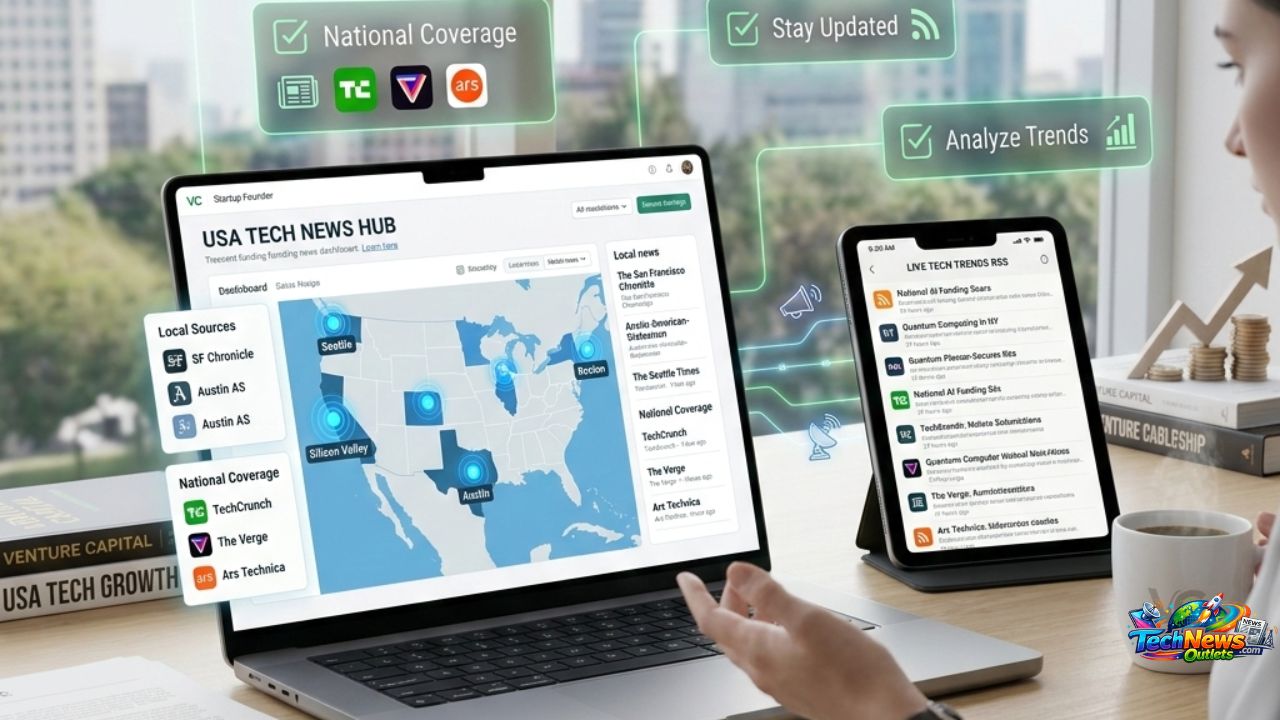
Tech news in the USA moves fast—but the real challenge isn’t finding headlines, it’s building a stack you can maintain. National outlets cover big launches, regulation, and major company moves. Local signals help you track startup ecosystems, hiring trends, security incidents, and community-level innovation.
This guide shows how to combine national tech coverage with local signal—without doomscrolling. If you want a curated directory of sources, start with our tech news outlets hub and then use this page to build your routine.
Quick answer: a simple USA tech news stack
Use a layered stack:
Daily (10 minutes):
• One briefings source (fast scan)
• One mainstream consumer-tech source (launches + reviews)
• One specialist (AI, security, or startups—based on your goals)
Weekly (45–90 minutes):
• One deep reporting source (context)
• One business/markets source (strategy + regulation)
Local (optional, 10 minutes per week):
• Track local startups, meetups, and funding via alerts and watchlists.
Why you need both local and national sources
National tech news tells you what changed in the industry. Local tech news tells you what’s happening in your ecosystem—which startups are hiring, what investors are funding, which communities are growing, and which risks are rising.
A good USA stack helps you answer three practical questions:
• What changed today? (daily scan)
• What matters long-term? (weekly depth)
• What’s happening near me or in my sector? (local signal)
National tech news sources to follow in the USA
These are national sources that cover the USA tech landscape broadly. Use a few—don’t subscribe to everything.
Axios (fast briefings)
Axios is a strong daily scan source. It’s built for busy readers and helps you catch major tech/business shifts quickly.
The Verge (consumer tech + platform shifts)
The Verge is great for consumer tech launches, platform moves, and reviews with context. Use it when you want product news that’s easy to follow.
CNET (mainstream reviews and practical explainers)
CNET is helpful for practical consumer guidance—especially if you’re reading tech news to make buying or everyday decision-making easier.
Ars Technica (technical explainers)
Ars Technica is a great pick when stories get technical—security issues, platform changes, and engineering-friendly explainers.
WIRED (deep reporting and impact)
WIRED is best as a weekly depth source for privacy, policy, and the cultural impact of technology.
Bloomberg Technology (markets + business of tech)
Bloomberg Technology adds business and markets context—earnings, M&A, regulation, and vendor strategy that shape the USA tech landscape.
Specialist sources (choose based on your goals)
Startups and venture capital
Use TechCrunch for startup ecosystem coverage and Axios for quick business briefings. Explore the Startups category for more curated sources.
AI and emerging tech
Use VentureBeat for industry adoption and MIT Technology Review for research-driven context. Browse the AI category to expand your stack.
Cybersecurity and incident awareness
Use BleepingComputer for fast incident coverage, plus one deeper source like KrebsOnSecurity (investigations) or SecurityWeek (professional coverage). See the Cybersecurity category for more options.
Enterprise IT (cloud, SaaS, IT ops)
Use ZDNET for practical enterprise guidance and add Bloomberg Technology for vendor strategy and market context. Explore Enterprise IT for more curated sources.
Developers and builders
Use Hacker News as a discovery layer and Ars Technica for explainers. Browse the Software Development category for more dev-friendly outlets.
Gadgets and buying advice
For consumer tech buying advice, browse the Gadgets category and follow a two-source approach: one testing-heavy review outlet plus one comparison/buying-guide outlet.
How to get local USA tech news (without needing local newspapers)
“Local tech news” is often about ecosystems, not geography. You want signals like:
• New funding rounds and accelerator cohorts
• Hiring surges and layoffs in your city/sector
• Local meetups, dev communities, and university research
• Incidents affecting local companies (security, outages)
Instead of subscribing to dozens of local sites, use tools and watchlists.
Local signal method 1: build a watchlist
Create a simple watchlist of:
• Your city + “startup” and “funding”
• Local accelerators and VCs
• Key employers in your region
• Competitors and partners
This turns local tech news into a repeatable monitoring system.
Local signal method 2: alerts for your city and industry
Set up alerts for:
• “{City} startup funding”
• “{City} SaaS company raised”
• “{City} venture capital”
• Your target industries (AI, security, fintech)
Alerts won’t catch everything, but they reduce the chance you miss important local news.
Local signal method 3: use RSS/newsletters as folders
Treat local sources like folders:
• National folder: your core tech outlets
• Startup folder: TechCrunch + local VC announcements
• Security folder: incident sources
• Local folder: city-specific alerts and community updates
The goal is to keep scanning fast and consistent.
A daily + weekly routine you can actually maintain
Daily (10 minutes)
1) Scan Axios (3 minutes).
2) Scan one mainstream outlet (The Verge or CNET) (3 minutes).
3) Scan one specialist based on your goal: startups, AI, security, or enterprise (3 minutes).
4) Save one link for weekly deep reading (1 minute).
Weekly (45–90 minutes)
1) Read 1–2 deep reporting pieces (WIRED or MIT Technology Review).
2) Read 2–3 business-context pieces (Bloomberg Technology).
3) Review local signals: funding, hiring, community updates.
4) Write 3 takeaways and 1 action (something you’ll actually do).
Monthly (30 minutes)
1) Unsubscribe from sources you don’t read.
2) Add one new source only if you felt a clear gap.
3) Update your watchlist: competitors, vendors, local ecosystem players.
Explore more USA-focused sources on TechNewsOutlets.com
Start with the main tech news outlets hub, browse the Outlets directory, and use topic pages like AI, Cybersecurity, Startups, Enterprise IT, and Gadgets to build your perfect stack.
FAQs
How many tech news sources should I follow in the USA?
Most people do best with 3 daily sources and 2 weekly depth sources. More than that usually creates overload and lowers consistency.
Is local tech news really necessary?
If you’re a founder, job seeker, investor, or builder, local signal is valuable. It helps you understand your ecosystem: hiring, funding, and community activity. If you’re just a casual reader, national sources may be enough.
What’s the fastest way to avoid tech news overload?
Time-box your reading, open only 1–2 links per day, and move deep reading to a weekly block. Unsubscribe aggressively from sources you don’t read.
Conclusion
To follow tech news in the USA efficiently, use a layered stack: national sources for broad coverage, a weekly depth layer for context, and a local watchlist for ecosystem signal. Keep it small, time-box your reading, and tie your news habit to decisions—not doomscrolling.

As an author, Nicai de Guzman focuses on helping readers quickly identify trusted and high-quality tech news platforms, making it easier for developers, entrepreneurs, students, and tech enthusiasts to stay informed without information overload. Through careful research and categorization, the goal is to provide clear, accurate, and up-to-date resources for the global tech community.