Doctor Headshots: Professional Medical Portrait Photography Blueprint
Patients select healthcare providers long before ever stepping into an examination room. They meticulously research physicians online scanning directories and hospital websites. Therefore, your digital first impression dictates your clinical success profoundly. A poorly lit smartphone selfie destroys medical credibility instantly. Conversely, professional doctor headshots establish immediate trust and authoritative expertise. These strategic portraits communicate warmth, competence, and clinical precision simultaneously. Furthermore, they unify hospital staff directories projecting cohesive institutional excellence. Consequently, investing in premium medical portraiture directly impacts patient acquisition and retention. In this comprehensive guide, we will explore the exact blueprint for executing flawless physician photography. Ultimately, mastering these visual branding tactics guarantees your medical practice projects absolute professionalism.
Doctor Headshots: Building Clinical Credibility and Trust
Healthcare decisions involve profound personal vulnerability. Therefore, patients desperately seek visual cues signaling competence and compassion. Human faces process emotional authenticity instantaneously before conscious logic intervenes. A rigid uncomfortable expression triggers subconscious alarm deterring potential patients. However, a warm confident physician portrait immediately alleviates healthcare anxiety. Professional medical photography engineers this critical psychological trust deliberately. Furthermore, consistent visual branding across healthcare directories reinforces institutional reliability. Consequently, premium portraiture transforms cold clinical credentials into approachable human connections.
The Psychology of Patient Trust and Physician Portraits
Visual perception profoundly influences healthcare decision making. Therefore, patients judge physician competence partially based on professional appearance. Authentic smiles activate mirror neurons generating subconscious emotional reciprocity. Furthermore, direct eye contact through a portrait establishes immediate intimate connection. Viewers perceive physicians as more empathetic when portraits exhibit genuine warmth. Conversely, stern unsmiling headshots project cold detachment alienating anxious patients. Consequently, strategic portrait psychology directly manipulates patient perception positively. As a result, optimized medical imagery increases appointment bookings measurably. Ultimately, physician portraits function as powerful psychological trust anchors.
Escaping the Generic Hospital Directory Photo
Many hospital directories feature disastrously inconsistent physician photography. Therefore, clinical websites appear chaotic and unprofessional immediately. Some physicians submit outdated casual snapshots while others use poorly cropped formal images. This visual pandemonium shatters institutional brand cohesion completely. Furthermore, generic stock backgrounds and harsh fluorescent lighting create penal institutional aesthetics. Patients subconsciously associate poor visual presentation with poor clinical care. Professional medical portrait photography enforces strict aesthetic standardization across entire departments. Consequently, unified hospital staff directories project meticulous organizational excellence. As a result, institutional credibility soars attracting top-tier medical talent and patients. Ultimately, escaping generic photography elevates the entire healthcare brand experience.
Core Elements of Professional Medical Portrait Photography
Creating authoritative physician imagery requires technical lighting precision. Therefore, casually snapping photos in exam rooms fails terribly. Professional medical photographers manipulate light and environment deliberately. They understand how specific lighting ratios sculpt facial dimension and project authority. Furthermore, they select backgrounds enhancing skin tones without clinical distraction. Consequently, technical mastery separates amateur snapshots from premium medical headshots.
Mastering Clinical Lighting and Neutral Backgrounds
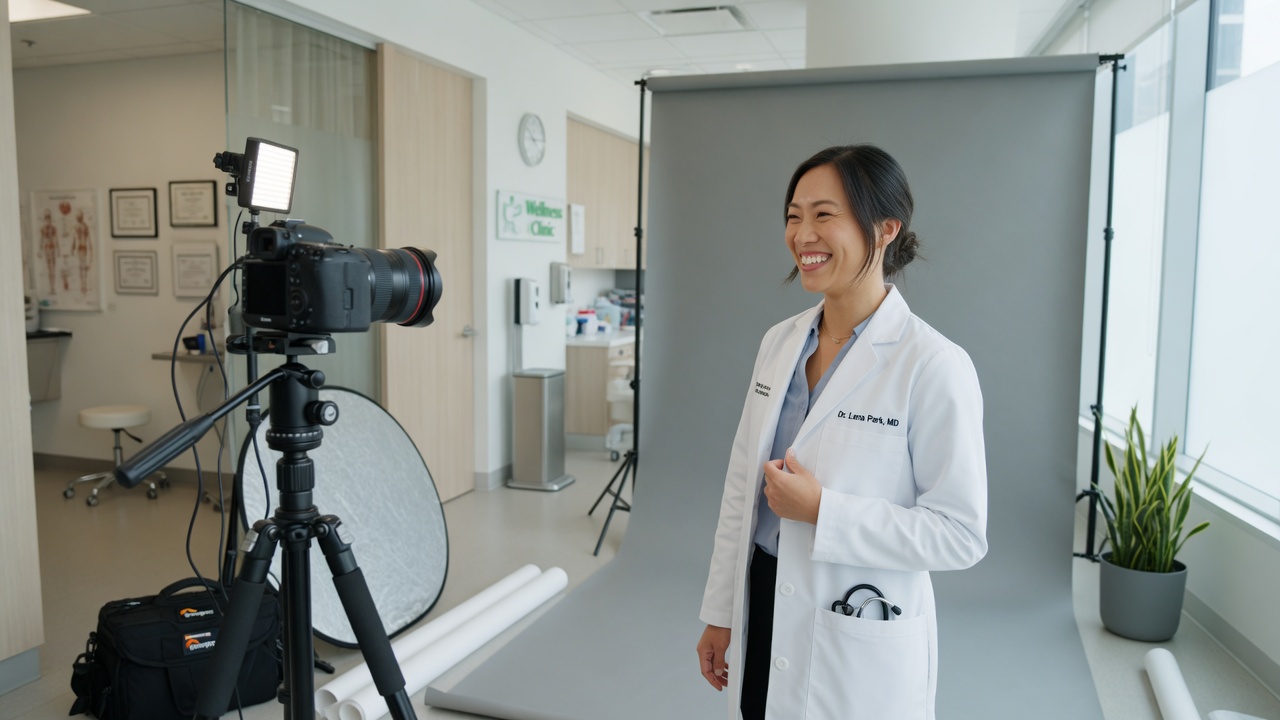
Flat direct lighting obliterates facial dimension creating unflattering featureless masks. Therefore, professional photographers employ sophisticated multi-light setups. A primary key light angled slightly creates essential shadows contouring jawlines. Furthermore, a subtle fill light softens harsh shadows maintaining approachable softness. A background separator light adds depth preventing subjects from merging into backdrops. This precise lighting ratio sculpts authoritative yet friendly facial dimension. Additionally, neutral grey backgrounds provide versatility across diverse digital platforms. They eliminate color clash conflicts with hospital brand palettes. Consequently, mastered lighting and neutral backgrounds create timeless versatile medical portraits. As a result, physician images integrate seamlessly across print and web directories. Ultimately, technical lighting precision dictates the professional quality of medical headshots.
Selecting Appropriate Medical Attire and Styling
Wardrobe selection profoundly impacts perceived medical specialty and seniority. Therefore, physicians must select attire aligning with their clinical discipline. Traditional white coats universally signal medical authority and scientific rigor. However, they sometimes project cold intimidating detachment for primary care. Business professional attire beneath white coats softens clinical austerity beautifully. Furthermore, surgical subspecialists often utilize scrubs emphasizing technical procedural expertise. Psychiatrists frequently wear approachable business casual diminishing intimidating therapeutic distance. Regardless of specialty, garments must fit impeccably avoiding distracting wrinkles. Consequently, strategic styling reinforces specialty credibility while maintaining essential warmth. As a result, physician attire choices visually communicate clinical competence instantly. Ultimately, deliberate wardrobe selection harmonizes authority with patient approachability.
Strategic Tactics for Flawless Doctor Headshots
Exceptional medical portraiture requires deliberate subject direction. Therefore, merely asking physicians to smile produces stiff unnatural results. Professional photographers employ specific psychological tactics eliciting authentic expressions. Furthermore, they meticulously adjust micro-postures optimizing body language signals. Consequently, directed sessions yield vastly superior intimate medical imagery.
Directing Authentic Expressions and Body Language
Physicians notoriously struggle relaxing before camera lenses. Therefore, photographers must master psychological techniques melting professional stiffness. Engaging subjects in conversation about challenging medical cases distracts from camera anxiety. Genuine laughter naturally emerges during stimulating intellectual dialogue. Photographers capture these fleeting authentic micro-expressions precisely. Furthermore, slight chin forward postures strengthen jawline definition projecting decisive confidence. Relaxed dropped shoulders eliminate tense defensive body language signals. Consequently, directed posing yields natural authoritative yet compassionate physician imagery. As a result, medical headshots project genuine human connection rather than forced grimaces. Ultimately, expert subject direction transforms awkward tension into approachable confidence.
Optimizing for Healthcare Directories and Online Platforms
Digital healthcare platforms demand specific image specifications. Therefore, producing single uncropped files severely limits utility across directories. Professional medical photographers capture generous resolution allowing versatile cropping. Horizontal orientation accommodates expansive hospital website banner placements perfectly. Furthermore, tight vertical crops optimize tiny thumbnail requirements on Zocdoc. Retouchers deliver multiple optimized aspect ratios suiting diverse digital environments. Additionally, standardized naming conventions streamline database uploads for large healthcare systems. Consequently, optimized delivery formats eliminate tedious administrative resizing labor. As a result, physician images deploy instantly across multifaceted digital ecosystems. Ultimately, technical optimization ensures seamless integration across all healthcare platforms.
Preparing Physicians for the Headshot Session
Successful medical portraiture begins days before strobes flash. Therefore, neglecting personal grooming guarantees suboptimal final results regardless of lighting. Professional photographers provide detailed preparation guidelines ensuring subjects arrive primed. Furthermore, adequate rest and skincare routines dramatically improve skin texture. Consequently, meticulous session preparation produces flawless naturally retouching complexions.
Grooming Standards and Skincare Protocols
Camera high-resolution sensors ruthlessly reveal skin imperfections. Therefore, physicians must hydrate intensely and rest adequately preceding sessions. Well-moisturized skin reflects light beautifully minimizing unflattering texture emphasis. Furthermore, professional subtle makeup application controls shine and evens skin tones. However, heavy theatrical makeup appears artificial under precise studio lighting. Hair styling should remain neat and professional avoiding distracting flyaways. Men must shave closely or trim beards meticulously eliminating unkempt stubble. Consequently, disciplined grooming standards significantly reduce expensive post-production retouching labor. As a result, natural complexions project healthy vitality reassuring patients subconsciously. Ultimately, impeccable preparation guarantees effortlessly polished final medical portraits.
Managing White Coat Stiffness and Wrinkles
White coats notoriously crease awkwardly creating severe visual distractions. Therefore, physicians must ensure coats are freshly pressed and steamed perfectly. Photographers often keep portable steamers readily available during sessions. Furthermore, stiff collars create unnatural rigid lines under chins. Strategic unbuttoning or collar adjustments soften severe formal geometry beautifully. Layering smooth professional blazers beneath coats adds rich textural depth. Consequently, managed coat stiffness projects meticulous professional standards rather than disheveled carelessness. As a result, crisp tailored coats reinforce clinical hygiene expectations flawlessly. Ultimately, garment management ensures clothing enhances rather than detracts from physician imagery.
Retouching Ethics in Medical Portraiture
Digital manipulation raises profound ethical questions in healthcare imaging. Therefore, aggressive retouching destroys authentic patient recognition causing distrust. Physicians must remain visually identifiable to arriving anxious patients. However, complete retouching abdication unnecessarily preserves temporary blemishes. Professional medical retouchers navigate this delicate balance meticulously. They eliminate transient flaws while preserving permanent identifying features. Furthermore, ethical enhancement maintains professional presentation without deceptive alteration. Consequently, principled retouching satisfies presentation standards without violating patient trust.
Maintaining Authenticity While Enhancing Appearance
Ethical retouchers heal temporary skin blemishes and stray hairs instantly. Therefore, they remove distracting under-eye circles caused by clinical shift fatigue. However, they strictly preserve permanent facial characteristics like natural moles. Smoothing skin texture subtly improves appearance without eliminating human realism. Furthermore, gentle teeth whitening brightens smiles without creating unnaturally glowing Chiclets. The goal involves presenting physicians at their best realistic daily appearance. Consequently, enhanced authenticity ensures patients recognize their doctors during initial consultations. As a result, visual continuity builds critical immediate bedside trust. Ultimately, ethical enhancement respects patient intelligence while maximizing professional presentation.
Avoiding the Over-Retouched Plastic Look
Excessive frequency separation smoothing generates disturbing plastic synthetic skin. Therefore, novice retouchers often destroy natural pore texture aggressively. This over-processing triggers immediate subconscious uncanny valley revulsion. Furthermore, aggressive facial structure warping distorts anatomical reality unethically. Patients feel deceived when their listed physician appears dramatically different in person. Such visual betrayal fractures foundational healthcare trust permanently. Professional retouchers apply subtle local corrections respecting facial geometry completely. Consequently, natural skin texture remains intact preserving vital human authenticity. As a result, medical portraits project approachable realism rather than disturbing perfection. Ultimately, restrained retouching protects crucial physician-patient trust relationships.
Choosing the Right Medical Photographer
Selecting an inexperienced generalist severely risks medical brand reputation. Therefore, healthcare administrators must vet photography portfolios rigorously. Capturing exquisite real estate differs entirely from directing anxious physicians. Medical photographers require specialized expertise managing clinical personalities and environments. Furthermore, they must understand stringent healthcare directory technical specifications. Consequently, specialized experience guarantees efficient sessions delivering superior results.
Evaluating Portfolios for Healthcare Experience
Review potential photographers’ portfolios specifically for previous medical work. Therefore, examine how they handle harsh clinical overhead lighting challenges. Assess their proficiency directing authentic natural physician expressions. Furthermore, evaluate their retouching philosophy ensuring ethical authentic enhancement. Request references from comparable healthcare systems validating professional reliability. Inexperienced portrait photographers waste valuable physician time with inefficient setups. Consequently, specialized medical experience ensures rapid polished session execution. As a result, minimal clinical workflow disruption occurs during photography days. Ultimately, healthcare portfolio evaluation prevents costly amateur experimentation on physicians.
Managing Large Hospital Staff Photography Logistics
Coordinating hundreds of physicians proves logistically nightmarish without professional management. Therefore, hospitals require photographers offering comprehensive scheduling solutions. Advanced providers utilize online booking portals syncing physician availability automatically. Furthermore, they deploy rapid automated workflow stations processing subjects every three minutes. Centralized setup locations within hospital campuses minimize physician travel time. Photographers capture tethered directly into sorting software assigning images immediately. Consequently, massive staff directories update with perfectly consistent imagery efficiently. As a result, administrative overhead plummets while visual consistency soars. Ultimately, logistical mastery enables seamless scalable medical portraiture operations.
Overcoming Common Doctor Headshots Challenges
Medical photography presents uniquely frustrating technical obstacles. Therefore, anticipating these challenges prevents session failures and costly reshoots. Corrective glare from prescription lenses destroys precious eye connections. Furthermore, self-conscious professionals project rigid uncomfortable body language reflexively. Expert photographers deploy reliable strategies neutralizing these pervasive issues instantly. Consequently, proactive problem-solving guarantees successful outcomes regardless of challenges.
Eliminating Glass Glare and Lens Distortions
Eyeglass reflections obliterate critical eye contact projecting patient connection. Therefore, photographers must position strobes meticulously avoiding specular reflection angles. Tilting glasses slightly downward throws reflections below camera sightlines safely. Furthermore, photographers sometimes request physicians remove lenses temporarily during captures. However, many doctors feel profoundly uncomfortable removing signature eyewear. Removing lenses occasionally creates confused squinting appearing distrustful. Expert lighting modification preserves natural eye sparkle without distracting glare. Consequently, clear unobstructed eye contact establishes powerful subconscious trust signals. As a result, medical portraits project penetrating intelligent compassionate focus. Ultimately, technical glare elimination preserves essential physician identity.
Easing Physician Anxiety During Sessions
Physicians experience intense performance anxiety before cameras regularly. Therefore, rushed impersonal sessions exacerbate professional stiffness terribly. Expert photographers establish relaxed rapport through genuine conversation initially. They explain every step clearly eliminating uncertainty inducing tension. Furthermore, they display beautiful preliminary results immediately boosting confidence. Positive reinforcement encourages progressively relaxed authentic expressions naturally. Quick efficient sessions respect valuable physician time reducing frustration. Consequently, comfortable doctors project genuine warmth translating into attractive headshots. As a result, relaxed portraiture sessions yield dramatically superior authentic imagery. Ultimately, psychological comfort directly determines medical headshot aesthetic success.
The Future of Physician Branding and Medical Imagery
Technological innovation continuously expands medical visual branding possibilities. Therefore, static traditional headshots merely represent the foundation of future potential. Emerging technologies introduce dynamic interactive physician profiles engaging patients deeply. Furthermore, advanced artificial intelligence streamlines production logistics unimaginably. Consequently, early adopting practices capture tremendous competitive differentiation.
Integrating AI into Medical Portrait Enhancement
Artificial intelligence revolutionizes tedious background replacement tasks instantly. Therefore, photographers capture physicians rapidly against temporary portable backdrops. AI algorithms seamlessly swap environments placing subjects into pristine clinical settings. Furthermore, machine learning automates ethical retouching applying consistent tasteful corrections effortlessly. Intelligent cropping algorithms optimize individual portraits across infinite directory specifications simultaneously. Consequently, AI integration slashes production timelines while amplifying aesthetic consistency. As a result, healthcare systems deploy updated physician imagery unprecedentedly rapidly. Ultimately, artificial intelligence eliminates technical bottlenecks paralyzing medical marketing agility.
Transitioning to Video Introductions and Interactive Profiles
Static imagery increasingly fails satisfying demanding digital healthcare consumers. Therefore, progressive directories now feature short physician introduction videos. These dynamic clips demonstrate bedside manner and communication clarity directly. Furthermore, interactive virtual office tours familiarize patients reducing appointment anxiety. Professional medical photographers now capture comprehensive branding libraries including motion. Consequently, dynamic multimedia elevates physician branding beyond static photographic limitations. As a result, practices offering video introductions convert website visitors significantly faster. Ultimately, interactive digital presence defines the future competitive healthcare landscape.
Conclusion
Establishing formidable medical credibility requires deliberate visual brand engineering. Therefore, abandoning professional portraiture risks alienating prospective patients immediately. By investing in premium doctor headshots, physicians project authoritative compassionate trust instantly. Strategic lighting, ethical retouching, and authentic expression direction synergistically build clinical confidence. Furthermore, optimized delivery ensures seamless integration across expanding healthcare directories. Ultimately, professional medical portraiture transforms cold clinical credentials into warm inviting human connections. Implement this strategic blueprint today, and watch your medical practice thrive through authentic visual branding.
Frequently Asked Questions (FAQs)
1. What are doctor headshots?
They are professional portraits capturing physicians’ faces for hospital directories, healthcare platforms, and personal branding, establishing patient trust.
2. Why are professional medical portraits important?
They instantly communicate clinical competence, warmth, and credibility, directly influencing patient selection and reducing healthcare anxiety.
3. What should a doctor wear for a headshot?
Physicians should wear clean pressed white coats, professional business attire, or specialty-specific scrubs that align with their medical discipline.
4. How much retouching is ethical for medical headshots?
Ethical retouching removes temporary blemishes and shine while preserving permanent features like moles, ensuring patients recognize the physician.
5. How do photographers eliminate eyeglass glare?
Experts position lighting strategically, tilt glasses slightly downward, or temporarily remove lenses to maintain clear eye contact without reflections.
6. How long does a physician headshot session take?
Efficient professional sessions typically require only five to ten minutes per physician, minimizing disruption to clinical schedules.