The Ultimate Blueprint for Mastering Commercial Truck Parking in Modern Logistics
The logistics sector faces a myriad of operational challenges, yet few are as persistent and critical as the scarcity of safe commercial truck parking. For fleet managers and owner-operators alike, the inability to secure a legal and secure resting spot is not merely an inconvenience; it represents a significant bottleneck in the supply chain that impacts driver retention, cargo security, and regulatory compliance. As freight volumes continue to surge alongside e-commerce growth, the infrastructure required to support these massive vehicles has lagged woefully behind, creating a “parking crisis” that demands immediate strategic attention. Navigating this landscape requires a deep understanding of available resources, technological advancements, and strict adherence to safety protocols to ensure that the rest period restores the driver without compromising the asset. This comprehensive guide explores the multifaceted world of commercial truck parking, offering actionable insights to mitigate risks and optimize downtime efficiency.
The Current State of the Trucking Infrastructure
Understanding the gravity of the situation requires a look at the statistical reality facing long-haul drivers every night. The disparity between the number of heavy-duty trucks on the road and the available public rest facilities has reached a tipping point.
Analyzing the Parking Deficit
Industry reports consistently indicate that there is roughly only one legal commercial truck parking spot for every eleven long-haul trucks operating on major corridors during peak hours. This imbalance forces drivers into impossible dilemmas: drive while fatigued to reach a distant safe haven, or park in unauthorized locations like highway ramps, retail lots, or industrial side streets where they risk fines or safety hazards.
The deficit is not uniform across the nation. It is acutely felt in high-density freight corridors such as the I-95 in the Northeast and the I-85 in the Southeast. Here, lots often reach capacity before sunset, leaving late starters with few viable options.
Economic Implications of Scarcity
The lack of adequate parking translates directly into financial loss. When drivers are forced to stop early due to anticipated shortages, they lose productive driving hours. Conversely, time spent circling lots looking for a space burns expensive diesel fuel and contributes to unnecessary emissions. Studies suggest that the search for parking adds significant operational costs annually to the logistics industry, costs that inevitably trickle down to consumers.
Regulatory Framework and Compliance
The legal framework governing driver rest periods is rigorous, designed primarily to prevent fatigue-related accidents. However, these regulations assume the availability of parking, which is often not the case.
Hours of Service (HOS) Constraints
The Federal Motor Carrier Safety Administration (FMCSA) enforces strict Hours of Service rules. Drivers must log their off-duty time accurately using Electronic Logging Devices (ELDs). The pressure of the “clock” running out while a driver hunts for a commercial truck parking space creates immense stress. If a driver cannot find a spot before their drive time expires, they are forced to park in the first available location, regardless of safety or legality, simply to avoid violating federal law.
Liability and Unauthorized Parking
Parking in non-designated areas carries significant risks.
- Fines and Penalties: Local municipalities often strictly enforce no-parking zones, issuing hefty citations to trucks found on ramps or city streets.
- Cargo Theft: Unauthorized locations rarely have the security measures of established truck stops, making parked trailers easy targets for organized theft rings.
- Accident Vulnerability: Trucks parked on shoulder areas are frequently struck by drowsy drivers who drift out of their lanes, leading to fatal accidents.
Technological Innovations in Parking Solutions
As physical infrastructure struggles to catch up, technology has stepped in to bridge the gap. The digitization of commercial truck parking management is perhaps the most significant development in recent years for driver convenience.
Real-Time Availability Applications
Gone are the days of relying solely on word-of-mouth orCB radios. Modern applications aggregate data from thousands of public and private lots to provide real-time occupancy information.
Leading Technologies in the Market:
- Trucker Path: A community-driven app that allows users to report parking availability, fuel prices, and amenity quality.
- Drivewyze: Offers a safety+ parking service that uses predictive analytics to reserve spaces before a driver arrives, ensuring they have a guaranteed spot.
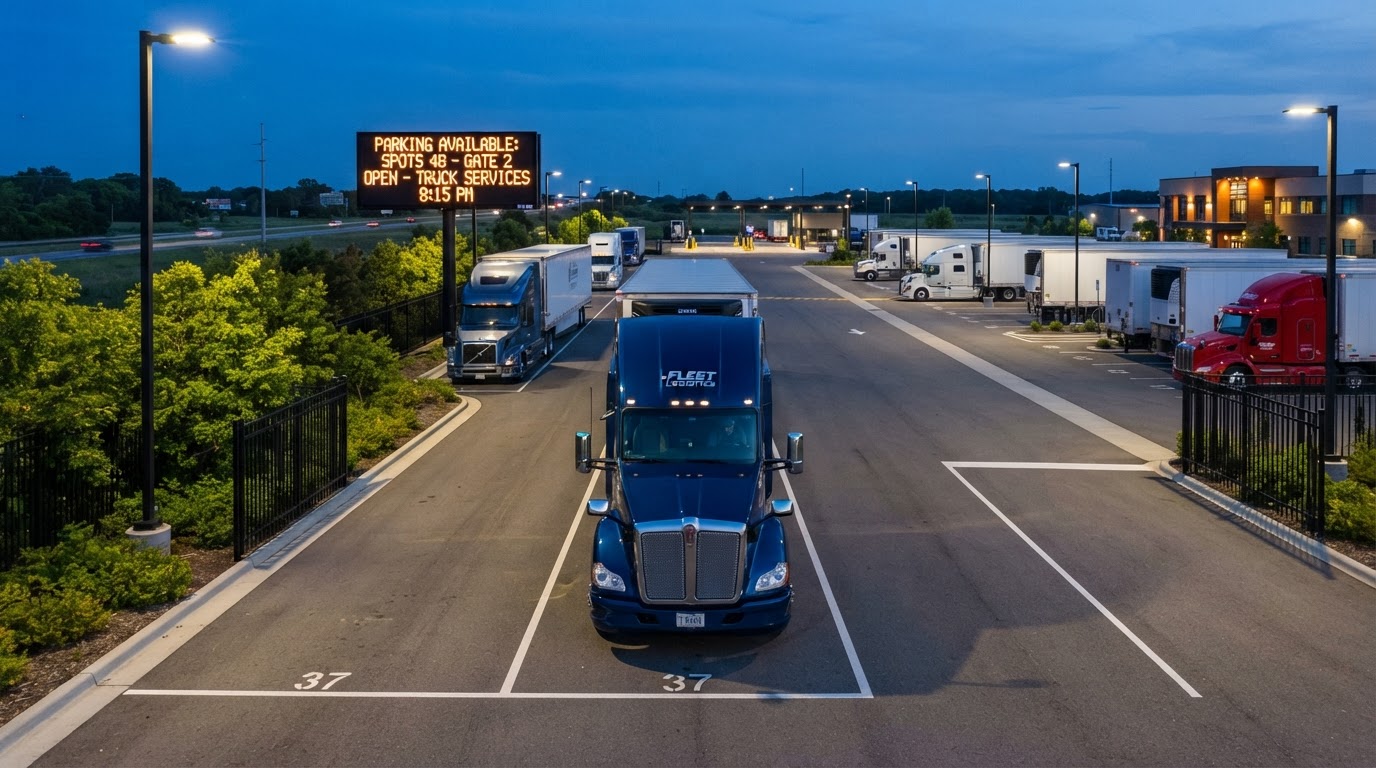
- State-Specific Systems: States like Tennessee and Kansas have implemented integrated corridor management systems that use ground sensors to count vehicles entering and exiting rest areas, displaying this data on dynamic message signs along the highway.
Smart Infrastructure and IoT
The Internet of Things (IoT) is revolutionizing how lots are managed. Smart parking solutions utilize overhead cameras or in-ground sensors to detect vehicle presence. This data feeds directly into navigation systems and apps, allowing for dynamic pricing and reservation models that maximize lot utilization during off-peak hours.
Safety Protocols for Secure Resting
Security is paramount when selecting a commercial truck parking location. A driver’s cab is not just a workspace; it is their home on the road, and the trailer often contains thousands of dollars in inventory.
Evaluating Lot Security Features
Drivers should prioritize facilities that demonstrate a commitment to security through visible infrastructure.
- Lighting: High-intensity LED lighting that eliminates dark corners and shadows is essential.
- Surveillance: Visible CCTV cameras act as a deterrent to theft and vandalism.
- Physical Barriers: Fenced perimeters with controlled access points prevent unauthorized entry by pedestrians and vehicles.
- Security Patrols: On-site guards provide a human element of safety that cameras cannot replicate.
Personal Safety Measures
Beyond infrastructure, drivers must practice situational awareness.
- Backing into the Spot: Always back into a stall to facilitate a quick escape if necessary and to protect the front engine compartment.
- Door Locks: Utilize air brake locks and deadbolts immediately upon entry.
- Blind Spot Awareness: Be mindful of blind spots created by adjacent high-profile vehicles when walking to amenities.
Strategic Planning for Long-Haul Routes
Successful trip planning in the modern era requires integrating parking searches into the route optimization process rather than treating it as an afterthought.
Pre-Trip Planning Essentials
Drivers should identify potential rest stops along their route before turning the key. By mapping out commercial truck parking hubs at the 10th or 11th hour of their drive, drivers can avoid the panic of a full lot at the end of their shift. This “plan B” mentality ensures that if the primary location is full, the driver knows exactly how far the next safe haven is.
Managing Peak Times
Understanding peak demand is crucial. Parking scarcity is most acute between 4:00 PM and 8:00 PM. Whenever possible, adjusting start times earlier in the day can allow a driver to arrive at a destination or rest stop before the evening rush, significantly increasing the odds of securing a premium spot near the entrance or exit.
The Role of Public vs. Private Sector
The ecosystem of commercial truck parking is divided between public state-run rest areas and private truck stops and travel centers. Each serves a distinct purpose and offers different amenities.
Public Rest Areas
State-operated rest areas are typically free and located directly on interstate right-of-ways.
- Pros: No cost, convenient access, strictly regulated.
- Cons: Limited stay durations (often 2 to 4 hours), fewer amenities, smaller size, often lack shower facilities or full-service dining.
Private Travel Centers
Major chains like TA, Petro, Love’s, and Pilot dominate the private sector.
- Pros: Full amenities including showers, laundry, gyms, restaurants, and massive retail stores. Longer stay tolerance (usually 10+ hours for paid parking).
- Cons: Cost involved (ranging from $15 to $25+ per night), can be crowded and noisy due to proximity to fuel islands and docks.
Reserved Parking Programs
Recognizing the frustration of the “hunt,” many major chains have implemented reserved parking programs. For a slightly higher fee, a driver can guarantee a specific spot. This model provides peace of mind and is increasingly viewed as a necessary operational expense rather than a luxury.
Future Trends and Infrastructure Expansion
Looking ahead, the industry is moving toward more holistic solutions that combine policy reform with construction and technology.
Government Legislation and Funding
The Infrastructure Investment and Jobs Act has allocated specific funding toward expanding commercial truck parking capacity. These funds are being utilized to build new facilities and expand existing ones in critical congestion points. Additionally, states are exploring the use of existing surplus property, such as weigh station scales, for overflow parking during nighttime hours when stations are closed.
Electrification and Alternative Fuels
The rise of electric semi-trucks introduces a new dimension to parking requirements. Future lots will need to be equipped with high-capacity megawatt charging stations. This transition offers an opportunity to redesign parking facilities from the ground up, integrating charging infrastructure with secure, designated parking bays specifically calibrated for modern fleet needs.
Addressing the Driver Retention Connection
It is impossible to discuss commercial truck parking without touching on the driver shortage. Quality of life is a primary factor in driver retention, and the ability to find safe, clean, and quiet rest is foundational to that quality.
When drivers are forced to park in unsafe conditions or wake up to the noise of traffic and idling engines, their health and job satisfaction deteriorate. Companies that assist drivers with parking—through corporate accounts at major chains or advanced routing software that prioritizes parking availability—see higher retention rates. Investing in the driver’s rest is effectively investing in the company’s longevity.
Best Practices Summary
To navigate the complexities of commercial truck parking, stakeholders should adopt a multi-pronged approach.
Operational Checklist for Drivers and Managers:
- Utilization of Tech: Mandate the use of real-time parking apps in fleet smartphones and ELD tablets.
- Financial Allocation: Budget for paid parking as a standard operating cost rather than an exception.
- Route Alignment: Align delivery schedules with parking availability windows where possible.
- Feedback Loops: Create internal databases where drivers report on the status of lots to help future dispatches.
- Safety Training: Regularly review security protocols regarding cargo theft prevention in unsecured areas.
Frequently Asked Questions
What is the best app for finding commercial truck parking?
Apps like Drivewyze and Trucker Path are currently the industry leaders for real-time availability and reservations.
Why is there a shortage of commercial truck parking?
The shortage is caused by a rapid increase in freight volume coupled with slow development of new rest facilities and land-use restrictions.
Is it illegal to park a semi-truck at a Walmart?
While not universally illegal, it depends on local ordinances and store management policies; it is generally considered a last resort due to security risks.
How much does it cost to park at a truck stop overnight?
Prices typically range from $15 to $25, though premium reserved spots with additional amenities can cost more.
Can you sleep in your truck at a rest area?
Yes, most state rest areas allow sleeping for a limited duration (usually 4 to 10 hours) to comply with Hours of Service regulations.
What are the safety risks of parking on highway on-ramps?
Parking on ramps is extremely dangerous due to the high risk of rear-end collisions by merging traffic and is illegal in most jurisdictions.
Conclusion
Mastering the logistics of commercial truck parking is no longer optional for efficient fleet operations; it is a central pillar of modern supply chain management. By leveraging cutting-edge technology, adhering to strict safety protocols, and advocating for continued infrastructure investment, the industry can mitigate the risks associated with the current parking deficit. Prioritizing the safety and rest quality of drivers through strategic planning not only ensures regulatory compliance but also safeguards the valuable assets moving across our nation’s highways every day.