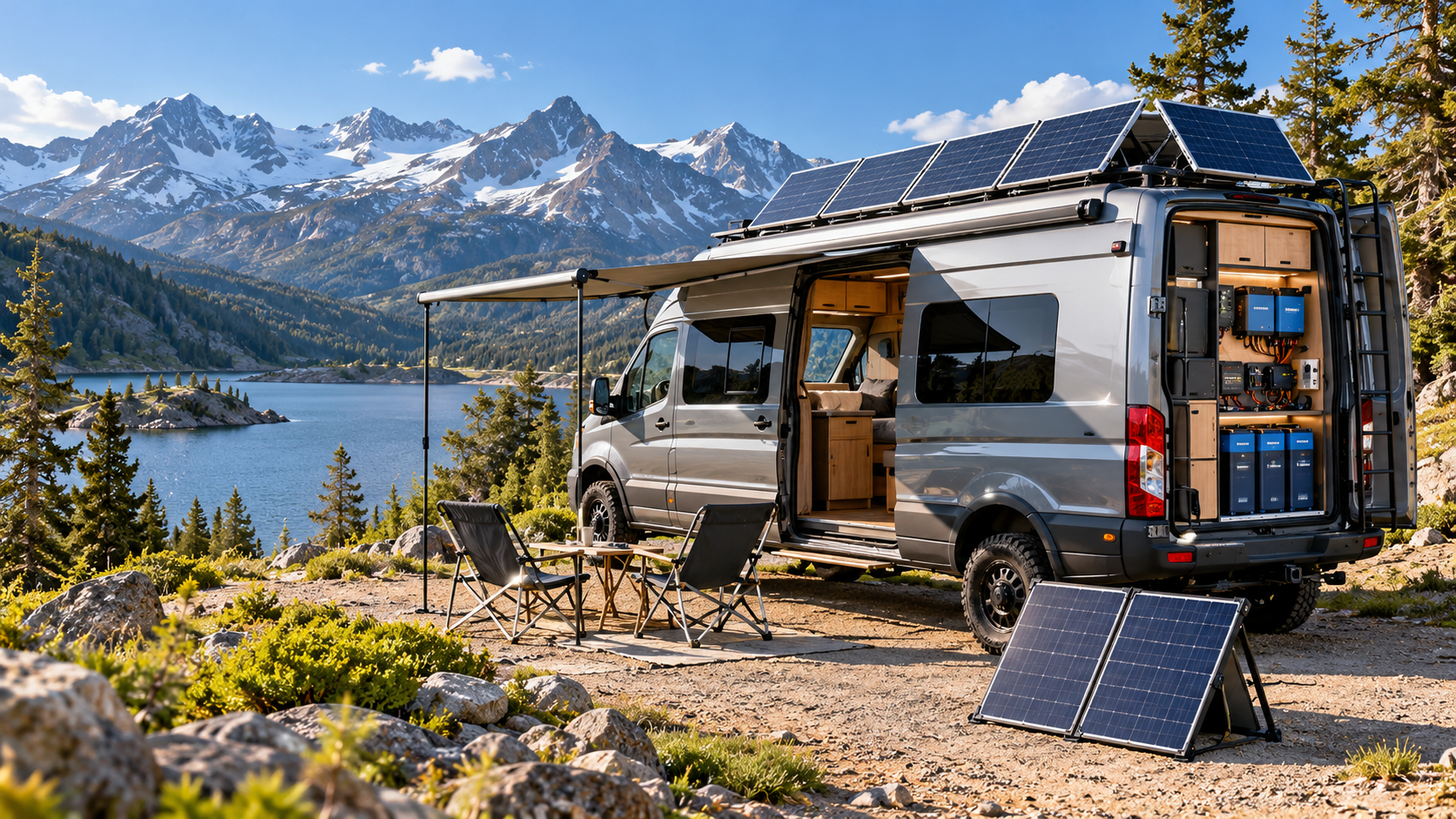
Solar Panels for Recreational Vehicles: How to Build a Reliable RV Power System
solar panels for recreational vehicles can give RV owners a practical way to recharge house batteries, reduce generator use, extend off-grid camping time, and keep essential devices running when shore power is unavailable. A well-designed RV solar setup can support lighting, refrigerators, water pumps, fans, laptops, communications equipment, and selected household appliances, but the system needs to be sized around actual daily energy use rather than the maximum number of panels that will fit on the roof. Panel wattage, battery capacity, charge controller type, inverter size, roof space, shading, travel habits, climate, and wiring all influence how well an RV solar system performs.
RV solar is often described as a simple process of placing a few panels on the roof.
In reality, the panels are only one part of the system.
A complete setup may include:
• Solar panels
• Mounting hardware
• Wiring
• Fuses and breakers
• Charge controller
• Battery bank
• Battery monitor
• Inverter
• Shore charging equipment
• Alternator charging
These components must work together.
A powerful solar array connected to a small battery bank can still leave the owner with limited usable energy.
Likewise, a large battery bank with too little solar capacity may take too long to recharge.
The best system balances generation, storage, and consumption.
What Are Solar Panels for Recreational Vehicles?
Solar panels for recreational vehicles are photovoltaic panels used to convert sunlight into electrical energy for an RV’s house electrical system.
They are commonly installed on:
• Motorhomes
• Travel trailers
• Fifth wheels
• Camper vans
• Truck campers
• Converted buses
• Expedition vehicles
Solar energy is usually sent through a charge controller before reaching the battery bank.
The batteries then supply power to the RV’s DC equipment.
An inverter can convert stored DC electricity into AC power for compatible household appliances.
Solar Panels Do Not Directly Power Everything
One important misunderstanding is assuming solar panels directly run every appliance in real time.
Most RV systems work through the batteries.
Sunlight charges the battery bank.
The battery bank supplies energy when appliances operate.
This means battery capacity is just as important as panel capacity.
7 Smart Tips for Choosing Solar Panels for Recreational Vehicles
The following considerations can help RV owners build a system that matches actual travel needs.
1. Solar Panels for Recreational Vehicles Should Be Sized From Energy Use
The first step should not be choosing a panel.
It should be calculating how much electricity the RV normally uses.
Create a list of devices such as:
• Refrigerator
• Lights
• Water pump
• Roof fans
• Television
• Laptop
• Phone chargers
• Router
• Coffee maker
• Microwave
• CPAP machine
• Air conditioner
Each device consumes a different amount of energy.
Think in Watt Hours
A simple way to estimate daily usage is:
Device wattage × hours used per day.
For example, a 60 watt laptop used for three hours consumes roughly 180 watt hours.
Repeat this process for each major device.
The total provides a useful starting point for system sizing.
Include System Losses
Real systems are not perfectly efficient.
Energy can be lost through:
• Inverter conversion
• Wiring resistance
• Battery charging
• Charge controller operation
• Heat
Build some reserve into the calculation rather than sizing the system exactly to the theoretical minimum.
2. Choose Between Rigid, Flexible, and Portable Solar Panels
RV solar panels come in several formats.
Each has advantages and tradeoffs.
Rigid Solar Panels
Rigid panels are the most common permanent roof-mounted option.
Advantages may include:
• Good efficiency
• Strong durability
• Airflow beneath the panel
• Long service life
• Broad availability
They are suitable for RV owners who want a fixed solar array.
Flexible Solar Panels
Flexible panels are thin and lightweight.
They can be useful on:
• Curved roofs
• Lightweight builds
• Limited-height installations
Potential disadvantages can include more heat buildup when mounted directly against a roof and, depending on construction quality, potentially different long-term durability characteristics.
Installation quality matters significantly.
Portable Solar Panels
Portable panels are placed outside the RV and connected when needed.
Benefits include:
• Ability to follow the sun
• Flexible positioning
• Useful when the RV is parked in shade
• No permanent roof mounting
The disadvantages include setup time and the need to store, move, and secure the panels.
Combining Roof and Portable Solar
Some RV owners use both.
Roof panels provide continuous charging during daylight.
Portable panels can add capacity when camping for longer periods.
This hybrid approach offers flexibility.
3. Roof Space Determines Practical Solar Capacity
The roof may contain:
• Air conditioners
• Fans
• Skylights
• Satellite equipment
• Antennas
• Storage boxes
• Roof vents
The available panel area may therefore be smaller than the total roof dimensions suggest.
Measure Before Buying
Create a roof layout before ordering panels.
Record:
• Panel dimensions
• Vent clearance
• Air conditioner clearance
• Cable routing
• Maintenance access
• Shadow sources
Trying to fit panels after purchase can lead to inefficient placement.
Leave Service Access
Do not completely block access to equipment that may need future maintenance.
Technicians should still be able to reach roof components safely.
4. Solar Panels for Recreational Vehicles Need the Right Charge Controller
A solar charge controller manages energy flowing from the panels to the battery bank.
Two common categories are:
• PWM
• MPPT
PWM Controllers
PWM controllers are relatively simple and can work well in smaller, properly matched systems.
They are generally less flexible when panel voltage is significantly higher than battery charging voltage.
MPPT Controllers
MPPT controllers can operate higher-voltage solar arrays and convert available power efficiently for battery charging.
They are commonly chosen for larger RV systems.
Potential advantages include:
• Greater design flexibility
• Higher panel string voltage
• Reduced wiring current in some configurations
• Better energy harvesting under certain conditions
Controller Size Matters
The charge controller must safely handle the expected solar output.
Consider:
• Panel wattage
• Array voltage
• Maximum current
• Battery voltage
• Future expansion
A controller with some extra capacity can make future panel additions easier.
5. Match Solar Capacity With the Battery Bank
Solar panels generate energy.
Batteries store it.
Both sides need to be balanced.
Common RV battery technologies include:
• Flooded lead-acid
• AGM
• Lithium iron phosphate
Each has different:
• Usable capacity
• Charging behavior
• Weight
• Maintenance requirements
• Cost
Lead-Acid Batteries
Lead-acid systems are widely understood and can be cost-effective.
However, only part of the rated capacity is normally used if owners want to preserve battery life.
They are also relatively heavy.
Lithium Batteries
Lithium iron phosphate batteries have become popular in RV systems because they can offer:
• Higher usable capacity
• Lower weight
• Faster charging
• Longer cycle life
However, they require a compatible battery management system and charging configuration.
Cold-temperature charging limitations may also require attention depending on the battery design and climate.
Battery Capacity Should Match Overnight Needs
Solar production stops after sunset.
The battery bank must carry overnight loads until solar charging resumes.
Owners who run overnight refrigeration, fans, medical equipment, or electronics should plan battery capacity carefully.
6. Understand How Shading Affects Solar Panels for Recreational Vehicles
Shading can reduce output significantly.
RV roofs often contain objects capable of casting shadows.
Examples include:
• Air conditioners
• Roof vents
• Antennas
• Nearby trees
• Buildings
• Other vehicles
Even partial shading can reduce production depending on panel design and wiring configuration.
Parking Creates a Tradeoff
A shaded campsite may keep the RV cooler.
But it may also reduce solar generation.
This creates a common RV solar challenge.
Portable panels can help by allowing the vehicle to remain in shade while the panels are placed in sunlight.
Panel Wiring Matters
Series and parallel configurations behave differently under shading.
The appropriate design depends on:
• Controller voltage limits
• Cable length
• Panel specifications
• Array size
• Shading patterns
Large or complex installations should be designed carefully.
7. Plan for Expansion Before Installation
Many owners begin with a small solar system and later want more capacity.
Future-proofing can make expansion easier.
Consider installing:
• Larger wire where appropriate
• A controller with spare capacity
• Accessible roof cable entry
• Expandable battery connections
• Suitable fuse distribution
Why RV Solar Systems Grow
Owners often add more solar after increasing electrical usage.
Common additions include:
• Larger refrigerator
• More laptops
• Induction cooking
• Additional batteries
• Entertainment equipment
• Mobile office equipment
Planning early can reduce the need to replace components later.
How Many Watts of Solar Does an RV Need?
There is no single correct wattage.
A small camper with minimal electrical loads may need relatively little solar.
A large motorhome with several occupants and extensive electronics may require a much larger array.
A practical approach is to calculate daily energy consumption first.
Then estimate how much solar generation is required to replace that energy under realistic sunlight conditions.
Sunlight Changes by Location and Season
Solar production varies based on:
• Latitude
• Season
• Weather
• Panel angle
• Temperature
• Shading
A system that performs very well in summer may produce less during winter.
Owners who travel across different climates should size for less favorable conditions if dependable off-grid charging is important.
Solar Panels for Recreational Vehicles and Inverters
Most RV batteries store DC electricity.
Many household appliances use AC electricity.
An inverter converts DC power into AC power.
Small Inverters
Small inverters may support:
• Laptop chargers
• Television
• Small electronics
Larger Inverters
Large inverter systems may support:
• Microwave
• Coffee maker
• Induction cooktop
• Other higher-power appliances
High power appliances can draw substantial current from the battery bank.
The inverter, battery, wiring, and protection equipment must all be sized accordingly.
Can RV Solar Run an Air Conditioner?
This is one of the most common questions.
An RV air conditioner consumes significantly more power than typical lighting or electronics.
Running air conditioning primarily from solar and batteries can be possible in a properly designed system, but it usually requires:
• Large solar array
• Large battery bank
• High-capacity inverter
• Heavy wiring
• Suitable charging infrastructure
• Careful energy management
For many RV owners, air conditioning remains one of the most difficult loads to support off-grid for long periods.
Reduce Cooling Demand First
Improving efficiency can help.
Consider:
• Parking strategically
• Window insulation
• Roof insulation
• Reflective shades
• Ventilation
• Efficient air conditioners
Reducing consumption can be easier and less expensive than continually expanding solar capacity.
Solar Panels and RV Refrigerators
Refrigeration can represent a major continuous load.
Power consumption varies depending on refrigerator type, ambient temperature, internal temperature, insulation, and usage.
A modern efficient compressor refrigerator can work well with solar when the system is sized correctly.
Owners should calculate daily energy use rather than relying only on instantaneous wattage.
Fixed Solar Versus Portable Solar
Both approaches can work well.
Fixed Roof Solar
Advantages include:
• Always installed
• Charges while driving or parked
• No daily setup
• Harder to forget
Potential limitations include:
• Roof shading
• Limited roof area
• Fixed panel angle
Portable Solar
Advantages include:
• Can move toward sunlight
• Can adjust angle
• Useful with shaded parking
• Easy to add temporarily
Potential limitations include:
• Setup required
• Storage needed
• Theft risk
• Cables around campsite
The ideal solution depends on camping style.
Monocrystalline Solar Panels for RVs
Monocrystalline panels are commonly used in RV applications because they provide strong power output relative to surface area.
Roof space is limited, so power density can be valuable.
Panel quality should also be evaluated through:
• Construction
• Warranty
• Electrical specifications
• Connector quality
• Temperature performance
• Manufacturer support
Do not select panels solely by advertised wattage.
RV Solar Wiring
Correct wiring is essential for both performance and safety.
Wire size depends on:
• Current
• Voltage
• Cable length
• Allowable voltage drop
• Environmental conditions
Undersized wiring can waste energy and create excessive heating.
Use Appropriate Protection
A properly designed installation may require:
• Fuses
• Breakers
• Disconnects
• Busbars
• Proper terminals
• Cable protection
• Strain relief
Electrical protection should match the system design.
Mounting Solar Panels on an RV Roof
Permanent panels need secure mounting.
The mounting method must consider:
• Roof material
• Wind loading
• Waterproofing
• Panel airflow
• Vehicle movement
• Service access
Roof Leaks Are a Serious Concern
Drilling through an RV roof requires careful sealing.
Incorrect installation can cause water damage far more expensive than the solar equipment itself.
Owners who are not comfortable working with roofing and electrical systems should consider professional installation.
Solar Panel Tilt Versus Flat Mounting
Many RV panels are installed flat because this is convenient while driving.
Flat mounting also avoids daily adjustment.
However, panels can sometimes produce more energy when angled toward the sun.
Portable panels make angle adjustment easier.
Some fixed systems use adjustable mounts, although owners must remember to secure them properly before travel.
Battery Monitors for RV Solar Systems
A good battery monitor helps owners understand the electrical system.
Useful information can include:
• Battery percentage
• Voltage
• Charging current
• Discharge current
• Power consumption
• Estimated remaining capacity
This information makes energy management easier.
Without monitoring, owners may not realize how quickly certain appliances consume stored energy.
Solar Panels for Recreational Vehicles During Driving
Roof-mounted panels can generate energy while the RV is traveling when exposed to sunlight.
Many RVs also charge house batteries from the vehicle alternator.
Combining:
• Solar charging
• Alternator charging
• Shore power
can create a more reliable system.
DC-to-DC Charging
Some modern RV electrical systems use DC-to-DC chargers between the alternator and house battery bank.
This can provide controlled charging, particularly where different battery technologies are used.
System compatibility should be checked carefully.
RV Solar During Cloudy Weather
Solar panels continue producing some electricity under clouds, but output may drop substantially.
The exact reduction depends on cloud density and system design.
Owners who camp off-grid for long periods should maintain another charging option.
Possible backups include:
• Alternator charging
• Shore power
• Generator
Solar works best as part of an overall energy strategy.
Maintaining Solar Panels for Recreational Vehicles
Solar systems generally require limited routine maintenance, but periodic checks are useful.
Clean the Panels
Dust, pollen, leaves, bird contamination, and road grime can reduce sunlight reaching the cells.
Clean according to panel manufacturer guidance.
Avoid harsh materials that could scratch the surface.
Inspect Mounting Hardware
Check for:
• Loose fasteners
• Cracks
• Sealant deterioration
• Roof damage
• Cable movement
Inspect Wiring
Look for:
• Damaged insulation
• Loose connectors
• Corrosion
• Heat damage
• Chafing
Travel vibration makes periodic inspection particularly important.
Common RV Solar Mistakes
Buying Panels Before Calculating Energy Use
System design should start with consumption.
Ignoring Battery Capacity
Solar without sufficient storage can limit off-grid usefulness.
Installing Too Small a Charge Controller
Future expansion may become difficult.
Ignoring Roof Shadows
Air conditioners and vents can affect output.
Undersizing Wiring
This can create voltage drop and heating.
Expecting Solar to Run Every Appliance Easily
High-power loads require significantly larger systems.
Forgetting Backup Charging
Several cloudy days can reduce solar production.
Focusing Only on Panel Wattage
The entire system matters.
Solar Panels for Recreational Vehicles for Boondocking
Boondocking means camping without normal campground hookups.
Solar is particularly useful in this environment.
A balanced system can support:
• Lighting
• Water pumps
• Refrigeration
• Fans
• Phone charging
• Laptops
• Internet equipment
• Entertainment
The exact capability depends on available sunlight and system capacity.
Energy Conservation Extends Off-Grid Time
Simple habits can help.
Use efficient LED lights.
Switch off unnecessary equipment.
Charge electronics during strong solar production.
Use high-demand appliances carefully.
Energy saved is often cheaper than adding more generation.
Solar Panels for Full-Time RV Living
Full-time travelers usually need more robust systems because electrical use is continuous.
A full-time setup may prioritize:
• Higher panel capacity
• Larger lithium battery bank
• Strong inverter
• Multiple charging sources
• Reliable monitoring
• Redundant components
Remote workers may also need enough energy for:
• Laptops
• Multiple monitors
• Mobile internet
• Cameras
• Communications equipment
Power planning becomes part of everyday travel planning.
Portable Solar Panels for Weekend Campers
Weekend RV users may not need an elaborate permanent system.
A portable panel and modest battery setup can sometimes support basic needs such as:
• Lights
• Phones
• Fans
• Small electronics
• Limited refrigeration support
This approach can reduce installation complexity.
Are Solar Panels for Recreational Vehicles Worth It?
Solar can be particularly valuable for travelers who regularly camp without hookups.
Potential benefits include:
• More off-grid independence
• Reduced generator runtime
• Quiet charging
• Lower fuel use
• Continuous daytime battery charging
• Greater travel flexibility
The financial return is not the only consideration.
Many RV owners value the convenience and independence solar provides.
Choosing an RV Solar Installer
A professional installer should understand both solar power and RV electrical systems.
Ask about:
• Experience with your RV type
• Battery chemistry
• Charge controller sizing
• Roof mounting
• Wiring protection
• Inverter installation
• System monitoring
• Warranty
• Expansion planning
A clean and documented installation can make future maintenance much easier.
Frequently Asked Questions
How do solar panels for recreational vehicles work?
Solar panels generate DC electricity from sunlight, which passes through a charge controller to recharge the RV house battery bank for later use.
How many solar panels does an RV need?
The correct amount depends on daily energy use, battery capacity, roof space, travel location, sunlight, appliance loads, and how long the RV needs to remain off-grid.
Can solar panels for recreational vehicles run an air conditioner?
It is possible with a sufficiently large solar array, battery bank, and inverter, but air conditioning requires far more energy than most normal RV electrical loads.
Are portable or roof-mounted RV solar panels better?
Roof panels provide automatic charging and convenience, while portable panels offer flexible placement and can be moved into sunlight when the RV is parked in shade.
Do RV solar panels work on cloudy days?
Yes, but output can fall substantially under heavy cloud cover. A backup charging source is useful for long off-grid trips.
What battery is best for RV solar?
Lead-acid, AGM, and lithium batteries can all be used when the charging system is compatible. Lithium iron phosphate batteries are popular for their usable capacity, weight, and cycle life.
Conclusion
Solar panels for recreational vehicles can make off-grid travel quieter, more flexible, and less dependent on generators or campground electrical hookups. A reliable system starts with understanding daily energy use and then balancing solar generation, battery storage, charge control, wiring, and inverter capacity. Roof space, shading, climate, and future expansion should also be considered before installation. With proper sizing and maintenance, RV solar can provide dependable renewable energy for everything from weekend camping to full-time mobile living.