The BMW Components That Work Hardest When Temperatures Start Climbing
Hot weather does more than make a parked vehicle uncomfortable. High ambient temperatures, intense sunlight, heavy traffic, and long journeys can increase thermal stress throughout a car. Certain BMW parts deserve particular attention in summer because cooling, electrical, rubber, tire, and air-conditioning systems all have to operate under demanding conditions when temperatures rise.
Heat does not mean these components will automatically fail, and BMW models differ considerably by generation, engine, powertrain, climate, mileage, and maintenance history. Still, knowing which BMW parts are exposed to additional summer demands can help drivers notice warning signs earlier, maintain the vehicle properly, and distinguish sensible preventive care from unnecessary replacement.
Why Summer Heat Matters to BMW Parts
A vehicle already generates substantial heat through its engine or powertrain, transmission, braking, electrical equipment, and air-conditioning system.
Summer raises the temperature of the surrounding environment before any of these systems begin working.
A cooling system that performs comfortably in mild conditions may have less thermal margin during a heatwave, particularly when the vehicle is climbing, towing where approved, idling in traffic, or operating with an existing fault.
BMW parts made from rubber, plastic, electronic components, and chemical storage systems can also be influenced by sustained heat exposure.
The correct response is maintenance rather than panic.
A properly maintained BMW is engineered to function across an appropriate operating range. Summer weather primarily becomes a concern when components are already aged, damaged, incorrectly serviced, or exposed to unusually demanding conditions.
Heat and sunlight affect different components differently
Ambient heat increases the surrounding air temperature. Engine-bay heat adds further thermal load while driving.
Direct sunlight can make exterior and cabin surfaces considerably hotter than the surrounding air.
These conditions can affect BMW parts through several mechanisms:
- Faster chemical degradation
- Increased cooling demand
- Higher air-conditioning workload
- Rubber aging
- Plastic deterioration
- Fluid temperature changes
- Battery stress
- Tire-pressure changes
- Greater electrical loads
The actual effect depends on the specific material and system.
Which BMW Parts Are Most Affected by Summer Heat
Cooling-system components typically deserve some of the greatest attention because they regulate operating temperature.
Batteries are another important area because heat can accelerate internal degradation even though drivers often associate battery failures mainly with winter.
Tires, hoses, belts, air-conditioning components, brakes, fluids, electronics, and certain plastic components also deserve routine observation.
These BMW parts work together.
A failed fan, for example, can affect cooling performance and air-conditioning operation, while a weak battery can create electrical symptoms elsewhere.
9 Critical BMW Parts to Watch During Hot Weather
Summer maintenance should focus on symptoms and manufacturer requirements rather than replacing components simply because the calendar says June.
The following BMW parts are particularly relevant when temperatures remain high.
1. Cooling System Components
The cooling system is fundamental to maintaining appropriate engine temperature on combustion-powered and hybrid vehicles. Electric BMWs also use thermal-management systems for batteries, motors, electronics, and cabin climate control, although their architectures differ.
On combustion-engine models, important cooling-related BMW parts can include the radiator, coolant pump, thermostat, expansion tank, hoses, cooling fan, temperature sensors, radiator cap or pressure-control components where applicable, and associated pipes and seals.
A weakness anywhere in this system can become more noticeable during demanding hot-weather operation.
The radiator needs unobstructed airflow
A radiator transfers heat from coolant to passing air.
Its efficiency can be affected by external blockage, damaged fins, contamination, internal problems, insufficient coolant flow, or inadequate fan operation.
Leaves, insects, road debris, and dirt can accumulate around heat exchangers.
Cleaning should be performed carefully because delicate fins can be damaged by aggressive tools or inappropriate pressure.
BMW parts around the front cooling stack can also be difficult to access, making professional inspection sensible when overheating problems are suspected.
Electric coolant pumps need attention on applicable models
Various BMW generations use electrically driven coolant pumps in particular engines and thermal-management systems.
An electric water pump can fail mechanically or electrically.
Warning signs vary by model but may include overheating messages, abnormal temperature behavior, reduced performance, cooling fan activity, or fault codes.
Do not assume every BMW uses the same pump design.
When replacing cooling-related BMW parts, identify the exact model, production date, engine, and part specification.
2. The 12-Volt Battery
Car batteries are commonly associated with cold-weather starting problems, but heat can also shorten battery life by accelerating chemical processes and degradation.
The 12-volt battery supports important vehicle electrical functions regardless of whether the BMW uses a conventional combustion engine, hybrid system, or full electric powertrain.
Its exact role varies by vehicle architecture.
Hot summer conditions can expose an already weakened battery.
Battery symptoms are not always obvious
Possible signs of battery or charging concerns can include:
- Slow engine cranking on applicable vehicles
- Electrical warning messages
- Start-stop system limitations
- Intermittent electronic behavior
- Difficulty starting
- Battery-discharge warnings
- Repeated need for external charging
These symptoms can have causes other than the battery.
BMW parts should not be replaced solely from a symptom list. Appropriate battery and charging-system testing can help identify the actual problem.
Battery registration may matter
On many BMW models, replacing a 12-volt battery can involve registration with the vehicle’s energy-management system, and changes in battery type or capacity may require appropriate coding or configuration.
Requirements vary by model and generation.
Installing the physical battery without following the vehicle-specific procedure can affect charging management.
When purchasing BMW parts such as batteries, confirm both physical specifications and any electronic service procedures.
3. Coolant Hoses and Plastic Cooling Components
Heat, pressure, age, chemical exposure, and repeated thermal cycling can gradually affect hoses, seals, plastics, and connectors.
BMW cooling systems can contain numerous plastic and composite components depending on the model.
A small crack or deteriorated seal can develop into a coolant leak.
Hot weather itself may not create the original defect, but demanding conditions can expose an existing weakness.
Check for evidence of coolant leaks
Potential signs include:
- Coolant-level warnings
- Visible fluid under the car
- Dried coolant residue
- Unusual sweet odor on some coolant formulations
- Rising temperature warnings
- Steam
- Frequent need to add coolant
Never open a pressurized hot cooling system.
Hot coolant can cause severe burns.
If a BMW displays an overheating warning, follow the vehicle’s current owner-manual instructions and seek professional assistance when required.
4. Air-Conditioning BMW Parts
Air conditioning receives its heaviest everyday use during hot weather.
The system may include a compressor, condenser, evaporator, refrigerant lines, pressure sensors, valves, cabin blower, filters, and electronic controls.
Hybrid and electric vehicles may use climate-control architectures that differ from conventional belt-driven systems.
When summer arrives, a marginal air-conditioning fault can quickly become obvious.
Weak AC does not automatically mean low refrigerant
Poor cooling can have multiple causes.
These may include refrigerant loss due to a leak, compressor issues, condenser airflow problems, fan faults, sensor problems, control issues, blend-door faults, or other conditions.
Simply adding refrigerant without diagnosing why performance declined can be inappropriate.
Air-conditioning BMW parts should be inspected using equipment and procedures suitable for the refrigerant and vehicle.
Refrigerant work requires proper equipment
Automotive refrigerants require specialized handling.
Rules concerning refrigerant recovery, servicing, and technician certification vary by jurisdiction.
Do not intentionally release refrigerant into the atmosphere.
A qualified workshop can identify the correct refrigerant, check system pressures and performance, and investigate leaks where appropriate.
5. Tires and Tire-Pressure Systems
Tires are among the most safety-critical components on any vehicle.
Ambient temperature affects tire pressure because the air inside changes with temperature.
Pressure can also rise while driving as tires heat through flexing and road conditions.
Drivers should use the cold inflation pressures specified by BMW for the particular vehicle, wheel and tire configuration.
The maximum figure molded into the tire sidewall is not automatically the correct normal operating pressure.
Inspect tires before long summer journeys
Check BMW parts such as tires for:
- Correct cold pressure
- Cuts
- Bulges
- Cracking
- Embedded objects
- Uneven tread wear
- Adequate tread depth
- Damage after pothole impacts
Legal tread requirements vary by jurisdiction.
Tread depth is only one measure of tire condition. Structural damage or severe aging can make a tire unsuitable even when tread remains.
Do not deliberately underinflate tires in summer
A persistent misconception is that drivers should release air from correctly inflated tires because pressure rises with heat.
Vehicle-recommended cold pressures already account for normal operating temperature changes.
Adjust pressure when tires are cold according to BMW specifications.
Underinflation increases tire flex and heat generation and can compromise handling, wear, efficiency, and load capability.
6. Belts and Rubber Components
On BMW models equipped with accessory drive belts, heat and aging can contribute to rubber deterioration.
A belt may develop cracking, glazing, fraying, contamination, or other wear.
Tensioners and pulleys can also deteriorate.
These BMW parts deserve inspection according to the vehicle’s maintenance requirements and whenever unusual noise or visible damage appears.
A belt problem may affect several systems
The functions driven by an accessory belt vary with engine design.
A failure can therefore have consequences beyond losing one accessory.
Do not assume a belt is healthy because it has not broken.
Inspection of related tensioners and pulleys can be as important as examining the belt itself.
7. Engine Oil and Other Fluids
Fluids perform essential lubrication, cooling, hydraulic, cleaning, and protective functions.
Engine oil operates under high temperatures regardless of season, while extreme operating conditions can increase demands.
Use the oil specification and service interval applicable to the exact BMW.
Do not select oil merely because a different viscosity appears better suited to hot weather without confirming manufacturer requirements.
Fluid level and fluid condition are different
Having enough fluid does not necessarily mean that the fluid remains suitable for service.
Engine oil, brake fluid, coolant, transmission fluid, and other fluids have distinct requirements.
Some systems are not intended for routine owner-level adjustment.
When servicing BMW parts and fluids, follow model-specific documentation rather than generic maintenance advice from unrelated vehicles.
8. Brake Components
Normal braking creates heat through friction.
High ambient temperature can add to demanding driving conditions, particularly on long descents, during towing where permitted, or with repeated heavy braking.
Brake fluid, pads, discs, calipers, hoses, and electronic control systems all contribute to reliable braking.
Summer does not automatically wear brakes dramatically faster, but high-load driving can generate substantial thermal stress.
Brake fluid condition matters
Brake fluid in many automotive systems is hygroscopic, meaning it can absorb moisture over time.
Excess moisture can reduce boiling performance and contribute to other service concerns.
Follow BMW’s specified brake-fluid service requirements for the vehicle.
A soft pedal, brake warning, fluid leak, unusual noise, vibration, or significant change in braking behavior deserves prompt professional assessment.
Safety-critical BMW parts should not be diagnosed solely through online descriptions.
9. Electronic Components and Sensors
Modern BMW vehicles rely extensively on electronic control modules, sensors, cameras, displays, communication networks, and power electronics.
These systems are engineered to handle automotive environments, but extreme cabin and under-hood temperatures can still create additional stress.
An existing electrical weakness may become intermittent in heat.
Heat-related electrical symptoms can be difficult to diagnose because the fault may disappear once the vehicle cools.
Avoid replacing sensors based only on fault messages
A diagnostic code identifies a detected condition or circuit issue, not necessarily the component that must be replaced.
Wiring, connectors, supply voltage, communication faults, mechanical problems, or another system can trigger codes.
Professional diagnosis matters before purchasing expensive BMW parts.
Random component replacement can cost more than systematic testing.
BMW Cooling System Performance in Summer
The cooling system deserves a closer look because overheating can create severe consequences.
Modern engines operate under carefully controlled temperature strategies.
The instrument cluster may also not display raw coolant temperature in the same way older cars did.
Drivers should therefore take warning messages seriously rather than waiting for visible steam.
Coolant specification matters
BMW specifies suitable coolant chemistry for particular vehicles and production periods.
Do not assume that coolant color alone proves compatibility.
Products that appear visually similar can have different formulations.
When topping up or servicing a water-cooled system, use an approved specification appropriate to the exact BMW and follow mixing instructions where relevant.
Incorrect coolant can potentially affect corrosion protection and system performance.
Never mix coolants casually
If the currently installed coolant is unknown, adding a random product can create compatibility issues.
The safest solution depends on the situation and vehicle.
A workshop can identify the correct service procedure.
BMW parts exposed to coolant, including seals, pumps, heat exchangers, and plastics, depend on appropriate fluid chemistry as well as adequate level.
Expansion Tanks and Reservoirs
Cooling-system expansion tanks experience temperature and pressure cycling.
Plastic reservoirs can deteriorate over long service periods depending on material, environment, and vehicle design.
Inspect visible components for cracks, discoloration, dried residue, or leakage where safely accessible.
A coolant reservoir should not be opened when hot and pressurized.
These BMW parts may appear simple but form part of a pressurized thermal-management system.
Cooling Fans and Hot-Weather Traffic
A moving vehicle receives airflow through the front heat exchangers.
At low speed or while stationary, electrically controlled fans become particularly important.
A fan problem may therefore reveal itself more clearly in heavy traffic than during steady highway driving.
Symptoms can vary, and loud fan operation alone does not necessarily prove a fault.
The vehicle may command high fan speed for legitimate temperature or air-conditioning reasons.
BMW parts should be diagnosed in context rather than replaced because of one behavior.
How Summer Heat Affects Turbocharged BMW Engines
Many modern BMW engines use turbocharging.
Turbochargers operate at high speeds and temperatures, making proper lubrication and cooling important regardless of ambient season.
Summer heat can add to overall thermal load, particularly during demanding driving.
Using the correct engine oil, maintaining the cooling system, and following manufacturer service requirements are more useful than adopting improvised hot-weather rituals.
Avoid hard use when the vehicle is already overheating
If a temperature warning appears or the car enters a protective operating mode, continuing to drive aggressively can worsen the situation.
Follow the owner’s manual.
Pull over safely and shut down when instructed.
A minor BMW parts failure in the cooling system can become far more expensive if an overheating engine is continually operated.
BMW Parts for Hybrid Vehicles in Summer
BMW plug-in hybrids combine combustion and high-voltage systems.
Their thermal management can involve cooling circuits for the engine, power electronics, battery, and cabin systems depending on model.
These architectures can be more complex than conventional cars.
High-voltage BMW parts should only be serviced by appropriately trained people following correct safety procedures.
Battery thermal management is important
Lithium-ion traction batteries perform best within managed temperature ranges.
The vehicle’s thermal-control system helps regulate battery conditions.
Owners generally do not need to manually cool the high-voltage battery.
Pay attention to vehicle warnings, maintain required cooling systems, and follow BMW guidance concerning charging and operation in high temperatures.
BMW Parts for Electric Vehicles in Summer
Fully electric BMW models do not use a combustion engine, but summer heat still matters.
The high-voltage battery, power electronics, electric motors, cabin air conditioning, tires, brakes, 12-volt system, and thermal-management equipment remain important.
Air conditioning can also influence energy use and driving range.
These effects vary with temperature, route, speed, climate settings, and model.
Preconditioning can improve comfort
Where supported, cabin preconditioning can cool the car before departure.
When the vehicle is connected to suitable charging infrastructure, preconditioning may draw energy according to the vehicle’s operating strategy and setup.
Consult the relevant BMW documentation for exact functionality.
Do not assume advice written for combustion BMW parts applies directly to an electric model.
Signs BMW Parts May Be Struggling With Heat
Drivers should pay attention to changes rather than waiting for complete failure.
Potential warning signs can include:
- Temperature or coolant warnings
- Coolant-level alerts
- Visible leaks
- Air conditioning losing cooling capacity
- Battery warnings
- Repeated starting difficulty
- Tire-pressure alerts
- Burning odors
- Unusual belt or pulley noises
- Brake changes
- Electrical malfunctions that appear in heat
These signs have multiple possible causes.
A warning is a reason to investigate, not proof that a particular BMW part has failed.
What to Check Before a Summer Road Trip
Long journeys expose the vehicle to sustained operation and make breakdowns more inconvenient.
Begin with routine maintenance status.
Check tires, cold inflation pressure, visible fluid levels that the owner is expected to monitor, exterior lights, wipers, and warning messages.
Make sure scheduled servicing is current.
If there has been a recent coolant leak, battery warning, brake concern, or air-conditioning problem, address it before departure.
Carry useful emergency items
Depending on route, climate, and local requirements, useful items can include drinking water for occupants, a phone charger, warning equipment, basic first-aid supplies, and roadside-assistance information.
Do not carry automotive fluids without understanding safe storage and correct specifications.
Keeping a random coolant bottle does not help if it is incompatible with the vehicle.
Preparation should support BMW parts maintenance rather than encourage roadside repairs beyond the driver’s competence.
Genuine, OEM and Aftermarket BMW Parts
Replacement components are often described using terms such as genuine, OEM, OE supplier, and aftermarket.
These terms can be used inconsistently by sellers.
A genuine BMW-branded part is different from an aftermarket component made by another company, even where that company may manufacture parts within automotive supply chains.
Quality within the aftermarket varies substantially.
Fitment matters more than a familiar-looking part
BMW vehicles frequently have differences based on chassis, engine, drivetrain, production date, option codes, and market.
Never buy BMW parts solely because the listing names the general model series.
Verify fitment through reliable part information.
Using a VIN-based catalog or reputable supplier can help, although installation requirements should still be confirmed.
Avoid Counterfeit BMW Parts
Popular automotive brands can attract counterfeit components.
Counterfeits are particularly concerning for safety-critical or high-consequence components.
Unusually low pricing, unknown sellers, poor packaging, suspicious branding, and missing traceability can be warning signs, although none alone proves a product is counterfeit.
Buy BMW parts from reputable sources with clear returns and product identification.
Be especially careful with safety components
Brake, steering, suspension, airbag, electrical protection, and other safety-critical BMW parts should never be selected solely on price.
Incorrect or poor-quality components can compromise vehicle operation.
Professional installation may also be required.
A qualified technician can confirm whether related components need inspection when a failure occurs.
Why Preventive Replacement Is Not Always Necessary
Maintenance advice sometimes becomes a list of everything that could theoretically fail.
Replacing functional BMW parts without evidence or manufacturer recommendation can waste money and introduce new installation risks.
Preventive replacement makes more sense when there is a known service interval, documented deterioration, model-specific guidance, or inspection evidence.
The objective is reliability, not replacing every component that experiences heat.
Condition-based inspection is valuable
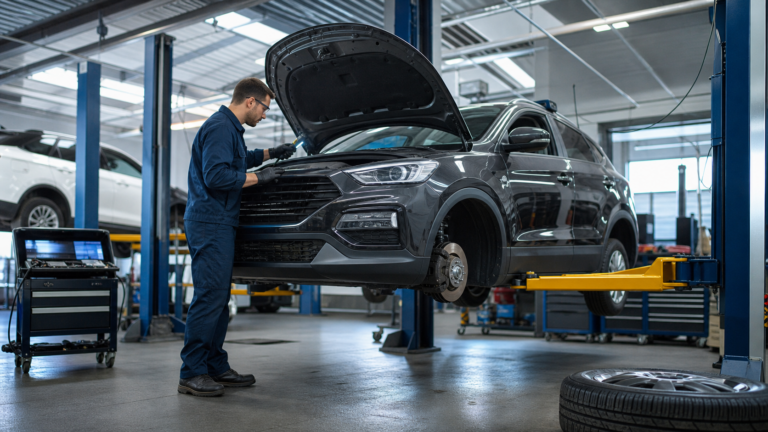
A technician can inspect for leaks, cracking, play, wear, electrical faults, and other indicators.
Diagnostic tools can also provide information unavailable through visual inspection.
Combining maintenance history with actual condition makes summer preparation more precise.
Summer Battery Care
A battery should remain securely mounted, appropriately charged, and free from obvious damage.
Modern BMW energy-management systems may respond to battery condition in ways that affect convenience features.
Frequent short journeys can also influence charge state.
If battery health is uncertain before a long trip, testing can be worthwhile.
Replacing BMW parts should follow the correct specification and vehicle procedure.
Avoid unnecessary electrical loads when the engine is off
Running high electrical loads for extended periods while a combustion vehicle is not operating can discharge the 12-volt battery.
Modern vehicles can also consume power while parked through various systems.
If the car reports excessive battery discharge, investigate instead of repeatedly ignoring the warning.
The battery may be weak, undercharged, or affected by another issue.
Protecting Interior BMW Parts From Heat
Cabin temperatures can become very high in direct sunlight.
Interior trim, leather, synthetic materials, displays, adhesives, and plastics are designed for automotive use, but prolonged heat and ultraviolet exposure can contribute to aging.
Parking in shade where safe and practical, using appropriate sunshades, and maintaining interior materials according to manufacturer recommendations can help.
Avoid applying unknown chemicals that may damage surfaces.
Never leave children or animals in a hot car
A parked vehicle can heat rapidly.
Children, pets, and vulnerable people should never be left inside a hot vehicle, even for a short period.
This safety issue is more important than protecting any interior BMW parts.
Climate-control features should not be used as justification for leaving vulnerable occupants unattended unless an explicitly designed, legally appropriate function applies and all safety requirements are understood.
Washing a BMW in Extreme Heat
Washing a car under intense sun can cause water and cleaning products to dry quickly, potentially leaving spotting or residue.
Where practical, wash during cooler conditions and follow product instructions.
Do not spray very cold water aggressively onto extremely hot brake components immediately after demanding driving.
Allowing the vehicle to cool can reduce unnecessary thermal shock.
Exterior BMW parts and finishes benefit from appropriate automotive cleaning products rather than harsh household chemicals.
Summer Maintenance for Older BMW Models
Age and service history can matter more than the season.
An older BMW with original hoses, seals, plastic cooling components, and a weak battery may be less tolerant of demanding summer driving than a well-maintained vehicle with recently inspected systems.
That does not mean older BMW parts should all be replaced automatically.
A comprehensive inspection can identify where deterioration is actually present.
Maintenance records provide valuable context
Knowing when coolant, belts, battery, pumps, brake fluid, and other service items were addressed makes planning easier.
Unknown history increases uncertainty.
For a recently purchased used BMW, establishing a reliable maintenance baseline may be more valuable than immediately buying performance upgrades.
Summer Maintenance for Newer BMW Models
Newer vehicles can still experience punctures, coolant leaks, battery problems, sensor issues, or air-conditioning faults.
Warranty coverage may affect how problems should be handled.
Avoid unauthorized modifications or repairs that could complicate warranty claims.
When a warning appears, consult current BMW documentation or an appropriate service provider.
Modern BMW parts are often integrated with software and diagnostics, making systematic troubleshooting particularly important.
Common Summer Maintenance Mistakes
One mistake is topping up coolant with whatever product happens to be available.
Another is lowering tire pressure because the tires feel hot after driving.
Drivers also sometimes ignore coolant warnings because the car appears to continue running normally.
Repeatedly recharging a failing battery without determining why it loses charge is another common problem.
Finally, replacing BMW parts from fault codes without proper diagnosis can become expensive quickly.
The best summer strategy combines inspection, correct specifications, and professional testing where needed.
How Often Should BMW Parts Be Inspected
There is no universal inspection interval for every part on every BMW.
Follow the maintenance information applicable to the exact model.
Some components have scheduled service requirements, while others are inspected according to condition.
Additional checks may be sensible before long journeys or extreme weather.
A vehicle used heavily in demanding conditions may require different attention from one driven lightly.
Do not replace model-specific maintenance guidance with a generic online schedule.
Creating a Summer BMW Maintenance Checklist
A practical checklist can help drivers focus on the systems most relevant to heat.
Before periods of demanding summer use:
- Check for active warning messages
- Verify coolant level according to the owner’s manual
- Look for visible cooling-system leaks
- Assess 12-volt battery health if symptoms exist
- Check tire condition and cold pressure
- Confirm air conditioning operates properly
- Inspect accessible hoses and belts where appropriate
- Verify scheduled brake-fluid and other maintenance
- Check wipers and washer fluid
- Look for obvious fluid leaks
- Review upcoming scheduled service
- Address overheating history before long trips
This approach targets BMW parts that genuinely influence reliability without turning summer preparation into unnecessary component replacement.
Why Quality BMW Parts Matter in Hot Conditions
The operating environment inside a vehicle can be demanding.
Cooling components must handle temperature and pressure. Rubber parts must tolerate heat and chemical exposure. Electrical components must function despite vibration and thermal cycling.
Replacement quality therefore matters.
A correctly specified, appropriately manufactured BMW part is more valuable than a bargain component that fits physically but cannot meet the system’s requirements.
Quality should be considered alongside correct installation.
Even premium BMW parts can fail prematurely if fitted improperly, contaminated, overtightened, incorrectly coded, or used with incompatible fluids.
When to Visit a BMW Specialist
Routine owner checks can identify obvious issues, but some symptoms require diagnostic expertise.
Seek professional help for overheating, recurring coolant loss, electrical faults, charging problems, brake concerns, persistent air-conditioning failure, significant fluid leaks, or repeated warning messages.
A BMW specialist or other appropriately qualified automotive technician can combine physical inspection with diagnostic data.
That is usually more efficient than purchasing BMW parts one at a time in the hope that one solves the problem.
FAQ’s
Which BMW parts are most affected by summer heat?
Cooling-system components, the 12-volt battery, hoses, tires, air-conditioning parts, belts, fluids, brakes, plastics, and electronics can experience additional thermal demands in hot conditions.
Does summer heat damage BMW batteries?
High temperatures can accelerate chemical degradation in 12-volt batteries. Heat may expose an already weakened battery even though starting failures are often associated with winter.
Should I change BMW tire pressure during summer?
Use BMW’s specified cold tire pressures for the vehicle and wheel configuration. Do not deliberately underinflate tires simply because operating pressure rises as tires warm.
How do I know if BMW cooling parts are failing?
Coolant warnings, overheating messages, visible leaks, dried coolant residue, or recurring coolant loss can indicate a problem. Professional diagnosis is needed to identify the failed component.
Can I use any coolant with BMW parts?
No. Use coolant meeting the specification required for the exact vehicle. Color alone does not establish compatibility, and random coolant mixing should be avoided.
Should BMW parts be replaced before every summer?
Not automatically. Follow BMW maintenance requirements and replace parts when service intervals, inspection, diagnostics, deterioration, or model-specific recommendations justify replacement.
Conclusion
BMW parts face different demands when summer temperatures climb, but the cooling system, 12-volt battery, tires, rubber components, air conditioning, fluids, brakes, and electronics deserve particular attention. Heat can expose weaknesses that were already developing, especially on older or poorly maintained vehicles. Taking warning messages seriously and checking the car before long journeys can prevent a small issue from becoming a more disruptive roadside failure.
The best way to protect BMW parts is not to replace everything before hot weather arrives. Use the correct fluids, maintain manufacturer-specified tire pressure, investigate leaks and electrical symptoms, follow service requirements, and purchase accurately matched replacement components from reliable sources. With condition-based maintenance and appropriate diagnosis, a BMW can be prepared for summer without unnecessary parts swapping or guesswork.