Transform Your Home With Exterior Painting That Looks Beautiful and Lasts
A successful exterior painting project does much more than change the color of a house. A properly prepared and coated exterior can improve curb appeal while helping protect siding, trim, and other compatible surfaces from sunlight, moisture, and ordinary weather exposure. The quality of the finished job depends on several connected decisions, including surface preparation, coating selection, weather conditions, application technique, and ongoing maintenance. Understanding these factors helps homeowners make informed choices whether they plan to hire professional painters or complete part of the project themselves.
What Is Exterior Painting and Why Does It Matter?
Exterior painting is the process of preparing and coating outdoor building surfaces with products formulated to withstand environmental exposure. Unlike interior coatings, exterior products are designed around conditions such as ultraviolet radiation, changing temperatures, rain, humidity, and repeated expansion and contraction of building materials.
The process typically includes inspection, cleaning, removal of loose material, repairs, priming where necessary, caulking appropriate joints, and applying the specified finish coats.
Painting is also part of property maintenance. Paint forms a protective film over compatible materials, but it should not be viewed as a solution for structural deterioration or uncontrolled moisture. Rotten wood, persistent leaks, damaged flashing, and similar problems should be corrected before coating the affected surfaces.
Exterior Painting Versus Interior Painting
Exterior and interior projects may look similar, but their performance requirements are different. Exterior coatings must tolerate weather conditions that indoor walls do not experience.
Exterior products are generally engineered to handle outdoor temperature changes, ultraviolet exposure, moisture, and movement. Interior products prioritize characteristics such as washability, stain resistance, and appearance in occupied spaces.
Using a product specifically approved by its manufacturer for the intended exterior substrate is important. Homeowners should check the technical data sheet rather than assuming that any paint will perform adequately outdoors.
How Exterior Paint Protects a Home
An appropriate coating system can provide a protective barrier over siding and trim. On materials such as wood, maintaining the coating system can reduce direct exposure to weather and sunlight.
Paint cannot make an entire building waterproof. Exterior walls rely on interconnected systems such as roofing, flashing, drainage, sealants, siding details, and weather resistant barriers to control water.
That distinction is important because painting over a moisture problem can temporarily conceal visible symptoms without correcting their cause.
7 Powerful Exterior Painting Tips for Better Results
Long lasting results generally begin well before the first finish coat is applied. Homeowners can improve project quality by focusing on preparation, compatibility, weather, and careful workmanship.
1. Inspect Every Surface Before Exterior Painting
Begin with a detailed inspection of the surfaces that will receive paint. Look for peeling coatings, cracked caulk, mildew or other biological growth, loose siding, corrosion, exposed wood, stains, and deteriorated components.
Pay particular attention to areas near rooflines, windows, doors, gutters, decks, and other locations where water may collect or enter.
Repair Problems Before Applying Paint
Damaged materials should be repaired rather than simply covered. Soft or rotting wood, active leaks, failed flashing, and unstable siding may require appropriate repair by a qualified professional.
Surface staining should also be investigated. For example, repeatedly occurring stains can indicate moisture rather than an ordinary cosmetic issue.
Painting should generally be one of the later stages of an exterior repair process, not the first attempt to hide a defect.
2. Make Surface Preparation a Priority
Preparation has a major influence on coating adhesion and appearance. Even a high quality product can fail prematurely when applied over dirt, loose paint, chalky residue, or an unsuitable substrate.
The exact preparation method depends on the existing coating and building material.
Typical preparation can include:
• Washing dirt and contaminants from the surface
• Removing loose or peeling coating material
• Sanding appropriate areas to create sound transitions
• Repairing damaged substrates
• Allowing surfaces to dry sufficiently
• Priming bare or problematic areas when required
• Caulking suitable gaps and joints
Manufacturer instructions should guide the process because preparation requirements vary among products and substrates.
Use Pressure Washing Carefully
Pressure washing can be useful, but more pressure is not necessarily better. Excessive force can damage wood fibers, siding, trim, seals, and other exterior components. It can also drive water into wall assemblies.
When washing is necessary, use methods appropriate for the substrate and provide adequate drying time before applying primer or paint.
Consider Older Paint Hazards
Older homes require additional caution. In the United States, lead based paint may be present in homes built before 1978. Disturbing old painted surfaces through scraping, sanding, or renovation can create hazardous lead dust.
The U.S. Environmental Protection Agency establishes requirements for certain renovation, repair, and painting work involving pre 1978 housing and child occupied facilities. Property owners working on older buildings should review current EPA requirements and use appropriately certified professionals when the regulations apply.
This is both a health consideration and an important part of responsible project planning.
3. Choose Exterior Painting Products for the Surface
There is no single best paint for every house. Product selection should reflect the substrate, previous coating, local climate, desired finish, and manufacturer recommendations.
Wood siding, fiber cement, masonry, stucco, metal, vinyl, and other surfaces have different characteristics. Some require specialized primers or coatings.
Using a complete compatible system is generally preferable to selecting products based only on color or price.
Understand Primer Requirements
Primer can improve adhesion, seal certain porous surfaces, isolate some stains, and prepare bare substrates. However, primer requirements vary considerably.
Previously painted surfaces that remain sound may not always require complete priming. Bare wood, repaired areas, metal, masonry, or difficult substrates may have specific requirements.
Modern self priming products can reduce steps in suitable applications, but the label and technical documentation should determine whether they are appropriate for the project.
Select an Appropriate Exterior Finish
Sheen affects appearance, cleanability, and how noticeable surface imperfections may be. Manufacturers offer various finishes for siding, doors, trim, and other exterior elements.
Lower sheen finishes can help minimize the appearance of imperfections on broad siding surfaces. Higher sheen coatings are often selected for architectural details, trim, and doors when compatible with the surface.
There is no universal sheen rule. Architectural style, substrate condition, maintenance needs, and product specifications should all influence the decision.
4. Plan Exterior Painting Around the Weather
Weather conditions can strongly affect application, drying, curing, and overall coating performance. Temperature alone is not enough to determine whether conditions are suitable.
Humidity, surface temperature, rain, dew, direct sunlight, and wind can also matter.
Always use the temperature and environmental ranges stated on the specific product label or technical data sheet. Different formulations can have significantly different requirements.
Avoid Painting Immediately Before Rain
Exterior coatings need adequate time to form a durable film before exposure to precipitation. The required period varies by product and environmental conditions.
Check the forecast and the manufacturer’s instructions before beginning. Remember that overnight condensation and morning dew can affect a project even when no rain is forecast.
Account for Direct Sunlight and Heat
Surfaces exposed to strong sunlight can become considerably hotter than the surrounding air. Applying paint to a very hot surface may interfere with application and film formation.
Professional painters often organize work around shade, moving to different elevations as sunlight changes throughout the day. Product limitations should still determine whether the conditions are acceptable.
5. Use Proper Exterior Paint Application Techniques
Consistent application contributes to appearance and durability. Brushes, rollers, and spray equipment can all produce professional results when used correctly.
Brushes are valuable for detailed areas and cutting around edges. Rollers can efficiently cover suitable broad surfaces. Airless spraying provides fast application but requires significant masking, equipment knowledge, and control.
Spraying does not eliminate the need for preparation or proper film thickness.
Follow Recommended Coverage Rates
Applying too little coating can compromise coverage and protection, while applying excessive material can create its own problems. Manufacturers specify recommended spread rates and film thicknesses for their products.
Surface texture and porosity can affect actual coverage. Rough masonry or textured siding, for example, may require more material than a smooth surface of comparable area.
Follow product specifications rather than attempting to stretch a fixed amount of paint across the largest possible area.
Maintain a Wet Edge
Lap marks can occur when one area begins drying before the adjoining area is coated. Maintaining a workable wet edge helps produce a more uniform appearance.
Plan manageable sections and work logically across the elevation. Avoid beginning an area that cannot reasonably be completed within appropriate working conditions.
6. Build a Coordinated Exterior Color Scheme
Color influences architectural character and perceived proportions. A good palette considers fixed features of the property rather than evaluating a paint chip in isolation.
Roofing, stone, brick, landscaping, neighboring properties, doors, windows, and permanent architectural details can all affect how an exterior color appears.
How to Test Exterior Painting Colors
Paint samples directly on representative areas when practical, or use appropriately prepared sample boards. Examine them at different times of day because natural light can significantly alter the appearance of color.
Compare potential colors against permanent materials. A neutral that looks cool on a digital screen might appear warmer beside brick, roofing, or stone.
Digital visualization tools can help narrow the options, but screens do not reproduce physical paint colors perfectly.
Consider Resale Without Losing Character
Neutral and broadly appealing colors are often considered when preparing a property for sale, but there is no paint color guaranteed to increase a home’s market value.
Regional preferences, architecture, neighborhood context, and buyer expectations differ. A coherent color scheme and good workmanship are generally more dependable goals than following short lived color trends.
7. Maintain Exterior Painting After Completion
An exterior coating requires maintenance. Periodic inspection makes it easier to identify small problems before they develop into larger repairs.
Inspect painted surfaces for peeling, cracking, fading, open joints, biological growth, damaged trim, and signs of moisture. Also examine gutters, downspouts, roof intersections, and nearby vegetation that could contribute to deterioration.
Clean Painted Surfaces Appropriately
Dirt, environmental deposits, and organic material can accumulate on exterior finishes. Cleaning methods should be compatible with both the coating and substrate.
Aggressive chemicals, stiff abrasives, and excessive pressure can damage some finishes. Consult the coating manufacturer’s maintenance guidance when selecting cleaning products and methods.
Address Localized Damage Promptly
Small areas of coating damage may sometimes be repaired before widespread repainting becomes necessary. Keep records of the manufacturer, product line, color name or code, sheen, and purchase date to simplify future touch ups.
Color can change over time because of aging and environmental exposure, so stored records are often more useful than relying solely on an old container of paint.
How Much Does Exterior Painting Cost?
There is no reliable universal price for painting a home’s exterior. Labor rates, building size, height, architecture, substrate condition, accessibility, preparation requirements, coating specifications, and geographic location all affect the final cost.
A straightforward single story property in good condition may require much less labor than a multistory house with extensive peeling, detailed trim, or significant repairs.
Factors That Influence Exterior Painting Prices
Several variables can change a contractor’s estimate:
• Total paintable surface area
• Amount of cleaning and preparation
• Number of stories and access requirements
• Siding and trim materials
• Repairs required before painting
• Primer and coating specifications
• Number of colors and design complexity
• Local labor and material costs
Rather than relying exclusively on a generic price per square foot, homeowners should request detailed estimates based on an inspection of the actual property.
Compare Contractor Estimates Carefully
A lower price does not necessarily represent a better value if the scope includes less preparation or fewer materials.
Compare what each estimate includes. Important details include surface preparation, primer requirements, number of finish coats, coating manufacturer and product line, repairs, cleanup, protection of landscaping, and warranty terms.
Written scope details make competing estimates easier to evaluate.
Professional Exterior Painting Versus DIY Work
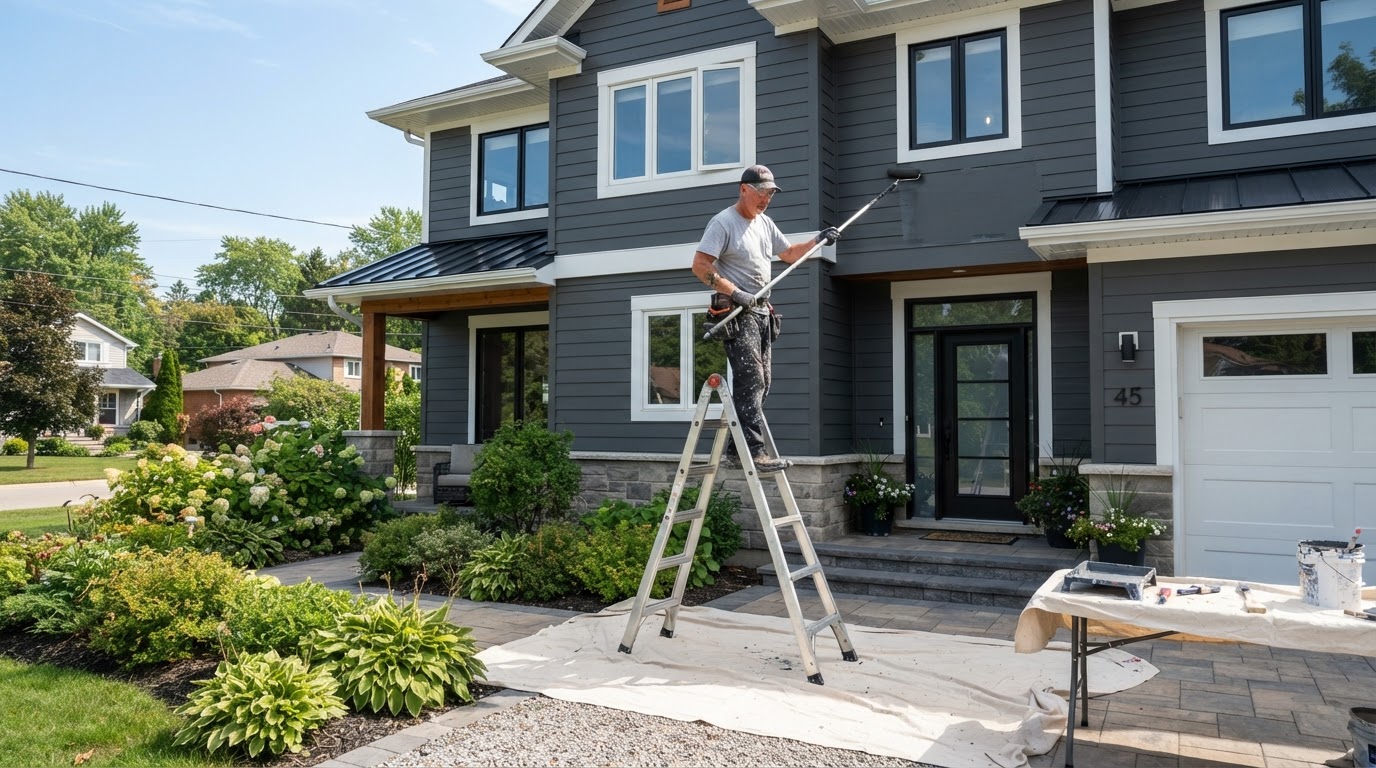
DIY painting can be practical for homeowners who have suitable equipment, enough time, and safe access to the surfaces. Smaller, single level projects are generally more manageable than tall or architecturally complex buildings.
Professional contractors can offer advantages for extensive preparation, difficult access, specialized coatings, or projects requiring scaffolding and spraying equipment.
When Should You Hire a Professional Painter?
Consider professional assistance when the property has significant deterioration, difficult elevations, possible lead paint, complicated repairs, or surfaces requiring specialized preparation.
Working at height introduces serious fall risks. Tasks involving ladders, scaffolds, lifts, electrical hazards, or hazardous coating disturbance require appropriate knowledge and safety controls.
Contractor requirements vary by jurisdiction, so property owners should verify applicable licensing, registration, and insurance requirements locally.
Common Exterior Painting Mistakes to Avoid
Some coating failures are related less to the brand of paint than to the conditions under which it was applied. Skipping preparation is among the most consequential mistakes.
Other common problems include painting damp surfaces, ignoring leaks, using incompatible coatings, applying material outside approved weather conditions, failing to protect nearby surfaces, and overlooking manufacturer recoat times.
Never Treat Paint as a Structural Repair
Paint can enhance and protect a sound substrate, but it cannot restore decayed building materials. Applying multiple coats to rotten wood or damaged masonry only conceals the underlying issue temporarily.
Correct the source of deterioration first and then establish a compatible coating system.
Do Not Assume More Paint Is Always Better
The objective is to achieve the manufacturer’s specified coverage and film build. Excessively thick application can produce undesirable curing and appearance problems depending on the product.
Follow technical specifications for application rate, drying time, and recoating rather than improvising based on appearance alone.
How Long Does Exterior Painting Last?
There is no single lifespan that applies to every painted exterior. Service life varies with substrate, preparation quality, coating system, workmanship, climate, building design, color, sun exposure, moisture, and maintenance.
Different elevations on the same building can also weather at different rates. A highly exposed wall may show deterioration before a more protected side of the house.
Signs That a House May Need Repainting
Visible deterioration is often more useful than an arbitrary repainting schedule. Watch for persistent peeling, cracking, substantial fading, exposed substrate, coating erosion, or widespread adhesion problems.
Investigate moisture whenever deterioration seems unusual or repeatedly occurs in the same location.
Early identification can reduce the amount of preparation required compared with waiting until extensive failure develops.
Exterior Painting and Energy Efficiency
Claims about ordinary exterior paint dramatically reducing household energy consumption should be treated carefully. Exterior color can influence how much solar radiation a surface absorbs, but whole building energy performance depends on many interconnected factors.
Insulation, windows, air sealing, ventilation, roofing, building orientation, shading, climate, and heating and cooling equipment generally play important roles.
Specialized reflective coatings exist for particular applications, but performance claims should be evaluated using relevant product data rather than assuming that conventional house paint will produce a specific energy saving percentage.
Creating an Exterior Painting Project Plan
Organizing the project into clear stages makes quality control easier.
A practical sequence is:
• Inspect the building and identify repairs
• Determine the existing substrates and coatings
• Select compatible primers and finishes
• Choose and test colors
• Review weather conditions
• Protect windows, landscaping, fixtures, and adjacent surfaces
• Clean and prepare the substrate
• Complete necessary repairs and priming
• Apply coatings according to manufacturer instructions
• Inspect finished surfaces and correct deficiencies
• Document products and colors for future maintenance
The exact sequence can change depending on the structure and coating system, but planning prevents important preparation steps from being overlooked.
Frequently Asked Questions
What is the best time of year for exterior painting?
The best period is when temperature, humidity, precipitation, and surface conditions fall within the coating manufacturer’s specified application range. Suitable months therefore vary by climate and product.
Does exterior painting require primer?
Not every previously painted surface requires full priming. Bare surfaces, repairs, stains, difficult substrates, and certain coating systems may require primer according to manufacturer specifications.
How many coats of exterior paint are needed?
Requirements vary by product, substrate, existing color, preparation, and desired system. Follow the coating manufacturer’s instructions regarding primer, finish coats, coverage, and recoat times.
Can exterior painting be done after rain?
Painting should begin only after the substrate is sufficiently dry and environmental conditions satisfy the product requirements. Drying time after rain varies with material, weather, and exposure.
How often should exterior painting be redone?
There is no universal repainting interval. Climate, material, previous preparation, coating quality, exposure, and maintenance determine how quickly an exterior needs another coating.
Does exterior painting increase home value?
A well maintained exterior can improve appearance and buyer perception, but no specific increase in property value can be guaranteed. Market conditions and overall property condition also influence value.
Conclusion
Quality exterior painting depends on much more than choosing an attractive color. Careful inspection, thorough preparation, compatible coatings, suitable weather, correct application, and regular maintenance all contribute to a durable finish. Following manufacturer specifications and repairing underlying building problems before painting can help homeowners protect exterior surfaces while achieving a cleaner, more attractive result.