AC Installation: 9 Essential Steps for a Comfortable, Efficient Home
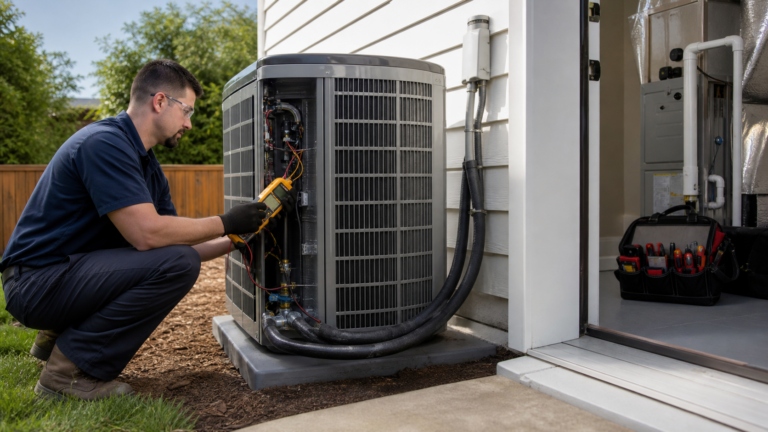
Professional ac installation involves considerably more than placing an outdoor condenser beside a house and connecting it to existing ductwork. A successful cooling system starts with an accurate load calculation, compatible equipment, appropriate efficiency, adequate airflow, correctly designed ductwork, suitable refrigerant piping, condensate drainage, electrical protection, careful equipment placement, and system commissioning. Making these decisions correctly during installation can improve comfort and help the air conditioner perform as designed, while installation errors can undermine even premium equipment.
What Is AC Installation?
AC installation is the process of designing, positioning, connecting, testing, and commissioning equipment used to cool and, depending on the system, dehumidify indoor spaces.
The exact work depends on the type of air conditioning system.
A central split system generally includes an outdoor condensing unit and an indoor evaporator coil installed with a furnace or air handler. Other projects may use heat pumps, ductless mini splits, packaged systems, or specialized configurations.
Installation can involve:
• Cooling load calculations
• Equipment selection
• Indoor and outdoor unit placement
• Ductwork
• Refrigerant piping
• Condensate drainage
• Electrical connections
• Thermostat and controls
• Permits and inspections
• Startup and commissioning
Each component affects the complete system.
9 Powerful AC Installation Tips for Better Performance
Air conditioning equipment represents a substantial home investment. These principles can help homeowners evaluate an installation before committing to a contractor.
1. Insist on Correct AC Sizing
Bigger is not automatically better.
An oversized cooling system can operate differently from an appropriately sized unit and may create problems with cycling, comfort, humidity control, and efficiency.
An undersized system can struggle to satisfy the home’s design cooling load during demanding weather.
Equipment capacity should therefore be calculated rather than guessed.
2. Use a Professional Cooling Load Calculation
Square footage alone does not determine how much cooling a house requires.
Two homes with identical floor areas can have very different heat gains.
In the United States, ACCA Manual J is a recognized methodology for residential heating and cooling load calculations.
AC Installation Load Calculation Factors
A proper calculation can consider:
• Local climate
• Home dimensions
• Orientation
• Insulation
• Window size and performance
• Air leakage assumptions
• Building materials
• Occupancy
• Internal heat sources
• Shading
Home improvements can change the load, making the capacity of an old air conditioner an unreliable shortcut for selecting new equipment.
3. Evaluate Existing Ductwork
A central air conditioner depends on the duct system to distribute conditioned air and return air to the equipment.
Restricted, undersized, poorly designed, damaged, or leaking ducts can reduce system performance.
If some rooms have always been difficult to cool, installing a new outdoor unit alone may not solve the problem.
Duct assessment should occur before final equipment selection.
4. Compare Efficiency With Context
Efficiency ratings provide useful standardized comparisons, but they do not guarantee a specific utility bill.
In the United States, modern central air conditioners may be rated using SEER2 and EER2 metrics.
Higher efficiency equipment generally uses less electricity under standardized testing conditions for a given cooling output than a comparable lower efficiency system.
Real household energy use still depends on climate, operating hours, thermostat settings, ductwork, building envelope, installation quality, and electricity prices.
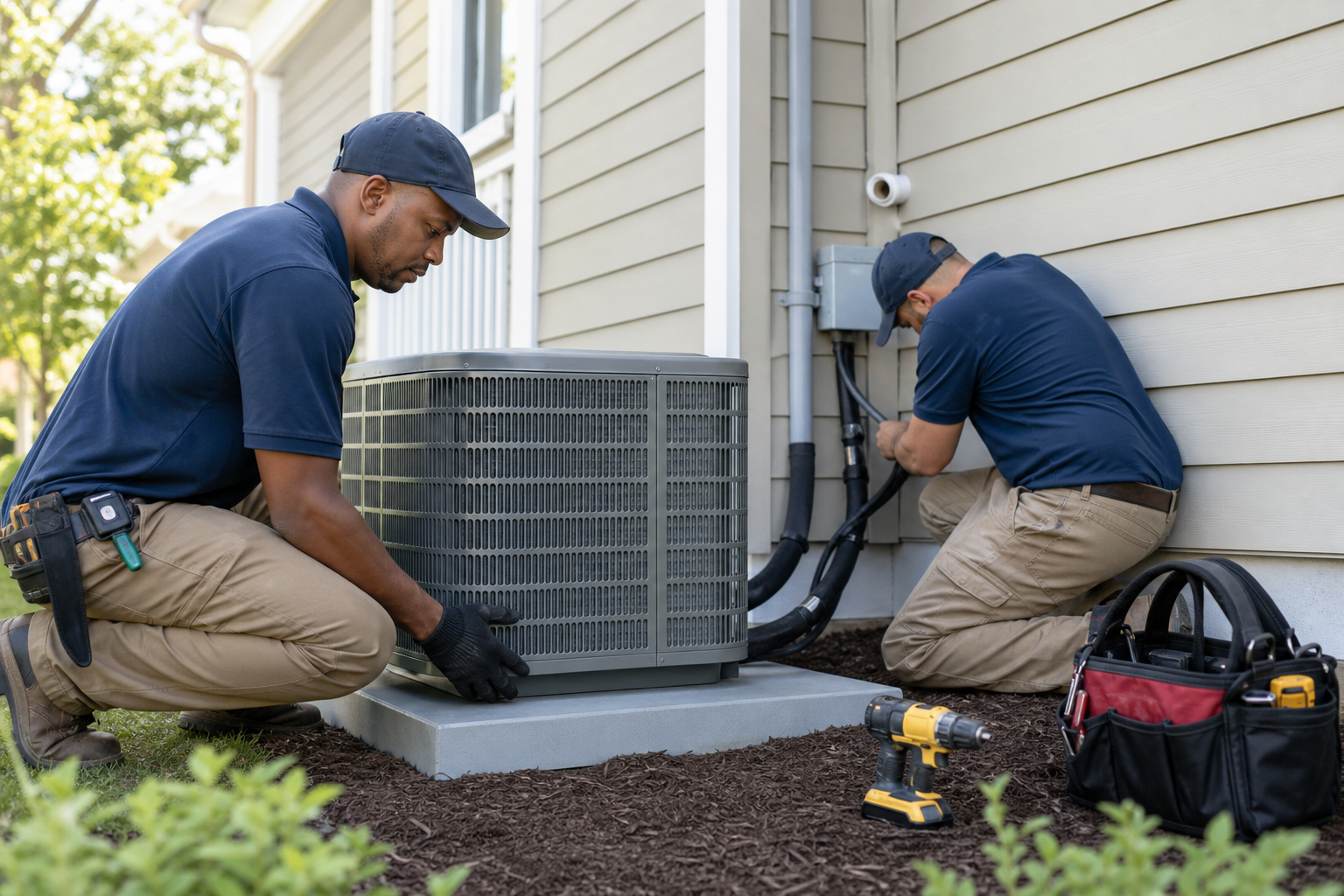
5. Plan Outdoor Unit Placement Carefully
Outdoor condensers need sufficient airflow.
They should be placed according to manufacturer clearances and installation requirements.
Avoid locations where vegetation, walls, fencing, debris, or other equipment will obstruct airflow.
Accessibility for future maintenance also matters.
6. Design Condensate Drainage Correctly
Cooling coils remove moisture from indoor air.
This water must drain safely.
Poor condensate installation can cause leaks, water damage, equipment shutdowns, or microbial growth where moisture persists.
7. Verify Refrigerant Installation Practices
Refrigerant piping is a critical part of system performance.
Pipe size, length, insulation, brazing procedures, cleanliness, evacuation, leak testing, and refrigerant charge should follow manufacturer requirements.
Refrigerant should not be treated as a generic consumable.
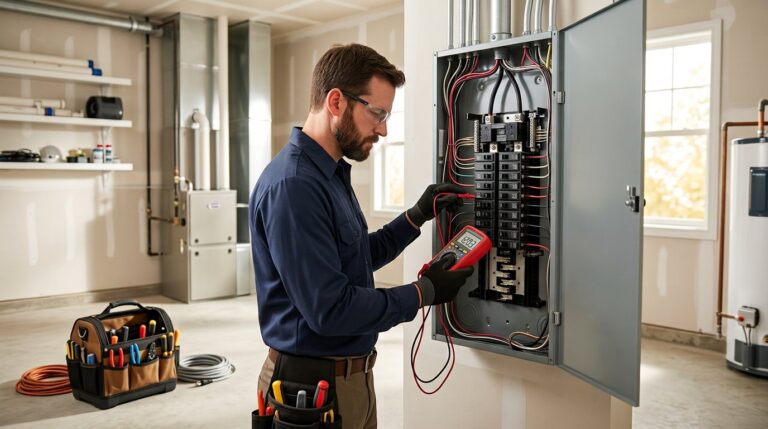
8. Review Electrical Requirements
Air conditioners operate on electrical circuits designed for the specific equipment.
Electrical protection, disconnects, wiring, grounding, and controls need to comply with applicable codes and manufacturer specifications.
9. Require Proper System Commissioning
The installation is not complete just because the AC turns on.
Commissioning verifies that it operates appropriately after installation.
AC Installation Commissioning Checks
Depending on the system, technicians may evaluate:
• Airflow
• Static pressure
• Refrigerant system operation
• Temperature performance
• Electrical measurements
• Thermostat setup
• Condensate drainage
• Equipment configuration
• Safety controls
Ask the contractor what commissioning measurements will be documented.
Choosing the Right AC System
Several residential cooling technologies are available.
The best choice depends on the building, climate, existing heating system, electrical service, budget, and comfort requirements.
Central Air Conditioning
Central AC distributes cooled air through ductwork.
It can be a natural choice when a home already has appropriately designed ducts and compatible heating equipment.
A central system includes more than the condenser.
The indoor coil, blower, ductwork, controls, and refrigerant circuit must work together.
Ductless Mini Split Systems
Mini splits use one or more indoor units connected to outdoor equipment through refrigerant lines and electrical/control connections.
They can be useful for homes without existing ductwork, additions, selected zones, or other specific applications.
They still require professional sizing and installation.
Heat Pumps
A heat pump can provide cooling and heating.
In cooling mode, it functions using the same basic refrigeration principles as an air conditioner.
AC Installation vs Heat Pump Installation
Homeowners replacing or adding cooling may want to compare traditional AC with a heat pump.
Consider:
• Heating requirements
• Climate
• Fuel prices
• Electricity costs
• Electrical capacity
• Existing furnace
• Incentives
• Equipment performance
• Backup heat needs
A contractor should evaluate both heating and cooling loads where a heat pump will serve both functions.
AC Installation and Correct Equipment Sizing
System size is commonly expressed in BTU per hour or tons in the United States.
One nominal ton corresponds to 12,000 BTU per hour of cooling capacity.
This measurement does not mean homeowners should select equipment using a simple square footage rule.
Why Oversized AC Is a Problem
An oversized system can satisfy thermostat temperature demand quickly, potentially creating shorter operating cycles depending on equipment and conditions.
That can affect humidity management and comfort.
Modern variable capacity systems can behave differently, but they still require appropriate design and selection.
Why Undersized AC Is a Problem
A system lacking adequate capacity under design conditions may run for extended periods while failing to maintain the intended indoor temperature.
Long run times by themselves are not necessarily evidence of undersizing.
Efficient equipment can legitimately run for long periods during hot weather.
AC Installation Sizing After Home Improvements
If insulation, windows, air sealing, additions, or other major building features have changed, perform a new load calculation.
Do not automatically replace existing equipment with identical nominal capacity.
AC Efficiency Ratings Explained
Consumers often encounter several efficiency specifications while comparing systems.
SEER2
SEER2 measures seasonal cooling efficiency under standardized test conditions.
It is useful for comparing eligible equipment within the applicable rating framework.
EER2
EER2 represents efficiency at specified operating conditions and can provide additional information about high load performance.
ENERGY STAR
Certain qualifying air conditioning products can carry ENERGY STAR certification in the United States when they meet current program criteria.
Requirements change, so check current official specifications.
AC Installation and Real World Efficiency
Rated efficiency assumes the equipment operates within appropriate conditions.
Actual performance can suffer from:
• Incorrect airflow
• Refrigerant problems
• Duct leakage
• Poor controls
• Dirty equipment
• Installation errors
• Building envelope deficiencies
An expensive high efficiency model cannot overcome fundamental installation problems.
AC Installation and Ductwork
Duct design deserves as much attention as equipment efficiency.
Duct Sizing
Airflow creates pressure within a duct system.
Undersized ducts and restrictive fittings can increase static pressure and reduce delivered airflow.
Recognized design procedures such as ACCA Manual D are commonly used for residential duct design in the United States.
Duct Leakage
Conditioned air lost through ducts in unconditioned spaces can waste energy.
Return leaks can draw attic, crawl space, garage, or other unwanted air into the HVAC system depending on location.
Duct Insulation
Ducts in hot or humid unconditioned locations may require insulation and vapor control appropriate to climate and code.
AC Installation Static Pressure Testing
Measuring static pressure can help determine how restrictive a duct system is during operation.
Contractors can compare measurements with equipment requirements and investigate excessive resistance.
Outdoor Condenser Placement
Placement affects airflow, serviceability, noise, drainage, and appearance.
Maintain Manufacturer Clearances
Do not crowd an outdoor unit against fences, walls, vegetation, or other condensers.
Exact clearance requirements vary by model.
Manufacturer installation instructions should guide placement.
Use a Suitable Base
Outdoor equipment needs stable support.
The installation may use an equipment pad, brackets, or another approved system depending on climate and application.
Consider Snow and Flooding
In areas vulnerable to deep snow, flooding, or coastal conditions, equipment elevation may require additional planning.
Landscaping Around AC Installation
Landscaping can soften the appearance of mechanical equipment, but plants grow.
Allow sufficient mature clearance and maintenance access.
Never tightly enclose a condenser simply to hide it.
Indoor AC Unit Installation
Indoor equipment needs enough space for installation, service, airflow, drainage, and filter access.
Evaporator Coil
The evaporator coil must be compatible with the outdoor system and installed in the correct orientation.
Manufacturers commonly rate complete matched combinations.
Air Handler or Furnace Blower
The blower must provide appropriate airflow for the selected cooling equipment.
Existing furnaces should not automatically be assumed compatible with a newly installed AC.
Filter Access
Homeowners need practical access to replace or service filters.
AC Installation in Attics and Crawl Spaces
Equipment installed in difficult locations can require additional drainage protection, access platforms, service clearances, insulation, and safety provisions depending on code and climate.
Future maintenance should be considered during design.
Refrigerant Lines During AC Installation
Copper refrigerant lines connect indoor and outdoor equipment in many split systems.
Correct Line Sizing
Pipe diameters and allowable lengths depend on equipment and installation conditions.
Manufacturers publish requirements.
Insulation
The suction or vapor line generally requires appropriate insulation.
Damaged or improperly installed insulation can contribute to condensation and performance concerns.
Clean Brazing Practices
Professional HVAC procedures are important during refrigerant line installation.
AC Installation Refrigerant Charge
Refrigerant charge should be established according to the equipment manufacturer’s procedures.
Too little or too much refrigerant can affect performance and equipment reliability.
Technicians should diagnose and measure rather than estimate by feel.
Refrigerant Regulations and Safety
Refrigerants require controlled handling.
In the United States, technicians performing covered work on regulated systems are subject to EPA Section 608 certification requirements.
Other countries have different regulatory frameworks.
Do Not Vent Refrigerant
Intentional refrigerant release can violate environmental regulations and is not an acceptable removal method.
Existing refrigerant should be recovered using appropriate equipment and procedures.
New Refrigerant Technologies
Air conditioning refrigerants continue to evolve as regulations address environmental impact.
Some newer residential systems use refrigerants with different flammability classifications and installation considerations than older products.
AC Installation With Newer Refrigerants
Contractors should be trained and equipped for the specific refrigerant used by the system.
Follow equipment manufacturer requirements, codes, and current regulations rather than applying procedures intended for an older refrigerant.
Condensate Drainage and Water Protection
During humid cooling conditions, an air conditioner can remove substantial moisture from indoor air.
Primary Drain
Condensate should flow through an appropriately designed drainage path.
Slope, trap requirements, venting, and discharge location vary by system and code.
Secondary Protection
Equipment positioned where drain failure could damage the building may require additional pans, drains, or overflow shutoff controls.
AC Installation Drain Safety Switches
Condensate overflow switches can stop equipment when water reaches an abnormal level.
They do not replace proper drainage.
Ask which water damage protection measures are included in the installation.
Electrical Requirements for AC Installation
Central cooling equipment commonly requires dedicated electrical circuits.
Circuit Sizing
Circuit protection and conductors should be selected using the equipment nameplate and applicable electrical code.
Do not reuse old wiring solely because it physically reaches the replacement unit.
Outdoor Disconnect
Outdoor HVAC equipment typically requires an appropriate disconnecting means under applicable electrical rules.
Grounding and Bonding
Electrical installation should follow current code and manufacturer specifications.
Professional Electrical Work During AC Installation
Electrical errors can create shock and fire hazards.
Use appropriately licensed professionals where required.
Never bypass overcurrent protection to prevent nuisance trips.
AC Installation Permits and Inspections
Permit requirements vary by jurisdiction.
An HVAC replacement or new installation may require mechanical, electrical, or other permits.
Why Permits Matter
Permits can trigger inspections for code related requirements.
They may also be relevant when selling the property or dealing with insurance and warranty questions.
Who Obtains the Permit?
Qualified contractors commonly manage required permits as part of their installation scope, but homeowners should verify responsibility.
AC Installation Without Required Permits
Skipping required permits can create compliance problems later.
Check with the local authority having jurisdiction rather than accepting a claim that permits are unnecessary simply to save time or money.
How Much Does AC Installation Cost?
There is no reliable universal AC installation price.
Costs vary substantially by location and property.
AC Installation Cost Factors
Pricing can depend on:
• System capacity
• Efficiency
• Equipment type
• Brand and model
• Ductwork
• Electrical work
• Refrigerant lines
• Controls
• Accessibility
• Drainage
• Permits
• Labor
• Market conditions
Installing AC in a home without existing ductwork is a different project from replacing compatible equipment in an established system.
Equipment Cost vs Installed Cost
Online equipment prices rarely represent the complete project.
Installation involves labor, materials, design, permits, refrigerant handling, setup, testing, warranty administration, and disposal where relevant.
Comparing AC Installation Quotes
Ask each contractor to specify:
• Indoor model
• Outdoor model
• Efficiency ratings
• Capacity
• Load calculation
• Duct modifications
• Thermostat
• Electrical work
• Drain work
• Line set work
• Permits
• Commissioning
• Parts warranty
• Labor warranty
Comparable scope creates a meaningful price comparison.
AC Installation Rebates and Incentives
Qualifying efficient systems may be eligible for incentives depending on location.
Programs can include utility rebates, manufacturer promotions, state programs, or federal incentives.
Check Current Requirements
Programs change.
Use official sources to verify eligible equipment, installation requirements, deadlines, and documentation.
Do not choose equipment based solely on an assumed rebate.
Keep Documents
Save model numbers, efficiency certificates, invoices, permit information, and other supporting records.
AC Installation Tax Considerations
Tax incentives depend on current tax law and individual circumstances.
Consult official government guidance or an appropriately qualified tax professional for tax specific advice.
Choosing an AC Installation Contractor
Contractor quality has a direct relationship with installation quality.
Check Licensing and Insurance
Verify applicable HVAC licensing through relevant state or local authorities.
Ask for appropriate insurance documentation.
Check Refrigerant Qualifications
In the United States, verify appropriate EPA certification for technicians performing covered refrigerant work.
Ask About Design Procedures
A contractor should explain sizing rather than simply quoting the same capacity as the existing equipment.
Questions to Ask an AC Installation Company
Ask:
• Will you perform a load calculation?
• How was this capacity chosen?
• Are the indoor and outdoor components matched?
• Will you assess existing ductwork?
• Will static pressure be measured?
• What efficiency ratings apply?
• Which refrigerant is used?
• Are permits included?
• What electrical work is required?
• How is condensate managed?
• How will the system be commissioned?
• What warranties apply?
Detailed technical answers are more useful than assurances that a particular brand is the best.
AC Installation Warranties
Warranty coverage is an important part of ownership.
Manufacturer Warranty
Manufacturer warranties can cover specified equipment components under defined conditions.
Read the current written warranty.
Registration requirements can vary by jurisdiction and manufacturer.
Labor Warranty
A parts warranty may not cover all technician labor.
Ask what workmanship or labor warranty the installation company provides.
Extended Coverage
Optional extended plans may be available.
Protecting Your AC Installation Warranty
Keep installation invoices, model and serial numbers, registration records, maintenance documentation, and repair records.
Follow manufacturer maintenance requirements.
Smart Thermostats and AC Installation
Smart thermostats can provide scheduling, remote control, and system information.
They are not universally compatible with all HVAC equipment.
Communicating Systems
Some variable capacity systems use manufacturer specific communicating controls.
Replacing those controls with a generic thermostat can reduce functionality.
Wiring Requirements
Certain thermostats require specific control wiring or a common power connection.
Choosing Controls During AC Installation
Select the thermostat after choosing the HVAC system.
The control should support all required equipment stages and features without compromising intended operation.
Indoor Air Quality During AC Installation
An HVAC project can be a useful time to evaluate filtration, ventilation, and humidity concerns.
Filters
Higher filtration efficiency can improve particle capture, but filter resistance needs to remain compatible with the system.
Dehumidification
Humid climates can require careful sizing and, in some homes, dedicated dehumidification.
Ventilation
Tighter homes may require planned mechanical ventilation based on applicable standards and building characteristics.
AC Installation Air Quality Upgrades
Avoid purchasing accessories solely from broad claims about healthier air.
Identify the actual indoor air quality concern first and select equipment with credible performance information.
How Long Does AC Installation Take?
Project duration depends on scope.
A straightforward replacement may be completed relatively quickly, while ductwork, electrical upgrades, system conversions, structural access, permitting, or multiple zones can extend the schedule.
A reliable contractor should explain the expected timeline after inspecting the property.
The work should not be rushed at the expense of testing or commissioning.
AC Installation Maintenance After Completion
New systems still require maintenance.
Check Filters
Inspect and replace or clean compatible filters according to manufacturer guidance and actual loading.
Keep the Outdoor Unit Clear
Maintain required clearances around the condenser.
Remove debris without damaging fins or electrical components.
Schedule Professional Service When Appropriate
Follow equipment manufacturer maintenance recommendations.
AC Installation Documentation to Keep
Retain:
• Contract
• Load calculation
• Model numbers
• Serial numbers
• Commissioning results
• Permits
• Warranty documents
• Registration
• Manuals
• Maintenance records
These documents can be valuable throughout the system’s life.
Common AC Installation Mistakes
Many problems begin with shortcuts during design or startup.
Avoid:
• Sizing by square footage alone
• Automatically matching old tonnage
• Oversizing for faster cooling
• Ignoring ducts
• Installing unmatched equipment
• Poor condenser placement
• Incorrect refrigerant charging
• Inadequate drainage
• Skipping electrical upgrades when required
• Using incompatible thermostats
• Skipping permits
• Ignoring commissioning
• Choosing solely by lowest price
Installation quality often matters more than small differences between reputable equipment brands.
Frequently Asked Questions
How much does AC installation cost?
AC installation cost varies by equipment type, capacity, efficiency, ductwork, electrical work, refrigerant piping, permits, labor, and location. Detailed local quotations are most reliable.
How is the correct AC installation size determined?
A professional cooling load calculation should consider climate, windows, insulation, air leakage, orientation, construction, occupancy, and other building characteristics.
How long does AC installation take?
Timing varies by scope. Straightforward replacements may be relatively quick, while new ducts, electrical upgrades, zoning, permits, or system conversions can require additional time.
Do I need a permit for AC installation?
Many jurisdictions require permits for HVAC and related electrical work. Requirements vary, so verify them with the local authority or qualified contractor.
Should ductwork be checked during AC installation?
Yes. Duct leakage, restrictions, poor sizing, or inadequate insulation can undermine comfort and system performance even when the new equipment is highly efficient.
Is a heat pump better than traditional AC installation?
Neither is universally better. A heat pump can provide both heating and cooling, but the choice depends on climate, energy costs, existing heating, electrical capacity, incentives, and household needs.
Conclusion
AC installation is a whole system project in which equipment sizing, ductwork, airflow, refrigerant practices, electrical work, drainage, controls, and commissioning all influence the final result. The most expensive or highest capacity unit is not automatically the best choice for a home. A qualified contractor who performs proper load calculations, follows manufacturer requirements, obtains necessary permits, and verifies operation after startup can provide a stronger foundation for reliable comfort and efficient cooling.