Sump Pump: How to Choose, Maintain, and Protect Your Basement From Water
A properly selected and maintained sump pump can help manage groundwater that collects beneath or around a basement or crawl space by moving water from a sump basin to an approved discharge location. It is an important component in many water management systems, but it is not a universal cure for every wet basement. Pump capacity, basin design, drainage, discharge routing, backup power, check valves, maintenance, grading, gutters, and the underlying source of water all influence how effectively the system protects a property.
What Is a Sump Pump?
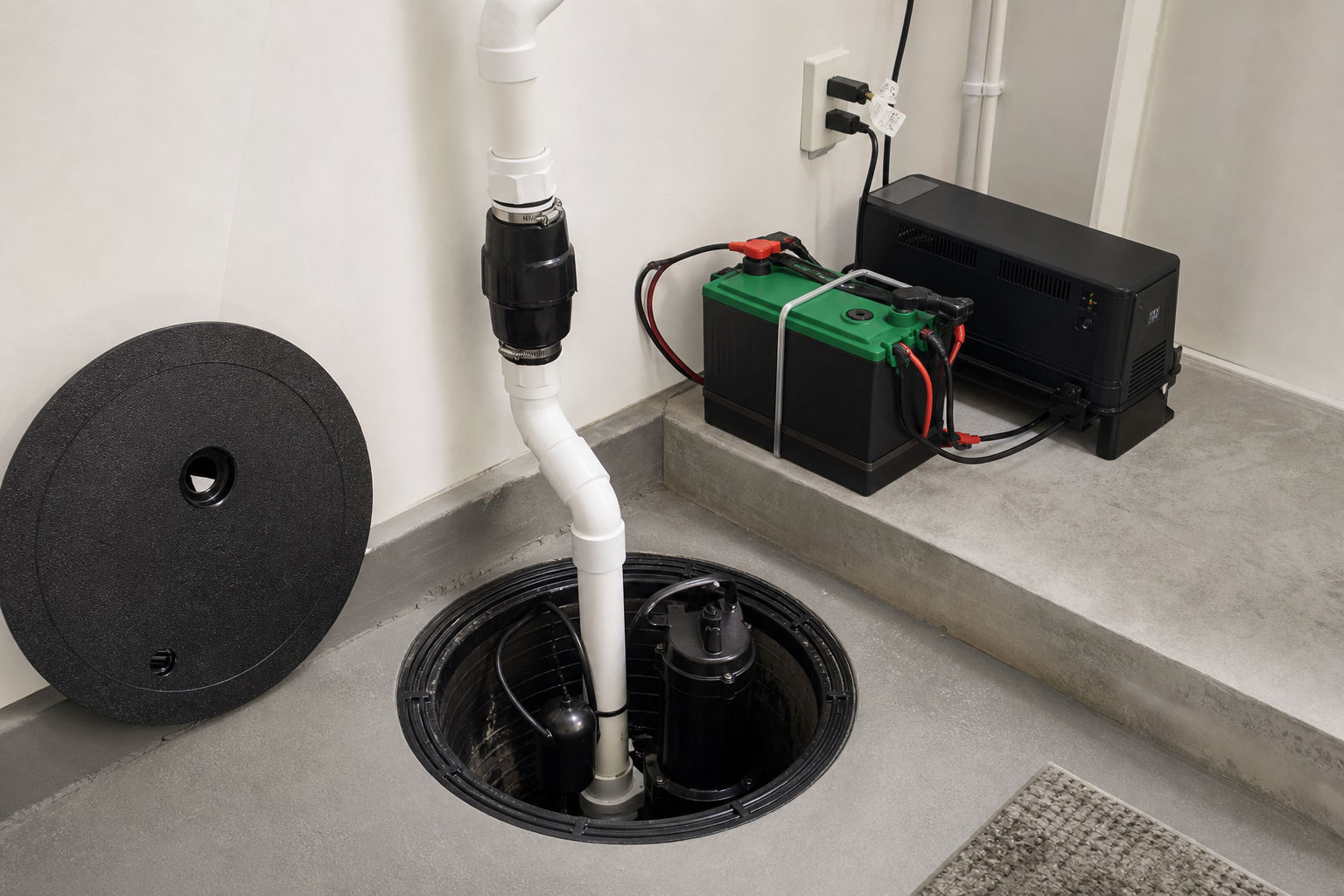
A sump pump is a powered water pump typically installed in a basin, also called a sump pit, located at a low point in a basement or crawl space drainage system.
Water enters the basin through perimeter drains, foundation drainage, groundwater movement, or another designed collection system. As the water level rises, a float switch or another control activates the pump.
The pump then moves the collected water through a discharge pipe and away from the building to a location permitted by local regulations.
Once the water falls to the system’s shutoff level, the pump stops.
This automatic cycle allows the system to respond to groundwater without requiring someone to manually switch the pump on whenever rain or snowmelt raises the water table.
9 Powerful Sump Pump Tips for Better Basement Protection
A pump is only one element of effective water management. These nine considerations can make the difference between a system that merely runs and one that is appropriately planned for the property.
1. Identify Where the Water Is Coming From
Before buying a larger pump, determine the likely source of moisture.
Basement water can result from groundwater, surface runoff, overflowing gutters, poor grading, plumbing leaks, foundation drainage problems, sewer backup, condensation, or combinations of several causes.
A sump system is intended primarily to manage collected groundwater or drainage water.
It will not repair a leaking supply pipe, and it should not be expected to solve every foundation or sewer problem.
2. Choose the Right Type of Pump
Residential sump systems commonly use submersible or pedestal pumps.
Submersible pumps operate within the sump basin. Their motor and pump assembly are designed for this environment when properly installed.
Pedestal pumps place the motor above the pit while the pumping mechanism extends into the water.
Each arrangement has practical advantages and space requirements.
Sump Pump Selection Based on the Property
Choose according to:
• Basin dimensions
• Required pumping capacity
• Vertical lift
• Discharge pipe configuration
• Water inflow
• Available electrical supply
• Maintenance access
• Backup system
• Manufacturer requirements
A professional can calculate whether a particular pump matches the installation rather than selecting it solely by horsepower.
3. Size the Pump for the Actual System
A larger horsepower rating is not automatically better.
Pump performance depends on total dynamic head, which includes vertical lift and resistance within the discharge piping.
Manufacturers publish pump performance curves showing approximate flow at different head conditions.
A pump rated for high flow under low head conditions may deliver significantly less water when it must lift water farther.
Proper selection should account for the actual installation.
4. Install a Reliable Check Valve
A check valve in the discharge line is intended to limit water from flowing backward into the basin after the pump shuts off.
Without appropriate backflow control, water remaining in the vertical discharge pipe can return to the pit and cause unnecessary cycling.
The valve should be suitable for sump applications and installed in the orientation specified by its manufacturer.
5. Plan for Power Failures
Heavy storms can create the exact conditions in which both groundwater levels and electrical outages occur.
A standard electric pump cannot operate without power.
A backup system can provide additional protection.
Options can include battery powered backup pumps, water powered backup systems where suitable and legally permitted, or appropriately connected standby power.
6. Test the System Periodically
A pump that has not operated visibly for months should not simply be assumed to be ready for the next major storm.
Testing can identify problems with the float, power, discharge, check valve, or pump operation.
Follow the manufacturer’s testing procedure.
7. Keep the Discharge Route Functional
A pump can operate correctly yet fail to protect the basement if the discharge path is blocked, frozen, disconnected, or returning water directly toward the foundation.
Inspect the visible discharge system periodically.
8. Consider a High Water Alarm
A high water alarm can provide warning when water rises beyond an expected level.
Smart models may also send remote notifications when internet connectivity and electrical systems are functioning.
An alarm does not remove water.
It gives occupants an opportunity to respond.
9. Maintain Exterior Water Management
Roof drainage and grading can significantly influence how much water reaches a foundation.
Sump Pump Protection Starts Outside the Basement
Check:
• Gutters
• Downspouts
• Grading
• Surface drains
• Window wells
• Exterior drainage
• Discharge location
Managing water before it reaches the foundation can reduce the burden placed on a sump system.
Types of Sump Pumps
Understanding common configurations helps homeowners compare replacement options.
Submersible Sump Pump
A submersible unit sits inside the basin and is designed to operate while surrounded by water.
This configuration can allow the sump to be covered, depending on installation.
A suitable cover can help keep debris out of the basin and may be particularly important where radon mitigation or other building requirements apply.
Pedestal Sump Pump
A pedestal system positions its motor above the basin.
This can make certain components easier to access.
The design may be useful where basin dimensions or other conditions make a submersible system unsuitable.
Combination Sump Pump Systems
Some products combine a primary pump with a battery backup.
This can simplify system integration.
Primary vs Backup Sump Pump
The primary pump handles normal groundwater inflow when electrical power is available.
A backup system is intended for conditions such as a power outage or, depending on system design, primary pump failure or unusually high water.
A backup should not be used to compensate for an inadequate primary system.
How Does a Sump Pump Work?
The operating sequence is relatively straightforward.
Water enters the sump basin, the level rises, and a control activates the pump.
The pump creates pressure that moves the water through the discharge system.
The Float Switch
Many systems use a mechanical float.
As the float rises with water level, it activates a switch.
Different float designs require different amounts of free space to move.
A crowded basin can interfere with some float mechanisms.
Discharge Pipe
The pipe carries water from the pump to the approved outlet.
Pipe diameter and routing should follow manufacturer and local plumbing requirements.
Check Valve
The check valve limits reverse flow after shutdown.
Why Sump Pump Cycling Matters
Extremely frequent cycling can increase wear.
Possible causes can include:
• High groundwater inflow
• A small basin
• Incorrect switch settings
• Failed check valve
• Water discharging too close to the foundation
• Pump sizing or system design problems
Frequent operation during very wet weather can also simply reflect substantial legitimate inflow.
Sump Pump Sizing Explained
Sizing should focus on required flow at actual system head rather than horsepower alone.
Estimate Water Inflow
One approach is to observe how quickly the sump fills during wet conditions when it can be done safely.
Professional installers can use site information and pump performance data to estimate requirements.
Determine Vertical Lift
Measure the elevation the pump must overcome before discharge.
Additional pipe length, fittings, and valves contribute resistance.
Read Pump Performance Curves
Manufacturers publish flow information at different head values.
Avoid Oversizing a Sump Pump Without a Reason
A significantly oversized pump can empty a small basin quickly and potentially cycle frequently.
System performance depends on pump, basin, switch, drainage, and discharge working together.
Select the complete system rather than maximizing one specification.
Sump Pump Installation
Installation requirements depend on property construction, drainage design, electrical requirements, and local codes.
Installing the Basin
The basin needs sufficient capacity and should receive water through the intended drainage system.
Excavating a basement slab can involve structural, utility, and radon considerations.
Before cutting or digging, confirm that concealed utilities or other building components will not be damaged.
Setting the Pump
The pump should sit according to manufacturer guidance.
It should not be placed where debris can easily obstruct the intake or float.
Connecting the Discharge
Discharge piping needs proper support, valve placement, routing, and termination.
Professional Sump Pump Installation
Professional installation is particularly appropriate when:
• A new pit is required
• Foundation drains are being modified
• Electrical work is needed
• Radon systems are present
• Discharge rules are unclear
• Sewer connections are involved
• Water problems are substantial
Depending on jurisdiction, plumbing and electrical permits may be required.
Sump Pump Discharge Rules
Where sump water may legally be discharged varies.
Some municipalities prohibit connecting foundation drainage to sanitary sewers because stormwater can overload wastewater systems.
Discharge Away From the Foundation
Where permitted, water should generally be directed to a location where it does not immediately flow back toward the house.
Site grading is important.
Protect Neighboring Properties
Do not direct concentrated water onto a neighboring property or create erosion.
Local drainage regulations can apply.
Prevent Frozen Discharge Lines
Cold climates can create discharge freezing concerns.
Sump Pump Discharge in Winter
Exterior piping should be designed according to local climate and professional guidance.
Incorrect pipe slopes, restrictive fittings, or exposed configurations can contribute to freezing.
A frozen discharge can prevent the pump from moving water and potentially damage components.
Battery Backup Sump Pump Systems
A battery backup can provide valuable redundancy.
How Battery Backup Works
Backup pumps generally use a separate battery and control unit.
When primary power fails, or when water reaches the backup activation level depending on design, the battery powered unit can begin pumping.
Battery Capacity
Backup runtime is not one fixed number.
It depends on battery type, pump load, inflow rate, cycling, battery condition, and system design.
Battery Maintenance
Some batteries require more maintenance than others.
Testing a Backup Sump Pump
A backup system should be tested according to manufacturer instructions rather than assumed operational because its indicator light is on.
Check the battery, charger, alarm, float, and pump function.
Replace batteries according to condition and manufacturer recommendations.
Water Powered Backup Sump Pumps
A water powered backup uses municipal water pressure to help remove sump water.
It does not rely on a battery.
When Water Powered Systems May Be Suitable
They require an adequate municipal water supply and compatible plumbing.
Homes using wells may lose water pressure during a power outage and therefore may not be suitable for this approach.
Water Consumption
These systems use potable water while operating.
Backflow prevention and local plumbing requirements are important.
Water Powered Sump Pump Regulations
Not every jurisdiction permits or treats these systems identically.
A licensed plumber can determine whether the system is permitted and what backflow protection or other installation requirements apply.
Sump Pump Maintenance
Routine inspection helps identify deterioration before heavy rainfall exposes it.
Clean the Basin
Sediment and debris can accumulate.
Follow manufacturer recommendations for safe cleaning.
Disconnect electrical power appropriately before performing permitted maintenance.
Inspect the Float
The float should move freely without interference from pipes, cords, walls, or other components.
Check the Discharge
Look for visible leakage, loose connections, unusual vibration, or obvious blockages.
Sump Pump Maintenance Checklist
Periodically review:
• Power connection
• Float movement
• Pump operation
• Check valve
• Basin condition
• Discharge pipe
• Exterior outlet
• Backup battery
• Backup pump
• Alarm
• Unusual noise
The manufacturer’s maintenance schedule should take priority.
How to Test a Sump Pump
Testing methods vary by model.
For many systems, manufacturer instructions may permit adding clean water to the basin until the float activates.
Observe whether the pump starts, removes water, and stops normally.
Watch the Water Level
The water should decline when the pump operates.
If the motor runs but the level does not fall, turn the system off as appropriate and investigate professionally.
Listen for Abnormal Sounds
New grinding, severe vibration, or other unusual noises can indicate a problem.
When a Sump Pump Fails a Test
Do not wait for the next storm.
A failed pump, switch, blocked discharge, or electrical problem should be addressed promptly.
Where groundwater risk is high, temporary backup planning may be necessary while repairs are arranged.
Common Sump Pump Problems
Understanding warning signs can help homeowners call for service before a basement floods.
Pump Does Not Start
Possible causes include:
• Power loss
• Tripped protection
• Failed switch
• Jammed float
• Motor failure
• Damaged wiring
Electrical troubleshooting should be left to appropriately qualified people when internal components are involved.
Pump Runs but Does Not Remove Water
Possible causes include a blocked intake, discharge problem, incorrect valve installation, damaged pump, or another hydraulic issue.
Pump Runs Continuously
A continuously running pump may reflect severe groundwater inflow, incorrect switch operation, discharge problems, or an undersized system.
Sump Pump Short Cycling
Repeated rapid starting and stopping can be caused by small effective basin volume, check valve problems, switch configuration, or other design conditions.
Professional evaluation can determine whether the pump itself or the surrounding system needs correction.
Sump Pump Warning Signs
Visible flooding should not be the first indication that maintenance is needed.
Potential warning signs include:
• Unusual noise
• Excessive vibration
• Failure to activate
• Constant running
• Rapid cycling
• Rust or corrosion
• Visible damage
• Water level remaining unusually high
• Alarm activation
• Water around the basement despite pump operation
Any sudden change from normal system behavior deserves investigation.
How Much Does a Sump Pump Cost?
Costs vary considerably between simple pump replacement and installation of an entirely new drainage system.
Pump Replacement Cost Factors
Pricing can depend on:
• Pump type
• Capacity
• Brand
• Discharge work
• Check valve
• Basin access
• Electrical condition
• Backup equipment
• Labor rates
• Location
New System Installation Costs
A new installation can require cutting concrete, excavation, basin installation, drainage work, plumbing, electrical work, and exterior discharge.
This is far more involved than replacing an existing pump.
Comparing Sump Pump Installation Quotes
Ask contractors to specify:
• Pump model
• Performance rating
• Basin work
• Check valve
• Discharge route
• Electrical work
• Backup system
• Alarm
• Permits
• Warranty
• Cleanup
Comparing identical scopes produces more useful pricing information.
Sump Pump vs Sewage Pump
Sump pumps and sewage pumps perform different jobs.
A standard sump pump is intended for groundwater or relatively clean drainage water according to its manufacturer specifications.
A sewage or ejector pump is designed to move wastewater containing solids from plumbing fixtures where gravity drainage is unavailable.
Do Not Interchange Pump Types
Using a pump outside its intended application can create failure and sanitation problems.
Identifying the Correct Basement Pump
If the basin receives wastewater from a toilet, sink, shower, or other plumbing fixture, consult a plumber.
Do not assume it is an ordinary sump solely because a pump sits below the floor.
Sump Pump vs French Drain
These systems can complement one another.
A French drain or interior perimeter drainage system collects and directs water.
The sump pump then removes collected water when gravity discharge is not available.
Drainage Before Pumping
A pump can only remove water that reaches its basin.
Water entering through unrelated wall cracks or surface pathways may require additional corrections.
Sump Pump and Basement Waterproofing
Effective basement water management can involve:
• Exterior grading
• Gutters
• Downspouts
• Foundation drainage
• Crack repair
• Interior drainage
• Sump pumping
• Humidity management
The solution should address the actual source.
Sump Pumps and Radon
In homes with radon mitigation systems, the sump basin may form part of the air sealing strategy.
A properly designed cover can help maintain pressure control and limit soil gas entry.
Do Not Modify a Radon System Casually
Removing or leaving open a sealed sump cover can affect mitigation system performance.
Consult a qualified radon professional before altering relevant components.
Seal Penetrations Appropriately
Covers may need sealed pipe and cable penetrations while maintaining serviceability.
Sump Pump Replacement With Radon Mitigation
Tell the plumber or installer that the property has a radon system before work begins.
The sump should be restored in a manner compatible with both pumping and mitigation requirements.
Smart Sump Pump Monitoring
Connected monitoring devices can provide additional awareness.
High Water Notifications
Sensors can alert homeowners if water reaches an abnormal level.
Remote alerts can be especially useful when a property is unattended.
Power Failure Alerts
Some systems can report when mains power is lost.
The communication method itself may require internet or cellular service.
Limits of Smart Sump Pump Technology
Monitoring does not replace pumping capacity, backup power, maintenance, or proper drainage.
Technology can tell you that a problem exists, but the physical system still needs to manage the water.
What Happens When a Sump Pump Fails?
Failure during heavy groundwater inflow can allow the basin to overflow and water to enter the basement.
The severity depends on inflow and other drainage pathways.
Protect Personal Safety
Do not enter standing basement water if electrical hazards may exist.
A flooded basement can require professional water removal and electrical assessment.
Limit Water Damage
Once safe, address the source and begin appropriate water extraction and drying.
Water can affect flooring, drywall, insulation, furniture, and stored belongings.
Emergency Sump Pump Failure
If the pump is unable to keep up or has stopped completely during active flooding, contact an appropriate plumbing, waterproofing, or emergency water management professional.
Significant water intrusion may also require restoration services.
When to Replace a Sump Pump
No universal replacement age applies to every system.
Service life depends on quality, duty cycle, water conditions, maintenance, installation, and operating environment.
A pump that rarely operates ages differently from one that cycles many times every day.
Replace Based on Condition
Consider replacement when the pump becomes unreliable, develops significant mechanical problems, repeatedly fails testing, or can no longer provide adequate performance.
Plan Before Complete Failure
If the basement has a history of flooding, waiting until failure during a storm creates unnecessary risk.
Sump Pump Replacement and Capacity Review
Do not automatically replace an old pump with an identical capacity.
Review whether building changes, drainage, groundwater behavior, or past performance indicate that system requirements have changed.
Choosing a Sump Pump Installer
Installation quality affects reliability.
Use Appropriate Professionals
A plumber or basement drainage specialist may install sump systems depending on local licensing and project scope.
Electrical work should comply with applicable electrical requirements.
Ask About Sizing
The installer should be able to explain why the selected pump is appropriate.
Discuss Backup Protection
If flooding consequences would be substantial, discuss redundancy rather than focusing solely on the primary pump.
Questions to Ask a Sump Pump Contractor
Ask:
• What pump model do you recommend?
• How was capacity selected?
• What is the expected system head?
• Is the basin adequately sized?
• What check valve is included?
• Where will water discharge?
• Is the discharge legal locally?
• What happens during a power failure?
• Is an alarm included?
• Are permits required?
• What warranty applies?
• How should the system be tested?
Document key specifications for future maintenance.
Common Sump Pump Mistakes
Many failures involve the surrounding system rather than the pump motor itself.
Avoid:
• Ignoring exterior drainage
• Choosing by horsepower alone
• Discharging water beside the foundation
• Running extension cords as permanent wiring
• Blocking float movement
• Ignoring the check valve
• Forgetting backup battery maintenance
• Never testing the pump
• Allowing discharge lines to freeze
• Modifying sealed radon sump covers improperly
• Connecting to prohibited sewer systems
• Assuming a smart alarm prevents flooding
A complete system approach provides better protection.
Frequently Asked Questions
What does a sump pump do?
A sump pump removes groundwater or drainage water collected in a sump basin and sends it to an approved discharge location away from the building.
How often should a sump pump be tested?
Testing frequency should follow manufacturer guidance and local conditions. Systems protecting high risk basements should be checked regularly and before periods of expected heavy water inflow.
Does a sump pump need battery backup?
Not every installation requires one, but backup power can provide valuable protection where storms may cause both high groundwater and electrical outages.
How do I know what size sump pump I need?
Sizing depends on water inflow, vertical lift, pipe resistance, basin size, and pump performance curves. Horsepower alone is not an adequate sizing method.
Why is my sump pump running constantly?
Possible causes include high groundwater, switch problems, undersized capacity, blocked discharge, check valve issues, or water returning toward the foundation.
Can a sump pump completely waterproof a basement?
No. A sump pump manages water collected by a drainage system. Basement moisture may also require grading, gutters, foundation drainage, crack repairs, or other water management measures.
Conclusion
A sump pump can provide critical basement water protection when it is correctly sized, installed, tested, and integrated with effective drainage. Reliable performance also depends on the basin, float switch, check valve, discharge route, electrical supply, and backup system working together. Regular maintenance and attention to exterior grading and roof drainage can reduce unnecessary pump demand while helping homeowners identify problems before severe weather puts the system to the test.