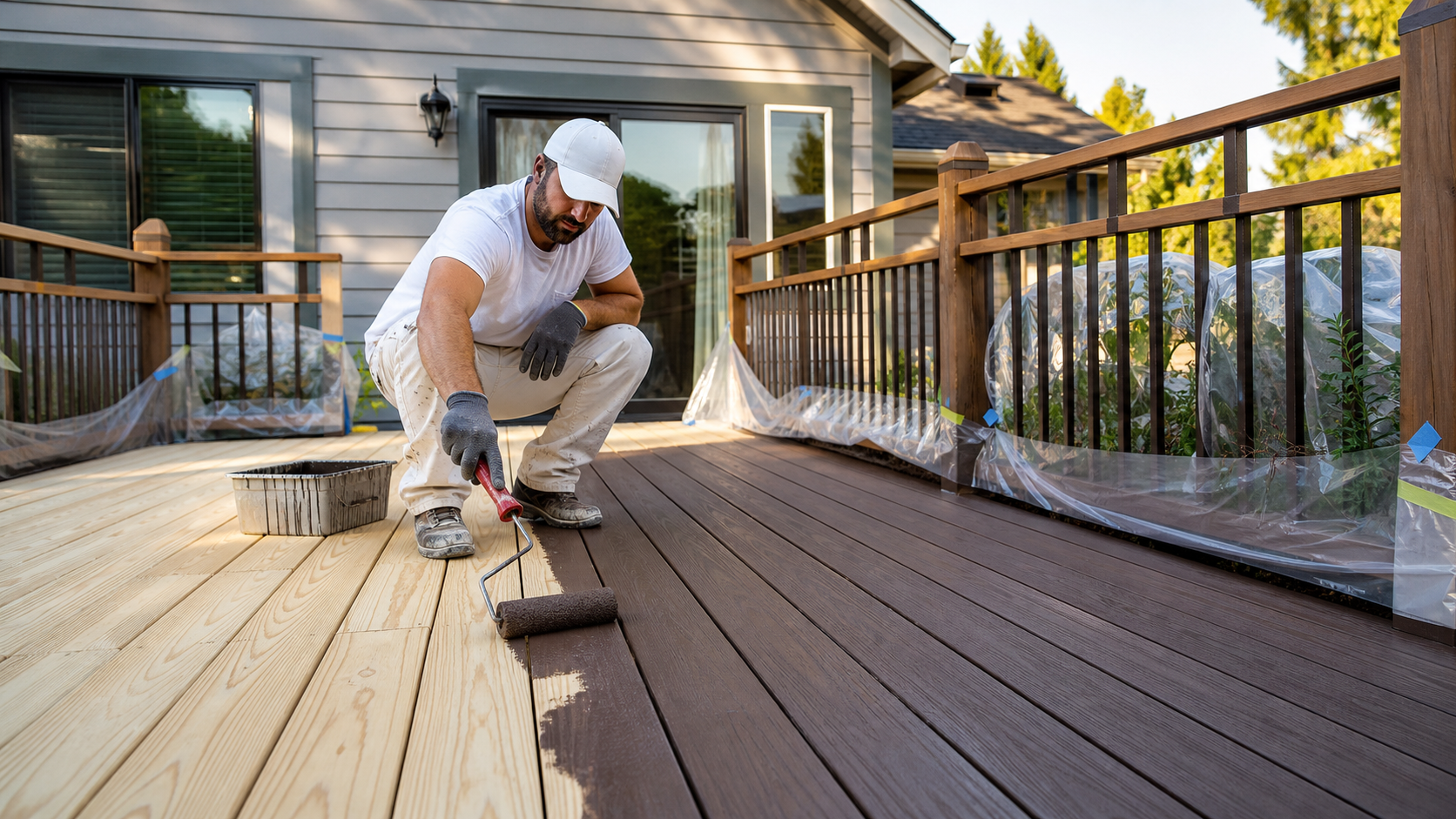
Deck Painting Explained: How to Create a Beautiful Finish That Lasts
Successful deck painting can refresh a weathered outdoor space while helping protect compatible surfaces from sunlight and routine environmental exposure. Achieving a durable finish requires more than rolling paint onto old boards. The deck’s condition, wood moisture, previous coating, surface preparation, product compatibility, weather, application thickness, drying time, and ongoing maintenance all influence the result. Painting can provide an opaque color and uniform appearance, but it cannot repair structural decay or solve trapped moisture. This guide explains how to assess a deck, prepare it correctly, choose an appropriate coating, apply it safely, and maintain the finish after the project is complete.
What Is Deck Painting?
Deck painting is the preparation and application of an opaque exterior coating to deck surfaces such as boards, stairs, railings, posts, and other compatible components.
Unlike transparent or semitransparent stains, paint generally hides more of the underlying wood grain and creates a continuous colored film.
Products intended for horizontal walking surfaces have different performance demands than ordinary exterior wall paint.
What Does Deck Painting Do?
A suitable coating can improve appearance and provide a protective finish over compatible surfaces.
Potential benefits include:
• Updating deck color
• Creating a uniform appearance
• Covering uneven previous coloration
• Protecting compatible wood surfaces
• Coordinating a deck with the home’s exterior
• Making certain surfaces easier to clean
Actual performance depends heavily on deck condition and preparation.
Deck Painting Versus Deck Staining
Paint and stain are not interchangeable.
Paint generally creates a more opaque film over the surface. Stains can range from transparent products that reveal substantial wood grain to solid color products that visually resemble paint.
The appropriate choice depends on the deck, desired appearance, previous finish, exposure, and maintenance expectations.
Is Paint Better Than Stain?
Neither is universally better.
Paint offers broad color choice and strong hiding ability. Stain can preserve more natural wood character depending on opacity.
A previously painted deck can also have different preparation requirements from bare wood.
Product compatibility should guide the decision.
7 Powerful Deck Painting Tips for Better Results
A high quality coating cannot compensate for rotting boards, excessive moisture, poor cleaning, or incompatible existing finishes. These seven principles address the factors most likely to influence performance.
1. Inspect the Structure Before Deck Painting
Before thinking about colors, determine whether the deck is physically sound.
Paint can conceal surface imperfections, but it cannot restore deteriorated framing, loose connections, or rotting boards.
Look for Signs of Damage
Inspect accessible areas for:
• Soft or decayed wood
• Loose deck boards
• Split components
• Protruding fasteners
• Damaged railings
• Loose stair components
• Significant surface deterioration
• Water collecting in unintended areas
• Damaged posts or framing
Potential structural issues deserve evaluation before cosmetic work begins.
Pay Attention to Railings and Stairs
Deck falls can cause serious injuries.
Loose guard components, unstable handrails, damaged stair treads, and movement in the structure should not be treated as painting problems.
Repair Before Coating
Replace or appropriately repair deteriorated components before preparation and painting.
New replacement lumber may also require product specific preparation and drying before coating.
Follow the coating manufacturer’s requirements for new wood rather than applying paint immediately by default.
2. Make Surface Preparation the Foundation of Deck Painting
Preparation is one of the most important parts of the project.
A coating applied over loose paint, dirt, mildew, chalky residue, or unstable wood fibers is unlikely to perform as intended.
Clean the Deck Thoroughly
The appropriate cleaning process depends on existing conditions and the new coating system.
Cleaning may involve:
• Sweeping loose debris
• Removing dirt
• Cleaning biological growth appropriately
• Removing loose coatings
• Treating compatible stains
• Rinsing residue when required
• Allowing adequate drying
Follow product instructions because cleaner concentrations and procedures vary.
Use Pressure Washing Carefully
Pressure washers can clean exterior surfaces efficiently, but excessive pressure can damage wood fibers and create visible marks.
Water can also be forced into joints and building interfaces.
Use a method appropriate for the wood and provide sufficient drying time afterward.
Remove Loose Existing Paint
Peeling or poorly adhered coating should be removed according to manufacturer preparation requirements.
Scraping and sanding may be necessary in appropriate areas.
Feathering sound edges can help reduce visible transitions.
Consider Lead Paint on Older Structures
Older painted decks and porches can contain lead based coatings.
In the United States, renovation work that disturbs lead based paint in certain pre 1978 housing is subject to EPA requirements.
Do not sand or mechanically disturb a potentially hazardous old coating without understanding applicable lead safe practices.
3. Check Moisture Before Deck Painting
Painting damp wood can interfere with coating adhesion and performance.
Wood can appear dry at the surface while retaining substantial moisture internally, particularly after rain or washing.
Allow the Deck to Dry
There is no universally correct waiting period after cleaning.
Drying depends on:
• Weather
• Humidity
• Temperature
• Shade
• Wood thickness
• Air movement
• Recent rainfall
• Deck construction
Product instructions should determine acceptable application conditions.
Moisture Meters Can Help
A suitable moisture meter can provide additional information about wood moisture before painting.
However, readings need to be interpreted according to the wood species, meter type, and coating manufacturer’s requirements.
Do not use one arbitrary moisture percentage for every product unless the manufacturer specifies it.
Find Persistent Moisture Sources
If boards repeatedly stay wet, investigate why.
Poor drainage, dripping roof edges, irrigation, dense vegetation, inadequate spacing, plumbing leakage, or other conditions can contribute.
Paint should not be used to trap or conceal an unresolved moisture problem.
4. Choose a Product Designed for Deck Painting
Not every exterior paint belongs on a deck floor.
Horizontal walking surfaces experience foot traffic, furniture movement, standing water, dirt, and more direct weather exposure than many vertical exterior surfaces.
Use a Coating Approved for Walking Surfaces
Look for a product specifically approved by its manufacturer for the deck material and intended application.
Potential product categories include porch and floor coatings, deck coatings, and other exterior systems formulated for horizontal use.
Check Material Compatibility
Decks can be constructed from:
• Pressure treated lumber
• Cedar
• Redwood
• Other natural wood
• Previously coated wood
• Composite materials
A product designed for wood may not be suitable for composite decking, and some composite manufacturers restrict which coatings can be applied.
Verify compatibility before purchasing.
Consider Slip Characteristics
Outdoor walking surfaces can become slippery when wet.
Some coating manufacturers offer products or additives designed for improved traction.
Use only compatible systems according to manufacturer instructions rather than randomly mixing sand or another material into paint.
5. Plan Deck Painting Around the Weather
Weather affects application, drying, curing, and coating film development.
Air temperature alone is not enough.
Check the Forecast
Consider:
• Air temperature
• Surface temperature
• Humidity
• Rain
• Dew
• Direct sunlight
• Wind
The coating manufacturer’s technical data should specify acceptable application conditions.
Avoid Painting Before Rain
Fresh coatings need adequate time before exposure to precipitation.
The required period varies substantially by product and weather.
Do not rely on a universal number of hours.
Watch for Overnight Dew
Even when rain is not forecast, condensation can form overnight.
Dew can affect coatings that have not developed sufficient resistance.
Plan application timing around both daytime and nighttime conditions.
Avoid Extremely Hot Surfaces
Deck boards exposed to strong sunlight can become much hotter than ambient air.
Excessive surface heat can interfere with application and drying.
Working with shade patterns can help, provided conditions remain within the product’s approved range.
6. Apply Deck Painting Products Correctly
Brushes, rollers, pads, and spray equipment can all have roles depending on the coating.
The product instructions should determine suitable application methods.
Work With the Board Direction
Applying coatings in manageable sections helps maintain a consistent appearance.
For board surfaces, working along board lengths can reduce unwanted lap marks.
Avoid painting yourself into a corner by planning the exit route before starting.
Coat Gaps Carefully
Deck construction needs pathways for drainage and drying.
Do not intentionally fill functional drainage gaps between boards with thick coating.
Heavy film buildup in gaps can interfere with drainage and later crack or bridge unpredictably.
Follow Recommended Coverage Rates
Applying paint too thinly can compromise coverage and protection.
Excessively heavy application can also interfere with drying or curing.
Use the manufacturer’s specified spread rate and number of coats.
Respect Recoat Times
The next coat should be applied within the product’s specified recoat conditions.
Temperature and humidity can influence the actual drying behavior.
Follow the label and technical data rather than deciding solely by touching the surface.
7. Maintain Deck Painting After the Project
A painted deck remains exposed to weather and traffic after the coating cures.
Routine care can help identify developing issues before they become widespread.
Keep the Deck Clean
Leaves, soil, pollen, food, and other debris can retain moisture or stain the surface.
Use cleaning methods approved for the coating.
Aggressive cleaners or pressure washing can damage some finishes.
Inspect High Traffic Areas
Stairs, entrances, paths to doors, and furniture locations can wear faster than less used portions of the deck.
Localized maintenance may be possible when deterioration is addressed early.
Keep Records of the Coating
Save:
• Manufacturer
• Product line
• Color
• Sheen where applicable
• Purchase date
• Application date
• Primer information
• Cleaning products used
These records simplify future maintenance.
How to Prepare a Wood Deck for Painting
Preparation requirements depend on whether the surface is bare, stained, painted, or weathered.
The objective is to create a clean, dry, sound substrate compatible with the new coating.
Preparing Bare Wood
Bare wood may need cleaning and surface preparation according to the selected coating.
Some wood contains mill glaze, extractives, preservatives, or other characteristics that affect finishing.
Preparing Previously Painted Wood
Existing coating should be checked for adhesion.
Loose material needs to be removed, while sound surfaces may require cleaning and abrasion before recoating.
Complete stripping is not automatically required for every painted deck.
Preparing Previously Stained Wood
Some existing stains can interfere with paint adhesion or create compatibility issues.
Determine what type of finish is already present when possible.
A test area can help evaluate compatibility before coating the entire deck.
Does Deck Painting Require Primer?
Primer requirements vary.
Some deck coatings require a separate primer, while others may be approved for direct application under specific conditions.
When Primer May Be Required
Primer can be relevant for:
• Bare wood
• Certain repaired areas
• Tannin prone wood
• Substrate transitions
• Difficult previous finishes
• Other manufacturer specified situations
Use a primer compatible with both the substrate and topcoat.
Self Priming Products
The phrase self priming does not mean preparation can be skipped.
It generally refers to the coating’s ability to serve specified primer functions under approved conditions.
Cleaning, drying, repairs, and removal of loose material remain important.
Deck Painting Colors and Design
Color can dramatically change how an outdoor space relates to the house and landscape.
Consider fixed features before selecting a shade.
Coordinate With the Home Exterior
Compare potential colors with:
• Siding
• Brick
• Stone
• Exterior trim
• Roofing
• Doors
• Outdoor furniture
• Hardscaping
• Landscaping
A deck can coordinate closely with the home or provide deliberate contrast.
Test Actual Samples
Paint colors can look different outdoors than they do under store lighting or on screens.
Test samples on representative prepared surfaces or boards and inspect them in morning, midday, and evening light.
Light Versus Dark Deck Paint
Both can work, but they behave differently visually and thermally.
Darker surfaces often show certain types of dust, pollen, and fading differently from lighter colors.
Surface Temperature
Dark colors can absorb more solar energy than lighter reflective colors, which can increase surface temperature under direct sunlight.
Actual temperatures depend on product, color, sun exposure, climate, and weather.
Consider Bare Feet and Pets
A sun exposed deck surface can become uncomfortable regardless of color under sufficiently hot conditions.
Evaluate actual samples and local exposure when surface temperature is an important concern.
Deck Painting for Pressure Treated Wood
Pressure treated lumber is widely used for outdoor structures.
New treated wood can contain substantial moisture depending on treatment and storage conditions.
Do Not Paint Based on Calendar Time Alone
The correct time for coating depends on the wood condition and the coating manufacturer’s requirements.
A fixed rule such as waiting a particular number of weeks cannot account for climate and lumber moisture.
Confirm Surface Readiness
Follow coating instructions concerning wood moisture, cleaning, and preparation.
If uncertain, a moisture meter can provide additional information when used properly.
Can Composite Decking Be Painted?
Sometimes, but not every composite decking product is designed for painting.
Composite formulations and surface technologies vary substantially.
Check the Deck Manufacturer
Before sanding, priming, or painting, identify the product when possible and consult its technical guidance.
Improper coating can affect appearance, adhesion, maintenance, and warranty coverage.
Older Composite Decks
Some older composite products may accept approved restoration coatings after suitable preparation.
That does not establish that all modern capped composites can be treated the same way.
Product specific instructions should control the decision.
Deck Painting Railings
Railings involve numerous corners, joints, balusters, and vertical surfaces, which can make them more time consuming than broad deck boards.
Detailed preparation is important.
Work From the Top Down
A logical painting sequence can reduce drips onto finished surfaces.
Depending on the railing design, painters may complete upper rails, balusters, posts, and lower components before adjacent walking areas.
Keep Safety Hardware Functional
Do not allow thick coating buildup to interfere with gates, fasteners, latches, or other functional components.
Loose railings should be structurally repaired rather than stabilized with paint.
Deck Painting Stairs
Deck stairs receive concentrated foot traffic and weather exposure.
They also present slip and fall risks.
Prepare Treads Thoroughly
Old peeling coatings on stair treads need careful preparation.
A durable coating approved for walking surfaces should be used.
Maintain Visibility
Contrasting stair components can sometimes improve visual definition, but accessibility and safety decisions should reflect the actual users and environment.
Lighting and secure handrails are also important.
How Much Does Deck Painting Cost?
There is no universal cost because decks differ in area, condition, architecture, height, and coating requirements.
Preparation can represent a substantial part of the labor.
Factors Affecting Deck Painting Cost
Pricing can depend on:
• Deck size
• Surface condition
• Existing coating
• Required cleaning
• Scraping and sanding
• Structural repairs
• Number of railings
• Stairs
• Accessibility
• Primer
• Number of finish coats
• Coating type
• Local labor rates
• Furniture movement
A detailed site inspection provides more meaningful pricing than a generic square foot figure.
Compare Contractor Proposals
Ask each contractor to specify:
• Preparation process
• Repair responsibilities
• Primer
• Product manufacturer and line
• Number of coats
• Included surfaces
• Cleanup
• Warranty terms
A low price can reflect less preparation rather than equivalent work at a discount.
DIY Deck Painting Versus Professional Service
Deck painting can be a manageable homeowner project when the deck is small, structurally sound, and easily accessible.
Large or highly deteriorated decks can require substantial preparation.
DIY Considerations
Homeowners need time, suitable tools, weather flexibility, and the ability to complete preparation correctly.
Working at height around elevated decks and exterior stairs introduces additional risk.
When to Hire a Professional
Professional help may be appropriate for:
• Significant peeling
• Large decks
• Difficult access
• High elevations
• Structural concerns
• Potential lead coatings
• Complex previous finishes
• Extensive repairs
Contractor requirements vary by jurisdiction, so verify applicable licensing and insurance.
How Long Does Deck Painting Take?
Project duration depends on much more than deck area.
Cleaning, drying, repairs, surface preparation, weather delays, multiple coats, and cure time all affect the schedule.
Drying Versus Curing
A coating that feels dry may not be ready for foot traffic, furniture, or normal use.
Manufacturers often distinguish between dry time, recoat time, and return to service.
Do Not Replace Furniture Too Early
Heavy furniture can stick to or mark a coating that has not developed sufficient hardness.
Follow manufacturer instructions for return to service instead of relying only on surface feel.
How Long Does Deck Paint Last?
No single lifespan applies to every painted deck.
Exposure and wear vary dramatically.
Factors Affecting Service Life
Longevity can depend on:
• Preparation
• Wood condition
• Moisture
• Sun exposure
• Rain and snow
• Foot traffic
• Furniture movement
• Coating quality
• Application
• Maintenance
Horizontal walking surfaces often experience more wear than vertical railings.
Repaint Based on Condition
Instead of relying solely on a fixed calendar schedule, monitor the deck for wear, peeling, cracking, exposed wood, or loss of coating integrity.
Early maintenance may reduce the amount of preparation needed later.
Deck Painting and Weather Protection
Paint can protect compatible wood surfaces, but a coating is not a substitute for good deck construction.
The structure still needs proper drainage and drying.
Water Must Be Able to Drain
Board spacing, flashing, ledger details, and overall deck design all contribute to water management.
Painting over poor drainage does not correct it.
Inspect the Ledger Area
Where a deck connects to a house, proper flashing is particularly important.
Water entering behind a ledger can cause concealed deterioration.
Suspected problems at this connection deserve professional evaluation.
Common Deck Painting Mistakes
Many coating failures can be traced to preparation or application rather than paint color or brand.
Understanding common mistakes can improve results.
Painting Wet Wood
Moisture can interfere with coating adhesion and curing.
Allow suitable drying and verify conditions when necessary.
Painting Over Loose Coating
A new layer is only as stable as the material underneath it.
Remove poorly adhered old coating before recoating.
Using Ordinary Exterior Wall Paint
A vertical siding product may not be formulated for walking surfaces.
Choose coatings approved for decks or exterior floors where appropriate.
Ignoring Weather Conditions
Rain, dew, strong sunlight, temperature, and humidity all influence coating performance.
Follow product requirements throughout application and initial curing.
Cleaning a Painted Deck
Routine cleaning helps maintain appearance.
Use gentle methods before escalating to stronger cleaning techniques.
Follow Product Instructions
Some manufacturers provide specific cleaner recommendations.
Test unfamiliar products in an inconspicuous location.
Avoid Aggressive Pressure
Excessive washing pressure can damage coatings and wood.
Gentle cleaning appropriate to the surface is usually a better starting point.
Frequently Asked Questions
What is the best paint for deck painting?
Choose an exterior coating specifically approved for the deck material and horizontal walking surfaces. The best product depends on substrate, previous finish, climate, and desired appearance.
Should wood be primed before deck painting?
Sometimes. Primer requirements vary by wood, existing coating, repairs, and selected paint system. Follow the coating manufacturer’s technical instructions.
Can deck painting be done after rain?
Only when the wood has dried sufficiently and environmental conditions meet the product requirements. Required drying time varies with wood, weather, and coating.
Can I paint over old deck paint?
Yes, in some cases, when the existing coating is compatible and firmly adhered. Loose or failing paint must be appropriately removed and the surface prepared first.
Is deck painting better than staining?
Neither option is universally better. Painting provides an opaque finish, while stains offer varying levels of wood grain visibility and different maintenance characteristics.
How often should deck painting be redone?
There is no universal interval. Repainting depends on coating condition, climate, traffic, preparation quality, moisture exposure, and manufacturer guidance.
Conclusion
Durable deck painting starts with a sound structure, clean and sufficiently dry surfaces, and a coating designed for the actual deck material and walking areas. Thorough preparation, suitable weather, correct coverage, and appropriate drying time influence performance as much as the paint itself. Regular inspection and prompt maintenance can preserve the finished appearance while helping homeowners identify moisture, coating, or structural problems before they become more extensive.