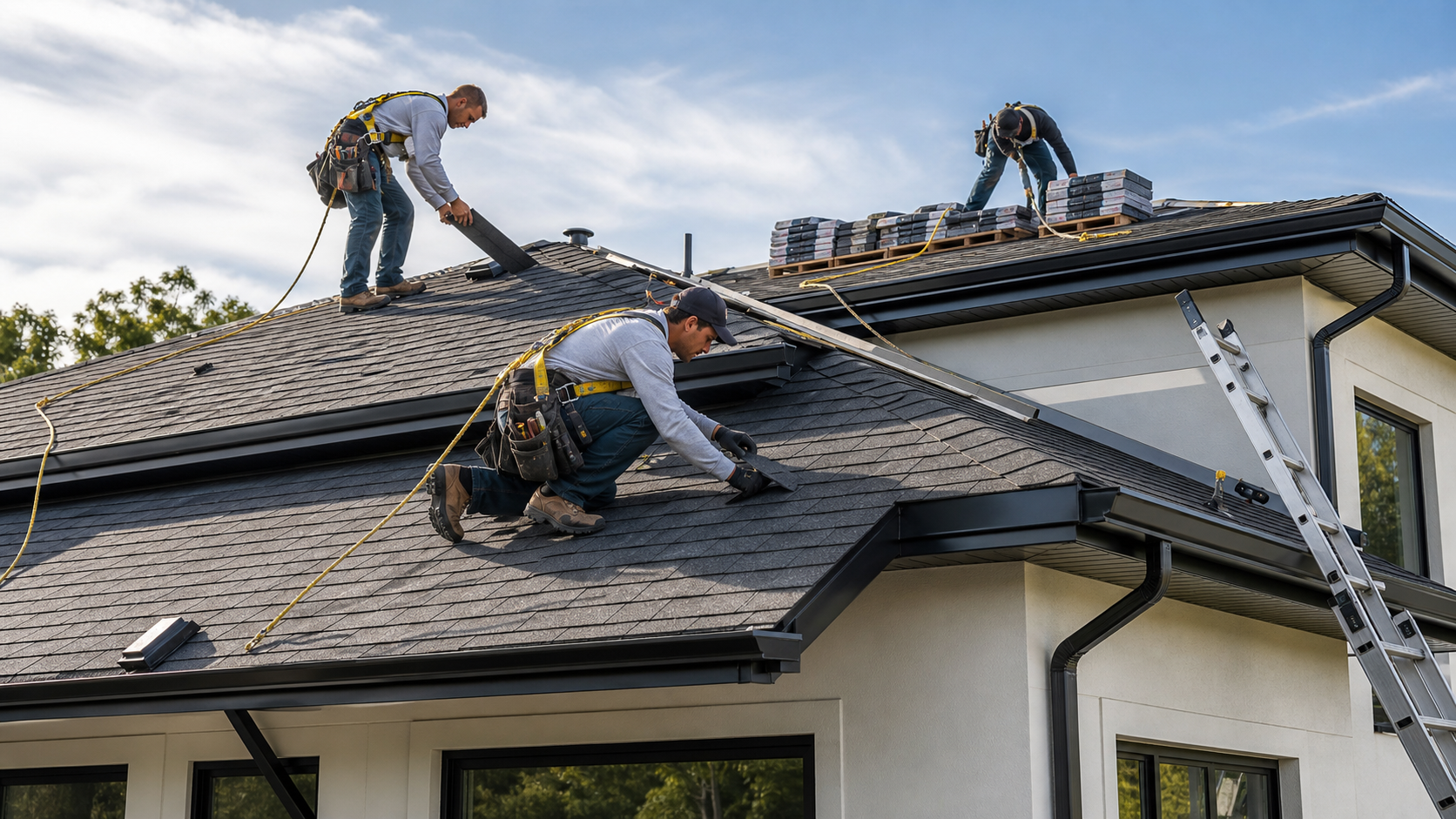
Roofing Contractors: How to Hire the Right Roofer and Protect Your Home
Qualified roofing contractors inspect, repair, replace and maintain roofing systems while coordinating materials, weatherproofing details, ventilation, drainage and site safety. Choosing the right contractor involves more than comparing the lowest estimate because poor installation can lead to leaks, premature material failure and costly damage to the structure below. Homeowners should verify licensing where required, insurance, relevant experience, written estimates, warranty terms and local reputation before authorizing major roof work.
A roof is a complete weather protection system rather than a decorative layer of shingles, tiles or metal. Underlayment, flashing, penetrations, valleys, ventilation, gutters and roof decking all contribute to performance.
A problem in one of these areas can appear somewhere entirely different inside the building.
For example, water entering around flashing may travel along roof framing before appearing as a ceiling stain. Accurate diagnosis is therefore important before deciding whether the property needs a minor repair or a complete replacement.
This guide explains what professional roofers do, how much roofing work can cost, which warning signs matter and how to compare contractors without relying on sales claims.
What Do Roofing Contractors Do?
Roofing contractors are construction professionals who specialize in installing, maintaining and repairing roof systems.
Their exact services depend on the business, local licensing rules and roofing materials they work with.
Some companies focus primarily on residential asphalt shingles, while others specialize in metal, tile, slate or low slope commercial roofing systems.
Roof Inspection
A contractor can inspect accessible parts of the roof to identify damage and possible failure points.
An inspection may cover:
• Roof covering condition
• Flashing
• Valleys
• Roof penetrations
• Chimney interfaces
• Gutters and drainage
• Visible decking concerns
• Ventilation components
• Signs of moisture intrusion
Inspection scope should be explained clearly because a basic visual assessment and a detailed diagnostic inspection are not necessarily equivalent.
Roof Repair
Repairs address localized problems where the broader roof remains serviceable.
Examples can include replacing damaged roofing materials, correcting flashing defects or repairing specific leak locations.
The correct repair depends on why the failure occurred.
Complete Roof Replacement
Replacement involves removing or appropriately addressing the existing roofing system and installing a new one according to product specifications and applicable building requirements.
Depending on conditions, work can involve underlayment, flashing, ventilation and damaged roof deck material in addition to the visible roof covering.
Roofing Contractors Versus General Contractors
Some general contractors legally and competently perform roofing work, while specialist roofing companies focus almost exclusively on roofs.
Licensing rules differ by jurisdiction.
For technically challenging projects, experience with the specific roofing material and system should carry significant weight in contractor selection.
7 Powerful Tips for Choosing Roofing Contractors
Homeowners can reduce avoidable project risks by evaluating contractors systematically.
1. Verify Licensing Requirements
Check whether roofers require state, provincial, municipal or other licensing in your location.
Where licensing exists, verify it through the appropriate official database.
A contractor showing a number on a website does not prove that a license is current or applies to the work being proposed.
2. Confirm Insurance
Ask for evidence of appropriate insurance.
Coverage can include general liability and workers compensation or equivalent protection where applicable.
Requirements vary by jurisdiction and business structure.
When the project is substantial, consider verifying coverage rather than relying solely on a copied certificate.
3. Look for Relevant Roofing Experience
Years in business can be useful information but are not enough by themselves.
Ask whether the company regularly installs your proposed roof system.
Tile, slate, standing seam metal and asphalt shingles involve different materials and techniques.
4. Request Detailed Written Estimates
A roofing estimate should contain enough information to understand what you are buying.
It can identify materials, labor, removal, underlayment, flashing, ventilation, waste disposal and other major work.
Quotes without defined scope are difficult to compare.
5. Understand Warranties
Roofing can involve both manufacturer product warranties and contractor workmanship warranties.
These are different protections.
Read what each warranty covers, how long coverage applies and which conditions can invalidate it.
6. Evaluate Communication
Contractor communication matters before, during and after construction.
You should know who manages the project, how changes are approved and whom to contact if a problem appears.
Unanswered questions before a contract is signed are unlikely to become easier once construction begins.
7. Avoid High Pressure Decisions
Roof damage can create urgency, particularly after storms.
Urgency should not prevent reasonable due diligence.
Be cautious about contractors who demand immediate signatures, discourage comparison or make extraordinary promises about insurance coverage or guaranteed results.
Roofing Contractors for Roof Repairs
Not every roof problem requires complete replacement.
Locating Roof Leaks
Leak diagnosis involves tracing the likely route of water.
Roofers may inspect flashing, penetrations, valleys, seams and damaged roof coverings.
Interior or attic inspection can sometimes provide additional clues.
Water stains should not automatically be treated as proof that the roof covering directly above them has failed.
Damaged Shingles
Individual shingles can be damaged by weather, impact or age.
Localized replacement may be practical when the surrounding roof remains in good condition and compatible materials are available.
Widespread deterioration may indicate a broader issue.
Flashing Repairs
Flashing protects transitions and penetrations where roof surfaces meet walls, chimneys, pipes or other structures.
Poorly installed or deteriorated flashing is a common area of concern during leak investigations.
When Roofing Contractors May Recommend Replacement Instead
Replacement may become more reasonable when deterioration is widespread, repairs repeatedly fail, the deck has significant damage or the existing system has reached poor overall condition.
A roofer should explain the physical reasons for recommending replacement.
For expensive projects, a second opinion can be valuable when the diagnosis is uncertain.
Signs You Need Professional Roofing Contractors
Some roof problems are visible from the ground, while others appear first indoors.
Active Water Leaks
Water entering the building requires prompt investigation.
Move possessions away from affected areas where safe and address any immediate electrical hazards.
A temporary emergency measure may reduce additional damage, but it does not replace permanent repair.
Missing or Broken Roof Materials
Storms can remove or damage shingles, tiles and other roof components.
Avoid climbing onto the roof yourself to investigate.
Ground level photographs or binoculars can provide preliminary information until a professional inspection is performed.
Sagging Roof Areas
Visible sagging can indicate structural or decking problems and warrants timely professional assessment.
The cause cannot be determined reliably from appearance alone.
Repeated Interior Stains
Recurring ceiling or wall stains suggest ongoing moisture intrusion or another moisture source.
The roof is one possibility, but plumbing and condensation can produce similar symptoms.
Emergency Roofing Contractors After Severe Weather
After major storms, local demand for repairs often increases sharply.
Confirm contractor credentials even when services are urgently needed.
Document damage before temporary repairs when safe, especially if an insurance claim may be involved.
Roof Repair Versus Roof Replacement
The correct decision depends on condition rather than one universal age threshold.
When Repair Can Make Sense
Repair may be appropriate when damage is localized and the rest of the roofing system remains functional.
It can also make sense when a relatively recent roof experiences an isolated installation or impact problem.
When Replacement Can Make Sense
A new roof may be more economical when widespread deterioration makes repeated repairs likely.
Replacement may also allow underlying issues involving underlayment, flashing or ventilation to be corrected comprehensively.
Consider the Entire Roofing System
The visible surface tells only part of the story.
Roof decking, moisture conditions, flashing and ventilation influence the decision.
How Roofing Contractors Assess Remaining Roof Condition
Professional assessment combines material condition with evidence of water intrusion, previous repairs and roof construction details.
Contractors should avoid declaring an exact remaining lifespan without acknowledging uncertainty.
Weather exposure and installation history can cause roofs of the same age to perform differently.
Roofing Materials Contractors May Install
Material availability and popularity differ by region.
Asphalt Shingles
Asphalt shingles are common on residential buildings in North America.
They are available in different designs, ratings and warranty structures.
Correct nailing, underlayment and flashing remain essential even with high quality shingles.
Metal Roofing
Metal systems can provide long service when correctly designed and installed.
Options can include standing seam panels and other configurations.
Metal expansion, fastening, flashing and corrosion compatibility require appropriate detailing.
Clay and Concrete Tile
Tile roofing is used extensively in certain climates and architectural styles.
Tiles can be heavy, so structural suitability matters.
Individual tiles can also be brittle when walked on incorrectly.
Slate Roofing
Natural slate can provide distinctive appearance and long term performance.
It also requires specialized installation knowledge and an appropriate supporting structure.
Choosing Roofing Contractors by Material Expertise
Ask potential roofers for examples involving the same roof type you plan to install.
Manufacturer training or certifications can provide additional information where relevant, but they should not substitute for licensing, insurance and demonstrated workmanship.
How Much Do Roofing Contractors Cost?
No universal roofing price is reliable because projects differ dramatically.
Roof Size
Larger roofs require more material and labor, but floor area alone cannot determine roof area.
Pitch, overhangs and architectural complexity influence the actual surface.
Roof Complexity
Valleys, dormers, skylights, chimneys and intersecting roof planes increase detailing and labor.
A simple roof can therefore cost less than a complicated roof with similar total area.
Material Selection
Material pricing ranges considerably.
Premium products can increase both material and installation costs.
Some materials also require specialized substructures or labor.
Existing Roof Removal
Removing old roofing adds labor, disposal and site protection requirements.
The condition of the underlying decking may not be fully visible until removal takes place.
Why Roofing Contractors Quotes Can Differ
Two quotations may use different materials, underlayment, flashing or ventilation assumptions.
One contractor may include permits and disposal while another lists them separately.
Compare line by line rather than selecting the lowest total without examining scope.
What a Roofing Estimate Should Include
A clear estimate reduces misunderstanding.
Look for:
• Roofing material and product
• Approximate quantity or project scope
• Underlayment
• Flashing work
• Existing roof removal
• Decking repair policy
• Ventilation work
• Gutters where applicable
• Waste removal
• Permits where required
• Payment schedule
• Estimated project timing
• Warranty information
• Change order procedure
Material descriptions should be specific enough to identify what will actually be installed.
Roof Ventilation and Why It Matters
Ventilation requirements depend on roof and building design.
Attic Ventilation
Some roof assemblies use intake and exhaust ventilation to manage heat and moisture.
Ventilation must be balanced and designed appropriately.
Adding random roof vents does not automatically improve an attic.
Moisture Problems
Poor moisture management can contribute to condensation and material deterioration.
The solution may involve air sealing, insulation and ventilation rather than ventilation alone.
Building Science Matters
Modern conditioned attics and unvented roof assemblies operate differently from conventional vented attics.
Roofing Contractors and Ventilation Assessment
A competent roofer should understand the type of roof assembly being worked on.
For complicated moisture or insulation problems, coordination with a building science professional or other qualified specialist may be appropriate.
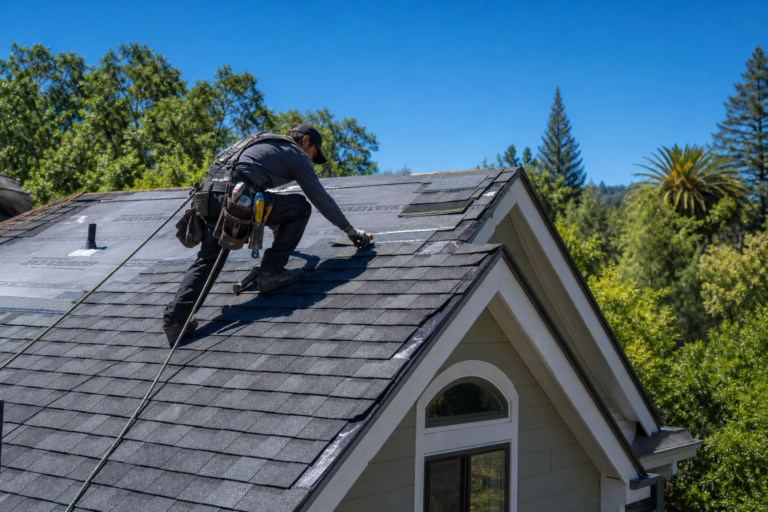
Roofing Contractor Safety
Roof construction involves substantial fall risk.
Fall Protection
Professional crews should follow applicable occupational safety requirements.
Equipment and procedures depend on roof conditions and jurisdiction.
Homeowners should not pressure crews to skip safety measures to reduce cost or speed up the project.
Ladder Safety
Ladders need appropriate placement and securing.
Keep family members and pets away from work areas.
Site Management
Roof replacement produces nails, debris and falling material.
Contractors should establish procedures for protecting landscaping and controlling the work zone.
Why Safety Practices Matter When Hiring Roofing Contractors
A contractor’s safety culture provides insight into broader professionalism.
If a company ignores obvious worker protection requirements, homeowners should consider what other installation procedures may also be neglected.
Roofing Warranties Explained
Warranty terminology can be confusing.
Manufacturer Warranty
A manufacturer warranty typically covers defined defects in roofing products subject to its terms.
It does not automatically cover installation mistakes.
Coverage and exclusions vary widely.
Workmanship Warranty
The contractor may provide separate coverage for installation related problems.
Ask how claims are handled if a leak develops.
Warranty Registration
Some manufacturers require registration or documentation for particular coverage.
Keep contracts, invoices and product details after completion.
Questions Roofing Contractors Should Answer About Warranties
Ask who provides each warranty, what is covered, which exclusions apply and whether coverage transfers to a future homeowner.
Get the terms in writing.
Verbal warranty promises are difficult to enforce later.
Insurance Claims and Storm Damage
Roof damage from wind, hail or falling objects may potentially be covered by property insurance depending on the policy.
Contact Your Insurer
Policy coverage, deductibles and exclusions vary.
The insurance company determines coverage under the contract, not the roofer.
A contractor can document physical damage but should not misrepresent insurance outcomes.
Document Damage
Photographs, repair invoices and inspection records can support documentation.
Do not put yourself at risk by climbing onto a damaged roof.
Be Careful With Insurance Promises
Be cautious when contractors guarantee that insurance will pay for an entire roof replacement.
Coverage decisions depend on the policy and insurer’s assessment.
Local Roofing Contractors Versus Traveling Storm Crews
Large storms can attract contractors from outside the immediate area.
Being nonlocal does not automatically make a business unreliable, but long term accessibility matters.
Advantages of Established Local Roofers
Local contractors may have greater familiarity with regional weather, building requirements and permitting.
They may also be easier to contact for future warranty service.
Verify Business Details
Confirm physical contact information and business registration where appropriate.
A temporary local phone number alone provides limited assurance.
Finding Reliable Roofing Contractors Near You
Combine several sources of information.
Check licensing databases, insurance, references, recent reviews and relevant project examples.
A personal referral can be helpful but should not replace formal verification.
Questions to Ask Before Hiring a Roofing Contractor
A short interview can uncover major differences among companies.
Ask:
• Are you licensed where required?
• Can you provide current insurance information?
• Who supervises the project?
• Which roofing product will you install?
• How do you protect exposed roofing if weather changes?
• How are damaged deck sections priced?
• Who obtains required permits?
• How is cleanup handled?
• What warranties apply?
• Who handles warranty service?
• Will subcontractors perform any work?
A professional contractor should be willing to answer reasonable questions clearly.
Common Roofing Contractor Red Flags
Price is only one indicator of risk.
Large Unexplained Upfront Payments
Deposits are common in construction, but payment practices vary by jurisdiction.
Be cautious about demands for unusually large advance payments without a reasonable explanation or contractual protection.
No Written Contract
Major roof work should not depend on a verbal agreement.
A contract protects both homeowner and contractor by establishing scope and expectations.
Unverifiable Credentials
Do not rely solely on images of licenses, certificates or insurance documents.
Verify important credentials independently where possible.
No Specific Product Information
A quote that says new roof without specifying the system provides little basis for evaluating quality.
Roofing Contractors Offering Unrealistic Guarantees
Be skeptical of promises such as a roof that will never leak or a guaranteed insurance approval.
Construction materials and buildings require maintenance, and no contractor controls future weather or insurance decisions.
Credible companies explain limitations.
Preparing Your Home for Roof Work
Homeowners can make the project safer and less disruptive.
Move Vehicles
Keep vehicles away from work and debris zones.
This also provides contractors with access for materials and waste equipment.
Protect Items in the Attic
Roofing work can dislodge dust and small debris.
Cover valuable items where appropriate.
Secure Pets
Construction noise can frighten animals.
Keep them safely indoors and away from workers and gates.
Inform Neighbors
Roof replacement can create temporary noise and traffic.
Advance notice can reduce inconvenience, particularly where homes are close together.
Inspecting a Completed Roofing Project
Completion should include more than removing ladders.
Review the Work
Walk around the property from ground level with the contractor.
Discuss visible details and any outstanding work.
Confirm Cleanup
Nails and roofing debris should be removed appropriately.
Contractors may use magnetic tools to collect metal fasteners, although no cleanup method can guarantee that every nail is recovered.
Collect Documentation
Keep the final invoice, warranty information, permits and product records.
Final Documentation From Roofing Contractors
Ask for any agreed inspection reports and warranty registration information.
Good records can assist with future repairs, warranty claims or property sales.
Frequently Asked Questions
What do roofing contractors do?
Roofing contractors inspect, repair, replace and maintain roof systems, including materials, flashing, underlayment, ventilation and related weatherproofing components.
How do I choose reliable roofing contractors?
Verify licensing where required, insurance, relevant experience, written estimates, references, warranty terms and the contractor’s established business information.
How much do roofing contractors charge?
Costs depend on roof area, pitch, complexity, material, labor, removal, decking condition, permits and location, so an on site estimate is usually necessary.
Should I repair or replace my roof?
Localized damage may justify repair, while widespread deterioration or repeated failures can make replacement more practical. A professional inspection can help determine condition.
Do roofing contractors provide warranties?
Many offer workmanship warranties, while roofing manufacturers may provide separate product warranties. Coverage, duration and exclusions should be reviewed in writing.
Should roofing contractors be insured?
Appropriate insurance is important for professional roofing work. Specific coverage requirements vary by location, so homeowners should verify applicable insurance and licensing requirements.
Conclusion
Roofing contractors play an important role in protecting a building from weather, moisture intrusion and premature roof failure. Choose a contractor by verifying credentials, relevant experience, insurance, written scope and warranty terms instead of relying on price alone. Detailed quotations make it easier to compare materials, installation methods and hidden costs before construction begins. Careful contractor selection and proper roof installation can protect both the roofing system and the larger investment in your home.