Commercial Fridge Repair: How to Keep Business Refrigeration Reliable and Safe
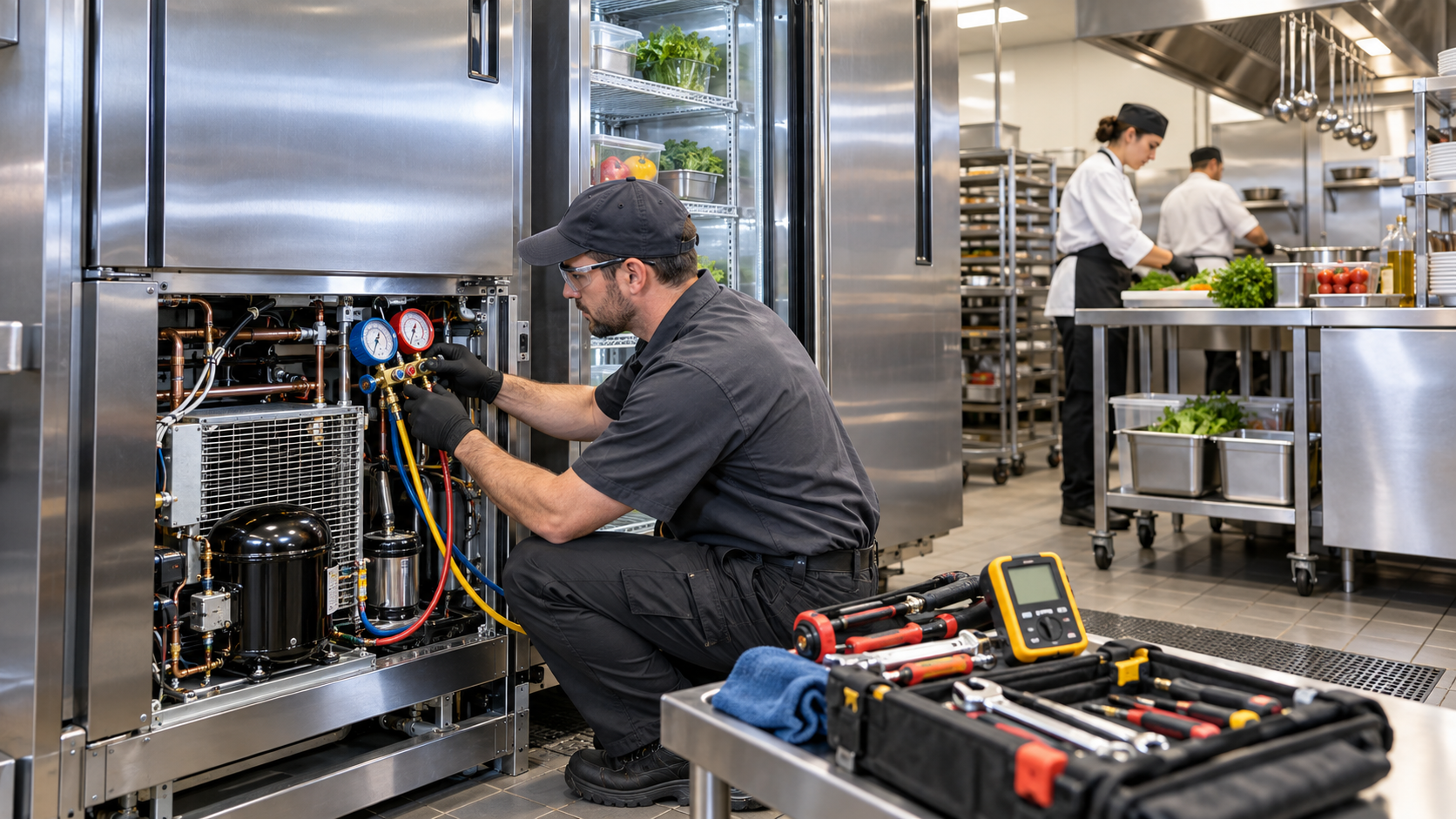
Commercial Fridge Repair becomes critical when a restaurant refrigerator, display cooler, prep table, reach-in unit or other business refrigeration system stops maintaining its required temperature. Commercial equipment often runs continuously while storing valuable food, beverages, ingredients or other temperature-sensitive products, so even a small fault can quickly become an operational and financial problem. Warning signs such as rising cabinet temperature, excessive frost, unusual compressor noise, leaking water or repeated cycling should be investigated before a minor issue develops into a complete refrigeration failure.
Commercial refrigeration differs considerably from a typical household refrigerator.
Restaurant and retail systems may operate for long periods, experience frequent door openings and need to recover quickly after warm products are introduced.
They can also use larger compressors, multiple fans, specialised controllers and refrigerant systems requiring trained service technicians.
For businesses, maintenance is therefore not only about equipment longevity. Reliable refrigeration can also support food safety, stock protection and uninterrupted service.
What Is Commercial Fridge Repair?
Commercial fridge repair involves diagnosing and correcting faults in refrigeration equipment used by businesses.
Typical equipment can include:
- Reach-in refrigerators
- Commercial freezers
- Prep tables
- Display refrigerators
- Glass-door merchandisers
- Under-counter units
- Walk-in refrigeration systems
- Bar coolers
- Bakery refrigeration
- Restaurant cold-storage equipment
A technician may investigate electrical, mechanical, airflow or refrigeration-system problems depending on the symptoms.
Common repairs can involve:
- Thermostats and controllers
- Door seals
- Fans
- Condenser components
- Evaporator components
- Defrost systems
- Compressors
- Electrical wiring
- Drainage systems
- Refrigerant circuits
Not every cooling problem requires a major component replacement.
Sometimes the cause is a blocked condenser, damaged door gasket, failed fan or poor airflow.
Accurate diagnosis should come before expensive repairs.
7 Smart Commercial Fridge Repair Tips for Businesses
Understanding common refrigeration issues can help business owners recognise when maintenance is required and what to discuss with a service provider.
1. Act Quickly When Cabinet Temperature Starts Rising
Temperature problems should not be ignored.
A commercial refrigerator may still sound as though it is operating even while the cabinet becomes progressively warmer.
Possible causes include:
- Dirty condenser coils
- Condenser fan failure
- Evaporator fan problems
- Damaged door seals
- Refrigerant-system faults
- Controller failure
- Defrost problems
- Compressor issues
The technician should investigate the actual cause rather than assuming that refrigerant simply needs to be added.
Monitor Food Temperatures, Not Just the Display
An equipment display can provide useful information, but businesses should also follow appropriate food-safety monitoring procedures.
In the United States, the current FDA Food Code is a model used by many jurisdictions for retail and food-service regulation. FDA guidance uses 41°F or below as an important cold-holding temperature for time/temperature-control-for-safety foods, although businesses must follow the rules adopted by their own state or local authority.
If food has spent too long outside safe temperature control, repairing the refrigerator does not automatically make that food safe again.
Food-handling decisions should follow applicable local health guidance.
Avoid Repeatedly Opening a Failing Unit
When a refrigerator is struggling, unnecessary door openings introduce additional warm air.
Keep the doors closed as much as practical while arranging appropriate backup storage and professional service.
2. Clean the Condenser as Part of Preventive Maintenance
The condenser helps the refrigeration system reject heat.
When it becomes covered with grease, dust or debris, airflow can decrease and the system may have to work harder.
Commercial kitchens can be especially challenging because airborne grease can combine with dust and form a thick layer on condenser surfaces.
Potential consequences can include:
- Longer compressor operation
- Higher energy consumption
- Poor cooling performance
- Higher component temperatures
- Premature equipment wear
Cleaning Frequency Depends on the Environment
There is no perfect schedule for every business.
A refrigerator in a clean office break room may require less frequent condenser cleaning than one beside a busy fryer in a commercial kitchen.
The manufacturer’s maintenance schedule should be followed where available.
Do Not Damage the Coil
Condenser fins can be delicate.
Aggressive cleaning or incorrect tools can bend fins and restrict airflow.
If the condenser is difficult to access or heavily contaminated, professional maintenance may be safer.
Commercial Fridge Repair Can Often Be Prevented With Routine Cleaning
Preventive maintenance does not eliminate every possible failure, but keeping heat-exchange surfaces clean can reduce unnecessary strain.
Technicians can also inspect fan operation, electrical connections and temperature performance during the same visit.
3. Inspect Door Gaskets and Closing Mechanisms
A refrigerator door must close and seal correctly.
A torn, hardened or loose gasket allows warm, humid air to enter the cabinet.
That can cause:
- Longer compressor cycles
- Frost
- Condensation
- Unstable temperatures
- Increased energy use
Door problems are relatively simple compared with many refrigeration faults, but they can create significant operational issues when ignored.
Perform a Visual Check
Look for:
- Cracks
- Tears
- Loose sections
- Food debris
- Areas that no longer contact the cabinet
Clean gaskets according to the equipment manufacturer’s instructions.
Grease and food residue can prevent a proper seal.
Check Hinges and Alignment
The gasket itself may be fine while the door is sagging or misaligned.
Worn hinges or damaged closing mechanisms can prevent the door from sitting correctly against the cabinet.
Heavy doors used hundreds of times per day naturally experience wear.
4. Treat Ice Buildup as a Symptom
A thick layer of ice inside commercial refrigeration equipment should not simply be removed repeatedly without investigating why it returns.
Possible causes can include:
- Failed defrost heater
- Defrost timer or controller problem
- Faulty temperature sensor
- Evaporator fan issue
- Drain problem
- Door left open
- Damaged gasket
Excessive frost can restrict airflow through the evaporator.
When airflow decreases, some parts of the cabinet may become too warm even though the evaporator itself is covered in ice.
Do Not Use Sharp Tools to Remove Ice
Puncturing an evaporator or refrigerant line can turn a defrost problem into an expensive refrigeration-system repair.
Follow manufacturer-approved defrost procedures or call a technician.
Check Operating Habits Too
Sometimes equipment faults are only part of the problem.
Staff may leave doors open while stocking, overload shelves or block internal airflow.
Operational habits should be reviewed alongside mechanical diagnosis.
5. Use Qualified Technicians for Refrigerant Work
Refrigerant work requires technical knowledge and, in many jurisdictions, specific certification.
In the United States, EPA Section 608 regulations require technicians who maintain, service, repair or dispose of refrigeration and air-conditioning equipment in ways that could release regulated refrigerants to hold appropriate technician certification.
EPA currently recognises Type I, Type II, Type III and Universal Section 608 certifications depending on the equipment being serviced.
Refrigerant Does Not Normally Get Used Up Like Fuel
A sealed refrigeration system is not designed to consume refrigerant during ordinary operation.
If the charge is low, a leak may exist.
Simply adding refrigerant repeatedly without addressing the underlying problem can result in continuing failure and additional cost.
A qualified technician may need to:
- Diagnose the system
- Locate leaks
- Repair affected components
- Evacuate appropriately
- Recharge according to specification
- Verify operating performance
The exact process depends on the system and applicable regulations.
Refrigerant Type Matters
Different commercial systems use different refrigerants.
Technicians must identify the correct refrigerant and follow relevant safety, environmental and equipment requirements.
Incorrect refrigerant handling can damage equipment and create safety or regulatory problems.
6. Pay Attention to Unusual Sounds and Compressor Cycling
Commercial refrigeration produces normal operating noise.
Fans start and stop.
Compressors cycle.
Defrost systems can create temporary changes in sound.
However, new or unusually loud noises can indicate a developing problem.
Listen for:
- Grinding
- Rattling
- Repeated clicking
- Buzzing
- Squealing
- Excessive vibration
Short Cycling Deserves Investigation
Short cycling occurs when equipment turns on and off unusually frequently.
Potential causes can include:
- Dirty condenser
- Control problems
- Electrical issues
- Incorrect system pressures
- Compressor protection devices
- Refrigeration-system faults
Frequent cycling can increase wear.
A technician should measure operating conditions rather than replace components based solely on sound.
A Compressor That Never Stops Can Also Signal Trouble
Long run times may result from:
- Heavy product loading
- High ambient temperature
- Door leakage
- Poor condenser airflow
- Low cooling capacity
- System faults
Operating conditions should always be considered.
A refrigerator working in an extremely hot kitchen has a different load from the same model operating in a cooler environment.
7. Build Preventive Maintenance Into Business Operations
Waiting until refrigeration stops completely can be expensive.
A preventive maintenance programme can identify developing issues before they cause emergency downtime.
Maintenance may include:
- Temperature checks
- Condenser cleaning
- Fan inspection
- Gasket inspection
- Drain cleaning
- Electrical inspection
- Controller checks
- Defrost-system review
- Refrigeration performance testing
The precise checklist should follow the equipment type and manufacturer’s recommendations.
Keep Service Records
Maintain records showing:
- Service date
- Equipment model
- Reported problem
- Work completed
- Components replaced
- Temperature readings
- Technician recommendations
This history can make future diagnosis easier.
Repeated repairs to the same component may indicate a larger underlying problem.
Record Equipment Details
Businesses with several refrigerators should label each unit.
Keep the model and serial number accessible.
When calling for service, this information can help the technician identify likely parts before arriving.
Common Signs You Need Commercial Fridge Repair
Several symptoms suggest that professional service may be needed.
Refrigerator Is Not Cold Enough
This is one of the most obvious warning signs.
Potential causes range from simple airflow problems to major compressor faults.
Check whether:
- Doors close properly
- Air vents are blocked
- The unit has power
- The thermostat has been changed accidentally
If basic checks do not explain the issue, arrange professional diagnosis.
Refrigerator Is Too Cold
Commercial refrigerators can also cool excessively.
Food may begin freezing even though the equipment is supposed to operate above freezing.
Possible causes include controller, sensor or airflow problems.
Water Is Leaking
Water near the refrigerator may result from:
- Blocked drain
- Defrost drainage problem
- Condensation
- Damaged drain pan
- Water-supply issue on equipment with additional features
Do not assume every puddle is a refrigerant leak.
Many refrigerants would not appear as an ordinary pool of water.
Excessive Condensation
Moisture around doors or inside the cabinet can indicate:
- Door gasket problems
- High humidity
- Frequent door opening
- Heater problems on applicable equipment
Persistent condensation deserves investigation because it can also create slippery floors and sanitation concerns.
Electrical Breaker Keeps Tripping
Repeated breaker trips should not be dismissed.
Electrical faults can involve:
- Compressor components
- Motors
- Wiring
- Short circuits
- Overloaded circuits
Resetting a breaker repeatedly without identifying the cause can be unsafe.
Use a qualified refrigeration or electrical professional as appropriate.
Commercial Fridge Repair for Restaurants
Restaurant refrigeration works in demanding conditions.
Doors open frequently, warm ingredients are added and equipment may sit near ovens, grills or fryers.
Downtime can interrupt:
- Food preparation
- Service
- Inventory storage
- Closing procedures
Restaurants should therefore identify backup cold-storage options before an emergency occurs.
Protect Food During a Breakdown
Move potentially hazardous food into properly functioning refrigeration where possible.
Use calibrated thermometers and follow applicable food-safety rules.
Do not rely solely on how cold food feels to the touch.
The FDA Food Code explains why maintaining time/temperature-control-for-safety foods at appropriate cold-holding temperatures helps limit pathogen growth.
Commercial Fridge Repair for Grocery and Retail Stores
Retail refrigeration may include large display cases and glass-door merchandisers.
Problems can affect substantial inventory at once.
Store operators should monitor:
- Product temperature
- Case airflow
- Door function
- Lighting where heat is relevant
- Frost buildup
- Alarms
Open display equipment can be especially sensitive to blocked air curtains or incorrect product loading.
Staff should follow manufacturer loading limits instead of stacking products into airflow paths.
Commercial Fridge Repair for Bars and Cafes
Bars, cafes and hospitality venues often rely on under-counter refrigeration, bottle coolers and prep refrigerators.
Common operating challenges can include:
- Tight ventilation spaces
- Dust
- Beverage spills
- Frequent door opening
Ensure ventilation openings remain clear.
Placing equipment too close to walls or blocking condenser airflow can raise operating temperature.
Should You Repair or Replace a Commercial Refrigerator?
Repair is not always the most economical choice.
Factors to consider include:
- Equipment age
- Repair history
- Parts availability
- Energy efficiency
- Refrigerant type
- Cost of repair
- Reliability requirements
Repair May Make Sense When
The unit is relatively new, parts remain available and the fault involves a limited component.
Examples might include a failed fan, controller or door component.
Replacement May Make More Sense When
The equipment has repeated failures, major structural damage or an expensive compressor problem on an older unit.
Obsolete refrigerant systems and poor parts availability can also affect the decision.
Ask for a written repair estimate when the cost is substantial.
Compare it with replacement price and expected future reliability.
How Much Does Commercial Fridge Repair Cost?
There is no universal repair price.
Costs vary according to:
- Equipment type
- Fault
- Parts
- Refrigerant
- Labour
- Service location
- Emergency timing
A minor gasket or thermostat repair is very different from replacing a compressor.
After-hours emergency calls can also cost more than scheduled maintenance.
Ask for Clear Pricing
Before authorising major work, ask whether the estimate includes:
- Call-out fee
- Diagnostic labour
- Parts
- Refrigerant
- Additional labour
- Taxes
Some problems cannot be fully priced until diagnosis is completed.
A professional provider should explain this clearly.
How to Choose a Commercial Fridge Repair Company
Businesses depend heavily on refrigeration, so service-provider selection matters.
Look for:
- Commercial refrigeration experience
- Appropriate licences or certifications
- Insurance
- Clear communication
- Parts sourcing capability
- Emergency support where required
Ask About Your Equipment Type
A technician experienced mainly with residential refrigerators may not regularly work on larger commercial systems.
Ask whether the company services your:
- Brand
- Equipment category
- Refrigerant
- Controller system
Ask About Warranty
Find out what warranty applies to installed parts and labour.
Keep invoices and service documentation.
Preventive Maintenance vs Emergency Repair
Emergency repair solves an immediate failure.
Preventive maintenance aims to reduce the probability of that failure occurring unexpectedly.
Both are important, but prevention is generally easier to schedule around business operations.
Routine service can also identify issues such as:
- Worn door gaskets
- Dirty condensers
- Weak fan motors
- Drain blockage
- Abnormal temperature trends
before they result in total equipment loss.
Commercial Refrigeration Energy Efficiency
A poorly maintained refrigerator may consume more electricity because it needs to run longer to remove heat.
Efficiency can be affected by:
- Dirty condenser coils
- Door leakage
- Poor ventilation
- Incorrect controls
- Ice buildup
- Faulty fans
Maintenance therefore supports both reliability and operating efficiency.
However, unusually high energy use can have several causes, so measurement and diagnosis are preferable to assumptions.
Staff Practices That Reduce Refrigerator Problems
Employees can help keep equipment operating correctly.
Train staff to:
- Close doors promptly
- Avoid blocking vents
- Report unusual temperatures
- Avoid overloading shelves
- Clean spills
- Report damaged gaskets
They should also know which unit is used for which products.
Clear operating procedures reduce misuse.
Frequently Asked Questions
What are the most common Commercial Fridge Repair problems?
Common problems include poor cooling, damaged door seals, dirty condensers, fan failures, frost buildup, controller faults, drainage problems and refrigeration-system issues.
Why is my commercial refrigerator running constantly?
Continuous operation may result from heavy product loads, a warm environment, damaged door seals, dirty condenser coils or a refrigeration fault. Professional diagnosis can identify the cause.
Can I add refrigerant to a commercial fridge myself?
Refrigerant work may require specific certification and equipment. In the United States, EPA Section 608 certification applies to technicians performing regulated refrigeration servicing activities.
What temperature should commercial food refrigeration maintain?
For U.S. food-service operations, the FDA Food Code uses 41°F or below for cold holding of many time/temperature-control-for-safety foods. Businesses must follow the requirements adopted by their local regulatory authority.
How often should a commercial refrigerator be serviced?
There is no single schedule for every unit. Maintenance frequency depends on equipment type, operating environment and manufacturer recommendations, with busy kitchens often requiring more frequent cleaning and inspection.
Is it better to repair or replace an old commercial refrigerator?
Consider age, repair history, parts availability, efficiency and the cost of the current fault. Repeated major failures can make replacement more economical than continued repairs.
Conclusion
Commercial Fridge Repair is essential when business refrigeration develops temperature, airflow, electrical or mechanical problems that threaten equipment reliability and stored inventory. Fast diagnosis, qualified refrigerant work, clean condensers, intact door seals and preventive maintenance can reduce avoidable breakdowns and expensive downtime. Businesses that monitor temperatures, maintain service records and respond early to warning signs are better positioned to keep refrigeration dependable and protect day-to-day operations.