How to Choose an Air Conditioning Company for Reliable Home Comfort
When summer temperatures rise, a dependable cooling system becomes essential for maintaining a comfortable indoor environment. Choosing the right air conditioning company can influence everything from equipment performance and energy efficiency to repair costs and long term reliability. Professional HVAC contractors do much more than install equipment. They evaluate cooling requirements, inspect airflow, diagnose problems, maintain systems and help homeowners understand whether repair or replacement makes practical sense. For homeowners planning a new AC installation or trying to improve an existing system, knowing what to expect from a qualified contractor makes the decision process considerably easier.
Air conditioning technology has also evolved. Modern systems can include variable capacity compressors, smart thermostats, heat pumps, advanced filtration and efficiency ratings designed to help consumers compare equipment. However, even advanced equipment depends heavily on correct design and installation.
ENERGY STAR emphasizes that proper HVAC installation includes correct equipment sizing, airflow, refrigerant charge and duct evaluation. Problems in any of these areas can reduce comfort and efficiency.
This guide explains the most important services an HVAC contractor provides, seven major benefits of professional air conditioning service and the questions homeowners should ask before scheduling installation, maintenance or repair.
What Does an Air Conditioning Company Do?
An air conditioning company provides professional services for residential or commercial cooling systems.
The exact services vary by contractor, but many companies provide installation, maintenance, repair, replacement and system evaluation.
A residential contractor may work with:
- Central air conditioners
- Heat pumps
- Ductless mini split systems
- Thermostats and controls
- Indoor air quality equipment
- Duct systems
- Condensate drainage
- Electrical components
- Refrigerant systems
- Air handlers and blower equipment
The contractor’s role should begin with understanding the property rather than immediately recommending a particular product.
Every home has different cooling requirements.
Square footage matters, but it is not the only consideration. Insulation, windows, orientation, air leakage, local climate and the condition of existing ductwork can all affect cooling demand.
This is why professional equipment selection involves more than replacing an old system with another unit of the same nominal capacity.
7 Powerful Benefits of Hiring an Air Conditioning Company
1. Professional AC System Sizing
Correct sizing is one of the most important parts of air conditioning installation.
Some homeowners assume a larger system will cool a house better. In reality, equipment that is significantly oversized can create its own problems.
ENERGY STAR explains that oversized HVAC equipment can cycle too frequently, which may reduce comfort and shorten equipment life. It recommends that contractors evaluate the actual characteristics of the home instead of relying only on simple rules of thumb.
Professional contractors can calculate the home’s cooling load before recommending equipment.
Factors commonly considered include:
- Property size
- Ceiling height
- Window area
- Insulation
- Building orientation
- Air leakage
- Local weather conditions
- Number of occupants
- Heat producing appliances
- Existing ductwork
Accurate sizing helps the system operate more closely to the conditions for which it was designed.
How an Air Conditioning Company Determines Cooling Needs
ENERGY STAR recommends using established HVAC design practices, including Manual J calculations, to determine heating and cooling requirements.
A proper evaluation can reveal that two houses with similar square footage require different equipment capacities.
For example, a well insulated home with efficient windows may have a different cooling load from an older property with significant air leakage.
This is why capacity should be based on the building rather than square footage alone.
2. Professional Air Conditioner Installation
Purchasing quality equipment is only one part of getting good cooling performance.
Installation quality matters as well.
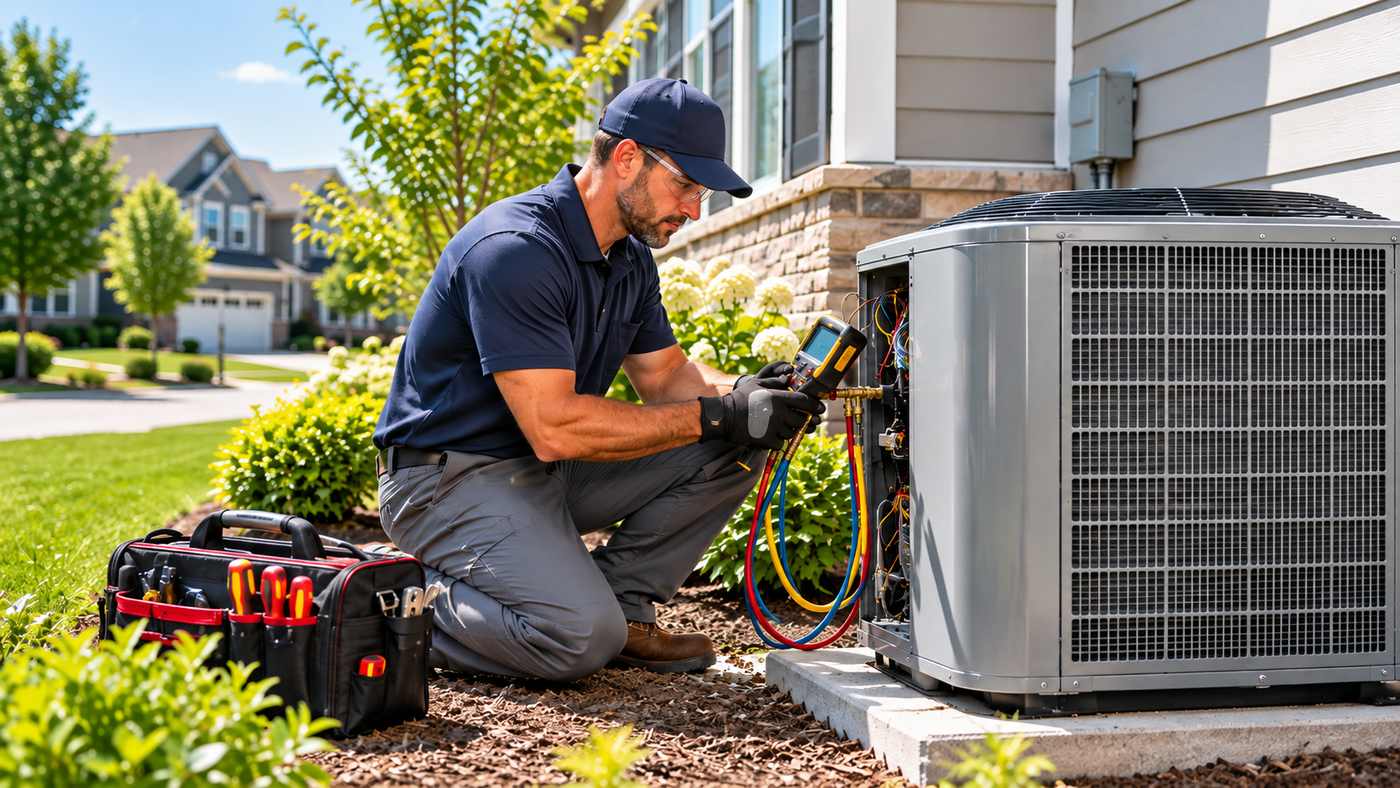
The contractor must correctly position equipment, connect refrigerant lines, establish proper drainage, verify electrical connections, set airflow and test the system.
ENERGY STAR specifically identifies refrigerant charge, airflow and duct condition as important elements of HVAC installation quality.
Incorrect refrigerant levels can reduce efficiency and contribute to equipment problems.
Poor airflow can also affect comfort and system performance.
This means homeowners should evaluate the contractor as carefully as they evaluate the equipment brand.
What an Air Conditioning Company Should Check After Installation
After installation, the contractor should verify that the complete system operates correctly.
Important checks can include:
- Thermostat operation
- Supply air performance
- Return airflow
- Refrigerant levels
- Electrical connections
- Condensate drainage
- Outdoor unit operation
- Indoor blower performance
- System controls
- Overall cooling response
The homeowner should also receive information about system operation, maintenance requirements and applicable warranties.
A professional installation should finish with a working system and a homeowner who understands how to use it.
3. Reliable Air Conditioning Repair
Cooling equipment contains electrical, mechanical and refrigeration components that can develop problems over time.
Common symptoms of an AC problem can include weak airflow, unusual sounds, warm air, frequent cycling, water around indoor equipment or inconsistent temperatures.
Not every symptom identifies the cause.
Weak cooling could result from airflow restrictions, equipment problems, refrigerant issues, thermostat settings or duct related concerns.
A professional technician uses diagnostic procedures to identify the underlying issue before recommending repairs.
That diagnostic process is important because replacing parts without confirming the cause can waste money and leave the actual problem unresolved.
AC Problems That Need Professional Attention
Homeowners should consider professional service when they notice persistent performance issues.
Examples can include:
- Air conditioner will not start
- System runs but does not cool properly
- Circuit breaker repeatedly trips
- Unusual electrical or mechanical smells appear
- Indoor unit leaks water
- Outdoor unit makes unusual sounds
- Cooling performance suddenly declines
- System operates for unusually long periods
- Some rooms remain consistently uncomfortable
- Thermostat and equipment do not communicate properly
Electrical and refrigerant work should be left to appropriately qualified technicians.
Homeowners can safely perform basic tasks such as checking filters and keeping the outdoor unit clear of leaves or debris, but technical repairs require the appropriate knowledge and equipment.
4. Preventive AC Maintenance
Air conditioners work under demanding conditions during hot weather.
Routine maintenance can help identify developing problems before they become more disruptive.
ENERGY STAR recommends annual pre season HVAC checkups and suggests scheduling cooling system maintenance in spring before contractors become busiest during summer.
Professional maintenance can include checking:
- Thermostat settings
- Electrical connections
- Voltage and current
- Condensate drainage
- System controls
- Evaporator coils
- Condenser coils
- Refrigerant level
- Blower components
- Overall system operation
ENERGY STAR also notes that dirty coils can reduce cooling performance and cause equipment to run longer.
Preventive maintenance does not guarantee that equipment will never fail, but it can give homeowners an opportunity to identify obvious problems earlier.
Simple Maintenance Homeowners Can Perform
Professional service should be combined with basic homeowner care.
One of the simplest tasks is checking the air filter.
ENERGY STAR recommends inspecting central HVAC filters monthly and cleaning or replacing them when necessary. A dirty filter can make the system work harder and potentially contribute to higher energy consumption and equipment problems.
Homeowners can also:
- Keep supply vents open and unobstructed
- Avoid blocking return air grilles
- Remove leaves from around outdoor equipment
- Follow manufacturer maintenance instructions
- Watch for unusual noises or odors
- Check whether the thermostat is operating normally
These simple habits can support professional maintenance.
5. Better Understanding of AC Energy Efficiency
Air conditioner efficiency ratings can be confusing if homeowners are unfamiliar with HVAC terminology.
One important current rating is SEER2.
The United States Department of Energy explains that the testing and efficiency terminology for central air conditioners changed in 2023, including the use of SEER2 for cooling efficiency.
A higher efficiency system can use less electricity under standardized test conditions compared with a lower efficiency alternative, but the real result depends on several factors.
These include:
- Climate
- Home insulation
- Thermostat settings
- Installation quality
- Equipment sizing
- Duct leakage
- Maintenance
- Local electricity prices
Homeowners should therefore avoid choosing equipment solely because it has the highest efficiency number.
The best value depends on the property, budget and expected use.
An experienced contractor should explain available efficiency options and how they relate to the homeowner’s circumstances.
6. Ductwork and Airflow Evaluation
The air conditioner itself is only one part of a central cooling system.
Ductwork distributes conditioned air throughout the property.
If ducts leak, are poorly designed or restrict airflow, even high quality cooling equipment may struggle to provide consistent comfort.
ENERGY STAR advises homeowners to ask contractors to evaluate duct systems and address leakage where necessary.
Airflow problems can lead to rooms that feel warmer or cooler than expected.
They can also make homeowners incorrectly assume that the air conditioning unit is too small.
A qualified contractor can consider the complete air distribution system when investigating comfort problems.
Signs That Ductwork May Need Attention
Potential signs can include:
- Significant temperature differences between rooms
- Weak airflow at certain vents
- Excessive dust around registers
- Visible damaged duct sections
- Unusual air movement noises
- Rooms that never reach the expected temperature
These symptoms do not automatically prove that ductwork is responsible.
They simply indicate that the distribution system may need to be included in the diagnostic process.
7. Help Deciding Between AC Repair and Replacement
Homeowners eventually face the question of whether an aging air conditioner should be repaired or replaced.
There is no single answer for every system.
A professional evaluation should consider several factors.
These include equipment age, condition, repair history, efficiency, availability of replacement parts and the cost of the current repair.
A small repair on an otherwise dependable system may be reasonable.
Repeated failures on older equipment can create a different financial decision.
The contractor should explain what failed, what the repair involves and whether other major components show signs of deterioration.
Homeowners can then make a decision based on information rather than pressure.
How to Choose the Right Air Conditioning Company
Choosing a contractor deserves careful research.
Start by confirming whether the company meets applicable state and local licensing requirements.
HVAC licensing and permit requirements differ by jurisdiction, so homeowners should check the rules where the property is located.
Insurance is also important.
Ask whether the contractor carries appropriate business insurance and whether technicians have relevant training.
Professional credentials can provide additional information.
ENERGY STAR suggests looking for contractors with recognized HVAC credentials from organizations such as North American Technician Excellence or the Air Conditioning Contractors of America.
Experience should also relate to the type of system being serviced.
A contractor who routinely works with central air conditioning may have different experience from one specializing in ductless heat pumps or large commercial equipment.
Questions to Ask an Air Conditioning Company
Before approving work, ask clear questions.
Useful questions include:
- What did you identify during the inspection?
- How was the equipment size determined?
- What equipment is included in the quote?
- Are labor and materials included?
- What warranty applies?
- Will permits be required?
- Is ductwork included in the evaluation?
- What maintenance does the equipment require?
- How will refrigerant charge be verified?
- What happens if additional work is discovered?
Written estimates make comparisons easier.
The estimate should identify the work being performed and provide enough detail for the homeowner to understand what is included.
Air Conditioning Installation Versus Replacement
New installation and replacement are not always the same type of project.
A replacement may involve removing existing equipment and installing a new system within an established HVAC layout.
A first time installation could require more extensive work involving ducts, electrical service, drainage or structural access.
Even during replacement, contractors should not automatically assume the old system was correctly designed.
The new equipment should still be evaluated against the home’s current requirements.
Changes to insulation, windows, room additions or other building improvements may have changed the cooling load since the original system was installed.
Central AC Versus Heat Pumps
Homeowners shopping for cooling equipment may also encounter heat pumps.
A heat pump can provide cooling in summer while reversing operation to provide heating during colder weather.
Whether a heat pump or conventional air conditioner makes more sense depends on climate, existing heating equipment, energy costs and household priorities.
ENERGY STAR recommends discussing equipment selection with an HVAC professional and notes that heat pumps can sometimes be combined with existing furnaces in dual fuel configurations.
The decision should be based on the individual property rather than general assumptions.
Why Airflow Is Critical to Home Comfort
Airflow is one of the least visible but most important parts of HVAC performance.
The system must move an appropriate amount of air across indoor equipment and through the distribution system.
Restricted airflow can reduce comfort and make the equipment work under less favorable conditions.
According to ENERGY STAR, airflow problems can reduce system efficiency and affect comfort.
This is why filter condition, blower performance and duct design deserve attention during service calls.
A contractor who only examines the outdoor condenser may miss problems elsewhere in the system.
Understanding AC Repair Costs
Air conditioning repair costs vary widely because the underlying problems can be very different.
A minor electrical component replacement is not comparable to a major compressor repair.
Price can also depend on:
- Equipment model
- Part availability
- Labor requirements
- System accessibility
- Refrigerant related work
- Local market conditions
- Emergency service timing
- Warranty status
Rather than relying on generic online price estimates, homeowners should request a diagnosis and written quote for their specific system.
If the proposed repair is expensive, asking what alternatives are available can help clarify the decision.
When Should You Call an Air Conditioning Company?
It is usually better to investigate unusual system behavior before complete cooling failure occurs.
Consider arranging service if cooling performance changes noticeably, electricity consumption appears unusual or equipment begins making unfamiliar noises.
Professional help may also be appropriate when the system operates continuously without maintaining the thermostat setting.
Water around indoor HVAC equipment should also be investigated.
Some issues may be relatively simple, while others can indicate drainage or mechanical problems.
Homeowners should not open electrical panels or attempt refrigerant repairs without the necessary qualifications.
How Professional AC Service Supports Long Term Comfort
A reliable home cooling strategy combines several elements.
The equipment should be appropriately sized.
Installation should follow manufacturer and industry requirements.
Airflow should be checked.
Filters and coils should be maintained.
Ductwork should be considered where comfort problems exist.
Homeowners should also understand how their thermostat settings and daily habits affect system operation.
No single piece of equipment can compensate for every problem elsewhere in the home.
For example, poor insulation or significant air leakage may increase cooling demand even when the air conditioner itself is functioning properly.
A good HVAC contractor can identify when the cooling system is only one part of a broader comfort issue.
Frequently Asked Questions
What services does an air conditioning company provide?
An air conditioning company commonly provides AC installation, repair, replacement, maintenance, system sizing, airflow evaluation, thermostat service and related HVAC support.
How often should an air conditioner receive professional maintenance?
ENERGY STAR recommends annual pre season maintenance for cooling equipment, ideally before the busiest summer period.
How do I choose a reliable air conditioning company?
Check applicable licensing, insurance, relevant experience, technician qualifications, written estimates, warranties and whether the contractor performs proper equipment sizing and system testing.
Should an air conditioning company inspect ductwork?
Yes, particularly when airflow or comfort problems exist. ENERGY STAR recommends evaluating ducts because leakage and airflow issues can reduce comfort and efficiency.
Is a bigger air conditioner always better?
No. Oversized equipment can cycle too frequently and may reduce comfort. Proper sizing should be based on the home’s actual cooling requirements.
What is SEER2 in air conditioning?
SEER2 is a current seasonal cooling efficiency metric used for central air conditioners and heat pumps under updated United States Department of Energy testing procedures.
Conclusion
Choosing the right air conditioning company can make a significant difference in cooling performance, comfort and the overall experience of maintaining an HVAC system. Professional contractors can help homeowners with correct sizing, installation, repairs, preventive maintenance, airflow and efficiency decisions while identifying problems that may extend beyond the AC unit itself. By comparing qualifications, asking detailed questions and maintaining equipment consistently, homeowners can make better informed decisions about reliable indoor cooling