Plumbing Repair Explained: How to Fix Problems and Protect Your Home
Timely plumbing repair can stop water loss, prevent additional property damage, restore drainage, and keep essential fixtures working correctly. A plumbing problem may be as simple as a worn faucet component, but symptoms such as low water pressure, recurring drain backups, unexplained dampness, or water stains can also point to problems hidden behind walls or underground. Effective repairs start with identifying the actual source instead of repeatedly treating the visible symptom. This guide covers common plumbing problems, emergency response, repair options, costs, prevention, and the situations where a qualified plumber is the appropriate choice.
What Is Plumbing Repair?
Plumbing repair is the process of diagnosing and correcting problems within a property’s water supply, drainage, venting, fixtures, valves, water heating connections, and related components.
The scope ranges from replacing a simple fixture component to repairing concealed pipe failures or sections of a building’s drainage system.
Good troubleshooting asks two questions: what failed and why did it fail?
What Does Plumbing Repair Include?
Depending on the property, common work can include:
• Leaking pipes and fittings
• Dripping faucets
• Running toilets
• Clogged sinks and tubs
• Drain line problems
• Failed shutoff valves
• Low water pressure investigations
• Water heater plumbing issues
• Garbage disposal plumbing connections
• Sewer line problems
• Outdoor plumbing leaks
• Fixture replacement
Some projects are straightforward maintenance tasks. Others involve regulated plumbing work, hazardous conditions, or specialized diagnostic equipment.
Why Prompt Plumbing Repair Matters
Water can migrate through drywall, flooring, insulation, cabinets, framing, and other concealed areas.
A small visible stain does not necessarily indicate a small leak.
Prompt source control and drying can limit additional damage. Persistent moisture can also create conditions favorable to mold growth.
7 Powerful Plumbing Repair Tips for Better Results
A logical troubleshooting process can help homeowners respond effectively without creating unnecessary damage. These seven principles apply to many common residential plumbing situations.
1. Locate the Problem Before Starting Plumbing Repair
Avoid replacing components based on guesswork.
Water often travels away from its original source before becoming visible. A ceiling stain can originate from plumbing, roofing, HVAC condensation, or another source.
Look for Signs of Plumbing Leaks
Possible indicators include:
• Damp cabinets
• Water stains
• Dripping sounds
• Wet flooring
• Unexplained puddles
• Swollen trim or cabinetry
• Peeling finishes
• Persistent musty odors
• Unusual changes in water consumption
These symptoms justify investigation but do not necessarily reveal the exact failed component.
Inspect Accessible Connections
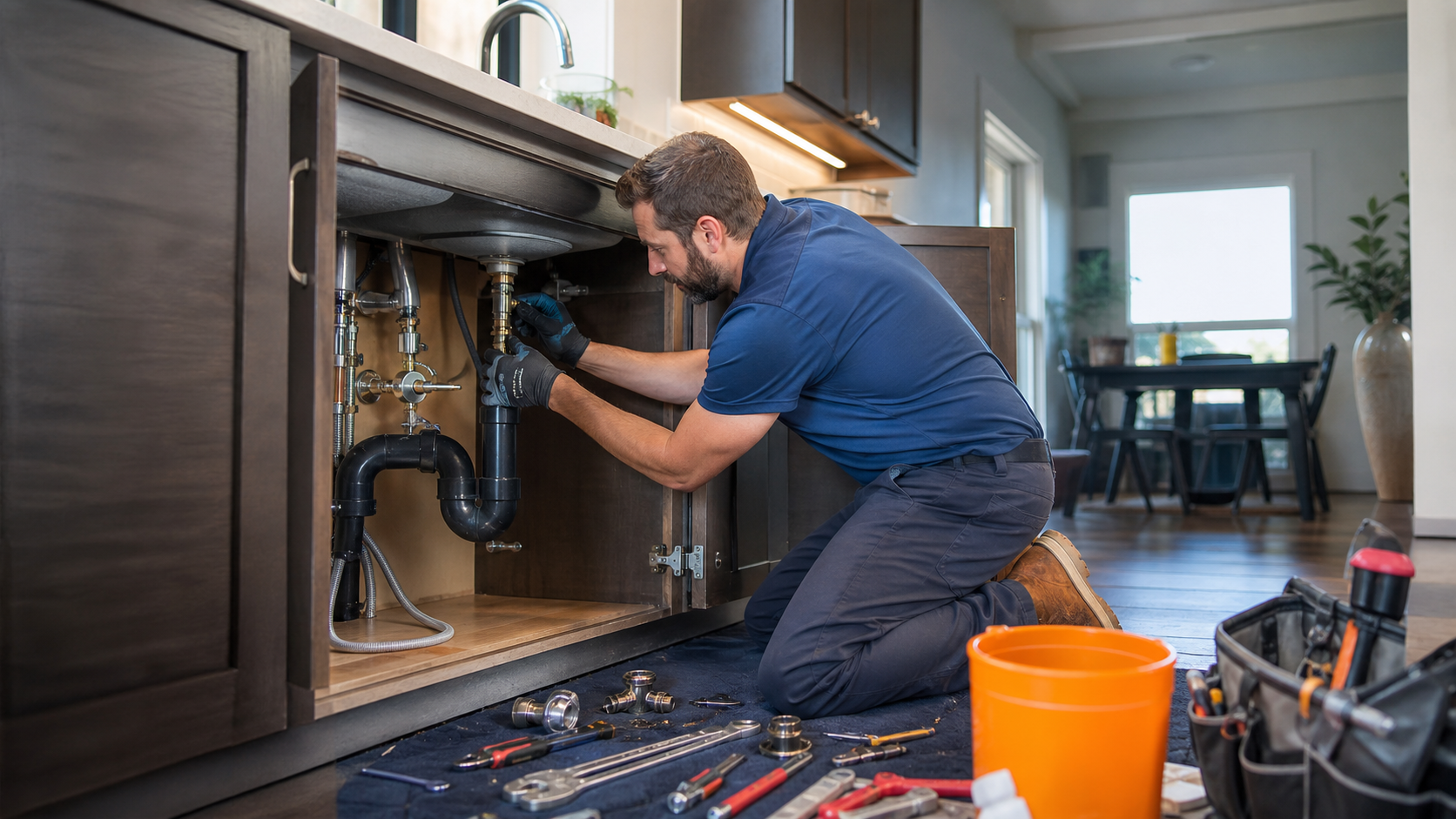
Begin with easily visible plumbing around sinks, toilets, appliances, water heaters, and exposed pipes.
Use a flashlight to look for moisture around valves, supply connections, drain fittings, and fixture bases.
Dry the Area Before Testing
Where safe, drying accessible surfaces can make active leakage easier to identify.
Run or operate the relevant fixture and observe where water first appears.
Do not continue testing if doing so is causing substantial property damage.
2. Know How to Stop Water During an Emergency
Every household should know where important plumbing shutoffs are located.
Rapidly stopping water flow can substantially reduce damage from a failed supply pipe or fixture connection.
Fixture Shutoff Valves
Many toilets, sinks, and appliances have local valves that allow their water supply to be isolated without shutting water off to the entire property.
Do not force a valve that is visibly corroded, damaged, or seized.
A plumber can replace unreliable shutoffs.
Main Water Shutoff
The main valve controls the building’s water supply.
Its location varies by building and climate. Homeowners should identify it before an emergency and understand how it is intended to operate.
If the valve does not function correctly, arrange repair rather than waiting for a future pipe failure.
Know When Electricity Creates an Additional Hazard
Water near outlets, panels, wiring, appliances, or other electrical equipment introduces a potentially serious risk.
Do not stand in water to reach electrical controls.
If water has affected electrical equipment or safe isolation is uncertain, stay clear and contact qualified professionals.
3. Match Plumbing Repair Materials Correctly
Residential plumbing can contain copper, PEX, CPVC, PVC, cast iron, galvanized steel, and other materials depending on age and application.
A repair method must be suitable for the specific material and service.
Water Supply Pipe Repairs
Potable water pipes operate under pressure and require fittings and materials approved for that use.
Connections should follow manufacturer instructions and applicable plumbing requirements.
Drain Pipe Repairs
Drain, waste, and vent piping operates differently from pressurized water supply piping.
Slope, fitting geometry, venting, pipe sizing, and cleanout access can affect drainage performance.
A fitting appropriate for a water line is not automatically appropriate for drainage.
Avoid Improvised Permanent Repairs
Tape, general purpose adhesive, or an unsuitable clamp may sometimes reduce leakage temporarily, but it should not be assumed to constitute a permanent code compliant repair.
Permanent work should use approved materials suitable for the pipe, pressure, temperature, and location.
4. Handle Drain Plumbing Repair Carefully
A slow or blocked drain is one of the most common household plumbing complaints.
The location and number of affected fixtures can provide diagnostic clues.
One Fixture Drains Slowly
When only one sink or tub is affected, a localized blockage may be more likely.
Hair, soap residue, food waste, grease, or another obstruction can collect near traps or fixture drains.
Multiple Fixtures Back Up
When several fixtures develop drainage problems at approximately the same time, the issue may involve a larger branch drain or main building drain.
Sewage backing up through lower fixtures warrants prompt attention.
Avoid continuing to use water throughout the house if it is worsening the backup.
Be Careful With Chemical Drain Cleaners
Chemical products can contain highly caustic or corrosive ingredients.
They can injure skin and eyes and create hazards for anyone subsequently opening the plumbing.
Follow product warnings precisely and never mix drain cleaners or other household chemicals.
For recurring or significant blockages, mechanical cleaning and professional diagnosis may be more appropriate than repeatedly adding chemicals.
5. Diagnose Water Pressure Before Plumbing Repair
Weak flow at a faucet does not necessarily mean the house needs new pipes.
Pressure and flow problems can have several causes.
Check Whether the Problem Is Localized
If one faucet has poor flow but nearby fixtures operate normally, inspect the fixture’s aerator or other serviceable components according to manufacturer instructions.
Sediment can sometimes restrict flow.
Whole House Pressure Problems
Widespread problems can involve:
• Water utility supply conditions
• Pressure reducing valves
• Main shutoff problems
• Pipe restrictions
• Leaks
• Water treatment equipment
• Pipe sizing
• Other distribution issues
A plumber can measure pressure and evaluate system behavior.
Excessive Pressure Can Also Be Harmful
Higher pressure is not automatically desirable.
Excessive water pressure can place additional stress on valves, appliance connections, fixtures, and piping components.
Where required, appropriately selected pressure regulating equipment should be installed and maintained according to applicable plumbing rules.
6. Know When DIY Plumbing Repair Is Appropriate
Some minor maintenance tasks may be reasonable for homeowners comfortable with basic tools.
Examples can include cleaning certain faucet aerators, replacing accessible fixture components according to manufacturer instructions, or clearing simple debris from a removable sink trap.
Local regulations still apply.
When to Call a Professional Plumber
Professional assistance is appropriate for situations involving:
• Major supply leaks
• Concealed pipe failures
• Sewer backups
• Repeated drain blockages
• Gas related plumbing systems
• Significant water heater problems
• Main service lines
• Extensive corrosion
• Whole house low pressure
• Frozen or burst pipes
• Work requiring permits
• Problems that remain undiagnosed
Qualified plumbers also have equipment for problems that cannot be evaluated visually.
Avoid Work Beyond Your Skill Level
An incorrect repair can create a slow hidden leak that causes more damage than the original problem.
If the piping material, connection method, or applicable requirements are unclear, professional service may be the safer option.
7. Prevent Repeat Plumbing Repair Problems
The best repair addresses the underlying cause whenever it can be determined.
Replacing a failed component without understanding why it repeatedly fails can result in another service call.
Investigate Recurring Leaks
Repeated failures can be associated with:
• Deteriorated piping
• Excessive pressure
• Freeze damage
• Corrosion
• Poor previous workmanship
• Physical movement
• Water chemistry
• Incompatible materials
• Installation defects
The cause varies, so broad conclusions should be avoided.
Keep Plumbing Records
Maintain invoices and document where repairs were completed.
Records can reveal patterns across an older plumbing system.
For concealed repairs, photographs taken before drywall is restored can provide useful information about pipe locations later.
Common Plumbing Repair Problems
Some issues occur frequently across residential properties, although their causes differ from house to house.
Accurate diagnosis remains essential.
Leaking Faucet Repair
A dripping faucet may involve a cartridge, washer, seal, valve component, damaged seat, or another product specific part.
Identify the faucet manufacturer and model when possible before purchasing replacement components.
When Should the Faucet Be Replaced?
A repair may make sense when the fixture remains in good condition and compatible parts are available.
Replacement may be more practical when the fixture is severely corroded, damaged, obsolete, or difficult to service.
Turn Off the Water First
Use the appropriate fixture shutoffs before disassembling the faucet.
Verify that water flow has stopped before removing components.
Running Toilet Plumbing Repair
A toilet that continually runs can consume unnecessary water.
Possible causes include problems with the fill mechanism, flush valve, seal, chain, float adjustment, or other internal components.
Diagnose Before Replacing Parts
Remove the tank lid carefully and observe normal operation where safe.
Manufacturer specific repair kits can simplify replacement for compatible models.
Toilet Leaks Around the Base
Water appearing around a toilet base should be investigated promptly.
Potential causes can include a failed seal, condensation, a supply connection leak, or another fixture problem.
Movement at the toilet can also indicate mounting or floor issues that need attention.
Leaking Pipe Plumbing Repair
Pipe leaks range from visible pinholes to concealed failures behind walls.
The permanent repair depends on material, condition, location, and cause.
Copper Pipe Leaks
Copper systems can develop leaks due to multiple factors, including localized corrosion, damaged joints, freezing, or installation conditions.
Repeated pinhole leaks across a system may justify broader investigation rather than repeated isolated repairs.
PEX Pipe Repairs
PEX systems require compatible fittings and manufacturer appropriate connection methods.
Not all PEX components and tools are interchangeable.
Use products approved for the particular piping system.
Water Heater Plumbing Repair
Water around a water heater requires diagnosis.
The source can include nearby piping, valves, connections, condensation in some situations, or the tank itself.
A Leaking Tank Is Different From a Leaking Connection
A connection may be repairable.
A water heater tank leaking because of internal tank failure generally presents a different situation and may require equipment replacement.
Safety Components Require Care
Water heaters involve hot water, pressure, electricity, or fuel gas.
Do not plug, cap, disable, or alter temperature and pressure relief equipment to stop discharge without appropriate professional diagnosis.
Such safety devices serve an important protective function.
Garbage Disposal Plumbing Repair
A disposal problem may be electrical, mechanical, or plumbing related.
Standing water in the sink does not necessarily prove the disposal itself has failed.
Never Put Hands Inside a Disposal
Disconnecting power does not make reaching into a disposal an appropriate troubleshooting method.
Follow the manufacturer’s service instructions and use intended tools where applicable.
Check Drain Connections
Leaks can occur at sink flanges, dishwasher connections, discharge fittings, or traps.
The source should be located before parts are tightened or replaced.
Excessive tightening can damage some fittings.
Shower and Bathtub Plumbing Repair
Water around a bath or shower can originate from supply plumbing, faucets, drains, overflow assemblies, enclosures, failed sealant, or the surrounding building assembly.
Accurate source identification is particularly important because water can travel behind finishes.
Do Not Assume Caulk Fixes Every Leak
Sealant is appropriate at specific joints but cannot compensate for defective plumbing or failed waterproofing.
Repeatedly applying caulk without diagnosing the problem may conceal continued water damage.
Concealed Shower Leaks
Moisture appearing below a bathroom or behind adjoining walls can require professional testing.
Opening the correct area strategically can reduce unnecessary demolition.
Sewer Line Plumbing Repair
Main drain and sewer problems can produce backups, slow drainage, odors, or unusual behavior across multiple fixtures.
Tree roots, damaged piping, blockages, offsets, deterioration, or other conditions may contribute.
Sewer Camera Inspection
A drain camera can help inspect accessible sections of piping after appropriate cleaning or access.
Images require knowledgeable interpretation.
A visible imperfection does not automatically prove complete sewer replacement is necessary.
Repair Options Depend on Condition
Traditional excavation, localized repair, pipe lining, and other approaches may be available depending on pipe material and damage.
No trenchless technique is universally appropriate.
A contractor should explain why a particular method fits the actual pipe condition.
Plumbing Repair for Frozen Pipes
Pipes can freeze in sufficiently cold environments, particularly in poorly protected areas.
A frozen pipe may split without visibly leaking until it thaws.
Shut Off Water if a Pipe Has Burst
If damage is evident, isolate water before thawing allows substantial flow through the break.
Keep electrical safety in mind when water has reached equipment or wiring.
Avoid Open Flames
Do not use torches or open flames to thaw frozen plumbing.
Fire and building damage risks are substantial.
Professional assistance is advisable when the frozen section is inaccessible or damage is suspected.
Emergency Plumbing Repair
Some plumbing problems should not wait for a routine appointment.
A rapidly flowing supply leak, sewage backup, flooding, or failure affecting electrical equipment warrants immediate attention.
What to Do During a Plumbing Emergency
When safe:
• Shut off the relevant water supply
• Keep people away from contaminated sewage
• Avoid electrical hazards
• Move vulnerable property from dry accessible areas
• Contact an appropriate professional
• Document damage for insurance purposes
Do not endanger yourself to save furnishings or take photographs.
Contact Emergency Services for Immediate Hazards
Gas odors, electrical hazards, structural instability, or other acute dangers can require utilities, emergency services, or specialized professionals rather than only a plumber.
How Much Does Plumbing Repair Cost?
There is no reliable universal price for plumbing service.
A simple accessible fixture repair and a concealed main line failure are entirely different projects.
Plumbing Repair Cost Factors
Pricing can depend on:
• Type of problem
• Repair material
• Accessibility
• Diagnostic work
• Emergency timing
• Local labor rates
• Required permits
• Wall or floor opening
• Restoration work
• Specialty equipment
• Replacement components
Request an estimate after the problem has been diagnosed where practical.
Understand Service Fees
Some contractors charge a service or diagnostic fee separately from repair labor.
Ask how the fee works and whether any portion is credited toward approved repairs.
Request Written Pricing for Larger Repairs
For substantial projects, the written scope should identify materials, labor, permits where applicable, cleanup, exclusions, and restoration responsibilities.
This makes competing estimates easier to compare.
Plumbing Repair Permits and Codes
Some repairs can be performed without permits, while major alterations, replacements, and installations may require approval.
Requirements differ by jurisdiction.
Why Plumbing Codes Matter
Plumbing requirements address sanitation, potable water protection, drainage, venting, materials, sizing, testing, and other safety considerations.
Current local codes should take priority over generic online instructions.
Who Obtains a Permit?
Licensed contractors commonly handle permits for covered projects, but homeowners should confirm responsibility in writing.
Do not assume replacement in the same location means a permit is never required.
Plumbing Repair and Water Damage
Fixing the pipe does not automatically complete water damage restoration.
Wet building materials may require drying, cleaning, removal, or further evaluation.
Hidden Moisture
Water can enter:
• Wall cavities
• Flooring systems
• Insulation
• Cabinets
• Ceiling assemblies
• Crawl spaces
• Basements
Moisture measurements can help determine the extent of affected materials.
Mold Prevention
The U.S. Environmental Protection Agency generally recommends drying wet materials promptly, commonly within about 24 to 48 hours where practical, to reduce the potential for mold growth.
Actual conditions vary, and contaminated water requires additional precautions.
Plumbing Repair and Insurance
Homeowners insurance may cover some sudden water damage depending on the cause and policy terms.
Coverage for the failed plumbing component itself can differ from coverage for resulting property damage.
Document the Event
When safe, photograph damage and retain contractor invoices and emergency mitigation receipts.
Contact the insurer for policy specific requirements.
Maintenance Related Problems
Policies can distinguish sudden accidental events from long term deterioration or maintenance issues.
Only the insurer and applicable policy language can determine coverage for an individual claim.
Choosing a Plumbing Repair Company
A good contractor should diagnose the problem, explain the proposed solution, and provide appropriate documentation.
Licensing requirements vary by jurisdiction.
Questions to Ask a Plumber
Consider asking:
• What caused the problem?
• Is the repair temporary or permanent?
• Which materials will be used?
• Are permits required?
• Are wall repairs included?
• What warranty applies?
• Are other deteriorated sections visible?
• What is included in the price?
The answers should relate directly to observed conditions.
Verify Licensing and Insurance
Check applicable contractor credentials with the relevant state or local authority.
Insurance and experience with the specific work are also worth verifying.
When Plumbing Repair Becomes Repiping
Repeated leaks throughout an aging water distribution system can eventually make broad replacement worth considering.
Repiping should not be recommended merely because one fitting fails.
When to Evaluate Repiping
Consider a broader assessment when there is widespread corrosion, recurring pipe failure in multiple locations, extensive flow restrictions, or deteriorated materials throughout the system.
A plumber can compare the practical implications of continuing localized repairs with replacement.
Diagnose the Cause First
If excessive pressure, water chemistry, freezing, or another condition contributed to previous failures, that factor should be addressed when the system is replaced.
Otherwise, a new installation may remain exposed to the same underlying problem.
Preventive Plumbing Maintenance
Routine observation can reduce the chance that a minor issue goes unnoticed for a long period.
Inspect accessible plumbing periodically and respond to unexplained changes.
Practical Maintenance Tasks
Homeowners can:
• Check beneath sinks for moisture
• Monitor toilets for continuous running
• Observe water heater areas
• Keep drains free of inappropriate waste
• Know shutoff locations
• Protect plumbing from freezing where relevant
• Review unusual water bill changes
• Address slow drainage before complete blockage
Follow manufacturer instructions for fixtures and appliances.
Consider Leak Detection Technology
Water sensors can alert homeowners when moisture is detected.
More advanced systems may monitor flow and automatically shut off the water under certain conditions.
Technology can reduce response time but cannot guarantee prevention of every form of water damage.
Frequently Asked Questions
When should I call a plumber for plumbing repair?
Call a qualified plumber for major leaks, sewer backups, repeated clogs, concealed failures, water heater problems, low pressure affecting multiple fixtures, or work beyond your experience.
How much does plumbing repair cost?
Cost depends on the failure, materials, access, labor, diagnostic requirements, permits, and restoration work. A site specific diagnosis provides the most useful estimate.
Can I perform plumbing repair myself?
Some minor maintenance tasks may be manageable, but pressurized pipes, sewer systems, water heaters, concealed plumbing, and permit regulated work commonly require professional expertise.
What should I do when a pipe starts leaking?
When safe, shut off the affected fixture valve or main water supply, avoid electrical hazards, protect accessible property, and arrange an appropriate permanent repair.
Why do I keep needing plumbing repair?
Repeated problems can result from aging pipes, corrosion, excessive pressure, freezing, installation defects, water chemistry, or recurring drainage conditions. The underlying cause should be investigated.
Does homeowners insurance cover plumbing repair?
Coverage depends on the policy and cause of damage. Some sudden water losses may be covered differently from long term deterioration, so confirm terms directly with the insurer.
Conclusion
Effective plumbing repair starts by diagnosing the source instead of repeatedly treating visible symptoms. Prompt water control, compatible repair materials, careful drain practices, pressure evaluation, and timely professional assistance can prevent many problems from becoming more disruptive. When failures recur or involve concealed pipes, sewage, water heaters, or major supply lines, a qualified plumber can determine whether targeted repair or broader plumbing replacement is the more appropriate solution.