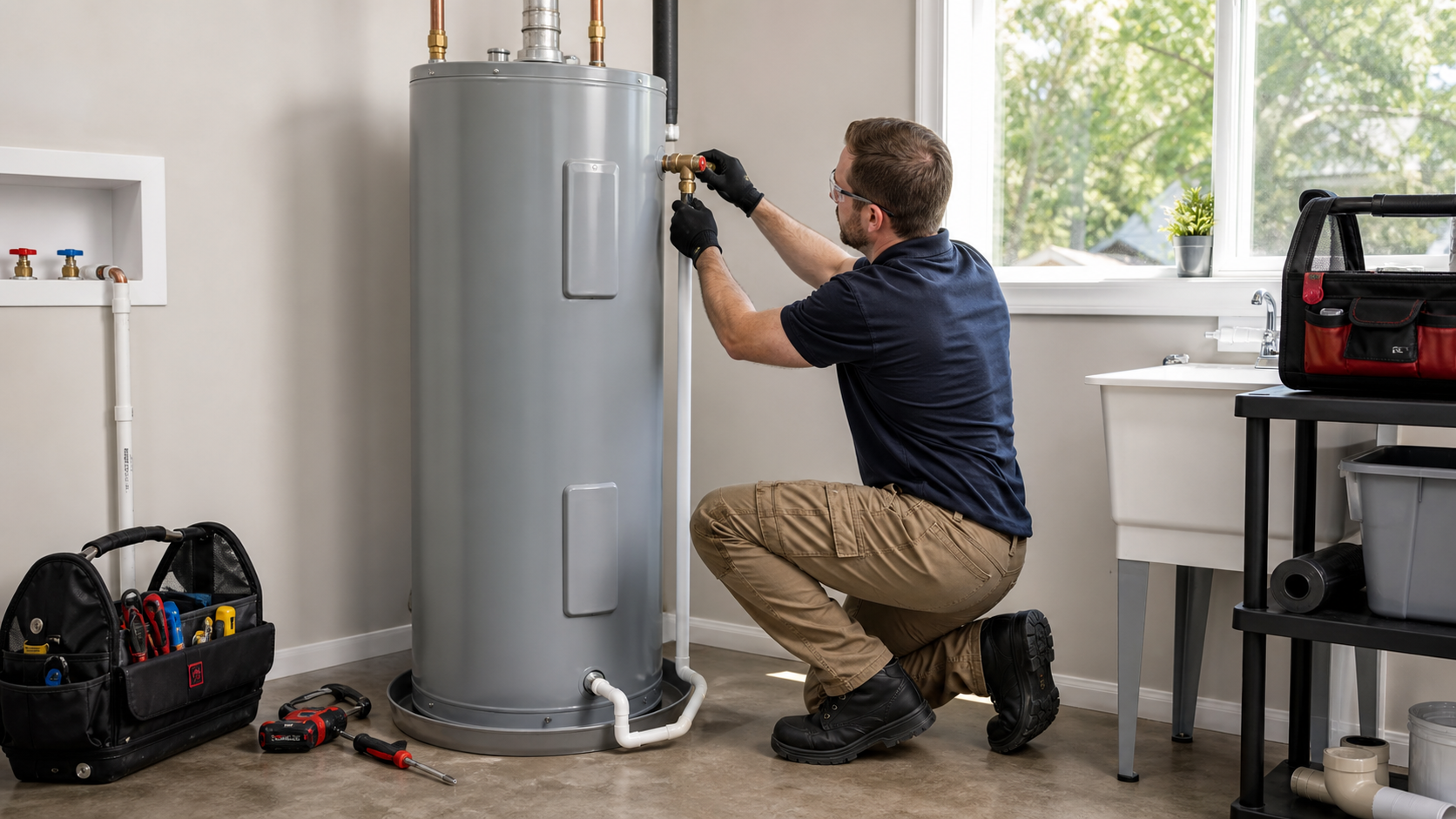
Water Heater Installation Explained: How to Choose and Install the Right System
A professional water heater installation involves much more than connecting a tank to existing plumbing. The new unit must match household hot water needs while meeting manufacturer requirements and applicable plumbing, electrical, fuel gas, venting, drainage, and energy rules. The correct approach also depends on whether the home uses a conventional storage tank, tankless unit, heat pump water heater, or another system. Careful sizing, safe connections, appropriate temperature and pressure protection, commissioning, and permits can influence safety, comfort, efficiency, and equipment reliability. Understanding these details helps homeowners compare installation proposals and avoid treating a water heater as a simple plug and play appliance.
What Is Water Heater Installation?
Water heater installation is the process of selecting, positioning, connecting, testing, and commissioning equipment that provides domestic hot water.
Depending on the technology, installation can involve potable water piping, electricity, natural gas or propane, combustion venting, condensate drainage, pressure relief equipment, expansion control, and structural support.
The exact requirements vary according to equipment and location.
What Does Water Heater Installation Include?
A typical replacement project can involve:
• Assessing household hot water demand
• Selecting compatible equipment
• Shutting down and removing the existing unit
• Preparing the installation area
• Connecting cold and hot water piping
• Completing gas or electrical connections
• Installing required safety components
• Addressing venting or condensate where applicable
• Filling and testing the system
• Checking for leaks
• Commissioning the equipment
• Explaining basic operation and maintenance
Permit and inspection procedures may also be part of the project.
Why Installation Quality Matters
Water heaters combine water, heat, pressure, and, depending on the model, high voltage electricity or combustible fuel.
Incorrect installation can lead to leakage, equipment malfunction, combustion hazards, electrical problems, property damage, or unsafe pressure conditions.
Manufacturer instructions and current local requirements should therefore determine installation details.
7 Powerful Water Heater Installation Tips
Homeowners do not need to become plumbers to make good purchasing decisions. Understanding these seven areas makes it easier to evaluate equipment and contractor proposals.
1. Size Water Heater Installation to Household Demand
Buying the largest available water heater is not necessarily the best strategy.
Equipment should provide sufficient hot water for normal household use without unnecessary capacity or expense.
Sizing Storage Water Heaters
Storage models keep a volume of heated water available in a tank.
Sizing considerations can include:
• Number of occupants
• Shower and bathing patterns
• Simultaneous hot water use
• Laundry habits
• Dishwasher use
• Fixture flow rates
• Recovery capability
Manufacturers provide sizing information for their products.
Understand First Hour Rating
For storage water heaters, first hour rating describes approximately how much hot water a fully heated unit can provide during a standardized first hour of use.
Tank capacity alone does not completely describe performance because recovery also matters.
Comparing first hour ratings can therefore be more useful than simply comparing tank volumes.
Sizing Tankless Water Heaters
Tankless systems are sized differently.
Important factors include the combined flow rate of fixtures expected to operate simultaneously and the temperature rise required between incoming cold water and the desired output temperature.
Incoming water temperature varies by climate and season.
A tankless unit that works well in a warm climate may deliver different simultaneous flow capability in a location with much colder incoming water.
2. Choose the Right Water Heater Type
Several technologies can provide domestic hot water, and each has different installation requirements.
The best option depends on utility availability, household demand, climate, available space, electrical service, venting, and budget.
Conventional Storage Water Heaters
Storage tank heaters remain common in residential buildings.
They are available in electric, natural gas, propane, and other configurations depending on the market.
Their relative simplicity can make replacement straightforward when compatible infrastructure already exists.
Tankless Water Heaters
Tankless equipment heats water as it flows through the unit rather than maintaining a large continuously heated storage tank.
Potential advantages can include compact dimensions and reduced standby losses.
However, installation can require electrical, gas supply, venting, or other infrastructure changes.
Heat Pump Water Heaters
Heat pump water heaters use electricity to transfer heat from surrounding air into stored water.
Because they transfer heat rather than relying only on electric resistance heating, they can offer high efficiency under suitable conditions.
Understand Space Requirements
Heat pump equipment interacts with the surrounding room.
Manufacturers specify requirements concerning installation volume, temperature, airflow, clearances, condensate disposal, and other factors.
Because the unit extracts heat from surrounding air, it can cool and dehumidify the installation area during heat pump operation.
Solar Water Heating
Solar thermal systems can heat domestic water using solar collectors and associated equipment.
Their design depends heavily on climate, roof or site exposure, storage, freeze protection, backup heating, and local requirements.
These are specialized systems requiring project specific design.
3. Plan Water Heater Installation Around Energy Efficiency
Efficiency affects operating costs, but purchase decisions should consider total installed cost and household usage.
In the United States, water heater products use standardized energy efficiency metrics appropriate to the equipment category.
Understand Uniform Energy Factor
Uniform Energy Factor, commonly abbreviated UEF, is used to compare water heater energy efficiency under standardized test procedures.
Higher UEF values generally indicate greater efficiency within appropriate product comparisons.
Homeowners should compare similar water heater categories because different technologies operate in fundamentally different ways.
Real World Energy Use Varies
Actual consumption depends on:
• Household hot water demand
• Incoming water temperature
• Thermostat settings
• Climate
• Equipment location
• Hot water distribution
• Maintenance
• Utility rates
• User behavior
An efficiency rating is valuable for comparison but cannot guarantee a specific monthly bill.
Look for Current ENERGY STAR Information
Qualifying water heaters can meet ENERGY STAR efficiency criteria.
Because criteria and eligible product categories can change, homeowners should check current ENERGY STAR information when purchasing rather than relying on older articles.
4. Make Safety Central to Water Heater Installation
Water heaters incorporate safety systems that should never be omitted, capped, or casually modified.
One of the most important is temperature and pressure relief protection.
Temperature and Pressure Relief Valves
Storage water heaters commonly incorporate a temperature and pressure relief valve, often called a TPR or T and P valve.
It is designed to relieve unsafe temperature or pressure conditions.
Never Cap a Relief Valve
Blocking a pressure relief device creates a potentially dangerous condition.
Discharge piping must be installed appropriately under manufacturer requirements and applicable plumbing codes.
A leaking or discharging relief valve should be diagnosed rather than disabled.
Thermal Expansion
When heated, water expands.
In certain plumbing systems, especially those that effectively prevent expanded water from flowing backward toward the supply, thermal expansion requires appropriate management.
A plumber can determine whether an expansion tank or another approved method is required.
Expansion Tanks Need Correct Setup
Simply installing an expansion tank does not guarantee proper performance.
Sizing and precharge need to correspond with system characteristics and manufacturer requirements.
5. Address Venting During Gas Water Heater Installation
Fuel fired equipment requires proper combustion and venting.
Incorrect installation can allow dangerous combustion products, including carbon monoxide, to enter occupied spaces.
Different Gas Water Heaters Use Different Venting Systems
Equipment categories can include atmospheric vent, direct vent, power vent, and condensing systems.
These systems have different requirements.
Never assume the existing vent is compatible with a replacement heater.
Vent Materials Must Be Compatible
Condensing and noncondensing appliances can have different exhaust temperatures and condensate characteristics.
The manufacturer specifies approved vent materials, dimensions, lengths, fittings, slope, termination, and clearances.
Improvised venting is inappropriate.
Combustion Air Matters
Some gas appliances draw combustion air from the installation area, while others bring air directly from outdoors.
The available space and building characteristics can affect combustion air requirements.
Homes that have undergone substantial air sealing deserve particular consideration when naturally vented combustion appliances are present.
Install Carbon Monoxide Alarms
Homes with fuel burning appliances should have carbon monoxide alarms installed and maintained according to manufacturer instructions and applicable laws.
Alarm placement requirements vary by jurisdiction.
An alarm adds an important layer of protection but does not correct defective combustion equipment.
6. Address Electrical Requirements for Water Heater Installation
Electric water heaters can require substantial electrical capacity.
The existing circuit should be evaluated against the exact equipment specifications.
Conventional Electric Water Heaters
Storage electric units commonly use dedicated electrical circuits.
Circuit conductors, overcurrent protection, disconnecting means, and other components need to comply with equipment data and applicable electrical requirements.
Tankless Electric Water Heaters
Whole house electric tankless equipment can require significant electrical power.
Some homes may need electrical panel or service changes to support the proposed unit.
A load assessment should occur before purchasing equipment.
Heat Pump Water Heater Electrical Needs
Heat pump models have their own electrical requirements that vary by product.
Some are designed for particular circuit configurations, while newer product options can differ.
Use specifications for the exact model rather than assuming all heat pump heaters have identical requirements.
Use Qualified Electrical Professionals
Electrical modifications should be performed by appropriately qualified professionals and permitted or inspected where required.
Water and high voltage electricity demand careful installation practices.
7. Commission Water Heater Installation Before Use
Installation is not complete when the pipes are connected.
The equipment should be tested and commissioned.
Check for Water Leaks
Once the system is filled, accessible connections should be examined carefully.
A small leak at a new fitting can cause substantial damage if it remains unnoticed.
Never Energize an Empty Electric Tank
Conventional electric storage water heaters generally need to be completely filled and properly purged of air before their heating elements are energized.
Operating elements without adequate water can damage them.
Follow the manufacturer’s startup instructions exactly.
Check Gas Operation
Gas equipment should be commissioned according to manufacturer instructions.
This can include verification of fuel supply, ignition, combustion related operation, controls, venting, and other specified parameters.
Verify Hot Water Operation
Once commissioning is complete, confirm that hot water is delivered as intended and controls work correctly.
The installer should explain temperature controls, normal operation, shutdown procedures, and relevant maintenance requirements.
Water Heater Installation and Temperature Settings
Hot water temperature involves balancing comfort, energy use, hygiene considerations, and scald risk.
Children, older adults, and people with certain disabilities can be especially vulnerable to scald injuries.
Follow Reliable Safety Guidance
The appropriate system configuration can involve water heater settings and thermostatic mixing or anti scald devices depending on building design and requirements.
Fixture level temperature limiting devices can also be required in certain applications.
Do Not Rely on the Dial Alone
The setting marked on a heater does not necessarily equal the exact temperature delivered at every fixture.
System losses, controls, mixing, and equipment characteristics influence delivered water temperature.
A qualified professional can evaluate a system when temperature control is a concern.
Water Heater Installation Location
Equipment placement influences maintenance access, drainage, ventilation, noise, and potential property damage.
Replacement equipment should fit both physically and technically.
Provide Service Access
Technicians need reasonable access to valves, electrical components, burners where applicable, filters, anodes, drains, and other serviceable components.
Do not permanently enclose the heater in a way that violates clearance or access requirements.
Protect Against Leakage
Depending on installation location and applicable requirements, a drain pan or other protective measures may be required or advisable.
The drain arrangement must discharge appropriately.
A pan cannot contain an unlimited leak, so it should not be treated as a substitute for proper installation or leak detection.
Water Heater Installation in Garages
Garage installations can have location specific requirements because vehicles, stored materials, and ignition concerns may affect equipment placement.
Requirements depend on appliance type and applicable codes.
Protect Equipment From Vehicle Impact
Where equipment is vulnerable to vehicles, protective measures may be required.
The solution should follow local requirements rather than an improvised barrier.
Check Manufacturer Clearances
Storage around water heaters can interfere with access, combustion air, or fire safety.
Keep required clearances around equipment.
Tankless Water Heater Installation
Tankless replacement can be straightforward when a home is already designed for the equipment, but converting from a conventional tank can require additional work.
Gas Supply Capacity
Some gas tankless heaters have substantial fuel demand while operating.
Existing gas piping should be evaluated to determine whether it can supply the proposed equipment along with other appliances.
Venting Requirements
Many modern tankless units use specialized venting or direct vent arrangements.
Termination location, vent material, length, and condensate handling where applicable should match manufacturer specifications.
Water Quality Considerations
Scale accumulation can affect heat exchanger performance in certain water conditions.
Manufacturers may specify maintenance or flushing procedures.
Local water chemistry and product requirements should guide maintenance decisions.
Heat Pump Water Heater Installation
Heat pump water heaters deserve special planning because they exchange heat with the surrounding air.
Installation conditions can influence both efficiency and comfort.
Room Volume and Airflow
Manufacturers specify appropriate space and airflow conditions.
Small enclosed closets may require ducting, louvers, or another manufacturer approved arrangement depending on the model.
Condensate Drainage
Heat pump operation can produce condensate.
That water needs a reliable drainage path.
Improper condensate management can create moisture or property damage.
Consider Noise
Heat pump models incorporate compressors and fans.
Sound levels vary by product.
Placement near bedrooms or noise sensitive living areas should be considered before installation.
Replacing a Gas Water Heater With an Electric Model
Fuel switching can sometimes support electrification or efficiency goals, but infrastructure needs to be evaluated before the old equipment is removed.
Electrical Capacity
An electrician can determine whether the existing panel, service, and circuits support the new heater.
A heat pump model can have very different requirements from an electric tankless system.
Decommission Gas Connections Properly
Unused gas piping should be handled according to applicable fuel gas requirements.
Do not leave abandoned connections in an unsafe condition.
Replacing an Electric Water Heater With Gas
Converting in the opposite direction also involves more than changing appliances.
The building needs an appropriate fuel supply and safe exhaust arrangement.
Fuel and Venting Infrastructure
Gas piping must be appropriately sized and installed.
Venting, combustion air, appliance clearances, and carbon monoxide safety all need consideration.
The conversion may be impractical where compliant infrastructure cannot be installed economically.
How Much Does Water Heater Installation Cost?
There is no reliable universal price.
A direct replacement of an accessible storage tank can differ substantially from converting to tankless, changing fuel type, or installing a heat pump system requiring electrical modifications.
Water Heater Installation Cost Factors
Pricing can depend on:
• Heater type
• Capacity
• Efficiency
• Fuel type
• Labor market
• Accessibility
• Plumbing modifications
• Electrical upgrades
• Gas piping
• Venting
• Condensate drainage
• Expansion control
• Permit fees
• Removal of old equipment
• Local disposal requirements
Request detailed estimates based on the actual property.
Compare Complete Installed Cost
Equipment price alone does not describe total project cost.
One quote may include permits, removal, new valves, expansion control, and code upgrades while another excludes them.
Written scopes make comparisons more meaningful.
Water Heater Installation Permits
Many jurisdictions require permits for water heater replacement or installation.
Rules vary according to location and project scope.
Why Permits May Be Required
Inspections can address issues involving:
• Plumbing connections
• Fuel gas systems
• Venting
• Electrical work
• Relief discharge
• Expansion control
• Seismic restraint where applicable
• Combustion air
• Equipment location
Current local requirements determine which provisions apply.
Who Obtains the Permit?
Professional contractors often manage permits, but homeowners should verify responsibility in the written proposal.
Do not assume that replacing a unit in the same location eliminates permit requirements.
Water Heater Installation and Seismic Protection
Some jurisdictions, especially in earthquake prone regions, require water heaters to be restrained against movement.
Requirements vary geographically.
Proper Strapping Matters
Where seismic restraint is required, straps or other approved restraint systems should be installed according to applicable requirements.
Improvised attachment may not provide adequate support.
Plumbing Connections Also Matter
Seismic movement can affect piping as well as the tank.
Local requirements and professional installation practices should guide the complete arrangement.
How Long Does Water Heater Installation Take?
Installation time depends on the equipment and property.
A compatible replacement can generally involve less work than a fuel conversion or major system redesign.
Factors That Affect Installation Time
Timing can depend on:
• Existing equipment removal
• Plumbing modifications
• Electrical work
• Gas work
• Vent changes
• Permits
• Inspection scheduling
• Accessibility
• Unforeseen deficiencies
Ask the installer for a project specific schedule.
Choosing a Water Heater Installation Professional
Plumbing, gas, and electrical work can be regulated separately depending on jurisdiction.
Choose professionals with qualifications appropriate to the project’s actual scope.
Questions to Ask an Installer
Consider asking:
• How was this size selected?
• Which exact model is proposed?
• What efficiency rating does it have?
• Are permits included?
• Are electrical changes required?
• Is gas piping adequate?
• Will venting need modification?
• Is expansion control required?
• How will leakage be managed?
• What warranties apply?
• Is old equipment removal included?
Clear answers indicate a more thoroughly defined project.
Verify Licensing and Insurance
Check current licensing requirements through the relevant local or state authority.
Appropriate insurance and manufacturer specific experience are also useful considerations.
Water Heater Installation Warranties
New equipment can include manufacturer warranty coverage as well as contractor workmanship coverage.
These are not necessarily the same.
Manufacturer Warranty
Review:
• Coverage period
• Covered components
• Registration requirements
• Exclusions
• Labor provisions
• Maintenance requirements
• Transferability
• Claim procedures
A long advertised warranty does not necessarily mean every future service cost is included.
Workmanship Warranty
Ask how long installation related issues are covered and what expenses the contractor will pay when covered workmanship problems occur.
Keep the signed contract and warranty documents.
Maintaining a New Water Heater
Maintenance requirements depend on equipment and local water conditions.
Manufacturer guidance should determine the schedule.
Storage Tank Maintenance
Depending on equipment, maintenance can involve inspection of components such as the anode rod, valves, drainage system, and other serviceable parts.
Do not perform procedures involving hot pressurized water unless you understand the hazards and manufacturer instructions.
Tankless Maintenance
Some tankless equipment requires periodic scale management or other maintenance based on water quality and manufacturer recommendations.
Filters or screens may also require service.
Heat Pump Maintenance
Heat pump systems can have air filters or other components requiring periodic cleaning.
Condensate systems should remain unobstructed.
Follow the specific product manual.
Common Water Heater Installation Mistakes
Many installation problems originate from treating different appliances as interchangeable.
A replacement unit may have different venting, electrical, drainage, or clearance requirements from the equipment it replaces.
Incorrect Sizing
A system that cannot meet normal demand can create ongoing comfort problems.
Oversizing can also add unnecessary equipment cost.
Incompatible Venting
Existing venting should never be assumed compatible with a new fuel fired appliance.
Manufacturer requirements determine acceptable arrangements.
Ignoring Thermal Expansion
A closed plumbing system can require thermal expansion management.
This should be evaluated during installation rather than after repeated relief valve discharge or pressure problems occur.
Poor Drainage Planning
Relief discharge, condensate, drain pans, and equipment drains all need appropriate discharge arrangements.
Water should not be directed where it can damage the building.
Water Heater Installation and Leak Detection
Water heater failures can cause substantial property damage, especially when equipment is located above finished spaces.
Leak detection can provide additional protection.
Water Sensors
Simple sensors can produce an alarm when they detect moisture.
More advanced systems may integrate with automatic water shutoff equipment.
Automatic Shutoff Systems
Some devices can stop the water supply when abnormal conditions are detected.
Capabilities vary, and these systems still require maintenance and testing.
They should supplement rather than replace proper plumbing installation.
Frequently Asked Questions
How much does water heater installation cost?
Cost depends on heater type, capacity, labor, plumbing modifications, electrical or gas work, venting, permits, and location. Site specific quotes provide the most useful pricing.
Does water heater installation require a permit?
Many jurisdictions require permits for installation or replacement. Requirements vary, so verify current rules with the local authority and contractor.
What size water heater does a household need?
Sizing depends on household demand and heater type. Storage systems can use first hour rating, while tankless units require flow rate and temperature rise calculations.
Can I perform water heater installation myself?
Water heaters can involve electricity, combustible gas, combustion venting, hot water, and pressure. Professional installation is generally appropriate and may be required by local regulations.
Is a tankless water heater better than a storage tank?
Not universally. Tankless systems and storage heaters have different costs, infrastructure requirements, efficiency characteristics, maintenance needs, and hot water delivery capabilities.
Are heat pump water heaters worth considering?
Yes, they can provide efficient electric water heating in suitable applications. Installation space, ambient temperature, airflow, condensate drainage, electrical requirements, and household demand should be evaluated.
Conclusion
A dependable water heater installation starts with accurate sizing and equipment selection, then coordinates plumbing, electricity or fuel, venting, drainage, pressure protection, and local requirements. Tank, tankless, and heat pump systems each have different installation and maintenance needs, so the existing infrastructure should be assessed before equipment is purchased. Choosing qualified professionals and completing proper commissioning can help provide reliable hot water while protecting the home from avoidable safety and water damage problems.