Expert Foundation Repair Services: How to Diagnose and Correct Structural Problems
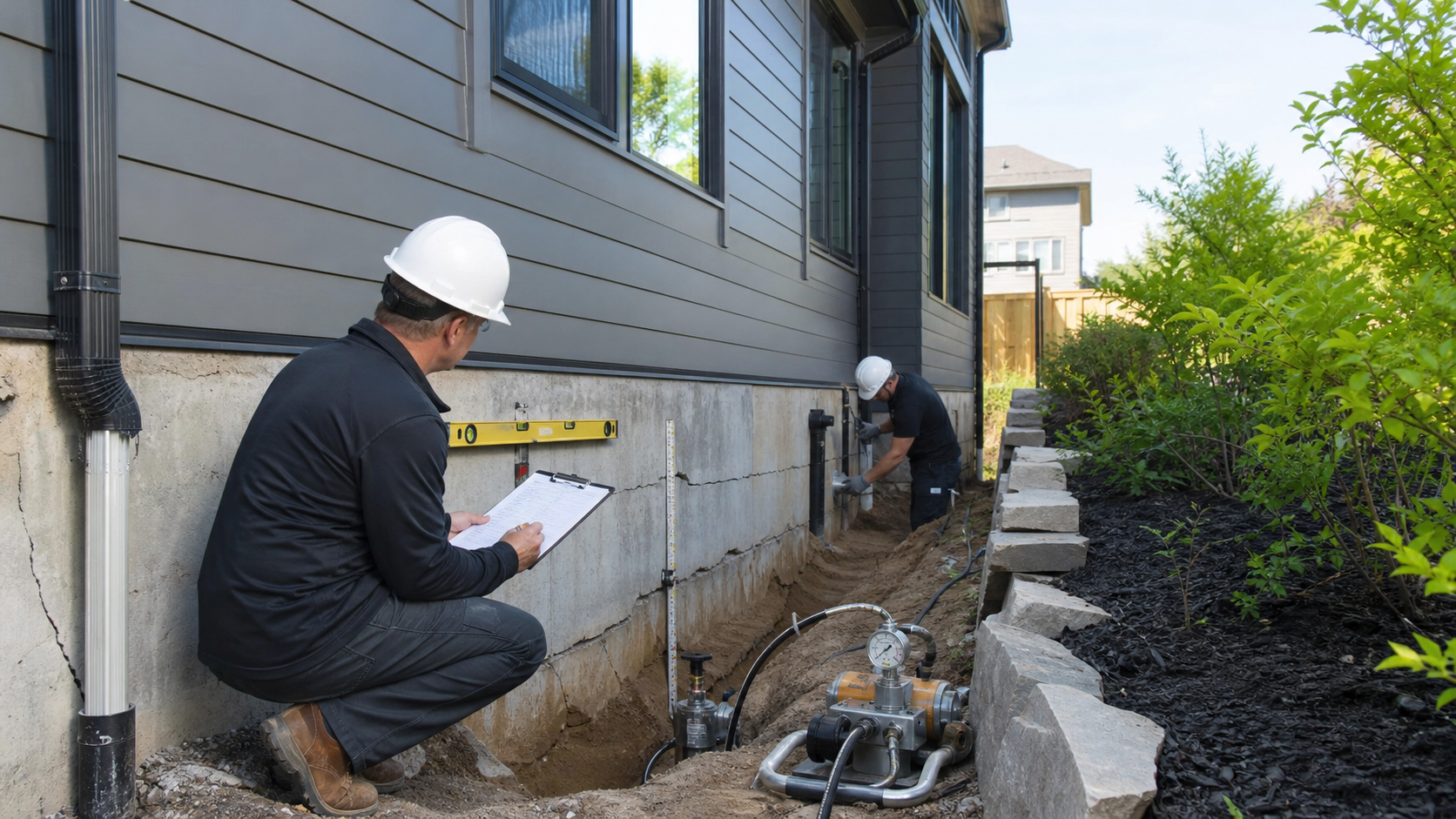
Choosing expert foundation repair services should begin with diagnosis rather than a predetermined repair product. Foundation cracks, uneven floors, sticking doors, basement moisture, and wall movement can have different causes, ranging from ordinary material shrinkage to drainage problems, expansive soils, settlement, construction deficiencies, or structural movement. The appropriate response might involve monitoring, water management, localized repairs, underpinning, wall stabilization, or another engineered solution depending on the building. Understanding how professionals assess foundations helps homeowners avoid both ignoring meaningful warning signs and paying for extensive structural work that has not been technically justified.
What Are Expert Foundation Repair Services?
Expert foundation repair services evaluate and correct problems affecting a building’s foundation or related structural components.
The process can involve inspection, measurements, structural analysis, soil considerations, repair design, excavation, installation, drainage improvements, and post repair monitoring.
Not every contractor provides every part of this process.
What Does Foundation Repair Include?
Depending on the condition, professional work can include:
• Crack evaluation
• Settlement assessment
• Foundation elevation measurements
• Structural engineering review
• Pier or pile installation
• Wall stabilization
• Foundation underpinning
• Masonry repair
• Drainage correction
• Waterproofing coordination
• Crawl space support work
• Concrete repair
• Monitoring
The correct scope should follow the diagnosis.
Foundation Repair Versus Foundation Waterproofing
Structural repair and waterproofing are related but distinct services.
Structural repairs address load carrying performance, movement, deterioration, or stability. Waterproofing and drainage work focuses primarily on controlling water.
A foundation can leak without having a significant structural problem, and a structurally compromised foundation may be dry.
Some properties have both conditions simultaneously.
7 Powerful Expert Foundation Repair Services Benefits
Qualified evaluation provides more value than simply selling a repair system. These seven considerations explain what homeowners should expect from a technically sound approach.
1. Expert Foundation Repair Services Start With Proper Diagnosis
Cracks and movement are symptoms rather than complete diagnoses.
A professional should determine where the problem is occurring, whether it appears active, and what conditions may be contributing.
Foundation Inspection
An inspection can consider:
• Crack locations
• Crack patterns
• Wall displacement
• Floor elevations
• Doors and windows
• Framing relationships
• Exterior grading
• Drainage
• Downspouts
• Nearby vegetation
• Foundation materials
• Previous repairs
• Moisture conditions
• Site history where available
The findings should be interpreted together.
Not Every Foundation Crack Is Structural
Concrete and masonry can crack for several reasons, including shrinkage, temperature changes, settlement, or structural movement.
A narrow crack by itself does not provide enough information to classify the cause.
Crack Direction Can Provide Clues
Horizontal, vertical, diagonal, and stair step cracks can be associated with different mechanisms depending on wall material and building conditions.
Pattern is informative but should not be used as an automatic diagnosis without considering displacement, location, construction, and other evidence.
2. Expert Foundation Repair Services Can Measure Building Movement
Statements that a house “feels uneven” can provide a reason for investigation, but measurements give professionals more objective information.
Elevation Surveys
Technicians or engineers may take relative floor or foundation elevations to identify variations across a building.
These readings can help document current conditions.
One Measurement Does Not Always Prove Active Settlement
An uneven floor can result from original construction, long completed settlement, framing deformation, remodeling, or active movement.
Repeated measurements over time may be useful when it is important to determine whether movement is continuing.
Crack Monitoring
Professionals may document crack dimensions or use monitoring devices when the significance of movement is uncertain.
Photos should include dates and scale where possible.
Keep Monitoring Records
Changes become easier to evaluate when homeowners retain:
• Dated photographs
• Engineering reports
• Elevation data
• Repair invoices
• Drainage improvements
• Inspection records
Historical information can be extremely useful if symptoms evolve.
3. Structural Engineers Can Strengthen Foundation Repair Decisions
Foundation contractors have practical repair expertise, but some projects benefit from an evaluation by a structural engineer.
An engineer can provide design or diagnostic services independent of the company selling installation work.
When to Consider a Structural Engineer
Engineering input can be particularly useful for:
• Significant structural movement
• Major horizontal cracking
• Bowed walls
• Unusual settlement patterns
• Complex buildings
• Failed previous repairs
• Significant structural modifications
• Real estate disputes
• Multiple conflicting contractor recommendations
• Projects requiring engineered repair documents
Local permit authorities may also require engineering for certain work.
Independent Evaluation Can Be Valuable
A contractor’s business is typically installing repairs.
An independent engineer may offer a separate technical perspective when a homeowner wants diagnosis before requesting construction bids.
Engineers and Contractors Have Different Roles
Engineers can analyze and design repairs, while contractors execute construction.
The strongest complex projects often involve appropriate coordination between both.
4. Expert Foundation Repair Services Address Soil and Drainage
Foundation performance is closely connected to surrounding soil and water.
Drainage should therefore be part of the assessment even when structural work is ultimately required.
Water Around Foundations
Roof runoff, poor grading, irrigation, plumbing leaks, and drainage systems can change soil moisture around a building.
The effect depends on soil type and foundation design.
Expansive Soil
Certain clay soils change volume as moisture conditions change.
This can contribute to foundation movement in susceptible buildings.
A site specific geotechnical evaluation can be valuable for complex soil related problems.
Poor Drainage Does Not Have One Universal Solution
Potential drainage measures can include:
• Gutter maintenance
• Downspout management
• Site grading
• Surface drainage
• Foundation drainage systems
• Sump systems
• Irrigation adjustment
The correct approach depends on the source and route of water.
Avoid Random Watering Advice
Some regions use foundation watering practices in response to expansive soil, while such practices can be inappropriate elsewhere.
Soil, climate, landscaping, water restrictions, and foundation design should guide decisions.
5. Expert Foundation Repair Services Use Methods Matched to the Problem
No one foundation repair technology is best for every building.
A method should be selected after considering loads, soil, foundation design, movement, access, and repair objectives.
Underpinning
Underpinning strengthens or supports an existing foundation using additional support beneath or adjacent to it.
Several underpinning technologies exist.
Push Piers
Steel push pier systems can transfer foundation loads to deeper supporting materials under suitable conditions.
Design and installation requirements depend on the structure and system.
Helical Piers
Helical piles or piers are screw shaped foundation elements installed into the ground using specialized equipment.
They can be used for certain new and remedial foundation applications.
Installation Needs Engineering
Pier spacing, capacity, depth, brackets, loads, and installation criteria should be based on appropriate design requirements.
The number of piers should not be selected solely from a generic formula.
Wall Anchors
Foundation wall anchor systems can be used in certain situations involving inward wall movement.
They typically connect the affected wall to stable soil outside through engineered components.
Carbon Fiber Reinforcement
Carbon fiber reinforcement systems may be appropriate for certain foundation wall conditions.
They are not a universal solution for every cracked or bowed wall.
Material selection should match the movement mechanism and wall configuration.
6. Expert Foundation Repair Services Can Coordinate Water Problems
Many homeowners first notice foundation trouble because water appears in a basement or crawl space.
The water source should be identified before choosing a solution.
Foundation Cracks and Water Entry
Some cracks can provide a pathway for water.
Repair can involve appropriate injection or other methods when the crack condition and foundation material are suitable.
Repair the Water Source Too
Sealing a crack may not solve exterior drainage conditions that continue to place water against the foundation.
A comprehensive plan may require both localized crack treatment and water management.
Interior Drainage Systems
Interior perimeter drainage systems can collect water entering at or near foundation areas and route it to a sump or another approved discharge.
These systems manage water rather than eliminating every exterior source.
Exterior Waterproofing
Some conditions justify exposing the foundation externally to repair cracks, apply suitable waterproofing or drainage components, and correct surrounding conditions.
Excavation requirements can make exterior work more invasive.
7. Expert Foundation Repair Services Should Include Documentation
Structural work can disappear underground or behind finished walls.
Documentation provides a record of what was installed.
Keep Repair Plans
Save drawings or plans identifying pier positions, wall reinforcement, repaired cracks, drainage components, and other work.
Keep Permit Records
Foundation repairs can require permits and inspections depending on scope and jurisdiction.
Retain final approval documents.
Keep Warranty Information
Foundation repair warranties vary substantially.
Review:
• Covered components
• Coverage duration
• Transferability
• Maintenance requirements
• Exclusions
• Claim procedures
• Ownership transfer requirements
A long advertised warranty should not be interpreted beyond its written terms.
Common Signs You May Need Foundation Repair
Foundation problems can appear inside and outside a home.
Symptoms should be evaluated in context rather than treated as automatic proof of structural failure.
Foundation Cracks
Cracks are among the most common reasons homeowners request inspections.
Professionals consider pattern, width, displacement, location, material, moisture, and evidence of change.
Horizontal Foundation Cracks
Horizontal cracks in certain foundation wall types can be associated with lateral pressure or wall movement.
Significant displacement or bowing deserves professional assessment.
Vertical Cracks
Vertical cracks can have several causes.
Some may relate to shrinkage, while others can be associated with movement or other conditions.
Stair Step Cracks
Cracks following mortar joints in masonry can develop for different reasons, including movement.
Their significance depends on extent, displacement, location, and changes over time.
Doors and Windows That Stick
Doors or windows can bind when openings become distorted.
Foundation movement is one possible cause, but humidity, framing movement, hardware, installation, or paint buildup can also affect operation.
Look for Multiple Symptoms
A newly sticking door accompanied by growing cracks and floor changes deserves more attention than one old door that has always fit poorly.
Patterns across the building matter.
Uneven or Sloping Floors
Floor slopes can originate from foundation movement, framing conditions, original construction, moisture damage, or other causes.
A structural assessment can help distinguish them.
Sagging Crawl Space Floors
Crawl space homes can have problems involving beams, joists, posts, moisture, or soil supports.
The foundation perimeter may not be the only issue.
Bowing Basement Walls
A foundation wall visibly moving inward deserves careful assessment.
Lateral soil pressure, drainage conditions, construction, and other factors may contribute.
Do Not Cover a Bowed Wall With Finishes
Installing framing or drywall over a visibly moving wall only hides the symptom.
Evaluate the structural condition first.
Expert Foundation Repair Services for Concrete Slabs
Slab foundations can experience cracking and movement because of soil behavior, moisture, plumbing leaks, fill conditions, or structural factors.
Slab Cracks
Many concrete slabs develop cracks.
The question is whether the crack is stable and cosmetic or associated with meaningful displacement or ongoing movement.
Floor Elevation Measurements
Level surveys can document variation across the slab and help professionals interpret settlement or heave patterns.
Slab Underpinning
Where settlement is significant and repair is technically justified, engineered underpinning can transfer loads to more suitable supporting strata.
Methods depend on site and structure.
Expert Foundation Repair Services for Basements
Basements combine structural foundation walls with below grade moisture exposure.
Both issues should be evaluated.
Basement Wall Movement
Wall cracks, displacement, and bowing require assessment according to wall type and severity.
Solutions can include reinforcement, anchors, rebuilding, or other engineered approaches.
Basement Water Is Not Always Structural
Water can enter through joints, cracks, windows, plumbing, or drainage failures without significant foundation instability.
A waterproofing problem should not automatically be sold as structural failure.
Expert Foundation Repair Services for Crawl Spaces
Crawl spaces can experience moisture, wood deterioration, soil settlement, and support problems.
Inspection should include both foundation and framing where appropriate.
Support Posts and Beams
Inadequate, damaged, or settled supports can contribute to uneven floors.
Repairs should use components and foundations suitable for structural loads.
Moisture Matters
Persistent crawl space moisture can contribute to wood deterioration and corrosion.
Structural repair should be coordinated with moisture control where necessary.
Foundation Repair and Plumbing Leaks
Underground water leaks can alter soil conditions and damage building materials.
A plumbing assessment may therefore be relevant when unexplained water or movement occurs.
Slab Plumbing Leaks
A pressurized leak below a slab can produce moisture, water use changes, or local conditions requiring plumbing diagnosis.
Fixing the foundation without correcting an active leak would leave an important cause unresolved.
Foundation Repair and Tree Roots
Trees are often blamed automatically for foundation problems, but the interaction among vegetation, soil moisture, and foundations is complex.
Do Not Remove Trees Without Evaluation
Removing a mature tree can have landscape and soil consequences.
A structural engineer, geotechnical professional, or qualified arborist may be useful when significant trees are involved.
Foundation Repair Cost
There is no reliable universal price because the term covers projects ranging from limited crack repairs to major underpinning.
A site specific diagnosis is required.
What Affects Foundation Repair Cost?
Major variables include:
• Foundation type
• Cause of movement
• Number of repair locations
• Depth of required support
• Repair method
• Excavation
• Structural engineering
• Permits
• Access
• Landscaping
• Interior restoration
• Drainage work
• Local labor costs
• Utility conflicts
Compare proposals only after understanding their scopes.
Ask for Itemized Pricing
A useful estimate should identify structural repair separately from waterproofing, drainage, demolition, landscaping, and interior restoration where applicable.
This prevents homeowners from comparing fundamentally different projects as if they were identical.
How Long Does Foundation Repair Take?
Project duration depends on complexity.
A localized crack treatment can be much shorter than underpinning an entire section of a house.
What Can Affect the Schedule?
Factors include:
• Engineering
• Permits
• Excavation
• Utility locating
• Repair type
• Site access
• Number of piers
• Weather
• Inspections
• Restoration
Ask for a project specific schedule.
Foundation Repair Permits
Structural foundation work often requires local approval, though requirements vary.
Do not assume repairs are exempt simply because they occur on an existing building.
Engineering Requirements
A permit authority may require stamped structural plans for certain repairs.
Local building officials can explain current requirements.
Inspections
Required work should remain accessible until applicable inspections are completed.
Do not conceal structural repairs prematurely.
Foundation Repair and Utility Locating
Excavation for piers, wall anchors, waterproofing, or foundation exposure can conflict with underground utilities.
Call Before Digging
In the United States, applicable 811 procedures should be followed before excavation.
Public utility marking does not necessarily identify every private line on a property.
Private Utilities
Irrigation, landscape lighting, private electrical lines, pool systems, and other utilities may require separate locating services.
Is Foundation Repair Covered by Homeowners Insurance?
Coverage depends on the policy and cause of damage.
Ordinary settlement, soil movement, flooding, plumbing failures, earthquakes, and other causes can be treated differently.
Review the Policy
Do not assume structural damage is automatically covered.
Optional endorsements or separate policies may apply to particular hazards.
Document the Condition
Engineering reports, photographs, measurements, plumbing reports, and repair estimates can be useful when pursuing an applicable claim.
The insurer ultimately determines coverage according to the policy.
Buying a Home With Foundation Repairs
A previous repair does not automatically make a house unsuitable for purchase.
Buyers should understand what problem occurred, how it was repaired, and whether relevant documentation exists.
Request Records
Ask for:
• Engineering reports
• Repair plans
• Contractor invoices
• Permits
• Inspection approvals
• Warranties
• Monitoring records
Missing documentation can make evaluation more difficult.
Consider Independent Inspection
An engineer or other qualified professional can evaluate current conditions when previous structural repair is substantial or concerns remain.
Selling a Home After Foundation Repair
Documentation can help explain completed work to potential buyers.
Disclosure obligations vary by jurisdiction.
Keep Transferable Warranties
If a repair warranty can transfer, follow the provider’s required transfer procedure.
Do not assume transfer occurs automatically.
Choosing Expert Foundation Repair Services
Choose a company based on diagnosis, qualifications, repair design, documentation, and workmanship rather than the strongest sales presentation.
Questions to Ask a Foundation Contractor
Consider asking:
• What caused the problem?
• What measurements support the diagnosis?
• Is the movement active?
• Is an engineer involved?
• What alternatives exist?
• Why is this repair method appropriate?
• Are drainage corrections also needed?
• Are permits included?
• What happens if site conditions differ?
• What warranty is provided?
• Is the warranty transferable?
Detailed answers make proposals easier to evaluate.
Be Careful With High Pressure Sales
Structural decisions deserve time for review when no immediate danger exists.
Be cautious of contractors claiming a home is unsafe without explaining the evidence or demanding immediate authorization for expensive work.
Common Foundation Repair Mistakes
One major mistake is treating every visible crack as proof of serious settlement.
The opposite error is ignoring cracks that are changing or accompanied by other structural symptoms.
Repairing Cracks Without Diagnosing Movement
Filling a crack can improve appearance or control water in suitable cases, but it does not correct an underlying settlement problem.
Ignoring Drainage
Structural repair alone may be incomplete when uncontrolled water or soil moisture contributed to the issue.
Choosing a Repair System First
The repair method should follow diagnosis.
A contractor specializing in one product may naturally recommend that product, which makes independent engineering particularly valuable on complex projects.
Skipping Monitoring
When movement is uncertain, monitoring may provide useful evidence before extensive construction is undertaken.
Preventing Future Foundation Problems
Not every structural problem can be prevented, but managing water and maintaining the property can reduce some avoidable stressors.
Maintain Roof Drainage
Keep gutters and downspouts functioning where they are part of the building’s water management system.
Discharge water appropriately for local site conditions.
Monitor Site Grading
Persistent ponding against the foundation deserves investigation.
Drainage changes should also consider neighboring properties and applicable local rules.
Address Plumbing Leaks
Repair water supply, drain, irrigation, or sewer leaks promptly.
Unexpected water around foundations should not be ignored.
Keep Records
Photographs and measurements provide a useful baseline if future changes are suspected.
Frequently Asked Questions
What do expert foundation repair services include?
Services can include structural inspection, measurements, engineering, crack evaluation, underpinning, wall stabilization, drainage coordination, repairs, and monitoring.
How do I know if foundation repair is necessary?
Changing cracks, wall displacement, significant unevenness, repeated structural symptoms, or measured movement can justify professional evaluation. Not every crack requires structural repair.
How much do expert foundation repair services cost?
Costs depend on foundation type, diagnosis, repair method, access, engineering, excavation, permits, and restoration. A site specific assessment is necessary for meaningful pricing.
Do foundation repairs require a structural engineer?
Not every minor repair requires one, but engineering can be valuable or legally required for significant movement, underpinning, bowed walls, or complex structural conditions.
Does homeowners insurance cover foundation repair?
Coverage depends on the cause and policy terms. Settlement, plumbing damage, flooding, earthquakes, and other causes can receive different treatment.
Are foundation repair warranties transferable?
Some are, but terms vary significantly. Read the warranty for transfer procedures, exclusions, maintenance conditions, and coverage details.
Conclusion
Expert foundation repair services should provide a diagnosis before recommending a construction method. Crack patterns, elevation measurements, drainage, soil conditions, plumbing, and structural behavior all help determine whether a property needs monitoring, water management, localized repair, or engineered stabilization. By obtaining clear documentation and comparing technically justified proposals, homeowners can address genuine foundation problems without relying on assumptions or one size fits all repair systems.