Dermal Fillers London: How to Choose a Qualified Practitioner and Approach Treatment Safely
People considering dermal fillers London clinics offer should look beyond before and after photographs, introductory prices, and social media popularity. Injectable fillers are medical aesthetic procedures with potential benefits, limitations, and complications, including rare but serious vascular events that require prompt recognition and treatment. Product type, facial anatomy, practitioner training, consultation quality, medical history, injection technique, aftercare, and access to emergency support all matter. An informed decision begins with understanding what fillers can realistically achieve and verifying the credentials of the person who would perform the procedure.
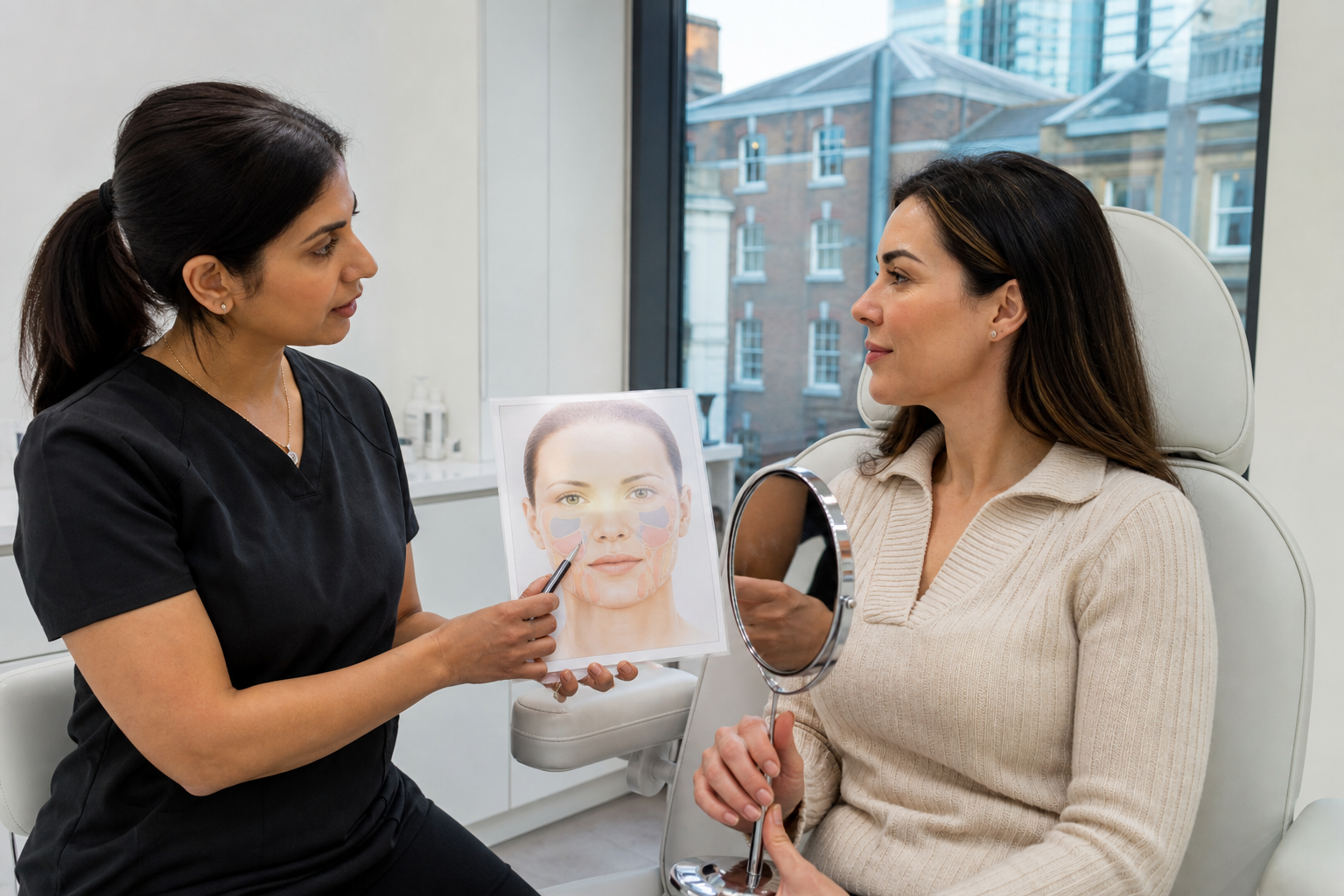
What Are Dermal Fillers?
Dermal fillers are injectable products used to alter volume, contour, or the appearance of selected facial features and soft tissues.
Several filler materials exist, but hyaluronic acid fillers are among the most commonly encountered products in contemporary aesthetic medicine.
Hyaluronic acid occurs naturally within the human body and has properties that allow it to bind water. Commercial dermal fillers use manufactured formulations designed for injection.
Products vary in composition, concentration, cross linking, rheological characteristics, approved indications, and intended anatomical placement.
This means fillers should not be treated as interchangeable simply because they share a general ingredient.
A product suitable for one area or treatment objective may not be suitable for another.
9 Essential Dermal Fillers London Safety Tips
Cosmetic treatment is optional, making safety and informed consent particularly important.
1. Check the Practitioner’s Professional Credentials
Start by identifying who will actually perform the injections.
Do not rely only on a clinic’s brand name or the qualifications of a medical director who will not personally assess or treat you.
In the UK, relevant healthcare professionals can be checked through their respective statutory professional registers where applicable.
For example, doctors can be checked through the General Medical Council, dentists through the General Dental Council, nurses through the Nursing and Midwifery Council, and pharmacists through the General Pharmaceutical Council.
Professional registration alone does not demonstrate specific competence in aesthetic injections.
Ask about additional training and experience relevant to the treatment being considered.
2. Have a Proper Consultation Before Treatment
The consultation should involve more than choosing how many millilitres to purchase.
A practitioner needs to understand the requested outcome and evaluate whether filler is appropriate.
Relevant discussion can include medical history, previous aesthetic treatments, medications, allergies, pregnancy or breastfeeding considerations where applicable, previous reactions, current skin or dental issues, and treatment expectations.
Dermal Fillers London Consultation Questions
Consider asking:
• What qualifications do you hold?
• How much experience do you have treating this area?
• Which filler do you recommend and why?
• What are the alternatives?
• What result is realistic?
• What are the common side effects?
• What serious complications can occur?
• How would you manage an emergency?
• What aftercare is provided?
• Who should I contact outside normal hours?
A practitioner should be comfortable discussing risks rather than presenting the procedure as trivial.
3. Ask Exactly Which Product Will Be Used
You should know the name and manufacturer of the proposed filler.
Ask why that product is appropriate for the treatment area and whether it is being used in accordance with applicable product information.
Be cautious if a provider cannot clearly identify the injectable product.
4. Understand That Fillers Carry Medical Risks
Common temporary effects can include swelling, bruising, tenderness, redness, and discomfort around injection sites.
Other complications can include lumps, asymmetry, infection, inflammatory reactions, and unwanted aesthetic outcomes.
Rare complications can be substantially more serious.
Inadvertent injection into or compression of a blood vessel can compromise tissue blood supply.
5. Know the Warning Signs of a Vascular Complication
Vascular occlusion is an urgent medical complication.
Symptoms can vary, making professional assessment essential.
Severe or escalating pain, unusual skin colour change, blanching, mottling, cool skin, or unexpected visual symptoms after treatment require urgent attention.
Any visual disturbance following facial filler requires immediate emergency medical assessment.
6. Avoid Choosing a Clinic Solely by Price
Low prices can be attractive, but filler treatment involves more than the cost of a syringe.
The fee supports clinical time, training, premises, product sourcing, sterile supplies, emergency preparedness, follow up, insurance, and other elements of care.
A high price does not guarantee quality either.
7. Be Cautious With Pressure Selling
You should have enough information and time to make a voluntary decision.
High pressure promotions, time limited offers, or encouragement to add several treatments during the consultation can undermine informed decision making.
8. Check Emergency and Follow Up Arrangements
Complications do not necessarily occur while you are still sitting in the clinic.
Find out how urgent concerns are handled after you leave.
A provider should have an appropriate plan for complications related to the products and areas they treat.
9. Maintain Realistic Expectations
Fillers alter soft tissue appearance; they do not stop aging or guarantee a particular facial aesthetic.
A skilled practitioner may advise against treatment when anatomy, expectations, or medical circumstances make the procedure inappropriate.
Dermal Fillers London Practitioners Should Sometimes Say No
Refusing treatment can be a sign of appropriate clinical judgment.
Examples may include unrealistic expectations, active infection, unsuitable anatomy, medical contraindications, excessive prior filler, or requests the practitioner believes would produce an undesirable or unsafe result.
Types of Dermal Fillers Available in London
Different filler materials and formulations behave differently.
Hyaluronic Acid Fillers
Hyaluronic acid fillers are widely used for facial aesthetic procedures.
Depending on the product and indication, they may be used to address volume, contour, or particular lines.
Certain hyaluronic acid fillers can potentially be broken down with the enzyme hyaluronidase when clinically appropriate.
This reversibility should not be interpreted as making injections risk free.
Calcium Hydroxylapatite Fillers
Calcium hydroxylapatite based products represent another filler category.
Their characteristics and indications differ from hyaluronic acid products.
They are not managed identically if an unwanted result occurs.
Other Filler Materials
Additional products may use other substances or mechanisms.
Choosing Dermal Fillers London Clinics Offer
Product selection should consider:
• Treatment area
• Tissue characteristics
• Desired result
• Product properties
• Medical history
• Previous treatments
• Practitioner experience
• Applicable product indications
Patients should not be expected to select injectable material solely from a menu.
Common Dermal Filler Treatment Areas
Fillers can be used across several facial areas, but risks and techniques differ by anatomy.
Lip Fillers
Lip fillers are commonly requested to alter lip volume, definition, or proportions.
The goal does not need to be dramatic enlargement.
A conservative approach may focus on proportion and individual anatomy.
Swelling can temporarily make the lips look larger than the eventual appearance.
Cheek Fillers
Cheek treatment can add or redistribute the appearance of volume within the midface.
Product placement and quantity should reflect facial structure.
Chin Fillers
Chin filler can alter perceived projection or contour in selected patients.
A practitioner should consider the entire profile rather than evaluating the chin in isolation.
Jawline Fillers
Jawline treatment is sometimes used to alter lower facial contour.
The amount of product required can vary substantially.
Dermal Fillers London for Under Eye Areas
Tear trough or under eye treatment is a specialized area.
Not every under eye concern is caused by volume loss, and filler can sometimes worsen puffiness or produce other unwanted outcomes.
Seek a practitioner with specific experience in periocular anatomy and treatment.
Dermal Fillers vs Anti Wrinkle Injections
These are different treatment categories.
Dermal fillers add or alter soft tissue volume through injected material.
Botulinum toxin products reduce activity in selected muscles by affecting nerve signaling when appropriately administered.
The two approaches can address different concerns and have different risks.
A clinic should not describe them interchangeably.
Which Treatment Is Appropriate?
That depends on anatomy and the concern being treated.
Lines caused primarily by muscular movement may respond differently from volume related changes or static folds.
A qualified practitioner can discuss whether treatment, another procedure, or no procedure is the better option.
How Long Do Dermal Fillers Last?
There is no single accurate duration for all fillers.
Longevity varies according to product, treatment area, dose, individual biology, movement, metabolism, and other factors.
Temporary Does Not Mean Predictable
Hyaluronic acid fillers are considered temporary, but the rate at which aesthetic effects change differs between people.
Residual material may persist differently from visible cosmetic effect.
Dermal Fillers London Longevity Claims
Be cautious with providers promising an exact number of months for every patient.
Manufacturer data can provide general information about a product, but an individual result cannot be guaranteed.
How Much Do Dermal Fillers Cost in London?
London filler prices vary considerably.
A universal price quickly becomes inaccurate because clinics, products, treatment areas, and quantities differ.
What Affects Dermal Filler Costs?
Potential factors include:
• Practitioner experience
• Product
• Treatment area
• Product quantity
• Clinic location
• Consultation
• Complexity
• Follow up
• Corrective care policies
Do not assume all syringes contain identical products or volumes.
Price per Syringe vs Treatment Plan
Some clinics charge by syringe, while others quote according to an overall treatment.
A treatment plan can be more clinically meaningful because patients do not necessarily need an arbitrary amount of product.
Comparing Dermal Fillers London Prices
When comparing prices, ask what is included:
• Consultation
• Exact filler product
• Amount of product
• Procedure
• Review appointment
• Emergency contact
• Corrective policy
• VAT where relevant
Price comparisons only make sense when services are comparable.
How to Choose a Dermal Fillers London Clinic
London offers a large aesthetics market, making it important to distinguish marketing quality from clinical quality.
Verify the Individual Practitioner
Check professional registration directly through the appropriate official register where relevant.
Search using the practitioner’s name rather than relying only on a registration logo displayed by the clinic.
Evaluate the Clinic
Treatment should occur in an appropriate clinical environment using suitable infection prevention practices.
Ask how products are sourced and stored.
Check Professional Indemnity
An appropriately practising professional should have suitable insurance or indemnity arrangements for their work.
Choosing Dermal Fillers London Safely
A useful clinic assessment includes:
• Practitioner identity
• Professional registration
• Aesthetic training
• Relevant experience
• Product transparency
• Clinical premises
• Infection control
• Emergency protocols
• Follow up
• Indemnity
• Clear consent
Social media follower count is not a substitute for any of these.
Dermal Filler Consultation Process
A strong consultation should clarify both what the patient wants and what treatment can realistically accomplish.
Facial Assessment
The practitioner may evaluate facial proportions, skin quality, movement, asymmetry, previous treatments, and the relevant anatomical area.
Natural facial asymmetry is common.
Medical Assessment
Medical history can affect treatment suitability.
Disclose relevant conditions and medications accurately.
Informed Consent
Consent should include expected benefits, limitations, meaningful alternatives, common side effects, serious risks, and post treatment instructions.
Consent for Dermal Fillers London Treatments
Consent is a process rather than a signature on a form.
Patients should be able to ask questions and understand the answers before deciding.
What Happens During Dermal Filler Treatment?
The exact process depends on the product and area.
The practitioner may cleanse the skin, mark anatomical landmarks, use appropriate pain control, and administer filler using a needle or cannula according to their clinical approach.
Patients do not need procedural detail sufficient to reproduce an injection themselves.
Injection depth and placement require anatomical expertise and clinical judgment.
Treatment Time
Appointment length depends on assessment, area, and complexity.
Rushing should not be a goal.
Immediate Appearance
Swelling can distort the early result.
The appearance immediately after injection is not always the final result.
Dermal Filler Side Effects
Expected short term effects and complications need to be distinguished.
Common Temporary Effects
Patients can experience:
• Swelling
• Bruising
• Tenderness
• Redness
• Mild discomfort
• Temporary asymmetry from swelling
Severity varies.
Less Common Problems
Other issues can include persistent lumps, infection, prolonged swelling, inflammatory reactions, or undesirable contour.
Serious Complications
Vascular compromise can cause tissue injury.
Rarely, facial filler complications can involve vision.
When to Seek Urgent Help After Dermal Fillers London Treatment
Follow the treating clinician’s emergency instructions.
Contact the clinic urgently for concerning pain, colour change, unusual skin changes, or rapidly worsening symptoms.
Visual changes, loss of vision, severe eye symptoms, neurological symptoms, breathing difficulty, or other severe reactions require immediate emergency medical care.
Dermal Filler Vascular Occlusion
Vascular occlusion occurs when blood flow through a vessel is compromised in association with filler.
It is an emergency requiring appropriate clinical action.
Why Anatomy Matters
The face contains complex networks of blood vessels.
Risk varies between anatomical regions and cannot be eliminated entirely by experience alone.
Training, anatomy knowledge, product selection, technique, recognition, and emergency response all matter.
Hyaluronidase
Hyaluronidase can break down hyaluronic acid and is used clinically in certain situations involving HA filler.
It is a prescription only medicine in the UK.
Dermal Fillers London Emergency Preparedness
A clinic performing HA filler should have an appropriate clinical protocol for complications and access to required emergency resources consistent with professional standards.
Ask how the clinic handles suspected vascular occlusion before treatment, not after a problem occurs.
Can Dermal Fillers Be Dissolved?
Hyaluronic acid filler can potentially be dissolved using hyaluronidase when clinically appropriate.
Other filler types do not respond in the same way.
Dissolving Is Still a Medical Procedure
Hyaluronidase has its own risks and should be used based on professional clinical judgment.
It should not be treated casually as an aesthetic reset button.
Elective vs Emergency Dissolving
A patient may request elective dissolving because of appearance, while urgent treatment can be required for certain complications.
These are different clinical circumstances.
Dermal Filler Aftercare
Aftercare advice varies by treatment and practitioner.
Follow the instructions provided by the clinician who knows exactly what product and technique were used.
Avoid Unnecessary Manipulation
Do not aggressively massage an injected area unless your practitioner specifically advises it for your treatment.
Skin Care
Follow guidance regarding makeup, skincare products, and cleansing after the procedure.
Exercise and Heat
Practitioners may recommend temporary modifications to particular activities depending on treatment.
Dermal Fillers London Aftercare Priority
The most important aftercare instruction is knowing how to contact the provider if a concerning symptom occurs.
Do not wait for a scheduled review when symptoms suggest a possible urgent complication.
Dermal Fillers and Pregnancy
Elective cosmetic filler treatment is generally approached cautiously during pregnancy because robust safety evidence is limited.
Breastfeeding can also require individualized discussion.
Patients should disclose pregnancy, possible pregnancy, breastfeeding, and relevant medical circumstances during consultation.
A qualified practitioner can explain their clinical policy.
Dermal Fillers and Dental Treatment
Dental procedures can be relevant to filler planning because they involve oral bacteria, inflammation, and manipulation around parts of the face.
Recommendations regarding timing vary.
Tell your aesthetic practitioner about recent or planned dental treatment.
If dental infection is present, elective filler may need to be postponed according to clinical judgment.
Dermal Fillers for Men in London
Fillers are used by adults of different genders.
Treatment planning should reflect individual anatomy and preferences rather than applying one standard aesthetic.
Facial Proportions
Chin, jawline, cheeks, lips, and other areas can be assessed in relation to the complete face.
Avoid Overcorrection
Increasing volume is not necessarily the appropriate answer to every concern.
Natural Looking Dermal Fillers London Results
The phrase natural looking is subjective.
Bring examples of your goals if useful, but understand that another person’s facial anatomy cannot simply be replicated.
The practitioner should explain what is realistically achievable for you.
First Time Dermal Filler Patients
First time patients benefit from conservative decision making.
Start With the Concern
Explain what bothers you rather than requesting a specific number of syringes from the outset.
The professional assessment can then determine whether filler is appropriate.
Avoid Multiple Impulsive Treatments
There is rarely a need to transform several facial areas during a first consultation.
First Dermal Fillers London Appointment
Before attending, prepare:
• Medical history
• Medication list
• Allergy information
• Previous aesthetic treatment details
• Questions
• Desired outcome
• Upcoming major events
Do not schedule an elective procedure immediately before an important event without discussing possible swelling or bruising.
Dermal Fillers and Social Media
Aesthetic medicine is heavily promoted online.
Images can be edited, selectively chosen, professionally lit, or taken before swelling has resolved.
Evaluate Before and After Photos Carefully
Check whether images use consistent:
• Lighting
• Angle
• Expression
• Camera distance
• Makeup
Photos can demonstrate a practitioner’s aesthetic style but cannot establish clinical safety.
Beware of Trends
Facial trends change.
An injectable procedure should be chosen around individual anatomy and informed preferences rather than short lived social media aesthetics.
UK Regulation and Dermal Fillers
The regulatory landscape around cosmetic procedures continues to evolve.
The UK Government and professional organizations have considered and implemented measures relating to aesthetic treatments, and requirements can change.
Consumers should check current official guidance rather than relying on outdated assumptions.
Age Restrictions
In England, it is illegal to administer cosmetic botulinum toxin or filler injections to people under 18 except within limited legally specified circumstances.
Practitioners have responsibilities regarding age verification.
Product and Medicine Regulation
Different products and medicines fall under different regulatory frameworks.
Current Dermal Fillers London Regulation
For up to date information, consumers can consult sources such as:
• UK Government
• NHS
• Medicines and Healthcare products Regulatory Agency
• General Medical Council
• Nursing and Midwifery Council
• General Dental Council
• General Pharmaceutical Council
Professional registers should be checked directly where applicable.
Dermal Fillers vs Cosmetic Surgery
Injectable fillers and surgery are not equivalent treatments.
Fillers
Fillers alter soft tissue volume or contour without a surgical operation.
Results are generally temporary for commonly used HA products.
Surgery
Surgery can reposition or remove tissue and has different indications, recovery, risks, and potential longevity.
Choosing Between Dermal Fillers and Surgery
A patient seeking substantial structural change may not achieve their desired result through repeated filler.
A responsible practitioner should discuss alternatives or specialist referral when relevant.
How to Evaluate Dermal Filler Reviews
Reviews can reveal information about communication, service, and the clinic experience.
They cannot prove that a practitioner provides safe treatment.
Look Beyond Ratings
Consider whether reviews mention:
• Consultation quality
• Explanation of risks
• Follow up
• Communication
• Pressure selling
• Problem resolution
Verify Credentials Separately
Even hundreds of five star reviews cannot substitute for professional registration, training, appropriate insurance, and emergency preparedness.
Dermal Fillers London Red Flags
Certain practices deserve caution.
Be wary when a provider:
• Refuses to identify the filler product
• Cannot explain serious risks
• Offers treatment without meaningful consultation
• Cannot explain emergency arrangements
• Uses pressure selling
• Encourages excessive treatment immediately
• Makes guaranteed outcome claims
• Dismisses complications as impossible
• Cannot clearly explain their qualifications
• Offers suspiciously cheap injectable products without explanation
• Treats professional credentials as irrelevant
The absence of red flags does not prove safety, but their presence should prompt further investigation.
Frequently Asked Questions
How much do dermal fillers London clinics charge?
Prices vary by product, practitioner, area, quantity, clinic, and follow up. Compare treatment plans and product information rather than choosing solely by syringe price.
How long do dermal fillers last?
Duration varies by filler formulation, treatment area, quantity, individual biology, movement, and other factors. Exact longevity cannot be guaranteed for every patient.
Are dermal fillers in London safe?
Fillers have known risks, including rare serious complications. Choosing an appropriately trained practitioner, receiving informed consent, and having access to urgent follow up can reduce avoidable risk.
Can hyaluronic acid dermal fillers be dissolved?
Hyaluronic acid fillers can potentially be broken down with hyaluronidase when clinically appropriate. Dissolving is itself a medical procedure with risks.
How do I choose a dermal fillers London clinic?
Verify the individual practitioner’s credentials, relevant aesthetic training, product transparency, clinical environment, indemnity, consultation process, emergency protocols, and follow up arrangements.
What symptoms after dermal fillers need urgent attention?
Severe or escalating pain, unusual blanching or colour changes, rapidly worsening symptoms, or skin changes require urgent clinical review. Any visual disturbance requires immediate emergency assessment.
Conclusion
Dermal fillers London clinics provide can offer temporary facial volume and contour changes, but treatment should be approached as a medical aesthetic procedure rather than a routine beauty service. Practitioner competence, facial anatomy, authentic products, informed consent, realistic expectations, and rapid access to complication management are more important than promotional pricing or social media popularity. Taking time to verify credentials and understand both common and serious risks can support a safer, better informed treatment decision.