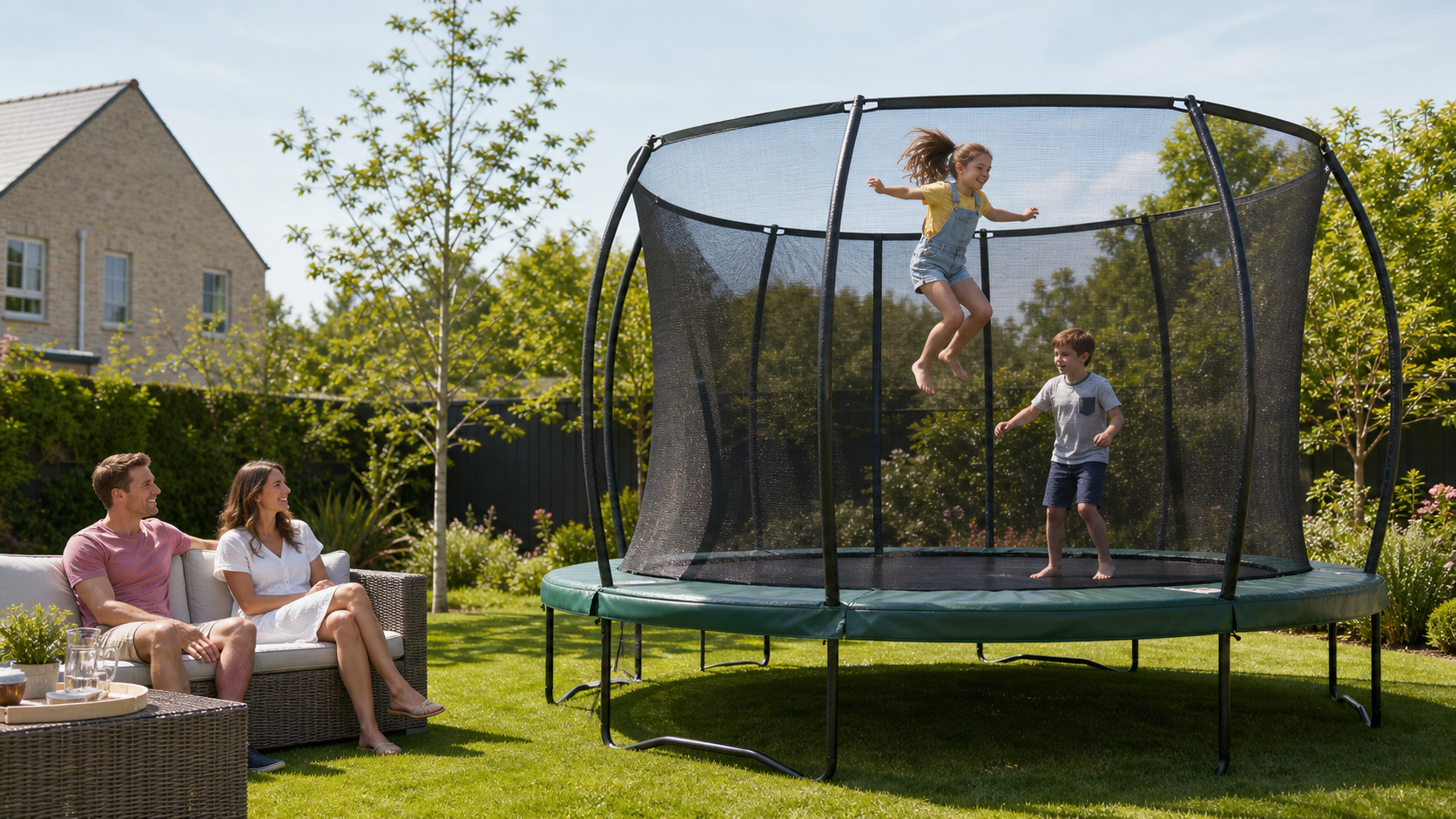
Trampoline Guide: 7 Amazing Benefits for Active Family Fun
A Trampoline can transform an ordinary garden into an active outdoor space where children and adults can enjoy movement, recreation, and time away from screens. Modern models range from compact designs suitable for smaller gardens to large family options with protective enclosures, padded edges, and weather resistant frames. Choosing the right one involves more than simply selecting the biggest model that fits your budget. Size, available garden space, user age, weight limits, construction quality, safety features, installation, maintenance, and intended use should all be considered before buying.
For many families, outdoor play equipment represents a long term purchase rather than a temporary toy.
A well selected model may be used regularly for several years.
The wrong size or poorly positioned equipment, however, can become inconvenient and may introduce avoidable safety concerns.
Understanding the basics before purchasing makes it easier to select equipment that fits both the users and the available outdoor space.
What Is a Trampoline?
A trampoline is recreational or sporting equipment designed around a flexible jumping surface supported by a strong frame and a suspension system.
Traditional designs commonly use springs between the jumping mat and frame, while some newer systems use alternative flexible components.
When a person lands on the mat, the suspension system stores energy before helping propel the user upward again.
Modern garden models often include several major components:
• Jumping mat
• Supporting frame
• Springs or alternative suspension system
• Frame padding
• Safety enclosure
• Support legs
• Enclosure poles
• Weather resistant materials
Some models also offer accessories such as ladders, covers, anchors, basketball hoops, storage solutions, or ground level installation options.
7 Amazing Benefits of Having a Trampoline
1. Encourages More Outdoor Activity
One of the biggest reasons families purchase outdoor play equipment is to encourage children to spend more time outside.
Phones, tablets, computers, televisions, and gaming systems compete heavily for children’s attention.
An appealing garden activity provides another option.
Instead of asking children repeatedly to go outside, parents can create an environment where outdoor play feels naturally enjoyable.
Regular access also removes the need to travel somewhere every time children want an active recreational activity.
Outdoor Play Can Become Part of the Routine
Consistency is easier when equipment is available at home.
Children may use it:
• After school
• During weekends
• During school holidays
• When friends visit
• During family gatherings
Short periods of active play can accumulate throughout the day.
The important point is not turning recreation into a strict exercise programme.
It is providing an enjoyable opportunity for movement.
2. Makes Physical Activity Enjoyable
People are more likely to repeat physical activities they genuinely enjoy.
Bouncing involves coordinated movement throughout the body.
The legs generate force, while the core and upper body help maintain position and balance.
Beginners may simply bounce gently.
More experienced users involved in appropriate training may progress to controlled recreational skills.
However, advanced tricks should never be attempted without suitable instruction, equipment, and supervision.
Movement Without Traditional Exercise
Some children do not enjoy organised sports.
Others may not be interested in running or structured exercise.
A trampoline provides a different type of physical recreation.
The activity can feel more like play than exercise, which may encourage longer participation.
3. Develops Balance and Body Awareness
Bouncing requires the body to constantly adjust.
The user must understand where their body is positioned while moving through the air and landing.
Controlled use can involve coordination between:
• Legs
• Core muscles
• Arms
• Vision
• Balance
Learning to land near the centre of the jumping surface also requires spatial awareness.
Beginners should focus on basic controlled bouncing before considering more complicated movements.
Why Control Matters More Than Height
New users sometimes try to bounce as high as possible immediately.
That is not a useful starting goal.
Controlled movement is more important.
A user should first become comfortable with:
• Starting a bounce
• Maintaining balance
• Staying near the centre
• Reducing bounce height
• Stopping safely
Basic control creates a better foundation for recreational use.
4. Creates a Social Garden Activity
Outdoor play equipment can become a focal point when children have friends or relatives visiting.
It provides an activity that does not depend entirely on electronic entertainment.
However, social use also requires rules.
Having several excited children around the equipment can increase the temptation for multiple people to jump simultaneously.
Manufacturer instructions regarding the number of users and maximum weight should always be followed.
Establish Rules Before Play Begins
Parents can make expectations clear before anyone starts.
Rules might include:
• Follow the manufacturer’s user limits
• Close the enclosure properly
• Remove shoes when instructed
• Keep toys away from the jumping area
• Avoid pushing
• Do not climb onto enclosure structures
• Stop when an adult asks
Simple rules are easier to enforce when everyone understands them beforehand.
5. Provides Convenient Home Entertainment
Family activities often involve travel, admission costs, scheduling, and preparation.
Garden equipment provides recreation directly at home.
This convenience can be particularly valuable during weekends and school holidays.
Parents can remain nearby while children play outside.
The garden can also become a more useful part of the home.
Instead of being an area used only occasionally, it can become a regular family recreation space.
6. Offers Options for Different Garden Sizes
Not every home has a large garden.
Fortunately, trampolines come in different shapes and dimensions.
Common shapes include:
• Round
• Rectangular
• Square
• Oval
Different configurations can suit different outdoor layouts.
The correct size depends on both the equipment dimensions and the safe clearance required around it.
A model technically fitting into the garden does not automatically mean it has enough safe operating space.
7. Can Provide Years of Use With Proper Care
Quality construction and regular maintenance can extend the useful life of outdoor equipment.
The frame, mat, padding, springs, enclosure, and attachment points should be inspected regularly.
Parts exposed continuously to sunlight, rain, moisture, wind, and temperature changes can deteriorate over time.
Replacing worn components when appropriate may help keep suitable equipment usable for longer.
How to Choose the Right Trampoline Size
Size is one of the first decisions buyers face.
Bigger is not automatically better.
Measure the intended area carefully.
Do not estimate visually.
Record the available width and length and consider surrounding obstacles.
Consider the Users
Ask who will use the equipment.
Factors include:
• Age
• Height
• Intended activity
• Manufacturer weight limits
• Number of permitted users
A model suitable for a young child may not meet the requirements of older teenagers or adults.
Always use the manufacturer’s specifications when checking suitability.
Measure More Than the Frame
The equipment needs clearance around it.
Nearby hazards can include:
• Walls
• Fences
• Trees
• Branches
• Garden furniture
• Sheds
• Washing lines
• Hard landscaping
• Other play equipment
Overhead clearance also matters.
Do not place jumping equipment beneath low branches or structures that could interfere with safe use.
Round vs Rectangular Trampoline Designs
Shape can influence how equipment fits into the garden and how the jumping surface behaves.
Round Models
Round designs are extremely common for family gardens.
They are available in numerous sizes and can fit naturally into many open lawn areas.
They are often chosen for general recreational use.
Rectangular Models
Rectangular equipment can make efficient use of certain garden layouts.
It is also associated with more advanced sporting applications, although recreational rectangular models are widely available.
The better option depends on:
• Garden shape
• User experience
• Available space
• Budget
• Intended activity
• Manufacturer recommendations
Do not choose based on appearance alone.
Above Ground vs In Ground Trampoline
Another decision is how the equipment will sit within the garden.
Above Ground Models
These use supporting legs to raise the frame above the ground.
Potential advantages include:
• Straightforward installation
• No major excavation
• Easier access to the underside
• Potentially easier relocation
However, the equipment remains visually prominent in the garden.
In Ground Models
In ground designs position the jumping surface closer to lawn level.
Families may prefer their lower profile and integrated appearance.
Installation can be considerably more involved.
Ground preparation, excavation, drainage, airflow, and manufacturer installation requirements need careful consideration.
Simply digging a hole beneath ordinary equipment without understanding these requirements is not a suitable approach.
Important Trampoline Safety Features
Safety should influence the purchasing decision from the beginning.
Safety Enclosure
A surrounding enclosure is designed to reduce the chance of users leaving the jumping area during normal use.
Inspect:
• Net condition
• Entrance closure
• Attachment points
• Pole padding
• Tears
• Loose connections
Damaged components should be addressed before continued use.
Frame Padding
Protective padding covers areas around the edge of the jumping surface.
Padding should remain securely positioned and in good condition.
Outdoor exposure can cause deterioration over time.
Strong Frame
The supporting structure needs to remain stable during use.
Check the manufacturer’s construction specifications and assembly instructions.
Loose or damaged frame components should not be ignored.
Secure Installation
Equipment should be assembled exactly according to the manufacturer’s instructions.
Improvised installation can affect stability and safety.
If assembly requirements are unclear, professional installation may be worth considering.
Where Should You Put a Trampoline?
Location is almost as important as the equipment itself.
Choose a level area with suitable clearance.
Look Above the Equipment
Check for:
• Tree branches
• Cables
• Structures
• Other overhead obstacles
Users need sufficient unobstructed space above the jumping surface.
Check the Surrounding Area
Avoid placing equipment immediately beside hard obstacles.
Consider fences, walls, patios, garden furniture, trees, and sheds.
Manufacturer guidance should determine appropriate clearance.
Consider Visibility
For families with younger children, placing outdoor play equipment where supervising adults can easily see it may be useful.
A hidden corner of the garden can make supervision more difficult.
Understanding Weight Limits
Every model has specifications regarding permitted user weight.
Never guess these limits.
Check the manufacturer’s instructions.
Exceeding the recommended limit can place unnecessary stress on:
• Mat
• Frame
• Springs
• Joints
• Supporting legs
• Other suspension components
Weight capacity should be considered before purchase, especially if teenagers or adults may use the equipment.
Trampoline Safety Rules for Families
Equipment design can reduce certain risks, but user behaviour remains important.
Families should establish clear rules.
Follow User Number Recommendations
Many recreational models are designed around specific user restrictions.
Multiple users can move unpredictably and may collide.
Follow the instructions supplied with the particular product.
Avoid Dangerous Tricks
Somersaults and advanced aerial movements can result in serious injuries when performed incorrectly.
Recreational users should not attempt advanced skills without suitable professional coaching and appropriate facilities.
Supervise Children
Appropriate adult supervision is important, particularly for younger users.
Supervision also helps ensure rules are followed consistently.
Keep the Jumping Surface Clear
Objects left on the mat can become hazards.
Keep balls, hard toys, phones, and unrelated objects away unless an accessory has specifically been designed and approved for that use.
How to Maintain a Trampoline
Outdoor equipment experiences constant environmental exposure.
Regular inspection helps identify wear before it becomes more serious.
Inspect the Mat
Look for:
• Tears
• Holes
• Unusual stretching
• Damaged stitching
• Worn attachment points
Do not ignore visible deterioration.
Check the Enclosure
Inspect the net and entrance.
Small tears may grow over time.
Attachment points should remain secure.
Examine Springs and Suspension Components
For spring based models, check for:
• Rust
• Damage
• Missing springs
• Excessive stretching
• Loose connections
Alternative suspension systems should be inspected according to their manufacturer’s instructions.
Check Frame Padding
Padding can degrade after repeated exposure to sunlight and weather.
Replace components when they no longer provide the protection intended by the manufacturer.
Inspect the Frame
Check connections, legs, joints, and structural components.
The equipment should remain level and stable.
Weather and Garden Trampoline Care
British weather can be challenging for outdoor equipment.
Rain, wind, moisture, frost, and sunlight can affect materials over time.
Strong Winds
Large outdoor equipment can be affected by severe winds.
Owners should follow manufacturer recommendations regarding anchoring and preparation for adverse weather.
Do not assume that heavy equipment cannot move.
Winter Care
Usage may decrease during colder months.
Regularly inspect the equipment even when it is not being used.
Remove accumulated debris and follow the manufacturer’s recommendations for seasonal maintenance and storage of removable components.
Covers
Some manufacturers offer weather covers.
Use only accessories that are suitable for the specific model and follow instructions about when they should be fitted or removed.
Common Trampoline Buying Mistakes
Buying Before Measuring
This is one of the easiest mistakes to avoid.
Measure the garden first.
Then check the complete equipment dimensions and recommended clearance.
Choosing Only by Price
The cheapest model is not necessarily the best value.
Consider:
• Construction
• Safety features
• Warranty
• Replacement parts
• Customer support
• Weight capacity
• Materials
• Long term suitability
Ignoring Replacement Parts
Outdoor equipment contains components that may eventually wear.
Before buying, investigate whether replacement mats, padding, enclosure nets, springs, and other important parts are available for the model.
Ignoring Installation Requirements
Large equipment may require considerable assembly.
Understand what is involved before delivery.
Choosing a Model Children Will Quickly Outgrow
A very small model may be appropriate initially but become less suitable as children grow.
Consider expected long term use while remaining within age and safety recommendations.
How Much Space Do You Need for a Trampoline?
The answer depends on the exact model.
Begin with the manufacturer’s dimensions.
Then account for recommended clearance around and above the equipment.
For example, do not assume that an advertised frame diameter represents the total garden space required.
Additional safe space may be necessary.
Measure:
• Garden width
• Garden length
• Overhead clearance
• Distance from obstacles
• Access for installation
• Access around the equipment
Also consider how much usable garden you want to retain for other activities.
Is a Trampoline Suitable for a Small Garden?
Potentially, yes.
Compact designs can work in smaller outdoor areas when the manufacturer specified clearance can still be maintained.
The mistake is forcing oversized equipment into a restricted space.
A smaller model with adequate clearance is generally more sensible than a larger one positioned too close to fences, walls, trees, or buildings.
Shape can also make a difference.
A rectangular or compact round design may suit certain garden layouts better.
Choosing Quality Over Short Term Savings
Outdoor recreational equipment should be evaluated as a complete product rather than simply comparing prices.
Consider the quality of:
• Frame
• Jumping mat
• Safety enclosure
• Padding
• Suspension system
• Connections
• Weather protection
• Instructions
• Replacement components
• Warranty support
A higher initial price does not automatically guarantee better quality, but unusually low pricing should encourage buyers to examine specifications carefully.
How Long Does a Trampoline Last?
There is no universal lifespan.
Durability depends on:
• Construction quality
• Frequency of use
• Weather exposure
• Maintenance
• Storage practices
• User weight
• Replacement of worn parts
• Installation quality
Some individual components may require replacement before the frame reaches the end of its usable life.
Regular inspection is therefore more useful than assuming equipment is safe simply because it is only a few years old.
Is a Trampoline Worth Buying?
The answer depends on how frequently it will be used and whether the garden can accommodate it properly.
It may offer good value for families whose children regularly enjoy outdoor physical play.
Before buying, consider:
• Available space
• Children’s ages
• Expected frequency of use
• Safety requirements
• Installation
• Maintenance
• Budget
• Long term suitability
• Replacement part availability
A carefully selected model that receives regular use can become an important part of the family’s outdoor space.
An oversized model purchased without measuring the garden may become more frustrating than enjoyable.
Frequently Asked Questions
What size trampoline should I buy?
Choose according to available garden space, intended users, manufacturer weight limits, and required safety clearance rather than simply purchasing the largest model available.
Are trampolines suitable for small gardens?
Compact models can suit smaller gardens when adequate clearance is available around and above the equipment. Always check the manufacturer’s installation requirements.
Can adults use a trampoline?
Some models are designed to support adults, while others have lower user weight limits. Check the specific manufacturer’s maximum user weight before use.
Should a trampoline have a safety enclosure?
Modern family models commonly include safety enclosures designed to reduce the chance of users leaving the jumping area. The enclosure should remain correctly installed and undamaged.
Can a trampoline stay outside all year?
Many garden models are designed for outdoor use, but weather exposure can cause wear. Follow the manufacturer’s guidance for maintenance, severe weather, winter care, and storage.
How often should a trampoline be inspected?
It should be checked regularly and before use when appropriate, particularly after severe weather or long periods without use. Inspect the mat, frame, enclosure, padding, suspension system, and connections.
Conclusion
A Trampoline can provide years of enjoyable outdoor recreation when its size, construction, placement, and intended users are considered carefully. Buyers should prioritise adequate garden space, strong safety features, suitable weight limits, quality materials, and access to replacement components rather than focusing only on price. Regular inspections and sensible family rules can then help keep the equipment in good condition while creating an outdoor activity that children and families can continue to enjoy.