What Is Really Replacing Throwaway Beauty Packaging in 2026
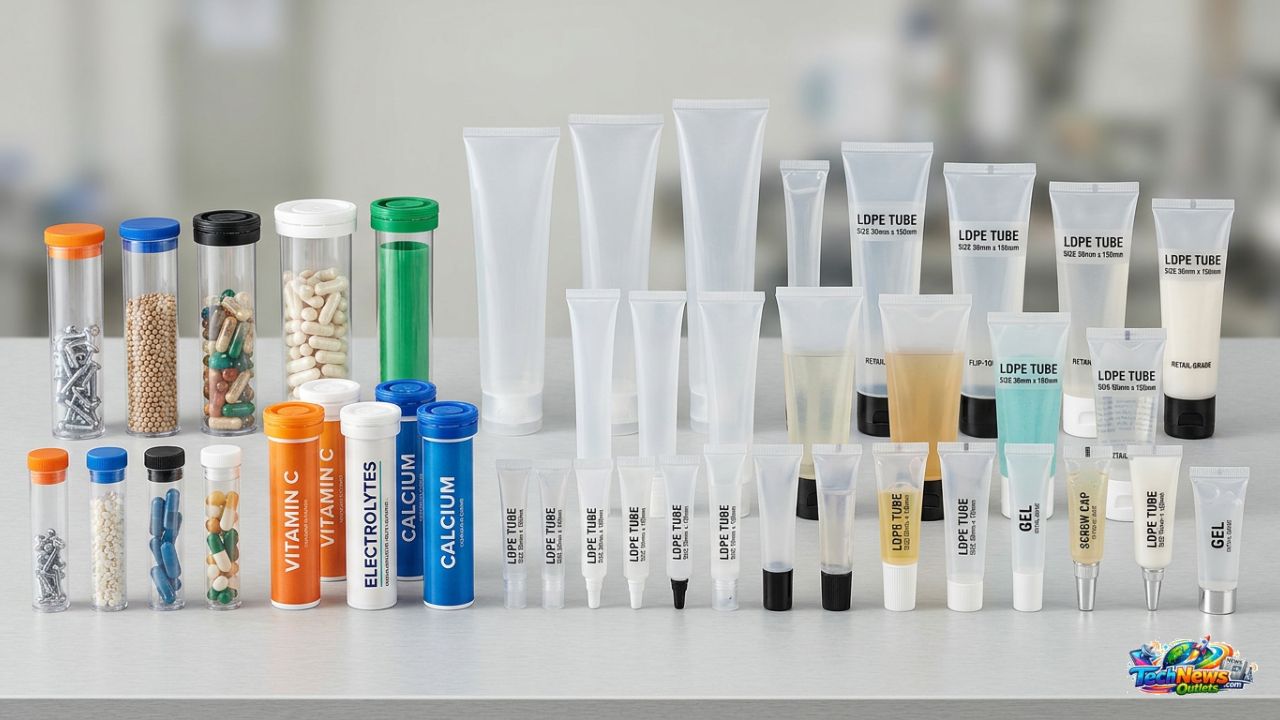
The beauty industry has relied on convenient disposable containers for decades, but packaging expectations are changing. Brands are under growing pressure to reduce unnecessary material, improve recycle-ability, respond to packaging regulation, and explain environmental claims more clearly. As a result, plastic tubes for packaging are being reconsidered alongside refill systems, mono-material designs, recycled plastics, aluminum, paper-based formats, and reusable containers.
This shift does not mean plastic tubes are simply disappearing. Tubes remain useful for toothpaste, cleansers, creams, gels, sunscreen, hair products, and many cosmetic formulations. Instead, manufacturers are asking a more complicated question about how plastic tubes for packaging can use fewer resources, protect products effectively, and fit more realistically into circular packaging systems.
Why the Beauty Industry Is Rethinking Packaging
Beauty packaging has traditionally had to accomplish several tasks simultaneously. It protects a formulation from contamination and damage, dispenses the correct amount, provides room for branding and regulatory information, survives transportation, and gives consumers a convenient experience.
Environmental performance has now become another important design consideration.
Brands are examining package weight, recyclability, recycled content, component separation, refillability, transportation efficiency, and the amount of material required for each product.
Plastic tubes for packaging sit directly within this discussion because they are widely used across personal care and cosmetics.
Single-Use Packaging Creates a Complex Waste Problem
The term single-use can sometimes oversimplify beauty packaging. Many cosmetic containers are used repeatedly during the life of the product but are discarded once the formulation has been consumed.
The resulting package may contain several components. A tube, shoulder, cap, pump, label, decorative layer, barrier material, and seal can potentially involve different materials.
Those combinations can help a package perform well, but they may also complicate recycling.
The challenge is therefore not merely replacing plastic tubes for packaging with another material. Packaging developers increasingly need to consider what happens throughout the entire package life cycle.
Regulation Is Increasing the Pressure for Change
Packaging regulation is developing in multiple markets. Governments are introducing or expanding measures involving packaging waste, producer responsibility, recycled content, recyclability, waste reduction, and environmental claims.
Requirements differ substantially between countries and can change over time.
For example, the European Union’s Packaging and Packaging Waste Regulation creates new requirements and targets that will phase in over coming years. Extended producer responsibility programs also operate or are developing in many jurisdictions.
Beauty businesses using plastic tubes for packaging should assess the rules applying to each market rather than assuming one package design will automatically satisfy every jurisdiction.
Are Plastic Tubes for Packaging Being Phased Out?
No universal phaseout of cosmetic tubes is occurring. The more significant development is a shift toward better-designed packaging systems.
Traditional multi-material structures can be difficult to recycle when their constituent materials cannot be efficiently separated or processed by available recycling infrastructure.
Modern plastic tubes for packaging can potentially address some of these limitations through mono-material construction, increased recycled content where technically and legally suitable, reduced package weight, or designs intended to improve recyclability.
The future is therefore more nuanced than replacing every plastic package with glass, metal, or paper.
Why Beauty Brands Still Use Tubes
Tubes offer several practical characteristics that make them difficult to replace across all product categories.
They can be lightweight, squeezable, hygienic, relatively resistant to breakage, and efficient for transporting formulations ranging from creams to gels.
Common applications include:
- Facial cleansers
- Moisturizers
- Hand creams
- Body lotions
- Sunscreen products
- Hair treatments
- Foundation and cosmetic products
- Toothpaste
- Facial masks
- Styling gels and creams
Plastic tubes for packaging can also help consumers dispense relatively controlled quantities without repeatedly placing their fingers inside a jar.
The format itself is not necessarily the central problem. Material selection, package design, disposal pathways, and actual recovery systems are equally important.
7 Major Changes Reshaping Beauty Packaging

The beauty packaging transition includes several approaches rather than one universal replacement for single-use plastic.
Understanding these developments helps explain why plastic tubes for packaging remain relevant while simultaneously undergoing significant redesign.
1. Mono-Material Plastic Tubes for Packaging
One important packaging trend involves reducing unnecessary combinations of incompatible materials.
A mono-material package is designed predominantly around one material family, although actual recyclability still depends on components, adhesives, inks, barriers, local collection systems, sorting technology, and recycling infrastructure.
For tube manufacturers, polyethylene-based structures are particularly relevant because polyethylene already has established recycling streams in some markets.
Why Mono-Material Tubes Matter
Historically, high-performance tubes could use multilayer structures to provide necessary barrier properties.
These layers can protect a sensitive formula from oxygen, moisture, light, fragrance loss, or other environmental influences. However, combining materials can make recycling more complicated.
The goal of newer plastic tubes for packaging is often to achieve sufficient product protection while simplifying the material structure.
That is an engineering challenge rather than merely a marketing decision.
Mono-Material Does Not Automatically Mean Recyclable
A mono-material claim should not be confused with guaranteed recycling.
Whether consumers can recycle plastic tubes for packaging depends on several factors, including:
- Local collection rules
- Package dimensions
- Sorting technology
- Material composition
- Caps and closures
- Labels and decoration
- Residual product
- Recycling facility capabilities
- End-market demand for recovered material
A package designed for recycling is valuable only when the broader recovery system can recognize and process it effectively.
2. Post-Consumer Recycled Plastic Is Expanding
Post-consumer recycled material, often shortened to PCR, comes from plastic that has been used, collected, processed, and made available as secondary raw material.
Using suitable recycled resin can reduce demand for virgin fossil-based feedstock and create demand for recovered plastic.
As beauty companies set packaging goals, PCR is becoming increasingly important in plastic tubes for packaging.
PCR Content Requires Careful Engineering
Adding recycled plastic is not as simple as replacing every gram of virgin resin with recycled material.
Color, odor, mechanical characteristics, processing consistency, regulatory requirements, product compatibility, appearance, and reliable material supply can all matter.
The required performance also varies by cosmetic product.
Plastic tubes for packaging containing recycled material therefore need appropriate testing to confirm that the package protects the formulation and functions as intended.
More Recycled Content Is Not Always Technically Simple
Beauty brands often prefer clean, consistent and premium-looking packaging. Recycled plastics can sometimes introduce visual variability.
Packaging engineers may need to balance recycled content with product protection, manufacturing performance, decoration requirements, and consumer expectations.
Instead of treating PCR percentage as the only sustainability metric, companies can assess the complete packaging system.
3. Lightweight Plastic Tubes for Packaging
One of the simplest ways to reduce packaging material is to use less of it.
Lightweighting aims to decrease package weight while preserving necessary performance. Tube walls, shoulders, closures, and other components can potentially be optimized to reduce material use.
This makes lightweight plastic tubes for packaging attractive to brands that want to lower material demand without completely changing their filling and dispensing format.
Less Material Can Affect Transportation
Reducing package weight may also reduce the weight transported throughout the supply chain.
However, the full impact depends on factors such as shipping distances, secondary packaging, pallet efficiency, product weight, logistics systems, and transportation method.
Lightweighting should therefore be evaluated using broader environmental data rather than assumptions.
There Is a Practical Limit to Lightweighting
Making a tube too thin could affect durability, barrier performance, filling-line operation, consumer experience, or product protection.
If a package fails and causes the cosmetic product itself to be wasted, the environmental outcome may be counterproductive.
The best plastic tubes for packaging use enough material to perform their function reliably without unnecessary material.
4. Refillable Beauty Packaging Is Growing
Refill systems represent a different approach to packaging reduction.
Instead of discarding the entire primary container when the product is empty, the consumer keeps a durable component and replaces or replenishes only part of the system.
Refills are appearing across fragrance, skincare, makeup, haircare, hand wash, and other beauty categories.
How Refillable Systems Can Reduce Packaging
A refill can potentially use less material than repeatedly purchasing a complete primary package.
The environmental outcome depends on how many times the durable container is actually reused, the materials used in the refill, manufacturing impacts, transportation, cleaning requirements, and end-of-life treatment.
A refillable container used only once does not capture the intended benefit of repeated reuse.
Tubes Can Be Part of Refill Systems
Refills and plastic tubes for packaging are not necessarily competing concepts.
Some brands may use flexible or lightweight packages as refills for durable dispensers. Others may use reduced-material tubes for products where a permanent refillable container is impractical.
The relevant question is which system provides functional product protection with a realistic path to lower overall material use.
5. Aluminum Packaging Is Gaining Attention
Aluminum is increasingly visible across personal care and beauty packaging.
It can be used for bottles, tins, cans, aerosol containers, and certain tubes. Aluminum has established recycling value and can be recycled when it successfully enters an appropriate recycling stream.
However, replacing plastic tubes for packaging with aluminum is not automatically environmentally superior in every application.
Benefits of Aluminum Packaging
Potential advantages include:
- Strong material recovery value
- Good barrier characteristics
- Premium appearance
- Durability in suitable formats
- Established recycling systems in many markets
- Potential for recycled content
Aluminum can work particularly well where its physical characteristics match the product and dispensing requirements.
Limitations of Aluminum
Primary aluminum production can be energy intensive, although recycled aluminum generally requires substantially less energy than primary production.
Metal containers can also be heavier than some lightweight plastic formats, and internal coatings may be necessary depending on the product.
A proper comparison between aluminum and plastic tubes for packaging should therefore consider the entire system rather than focusing only on whether a material is technically recyclable.
6. Paper-Based Beauty Packaging Is Developing
Paper and fiber-based packaging have strong consumer recognition and are increasingly being explored for beauty products.
Paperboard already works effectively for secondary cartons. The larger technical challenge is using fiber-based materials for direct product containment, especially when the formulation is wet, oily, or chemically demanding.
This has led to hybrid tubes, paper-forward packages, molded-fiber components, and other experimental formats.
Paper Tubes Are Not Always Pure Paper
A package that looks like paper may still require a polymer liner, coating, shoulder, closure, or barrier.
These components can be necessary to prevent leaking or preserve the product.
Consumers and brands should therefore examine the actual composition of paper-based alternatives to plastic tubes for packaging.
Paper Works Best Where Its Properties Match the Product
Dry products and secondary packaging can present relatively straightforward applications for fiber materials.
Creams, lotions, gels, and liquid cosmetics are more technically demanding because packaging must resist moisture and maintain product integrity.
Innovation may expand what fiber-based packaging can accomplish, but design claims need to reflect the actual structure.
7. Concentrated and Waterless Beauty Products Are Changing Packaging
Not every packaging improvement begins with the package itself.
Changing the product format can reduce packaging requirements.
Solid shampoo bars, cleansing bars, powders, concentrates, tablets, and other waterless or low-water products can sometimes use simpler packaging than conventional liquid products.
Product Design and Packaging Design Are Converging
A liquid shampoo may require a bottle or tube capable of securely containing the formulation.
A solid shampoo bar can potentially use a paperboard carton or wrapper instead.
This means one way to reduce reliance on plastic tubes for packaging is to redesign both the formula and the package together.
However, concentrated and waterless formats must still provide acceptable safety, stability, performance, and consumer experience.
Plastic Tubes for Packaging Compared With Key Alternatives
No packaging material performs best across every environmental and functional category.
The following comparison highlights why beauty brands generally need application-specific assessments.
| Packaging Option | Key Strength | Main Challenge | Suitable Beauty Uses |
|---|---|---|---|
| Mono-material plastic tubes | Lightweight and squeezable | Local recycling access varies | Creams, gels, cleansers |
| PCR plastic tubes | Uses recovered plastic feedstock | Supply and quality can vary | Skincare and personal care |
| Aluminum | Valuable recyclable material | Production and weight considerations | Creams, balms, specialty products |
| Glass | Chemically resistant and premium | Heavy and breakable | Serums, fragrance, skincare |
| Refill systems | Can reduce repeated primary packaging | Requires consumer reuse | Fragrance, skincare, soaps |
| Paper-based formats | Renewable fiber potential | Barrier requirements | Solids and secondary packaging |
| Waterless packaging | Can reduce packaging complexity | Requires product reformulation | Bars, powders, concentrates |
This comparison shows why replacing plastic tubes for packaging is rarely a simple material swap.
What About Glass Beauty Packaging?
Glass is often associated with premium skincare and cosmetics. It can provide strong barrier properties and is chemically suitable for many formulations.
Glass also has established recycling systems in numerous markets.
However, it is considerably heavier than many plastic packages and can break during production, transportation, retail handling, or consumer use.
Glass Has Advantages and Trade-Offs
A glass jar may feel substantial and durable, but a heavier package can affect transportation impacts.
Glass recycling performance also depends on local collection and processing.
For a small amount of lightweight product, plastic tubes for packaging may use substantially less package mass than a thick glass container.
This is why sustainability comparisons should include material quantity as well as material type.
Bioplastics and Bio-Based Plastic Tubes for Packaging
Bio-based plastics are another area attracting interest.
A bio-based plastic is made wholly or partly from biological feedstocks rather than exclusively fossil feedstocks. Importantly, bio-based does not necessarily mean biodegradable or compostable.
Some bio-based versions of conventional polymers can function similarly to their fossil-derived equivalents and may fit existing recycling streams where infrastructure accepts the material.
Compostable Is a Different Claim
Compostable plastics are designed to break down under specified composting conditions.
That does not necessarily mean they will readily decompose in a backyard, landfill, natural environment, or conventional recycling facility.
Beauty companies investigating bio-based plastic tubes for packaging need to distinguish clearly between bio-based, biodegradable, compostable, recyclable, and recycled terminology.
These words describe different characteristics.
Why Product Protection Still Comes First
Packaging exists primarily to protect a product.
Cosmetics can contain ingredients susceptible to oxygen, light, moisture, contamination, evaporation, or interaction with the container.
If poorly selected sustainable packaging causes a product to spoil prematurely, leak, or become unusable, the resulting product waste must also be considered.
Barrier Performance Matters
Different formulations require different barriers.
Plastic tubes for packaging can be engineered with barrier characteristics appropriate to particular products, but improving recyclability while maintaining those properties can be technically challenging.
Packaging engineers must determine what level of protection is actually necessary rather than adding unnecessary complexity or removing essential performance.
Compatibility Testing Is Essential
A package and formulation can interact over time.
Testing may examine leakage, discoloration, deformation, odor changes, weight loss, dispensing, closure performance, and other characteristics.
Beauty companies switching from conventional plastic tubes for packaging to a new material should conduct appropriate compatibility and stability studies rather than assuming equivalent performance.
The Role of Caps and Closures
A sustainable tube is more than its cylindrical body.
Caps, shoulders, seals, labels, inks, adhesives, and decoration influence overall material composition and recyclability.
A tube body designed for recycling can still face challenges if its other components interfere substantially with sorting or reprocessing.
Smaller Components Can Be Important
Brands are increasingly examining closure weight and design.
A smaller cap can potentially reduce material use, while compatible polymers can help simplify package construction.
The ideal solution depends on performance requirements because the closure must still prevent leakage and protect the formulation.
Plastic tubes for packaging therefore need to be evaluated as complete packages rather than isolated tube walls.
Beauty Packaging and Greenwashing Risks

Growing consumer interest in sustainability has also increased scrutiny of environmental marketing.
Terms such as eco-friendly, green, sustainable, recyclable, biodegradable, plastic-free, and zero waste can imply broad environmental benefits.
Claims need sufficient evidence and should reflect actual circumstances.
Recyclable Does Not Always Mean Recycled
A package might technically be recyclable while lacking practical collection or processing options for many consumers.
Similarly, plastic tubes for packaging can contain recycled material without themselves necessarily being recyclable in every location.
Brands should communicate these distinctions clearly.
Plastic-Free Does Not Automatically Mean Lower Impact
Switching to a heavier or more resource-intensive material solely to claim plastic-free packaging may not always reduce total environmental impact.
A life-cycle approach considers raw material production, package manufacturing, transportation, product protection, reuse, collection, recycling, and disposal.
This broader perspective can produce more informed packaging decisions.
How Life Cycle Assessment Helps Compare Packaging
Life cycle assessment, usually called LCA, is a methodology used to evaluate environmental impacts across defined stages of a product system.
An LCA can help businesses compare packaging options using factors beyond visual perception.
Results depend heavily on system boundaries, assumptions, data quality, geographic context, recycling rates, energy sources, transportation, and other variables.
Metrics Can Include More Than Carbon
Depending on the study, environmental assessment may consider:
- Greenhouse gas emissions
- Energy demand
- Water use
- Raw material consumption
- Package weight
- Transportation
- Waste generation
- Recycling scenarios
- Reuse rates
- End-of-life pathways
Comparing plastic tubes for packaging with glass, aluminum, paper, or refill systems requires consistent assumptions if the results are to be meaningful.
What Consumers Should Look for in Better Beauty Packaging
Consumers rarely have access to complete packaging life-cycle data while standing in a store.
They can still look for practical indicators that a company is taking material reduction and end-of-life design seriously.
Clear disposal instructions are particularly useful because recycling systems vary by location.
Look Beyond the Front Label
A package making a broad sustainability claim should ideally provide more specific information.
Consumers can look for details such as:
- Percentage of recycled content
- Material identification
- Refill instructions
- Disposal guidance
- Whether components need separation
- Availability of take-back programs
- Certification where relevant
- Specific rather than vague environmental claims
For plastic tubes for packaging, knowing the type of plastic and local collection rules can be more actionable than seeing an undefined green claim.
What Beauty Brands Should Consider Before Changing Packaging
Redesigning packaging can affect much more than appearance.
Filling equipment, sealing processes, transportation, shelf displays, product stability, labeling, artwork, consumer usability, and regulatory compliance can all be affected.
A systematic approach reduces the chance that an environmental improvement in one area creates a problem somewhere else.
Start With Material Reduction
Before changing materials completely, brands can examine whether the existing package uses more material than necessary.
Reducing the weight of plastic tubes for packaging may be less disruptive than adopting a completely different format.
The resulting environmental benefit should still be quantified where meaningful.
Design for Relevant Recycling Systems
A theoretically recyclable package has limited practical value if the target market cannot collect or process it.
Brands should consult current design-for-recycling guidance relevant to their markets.
This can help determine whether plastic tubes for packaging are likely to be compatible with existing recycling infrastructure.
Test Consumer Experience
Consumers need to be able to dispense the product, close it securely, understand refill instructions, and dispose of the package appropriately.
A packaging system that is too difficult to use may undermine adoption.
Refill systems are particularly dependent on consumer behavior because their potential benefits generally increase with repeated reuse.
Could Plastic Tubes for Packaging Become Circular?
Circular packaging aims to keep materials in productive use rather than continually extracting new resources and discarding packages after use.
For plastic tubes, this could involve using recovered material where appropriate, designing packages to be recyclable, collecting used packaging effectively, and converting recovered material into new products.
Achieving this at scale is difficult.
Collection Is a Critical Missing Link
Design changes alone cannot create a circular system.
Plastic tubes for packaging need collection infrastructure, effective sorting, reprocessing capacity, material demand, and consumer participation.
Differences between municipal recycling systems can make outcomes inconsistent even within a single country.
Recycling Cannot Replace Reduction
Recycling is useful, but reducing unnecessary material remains important.
Lightweighting, concentrates, larger efficient formats, reusable systems, and avoiding unnecessary secondary components can complement recycling strategies.
A comprehensive approach therefore uses several methods rather than expecting recycling to solve packaging waste independently.
Are Refill Systems Always Better Than Plastic Tubes?

Not necessarily. A well-designed refill system can reduce packaging per use when consumers repeatedly reuse the durable primary package. A poorly adopted refill system may deliver far less benefit.
The refill itself also requires material and manufacturing.
Comparing refills with plastic tubes for packaging should account for how often the main container is reused and how much material each refill requires.
Convenience Influences Reuse
Environmental performance can depend on consumer behavior.
If refilling is expensive, messy, difficult to access, or inconvenient, consumers may stop using the system.
The best refill programs therefore need to combine environmental objectives with practical usability.
Why Plastic Tubes for Packaging May Remain Important
The movement away from unnecessary single-use plastic should not be interpreted as the disappearance of every plastic format.
Lightweight packaging can have practical advantages, particularly when transporting and dispensing viscous products.
Future plastic tubes for packaging are likely to be judged increasingly by how efficiently they use material and whether their design fits evolving circularity requirements.
Innovation Is Happening Inside the Tube Format
Developments can include:
- Mono-material constructions
- Reduced tube weight
- PCR content
- Bio-based polymer feedstocks
- More compatible closures
- Simplified decoration
- Improved barrier technologies
- Designs intended for recycling
- Concentrated products requiring smaller packs
These changes demonstrate that replacing conventional packaging does not always require abandoning a familiar format.
How to Choose Plastic Tubes for Packaging Responsibly
Businesses selecting tubes should begin with product requirements.
A package that cannot protect the formulation or survive distribution is not an effective environmental solution.
After functional requirements are established, brands can evaluate material efficiency and end-of-life considerations.
Questions to Ask a Packaging Supplier
Useful questions include:
- What polymer is used?
- Is the tube designed for recycling?
- Does it meet relevant design-for-recycling guidance?
- What percentage of PCR is available?
- Is food or cosmetic contact compliance documented where applicable?
- What barrier properties does the tube provide?
- Are the cap and tube made from compatible materials?
- Can package weight be reduced?
- Which decorations affect recyclability?
- What minimum order quantities apply?
- Has the package undergone relevant performance testing?
- What environmental claims can be substantiated?
These questions help brands compare plastic tubes for packaging using measurable characteristics rather than appearance alone.
The Future of Beauty Packaging
Beauty packaging is moving toward a portfolio of solutions rather than one material winning every application.
Glass may remain attractive for premium serums. Aluminum can work for suitable products. Paper and fiber formats can expand in dry products and secondary packaging. Refill systems can reduce material when customers reuse them consistently.
Plastic tubes for packaging can remain part of that portfolio, particularly when they are lightweight, appropriately designed for recycling, and incorporate recycled material where practical.
Packaging Will Become More Application Specific
The industry is increasingly recognizing that a mascara package, shampoo bottle, face cream jar, sunscreen tube, and fragrance bottle have fundamentally different requirements.
Using the same sustainability strategy for each category can therefore produce poor results.
Plastic tubes for packaging should be compared with realistic alternatives for the specific product rather than against an abstract idea of perfect packaging.
Better Data Will Influence Decisions
Environmental packaging choices become stronger when brands can measure them.
Package weight, recycled content, reuse rates, recycling compatibility, transportation requirements, and life-cycle assessment can provide more useful information than vague environmental language.
Regulation is also pushing businesses toward more specific and supportable claims.
What Is Actually Replacing Single-Use Plastic?
There is no single replacement.
The transition includes mono-material plastics, recycled plastics, lightweight packages, refill models, aluminum, glass, fiber-based structures, concentrates, solid products, and packaging-free systems where practical.
In some applications, redesigning plastic tubes for packaging may provide a more workable path than eliminating plastic entirely.
In others, switching to another format can make sense.
The most credible approach is to assess environmental impact alongside functionality, consumer behavior, infrastructure, cost, and product protection.
FAQ’s
Are plastic tubes for packaging recyclable?
Some plastic tubes for packaging are designed for recycling, particularly newer mono-material formats, but actual acceptance depends on local collection, sorting, and recycling infrastructure. Consumers should follow local disposal guidance.
Are plastic tubes for packaging better than glass?
Neither is universally better. Plastic tubes for packaging can be lightweight and resistant to breakage, while glass offers strong barrier properties and established recycling in many regions. The better choice depends on the application and life cycle.
Can plastic tubes for packaging contain recycled plastic?
Yes, some plastic tubes for packaging incorporate post-consumer recycled material. Suitable percentages depend on package performance, material availability, regulatory considerations, appearance, and product compatibility.
What is replacing single-use beauty packaging?
Refill systems, recycled and mono-material plastics, aluminum, glass, paper-based formats, concentrates, and waterless products are all being explored. No single alternative is appropriate for every beauty product.
Are mono-material plastic tubes for packaging more sustainable?
Mono-material plastic tubes for packaging can simplify recyclability compared with some complex structures, but sustainability depends on material quantity, local recycling infrastructure, product protection, and other life-cycle factors.
How can brands choose more sustainable plastic tubes for packaging?
Brands can consider lightweight construction, suitable PCR content, recyclable designs, compatible closures, simplified decoration, product protection, and local recycling infrastructure while verifying environmental claims with evidence.
Conclusion
Beauty brands are not simply replacing every plastic container with paper, glass, or aluminum. Instead, they are reconsidering how much packaging they need, how products can be refilled or concentrated, which materials can realistically be recovered, and whether alternative designs genuinely improve environmental performance. Better plastic tubes for packaging can remain relevant within this transition through light-weighting, mono-material construction, recycled content, and improved end-of-life design.
The direction of travel is away from unnecessary material and toward packaging designed with its entire life cycle in mind. Whether brands choose refills, metal, fiber, glass, concentrates, or improved plastic tubes for packaging, credible progress depends on product protection, measurable reductions, practical recovery infrastructure, responsible consumer use, and environmental claims that can be supported by evidence.