Clip in Ponytail: How to Add Length and Volume in Minutes
A clip in ponytail is one of the simplest ways to create the appearance of longer, fuller hair without committing to permanent extensions or spending a long time styling. Most ponytail extensions are designed to attach around a natural ponytail or small bun, allowing the extra hair to blend into an existing hairstyle. With the right shade, texture, length and attachment method, the result can work for everyday outfits, weddings, parties, work events and polished evening looks while remaining easy to remove at the end of the day.
Unlike permanent hair extensions, a removable ponytail gives the wearer more control over when additional length or volume is used. It can be attached for a particular event and removed when it is no longer needed.
However, choosing the right piece and fitting it correctly are important. Colour mismatch, excessive weight, visible attachment points or a base that feels too tight can make even a good quality extension look uncomfortable or unnatural.
This guide explains how ponytail extensions work, how to choose one, how to attach it securely, how to style it and how to care for both the extension and natural hair.
What Is a Clip in Ponytail?
A clip in ponytail is a removable hair extension designed specifically to create a fuller or longer ponytail.
The exact attachment design varies by product.
Many models use a small comb or prong that slides beneath the natural ponytail, followed by a wrap section that secures around the base. Some designs also use hook and loop fastening, extra side combs or bobby pins for additional support.
For example, current ponytail extension instructions from Luxy Hair describe placing the natural hair into a ponytail or bun, inserting the extension comb beneath the hair tie, securing the wrap around the base and using a strand of hair to conceal the attachment.
The basic concept is similar across many brands, although users should always follow the instructions supplied with their specific extension.
Why Ponytail Extensions Are Popular
The main advantage is speed.
A person can create a dramatic hairstyle without individually attaching several extension wefts throughout the head.
Other benefits can include:
- Extra ponytail length
- Increased volume
- Easy removal
- Temporary styling
- Multiple hairstyle options
- No permanent attachment
- Less installation time than many full extension systems
A ponytail extension can also help create styles that may be difficult to achieve with natural hair alone.
This may include a long high ponytail, thick low ponytail, braided ponytail or voluminous bun.
7 Amazing Tips for Choosing and Wearing a Clip in Ponytail
The most natural result comes from selecting the correct extension and attaching it in a way that suits the wearer’s hair.
These seven areas are worth considering before buying or styling.
1. Choose the Right Colour Match
Colour is one of the first things people notice when an extension does not blend.
The goal is not always to match the roots.
For ponytail extensions, the colour should generally coordinate with the hair that will actually sit beside or underneath the extension.
If the natural hair has balayage, highlights or lighter ends, look at the colour around the ponytail rather than only the crown.
Check Hair Colour in Natural Light
Indoor lighting can change how hair colour appears.
Warm artificial lighting may make brown hair look more golden.
Cool lighting can reduce warmth.
When possible, compare hair shades near a window or outside in indirect daylight.
Photographs can also help when shopping online, but avoid heavily filtered images.
Consider Multitone Shades
Natural hair is rarely one completely flat colour.
Many people have slightly lighter ends, darker roots and subtle variations through the lengths.
An extension that contains blended tones can sometimes integrate more naturally than one flat colour.
What If the Clip in Ponytail Is Between Two Shades?
If neither option appears perfect, consider which shade matches the visible lengths of your hair most closely.
Styling the natural hair and extension together can also help disguise small differences.
For expensive pieces, check whether the retailer offers a shade matching service, sample swatch or return policy before altering the hair.
2. Pick the Right Length
Longer is not automatically better.
A very long extension creates a dramatic appearance, but it also adds weight.
The ideal length depends on the desired hairstyle, height, natural hair and how long the piece will be worn.
Common style choices include:
- Short ponytail for everyday wear
- Medium ponytail for versatile styling
- Long ponytail for dramatic length
- Extra long ponytail for statement looks
Consider where the extension will fall on the body.
The same advertised length can look different on people of different heights.
Think About Weight as Well as Length
A thick, very long extension can feel heavier than expected.
People with fine or fragile natural hair may find a lighter piece more comfortable.
Luxy’s current ponytail guidance specifically notes that people with very thin hair may experience a heavier feel or find a ponytail less secure.
Comfort matters as much as appearance.
If the extension causes pain or significant pulling, it should be adjusted or removed.
3. Match the Hair Texture
Texture is just as important as colour.
A completely straight extension attached to naturally curly hair can look disconnected unless the natural ponytail is styled to match.
Common ponytail textures include:
- Straight
- Soft wave
- Loose curl
- Defined curl
- Textured or coily styles
Choose a texture that works naturally with the hairstyle you intend to create.
Should Natural Hair Be Styled First?
Usually, yes.
Prepare the natural hair before attaching the extension.
If you want a sleek ponytail, smooth the natural hair first.
If you want waves or curls, prepare the visible natural sections so they blend.
Some manufacturers also recommend styling the extension before it is attached when heat styling is appropriate for that product. Luxy’s current application instructions recommend styling the ponytail extension before attachment when curling or straightening it.
Always confirm whether the extension is heat safe before using heated tools.
4. Create a Secure Natural Ponytail Base
The extension depends on the natural ponytail for support.
Start by brushing or combing the hair into the position where you want the finished style.
This may be:
- High ponytail
- Mid ponytail
- Low ponytail
- Small bun
Secure the natural hair with an appropriate hair tie.
Bellami’s current ponytail installation guide similarly recommends preparing and smoothing the natural hair first, then securing the extension at the top of the ponytail before wrapping the finishing strand around the base.
Do Not Make the Base Painfully Tight
The ponytail needs enough stability to support the extension, but excessive tension is not desirable.
The American Academy of Dermatology warns that repeatedly wearing tight ponytails or hair extensions can create traction on the hair and potentially lead to traction alopecia.
A secure hairstyle should not cause ongoing pain, stinging or significant scalp tension.
Why Scalp Comfort Matters With a Clip in Ponytail
Extensions add additional weight to the natural ponytail.
That weight concentrates around the attachment point.
If the style feels painful immediately, making it tighter is not the solution.
The AAD specifically advises that pain is a sign a hairstyle may be too tight and recommends loosening styles that pull excessively.
People who frequently wear extensions should also vary hairstyles and allow the hair periods without constant tension.
5. Attach the Ponytail According to Its Design
Not every ponytail extension attaches in exactly the same way.
Follow the product instructions.
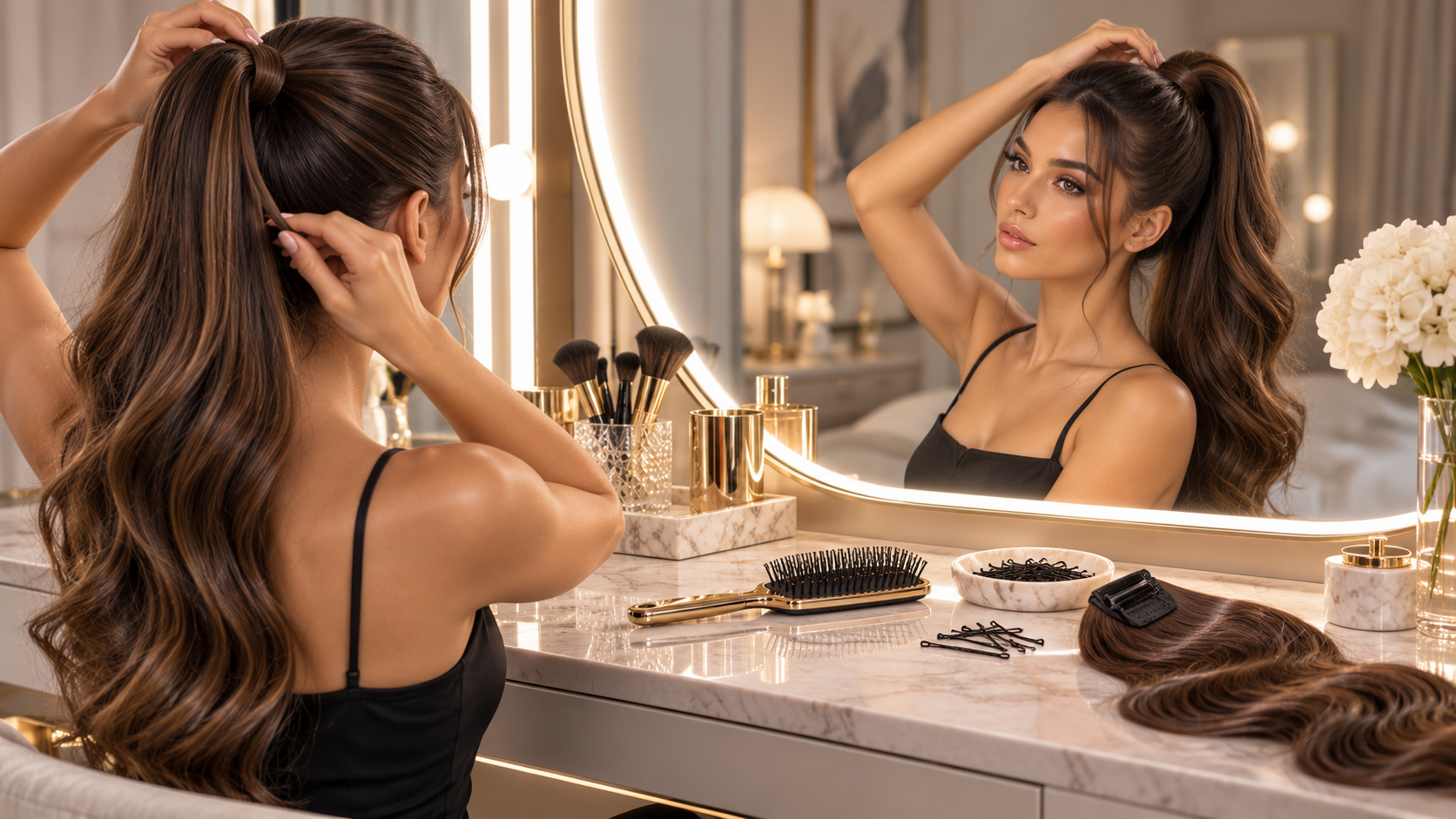
A common wrap style installation involves creating the natural ponytail, sliding the comb beneath the hair tie, wrapping the attachment band around the base and securing the decorative hair section around the outside.
Luxy’s current design uses a centre comb with side combs and a wrap base, while Bellami describes placing the upper prong into the natural ponytail and then wrapping the extension around the base.
Check Security Before Leaving Home
Once the extension is attached, gently move your head.
The piece should feel stable without pulling painfully.
Check the style from several angles.
Make sure:
- The attachment is hidden
- The extension sits straight
- The natural hair is covered
- Bobby pins are secure
- The base does not feel painful
A mirror or phone camera can help you check the back of the hairstyle.
6. Blend the Clip in Ponytail Naturally
Even a close colour match can look artificial if the natural hair remains visibly separate.
Blending creates a more consistent texture and silhouette.
If your natural ponytail is long enough to remain visible beneath the extension, distribute it through the added hair.
Depending on the material and product care instructions, gentle styling may help combine the sections.
Use the Wrap Strand to Hide the Base
Many ponytail extensions include a separate strand designed to wrap around the attachment.
This gives the hairstyle a more polished appearance.
Wrap the strand around the base and secure the end discreetly with bobby pins.
Position the pin beneath the ponytail where it is less visible.
Avoid Excessive Product
Strong styling products can build up on extensions.
Use only what is necessary.
Heavy oils and sprays may make the hair look greasy or cause strands to clump together.
For synthetic pieces in particular, follow the manufacturer’s product recommendations.
7. Care for the Extension Properly
Ponytail extensions do not receive natural oils from the scalp in the same way as growing hair.
They therefore need different care.
The exact routine depends on whether the piece is made from human hair, synthetic fibre or another material.
Brush Gently
Detangle before and after wearing when appropriate.
Start near the ends and gradually work upward instead of pulling through knots from the top.
A wide tooth comb or extension suitable brush may reduce unnecessary tension.
Luxy recommends gently brushing its ponytail before application using an extension brush, wide tooth comb or paddle brush.
Wash Only When Needed
A removable ponytail usually does not need to be washed after every wear.
Too much washing can shorten the useful life of some extensions.
Follow the care instructions for the specific product.
Human hair and synthetic fibre can require different shampoos, temperatures and drying methods.
Store the Ponytail Carefully
Before storing, make sure the extension is dry and reasonably detangled.
Keep it somewhere protected from dust, moisture and friction.
A dedicated extension bag, box or hanger can help prevent tangling.
Avoid placing heavy objects on top of it.
Human Hair vs Synthetic Clip in Ponytail
One of the most important buying decisions is material.
Both human hair and synthetic ponytails can be suitable, but they offer different advantages.
Human Hair Ponytail Extensions
Human hair generally offers more flexibility for styling.
Depending on the manufacturer’s instructions, it may be suitable for curling, straightening and certain professional colour services.
It can also provide natural movement.
However, human hair extensions normally require more maintenance and often cost more than basic synthetic options.
Benefits of Human Hair
Potential advantages include:
- Natural movement
- Broad styling flexibility
- Realistic texture
- Ability to restyle many products
- Better blending for some hair types
Do not assume every human hair product can tolerate unlimited heat, bleach or colouring.
Always follow the supplier’s care limits.
Synthetic Ponytail Extensions
Synthetic options can be convenient because many hold their original texture with minimal styling.
A curled synthetic ponytail may maintain its curl pattern after repeated use.
They are also often available at lower prices.
The main limitation is styling flexibility.
Some synthetic fibres cannot tolerate traditional heated tools.
Others are specifically designed to withstand limited heat.
Check the label before applying heat.
How to Style a Clip in Ponytail for Different Occasions
One advantage of this type of extension is versatility.
The same piece can create several different looks.
High Ponytail
A high ponytail creates a lifted and dramatic appearance.
Position the natural ponytail toward the crown before attaching the extension.
Make sure the base is comfortable because a high position can concentrate weight.
A smooth base works well for formal or evening looks.
Low Ponytail
A low ponytail is one of the easiest styles to wear for longer periods.
Secure the natural hair near the nape.
Attach the extension and smooth the wrap around the base.
This style can work for work, dinners and simple everyday looks.
Wavy Ponytail
Soft waves can make the extension appear fuller.
If the product permits heat styling, create waves before installation.
Another option is buying a prewaved piece that already matches the desired texture.
Braided Ponytail
A long ponytail can be braided after attachment if the base remains secure.
Try:
- Classic three strand braid
- Loose braid
- Bubble style ponytail
- Rope inspired braid
Avoid making the style unnecessarily heavy or tight.
Ponytail Bun
Some ponytail extensions can also be wrapped into a larger bun.
Luxy provides styling examples showing its ponytail extension being twisted and wrapped into a bun after secure attachment.
Use enough pins to support the shape without pulling excessively on the scalp.
How to Make a Clip in Ponytail Look More Natural
The best result usually comes from attention to small details.
Choose a believable length for the intended hairstyle.
Match the colour carefully.
Blend the texture.
Hide the attachment point.
Do not overload the base with pins or visible elastics.
Match Hair Density
If your natural hair is very fine, an extremely dense ponytail may create a noticeable contrast.
A medium density piece may look more believable and feel lighter.
If your hair is naturally thick, a fuller extension can create better visual balance.
Blend the Hairline
For sleek styles, use a small amount of appropriate styling product around the front and sides.
Avoid pulling the hairline excessively tight.
Softening the style slightly can look natural while reducing tension.
Leave a Small Amount of Natural Texture
A perfectly smooth extension paired with completely different natural texture can reveal the transition.
Matching the two sections matters more than making every strand perfectly polished.
Clip in Ponytail for Short Hair
People with short hair can often wear ponytail extensions as long as enough natural hair can be secured into a ponytail or small bun.
The natural ends should remain contained beneath the extension.
A small bun can sometimes provide a better base than leaving short ends loose.
Luxy’s current ponytail guidance specifically notes that shorter natural hair can be placed into a small bun before the extension is attached.
The exact minimum length depends on the attachment design and hair texture.
Clip in Ponytail for Fine Hair
Fine hair requires extra attention to weight and tension.
Choose a lighter extension when possible.
Avoid attaching an unusually heavy piece to a very small section of natural hair.
The base should be secure but comfortable.
People experiencing thinning, scalp pain or hair loss should be especially cautious with styles that add traction.
The AAD advises that extensions and tight ponytails can contribute to hair breakage and traction related hair loss when they repeatedly pull on the scalp.
How Long Can You Wear a Clip in Ponytail?
A removable ponytail is designed as a temporary styling option rather than something that should remain permanently attached.
Comfort should determine how long it stays on.
If the extension starts to pull, cause pain or create scalp discomfort, remove it.
Avoid sleeping with a removable ponytail attached unless the specific manufacturer clearly instructs otherwise.
Taking the extension off also gives the natural hair and scalp a break from additional weight.
Can You Use Heat on a Clip in Ponytail?
That depends entirely on the material.
Human hair extensions are often more suitable for heat styling, but temperature limits can still apply.
Synthetic extensions may melt, frizz or permanently change if exposed to unsuitable temperatures.
Heat friendly synthetic fibres are different and may allow controlled styling.
Check the product instructions before using:
- Straighteners
- Curling irons
- Hot brushes
- Heated rollers
- Blow dryers
When heat is permitted, use the minimum temperature needed to achieve the style.
Common Clip in Ponytail Mistakes to Avoid
Several simple mistakes can make a ponytail uncomfortable or unnatural.
Choosing the Wrong Shade
A strong colour difference can make the extension obvious.
Compare the extension with the mid lengths and ends of the natural hair.
Making the Natural Ponytail Too Tight
A secure base is necessary, but painful tension is not.
Repeated tight ponytails and extensions can contribute to traction alopecia.
Ignoring the Extension Weight
Long, dense ponytails can feel heavy.
Choose a weight your natural hair can comfortably support.
Applying Heat Without Checking the Material
Not every extension is heat safe.
Check the manufacturer’s instructions first.
Sleeping in the Extension
Keeping a removable extension attached overnight may create unnecessary tangling and tension.
Remove and store it properly after wear unless the product instructions state otherwise.
Washing Too Frequently
Extensions usually require less frequent washing than natural hair.
Follow product specific guidance rather than treating the piece exactly like growing hair.
Frequently Asked Questions
What is a clip in ponytail?
A clip in ponytail is a removable hair extension that attaches around a natural ponytail or bun to add temporary length, volume or a different texture.
How do you attach a clip in ponytail?
Create a secure natural ponytail, position the extension attachment beneath or around the hair tie, fasten the wrap and hide the base using the supplied hair strand or pins.
Can a clip in ponytail damage natural hair?
It can create stress if it is too heavy or worn very tightly and repeatedly. The American Academy of Dermatology recommends avoiding hairstyles that cause ongoing pulling or pain.
Can you wear a clip in ponytail with short hair?
Yes, if the natural hair is long enough to form a secure ponytail or small bun that can support and remain hidden beneath the extension.
Can you curl or straighten a clip in ponytail?
It depends on the material. Many human hair extensions can be heat styled within recommended limits, while synthetic products require specific heat safety guidance.
How do you make a clip in ponytail look natural?
Choose a close colour and texture match, select suitable density, blend the natural hair, conceal the attachment and avoid an extension that looks disproportionately long or heavy.
Conclusion
A clip in ponytail offers a practical way to add temporary length, volume and styling flexibility without committing to permanent extensions. The most natural results come from matching the colour and texture carefully, creating a secure but comfortable base and choosing an extension weight that suits the natural hair. With gentle installation, sensible scalp care and proper storage, a ponytail extension can become a versatile accessory for both everyday styling and special occasions.