NeuroCalm Metagenics: Ingredients, Uses, Safety and What to Know Before Taking It
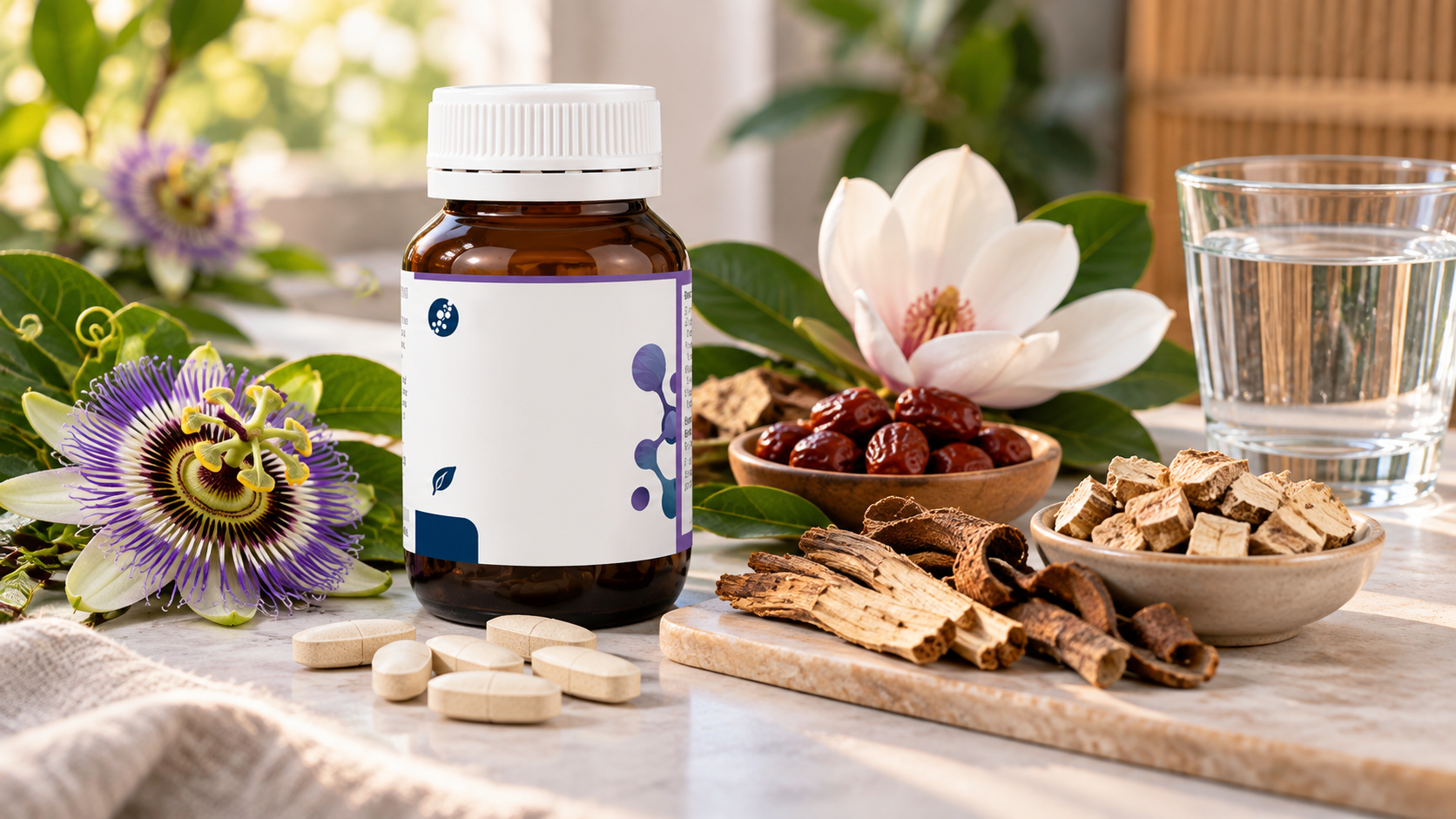
neurocalm metagenics is an Australian complementary medicine formulated with extracts of zizyphus, kudzu vine, magnolia and passionflower and marketed by Metagenics for stress, nervous tension and mild anxiety. The current Australian product page directs adults to take one tablet three times daily, or as directed by a healthcare professional. Because it contains several herbal ingredients, however, understanding the formula, current product registration, possible side effects and situations requiring professional advice is just as important as understanding its advertised benefits.
Stress related symptoms are common, but persistent anxiety, sleep problems, low mood or physical symptoms should not automatically be treated with a supplement alone. Herbal products can have genuine biological effects and may interact with medicines or be unsuitable in particular circumstances.
This guide examines the current Australian NeuroCalm formula, what its ingredients are traditionally used for, how the product is directed to be taken and what consumers should check before adding it to a wellness routine.
What Is neurocalm metagenics?
NeuroCalm is a Metagenics complementary medicine currently sold in Australia in tablet form.
Metagenics describes the product as formulated to support a healthy response to stress, ease nervous tension and support a calmer state of mind.
The current formula contains four herbal extracts:
- Ziziphus jujuba var. spinosa
- Pueraria lobata
- Magnolia officinalis
- Passiflora incarnata
The Therapeutic Goods Administration currently lists METAGENICS NEUROCALM under ARTG ID 451145, with Metagenics Australia as the sponsor and the same four active herbal ingredients.
Is NeuroCalm a Prescription Medicine?
No.
The current Australian product is a listed complementary medicine rather than a prescription medicine.
The TGA explains that listed medicines are lower risk, nonprescription products that can contain ingredients such as herbs, vitamins and minerals. They are included in the Australian Register of Therapeutic Goods but are not individually assessed by the TGA for safety, quality and effectiveness before supply in the same way as registered prescription medicines.
Sponsors of listed medicines must certify that applicable requirements are met and must hold evidence supporting the permitted claims they make.
This distinction is important when interpreting product marketing.
Being listed in the ARTG does not mean the TGA has independently proven that every claimed benefit will occur in every person.
7 Proven Facts to Know About neurocalm metagenics
Understanding the current formula makes it easier to decide what questions to ask before using the product.
1. NeuroCalm Contains Four Herbal Extracts
According to the current Australian Metagenics label information, each tablet contains four active herbal extracts.
Zizyphus
Each tablet contains 167 mg of Ziziphus jujuba var. spinosa dry seed extract, derived from 3 g of dry seed.
This herb is sometimes referred to as sour jujube seed or zizyphus.
It has a history of use in traditional Chinese medicine and appears in herbal preparations associated with calming and sleep related applications.
Traditional use does not automatically establish modern clinical effectiveness for a particular condition.
The strength of evidence should therefore be considered separately from the history of traditional use.
Kudzu Vine
Each tablet contains 80 mg of Pueraria lobata dry root extract, derived from 2 g of dry root.
Metagenics describes Pueraria as an ingredient used in the formula for physical relaxation and relief of certain headache symptoms within relevant traditional medicine contexts.
People should avoid assuming that this means the product treats every type of headache.
Recurring, severe or unusual headaches deserve appropriate medical assessment.
Magnolia
The formula provides 150 mg of Magnolia officinalis dry stem bark extract, derived from 1.5 g of dry bark per tablet.
Magnolia bark has a history of traditional use and contains naturally occurring compounds that have been investigated in laboratory and clinical research.
The presence of an investigated botanical compound, however, does not by itself prove that a particular commercial formulation will produce a specific effect in every user.
Passionflower
Each tablet contains 236 mg of Passiflora incarnata dry herb extract, derived from 1.3 g of dry herb.
Passionflower has historically been used in herbal preparations intended for calming purposes.
The U.S. National Center for Complementary and Integrative Health states that a small amount of research suggests passionflower may help with some anxiety symptoms, but the evidence remains limited and conclusions are not definitive.
Why the Ingredient Evidence Matters
A supplement may contain several ingredients with traditional or preliminary research support while still lacking large clinical trials on the exact finished formulation.
That is why consumers should distinguish between:
- Traditional herbal use
- Research on individual ingredients
- Studies of specific extracts
- Evidence for the complete commercial product
These categories are not automatically interchangeable.
2. The Current Directions Are for Adults
The official Australian Metagenics directions currently state:
Adults should take one tablet three times daily, or as directed by a healthcare professional.
The product should be used according to its current label rather than an old website, social media post or previous formulation.
Do Not Automatically Increase the Dose
Taking more than the labelled amount does not guarantee stronger benefits.
Higher intake can increase exposure to active herbal constituents and may increase the chance of unwanted effects.
If the recommended amount does not appear to help, the appropriate next step is to discuss persistent symptoms with a qualified healthcare professional rather than continually increasing the dose.
Check the Current Pack Before Taking It
Formulations and product registrations can change.
Metagenics currently sells several products carrying the NeuroCalm name, including NeuroCalm, NeuroCalm Sleep and NeuroCalm Soothe. These are different formulas with different ingredients and directions.
Always read the exact label on the product you have.
3. NeuroCalm Is Not the Same as NeuroCalm Sleep
The similar names can create confusion.
Standard NeuroCalm currently contains zizyphus, kudzu vine, magnolia and passionflower.
NeuroCalm Sleep contains a different combination that includes lavender oil, zizyphus, passionflower, California poppy and Jamaica dogwood.
The directions also differ.
This means advice for NeuroCalm Sleep should not automatically be applied to standard NeuroCalm.
NeuroCalm Soothe Is Also Different
NeuroCalm Soothe currently contains lavender oil, lemon balm and green tea extract standardised to L theanine.
Its official directions and warnings differ from the standard NeuroCalm product.
Check the Full Product Name
Before researching interactions or ingredients, look at:
- Full product name
- Ingredient list
- Directions
- Warning statements
- ARTG number
- Expiry date
This prevents information about one product in the range from being mistaken for another.
4. Herbal Does Not Automatically Mean Risk Free
Many people associate herbal products with being gentle or completely natural.
That does not mean they are suitable for everyone.
Herbs contain biologically active compounds.
They can potentially cause side effects or interact with medicines, supplements, anaesthesia or health conditions.
Passionflower is a good example.
NCCIH notes that reported possible effects can include drowsiness, dizziness and confusion. It also advises discussing passionflower use around surgery because of possible additive effects with medicines used during anaesthesia.
Pregnancy Requires Particular Caution
NCCIH advises against passionflower during pregnancy because it may cause uterine contractions and states that little is known about its safety during breastfeeding.
Because NeuroCalm contains passionflower and several other botanicals, anyone who is pregnant, planning pregnancy or breastfeeding should seek professional advice before use.
Medicines and Supplements Can Interact
People taking prescription or nonprescription medicines should discuss complementary medicines with a pharmacist or doctor when appropriate.
This is especially important when medications affect alertness, sleep, mood, blood pressure or other nervous system functions.
Rather than assuming an interaction exists or does not exist, provide the healthcare professional with the complete NeuroCalm ingredient list.
5. The Product Is Marketed for Mild Symptoms, Not Serious Mental Health Conditions
The current Metagenics product page positions NeuroCalm for stress, nervous tension and mild anxiety.
That wording matters.
A complementary medicine intended for mild symptoms should not be used as a substitute for appropriate assessment of severe or persistent anxiety.
When Professional Assessment Is Important
Consider speaking with a healthcare professional if symptoms:
- Persist for a long period
- Significantly interfere with work or study
- Affect relationships
- Cause repeated sleep disruption
- Include panic episodes
- Become difficult to manage
- Occur alongside significant low mood
The product’s own current warning advises consulting a healthcare professional if symptoms persist.
Seeking professional assessment does not prevent someone from discussing complementary approaches as part of a broader plan.
6. Current Australian Registration Should Be Checked
Product registrations can change as formulations, sponsors or administrative arrangements change.
The TGA currently shows METAGENICS NEUROCALM ARTG ID 451145 as active, with a listing date of 5 June 2024.
An older Metagenics NeuroCalm entry, ARTG ID 396971, was cancelled with effect from 30 June 2026.
This does not mean the current product is cancelled.
The current listing under ARTG ID 451145 remains active in the TGA database.
Why This Matters When Researching Supplements Online
Old retailer pages, archived labels and screenshots may remain online for years.
Whenever possible, check:
- Current manufacturer website
- Current packaging
- Current TGA listing
- Current ingredient quantities
- Current directions
This is particularly useful when a product has been reformulated or moved to a new ARTG entry.
7. Lifestyle Strategies Still Matter
A supplement should not become the entire stress management plan.
Stress can be influenced by workload, sleep, physical health, relationships, finances, caffeine, alcohol, illness and many other factors.
Depending on the individual, supportive strategies may include:
- Regular physical activity
- Consistent sleep routines
- Adequate meals and hydration
- Reducing excessive caffeine
- Relaxation techniques
- Time outdoors
- Mindfulness practices
- Professional counselling where appropriate
NCCIH notes that approaches such as mindfulness and relaxation techniques have evidence supporting their role in helping some people manage stress related symptoms.
A supplement may therefore be considered as one possible part of a broader wellbeing approach rather than a replacement for healthy routines or clinical care.
How Does neurocalm metagenics Claim to Work?
Metagenics describes the current formula as combining herbs traditionally used in Western herbal medicine and Chinese medicine to support calming and stress related functions.
The manufacturer specifically highlights zizyphus, passionflower and magnolia in relation to calming traditional uses and includes Pueraria in the formula for physical relaxation related indications.
It is important to describe those statements accurately.
Manufacturer claims are not the same as independent clinical conclusions.
What Does the Research Say About Passionflower?
Passionflower is among the better recognised ingredients in the formula.
NCCIH reports that some small studies suggest possible benefit for anxiety symptoms, including anxiety associated with certain procedures.
However, it emphasises that research remains limited and conclusions are not definitive.
That means phrases such as proven anxiety treatment would overstate the current evidence.
What About the Complete NeuroCalm Formula?
Consumers should not assume that research involving a single herb automatically proves the effectiveness of the complete four ingredient product.
Formulation strength, extraction method, dose and combination can all affect how botanical products behave.
This is one reason health information should separate manufacturer approved indications from independent evidence.
Who Might Consider NeuroCalm?
The current product is designed for adults seeking support for mild stress related symptoms and nervous tension.
Someone considering it should first confirm that:
- The product matches their intended use
- They are an adult
- They can follow the labelled directions
- They do not have a known reason to avoid an ingredient
- Their medicines have been considered
- Persistent symptoms are being appropriately assessed
A pharmacist can be particularly useful when checking supplement and medication compatibility.
Who Should Get Advice Before Taking It?
Professional advice is sensible when there is increased uncertainty.
Examples include people who:
- Are pregnant or breastfeeding
- Are planning surgery
- Take regular prescription medicines
- Use medicines that cause drowsiness
- Have significant chronic health conditions
- Are experiencing persistent anxiety
- Are taking several other herbal products
- Have previously reacted to botanical supplements
This is not because every person in these groups will necessarily experience a problem.
It is because individual factors can change the risk and benefit calculation.
Can neurocalm metagenics Cause Drowsiness?
The current product page promotes NeuroCalm for use during the day or night.
However, passionflower itself has been associated with drowsiness in some users. NCCIH also lists dizziness and confusion among possible side effects.
Individual responses may differ.
Be Careful When First Trying the Product
Until you know how the product affects you, consider whether activities requiring full alertness are appropriate.
This is particularly relevant for:
- Driving
- Operating machinery
- Working at heights
- Safety critical tasks
If noticeable sedation, dizziness or unusual symptoms occur, stop and seek advice where appropriate.
Can NeuroCalm Be Taken With Alcohol?
Mixing substances that may affect alertness is generally a situation where caution is sensible.
Because NeuroCalm contains passionflower and other botanicals associated with calming traditional uses, anyone considering combining it with alcohol should first check with a healthcare professional.
Healthdirect similarly advises caution around alcohol when using medicines and herbal sleep related products.
Avoid assuming that a herbal product cannot interact with alcohol simply because it is sold without a prescription.
How Long Does NeuroCalm Take to Work?
Metagenics states on its current product information that research involving ingredients in the formula has shown effects within approximately 30 minutes in some contexts.
That should not be interpreted as a guarantee that every person will notice a particular effect within 30 minutes.
Individual response may vary according to:
- Symptoms
- Dose
- Other medicines
- Diet
- Sleep
- Stress level
- Individual biology
A precise universal onset time cannot be promised for herbal supplements.
How Long Can NeuroCalm Be Taken?
The current product page provides daily dosing directions but does not establish one universal duration suitable for every person.
Longer term use should be considered in the context of why the product is being taken and whether symptoms persist.
If someone continues needing a stress or calming supplement for an extended period, it is reasonable to discuss the underlying symptoms with a healthcare professional.
Persistent symptoms deserve assessment rather than indefinite self treatment.
How to Buy NeuroCalm More Carefully
Supplement purchasing should involve more than comparing price.
Check the label and supplier carefully.
Confirm the Product Identity
Look for:
- Metagenics branding
- Correct NeuroCalm product name
- Current ingredient panel
- ARTG information for Australian products
- Batch information
- Expiry date
- Sealed packaging
Use Reputable Sellers
Buying from established pharmacies, practitioners or authorised retailers can reduce uncertainty about storage conditions and product authenticity.
Be cautious with unusually cheap marketplace listings, old stock or products showing different ingredient panels from the current manufacturer information.
Store It Correctly
Metagenics currently directs NeuroCalm tablets to be stored below 30°C.
Keep the product in its original packaging unless the dispensing instructions say otherwise and protect it from inappropriate heat or moisture.
Common Mistakes With Herbal Stress Supplements
One common mistake is assuming that natural means completely safe.
Another is expecting a supplement to fix a persistent mental health issue without addressing contributing factors.
Other mistakes can include:
- Taking more than the label recommends
- Combining several calming products without checking ingredients
- Ignoring medication interactions
- Using an old formulation guide
- Confusing NeuroCalm with NeuroCalm Sleep
- Continuing self treatment despite persistent symptoms
- Taking a product during pregnancy without professional advice
A careful approach makes complementary medicine use more informed.
Frequently Asked Questions
What is neurocalm metagenics?
NeuroCalm is an Australian Metagenics listed complementary medicine containing zizyphus, kudzu vine, magnolia and passionflower and marketed for stress, nervous tension and mild anxiety.
What ingredients are in neurocalm metagenics?
The current formula contains extracts of Ziziphus jujuba var. spinosa, Pueraria lobata, Magnolia officinalis and Passiflora incarnata.
How do you take neurocalm metagenics?
The current Australian directions state that adults take one tablet three times daily, or as directed by a healthcare professional.
Is neurocalm metagenics the same as NeuroCalm Sleep?
No. NeuroCalm Sleep is a different Metagenics formula containing ingredients including lavender oil, zizyphus, passionflower, California poppy and Jamaica dogwood.
Can neurocalm metagenics cause side effects?
Herbal ingredients can cause unwanted effects. Passionflower, for example, may cause drowsiness, dizziness or confusion in some people, so individual suitability should be considered.
Is neurocalm metagenics safe during pregnancy?
Professional advice is essential. NCCIH advises against passionflower during pregnancy, and NeuroCalm contains passionflower along with several other herbal ingredients.
Conclusion
Neurocalm metagenics combines four herbal extracts in an Australian listed complementary medicine intended for mild stress, nervous tension and related symptoms. The current formula and directions should always be checked because products and registrations can change, and herbal ingredients can still cause side effects or interact with medicines. Using the label correctly, checking individual suitability and seeking professional advice when symptoms persist provides a safer and more informed approach to complementary stress support.






One Comment