The Smart Plywood Upgrade That Protects Your Home Renovation for Years
Choosing termite-proof plywood can be an important decision when renovating kitchens, bedrooms, storage spaces, and other areas where wooden furniture or built-in cabinetry will remain in place for years. Termites can damage wood and wood-based products, making material selection relevant to long-term maintenance and the durability of renovation investments.
However, the term termite-proof requires careful interpretation. Some plywood products are manufactured with termite-resistant treatments or naturally resistant materials, but their effectiveness depends on the product, treatment method, exposure conditions, and installation. Homeowners should look for verified resistance claims rather than assuming any wooden panel can provide absolute protection against every termite species indefinitely.
Why Termite-Proof Plywood Matters in Home Renovation
Home renovation involves more than selecting attractive finishes.
Materials installed behind decorative surfaces or inside built-in furniture can be difficult to replace once the project is complete.
Termite-proof plywood is often considered for these applications because resistance to termite attack can reduce one important source of potential wood damage.
Termites feed on cellulose-containing materials, including many wood products.
Depending on species and environmental conditions, they can damage furniture, cabinetry, doors, and structural components.
Although treated plywood can help protect particular installations, it should not replace broader termite prevention and property maintenance.
Termite Damage Can Remain Hidden
Termites may attack wood in concealed locations.
Furniture bases, cabinet backs, wall interfaces, and enclosed joinery can make early damage difficult to notice.
This is one reason termite-proof plywood may appeal to homeowners planning permanent cabinetry.
Nevertheless, resistance in one component does not prevent termites from affecting nearby untreated wood or other vulnerable materials.
Prevention Is Easier to Plan Before Installation
During renovation, panels are accessible before assembly.
This creates an opportunity to select appropriately treated materials, inspect construction conditions, and address existing termite activity.
Installing termite-proof plywood into an already infested building does not automatically eliminate the infestation.
A qualified pest-management professional should assess suspected termite activity before vulnerable materials are enclosed.
What Is Termite-Proof Plywood?
Termite-proof plywood generally refers to plywood marketed as having resistance to termite attack.
The resistance may come from preservative treatment, chemical processing, material selection, or a combination of manufacturing approaches.
Because the phrase is often used in marketing, it is important to distinguish verified termite resistance from an unsupported claim of complete immunity.
How Plywood Is Manufactured
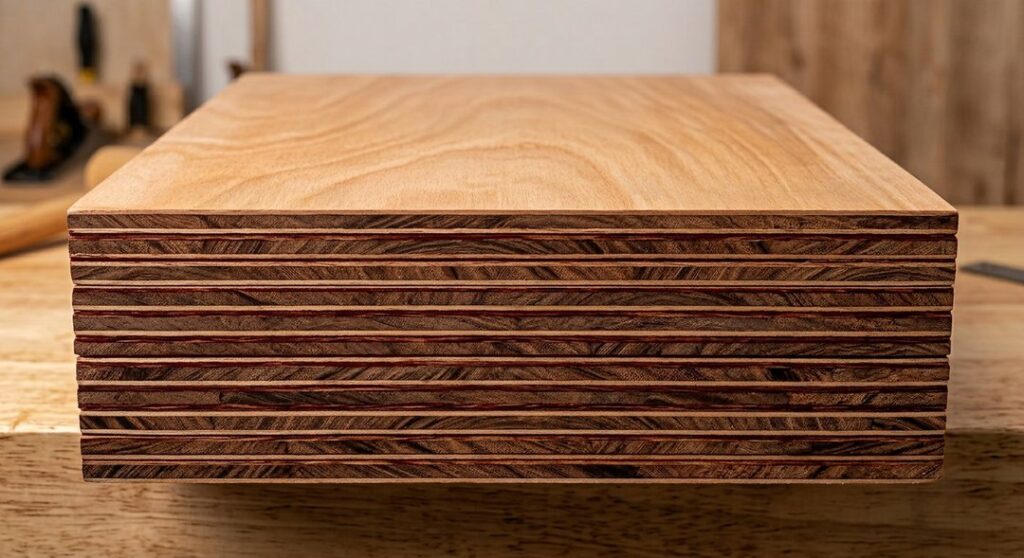
Plywood is produced by bonding thin wood veneers together, typically with the grain direction of adjacent layers arranged to improve dimensional stability and structural performance.
The precise construction varies by plywood grade, species, adhesive, and intended application.
Termite-proof plywood may use additional treatment methods intended to discourage or prevent termite damage under specified conditions.
The presence of adhesive between veneers does not automatically make a plywood product termite resistant.
Termite Resistance Is Not Universal
Different termite species behave differently.
Product performance can also depend on treatment retention, penetration, moisture exposure, cutting, installation, and service conditions.
When purchasing termite-proof plywood, ask which standard or test method supports the claimed resistance.
A credible manufacturer should be able to explain what the product has been tested to withstand.
How Termite-Proof Plywood Is Different From Regular Plywood
Regular plywood is designed to meet specific structural, bonding, dimensional, or appearance requirements.
Not all plywood receives a treatment intended to resist termite attack.
Termite-proof plywood is marketed specifically for that additional property.
However, the distinction cannot be confirmed by appearance alone.
Two panels may look nearly identical while having very different treatment histories.
Protection Against Biological Damage
Termite-resistant treatments may reduce susceptibility to termite attack when properly applied.
This can be valuable in locations where termite exposure is a realistic concern.
Regular untreated plywood may not provide equivalent resistance.
Still, termite-proof plywood should not be assumed to resist fungi, moisture, or other biological agents unless those properties are also supported by appropriate specifications.
Material Properties Still Matter
A termite-resistant panel can still be unsuitable for a particular application.
For example, a product designed for dry interior use should not automatically be installed in an area with repeated moisture exposure.
Homeowners need to assess bond classification, structural rating, thickness, finish, and manufacturer instructions alongside termite resistance.
Why Termite-Proof Plywood Is Useful for Built-In Furniture
Built-in furniture is often expensive to remove.
Kitchen cabinets, fitted wardrobes, wall storage, and customized shelving are designed around particular spaces.
If a hidden panel becomes damaged, repairs can involve dismantling surrounding components.
Termite-proof plywood can therefore be a practical material to consider where termite resistance is important.
Kitchen Cabinets
Kitchens contain many concealed spaces.
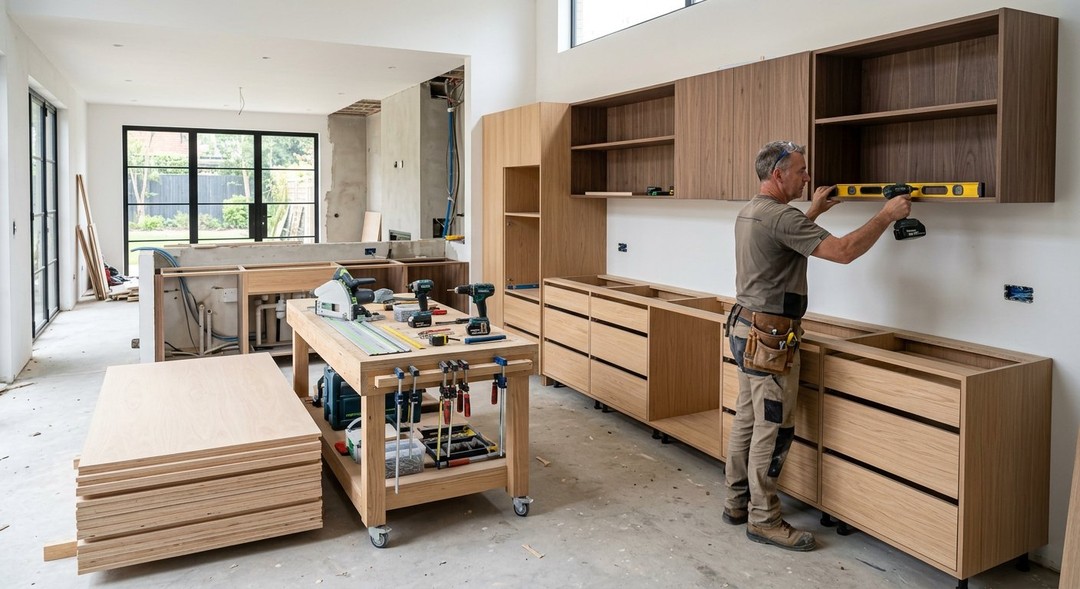
Base cabinets, sink cabinets, wall units, and storage compartments can remain in use for years.
Using termite-proof plywood in suitable cabinetry may help reduce one category of potential damage.
However, the material must also meet the kitchen’s moisture and load requirements.
Leaks should be repaired promptly because preservative treatment is not a substitute for moisture management.
Wardrobes
Fitted wardrobes can contain large quantities of plywood behind laminates, veneers, and decorative finishes.
Termite-proof plywood may be useful for side panels, shelves, partitions, and other components when the specific product is appropriate.
Correct edge finishing and installation remain important.
A wardrobe installed against a persistently damp wall may develop problems unrelated to termite attack.
Storage Cabinets
Home offices, living rooms, utility spaces, and bedrooms frequently contain permanent storage units.
Termite-proof plywood can be considered for these applications where additional resistance is desired.
The final choice should also account for panel thickness, load-bearing needs, surface finish, and expected humidity.
Long-Term Durability Depends on More Than Treatment
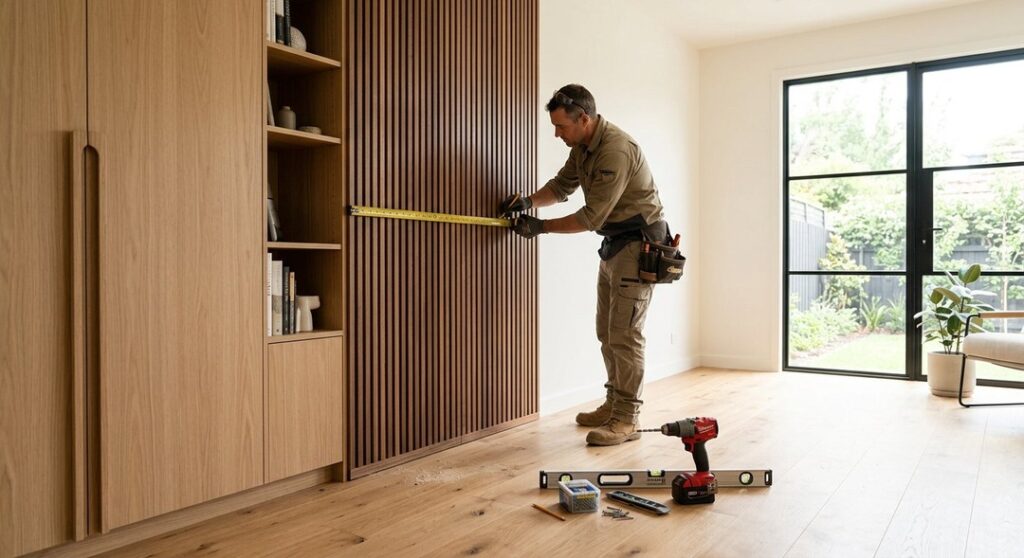
Durability is one of the main reasons homeowners investigate termite-proof plywood.
Yet the term durable includes several different performance characteristics.
A material can resist termites while remaining vulnerable to excessive moisture, mechanical damage, delamination, or incorrect loading.
Good renovation outcomes depend on matching each panel to its intended purpose.
Moisture Resistance
Moisture can affect plywood through swelling, changes in dimensions, or deterioration of unsuitable adhesive bonds.
Some plywood is specifically manufactured for humid or exterior conditions.
Termite-proof plywood does not automatically have those characteristics.
Check the manufacturer’s declared bonding and exposure classification before installing panels near sinks, bathrooms, or other moisture-prone areas.
Dimensional Stability
Plywood’s cross-laminated construction can provide dimensional advantages over solid wood in some applications.
However, changes in humidity can still influence its dimensions.
Termite-proof plywood should be stored and installed according to the manufacturer’s instructions.
Appropriate acclimatization and edge detailing may help support performance where recommended.
Structural Performance
Plywood strength depends on veneer quality, species, layup, adhesive, thickness, grading, and manufacturing quality.
Termite treatment does not automatically establish structural suitability.
For load-bearing or regulated construction applications, use products with the necessary structural certification.
Termite-Proof Plywood for Kitchen Renovation
Kitchen renovation is one of the most common situations where homeowners consider termite-resistant materials.
Cabinetry is frequently built to last through years of everyday use.
Termite-proof plywood can provide an additional consideration in the material selection process, especially in termite-prone locations.
Under-Sink Cabinets
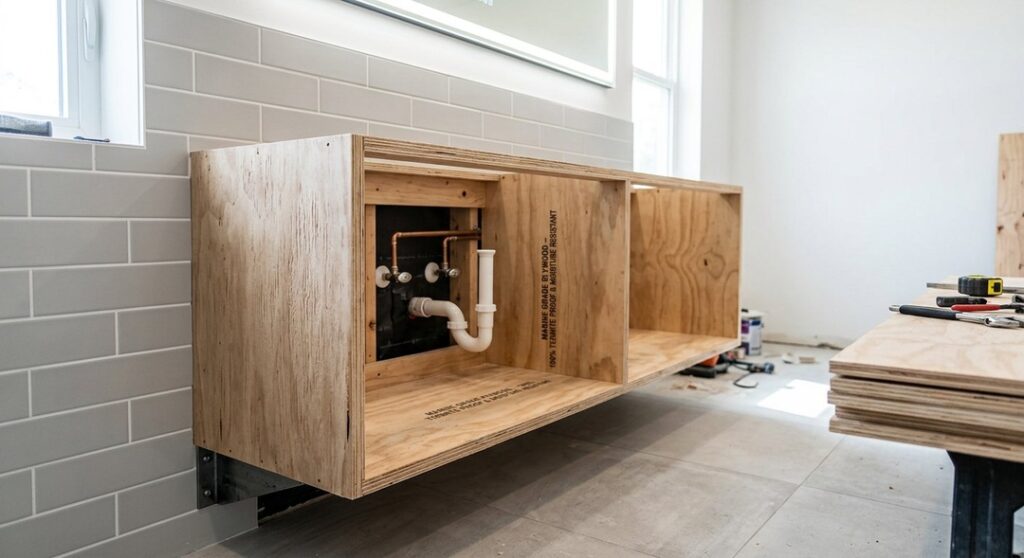
Under-sink cabinets are exposed to a higher possibility of leaks, condensation, and accidental spills.
Termite-proof plywood may be considered, but moisture resistance is equally important.
A suitable panel system should use appropriate adhesives, finishes, edge protection, and installation techniques.
A leaking pipe can damage even an expensive cabinet system if the problem remains unresolved.
Modular Kitchen Units
Modular kitchens often combine several panel materials.
A manufacturer may use different products for cabinet carcasses, shutters, backs, and internal partitions.
Termite-proof plywood does not need to be selected without considering these different roles.
Ask the cabinet manufacturer why a particular panel is recommended for each component.
Kitchen Cabinet Finishes
Laminate, veneer, paint, and other finishes can influence cleaning and appearance.
They may also affect exposure to moisture.
However, decorative finishes should not be assumed to provide reliable termite protection.
When termite resistance is important, the underlying material specification matters.
Termite-Proof Plywood for Bedroom Renovation
Bedrooms frequently contain wardrobes, bed bases, bedside tables, and storage furniture.
These products often involve significant quantities of wood-based panels.
Termite-proof plywood may appeal to homeowners who want additional protection for furniture that is difficult to replace.
Fitted Wardrobes
Large wardrobes can contain multiple concealed sections.
If termite activity develops behind a permanently installed unit, access may become difficult.
Selecting verified termite-proof plywood can be one part of preventive material planning.
However, regular inspection and property-level termite management remain important.
Storage Beds
Storage beds place panels close to floors and may contain enclosed compartments.
The material needs appropriate strength for its structural role.
Termite-proof plywood may be suitable for certain parts of the design, but loading, ventilation, moisture, and fastening details should also be considered.
Bedroom Shelving
Shelves need to support anticipated loads without excessive deflection.
Panel thickness and support spacing can be more important to shelf performance than termite resistance alone.
Choose termite-proof plywood only after verifying the complete material requirements.
Is Termite-Proof Plywood Suitable for Bathrooms?
Bathrooms create challenging conditions for many wood products.
Humidity, splashing, condensation, and leaks can affect cabinetry.
Termite-proof plywood may provide termite resistance, but it should not be assumed waterproof.
Moisture and Termite Resistance Are Different
A product treated against termites may still use an adhesive system unsuitable for prolonged wet exposure.
Similarly, moisture-resistant plywood may not have been treated against termites.
For bathroom furniture, both properties may need consideration.
Use Suitable Surface Protection
Appropriate finishes, edge sealing, ventilation, and installation detailing can help manage moisture exposure.
The exact system depends on the plywood and finish manufacturer.
Do not rely on surface coatings to compensate for an unsuitable panel specification.
Understanding Termite Treatment Methods
Manufacturers may use different preservative systems and treatment techniques.
The appropriate method depends on intended use, applicable regulations, chemical approvals, and manufacturing processes.
Termite-proof plywood should have clear documentation identifying the relevant performance claim.
Preservative Treatment
Some wood products receive preservative treatment designed to resist insects or other biological agents.
Treatment effectiveness depends on the preservative formulation, penetration, retention, and service environment.
These characteristics require proper manufacturing controls.
Factory Treatment Versus Surface Application
Factory-applied treatments may differ from coatings or chemicals applied after manufacture.
A surface-applied product should not automatically be considered equivalent to preservative treatment throughout a panel.
Homeowners should ask how termite-proof plywood has been treated and whether cutting or drilling affects the required protection.
Follow Manufacturer Guidance
Some treated wood products require particular handling or finishing procedures.
Follow manufacturer guidance and applicable safety requirements.
Never apply unidentified pesticides or wood preservatives inside living spaces.
Does Termite-Proof Plywood Eliminate the Need for Pest Control?
No.
Termite-proof plywood can help protect specific wood components when its resistance claims are valid and the product is used correctly.
It does not eliminate termites from a building or stop them from attacking other susceptible materials.
A complete termite management strategy may involve inspections, moisture control, building maintenance, monitoring, and professional treatment when necessary.
Address Existing Infestations First
If termites are already present, replacing damaged furniture with termite-proof plywood does not necessarily solve the problem.
The infestation may remain active elsewhere.
Professional assessment can identify the termite type, extent of activity, and appropriate treatment approach.
Inspect Vulnerable Areas
Homeowners should remain attentive to signs such as mud tubes, damaged wood, discarded wings, or other suspicious changes.
Not every sign establishes an active infestation.
A qualified pest-management professional can confirm the cause.
Benefits of Termite-Proof Plywood in Renovation
Verified termite resistance can provide practical benefits, especially where termite exposure is a concern.
The exact value depends on local conditions and product performance.
Reduced Susceptibility to Termite Damage
The primary potential benefit of termite-proof plywood is resistance to termite attack under specified conditions.
This can support longer service life for some furniture and joinery components.
It should not be presented as guaranteed permanent protection.
Protection for Difficult-to-Replace Furniture
Built-in cabinets and fitted storage can be costly to dismantle.
Using an appropriately specified resistant panel may reduce the likelihood of termite-related damage to those components.
Greater Material Choice
Termite-proof plywood may be available in grades and specifications suited to different interior applications.
This allows homeowners to consider termite resistance alongside strength, appearance, and moisture performance.
Potential Maintenance Advantages
A durable, appropriately treated product may require fewer termite-related repairs under certain conditions.
However, actual savings depend on exposure, product quality, installation, and maintenance.
No manufacturer can responsibly guarantee zero maintenance for every installation environment.
Termite-Proof Plywood Versus Other Furniture Materials
Homeowners often compare plywood with MDF, particleboard, solid wood, and other engineered materials.
Each has advantages and limitations.
Plywood Versus MDF
MDF is an engineered wood product made from wood fibers bonded with resin.
It offers a relatively uniform surface suitable for certain furniture and finishing applications.
Plywood uses layered veneers and may provide different strength and fastening characteristics.
Termite resistance should be evaluated from the individual product’s treatment and test information rather than assuming all plywood is superior to all MDF.
Plywood Versus Particleboard
Particleboard can be economical and useful in suitable dry interior applications.
Its moisture performance and mechanical characteristics depend on grade and manufacture.
Termite-proof plywood may be preferred where its particular combination of structural properties and termite resistance provides value.
The correct choice still depends on design requirements.
Plywood Versus Solid Wood
Solid wood offers natural appearance and various woodworking possibilities.
It can also be affected by moisture movement and biological damage.
Termite-proof plywood provides a different balance of properties.
Neither material is automatically better for every furniture component.
How to Identify Genuine Termite-Proof Plywood
Marketing terminology should not replace documentation.
Buyers should look for verifiable information about the product.
Check Product Specifications
Ask for the technical data sheet.
Relevant information may include:
- Manufacturer identity
- Product grade
- Intended application
- Thickness
- Bond classification
- Treatment description
- Relevant test standard
- Termite resistance test results
- Installation guidance
- Warranty terms
A product described as termite-proof plywood should have evidence supporting its advertised resistance.
Ask About Independent Testing
Independent testing can provide additional confidence when performed by a competent laboratory using a relevant method.
However, the test conditions matter.
A laboratory result does not necessarily establish that a product will resist every termite species in every environment.
Examine Warranty Conditions
Some products include warranties related to treatment or performance.
Read the exclusions carefully.
Moisture exposure, improper installation, cutting, or inadequate maintenance may affect coverage.
Do not assume the word lifetime means unconditional protection.
Choosing the Right Plywood Thickness
Plywood thickness influences strength, stiffness, weight, and suitability for particular furniture applications.
There is no universal thickness that works for all cabinets, shelves, doors, and partitions.
Cabinet Carcasses
Cabinet sides and partitions need sufficient stiffness and fastening capacity.
The appropriate thickness depends on panel dimensions, joinery design, support, and loading.
Termite-proof plywood should be selected with these engineering considerations in mind.
Shelving
Longer shelves or heavier loads may require thicker panels or additional support.
The span and support arrangement can have a major effect on deflection.
Decorative Panels
Decorative wall panels may have different requirements from structural furniture components.
Choose material specifications according to the application rather than assuming thicker is always better.
Cost of Termite-Proof Plywood
Termite-proof plywood may carry a price premium compared with some untreated alternatives.
However, pricing varies by region, manufacturer, treatment, thickness, grade, and certification.
The purchase price alone does not establish value.
Consider Total Renovation Costs
Material cost is only one part of the renovation.
Other expenses may include:
- Cutting
- Edge finishing
- Adhesives
- Hardware
- Installation labor
- Decorative finishes
- Transport
- Waste allowance
- Future maintenance
The value of termite-proof plywood depends on how its documented performance fits the intended project.
Avoid Paying for Unsupported Claims
A higher price does not automatically indicate better termite resistance.
Request technical documentation before accepting premium marketing claims.
Installation Best Practices
Correct installation supports the performance of any engineered wood panel.
Termite-proof plywood should be stored, cut, fixed, and finished according to manufacturer recommendations.
Store Panels Properly
Keep panels appropriately supported and protected from unnecessary moisture exposure.
Improper storage can lead to distortion or damage before installation begins.
Use Suitable Fasteners
Fastener selection depends on plywood construction, panel thickness, load, and joinery design.
Poor fastening can undermine the finished furniture even when the panel itself is high quality.
Protect Exposed Edges
Edges can be particularly important where moisture exposure is possible.
Use suitable edge treatments or finishes as recommended for the application.
Any special requirements for maintaining termite treatment after cutting should also be followed.
Sustainability and Environmental Considerations
Environmental claims about termite-proof plywood should be evaluated carefully.
The product may contain wood from different forestry sources, adhesives, and preservative chemicals.
A termite-resistant label alone does not establish sustainability.
Look for Responsible Wood Sourcing
Where relevant, homeowners can consider recognized chain-of-custody certifications and manufacturer sourcing information.
The availability and meaning of certifications depend on the product and market.
Consider Indoor Air Quality
Wood-based panels may release substances depending on their adhesives, treatments, and finishes.
Choose products that meet applicable indoor emission requirements.
Termite-proof plywood should be suitable for occupied residential interiors, not merely resistant to insects.
Dispose of Treated Wood Responsibly
Preservative-treated wood may require particular disposal methods.
Follow local waste regulations and manufacturer instructions.
Do not burn treated wood in domestic fireplaces or open fires.
Common Mistakes When Buying Termite-Proof Plywood
Homeowners can avoid several purchasing errors through better research.
Believing Every Termite-Proof Claim
The term is not a universal certification.
Always request evidence.
Ignoring Moisture Performance
Termite resistance does not equal waterproofing.
Check the relevant exposure classification.
Choosing by Price Alone
Low cost may be attractive, but insufficient material performance can create future problems.
Forgetting About Existing Infestations
New resistant furniture does not eliminate termites elsewhere in the building.
Ignoring Installation Quality
Incorrect storage, cutting, or fixing can undermine otherwise suitable materials.
Failing to Check Documentation
Keep product labels, specifications, invoices, and warranty records.
These may be useful for future maintenance or claims.
When Is Termite-Proof Plywood Worth Considering?
Termite-proof plywood can be particularly relevant when the local termite risk is meaningful and furniture will be difficult to replace.
Examples may include permanent kitchen cabinets, fitted wardrobes, storage beds, and built-in furniture.
However, a product’s suitability should always be established through its full specifications.
Termite resistance is one feature among several.
A homeowner renovating a dry, low-risk environment may prioritize other characteristics differently from someone renovating a property with known termite exposure.
How to Make a Better Renovation Material Decision
A strong renovation decision begins with understanding the environment.
Assess where the furniture will be installed, expected moisture exposure, structural requirements, termite risk, and maintenance access.
Then compare materials using documented technical information.
For projects involving known termite activity, obtain professional pest-management advice before installation.
Termite-proof plywood can be one component of a durable home renovation strategy, but it should never be presented as a complete solution to termite prevention.
FAQ’s
Is termite-proof plywood completely resistant to termites?
Not necessarily. Termite-proof plywood may offer tested resistance under specified conditions, but performance depends on treatment, termite species, installation, and environmental exposure.
Can termite-proof plywood be used for kitchen cabinets?
Yes, when the product meets the required strength, bonding, moisture, and safety specifications. Termite resistance alone does not establish kitchen suitability.
Is termite-proof plywood waterproof?
No. Termite resistance and water resistance are different properties. Check the manufacturer’s moisture and bond classification before using plywood in damp areas.
How long does termite-proof plywood last?
Service life varies with product quality, treatment, exposure, installation, and maintenance. Manufacturer warranties and technical data provide more useful guidance than universal lifespan claims.
Is termite-proof plywood better than regular plywood?
It may offer an advantage where verified termite resistance is important. Overall suitability also depends on strength, moisture performance, cost, and the intended application.
Does termite-proof plywood remove the need for pest control?
No. Resistant panels do not eliminate existing infestations or protect every other material in the building. Property-level termite management may still be necessary.
Conclusion
Termite-proof plywood can be a valuable option for home renovation projects involving permanent cabinetry, wardrobes, storage units, and other wood-based installations. Where termite exposure is a genuine concern, selecting plywood with documented resistance can help protect vulnerable components and support long-term material performance.
However, termite resistance should be evaluated alongside strength, moisture suitability, indoor safety, installation quality, and manufacturer documentation.
The best renovation results come from choosing materials based on verified performance rather than marketing terminology.
Homeowners should confirm relevant testing, understand warranty limitations, address existing pest problems, and follow suitable installation practices. When combined with responsible property maintenance and professional termite management where necessary, termite-proof plywood can contribute to more durable and dependable home interiors.