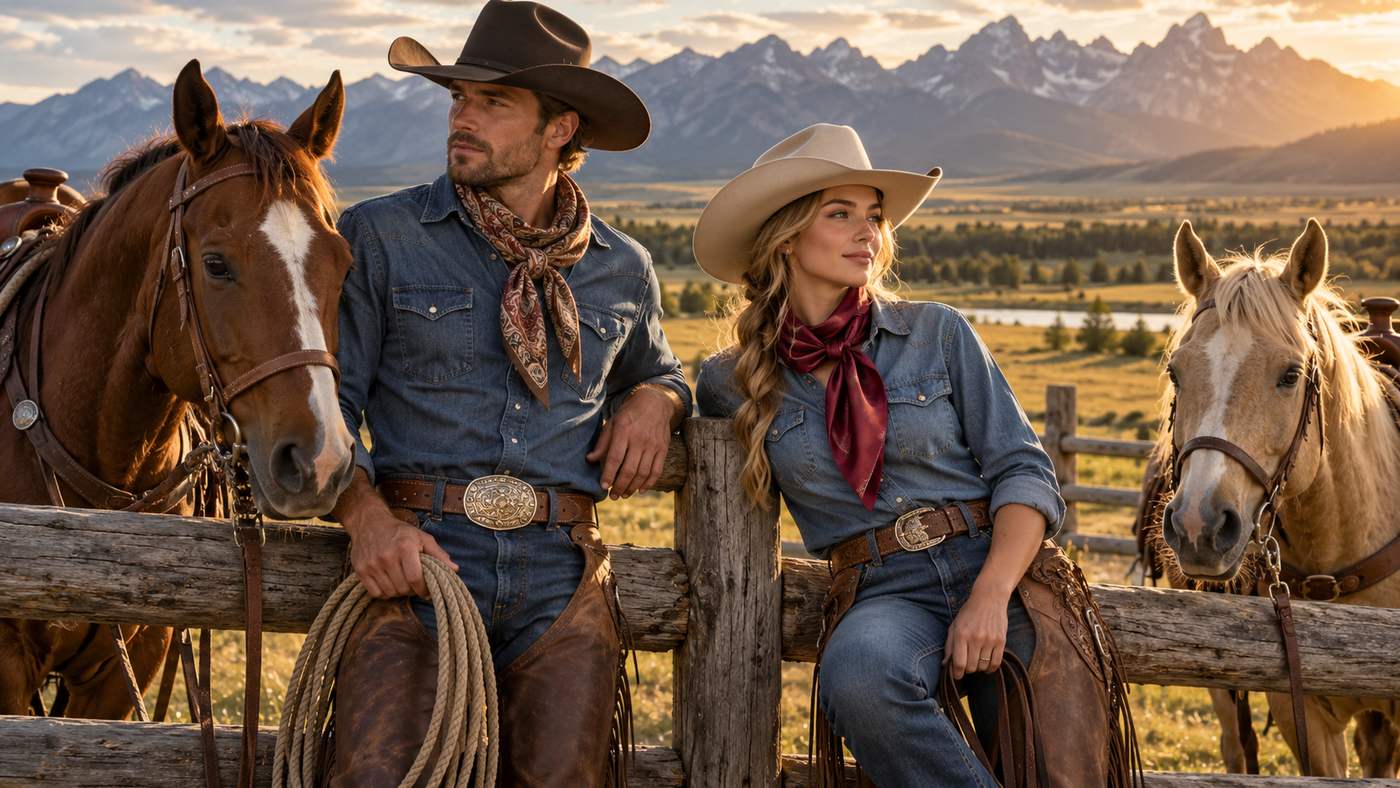
Wild Rags: 9 Things to Know About the Classic Cowboy Scarf
Wild rags are large scarves or neckerchiefs closely associated with cowboy, ranching and Western culture. Traditionally worn around the neck by cowboys, cowgirls and cattle workers, they combine practical protection from changing weather with one of the most recognizable elements of Western style. Western Horseman describes a wild rag as a scarf commonly worn while working livestock on the range and notes that it can be worn loosely in warm weather to absorb sweat or tightened around the neck when temperatures fall.
Today, wild rags have expanded far beyond everyday ranch work.
They can be seen at:
- Ranches
- Rodeos
- Horse shows
- Western weddings
- Country concerts
- Agricultural events
- Everyday Western outfits
Traditional versions are strongly associated with silk, although modern products may also use polyester, satin-like synthetics and other fabrics.
Designs range from simple solids to elaborate:
- Paisley
- Floral
- Jacquard
- Plaid
- Western art
- Southwestern-inspired prints
Wyoming Traders, a Western wear company founded in 1990, began specifically with silk wild rags and currently offers hundreds of scarf variations across its Western-wear range.
Understanding material, size and intended use can make it much easier to choose one that actually feels comfortable and looks right.
1. What Exactly Are Wild Rags?
A wild rag is essentially a Western neck scarf.
What distinguishes it from a small fashion neckerchief is usually its combination of:
- Generous size
- Soft fabric
- Western styling
- Practical outdoor use
Western Horseman describes traditional wild rags as colorful, large silk scarves worn around the neck by buckaroos and ranch workers.
They can be folded into a triangle, wrapped around the neck and secured with:
- A knot
- Scarf slide
- Wild-rag slide
Depending on the size, the same scarf can also be:
- Wrapped higher around the neck
- Pulled over part of the face
- Draped loosely over the chest
This flexibility is one reason the design has remained useful in working Western clothing.
2. Silk Is the Traditional Material for Wild Rags
Silk remains one of the most recognizable materials for authentic Western wild rags.
Current Wyoming Traders collections, for example, continue to feature 100% silk designs in several weights and finishes. Its limited-edition collection currently uses 12mm silk with hand-stitched hems, while other collections include lighter silk and satin-silk options.
Why Silk Works Well
Silk provides several qualities that suit a neck scarf.
It is:
- Lightweight
- Soft
- Flexible
- Easy to fold
- Comfortable against the skin
A silk rag can also be packed into a jacket pocket or saddlebag without taking up much room.
Different Silk Weaves Feel Different
Not every silk wild rag looks or feels identical.
A lightweight silk may drape softly and tie easily.
A heavier silk can feel:
- More substantial
- More structured
- Warmer
A satin silk creates more surface shine.
Wyoming Traders currently describes its 12mm satin version as a more lustrous option suited to occasions such as shows, weddings and dances.
Silk vs Polyester Wild Rags
Polyester wild rags are also widely available.
They may appeal because they can be:
- Less expensive
- Easy to find
- Available in many prints
But polyester and silk do not feel exactly the same.
For traditional Western wear, many buyers specifically prefer genuine silk because of its:
- Drape
- Texture
- Heritage
- Comfort
Always check the fiber-content description rather than assuming the word “silky” means actual silk.
3. Wild Rag Size Makes a Big Difference
Wild rags are available in numerous sizes.
There is no single required measurement.
Western Horseman has featured silk wild rags ranging from about 22 × 22 inches to 44 × 44 inches, while current Western-wear collections also offer several size options.
The best size depends on how you intend to wear it.
Small Wild Rags
A smaller scarf uses less fabric around the neck.
It can work well for:
- Simple knots
- Lightweight outfits
- Subtle Western styling
It may also suit someone who finds larger scarves bulky.
Medium Wild Rags
Medium sizes provide a balance between:
- Coverage
- Knotting flexibility
- Comfort
They work well for both everyday Western outfits and ranch use.
Large Wild Rags
A large scarf provides additional fabric for:
- Fuller knots
- Neck coverage
- Face coverage
- More dramatic styling
Larger scarves can also make bold prints easier to see.
Consider Your Preferred Knot
A knot that requires several wraps naturally needs more material.
If you already own a Western scarf that fits well, measure it before purchasing another one.
This provides a useful starting point for selecting future sizes.
4. Cowboys Use Wild Rags for More Than Appearance
Although wild rags have become fashionable, their roots are closely connected with practical ranch use.
Western Horseman notes that cowboys may wear them loosely in summer to absorb sweat and tighten them in colder conditions for additional warmth.
Cold Weather
A scarf around the neck helps cover the gap between:
- Shirt collar
- Jacket
- Face
This can be especially useful during:
- Early morning chores
- Winter riding
- Windy ranch conditions
Hot Weather
In warmer conditions, a lightweight rag can absorb some perspiration while keeping a traditional Western look.
Dust and Wind
A large wild rag can also be pulled higher when traveling through dusty or windy environments.
Western Horseman has documented silk wild rags being valued for protection from sand and dust as well as their traditional Western use.
However, a fashion scarf should not be treated as certified respiratory protective equipment.
Sun Exposure
A large scarf can also provide some physical coverage around the:
- Neck
- Upper chest
when working outside.
It does not replace proper sunscreen or other sun-protective clothing.
5. Wild Rags Can Be Tied in Many Different Ways
There is no single correct way to tie a wild rag.
Different tying methods change both the appearance and amount of coverage.
Basic Cowboy Knot
One straightforward method is:
- Fold the square diagonally.
- Position the triangular section over the chest.
- Bring the ends around the neck.
- Return them toward the front.
- Tie them securely.
The exact knot can be adjusted depending on:
- Weather
- Scarf size
- Personal preference
Simple Front Knot
A simple knot lets the scarf hang naturally.
This works particularly well when the fabric has an attractive:
- Paisley
- Floral
- Jacquard pattern
Neck Wrap
In colder conditions, more of the fabric can be wrapped closely around the neck before securing it.
This produces a fuller look and greater coverage.
Wild Rag Slide
Scarf slides are another popular option.
A slide can replace a conventional knot and may be made from:
- Silver
- Leather
- Metal
- Decorative Western materials
This is particularly useful for dressier Western styling.
Do Not Overtighten
The scarf should feel secure but comfortable.
Avoid tying anything tightly enough to restrict:
- Breathing
- Neck movement
Practical Western wear should remain functional.
6. Colors and Patterns Can Completely Change the Look
One of the biggest attractions of wild rags is the enormous variety of available patterns.
Current Western collections include:
- Solid colors
- Paisley
- Plaid
- Polka dot
- Jacquard
- Western art
- Cowboy-themed prints
Wyoming Traders currently offers everything from simple silk solids to limited-edition Western-art designs and patterned collections.
Solid Wild Rags
Solid colors can be easy to coordinate.
Popular choices include shades such as:
- Black
- Navy
- Red
- Burgundy
- Silver
- Gold
Current satin-silk collections include several of these traditional Western colors.
Paisley Wild Rags
Paisley is one of the most recognizable Western scarf styles.
It pairs naturally with:
- Denim
- Western shirts
- Vests
- Cowboy hats
Jacquard
Jacquard fabric creates pattern through the weave itself rather than relying entirely on surface printing.
This can create a more textured, dressy appearance.
Western Art Prints
Modern wild rags may feature:
- Horses
- Ranch scenes
- Western landscapes
- Cowboy art
These are useful when the scarf is intended to be a major visual element of the outfit.
7. Wild Rags Work for Both Men and Women
The wild rag is not limited to one gender.
Cowboys and cowgirls both wear them.
The styling may be:
- Rugged
- Traditional
- Minimal
- Dressy
- Fashion-forward
depending on the outfit.
Men’s Western Style
A classic combination might include:
- Denim shirt
- Cowboy hat
- Jeans
- Boots
- Silk wild rag
A solid or dark paisley scarf can add color without dominating the outfit.
Women’s Western Style
A cowgirl outfit may use a bright print to create a stronger visual accent.
Wild rags can complement:
- Denim jackets
- Western dresses
- Riding shirts
- Vests
Rodeo and Horse Shows
A richer silk finish or bold pattern can be particularly suitable for:
- Rodeos
- Horse shows
- Western competitions
Current Western Horseman coverage continues to feature premium silk wild rags as part of contemporary ranch and rodeo fashion.
8. Wild Rags Have Moved From Ranch Work Into Western Fashion
The wild rag remains connected to practical cowboy clothing, but it is now equally recognizable as a Western fashion accessory.
It may be worn to:
- Country weddings
- Rodeos
- Western events
- Concerts
- Dinner
- Church
- Everyday casual outings
Wyoming Traders specifically positions some of its current limited-edition silk wild rags for settings ranging from the arena to church and dinner.
This versatility has helped the wild rag remain relevant.
Western Wedding Style
For a Western wedding, coordinating wild rags can be used by:
- Groom
- Groomsmen
- Wedding party
A satin or heavier silk can provide a more formal appearance.
Casual Western Outfit
For everyday wear, a simple paisley scarf can be paired with:
- Plain shirt
- Denim
- Boots
without making the outfit feel overly formal.
Ranch Wear
For actual ranch work, practicality matters more.
Priorities may include:
- Comfortable fabric
- Easy knotting
- Adequate size
- Durability
A work scarf does not need to be expensive or elaborate to be useful.
9. Look at Construction Quality Before Buying Wild Rags
Two scarves can look similar online while differing considerably in quality.
Before purchasing, check more than the pattern.
Fabric Content
Look for a clear statement such as:
100% silk
if genuine silk is important to you.
Do not rely solely on descriptions such as:
- Satin
- Silk-feel
- Silky
because these can refer to synthetic fabrics.
Hem Construction
A clean hem helps prevent the edge from fraying.
Premium Western products may use:
- Hand-stitched hems
- Carefully finished edges
For example, current Wyoming Traders silk collections frequently specify hand-stitched hems.
Print Quality
Check whether the pattern appears:
- Sharp
- Even
- Consistent
If the back of the scarf will be visible when tied, consider how the reverse side looks as well.
Fabric Weight
A lightweight fabric can be ideal in warm conditions.
A heavier silk may:
- Drape differently
- Feel more substantial
- Provide additional warmth
Choose based on actual use rather than assuming heavier always means better.
How to Care for Silk Wild Rags
Silk requires more care than many synthetic fabrics.
Always follow the manufacturer’s instructions first.
Current Wyoming Traders silk products commonly specify:
- Hand washing
- Hang drying
with dry cleaning offered as another option on certain products.
Hand Washing
When permitted by the product instructions:
- Use cool or lukewarm water.
- Use a detergent appropriate for delicate fabric.
- Avoid aggressive scrubbing.
- Rinse carefully.
Avoid Twisting
Do not aggressively wring wet silk.
That can distort the fabric.
Dry Carefully
Hang or lay the scarf as recommended by the manufacturer.
Avoid high dryer heat unless the care label explicitly permits it.
Store Clean
Before storing for a long period:
- Make sure the scarf is clean.
- Make sure it is completely dry.
Store it where it will not be crushed against sharp:
- Buckles
- Spurs
- Metal accessories
Silk Wild Rags vs Cotton Bandanas
A wild rag and a bandana can both be worn around the neck, but they are not necessarily interchangeable.
Bandanas
Traditional cotton bandanas are generally:
- Smaller
- More casual
- Less flowing
They can be excellent work accessories.
Silk Wild Rags
A large silk wild rag offers:
- Softer drape
- More fabric
- More elaborate tying options
- Dressier appearance
Many Western riders own both and use them for different situations.
Wild Rags for Winter
Cold weather is one of the traditional reasons to wear a wild rag.
A larger scarf can be wrapped closely around the neck and tucked into:
- Vest
- Coat
- Jacket
This can help block cold air around the collar.
For very cold environments, however, a silk scarf should be one part of a complete cold-weather clothing system rather than the only insulation.
Wild Rags for Summer
Lightweight versions can also be useful in warm weather.
Western Horseman notes their historical use for absorbing sweat when tied more loosely during summer work.
A summer rag should feel:
- Light
- Comfortable
- Nonrestrictive
Bright colors and lightweight prints can also fit naturally into warm-season Western outfits.
Common Mistakes When Buying Wild Rags
Assuming Every Wild Rag Is Silk
Always read the fabric composition.
Buying the Wrong Size
Consider your:
- Neck size
- Preferred knot
- Desired coverage
before ordering.
Choosing Appearance Over Comfort
An attractive scarf that constantly needs adjustment will not be enjoyable to wear.
Ignoring Care Instructions
Silk generally needs more careful washing than ordinary cotton workwear.
Buying Too Small for the Desired Style
Complex knots and fuller Western looks require enough fabric.
What Makes a Good Wild Rag?
A good wild rag should suit both the wearer and its intended purpose.
Look for:
- Comfortable material
- Appropriate size
- Clean edge finishing
- Attractive design
- Good drape
- Clear care instructions
There is no single “best” wild rag for everyone.
A ranch hand working in winter may choose differently from someone building a Western wedding outfit.
Frequently Asked Questions
What are wild rags?
Wild rags are large Western scarves or neckerchiefs traditionally worn by cowboys, cowgirls and ranch workers. They are commonly associated with silk and can provide warmth, sweat absorption and Western styling.
Are wild rags always made from silk?
No. Traditional and premium versions are often made from silk, but polyester and other synthetic fabrics are also available. Check the fiber content before buying.
What size wild rag should I buy?
It depends on how you plan to wear it. Smaller scarves are easier for simple knots, while larger sizes provide more coverage and fabric for elaborate tying styles. Western products can range from roughly 20 inches into the 40-inch-plus range.
Why do cowboys wear wild rags?
They can provide warmth in cold weather, absorb sweat in warmer conditions and offer some protection around the neck while also serving as a traditional element of Western clothing.
How do you wash a silk wild rag?
Follow the product label. Current silk collections commonly recommend hand washing and hang drying, while some also permit dry cleaning.
Can women wear wild rags?
Yes. Wild rags are widely worn by both men and women for ranch work, riding, rodeos and Western fashion.
Conclusion
Wild rags combine practical ranch heritage with one of the most versatile accessories in Western clothing. A quality silk scarf can be worn for warmth, light outdoor protection, rodeo style or simply to add colour to a denim-and-boots outfit. Size, fabric weight, construction and tying style all influence how a wild rag feels and performs. Choosing the right combination allows this classic cowboy accessory to work just as naturally on a working ranch as it does at a modern Western event.