The One Footwear Investment That Makes Almost Every Outfit Easier
Black boots earn their wardrobe status by solving a simple problem: they work with an unusually wide range of clothes while remaining practical enough for everyday wear. A well-chosen pair can move between denim, tailored trousers, dresses, skirts and casual weekend outfits without requiring the rest of the wardrobe to be redesigned around the footwear. Depending on the style, they can look refined, rugged, minimalist or deliberately bold.
Buying black boots is still more complicated than choosing a colour. Leather, suede and synthetic materials behave differently, while heel height, shaft length, toe shape, outsole grip and construction influence comfort and durability. The pair that provides excellent value is ultimately the one that fits properly, suits the wearer’s routine and receives enough use to justify its price.
Are Black Boots Really Worth Buying
For many wardrobes, yes. Their biggest advantage is versatility rather than fashion novelty.
Black is visually easy to coordinate with neutrals, denim and a wide range of stronger colours. It can also make footwear feel more understated when the boot itself has a substantial shape, such as a combat or platform design.
This makes black boots useful for people trying to build a smaller wardrobe. Instead of owning separate footwear for every outfit, one carefully selected pair can cover multiple situations.
They are not automatically a good purchase, however. Uncomfortable footwear that stays in a cupboard delivers poor value regardless of how versatile its colour might be.
7 Reasons Black Boots Deserve a Place in Your Wardrobe
The strongest case for boots comes from the combination of aesthetics and practical use. Different styles provide different benefits, but several advantages apply across much of the category.
1. Black Boots Are Exceptionally Easy to Style
Footwear can either simplify getting dressed or complicate it. Black generally belongs in the first category.
A pair of uncomplicated ankle boots can work with blue jeans during the day and tailored black trousers later. The same footwear can complement a midi dress, long coat or leather jacket depending on its shape.
Black boots also coordinate naturally with commonly worn outerwear colours such as grey, camel, navy, olive and black. That makes them particularly useful during autumn and winter, when footwear has to interact with several visible layers.
Versatility should still be judged by silhouette. A heavily lugged platform boot will not perform the same styling role as a sleek pointed ankle boot merely because both are black.
2. They Can Move Between Casual and Smarter Outfits
Some footwear has an obvious setting. Running shoes look athletic, while formal dress shoes can feel overly polished with relaxed clothes.
Certain black boots occupy useful territory between the two.
A refined Chelsea boot, for example, can look relaxed with denim but more polished when paired with tailored trousers. A clean leather ankle boot can similarly shift between casual and semi-smart styling.
Details determine how easily the transition works. Minimal hardware, a moderate sole and clean upper generally create greater formal flexibility, while oversized buckles, thick platforms and aggressive tread create a more casual or fashion-led appearance.
3. Black Boots Work Across Multiple Seasons
Boots are strongly associated with winter, but many styles remain useful in autumn and spring.
Lightweight ankle boots can work during cooler transitional weather, while insulated or weather-oriented versions make more sense when temperatures fall.
The material and construction should match conditions. A thin fashion boot is not automatically suitable for snow or heavy rain.
Similarly, black boots marketed as waterproof should have specific construction or manufacturer claims supporting that capability. Dark colour alone does nothing to prevent water penetration.
4. Dark Footwear Can Be Practical for Everyday Wear
Black can make certain superficial marks less visually dominant than very light footwear, though dust, salt and mud can still be visible.
This can make darker boots appealing for commuting and frequent use.
Material care remains necessary. Leather can dry or crease, suede can show contamination and synthetic finishes can become scratched.
Black boots stay attractive for longer when maintenance starts before severe wear becomes visible.
5. They Offer an Enormous Range of Styles
A major advantage is choice.
Someone looking for elegant footwear can select a slim ankle boot, while another person can choose a rugged lace-up design. Chelsea, riding, western-inspired, biker, knee-high and heeled boots offer additional options.
Because black appears across virtually every boot category, shoppers do not need to compromise heavily on shape simply to obtain a versatile colour.
This also means the phrase black boots describes a broad footwear family rather than one fashion aesthetic.
6. Black Boots Can Support a Capsule Wardrobe
A capsule wardrobe aims to create many combinations from a relatively small number of pieces.
Versatile footwear is crucial because shoes that work with only one or two outfits undermine that efficiency.
Black boots can connect jeans, tailored trousers, knitwear, coats and dresses within the same wardrobe.
A minimalist pair with limited decoration usually offers the greatest number of combinations. More dramatic styles can still belong in a capsule wardrobe when they closely match the wearer’s personal aesthetic.
7. Good Black Boots Can Offer Strong Cost Per Wear
Purchase price alone does not determine whether footwear is expensive.
A £200 pair worn 150 times may represent better personal value than a £60 pair worn three times. This idea is commonly described as cost per wear.
Black boots can perform well by this measure because their neutral colour makes frequent outfit repetition straightforward.
Quality and repairability also matter. Resoleable construction can extend the useful life of some boots, although not every design is built to be repaired economically.
Which Black Boots Should You Buy
The best style depends on what you already wear.
Before shopping, look at your trousers, dresses and outerwear. Consider where the boots will actually be used and which existing shoes they are intended to replace or complement.
For an everyday wardrobe, prioritise fit, moderate styling and a sole appropriate for normal conditions. For occasion wear, silhouette and heel shape may matter more.
The following comparison provides a practical starting point.
| Boot style | Best suited to | Styling character | Main buying consideration |
|---|---|---|---|
| Chelsea boots | Everyday versatility | Clean and timeless | Elastic quality and heel fit |
| Ankle boots | Broad outfit range | Minimal to dressy | Shaft height |
| Lace-up boots | Casual and utility looks | Rugged | Weight and sole flexibility |
| Knee-high boots | Dresses and colder weather | Polished or equestrian | Calf fit |
| Heeled boots | Smart and evening outfits | Refined | Heel stability and comfort |
| Biker boots | Casual statement styling | Bold | Weight and hardware |
| Western boots | Fashion-led outfits | Distinctive | Toe shape and shaft fit |
The most versatile choice is not necessarily the most interesting one. Personal style should determine the balance.
Why Chelsea Black Boots Are So Versatile
Chelsea boots use elastic side panels rather than conventional laces. Their clean construction makes them one of the easiest boot styles to dress up or down.
With straight-leg denim, they can create a simple everyday look. With tailored trousers, a slimmer Chelsea shape becomes considerably more polished.
The sole changes the character dramatically. A thin leather-look or low-profile rubber sole appears refined, while a deep lug sole pushes the boot toward utility-inspired styling.
When trying on Chelsea black boots, pay close attention to heel movement. The elastic must permit entry without making the boot excessively loose during walking.
Ankle Black Boots for Everyday Outfits
Ankle boots are broad enough as a category to include almost every toe shape and heel height.
Their shorter shaft makes them particularly easy to pair with trousers. They can also work with skirts and dresses when the proportions feel balanced.
One important detail is where the shaft ends on the leg. A very wide opening can visually interrupt a slim trouser, while a close-fitting shaft may integrate more smoothly.
Black boots with an ankle-height shaft are often a practical first purchase because they require less styling adjustment than taller designs.
Lace-Up Black Boots for Utility Style
Laces allow more adjustment than pull-on footwear and can provide a secure feel across different foot shapes.
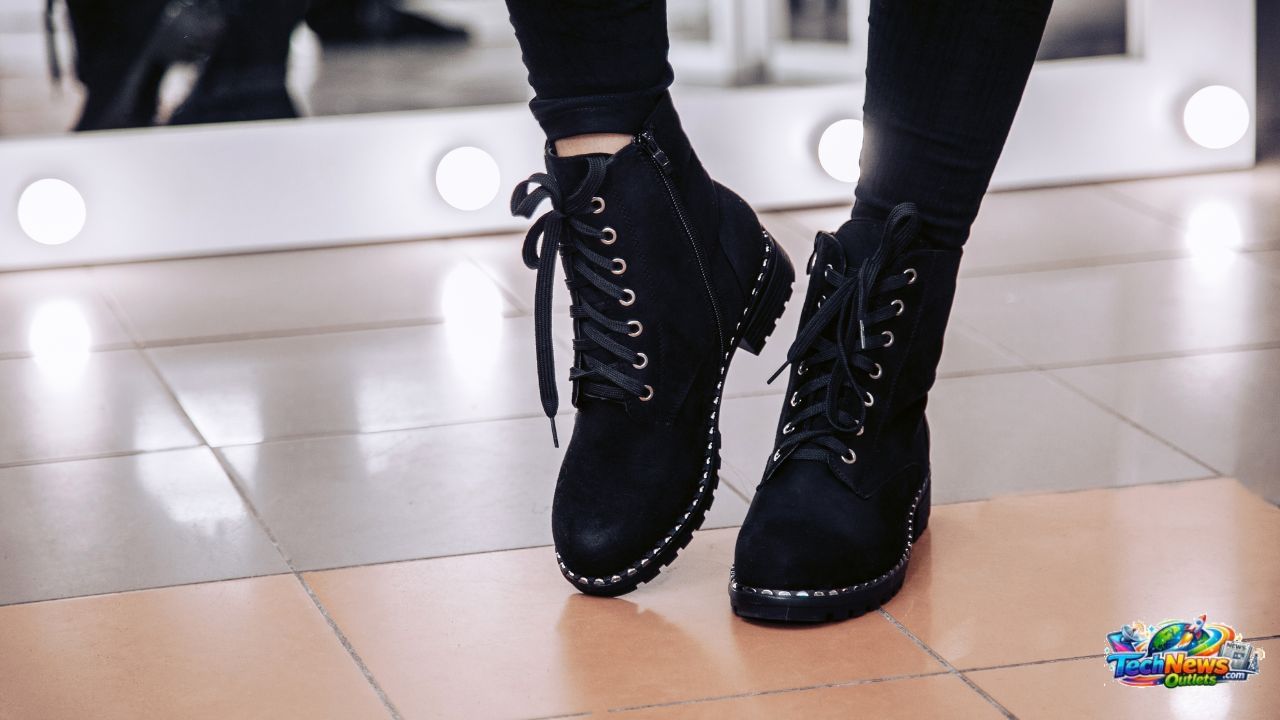
Combat-inspired designs often combine laces with substantial rubber soles. They work naturally with denim, cargos, oversized coats and casual dresses.
Weight is worth checking before purchase. Some heavily built black boots can feel tiring during extended walking even when they seem comfortable during a short fitting.
Flexibility matters too. A very rigid new sole may require an appropriate break-in period, though persistent pain should never be dismissed as normal breaking in.
Knee-High Black Boots
Knee-high designs create more visual presence and provide extra leg coverage in cooler weather.
They can pair well with midi dresses, skirts and selected trouser silhouettes. Sleeker styles can look polished, while wider shafts and heavier soles provide a more casual feel.
Calf fit is essential.
Measure the widest part of the calf and compare it with the manufacturer’s current specification where available. Forcing an excessively tight shaft can be uncomfortable, while a very loose shaft may collapse or move more than desired.
Heeled Black Boots
A heel changes posture and visual proportion, but comfort depends on more than heel height.
Heel width, footbed shape, pitch and toe-box space all influence wearability. A relatively high block heel can sometimes feel more stable than a narrower lower heel, though individual preference varies.
Consider how long the footwear will be worn.
Black boots intended for an occasional dinner have different comfort requirements from footwear used during an eight-hour working day.
Leather Black Boots
Leather remains a popular material because it can combine durability, flexibility and a refined appearance.
Different leather types behave differently. Full-grain, corrected-grain, patent and other finishes have distinct textures and maintenance requirements.
Natural leather can develop creasing and patina with use. These changes are not automatically signs of poor quality.
Well-maintained leather black boots can remain useful for many seasons, depending on construction and how frequently they are worn.
Leather Care
Remove surface dirt before applying conditioning or polishing products. Use treatments intended for the specific leather type and test unfamiliar products discreetly.
Too much conditioner can be as undesirable as too little.
Allow wet footwear to dry naturally away from excessive direct heat. High temperatures can damage leather, adhesives and other footwear components.
Follow the manufacturer’s care guidance whenever available.
Suede Black Boots
Suede offers a softer, more textural appearance than smooth leather.
Black suede can look particularly rich because light interacts with the raised surface differently depending on direction.
The trade-off is care. Suede generally requires more attention around mud, water and stains.
A suitable suede brush can help maintain the nap, while approved protective treatments may provide additional resistance to certain conditions. No treatment should be assumed to make ordinary suede completely waterproof.
Synthetic Black Boots
Synthetic materials can provide lower-cost options and alternatives for consumers avoiding animal-derived leather.
Performance varies widely.
Some synthetic uppers are flexible and durable, while others may crack or peel earlier. Breathability can also differ.
Instead of assuming synthetic black boots are inherently inferior or superior, evaluate the actual construction, material specification, warranty and customer feedback.
Repairability may be more limited for certain bonded constructions.
Vegan Black Boots
Vegan describes the absence of animal-derived materials rather than automatically indicating a particular environmental profile.
A vegan boot may use petroleum-derived synthetics, bio-based materials or combinations of different components.
Consumers interested in sustainability should therefore look beyond the vegan label.
Ask what the upper, lining, sole and adhesive systems contain when manufacturers disclose that information.
Durability also matters because frequently replacing footwear creates additional material consumption.
Black Boots for Work
Work footwear needs to match the workplace.
An office can accommodate sleek ankle or Chelsea designs, while industrial jobs may require certified protective footwear with specific toe, slip, electrical or puncture-resistant properties.
Fashion black boots should never be substituted for required safety footwear simply because they look rugged.
Where occupational standards apply, check the relevant certification and employer requirements.
Appearance comes after protection in those environments.
Black Boots for Rain
For regular wet weather, choose boots specifically designed to resist water.
Construction is important because water can penetrate seams and joins even when the upper material itself resists moisture.
Products may be described as water-resistant or waterproof, and those terms should not be assumed equivalent.
If rain protection is essential, look for explicit manufacturer specifications and care instructions.
Black boots made from ordinary fashion leather may tolerate occasional light moisture after suitable care without being intended for sustained wet conditions.
Black Boots for Snow and Winter
Winter use involves more than keeping water out.
Traction, insulation and room for appropriate socks can all matter.
A smooth outsole may provide poor grip on snow or ice regardless of how warm the upper feels.
No boot guarantees protection against slipping on ice.
For severe winter conditions, footwear specifically designed for those conditions is more appropriate than an ordinary fashion boot.
Fit Matters More Than Brand
An expensive boot that does not match the wearer’s foot shape is a poor purchase.
Feet vary in width, arch height, heel shape and toe structure. Brand sizing can also differ between models.
Try black boots with the type of socks you expect to wear regularly. Test both feet because they may differ slightly in size.
The heel should feel appropriately secure, toes should have enough room, and there should be no severe pressure points.
How Much Toe Room Should Boots Have
Toes need space to move naturally without sliding excessively.
A narrow toe box can compress the forefoot, while a boot that is too long can cause the foot to move and rub.
Toe shape influences available room. Pointed black boots can appear narrow externally while being constructed with different internal dimensions depending on design.
Do not buy a painfully tight pair in the expectation that all materials will stretch dramatically.
Some leather may soften, but footwear length and structural shape change far less than shoppers sometimes expect.
Understanding Boot Construction
Construction influences flexibility, durability and repairability.
Some boots use cemented construction, where the sole is bonded to the upper. Others use stitched methods such as Goodyear welting or Blake construction in certain footwear categories.
No construction method automatically guarantees comfort or quality.
Cemented black boots can be lightweight and perform very well, while welted footwear may offer repair advantages when appropriately manufactured.
Buy according to use rather than assuming one construction term solves every requirement.
Outsoles and Grip
The outsole is the part of the boot that contacts the ground.
Rubber compounds and tread patterns can provide useful traction, while smoother soles can look more formal.
A deep tread is not a guarantee against slipping.
Surface conditions, contamination and rubber formulation all influence grip.
For commuters walking regularly in rain, black boots with a practical rubber outsole may provide a better balance than highly polished smooth-bottomed footwear.
Black Boots With Jeans
This is one of the easiest combinations.
Straight and slim jeans can sit over or near the shaft depending on the boot profile. Wider jeans usually work with more substantial footwear because the proportions remain balanced.
Cropped denim can deliberately expose the entire boot.
Blue denim provides visual contrast against black footwear, while black jeans produce a continuous dark silhouette.
Both approaches are versatile enough for repeated everyday wear.
Black Boots With Dresses
Boots can make dresses feel less formal or provide seasonal practicality.
Ankle boots work with many midi and shorter dresses, while knee-high styles create additional coverage.
The boot’s visual weight should relate to the dress.
A delicate dress paired with heavy black boots creates intentional contrast. A fitted dress with sleek heeled footwear creates a more continuous aesthetic.
Neither rule is mandatory; the contrast simply changes the overall mood.
Black Boots With Tailored Trousers
Slim Chelsea or ankle styles can function almost like dress shoes beneath tailored trousers.
Avoid excessively bulky shafts if the trouser opening is narrow because fabric can catch around the boot.
A clean toe and minimal hardware generally produce the smartest appearance.
For business-casual environments, black boots can offer a useful alternative to loafers or conventional lace-up shoes during cooler weather.
Black Boots With Leggings
Leggings create a close silhouette that makes the boot more visible.
Chunky lace-up or riding styles can balance the narrow leg line, while ankle designs create a simpler casual outfit.
Long knitwear, oversized shirts and coats can complete the proportions.
Because leggings do not cover the shaft, pay additional attention to how the black boots fit around the ankle or calf.
Black Boots With All-Black Outfits
Monochrome dressing does not need to look flat.
Texture creates separation.
Smooth leather boots can contrast with wool trousers, denim, knitwear or matte technical fabrics even when every item is black.
Hardware can provide small visual highlights.
An all-black outfit also makes silhouette especially important because shape replaces colour as the primary source of contrast.
Black Boots With Neutral Colours
Camel, cream, grey, beige and olive all work naturally with black footwear.
Black boots can ground lighter clothing by adding visual weight at the bottom of the outfit.
Repeating black elsewhere, perhaps through a belt, bag or jacket, can make the footwear feel integrated.
Exact matching is unnecessary.
A small repeated dark detail is often enough.
Caring for Black Boots After Rain
Remove surface dirt gently and allow the footwear to dry naturally.
Stuffing boots with suitable absorbent paper can help them retain shape and draw out some moisture, provided any material used will not transfer ink or colour.
Avoid direct radiators or strong heat.
Once dry, condition or treat the upper when appropriate to its material.
Regular maintenance after mild exposure is easier than trying to restore heavily neglected black boots later.
Salt Marks in Winter
Road salt can leave visible marks and may damage some materials if ignored.
Treat stains using methods suitable for the specific upper.
Do not apply random household acids or chemicals based solely on an online tip.
Manufacturers or professional shoe-care specialists can advise on difficult marks.
Winter black boots benefit from routine cleaning before residues become deeply established.
How to Store Black Boots
Storage helps preserve shape.
Keep boots dry and avoid crushing them beneath other footwear.
Tall shafts can use appropriate boot shapers or gentle supports when needed.
Leather should have some air circulation rather than being sealed indefinitely while damp.
For seasonal storage, clean black boots first. Dirt left for months can become more difficult to remove.
When to Resole or Repair
Worn heels and soles do not always mean the entire pair has reached the end of its life.
A cobbler can assess whether repair is practical.
Higher-quality stitched black boots may be particularly suitable for resoling, but some cemented footwear can also be repaired depending on construction.
Address heel wear before it reaches structural parts of the shoe.
Early repairs are often simpler and can preserve the intended walking angle.
What Makes Black Boots Look Expensive
Price is not the only factor.
Balanced proportions, clean stitching, controlled finishing and appropriate materials can make moderately priced footwear look refined.
Excessive decorative hardware can date more quickly unless it aligns strongly with personal style.
For maximum versatility, simple black boots with restrained detailing usually age visually better than designs built around a temporary microtrend.
Condition also matters. Well-maintained affordable footwear can look better than neglected luxury footwear.
Budget Black Boots Versus Premium Options
A higher price can reflect materials, labour, construction, brand positioning and retail margins.
It does not automatically guarantee greater comfort.
When comparing options, focus on the features that influence actual use.
| Buying factor | Budget option | Premium option |
|---|---|---|
| Upper material | Often synthetic or lower-cost leather | May use higher-grade leather |
| Construction | Commonly cemented | May offer repairable stitched construction |
| Initial cost | Lower | Higher |
| Repairability | Product dependent | Can be better on certain designs |
| Finishing | Varies | Often more detailed |
| Comfort | Highly product specific | Highly product specific |
Try both rather than assuming price decides the outcome.
How to Calculate Cost Per Wear
Cost per wear is simple.
Divide the purchase price by the approximate number of times the footwear is worn.
If black boots cost $180 and are worn 90 times, their simple cost per wear is $2 before maintenance costs.
This is not a financial investment calculation.
It is merely a way to compare frequently used wardrobe staples with impulse purchases.
A versatile pair has a better chance of achieving a low cost per wear because there are more opportunities to use it.
Are Trendy Black Boots Worth Buying
They can be if you genuinely enjoy the trend.
Platform soles, western shapes and oversized biker hardware can all create distinctive looks.
The risk comes from purchasing solely because a design is currently prominent on social media.
Ask whether you would still wear the black boots if they stopped appearing in trend content next season.
If the answer is yes, their trend status becomes largely irrelevant.
Sustainability and Black Boots
Footwear sustainability is complex because one boot can contain leather or synthetic uppers, rubber, textiles, foam, metal hardware and adhesives.
Durability is therefore an important consideration.
A pair worn for years may reduce replacement frequency compared with repeatedly buying disposable footwear.
Repair can further extend lifespan where construction permits.
Consumers interested in environmental claims should look for specific information about materials, sourcing and manufacturing rather than accepting vague labels such as eco-friendly.
How Many Pairs of Black Boots Do You Need
There is no correct number.
Someone living in a warm climate may need only one pair, while a person in a cold wet region could reasonably own separate everyday, smart and winter-specific styles.
Function should determine quantity.
If two pairs perform exactly the same role, consider whether both genuinely add value.
A strong wardrobe often contains fewer black boots with clearly different purposes rather than several nearly identical pairs.
Common Buying Mistakes
Purchasing based entirely on appearance is the most common mistake.
Other problems include ignoring material care, assuming leather will stretch enough to fix poor sizing and buying a smooth outsole for conditions requiring better traction.
Shoppers can also overestimate how often they wear heels.
Choose black boots for the life you actually live rather than an imagined lifestyle.
If most days involve walking and public transport, comfort deserves greater priority than dramatic heel height.
A Practical Checklist Before Buying Black Boots
Start by deciding where the footwear will be worn most often. Then identify the style that works with your existing trousers, dresses and outerwear.
Check material, outsole, construction and weather suitability. Try the footwear with realistic socks and walk long enough to notice heel movement or pressure.
Finally, consider care and repair. A pair of black boots that fits well and can be maintained sensibly is more likely to become a genuine wardrobe staple.
FAQ’s
Are black boots worth buying?
Yes, black boots can offer strong wardrobe value because they coordinate with denim, tailoring, dresses and neutral outerwear while working across many casual and smarter settings.
Which black boots are the most versatile?
Simple Chelsea or ankle black boots with moderate soles and minimal hardware tend to provide broad versatility, although the best style depends on the wearer’s wardrobe.
Are leather black boots better than synthetic boots?
Not universally. Leather can offer durability and repair potential, while synthetic materials can provide affordability and animal-free options. Construction quality matters in both categories.
Can black boots be worn in rain?
Only footwear designed or treated appropriately for wet conditions should be relied upon in rain. Water resistance and waterproof construction differ, so check manufacturer specifications.
How should black boots fit?
Black boots should feel secure without painful pressure. Toes need adequate room, heels should not move excessively, and sizing should be tested with the socks normally worn.
How do you make black boots last longer?
Clean them regularly, use care products suited to their material, dry wet footwear away from direct heat, store them properly and repair worn soles or heels when practical.
Conclusion
Black boots are worth considering because relatively few footwear categories combine the same level of styling flexibility with everyday practicality. Depending on the design, one pair can move from denim and knitwear to tailored trousers or dresses while coordinating naturally with the colours already found in most wardrobes. Chelsea, ankle, lace-up and knee-high styles also give shoppers enough variety to choose functionality without giving up personal style.
The best black boots are not automatically the most expensive or fashionable pair. Prioritise fit, material, grip, weather suitability and the outfits you genuinely wear, then maintain the footwear according to its construction. When those fundamentals are right, black boots can become a high-use wardrobe staple that earns its place season after season rather than another purchase waiting at the back of the cupboard.