Furniture Installation for Safe, Functional, and Professional Interiors
furniture installation is the process of assembling, positioning, securing, adjusting, and inspecting furniture so that it fits the intended space safely and performs as expected. The work can range from assembling a simple desk or bed to installing complete office systems, wall mounted storage, modular workstations, reception furniture, wardrobes, shelving, cabinets, conference tables, and custom commercial interiors. A successful installation depends on accurate measurements, the correct tools, careful assembly, proper anchoring, level positioning, protection of surrounding surfaces, and final quality checks before the furniture is put into regular use.
Many people think furniture installation begins when the boxes are opened.
In reality, the best installations begin much earlier.
Room dimensions need to be checked.
Doorways and lifts may need to be measured.
Delivery routes should be planned.
Floor surfaces should be protected.
Electrical outlets, walls, windows, heating systems, and circulation areas all affect where furniture can be placed.
Ignoring these details can lead to delays, damaged products, unsafe layouts, or pieces that simply do not fit.
Professional installation therefore combines practical assembly skills with planning and attention to detail.
What Is Furniture Installation?
Furniture installation includes the work required to turn packaged, flat packed, modular, or custom furniture into a finished usable setup.
It may involve:
• Unpacking
• Component identification
• Assembly
• Hardware installation
• Leveling
• Wall fixing
• Positioning
• Joining modular pieces
• Cable management
• Door and drawer adjustment
• Final inspection
• Packaging removal
The amount of work varies widely.
A freestanding chair may need only minor assembly.
A large office project may require dozens of installers coordinating hundreds of workstations across multiple floors.
Furniture Installation Is Different From Delivery
Delivery usually means transporting furniture to a property.
Installation goes further.
The installer may need to:
• Assemble the product
• Confirm correct location
• Secure it
• Adjust moving parts
• Test stability
• Remove packaging
Some furniture suppliers include installation.
Others deliver boxes only.
Customers should confirm what the service includes before placing an order.
Why Professional Furniture Installation Matters
Furniture affects how people move, work, store items, relax, and use a room.
Poor assembly can create problems such as:
• Loose joints
• Uneven doors
• Unstable shelving
• Misaligned drawers
• Damaged finishes
• Unsafe tall units
• Poor workstation layout
• Missing components
A professional installer can reduce these risks by following manufacturer instructions and using appropriate fixing methods.
7 Powerful Benefits of Furniture Installation Services
Professional installation can provide value in both homes and commercial environments.
1. Furniture Installation Helps Improve Safety
Safety is one of the most important reasons to install furniture correctly.
Tall or heavy items may need to be secured to a suitable wall.
Examples include:
• Bookcases
• Wardrobes
• Cabinets
• Storage towers
• Shelving systems
• Display units
• Filing cabinets
Tip over risks can be serious, particularly in homes with children or in busy commercial environments.
Installers should follow manufacturer anchoring instructions and use fixings appropriate to the wall construction.
Furniture Installation Requires the Right Fixings
Different walls require different fixing methods.
Common wall types include:
• Timber stud walls
• Masonry
• Concrete
• Plasterboard
• Blockwork
A fixing suitable for concrete may not be suitable for hollow plasterboard.
The installer should identify the wall type before drilling.
Electrical cables, plumbing, and hidden services should also be considered.
2. Accurate Assembly Improves Furniture Performance
Furniture is designed to function within certain tolerances.
Incorrect assembly can cause:
• Drawers to stick
• Doors to rub
• Shelves to sit unevenly
• Tables to wobble
• Hinges to loosen
• Panels to separate
Installers should assemble components in the correct sequence.
Fasteners should be tightened properly without damaging materials.
Some furniture also requires final adjustment after it has been placed in position.
3. Professional Installation Can Save Time
Large furniture projects can take many hours when handled without experience.
Installers already understand:
• Assembly sequences
• Common hardware
• Tool requirements
• Leveling
• Cabinet adjustment
• Modular furniture systems
This can reduce setup time significantly.
Time savings become especially important for offices, hotels, schools, and commercial properties where delays can affect operations.
4. Furniture Installation Protects the Product
Furniture can be damaged during installation if components are dragged, dropped, or assembled on rough surfaces.
Installers commonly use:
• Floor protection
• Blankets
• Cardboard
• Protective pads
• Suitable lifting methods
This helps protect:
• Timber
• Veneer
• Laminates
• Metal
• Glass
• Flooring
• Walls
Careful handling is especially important for premium furniture.
5. Correct Positioning Improves Space Use
Furniture should not simply fit physically.
It should support how the room is used.
A good layout considers:
• Walkways
• Door movement
• Natural light
• Power outlets
• Storage access
• Ergonomics
• Emergency routes
• Cleaning access
In offices, poor furniture placement can reduce productivity and create congestion.
At home, it can make rooms feel smaller than necessary.
6. Professional Installers Can Handle Complex Systems
Modern furniture often contains more than a few screws and panels.
Complex systems may include:
• Modular office furniture
• Height adjustable desks
• Integrated power
• Cable management
• Wall mounted components
• Sliding doors
• Soft close hinges
• Custom storage
• Reception desks
These systems often require more technical knowledge.
7. Final Quality Checks Reduce Future Problems
Installation should end with inspection.
A final check may include:
• Stability
• Level
• Door alignment
• Drawer operation
• Fastener tightness
• Surface condition
• Cable routing
• Wall fixings
• Missing parts
Small problems are easier to correct before the installer leaves.
Furniture Installation for Homes
Residential furniture installation can include nearly every room.
Bedroom Furniture
Common items include:
• Beds
• Wardrobes
• Nightstands
• Dressers
• Shelving
Beds should be assembled securely because they experience repeated movement.
Wardrobes may need leveling and wall anchoring.
Living Room Furniture
Installation may involve:
• TV units
• Shelves
• Coffee tables
• Sideboards
• Cabinets
• Modular storage
Wall mounted units require careful positioning.
Dining Room Furniture
Dining tables and chairs may appear simple, but leg alignment and fastener tension affect stability.
Extendable tables also need correct mechanism setup.
Furniture Installation for Offices
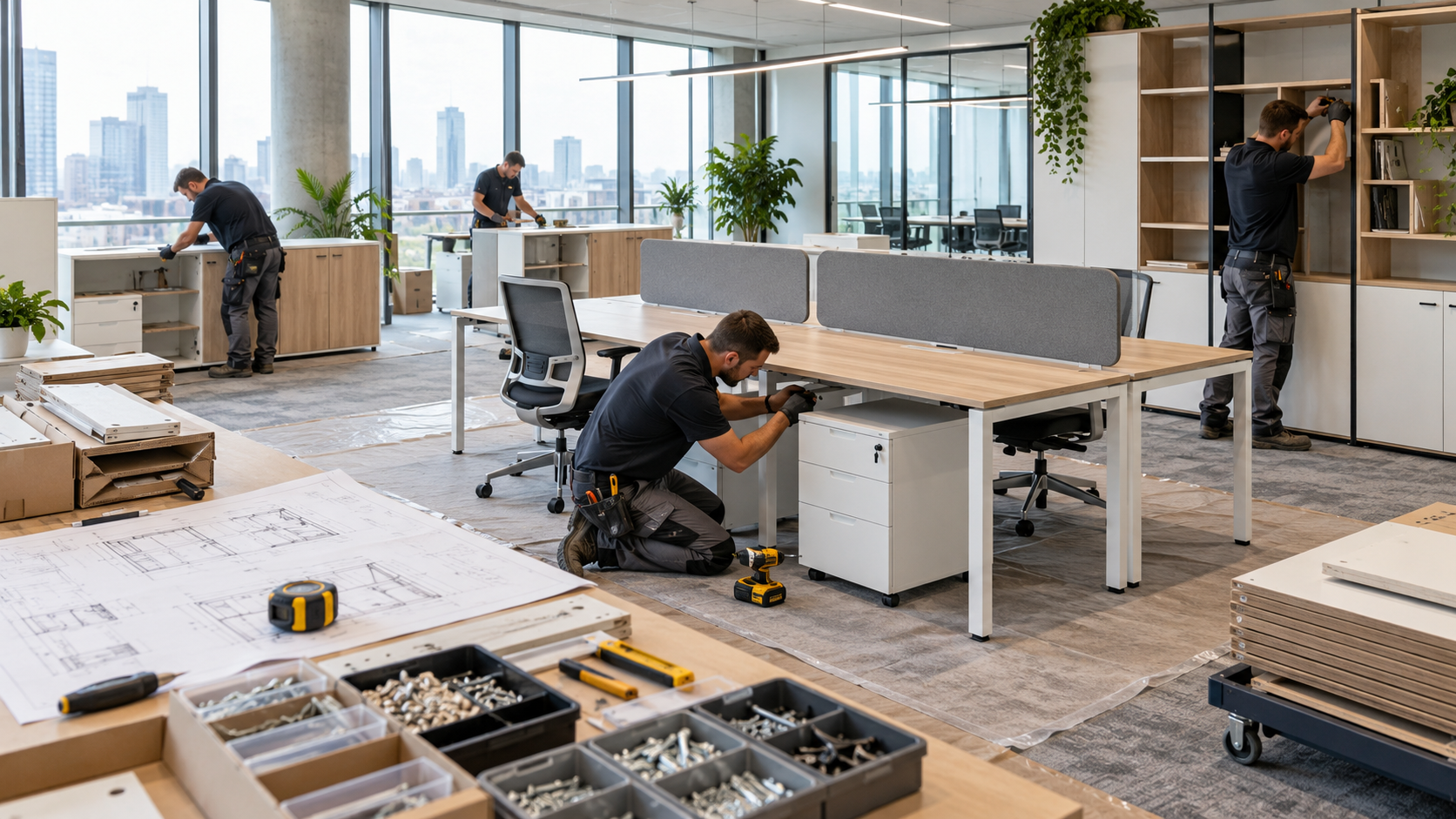
Office installation can be much more complex than residential work.
A large workplace may include:
• Desks
• Benching systems
• Task chairs
• Filing cabinets
• Meeting tables
• Reception desks
• Storage walls
• Acoustic screens
• Lockers
• Breakout furniture
The installation must often follow a detailed floor plan.
Workstation Installation
Workstations may require:
• Desk assembly
• Screen fitting
• Power management
• Cable trays
• Monitor arms
• Divider screens
• Storage pedestals
Each workstation should be positioned consistently.
Office Moves
Furniture installers may also support office relocations.
Services can include:
• Dismantling
• Labeling
• Transportation coordination
• Reassembly
• Layout changes
A clear labeling system is important when many pieces are moved at once.
Modular Furniture Installation
Modular systems are designed to be combined in different configurations.
This can include:
• Shelving
• Office desks
• Cabinets
• Seating
• Storage
• Partition systems
The advantage is flexibility.
However, modules need to be joined and aligned correctly.
Even a small error in the first unit can become larger as additional modules are added.
Flat Pack Furniture Installation
Flat pack furniture is popular because it is easy to transport.
However, assembly can still be time consuming.
Common challenges include:
• Similar looking components
• Reversed panels
• Missing hardware
• Unclear orientation
• Uneven tightening
• Difficult final alignment
The best approach is to identify all parts before assembly begins.
Do Not Overtighten Fasteners
Many flat pack products use engineered wood.
Overtightening screws or cam fittings can damage the material.
Fasteners should be secure but not forced.
Wall Mounted Furniture Installation
Wall mounted furniture can save floor space and create a clean appearance.
Examples include:
• Floating shelves
• Cabinets
• TV units
• Desks
• Storage boxes
Wall mounting requires greater attention to structure.
Check the Wall First
Before drilling, identify:
• Wall material
• Stud positions
• Pipes
• Electrical cables
• Required load capacity
The mounting method should match both the wall and the furniture weight.
Furniture Installation and Accurate Measurements
Measurement errors cause many installation problems.
Before ordering furniture, check:
• Room width
• Room length
• Ceiling height
• Door width
• Hallways
• Staircases
• Lifts
• Window locations
• Radiators
• Electrical outlets
• Skirting boards
A product may fit inside the room but fail to fit through the doorway.
Delivery access should therefore be measured as carefully as the final location.
Planning a Furniture Installation Project
A structured plan reduces delays.
Step One: Review the Furniture List
Confirm every item.
Record:
• Product name
• Quantity
• Room
• Dimensions
• Assembly requirements
Step Two: Check the Space
Verify measurements and access.
Step Three: Prepare the Area
Remove obstacles.
Protect floors and nearby surfaces.
Step Four: Organize Components
Keep hardware with the correct product.
Step Five: Assemble
Follow manufacturer instructions.
Step Six: Position
Move furniture into final location carefully.
Step Seven: Secure and Adjust
Complete wall fixing, leveling, and alignment.
Step Eight: Inspect
Test everything before use.
Tools Used for Furniture Installation
Tool requirements depend on the project.
Common tools include:
• Screwdrivers
• Drill
• Driver bits
• Allen keys
• Tape measure
• Spirit level
• Stud detector
• Rubber mallet
• Pliers
• Socket set
• Clamps
• Utility knife
• Pencil
Professional installers may use additional specialist equipment.
Power Tools Should Be Used Carefully
Power tools improve speed but can also damage furniture if torque settings are too high.
Controlled tightening is important.
Furniture Installation and Ergonomics
Workplace furniture should support comfortable use.
Ergonomic factors may include:
• Desk height
• Chair adjustment
• Screen position
• Keyboard position
• Leg clearance
• Reach distance
Height adjustable desks should be tested through their full movement range.
Cables should have enough slack to move safely with the desk.
Cable Management During Installation
Modern furniture often needs to accommodate power and data cables.
Poor cable management can create:
• Trip hazards
• Visual clutter
• Difficult maintenance
• Damaged cables
Useful solutions include:
• Cable trays
• Grommets
• Clips
• Sleeves
• Under desk channels
Cable routing should allow future access.
Furniture Installation in Commercial Spaces
Commercial environments often require faster completion and stronger coordination.
Projects may include:
• Offices
• Hotels
• Restaurants
• Retail stores
• Schools
• Healthcare facilities
• Co working spaces
• Showrooms
Commercial furniture may also experience heavier use.
Installation quality therefore has a direct impact on durability.
Retail Furniture Installation
Retail spaces may contain:
• Display units
• Shelving
• Counters
• Cabinets
• Product stands
• Storage
The furniture should support customer movement and staff operations.
Displays must remain stable and properly aligned.
Hotel Furniture Installation
Hotels often require repeated installation across many similar rooms.
Consistency matters.
Installers may need to follow a standard room layout for:
• Beds
• Desks
• Wardrobes
• Nightstands
• Seating
• Luggage units
Room by room quality checks help maintain consistency.
Furniture Installation in Schools
School furniture experiences frequent use.
Installation may include:
• Desks
• Chairs
• Storage
• Shelving
• Classroom tables
• Library furniture
Safety is particularly important.
Tall storage should be secured where required.
Furniture Installation Costs
Installation cost depends on several factors.
These can include:
• Furniture type
• Quantity
• Complexity
• Wall mounting
• Location
• Access
• Number of installers
• Project duration
• Custom work
• Disposal requirements
A simple chair may take minutes.
A custom reception desk may require several people and detailed fitting.
Ask What the Quote Includes
Before hiring a service, confirm whether the price includes:
• Assembly
• Wall fixing
• Positioning
• Packaging removal
• Travel
• Delivery coordination
• Disposal
Clear scope reduces unexpected charges.
Choosing a Furniture Installation Company
Professional experience matters.
Ask potential installers about:
• Residential experience
• Commercial experience
• Office systems
• Wall mounting
• Insurance
• Tools
• Project management
• Quality checks
• Packaging removal
• Large project capacity
Review Similar Projects
An installer experienced in office furniture may be better suited to a commercial workspace than someone who mainly assembles small domestic items.
The reverse can also be true.
Choose experience that matches the project.
Furniture Installation and Safety Procedures
Installers should work carefully around occupied properties.
Safety measures may include:
• Clear work zones
• Floor protection
• Safe tool storage
• Controlled lifting
• Proper ladders
• Secure drilling
• Packaging management
Heavy pieces should not be lifted by one person when team lifting or equipment is needed.
Common Furniture Installation Mistakes
Skipping the Instructions
Even experienced installers should review manufacturer requirements.
Installing Panels Backward
Many components look similar.
Check orientation before tightening.
Using the Wrong Hardware
Mixing screws can damage panels.
Overtightening
Excessive force can strip threads or damage engineered wood.
Forgetting Leveling
Uneven furniture may cause doors and drawers to move incorrectly.
Ignoring Wall Anchoring
Tall furniture can create safety risks if left unsecured.
Dragging Furniture Across Floors
This can damage both furniture and flooring.
Throwing Away Packaging Too Early
Packaging should usually remain until all components are confirmed.
Furniture Installation Quality Checklist
Before considering the job complete, inspect:
• All fasteners
• Stability
• Level
• Alignment
• Drawers
• Doors
• Handles
• Hinges
• Wall fixings
• Surfaces
• Cable management
• Final position
Furniture should operate smoothly and look clean.
Furniture Installation After Delivery Damage
Sometimes furniture arrives damaged.
Common issues include:
• Scratches
• Cracked panels
• Bent hardware
• Missing components
• Broken glass
• Colour mismatch
Photograph the problem before installation.
Do not hide major damage during assembly.
Report it according to the supplier’s process.
Should You Install Furniture Yourself?
DIY installation can be reasonable for simple items.
It may suit people who:
• Have basic tools
• Understand instructions
• Can lift safely
• Have enough time
Professional help becomes more valuable for:
• Large projects
• Heavy furniture
• Wall mounted units
• Custom systems
• Offices
• Tight deadlines
• Complex modular layouts
• Expensive furniture
The decision depends on risk, complexity, and time.
Furniture Installation and Maintenance
Correct installation supports long term maintenance.
Furniture may still require periodic checks.
Look for:
• Loose screws
• Hinge movement
• Wobbles
• Damaged feet
• Drawer alignment
• Worn fixings
Busy commercial environments may benefit from scheduled inspections.
Frequently Asked Questions
What does furniture installation include?
Furniture installation can include unpacking, assembly, positioning, leveling, wall anchoring, hardware fitting, adjustment, testing, and final quality inspection.
Why should I hire professional furniture installation services?
Professional installers can save time, improve assembly accuracy, reduce damage, handle complex furniture, and secure heavy or tall items correctly.
Does furniture installation include wall mounting?
It can, but services vary. Confirm whether wall fixing is included and whether the installer can work with the specific wall construction in your property.
How long does furniture installation take?
Timing depends on the quantity, furniture complexity, access, room layout, and number of installers. Small jobs may take less than an hour, while commercial projects can take several days.
What should I do before furniture installation?
Clear the work area, confirm measurements, provide access, identify final furniture locations, protect valuables, and make sure all products and components have arrived.
Is furniture installation important for office furniture?
Yes. Office furniture installation helps ensure consistent workstation layouts, correct assembly, ergonomic positioning, cable management, stability, and efficient use of available space.
Conclusion
Furniture installation plays an important role in creating interiors that are safe, functional, organized, and visually complete. Proper planning, accurate measurements, correct assembly, suitable wall fixings, careful positioning, and final quality checks can prevent many common problems. Simple furniture may be suitable for DIY assembly, while heavy, modular, wall mounted, or commercial systems often benefit from professional installation. A careful installation process protects both the furniture and the surrounding space while helping each piece perform as intended for years of regular use.