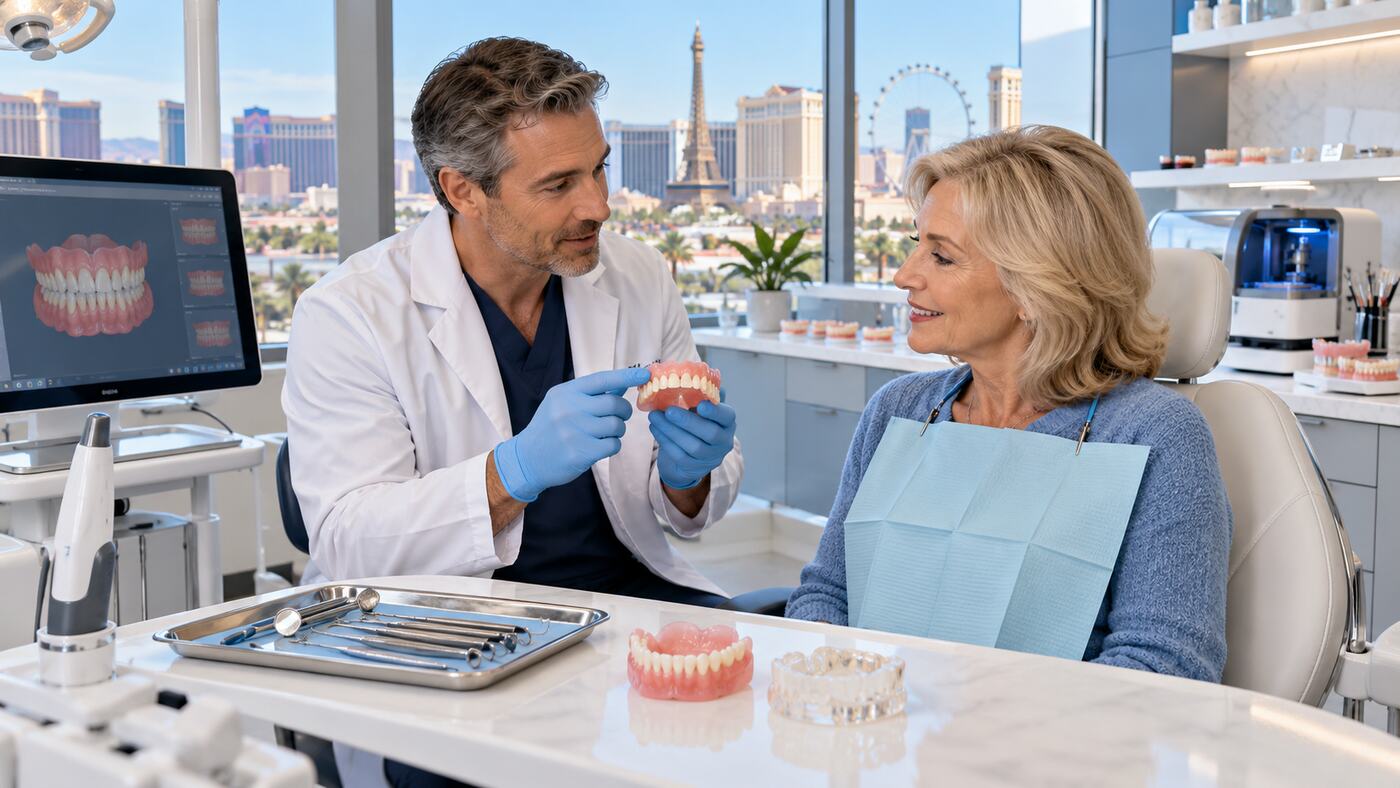
Dentures in Las Vegas: 7 Smart Tips for Choosing Comfortable, Natural Looking Replacement Teeth
Missing teeth can affect much more than your smile. They may make everyday activities such as eating, speaking, and socializing more difficult. Fortunately, modern dental treatments offer several ways to replace missing teeth and restore oral function. Choosing dentures in Las Vegas can be a practical solution for patients who want to improve their comfort, appearance, and ability to enjoy daily activities.
Las Vegas residents have access to different denture services, including conventional full dentures, partial dentures, immediate dentures, and implant supported options. Each treatment has distinct advantages, limitations, costs, and maintenance requirements.
Finding the right solution requires more than comparing prices or selecting a dental office based on advertising. Understanding your oral health, the available treatments, and the experience of your dental professional helps you make an informed decision.
This guide explains seven important considerations when choosing dentures, what to expect during treatment, and how to maintain your replacement teeth for long term comfort.
What Are Dentures and How Do They Work?
Dentures are custom made dental appliances designed to replace missing natural teeth and some surrounding oral structures.
They are commonly made using acrylic resin, other dental polymers, and sometimes metal frameworks or additional supporting materials.
Modern dentures can be designed to resemble natural teeth while supporting facial appearance and everyday oral function.
Depending on the treatment, dentures may rest on the gums, attach to remaining teeth, or receive additional support from dental implants.
Why People Choose Dentures
Tooth loss can occur because of several factors, including advanced tooth decay, periodontal disease, injury, or other oral health conditions.
When multiple teeth are missing, chewing certain foods can become difficult.
Speech may also change because the tongue and lips interact differently with the remaining teeth.
Dentures can help replace missing teeth and restore some of these functions.
However, they do not necessarily function exactly like natural teeth, and every patient experiences a different adjustment process.
A dentist should examine your oral health before recommending a particular treatment.
7 Essential Tips for Choosing Dentures in Las Vegas
Selecting dentures involves decisions about comfort, appearance, materials, cost, and long term care.
These seven practical tips can help you prepare for a consultation and understand your treatment options.
1. Understand the Different Types of Dentures
One of the first steps is identifying which denture category meets your needs.
The appropriate option depends on how many teeth are missing, the condition of your remaining teeth, available supporting bone, and personal preferences.
Complete Dentures
Complete dentures, also called full dentures, replace all teeth in the upper jaw, lower jaw, or both.
They are generally supported by the gum tissues and underlying jaw structures.
Conventional complete dentures are commonly made after necessary extractions and sufficient healing.
Because the upper and lower jaws have different anatomy, the stability and comfort of each denture can vary.
Some patients find lower dentures more challenging to retain because of tongue movement and other anatomical factors.
A careful fitting process helps improve stability and comfort.
Partial Dentures
Partial dentures replace several missing teeth while preserving suitable remaining natural teeth.
They may use acrylic bases, metal frameworks, clasps, or other attachment systems.
Partial dentures can help restore chewing function and fill gaps in a smile.
Their design depends on the location and condition of the remaining teeth.
Before treatment, a dentist should assess whether existing teeth need fillings, periodontal care, or other procedures.
Immediate Dentures
Immediate dentures are prepared before planned tooth extractions and placed soon after the teeth are removed.
They allow some patients to avoid going completely without replacement teeth during early healing.
However, the gums and supporting bone change as the mouth heals.
This means immediate dentures commonly require adjustments, relining, or eventual replacement.
They should not be confused with a permanent final denture that will necessarily fit without modification.
Implant Supported Dentures
Implant supported dentures use dental implants to provide additional retention or support.
Some designs can be removed by patients for cleaning, while others are fixed restorations that require professional removal.
Implants may improve stability for appropriately selected patients.
However, treatment involves additional examinations, possible surgery, healing, and maintenance.
Not everyone is a suitable candidate.
2. Choose an Experienced and Licensed Dental Professional
The quality of denture treatment depends partly on careful diagnosis, treatment planning, and the clinician’s experience.
When searching for dentures in Las Vegas, look for a dentist who regularly provides removable prosthodontic treatment.
Some general dentists offer comprehensive denture services.
Patients with complex restorative needs may benefit from consulting a prosthodontist.
A prosthodontist is a dental specialist with additional advanced training focused on replacing and restoring missing or damaged teeth.
Verify Nevada Dental Licensing
Patients can verify dentist licensing through the Nevada State Board of Dental Examiners.
The board provides public license information, including certain disciplinary records.
A valid license does not guarantee a particular treatment outcome, but checking credentials is an important precaution.
You can also ask about the dentist’s experience with complete dentures, partial dentures, and implant retained restorations.
Questions to Ask During Consultation
Consider asking:
- Which denture treatment would you recommend for my mouth?
- What are the alternatives to the recommended treatment?
- How many appointments will I need?
- Will extractions or other procedures be necessary?
- Who makes the dentures?
- Are fitting adjustments included?
- What happens if the dentures remain uncomfortable?
- What are the total estimated treatment costs?
Clear answers help you understand the proposed care before making a commitment.
3. Prioritize Proper Fit and Everyday Comfort
Comfortable dentures should be designed around the unique shape of a patient’s mouth.
A poor fit may cause soreness, irritation, difficulty chewing, or movement while speaking.
Proper fitting involves detailed measurements and an assessment of the relationship between the upper and lower jaws.
Dentists may use conventional impressions, digital scanning technologies, or a combination of techniques.
The method depends on the clinical situation and available equipment.
Why Accurate Impressions Matter
Denture fabrication requires information about the gums, supporting ridges, bite relationship, and surrounding oral tissues.
If these details are not captured appropriately, the finished denture may require additional correction.
A professional fitting process helps establish suitable positioning, contact between replacement teeth, and support for the lips and cheeks.
Expect an Adjustment Period
New dentures can feel unfamiliar at first.
Patients may notice temporary changes in speech, saliva, and chewing.
Minor sore spots can develop during adaptation and may require professional adjustment.
Although some initial discomfort can be expected, persistent pain should not be ignored.
Contact your dentist if the appliance causes significant soreness, repeated irritation, or difficulty functioning.
Never attempt to reshape the denture using household tools.
4. Compare Denture Materials and Appearance
Denture materials influence the appliance’s appearance, weight, maintenance, and performance.
Some dentures use acrylic resin for both the base and replacement teeth.
Others may include metal frameworks or different types of manufactured dental teeth.
The appropriate material depends on treatment requirements and the design of the appliance.
Natural Looking Denture Teeth
Modern denture teeth are available in different shapes, sizes, and shades.
A dentist may consider facial proportions, remaining natural teeth, gum appearance, and the patient’s preferences when selecting them.
The goal is to create a result that looks appropriate for the individual rather than simply choosing the brightest available shade.
Natural looking dentures should also support proper bite function.
Appearance is important, but aesthetics should not compromise comfort or stability.
Premium vs. Standard Dentures
Some practices advertise standard, premium, or customized denture packages.
These labels are not universally standardized across dental clinics.
A premium package may involve different materials, additional customization, or more detailed laboratory procedures.
However, a higher price does not automatically guarantee a better fit or longer lifespan.
Ask the dentist to explain exactly what distinguishes one option from another.
5. Understand Denture Costs and Payment Options
The cost of dentures in Las Vegas varies depending on the treatment, materials, oral health condition, and services included.
A conventional removable denture generally has a different cost structure from a treatment involving multiple implants.
A patient who needs extractions or other preparatory care may also face additional expenses.
What Affects Denture Pricing?
Common cost factors include:
- Complete or partial denture design
- Standard or customized materials
- Dental examination and imaging
- Necessary tooth extractions
- Laboratory fabrication
- Preliminary and final fittings
- Adjustments and relining
- Implant placement when appropriate
- Follow-up care
- Repair or replacement arrangements
Request a detailed written treatment estimate rather than relying solely on an advertised starting price.
Dental Insurance and Financing
Some dental insurance plans provide benefits for dentures, but coverage depends on the policy.
Patients may encounter deductibles, annual maximums, waiting periods, or limitations on replacement frequency.
Original Medicare generally does not cover routine dentures.
Some Medicare Advantage plans provide additional dental benefits, but specific coverage must be verified.
For patients without sufficient insurance, certain dental practices may offer payment plans or third-party financing.
Review interest rates, repayment conditions, and total financing costs before agreeing to a plan.
6. Learn How to Maintain Your Dentures Properly
Daily cleaning is necessary to remove food debris, plaque, and other buildup.
Dentures can accumulate microorganisms even though they are made from artificial materials.
Inadequate cleaning may contribute to bad breath, oral irritation, and denture-related inflammation.
Clean Dentures Every Day
Remove the dentures and rinse away loose debris.
Use a soft denture brush and a nonabrasive cleanser appropriate for the appliance.
Clean all surfaces carefully.
Regular toothpaste may be too abrasive for certain denture materials.
Avoid boiling water because excessive heat can distort denture components.
Follow the dentist’s advice regarding overnight soaking and approved cleaning products.
Always rinse dentures thoroughly before placing them back into your mouth.
Care for Your Gums and Remaining Teeth
Good oral hygiene remains essential even when all natural teeth have been replaced.
Clean your gums, tongue, cheeks, and the roof of your mouth as instructed by your dental professional.
If you have a partial denture, continue brushing and cleaning between your remaining teeth.
Patients with implant retained dentures also need to maintain the tissues and components around their implants.
Remove Dentures as Directed
Many patients are advised to remove removable dentures overnight to allow oral tissues to rest.
However, wearing instructions may differ immediately after surgery or during certain stages of treatment.
Follow your dentist’s specific recommendations.
7. Plan for Future Adjustments and Replacement
Dentures do not remain perfectly fitted forever.
Over time, the gums and jawbone can change shape, affecting how the appliance rests in the mouth.
Ordinary wear can also change the denture’s appearance and function.
Regular dental examinations help identify problems before they become more uncomfortable.
When Does a Denture Need Relining?
Relining involves modifying the tissue contacting surface of a removable denture to improve its fit.
A dentist may recommend relining when the underlying oral tissues have changed but the denture is otherwise suitable for continued use.
Not every loose denture can be corrected with relining.
Some appliances require replacement because of extensive wear, damage, or significant changes in oral anatomy.
Signs That Your Dentures Need Attention
Watch for:
- Frequent movement while eating
- Persistent gum irritation
- Difficulty speaking clearly
- Cracks or damaged denture teeth
- Changes in how the upper and lower teeth meet
- Increasing dependence on denture adhesive
- Unexplained discomfort or pressure
If these symptoms develop, arrange a dental examination.
Adhesive products should not be used to conceal a persistent fitting problem.
How Much Do Dentures Cost in Las Vegas?
Patients frequently compare treatment prices before scheduling a consultation.
However, there is no single price that accurately reflects every case.
A full upper denture, lower denture, partial denture, and implant supported restoration involve different materials and treatment procedures.
The cost of necessary extractions, laboratory work, imaging, and follow-up adjustments can also influence the total amount.
Affordable Dentures in Las Vegas
An affordable denture option should provide appropriate clinical care at a manageable total cost.
A lower advertised price may be useful as a starting point, but ask what services are included.
For example, an introductory price might not include extractions, follow-up relines, or other necessary treatment.
Before selecting a provider, compare written estimates based on similar treatment plans.
Why Implant Supported Dentures Often Cost More
Implant supported restorations involve additional components and surgical procedures.
The treatment may require imaging, implant placement, temporary appliances, and later restorative work.
Some patients also need bone grafting or other preparatory care.
The total cost depends on the number of implants, supporting bone, type of restoration, and treatment complexity.
Your dentist should explain both financial and clinical considerations before recommending this option.
What Happens During the Denture Fitting Process?
Understanding the sequence of care can make treatment feel more manageable.
Although each case differs, several stages are common.
Initial Dental Examination
The process usually begins with a review of your medical and dental history.
The dentist examines remaining teeth, gums, oral tissues, and jaw relationships.
Dental imaging may be recommended when clinically appropriate.
The examination helps identify any infection, periodontal problems, or other conditions that need attention before denture fabrication.
Impressions and Bite Measurements
The dental team records information about the shape of the mouth and the desired relationship between the replacement teeth.
This may involve impressions, digital scans, bite records, and other measurements.
These records guide the laboratory during appliance fabrication.
Denture Design and Try-In
Some treatments include a trial fitting before the final denture is completed.
The dentist evaluates appearance, tooth position, speech, and bite relationships.
Patients may have an opportunity to discuss aesthetic preferences.
Appropriate adjustments can be made before the final restoration is manufactured.
Final Placement and Follow-Up
Once the dentures are ready, the dentist checks the fit and gives instructions for wearing, cleaning, and maintenance.
Follow-up appointments are important because the mouth may need time to adapt.
Some patients require several small adjustments before the dentures feel comfortable.
The number and timing of visits vary according to individual needs.
Same Day Dentures in Las Vegas: What Should Patients Know?
Same day dentures are often advertised as a convenient option.
However, the phrase can refer to different services.
Some clinics offer immediate dentures that are prepared before tooth extraction and delivered the same day.
Others provide fast denture repairs, replacement appliances, or accelerated fabrication using on-site laboratory services.
These options should not be treated as identical.
Immediate Dentures After Tooth Extraction
Immediate dentures can help patients maintain an appearance with replacement teeth during healing.
However, the mouth changes after teeth are removed.
As healing progresses, additional adjustments or relining may be necessary.
A dentist should explain whether the initial appliance is temporary or intended for longer-term use.
Can Permanent Dentures Be Made in One Day?
Certain digital workflows and laboratory arrangements can shorten fabrication times.
However, permanent denture delivery depends on examination findings, preparation requirements, and appliance complexity.
A one day process should never replace necessary clinical evaluation.
Ask exactly what will be completed during the advertised appointment.
Dentures vs. Dental Implants: Which Is Better?
Both dentures and dental implants can help replace missing teeth.
The most appropriate treatment depends on oral health, anatomy, goals, budget, and medical considerations.
Advantages of Conventional Dentures
Conventional removable dentures can replace several or all missing teeth without requiring implant surgery.
They may be suitable for patients who prefer a removable appliance or cannot pursue implant treatment.
They also provide an option for restoring appearance and some chewing function.
However, stability and comfort vary, particularly when supporting tissues change over time.
Advantages of Implant Supported Options
Dental implants can provide additional support and retention for suitable restorations.
Some implant retained dentures attach securely to implants but can still be removed for cleaning.
Fixed full arch implant restorations use a different maintenance approach.
Implant treatment involves surgical and restorative risks, and implants can develop complications requiring ongoing professional care.
Neither treatment should be selected without an individualized assessment.
How to Find a Reliable Denture Dentist in Las Vegas
Choosing the right dental provider can influence your overall treatment experience.
Start by reviewing the dentist’s qualifications, experience, and available restorative services.
A clinic that offers several treatment options may be able to explain alternatives based on your needs.
Verify Qualifications and Experience
Use the Nevada State Board of Dental Examiners license verification system to check professional credentials.
Ask whether the practice routinely provides full dentures, partial dentures, and more complex prosthodontic treatment.
If you are considering implant supported dentures, ask about the qualifications of the professionals involved in surgery and restoration.
Compare Patient Communication and Follow-Up
A helpful dental team should explain procedures, expected adaptation, possible complications, and aftercare.
Pay attention to whether the dentist answers your questions and discusses reasonable alternatives.
Confirm whether follow-up adjustments are included in the initial treatment fee.
Consider Convenience Across Las Vegas
Because denture treatment may require multiple appointments, location can matter.
Patients in Summerlin, Henderson, Spring Valley, North Las Vegas, and other communities may prefer a practice that is reasonably accessible.
However, convenience should not outweigh appropriate clinical qualifications.
Travel distance is only one factor in selecting a provider.
Common Mistakes to Avoid When Getting Dentures
One common mistake is choosing the least expensive advertised treatment without understanding what the price includes.
Another is assuming that dentures will feel completely natural immediately.
Adjusting to an appliance takes time, and follow-up appointments may be necessary.
Patients should also avoid ignoring recurring sore spots.
Persistent irritation can indicate fitting problems or other oral health concerns.
Using too much denture adhesive may temporarily hide an underlying issue.
Finally, do not attempt to repair broken dentures with household glue or reshape them yourself.
Professional repairs help reduce the risk of further appliance damage and oral injury.
How to Adjust to New Dentures More Comfortably
The first few weeks may involve changes in eating and speaking.
Patience and professional follow-up can help make the adjustment period easier.
Begin With Manageable Foods
Many patients find softer foods easier when first wearing new dentures.
Cut food into smaller pieces and chew slowly.
Using both sides of the mouth can help distribute pressure more evenly.
Follow the dentist’s recommendations, particularly if you recently had extractions or other procedures.
Practice Speaking
Some words may feel different when speaking with new dentures.
Reading aloud and practicing difficult sounds can help patients adapt.
If speaking difficulties remain significant, ask the dentist to evaluate the appliance.
Stay Attentive to Oral Comfort
Dry mouth may make denture wear less comfortable for some patients.
Medications, medical conditions, and other factors can contribute to reduced saliva.
If you experience persistent dryness, discuss suitable management strategies with your dental professional.
Seek advice rather than attempting to correct the problem with unsuitable products.
Frequently Asked Questions
1. How much do dentures in Las Vegas cost?
Costs vary depending on denture type, materials, extractions, laboratory work, and additional treatment. Request an itemized estimate from a licensed dentist.
2. Are same day dentures available in Las Vegas?
Some practices offer immediate dentures or expedited services. Availability and suitability depend on the patient’s needs and the clinic’s treatment process.
3. What is the difference between full and partial dentures?
Full dentures replace all teeth in an upper or lower jaw, while partial dentures replace selected missing teeth and work around suitable remaining natural teeth.
4. How long do dentures last?
Dentures can provide years of service, but their fit and condition change over time. Regular dental examinations help determine when relining or replacement is necessary.
5. Does Medicare cover dentures in Las Vegas?
Original Medicare generally does not cover routine dentures. Some Medicare Advantage or other dental insurance plans may provide benefits, depending on coverage terms.
6. Where can I find a qualified dentist for dentures in Las Vegas?
Look for licensed dentists experienced in denture treatment and consider prosthodontists for complex cases. Verify credentials through the Nevada State Board of Dental Examiners.
Conclusion
Choosing dentures in Las Vegas involves understanding your oral health, comparing treatment options, and selecting an experienced dental professional. Full, partial, immediate, and implant supported dentures provide different solutions depending on individual needs. Proper fitting, regular dental visits, and consistent cleaning are essential for maintaining comfort and function. With a personalized treatment plan and realistic expectations, patients can work toward a healthier, more confident smile






One Comment