Your Fast Track Into Healthcare Could Start With the Right Training Program
Choosing healthcare training programs can provide a practical starting point for job seekers who want to enter the healthcare industry without immediately committing to a lengthy university degree. Many healthcare support roles require focused education, supervised practical experience, or recognized credentials rather than years of academic study. These pathways can appeal to career changers, recent school graduates, and adults returning to employment.
However, faster training does not automatically guarantee employment, professional licensing, or higher earnings. Career requirements vary by occupation, employer, and location. Understanding available healthcare training programs, qualification standards, course costs, and realistic career opportunities can help job seekers make informed decisions in 2026.
Why Healthcare Careers Are Attracting Job Seekers in 2026
Healthcare remains an essential industry because communities need medical treatment, preventive services, rehabilitation, and ongoing patient support. These services depend on professionals working across clinical, administrative, technical, and caregiving roles.
For job seekers, healthcare training programs can offer structured routes into selected occupations. Some positions require relatively short vocational preparation, while others demand extensive education, registration, and professional licensing.
The appeal of healthcare careers often comes from the combination of practical work, opportunities to develop specialized skills, and the possibility of progressing into other healthcare roles.
However, employment conditions differ considerably between occupations. Job seekers should investigate actual local demand before selecting a program.
Healthcare Includes More Than Doctors and Nurses
Healthcare organizations employ professionals with many different qualifications and responsibilities. Hospitals, clinics, laboratories, dental practices, long-term care facilities, and community health providers all require support staff.
Healthcare training programs may prepare students for roles involving patient assistance, medical administration, clinical procedures, or technical services. The exact scope depends on the curriculum and applicable professional requirements.
Career Changes Are Possible at Different Ages
Healthcare education is not limited to recent graduates. Adults with experience in retail, hospitality, customer service, administration, or other industries may already possess useful transferable skills.
Communication, organization, problem-solving, and teamwork can be relevant in healthcare settings. Healthcare training programs help learners develop the additional technical knowledge required for specific roles.
What Are Healthcare Training Programs?
Healthcare training programs are educational courses designed to prepare students for particular healthcare occupations or professional responsibilities. They may be offered by vocational schools, community colleges, universities, hospitals, employers, or approved training organizations.
Programs can include classroom teaching, practical demonstrations, laboratory activities, online learning, and supervised workplace experience. Their structure depends on the occupation and the qualification being pursued.
Some healthcare training programs lead to certificates or diplomas, while others form part of degree-level education or professional registration pathways.
Short-Term Healthcare Courses
Short-term courses generally focus on a defined set of occupational skills. Depending on local rules, they may prepare learners for selected support or administrative positions.
However, course duration alone does not establish professional eligibility. Students should verify whether employers recognize the qualification and whether additional certification is required.
Certificate Healthcare Programs
Certificate courses may cover clinical assisting, phlebotomy, medical administration, or other specialized areas. The scope and recognition of these qualifications vary.
Healthcare training programs offering certificates should clearly explain which occupations their graduates may pursue. They should also identify any licensing or examination requirements.
Diploma and Degree Pathways
Some healthcare careers require more extensive education. Diploma and degree programs may provide broader scientific knowledge, clinical experience, and professional preparation.
Students should compare training length with the responsibilities and opportunities associated with the intended occupation. Faster is not necessarily better when a role requires deeper preparation.
Why Fast Healthcare Training Appeals to Career Changers
Career changers often want to enter a new industry without spending several years away from employment. Focused training can make some healthcare occupations more accessible.
Healthcare training programs may allow students to build specific skills through structured instruction and practical experience. This can provide a clearer transition than attempting to enter a regulated healthcare role without appropriate preparation.
Shorter Educational Commitments
Some healthcare support occupations have training requirements that can be completed more quickly than traditional degree pathways. This may reduce the time between starting education and applying for suitable positions.
However, healthcare training programs should never shorten essential instruction merely to advertise rapid completion. Competence and patient safety remain fundamental.
Opportunities for Practical Learning
Many learners prefer courses that connect theory with real tasks. Practical demonstrations and supervised exercises can help students understand workplace expectations.
Healthcare training programs may include skills laboratories, simulations, or clinical placements. Students should verify which practical experiences are genuinely included.
Potential for Career Progression
An entry-level healthcare role can provide exposure to medical environments and professional expectations. Some workers later pursue additional qualifications.
Healthcare training programs may therefore form one stage of a longer career plan. Progression depends on further education, experience, eligibility, and available opportunities.
Popular Healthcare Training Programs for Job Seekers
Different healthcare occupations require different levels of preparation. Some are accessible through vocational routes, while others involve formal certification or state-specific licensing.
Job seekers should select healthcare training programs according to their interests, abilities, and local requirements rather than assuming every course leads to the same opportunities.
Medical Assistant Training
Medical assistants may perform administrative and selected clinical tasks depending on employer expectations and jurisdiction. Responsibilities can include appointment coordination, documentation, and assisting with approved procedures.
Healthcare training programs for medical assistants commonly cover medical terminology, anatomy, administrative processes, and practical clinical skills. Certification requirements vary by location and employer.
Certified Nursing Assistant Training
Nursing assistants support patients with everyday care activities under appropriate supervision. Tasks may include assisting with mobility, personal care, and other permitted responsibilities.
Healthcare training programs for nursing assistants often involve classroom learning and supervised practical instruction. In the United States, certification and state requirements must be checked carefully.
Phlebotomy Training
Phlebotomy professionals collect blood specimens for medical testing. Their work requires attention to patient identification, infection prevention, specimen handling, and communication.
Healthcare training programs in phlebotomy may include supervised practical experience. Certification or licensing requirements depend on the jurisdiction and employer.
Medical Billing and Coding
Medical billing and coding professionals help manage healthcare documentation and reimbursement processes. Their work requires knowledge of coding systems, payer requirements, and administrative procedures.
Healthcare training programs in this field may be suitable for people who prefer administrative responsibilities. Students should understand that coding accuracy and regulatory knowledge require ongoing learning.
Patient Care Technician Training
Patient care technicians support clinical teams with selected patient-care activities. Their responsibilities vary across healthcare organizations.
Healthcare training programs for these roles may cover basic care skills, infection prevention, patient communication, and other approved tasks. Applicants should verify the exact qualification employers require.
Medical Assistant Healthcare Training Programs
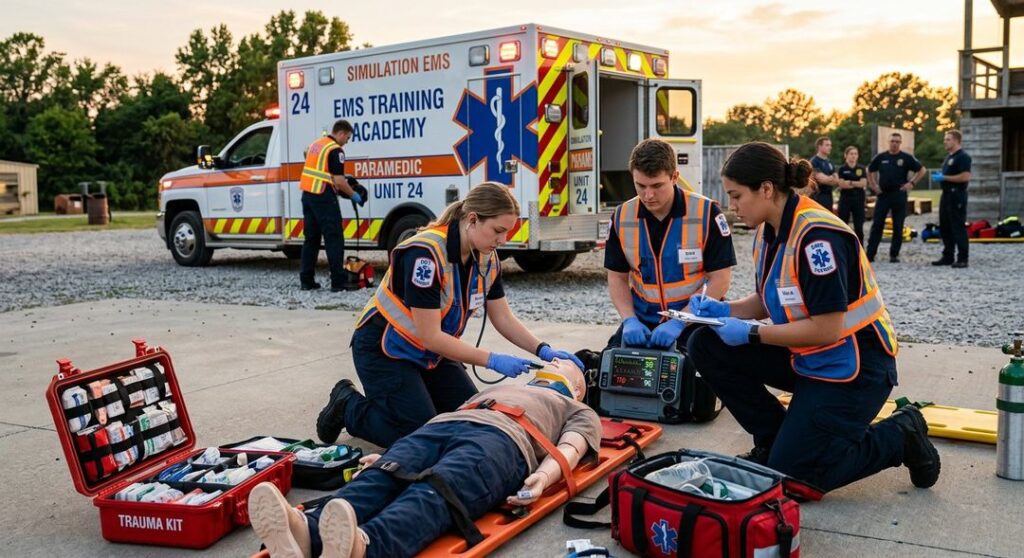
Medical assisting is frequently discussed as an accessible healthcare career pathway. The occupation combines organizational responsibilities with selected patient-facing activities.
Healthcare training programs may introduce students to clinical terminology, medical records, appointment systems, and basic procedures. The specific curriculum depends on the institution.
Skills Students May Learn
Programs may cover:
- Medical terminology
- Basic anatomy and physiology
- Patient communication
- Medical office procedures
- Infection prevention
- Clinical documentation
- Appointment management
- Professional ethics
- Approved clinical assisting tasks
Students should check whether practical training is included. A course describing itself as comprehensive may still differ significantly from another provider’s curriculum.
Employment Requirements
Medical assistant requirements vary by employer and jurisdiction. Some positions may prefer or require recognized certification.
Before enrolling in healthcare training programs, students should compare course outcomes with actual job advertisements in their area.
Nursing Assistant Training as an Entry-Level Pathway
Nursing assistants provide important support in many care environments. Their responsibilities can involve close interaction with patients and residents.
Healthcare training programs for nursing assistants should emphasize safe care practices, communication, dignity, and appropriate supervision.
Practical Skills Are Essential
Students may learn safe mobility assistance, personal care procedures, basic observation, and infection-control practices. The exact scope depends on training requirements and applicable regulations.
Supervised practice helps learners understand how classroom concepts apply to real care settings. Online-only instruction may not satisfy practical requirements for certain credentials.
Understand the Physical Demands
Some nursing assistant roles involve standing, moving equipment, and assisting patients with mobility. Shift work may also be common.
Healthcare training programs should provide realistic information about these responsibilities. Job seekers should consider whether the occupation matches their physical abilities and preferences.
Phlebotomy Training and Laboratory Support Careers
Phlebotomy requires technical precision and professional communication. Collecting blood specimens involves patient safety, infection prevention, and correct sample identification.
Healthcare training programs should teach approved procedures and provide appropriate supervised practice.
Patient Communication Matters
Some patients feel anxious about blood collection. Phlebotomy professionals need to explain procedures clearly and respond respectfully.
Technical ability alone is insufficient. Healthcare training programs should address communication and patient comfort alongside specimen collection.
Accuracy Is a Core Responsibility
Incorrect identification or specimen handling can affect laboratory processes. Training should emphasize established safety and documentation procedures.
Students should verify whether the program meets relevant local certification or employment requirements.
Medical Billing and Coding Training
Healthcare administration offers career options for people who prefer working with information rather than providing direct clinical care. Medical billing and coding involve detailed documentation and standardized systems.
Healthcare training programs in this area may cover coding classifications, insurance procedures, healthcare terminology, and privacy requirements.
Attention to Detail Is Important
Coding and billing errors can create reimbursement problems or require additional review. Professionals must follow current coding rules and organizational procedures.
Healthcare training programs should teach accurate documentation practices rather than simply memorizing codes.
Remote Work Is Not Guaranteed
Some healthcare administrative positions may offer remote or hybrid arrangements. However, employers can require office-based work, experience, or additional qualifications.
Job seekers should not enroll based solely on promises of immediate work-from-home employment.
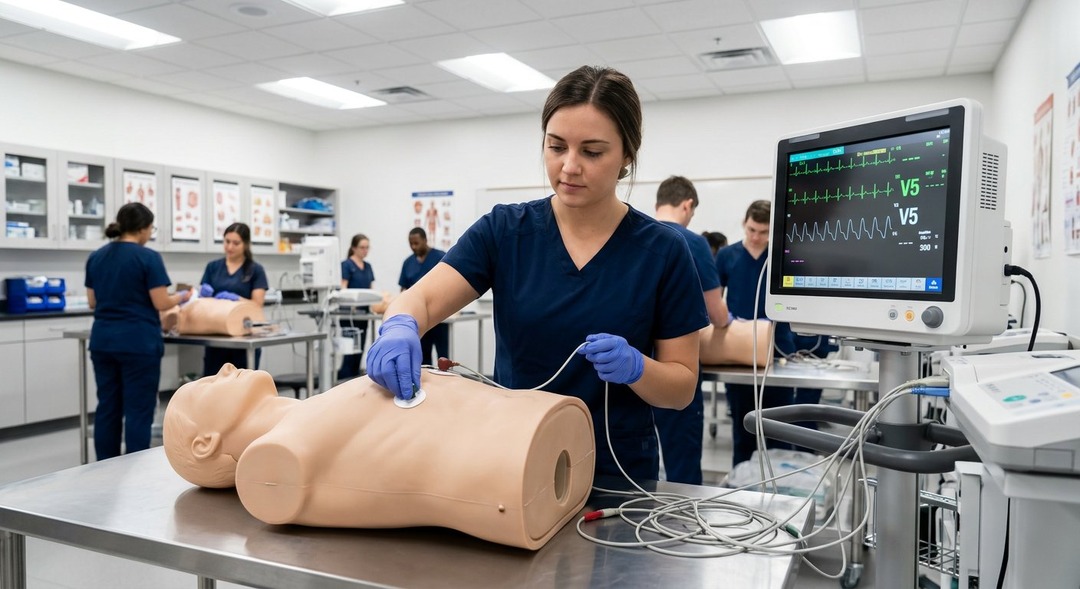
EKG Technician Training
Electrocardiogram technicians may assist with recording cardiac electrical activity using approved equipment. Duties depend on workplace procedures and local requirements.
Healthcare training programs may cover electrode placement, patient preparation, equipment operation, and basic documentation.
Technical Accuracy Matters
Correct equipment use is important for obtaining suitable recordings. Students should learn the procedure under appropriate supervision.
An EKG technician does not automatically have authority to diagnose heart conditions. Clinical interpretation belongs to appropriately qualified professionals.
Dental Assistant Training
Dental assistants support dental professionals through clinical preparation, infection-control procedures, equipment handling, and administrative tasks.
Healthcare training programs for dental assisting vary by jurisdiction. Some duties require additional qualifications or permits.
Understand Local Regulations
A course that prepares students for one state’s dental assisting requirements may not satisfy another state’s rules.
Students should confirm local eligibility before enrolling. The institution should clearly explain the qualification’s intended recognition.
Pharmacy Technician Training
Pharmacy technicians support pharmacy operations under applicable professional supervision. Responsibilities may include medication-related administrative processes, inventory handling, and other permitted tasks.
Healthcare training programs may cover pharmaceutical terminology, calculations, dispensing systems, and relevant regulations.
Accuracy and Safety Are Essential
Medication-related work requires careful attention to detail. Errors can have serious consequences.
Healthcare training programs should provide appropriate technical instruction and explain the limits of the technician’s responsibilities.
How Long Do Healthcare Training Programs Take?
Training duration depends on the occupation, curriculum, required practical experience, and educational format. Some introductory courses may last weeks, while others require months or years.
Healthcare training programs should be evaluated according to whether they meet recognized requirements rather than advertising the shortest completion time.
Short Certificate Courses
Certain healthcare support courses may provide focused training over a relatively short period. However, completion does not necessarily establish eligibility for regulated clinical work.
Students should verify the credential awarded and its recognition before paying tuition.
Longer Vocational Programs
Programs requiring clinical practice, broader scientific instruction, or external examinations may take longer.
Additional training time can be necessary for patient safety and professional competence. A faster course is not automatically a better investment.
What Makes a Healthcare Training Program Worth Choosing?
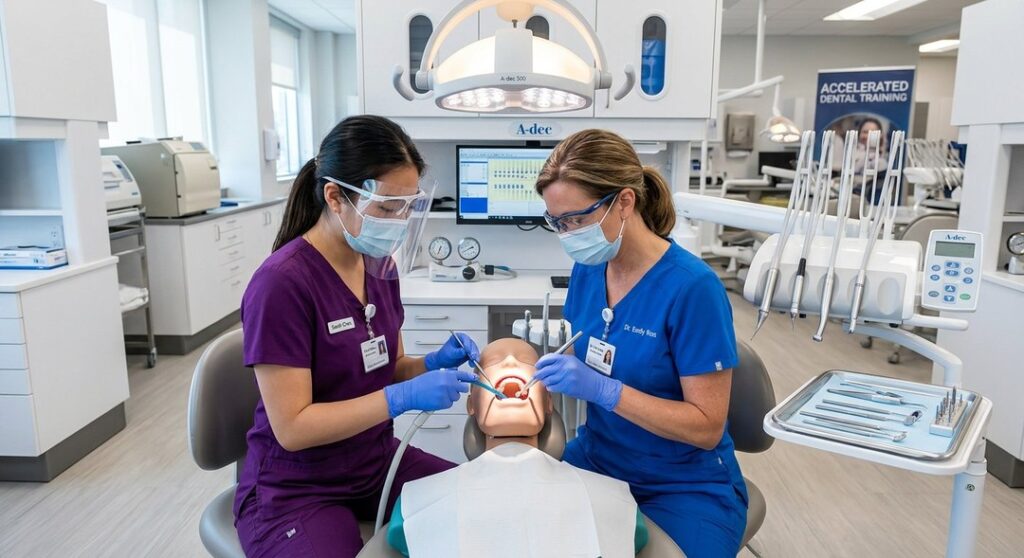
Course quality matters more than promotional promises. A suitable program should provide accurate information about its curriculum, teaching staff, practical requirements, and career outcomes.
Healthcare training programs should also disclose costs and explain what qualification students receive.
Accreditation and Approval
Accreditation may help establish whether an institution or program meets relevant educational standards. However, the appropriate accrediting organization depends on the occupation and jurisdiction.
Students should independently verify accreditation claims. A school’s statement that it is accredited is not sufficient without identifying the accrediting body.
Qualified Instructors
Healthcare education should involve instructors with appropriate professional knowledge and teaching competence.
Practical healthcare training programs should provide suitable supervision during skills development. Students can ask about instructor qualifications and experience.
Relevant Curriculum
Training content should reflect current workplace responsibilities and professional requirements.
A course that omits essential safety or technical topics may leave students inadequately prepared. Compare the curriculum with recognized occupational expectations.
The Importance of Hands-On Healthcare Training
Practical learning is especially important for roles involving patients, medical equipment, or clinical procedures. Reading about a skill does not establish that someone can perform it safely.
Healthcare training programs may use simulation laboratories, supervised demonstrations, and clinical placements to develop competence.
Simulation-Based Learning
Medical mannequins and training equipment can help students practice selected procedures in controlled environments.
Simulations allow mistakes to be corrected without exposing patients to unnecessary risks. However, they do not always replace required supervised clinical experience.
Clinical Placements
Some qualifications require training in approved healthcare settings. These experiences can help students understand professional routines and patient interactions.
Healthcare training programs should explain whether placements are guaranteed, arranged by the institution, or the student’s responsibility.
Online Versus In-Person Healthcare Training Programs
Online education can make learning more accessible for students with work or family commitments. However, not every healthcare skill can be taught or assessed remotely.
Healthcare training programs should use delivery methods appropriate to the occupation and its practical requirements.
Benefits of Online Learning
Online courses may offer flexible access to lectures, assignments, and theoretical materials.
This can be useful for subjects such as medical terminology or certain administrative topics. Students still need appropriate assessments and recognized qualifications.
Benefits of Classroom Training
In-person teaching can provide direct interaction with instructors and access to equipment.
Healthcare training programs involving clinical procedures may require supervised practice. Students should confirm whether online courses include mandatory in-person components.
Hybrid Learning Options
Hybrid programs combine online theory with classroom or workplace training.
This format can provide flexibility while preserving necessary practical instruction. Its suitability depends on the course and local requirements.
Healthcare Training Programs for Career Changers
Changing careers can involve uncertainty about finances, time, and professional expectations. Focused education can provide a structured introduction to healthcare.
Healthcare training programs may help adults build occupational knowledge while drawing on skills developed in previous employment.
Transferable Communication Skills
Customer service experience can be relevant to patient-facing roles. Listening, explaining information, and responding calmly are valuable in many healthcare environments.
However, healthcare communication also involves confidentiality, professional boundaries, and patient-specific needs. Training should address these differences.
Administrative Experience
People with office experience may already understand scheduling, documentation, and organizational processes.
Healthcare training programs can introduce medical terminology, privacy practices, and industry-specific systems needed for healthcare administration.
Healthcare Career Opportunities in 2026
Healthcare employment opportunities depend on population needs, funding, technology, local labor markets, and workforce availability.
Some healthcare occupations may experience strong demand, while others face competitive hiring conditions.
Healthcare training programs should provide career information supported by credible labor-market sources.
Use Reliable Employment Data
In the United States, the Bureau of Labor Statistics publishes occupational information covering duties, education, wages, and employment projections.
Job seekers can compare this information with current local advertisements. National projections do not guarantee openings in a particular city.
Research Local Employers
Hospitals, clinics, care facilities, laboratories, and healthcare service providers may have different qualification expectations.
Before choosing healthcare training programs, review several job listings for the intended occupation. Look for recurring requirements and preferred certifications.
What Salary Can Healthcare Training Graduates Expect?
Earnings differ considerably between healthcare roles. Location, employer, experience, shifts, certification, and job responsibilities can influence compensation.
Healthcare training programs should avoid promising guaranteed salaries. Advertised earnings may not reflect what a new graduate can realistically obtain.
Compare Entry-Level Pay
Job seekers should research typical starting wages in their local market. Experienced-worker averages can give a misleading impression of entry-level compensation.
Government labor statistics and current employer advertisements can provide useful context.
Consider Total Employment Conditions
Salary is only one part of a job offer. Benefits, scheduling, commuting, training opportunities, and working conditions also matter.
Healthcare careers can involve evenings, weekends, or physically demanding responsibilities. These factors should be considered before enrolling.
How Much Do Healthcare Training Programs Cost?
Tuition varies according to program length, institution, location, equipment, and qualification requirements.
Healthcare training programs may also involve costs beyond advertised tuition. Students should calculate the complete financial commitment.
Common Additional Expenses
Potential expenses include:
- Registration fees
- Textbooks
- Uniforms
- Medical equipment
- Laboratory fees
- Background checks
- Health screening
- Certification examinations
- Transportation
- Clinical placement requirements
Not every program includes these costs. Ask for a written breakdown before enrollment.
Financial Assistance Options
Some institutions offer payment plans, scholarships, employer sponsorship, or other assistance. Eligibility and availability vary.
Healthcare training programs should explain funding arrangements accurately. Students should verify whether a particular course qualifies for any advertised aid.
Avoid Unnecessary Education Debt
A short course can still become financially burdensome if tuition is high relative to realistic earnings.
Before borrowing money, compare program costs with expected entry-level pay and local employment opportunities.
Healthcare training programs should be assessed as career investments rather than purchased solely because enrollment is convenient.
Skills Employers Value in Healthcare Workers
Technical qualifications are important, but healthcare organizations also depend on professional behavior.
Communication, reliability, teamwork, confidentiality, and attention to detail can influence workplace performance.
Healthcare training programs should help students develop these qualities alongside occupation-specific knowledge.
Patient Communication
Patients may feel anxious, uncomfortable, or uncertain about medical procedures. Respectful communication helps create a more supportive environment.
Students should learn to explain tasks within their professional scope. They must also recognize when questions require a clinician’s response.
Infection Prevention
Healthcare environments require appropriate infection prevention and control practices.
Healthcare training programs should introduce relevant principles and procedures for the occupation. Students must follow current workplace requirements.
Confidentiality
Healthcare workers may encounter sensitive personal and medical information.
Training should cover applicable privacy obligations and professional expectations. Accessing information without a legitimate reason is inappropriate.
Teamwork
Patient care frequently involves several professionals coordinating different responsibilities.
Healthcare training programs can prepare students to communicate clearly, follow instructions, and understand the limits of their role.
Healthcare Training Programs and Patient Safety
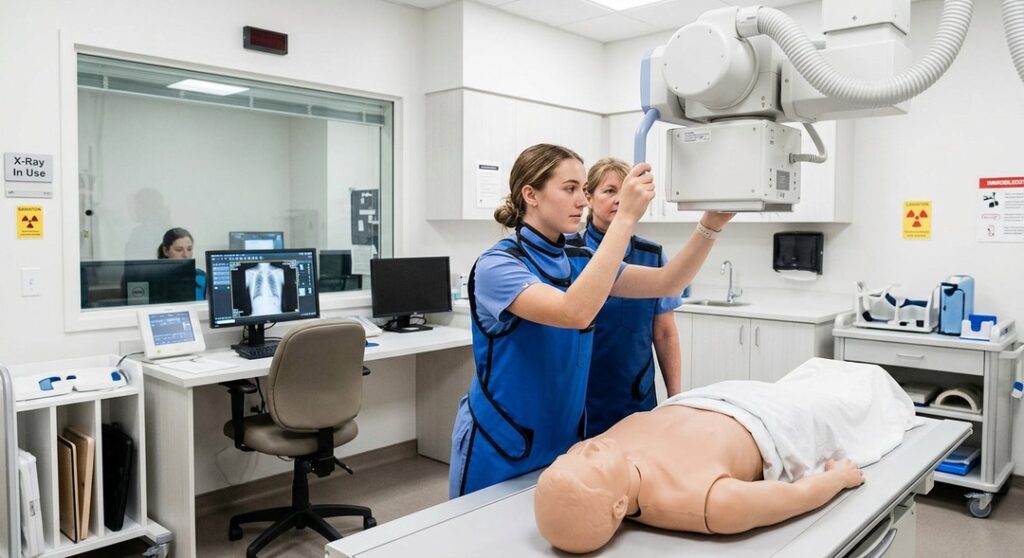
Patient safety should be a central part of healthcare education. Even entry-level roles can involve responsibilities that affect patient wellbeing.
Healthcare training programs should emphasize correct procedures, supervision, communication, and recognition of situations requiring escalation.
Understand Professional Boundaries
A certificate does not authorize someone to perform every healthcare task.
Students should understand which duties are permitted under relevant laws, employer policies, and supervision arrangements. Acting outside one’s scope can create serious risks.
Learn When to Ask for Help
New healthcare workers should feel comfortable seeking guidance when uncertain.
A supportive training environment encourages questions and recognizes the importance of supervision. Confidence should develop through competence rather than pressure.
The Role of Technology in Modern Healthcare Training
Healthcare workplaces increasingly use digital records, scheduling platforms, diagnostic equipment, and communication systems.
Healthcare training programs may introduce students to technologies relevant to their future responsibilities.
However, technology requirements vary by occupation. Students should focus on the tools actually used in their intended field.
Electronic Health Records
Electronic health record systems help authorized healthcare professionals document and access information.
Healthcare training programs may teach basic documentation principles and system navigation. Students should also learn privacy and access-control expectations.
Digital Scheduling Systems
Administrative staff may use software to manage appointments, referrals, and patient communications.
Training can help learners understand accurate data entry and workflow coordination. Specific software experience depends on employer requirements.
Can Healthcare Training Programs Lead to Long-Term Careers?
Entry-level training can provide access to certain occupations, but long-term progression usually requires additional experience or education.
Healthcare training programs may serve as an initial step toward broader professional goals.
Progression Through Additional Education
A healthcare support worker may later pursue a nursing, allied health, or another professional qualification.
However, previous training does not automatically transfer into a new credential. Admission, credit recognition, and licensing requirements must be verified.
Developing Specialized Skills
Workers may gain additional certifications or experience in particular areas.
Specialization can create new opportunities, but its value depends on employer demand and recognized requirements.
How to Choose the Best Healthcare Training Programs
The right program depends on the student’s career goal, location, finances, availability, and learning preferences.
Healthcare training programs should be compared using objective criteria rather than advertising claims.
Confirm Career Eligibility
Ask exactly which occupation the qualification prepares students for. Determine whether certification, registration, or licensing is required afterward.
A course completion certificate should not be confused with professional authorization.
Review Graduation and Employment Information
Some schools publish completion rates, examination outcomes, or graduate employment data.
These figures can be useful when the definitions and reporting periods are clear. Healthcare training programs should not present unverifiable job-placement percentages as guaranteed outcomes.
Speak With the Institution
Prospective students should ask detailed questions about the curriculum, instructors, practical training, costs, and support services.
Clear responses can help establish whether the program meets their needs.
Warning Signs of Poor Healthcare Training Programs
Not every educational provider offers the same quality or transparency.
Job seekers should be cautious when marketing emphasizes instant certification, guaranteed jobs, or unusually high earnings without supporting evidence.
Healthcare training programs deserve careful verification before payment.
Guaranteed Employment Claims
No legitimate school can guarantee that every graduate will receive a particular job.
Employment depends on qualifications, employer demand, interviews, background requirements, and other factors. Promises of automatic placement should be examined carefully.
Unclear Accreditation
A provider that refuses to identify its accrediting or approval organization may require further investigation.
Students should verify relevant claims independently. Accreditation requirements depend on the program and jurisdiction.
Hidden Fees
A course may advertise affordable tuition while excluding substantial mandatory expenses.
Request complete written cost information before signing enrollment agreements.
Inadequate Practical Training
Certain occupations require supervised practical instruction. A program that does not provide necessary training may leave graduates ineligible for credentials or employment.
Healthcare training programs should clearly describe how practical requirements are satisfied.
How to Prepare Before Enrolling
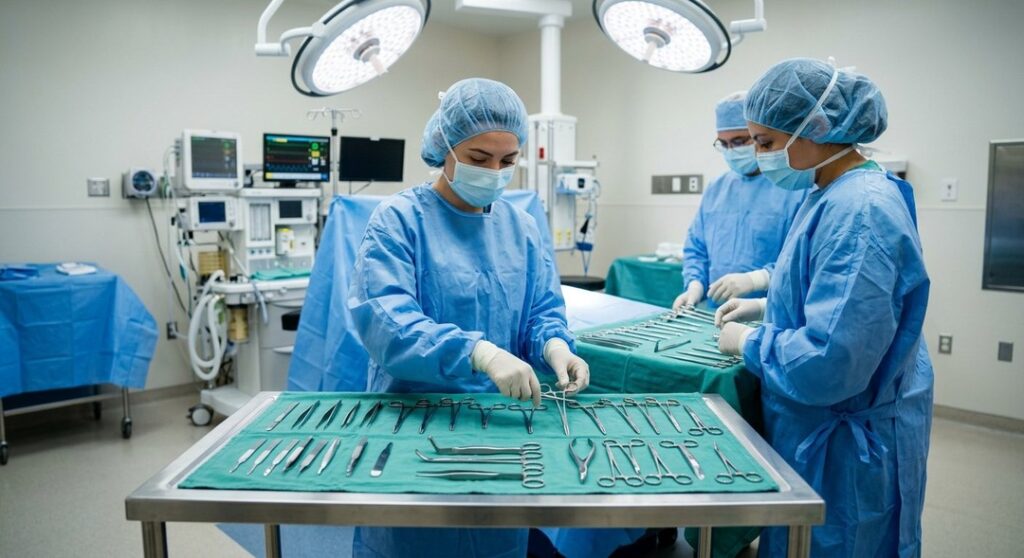
Preparation can reduce the risk of choosing an unsuitable course.
Begin by identifying a specific healthcare occupation rather than selecting a program simply because it appears short.
Research local requirements, compare institutions, and evaluate the complete financial commitment.
Review Admission Requirements
Some healthcare training programs require minimum educational qualifications, assessments, background checks, or health documentation.
Requirements vary by institution and occupation. Confirm eligibility before paying application fees.
Understand Your Weekly Schedule
Training may involve classes, assignments, practical sessions, and travel.
Students who work or care for family members should assess whether the schedule is realistic. Flexible advertising does not always mean attendance requirements are optional.
Balancing Healthcare Training With Work
Many adult learners need to maintain employment while studying.
Part-time, evening, or hybrid healthcare training programs may provide suitable options where available.
However, practical sessions and clinical placements can have fixed schedules.
Plan for Clinical Requirements
Workplace training may occur during ordinary healthcare operating hours. Students should confirm attendance expectations before enrollment.
Employers and family members may need advance notice when schedules change.
Create a Study Routine
Regular study periods can make coursework more manageable.
Healthcare training programs often introduce unfamiliar terminology and procedures, so consistent review may be more effective than last-minute preparation.
Healthcare Training Programs for Recent Graduates
Students leaving school may want a practical career pathway without immediately pursuing a four-year degree.
Healthcare training programs can provide exposure to selected occupations and help learners evaluate their interests.
However, long-term career goals should influence the decision. Some professions require degree-level qualifications that cannot be replaced by short courses.
Explore Different Roles First
Healthcare includes clinical, administrative, technical, and support occupations.
Job shadowing, career counseling, or conversations with working professionals may help students understand the differences.
Consider Future Education
A short certificate may provide useful employment preparation, but it may not count toward later degree requirements.
Students should confirm credit-transfer arrangements before assuming progression is automatic.
The Importance of Career Support Services
Career support can help students prepare applications and understand employer expectations.
Some healthcare training programs offer resume workshops, interview preparation, and information about local employers.
These services can be useful, but they do not guarantee employment.
Resume Preparation
A strong resume should accurately describe qualifications, practical training, and transferable skills.
New graduates can highlight supervised experience without exaggerating their responsibilities.
Interview Preparation
Healthcare employers may ask about communication, confidentiality, teamwork, and difficult workplace situations.
Practicing thoughtful responses can help applicants explain their readiness for entry-level responsibilities.
Common Mistakes Job Seekers Should Avoid
Choosing a healthcare course is a significant decision. Several common mistakes can create unnecessary financial or career difficulties.
Healthcare training programs should be evaluated using verified information rather than urgency or promotional pressure.
Choosing Only by Course Length
A shorter course may appear convenient but fail to meet required qualification standards.
Students should prioritize eligibility and training quality over speed alone.
Ignoring Local Regulations
Healthcare occupations may have different licensing or certification requirements between states and countries.
A qualification recognized in one location may not automatically transfer elsewhere.
Assuming Certification Guarantees Employment
Credentials can establish certain qualifications, but employers still make hiring decisions.
Healthcare training programs should prepare students realistically for recruitment.
Overlooking Working Conditions
Healthcare roles can involve demanding schedules, physical work, emotional challenges, and strict professional responsibilities.
Understanding these conditions before training can help prevent career disappointment.
Why Healthcare Training Programs Can Be a Smart Investment
Education can be valuable when it provides recognized skills aligned with realistic employment opportunities.
Healthcare training programs may offer focused pathways into selected occupations without requiring unnecessary academic commitments.
However, the return on investment depends on program cost, career requirements, local demand, and individual circumstances.
Practical Skills Have Workplace Value
Employers need workers who can perform authorized tasks accurately and professionally.
Programs combining theory with appropriate practical experience can help students develop relevant competence.
Career Flexibility Can Develop Over Time
Healthcare experience may help individuals understand additional professional opportunities.
Further education can support career changes within the industry, although progression is not automatic.
Healthcare Career Trends Beyond 2026
Healthcare workforce needs will continue to be influenced by demographic changes, technology, healthcare funding, and service delivery models.
Digital documentation, outpatient care, and community-based services may affect the responsibilities of different occupations.
Healthcare training programs will need to respond to changing professional expectations.
Technology Will Change Some Tasks
Automation and digital systems may simplify selected administrative activities while introducing new technical requirements.
Healthcare workers may need ongoing training to remain familiar with current systems.
Human Skills Remain Important
Empathy, communication, teamwork, and professional judgment remain important in patient-facing work.
Healthcare training programs should therefore develop interpersonal abilities alongside technical knowledge.
A Practical Roadmap for Starting a Healthcare Career
A successful career transition begins with realistic planning.
First, identify the occupation you want to pursue and research its actual responsibilities. Then determine which qualifications employers and regulators require.
Compare healthcare training programs based on recognition, curriculum, practical experience, costs, and scheduling.
After enrolling, focus on developing competence rather than simply completing the course quickly. Prepare for any required examinations and begin researching suitable employers before graduation.
FAQ’s
What are healthcare training programs?
Healthcare training programs are educational courses that prepare students for specific clinical, administrative, technical, or support roles through classroom learning, practical instruction, or supervised experience.
Can healthcare training programs lead to jobs quickly?
Some programs prepare students for selected entry-level roles in a relatively short period. However, employment depends on qualifications, local demand, certification requirements, and hiring decisions.
What are the best healthcare training programs for beginners?
Suitable options may include medical assisting, nursing assistant training, phlebotomy, and medical administration. The best choice depends on career interests and local qualification requirements.
Are online healthcare training programs recognized?
Recognition depends on the institution, occupation, accreditation, and applicable regulations. Clinical roles may require supervised in-person training even when theoretical coursework is online.
How much do healthcare training programs cost?
Costs vary by institution, course length, location, and credential. Students should consider tuition, equipment, textbooks, examinations, background checks, and practical training expenses.
Do healthcare training programs guarantee employment?
No. Reputable programs may provide career support, but no qualification guarantees a job. Employment depends on employer requirements, local opportunities, and individual readiness.
Conclusion
Healthcare training programs can offer practical pathways for job seekers who want to explore healthcare careers in 2026. Focused education may prepare students for selected roles in medical assisting, patient care, phlebotomy, healthcare administration, and other support occupations. However, course length should never be prioritized over appropriate qualifications, practical competence, and patient safety.
Choosing suitable healthcare training programs requires careful research into accreditation, local employment requirements, training costs, and realistic career opportunities. Job seekers who compare programs thoughtfully, develop transferable skills, and understand the responsibilities of their chosen occupation can make more informed career decisions. A well-selected program can become a valuable first step toward professional development and longer-term opportunities in healthcare.