Tech News Outlets vs Tech Blogs: What’s the Difference?
People often use “tech news site” and “tech blog” as if they mean the same thing. They don’t.
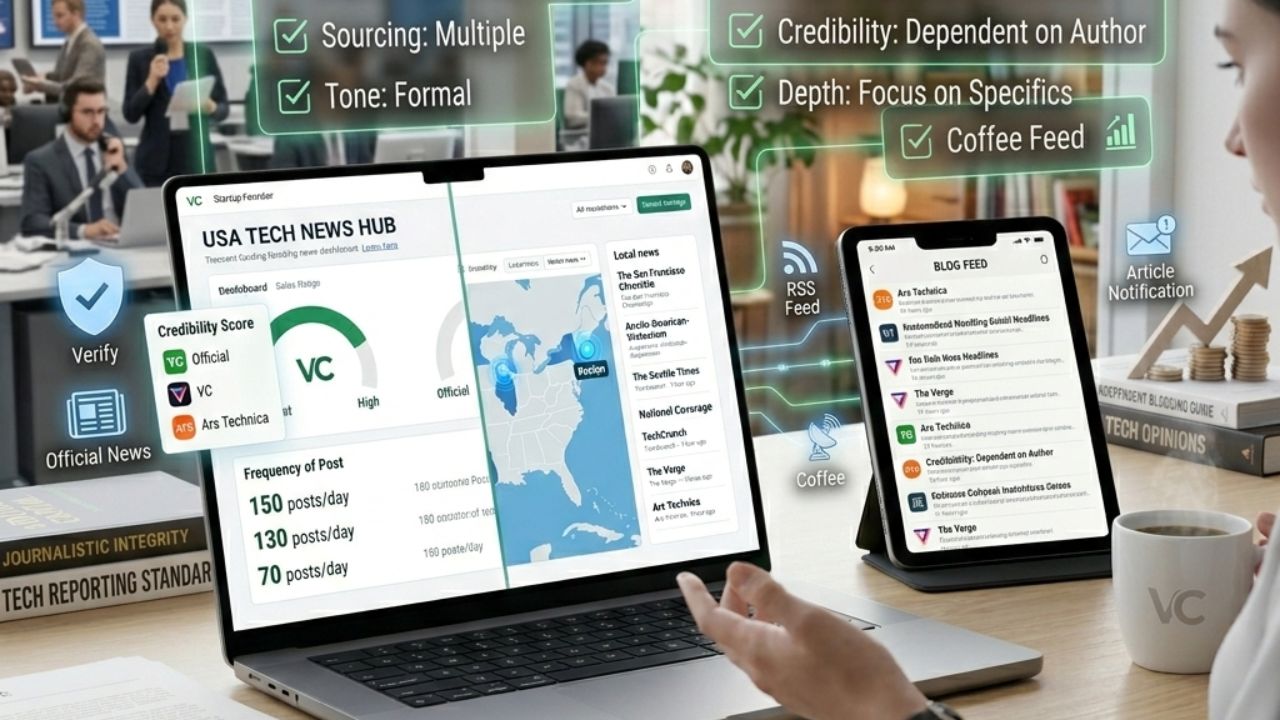
Both can publish great content. Both can publish low-quality content. But the *job* they usually do is different: a tech news outlet is typically built around reporting and newsroom-style publishing, while a tech blog is often built around opinions, guides, personal expertise, or niche coverage.
This guide explains the difference in simple terms, shows how to judge credibility, and helps you decide when to trust an outlet, when to trust a blog, and when to cross-check. If you’re building your reading stack, start with our tech news outlets directory and topic hubs.
Quick answer: the main difference
In most cases:
• Tech news outlets focus on reporting, editing, and publishing news at scale.
• Tech blogs focus on expertise, opinions, tutorials, and niche perspectives.
News outlets tend to be better for breaking stories and verification. Blogs tend to be better for practical how-tos, deep niche knowledge, and personal experience.
What is a tech news outlet?
A tech news outlet is a publication that primarily reports technology news—company moves, product launches, security incidents, funding rounds, policy changes, and industry trends. Many outlets operate like a newsroom:
• Multiple writers and editors
• A consistent publishing cadence
• Editorial oversight (fact-checking, corrections, style standards)
• Clear sections (startups, gadgets, enterprise IT, security, AI)
Examples (from our directory) include consumer-tech outlets like The Verge, deeper reporting publications like WIRED, and technical explainers like Ars Technica.
What is a tech blog?
A tech blog is typically more personal or niche. It may be run by one person or a small team, and it often focuses on:
• Tutorials and how-to guides
• Opinions and commentary
• Reviews and recommendations (sometimes affiliate-driven)
• Niche technical topics (e.g., a specific framework, cloud platform, or device)
• Personal experiments, benchmarks, or case studies
Blogs can be extremely valuable because they often include real-world details that mainstream outlets don’t have time to cover.
Tech news outlets vs tech blogs: the key differences
1) Reporting vs publishing
News outlets often report stories: they gather information, interview sources, and publish updates quickly. Blogs often publish analysis, tutorials, or personal experience. A blog can report news too, but it’s usually not optimized for newsroom-style reporting.
2) Editorial process and corrections
Tech news outlets usually have editors and correction policies. That doesn’t guarantee perfection, but it creates accountability. Blogs vary widely: some are excellent and rigorous; others publish quickly with little verification.
Credibility tip: trustworthy sites (outlets or blogs) explain errors, update articles, and link to primary sources.
3) Speed vs depth
Outlets are usually faster on breaking news. Blogs are often deeper on specific topics. If a new phone launches today, outlets will cover it immediately. If you need a “how to fix X on this model” guide, a specialist blog may be better.
4) Incentives and monetization
Both outlets and blogs can be influenced by incentives:
• Ads and sponsorships
• Affiliate links (especially in buying guides)
• Paywalls and subscriptions
None of these automatically mean content is bad. The important question is whether the site explains its methodology, discloses relationships, and shows evidence.
5) Coverage style: mainstream vs niche
Outlets often cover broad categories. Blogs often go niche:
• Broad: consumer tech, big tech business, general AI trends
• Niche: one OS, one framework, one device family, one security topic
That niche focus is why many blogs are essential for builders and power users.
When to trust a tech news outlet
Use outlets for breaking news and verification
If a story is time-sensitive or high-stakes—security incidents, major layoffs, acquisitions, regulation—start with a news outlet and cross-check. For example, for mainstream consumer tech and platform moves, you might start with The Verge; for deeper context, WIRED; and for technical details, Ars Technica.
Use outlets for category overviews and discovery
Outlets are good for broad discovery. If you’re exploring a topic, start with our category hubs like AI, Cybersecurity, Startups, Gadgets, and Software Development. These pages help you find reliable sources before you go deep.
When to trust a tech blog
Use blogs for hands-on guides and real-world fixes
Blogs often shine when you need:
• Step-by-step tutorials
• Troubleshooting and edge cases
• Performance tests or benchmarks
• Niche “how it works” explanations
A blog written by someone who has actually built, deployed, or repaired something can be more useful than a generic news summary.
Use blogs for opinion and strategy—when labeled as opinion
Many of the best tech blogs are opinionated. That’s fine—if the author is transparent about what’s fact vs interpretation. Treat opinion as a perspective, not a primary source of truth.
How to tell if a tech blog (or outlet) is trustworthy
Use this checklist:
1) Does it link to primary sources (docs, filings, advisories, repos)?
2) Does it explain methodology (testing, benchmarks, evaluation)?
3) Does it separate facts from opinion?
4) Does it update articles and correct mistakes?
5) Is the author’s identity and expertise clear?
6) Is the headline matched by the content (no bait-and-switch)?
If a site fails most of these, treat it as entertainment—not information.
Examples: how to use outlets and blogs together
Example 1: a security incident
Start with a fast incident outlet like BleepingComputer to understand what happened. Then look for deeper verification and context. If you see a blog post claiming “this affects everyone,” verify it with a credible outlet and primary advisories.
Example 2: a new gadget release
Use CNET or The Verge for launch coverage and reviews. Then use niche blogs or power-user communities for long-term issues like battery behavior, firmware bugs, and real-world reliability.
Example 3: developer tooling
Use Hacker News as a discovery layer, then read official docs and a few high-quality blog posts from practitioners. Outlets help you see the trend; blogs help you implement it.
How to build a balanced reading stack
Most readers do best with a 3-layer stack:
• One briefing or headline layer (fast scanning)
• One depth layer (weekly deep reporting)
• One niche layer (blogs or communities in your exact interests)
This keeps you informed without overload. Use our Outlets directory as your map to build the first two layers, then add blogs as your niche layer.
You can browse the Outlets directory to discover more sources and build your personal stack.
Common mistakes people make
Mistake 1: trusting one source for everything
No single outlet (or blog) covers every topic well. The safest habit is cross-checking important stories with at least one independent source.
Mistake 2: confusing popularity with accuracy
A viral post can be wrong. A small blog can be right. Use evidence, primary sources, and consistency over time—not likes and shares.
Mistake 3: reading too much
More reading doesn’t automatically mean better understanding. Time-box your news intake and move deep reading to a weekly block.
FAQs
Are tech blogs less trustworthy than tech news outlets?
Not necessarily. Many tech blogs are more trustworthy in their niche than mainstream coverage. The difference is consistency and editorial process: outlets usually have more structure, while blogs vary widely. Use the trust checklist to judge both.
Do tech news outlets write blogs too?
Yes. Many outlets publish opinion columns, guides, and reviews that look like blog content. The difference is usually the editorial environment and the primary purpose of the publication.
What should I follow if I only have 10 minutes a day?
Use one fast headline source plus one specialist source based on your goals, then do deeper reading weekly. A small stack you actually maintain beats a big stack you ignore.
Conclusion
Tech news outlets and tech blogs serve different roles. Outlets are usually better for reporting, breaking news, and verification. Blogs are often better for tutorials, niche knowledge, and real-world experience. Use both: start with a reliable outlet for the ‘what happened,’ then use high-quality blogs for the ‘how to do it’ and ‘what it’s like in practice.

As an author, Nicai de Guzman focuses on helping readers quickly identify trusted and high-quality tech news platforms, making it easier for developers, entrepreneurs, students, and tech enthusiasts to stay informed without information overload. Through careful research and categorization, the goal is to provide clear, accurate, and up-to-date resources for the global tech community.