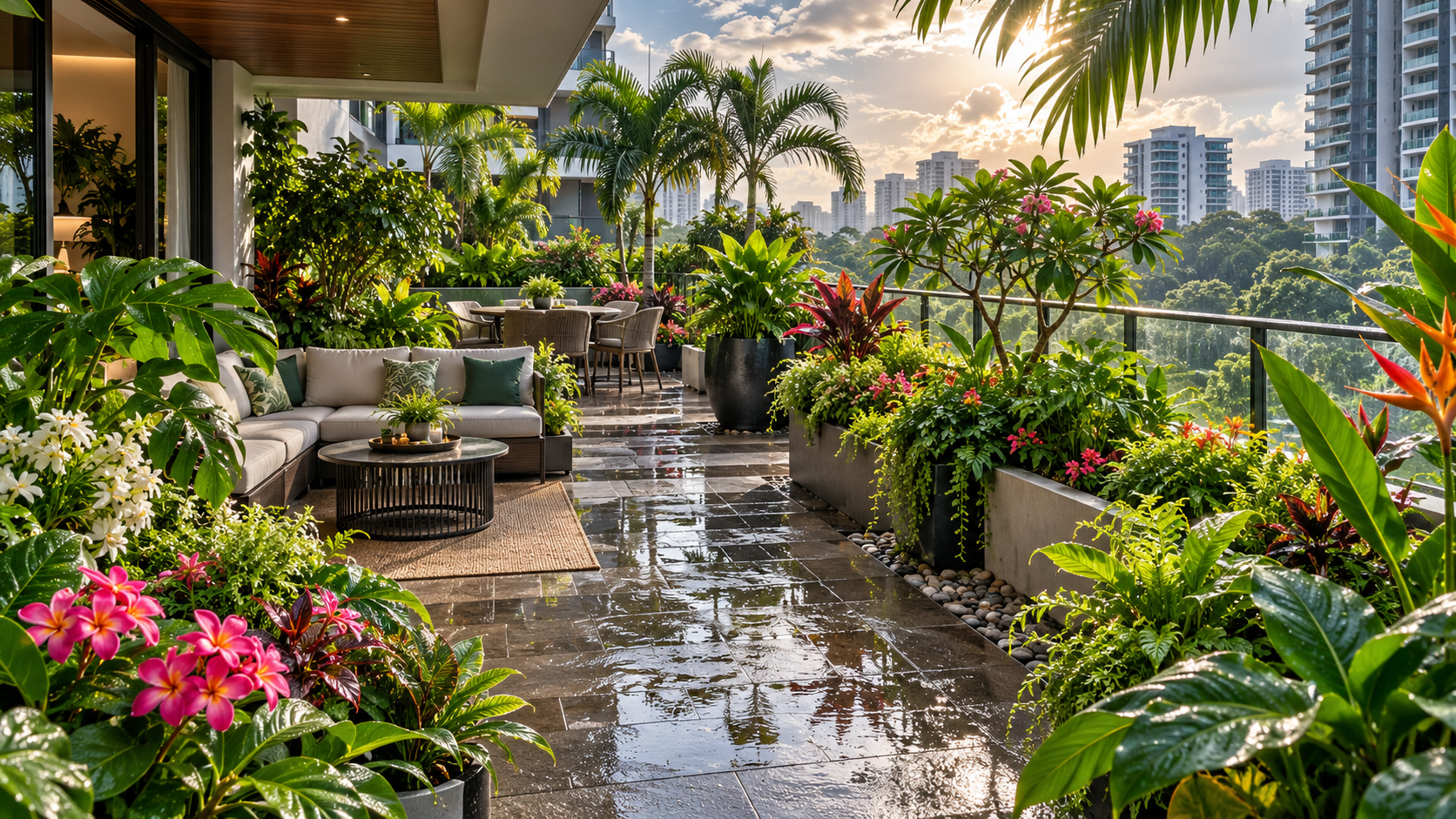
Outdoor Plants in Singapore: Creating a Beautiful Tropical Garden That Thrives
Choosing outdoor plants in Singapore requires more than selecting attractive greenery from a nursery. Singapore’s warm tropical conditions can support an impressive variety of ornamental plants, flowering species, herbs, palms, climbers, shrubs, and edible plants, but each growing space has its own combination of sunlight, rainfall exposure, wind, drainage, heat, and available room. A plant that thrives in an open sunny garden may struggle on a shaded apartment balcony, while a shade-loving species can suffer when exposed to intense afternoon sun. Successful gardening therefore begins by understanding the environment first and choosing plants that naturally suit it.
Singapore offers many opportunities for outdoor gardening despite its dense urban environment.
Plants can be grown in:
• Landed home gardens
• Condominium balconies
• HDB gardening spaces where appropriate
• Patios
• Rooftop gardens
• Courtyards
• Community gardens
• Window ledges designed for safe planting
• Commercial landscapes
Even a relatively small balcony can become a productive green space when plant size and light requirements are considered carefully.
The key is not how many plants you own.
It is whether those plants fit the conditions available.
Why Outdoor Plants Grow Well in Singapore
Singapore lies close to the equator and experiences a tropical climate throughout the year.
There is no cold winter that forces most tropical ornamentals into a long dormant season.
Warm temperatures, humidity, and frequent rainfall create favorable conditions for many tropical species.
However, these same conditions can also create gardening challenges.
High humidity can encourage certain fungal problems.
Heavy rain can waterlog poorly draining containers.
Strong sunlight can scorch shade-adapted foliage.
Fast plant growth can make pruning more important.
A successful garden therefore works with the climate instead of fighting it.
7 Smart Ways to Choose Outdoor Plants in Singapore
The best plant choices begin with practical growing conditions.
1. Outdoor Plants in Singapore Should Match the Available Sunlight
Light is one of the most important factors in plant selection.
Before buying anything, observe the gardening area throughout the day.
Ask:
• Does it receive direct morning sun?
• Is there strong afternoon sunlight?
• Is light filtered through nearby buildings or trees?
• Is the balcony permanently shaded?
• How many hours of direct light are available?
Full-Sun Areas
Open terraces, gardens, and some balconies may receive several hours of strong sunlight.
Plants suited to brighter conditions can include options such as:
• Bougainvillea
• Ixora
• Portulaca
• Hibiscus
• Murraya
• Certain herbs
• Many flowering ornamentals
Plants grown for heavy flowering often perform better with sufficient sunlight.
Semi-Shaded Areas
Spaces receiving morning sun or filtered light can support many foliage and flowering plants.
These conditions may work for certain:
• Gingers
• Ferns
• Caladiums
• Begonias
• Bromeliads
• Tropical shrubs
Exact requirements vary by species.
Shaded Outdoor Areas
A shaded balcony still offers many possibilities.
Possible choices include appropriate varieties of:
• Ferns
• Peace lilies
• Aglaonema
• Calathea relatives
• Philodendrons
• Pothos
• Snake plants
However, outdoor shade can still be brighter than indoor conditions.
Observe how the plant responds after placement.
2. Choose Plants That Can Handle Tropical Heat and Humidity
Not every attractive plant sold online is suitable for Singapore’s outdoor environment.
Plants native to cooler climates may struggle with year-round tropical warmth.
Selecting tropical or tropical-adapted species generally makes gardening easier.
Tropical Foliage Plants
Tropical foliage plants can create a lush appearance even when flowers are limited.
Popular landscape styles can incorporate:
• Broad leaves
• Variegated foliage
• Deep green textures
• Red or purple leaves
• Upright architectural forms
• Cascading plants
Mixing foliage shapes creates visual interest without relying entirely on seasonal flowers.
Humidity Can Be Helpful and Challenging
Many tropical plants appreciate humidity.
However, dense foliage with poor airflow can remain wet for too long.
This may encourage:
• Leaf spots
• Fungal problems
• Pest activity
• Stem rot
Avoid overcrowding plants simply to create instant fullness.
Give them space to mature.
3. Consider Rainfall and Drainage Before Planting
Singapore receives substantial rainfall.
That makes drainage particularly important.
A container without proper drainage can fill with water after a storm.
Roots need both moisture and oxygen.
Constantly saturated soil can damage many species.
Containers Need Drainage Holes
Outdoor pots should normally allow excess water to escape.
Check whether drainage holes are:
• Large enough
• Unblocked
• Positioned correctly
Decorative outer pots can trap water around inner nursery containers.
Check them after heavy rain.
Use Suitable Potting Media
Good container soil should generally balance:
• Moisture retention
• Drainage
• Aeration
The correct mixture depends on the plant.
A moisture-loving tropical plant may require a different mix from a succulent.
Raised Containers Can Help
Plant stands or pot feet can improve drainage and reduce water collecting underneath containers.
This is particularly useful on patios and balconies.
4. Select the Right Plant Size for the Available Space
Small nursery plants can become surprisingly large.
Always consider mature size.
A shrub that looks compact today may eventually spread across a walkway.
A climbing plant may need substantial support.
A tree can eventually outgrow a small container.
Balcony Plants
For balconies, consider:
• Mature height
• Mature width
• Root space
• Pot weight
• Wind exposure
• Falling leaves
• Maintenance
• Safe placement
Large planters can become extremely heavy when filled with wet soil.
Structural and safety considerations are important.
Gardens With More Space
Landed properties can accommodate:
• Larger shrubs
• Small trees
• Palms
• Climbers
• Groundcovers
• Layered planting
Use mature dimensions when planning spacing.
Correct spacing reduces future pruning and overcrowding.
5. Pick Low-Maintenance Plants When Time Is Limited
A beautiful garden does not need constant attention.
Busy homeowners should select species that tolerate realistic care routines.
Low-maintenance does not mean maintenance-free.
Every living plant still needs appropriate:
• Light
• Water
• Nutrition
• Pruning
• Pest observation
Snake Plant
Snake plants are valued for their architectural foliage and tolerance of a range of growing conditions.
They should still be protected from prolonged waterlogging.
Indian Borage
Indian borage can grow vigorously under suitable tropical conditions and is appreciated by many gardeners for its aromatic foliage.
Regular pruning can keep it compact.
Thai Basil
Thai basil can suit sunny edible gardens when provided with appropriate water and care.
Harvesting regularly can encourage continued useful growth.
Turmeric
Turmeric can be an interesting edible addition to tropical gardens where sufficient warmth, soil, and moisture are available.
Murraya
Orange jasmine, or Murraya paniculata, is commonly used for hedging and landscaping.
Its glossy foliage and fragrant flowers can make it attractive for outdoor areas with suitable light.
6. Outdoor Plants in Singapore Should Suit Your Gardening Goal
Do not choose plants randomly.
Decide what the garden should accomplish.
Possible goals include:
• Creating privacy
• Adding flowers
• Growing food
• Attracting biodiversity
• Cooling a patio visually
• Creating a tropical appearance
• Framing an entrance
• Covering bare ground
• Decorating a balcony
Different objectives require different plant forms.
7. Think About Long-Term Maintenance Before Buying
Garden centres naturally display plants when they look attractive.
Imagine them six months later.
Ask:
• How quickly will this grow?
• Will it need frequent pruning?
• Does it drop many leaves?
• Will it need a larger pot?
• Is it susceptible to pests?
• Does it need frequent fertilising?
• Can I provide enough sunlight?
• Who will care for it when I travel?
Buying plants according to realistic maintenance capacity prevents unnecessary losses.
Best Outdoor Plants in Singapore for Sunny Areas
Sunny tropical gardens can support numerous flowering plants.
Bougainvillea
Bougainvillea is widely associated with colourful tropical landscaping.
It generally performs best with strong light and appropriate drainage.
Its colourful bracts can create dramatic displays on:
• Trellises
• Walls
• Large containers
• Garden boundaries
Regular pruning can help manage its size.
Hibiscus
Hibiscus provides large tropical flowers and can create an immediate warm-climate appearance.
It generally appreciates bright conditions.
Monitor for common garden pests and prune when necessary to maintain form.
Ixora
Ixora produces clusters of colourful flowers and is widely suited to tropical landscape styles.
It can work well as:
• Shrub planting
• Borders
• Hedges
• Container specimens
Portulaca
Portulaca can provide bright flowers in sunny locations.
Its low-growing habit can make it useful in containers and sunny garden areas with appropriate drainage.
Rain Lily
Rain lilies provide delicate flowers and can perform in sunny to semi-shaded positions depending on conditions.
They can be attractive in borders and containers.
Outdoor Plants for Semi-Shaded Singapore Gardens
Semi-shade can be one of the most flexible conditions.
Plants receive useful light while avoiding the strongest sun throughout the entire day.
Bromeliads
Many bromeliads offer:
• Strong foliage structure
• Colour
• Compact forms
They can be useful for tropical decorative planting.
Different species have different light requirements.
Ferns
Many ferns prefer filtered light and humidity.
They can add soft texture to:
• Balconies
• Courtyards
• Shaded entrances
• Vertical gardens
Avoid assuming every fern wants the same moisture level.
Caladium
Caladiums are appreciated for colourful foliage.
Their leaves can include combinations of:
• Green
• White
• Pink
• Red
They can provide visual interest in areas where flowering plants receive insufficient sunlight.
Plants for Shaded Outdoor Spaces
Shade should not be treated as a gardening failure.
It simply requires different plant selection.
Aglaonema
Many Aglaonema varieties offer decorative foliage suitable for lower-light environments.
Protect them from harsh direct sunlight unless the specific variety tolerates it.
Peace Lily
Peace lilies can work in protected shaded areas.
They are more sensitive to intense direct sunlight and should receive appropriate moisture without permanent waterlogging.
Pothos
Pothos is adaptable and can create attractive trailing foliage.
It can be grown:
• In hanging containers
• Along supports
• On shelves
• In shaded corners
Control its growth so it does not spread where unwanted.
Outdoor Plants in Singapore for Balconies
Balcony gardening presents special conditions.
Tall buildings can create:
• Strong wind
• Reflected heat
• Limited sunlight
• Sudden heavy rain
• Very bright afternoon exposure
Observe the Balcony Before Planting
Spend several days checking:
• Morning sunlight
• Afternoon sunlight
• Rain exposure
• Wind direction
• Hot wall surfaces
The same condominium can have very different growing conditions on different sides of the building.
Secure Containers Properly
Safety comes first.
Do not place unstable pots where strong wind could cause them to fall.
Use containers appropriate for the available space.
Avoid dangerously overloading ledges or supports.
Outdoor Plants for Privacy
Plants can create a softer alternative to solid screening.
Possible choices depend on available space.
Options may include suitable:
• Palms
• Shrubs
• Bamboo-like ornamental plants
• Trellised climbers
• Dense container plants
Consider mature height before choosing.
A privacy plant that grows too aggressively may become difficult to manage.
Flowering Plants for Singapore Gardens
Flowering plants add seasonal or repeated colour.
Possible tropical choices include:
• Hibiscus
• Ixora
• Bougainvillea
• Rain lilies
• Jasmine varieties
• Angelonia
• Portulaca
Flowering performance often depends heavily on sunlight.
A plant may remain green in shade but produce fewer flowers.
Fragrant Outdoor Plants
Fragrance can make a balcony or entrance more enjoyable.
Possible fragrant choices include suitable forms of:
• Orange jasmine
• Gardenia
• Water jasmine
• Jasmine
Place fragrant plants near:
• Seating
• Entrances
• Walkways
• Windows
However, avoid overcrowding small enclosed spaces with several strongly scented species if household members are sensitive to fragrance.
Edible Outdoor Plants in Singapore
Tropical conditions can also support productive edible gardening.
Possible choices include:
• Thai basil
• Chilli
• Pandan
• Mint in suitable conditions
• Turmeric
• Indian borage
• Kang kong
• Bayam
• Spring onion
• Selected leafy greens
Edibles generally require careful attention to sunlight, water, nutrition, and pests.
Herbs in Containers
Herbs can be particularly convenient for apartment gardeners.
Place commonly used plants close to the kitchen where practical.
Harvest regularly.
A productive edible garden does not need to be large.
Outdoor Plants That Attract Biodiversity
Gardens can support urban biodiversity when suitable plants are selected.
Flowering species may attract:
• Bees
• Butterflies
• Other pollinators
Certain plants can also provide food or shelter for wildlife.
A biodiversity-friendly garden typically benefits from:
• Variety
• Flowering plants
• Reduced unnecessary pesticide use
• Appropriate plant density
• Healthy soil
Avoid assuming every insect is harmful.
Many garden insects are harmless or beneficial.
Watering Outdoor Plants in Singapore
Frequent rainfall can make watering schedules confusing.
Do not water simply because it is part of a daily routine.
Check the soil.
Signs a Plant May Need Water
Depending on species, signs can include:
• Dry upper soil
• Drooping leaves
• Lightweight container
However, drooping can also result from root problems or excessive heat.
Overwatering Can Be as Harmful as Underwatering
Constantly saturated roots may decline.
During rainy periods, some outdoor containers may require very little additional watering.
Fertilising Tropical Outdoor Plants
Container plants gradually use nutrients from their potting media.
Fertiliser can support healthy growth when used appropriately.
Different plants need different levels of nutrition.
Follow product instructions carefully.
Excess fertiliser can:
• Damage roots
• Burn foliage
• Create weak growth
• Waste money
More fertiliser does not automatically mean better growth.
Pruning and Plant Shape
Tropical plants can grow quickly.
Pruning can:
• Control size
• Remove damaged growth
• Improve airflow
• Shape shrubs
• Encourage branching
Use clean tools.
Avoid removing excessive healthy growth at once unless the species and situation justify heavier pruning.
Common Outdoor Plant Pests
Tropical gardens can experience pests such as:
• Aphids
• Mealybugs
• Scale insects
• Caterpillars
• Spider mites
• Snails or slugs
The correct response depends on the pest.
Inspect Before Treating
Look at:
• Leaf undersides
• New shoots
• Stems
• Flowers
• Soil surface
Identify the problem before applying a treatment.
Unnecessary pesticide use can affect beneficial organisms as well.
Improving Air Circulation
Closely packed balcony plants may look lush, but dense growth can reduce airflow.
Allowing some spacing can help foliage dry after rain.
This may reduce conditions favourable to certain plant diseases.
Pruning overcrowded growth can also help.
Repotting Outdoor Container Plants
Eventually, some plants outgrow their containers.
Possible signs include:
• Roots circling densely
• Roots emerging from drainage holes
• Rapid drying
• Reduced growth
• Plant becoming unstable
Move to an appropriately larger container rather than an unnecessarily enormous one.
Fresh potting media can also restore structure and nutrients.
Choosing Pots for Outdoor Plants
Containers should match both practical and visual requirements.
Consider:
• Drainage
• Weight
• Durability
• Plant size
• Root space
• Heat exposure
Dark containers in strong sunlight can become hot.
Large ceramic pots can be heavy.
Lightweight planters may be easier to reposition but must remain stable in wind.
Creating a Layered Tropical Garden
Professional-looking tropical gardens often use plants at different heights.
A simple arrangement may include:
Tall structural plants
Medium shrubs
Low foliage
Groundcovers
Trailing plants
This creates visual depth.
Avoid placing every plant at the same height.
Outdoor Plants in Singapore for Small Spaces
Small spaces benefit from vertical thinking.
Consider:
• Wall-mounted planters where safely supported
• Trellises
• Hanging baskets
• Narrow shelving
• Climbing plants
• Tall narrow pots
Avoid filling every centimetre.
Plants need access for:
• Watering
• Pruning
• Pest inspection
• Cleaning
Common Outdoor Gardening Mistakes
Buying Without Checking Sunlight
Light should be assessed first.
Overwatering During Rainy Weather
Check soil moisture before watering.
Using Containers Without Drainage
Standing water can damage roots.
Planting Too Densely
Allow space for mature growth and airflow.
Ignoring Mature Plant Size
Small nursery specimens can become large.
Choosing Plants Only for Appearance
Care requirements matter just as much.
Ignoring Wind on High Balconies
Wind can dry foliage and destabilize pots.
Frequently Asked Questions
What are the best outdoor plants in Singapore?
Good choices depend on light and space, but tropical options can include Murraya, hibiscus, ixora, bougainvillea, portulaca, ferns, herbs, and many foliage plants.
Which outdoor plants in Singapore are easy to maintain?
Plants such as snake plants, Indian borage, Thai basil, turmeric, and other tropical-adapted species can be relatively manageable when matched to appropriate light and drainage.
What plants are suitable for a sunny Singapore balcony?
Depending on exposure and space, sunny balconies may suit bougainvillea, hibiscus, ixora, portulaca, herbs, and other sun-tolerant tropical plants.
Can outdoor plants survive Singapore’s heavy rainfall?
Yes, many tropical plants thrive in Singapore, but good drainage is essential because containers that remain waterlogged can damage roots.
How often should outdoor plants in Singapore be watered?
There is no fixed schedule for every plant. Check soil moisture, rainfall, pot size, sunlight, and individual species requirements before watering.
Can I grow edible outdoor plants in Singapore?
Yes. Depending on sunlight and space, gardeners can grow herbs and edibles such as Thai basil, turmeric, chilli, pandan, bayam, kang kong, and other suitable tropical crops.
Conclusion
Outdoor plants in Singapore can thrive when gardeners work with the country’s tropical conditions instead of choosing plants purely for appearance. Start by evaluating sunlight, rainfall exposure, drainage, wind, available space, and the amount of maintenance you can realistically provide. Selecting tropical plants suited to those conditions makes balconies, patios, and gardens easier to maintain while creating healthier and more attractive greenery. With thoughtful plant selection and consistent basic care, even a compact urban space can develop into a lush tropical garden.
