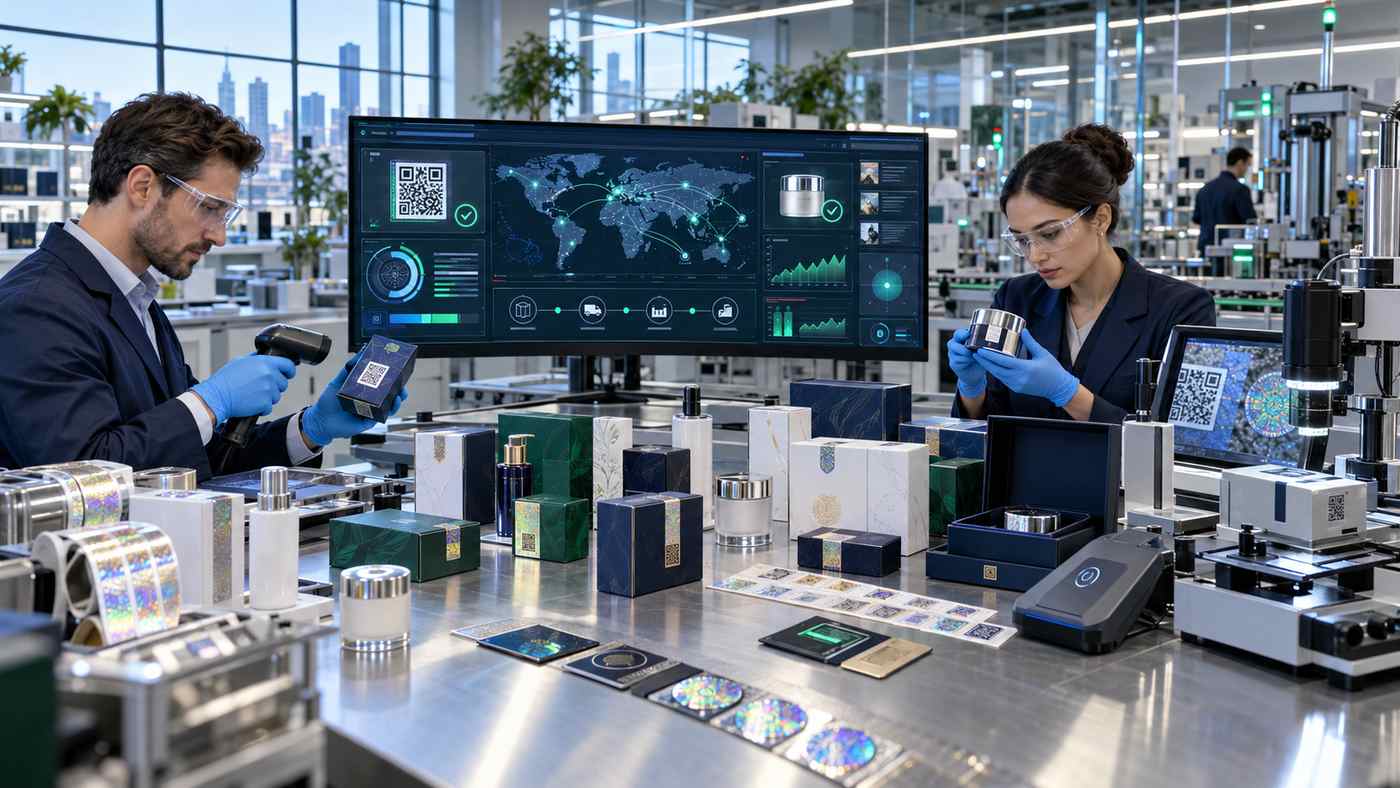
Anti Counterfeit Solution: 7 Powerful Strategies to Protect Products, Prevent Fraud, and Build Customer Trust
Counterfeit products have become a serious concern for manufacturers, retailers, distributors, and consumers across global markets. From luxury accessories and electronics to cosmetics, automotive components, and pharmaceuticals, fake products can enter legitimate distribution channels and create financial, reputational, and safety risks. Implementing an effective anti counterfeit solution helps businesses strengthen product authentication, improve supply chain visibility, and give customers more reliable ways to distinguish genuine merchandise from suspicious alternatives.
As ecommerce continues to connect buyers and sellers across international borders, protecting product authenticity has become increasingly complicated. Counterfeiters can imitate packaging, reproduce brand marks, copy product identifiers, and distribute unauthorised goods through online marketplaces and physical retail networks.
Traditional product labels and ordinary barcodes may provide identification, but they do not necessarily establish whether an individual item is genuine.
Modern anti-counterfeiting systems combine physical security features with digital verification, unique product identifiers, and supply chain information to provide stronger protection.
Technologies such as serialized QR codes, NFC tags, holographic security labels, tamper-evident packaging, and digital authentication platforms can help businesses detect suspicious activity.
However, no single technology eliminates counterfeit risk completely.
A reliable strategy requires selecting appropriate security features, protecting sensitive data, training supply chain partners, and developing a clear response when suspicious products are discovered.
This guide explores seven essential strategies for implementing anti-counterfeiting technology, explains how product authentication systems work, and highlights practical considerations for businesses seeking stronger brand protection in 2026.
What Is an Anti Counterfeit Solution?
An anti counterfeit solution is a combination of technologies, processes, and security measures designed to help identify genuine products, detect suspicious merchandise, and reduce opportunities for counterfeiting.
Depending on the industry, it may involve digital authentication software, unique identifiers, specialized packaging, supply chain tracking, or physical security features.
Some systems allow consumers to verify products by scanning a code on the packaging.
Others enable manufacturers and distributors to monitor individual items as they move through production, storage, transportation, and retail channels.
The most effective approach depends on the product’s value, risk level, distribution network, and applicable regulations.
How Does Product Authentication Work?
A product authentication system generally begins by assigning or attaching an identifier to a product or package.
Depending on the design, that identifier may be associated with a specific product model, production batch, or individual unit.
The system stores relevant information in an authorised database.
When someone scans or examines the product’s security feature, the system may compare the submitted information against the expected record.
It can then return an appropriate verification result or flag suspicious activity for further investigation.
However, the presence of a valid identifier does not automatically prove the physical product is genuine.
A counterfeiter may copy certain types of visible identifiers and place them on fake merchandise.
More advanced solutions address this risk through additional physical or cryptographic authentication measures.
Why Is Anti-Counterfeiting Important?
Counterfeit products can affect both businesses and consumers.
Brands may face unauthorised sales, customer complaints, disrupted distribution arrangements, and reputational damage.
Consumers may receive products that fail to meet expected quality or safety requirements.
The risks can be especially serious when counterfeit goods involve medicines, electrical products, automotive components, or other safety-sensitive items.
A properly designed anti counterfeit solution supports better identification, investigation, and control of these risks.
The Growing Global Problem of Counterfeit Products
Counterfeiting is not limited to luxury fashion or expensive accessories.
It affects a wide range of consumer and industrial products.
According to the OECD and EUIPO report Mapping Global Trade in Fakes 2025, counterfeit and pirated goods represented up to 2.3% of global trade in 2021.
The report also estimated that counterfeit goods accounted for up to 4.7% of European Union imports in that year.
These are historical estimates based on the report’s underlying 2021 data, not measurements of counterfeiting activity in 2026.
Nevertheless, they demonstrate the scale of the challenge.
Why Ecommerce Creates Additional Challenges
Online marketplaces allow businesses to reach customers internationally.
However, they can also make it difficult for buyers to evaluate product authenticity before purchasing.
Counterfeiters may use misleading product photographs, copied descriptions, false claims of authorisation, or packaging that resembles genuine merchandise.
A buyer may not discover a problem until the product arrives.
Digital product authentication can provide an additional method of verification, but it should complement marketplace monitoring and authorised distribution controls.
Counterfeiting Can Affect Supply Chains
Fake products may enter distribution networks through unauthorised intermediaries, product substitution, fraudulent returns, or other channels.
Once mixed with legitimate inventory, suspicious items may become difficult to identify without effective traceability.
This is why brand protection requires attention to the product’s entire journey rather than only its final packaging.
7 Essential Strategies for Choosing an Effective Anti Counterfeit Solution
Businesses should approach anti-counterfeiting as a coordinated product security programme.
The following seven strategies can help organisations select suitable technologies and reduce avoidable risks.
1. Use Unique Product Serialization for Better Identification
Serialization assigns a distinct identifier to individual product units.
It is one of the most important foundations of advanced product authentication.
Unlike a standard product barcode that identifies a product category, serialized identification can distinguish one physical unit from another.
What Is Product Serialization?
A serialized product may contain a combination of a product identifier and a unique serial number.
For example, multiple boxes of the same skincare product may share the same product identifier while each box receives a different serial number.
This creates the possibility of tracking individual units.
The effectiveness of the system depends on how identifiers are generated, applied, stored, and verified.
Understanding GS1 Standards
GS1 provides internationally recognised standards for product and supply chain identification.
A Global Trade Item Number, commonly called a GTIN, identifies a trade item.
Combining a GTIN with a serial number can provide unique identification at the individual product level.
GS1 standards support multiple data carriers, including certain barcode formats and RFID technologies.
However, selecting a GS1-compliant identifier does not automatically make a product counterfeit-proof.
How Serialization Helps Detect Suspicious Products
Suppose a company manufactures a limited quantity of premium electronic accessories.
Each product receives a unique serial number.
If the same identifier is later associated with multiple products appearing in incompatible locations, the system may identify suspicious activity.
This can help investigators discover possible code duplication or product substitution.
However, duplicate scans are not always evidence of fraud.
Legitimate customer behaviour, scanning errors, and system configuration can produce repeated records.
Authentication software should evaluate the context before declaring an item counterfeit.
Why Secure Identifier Management Matters
Serial numbers should be generated using appropriate controls.
Manufacturers must also prevent accidental duplication and protect relevant production records.
A poorly maintained database can undermine an otherwise sophisticated system.
Serialization should be integrated with manufacturing quality control and product data management.
2. Implement Secure QR Code Product Verification
QR codes provide an accessible way to connect physical packaging with digital information.
Many consumers already have smartphones capable of scanning these symbols.
This makes QR-based verification attractive for retail products and ecommerce packaging.
How QR Authentication Works
A product package may include a QR code that connects to an official verification service.
The customer scans the code and receives information associated with the product.
Depending on the implementation, the system may display product details, authenticity-related checks, or an instruction to complete additional verification.
Some solutions also collect relevant scan events for investigation.
Ordinary QR Codes Are Not Enough
A standard QR code can be photographed, copied, and reprinted.
If the code simply opens a public webpage, counterfeiters may reproduce it on fake packaging.
Even a QR code containing a serial number can be copied.
For this reason, businesses should not describe ordinary QR labels as impossible to counterfeit.
Add Secure Authentication Layers
More sophisticated QR-based systems may use additional security methods.
Examples include cryptographic signatures, concealed authentication information, controlled verification services, and physical features that are difficult to reproduce.
The design should ensure that copied codes do not automatically provide the same level of assurance as a genuine product.
Use GS1 Digital Link Appropriately
GS1 Digital Link provides a standards-based approach to connecting product identifiers with digital information.
A supported data carrier can connect users with product-specific resources.
This may include instructions, product details, traceability information, or appropriate authentication services.
However, GS1 Digital Link itself is not a guarantee that a physical product is authentic.
Brand owners should combine digital identification with suitable verification controls.
Design a Trustworthy Customer Experience
Customers should understand how to identify the manufacturer’s official verification service.
A suspicious QR code may redirect users to a fraudulent website.
Businesses should maintain clear verification instructions and protect their official web domains.
A verification interface should also explain uncertain results without unnecessarily alarming customers.
3. Strengthen Packaging With Physical Security Features
Digital systems can provide valuable information, but they do not eliminate the need for physical product security.
Packaging remains an important part of the authentication process.
Physical security features can make unauthorised duplication, opening, or replacement more difficult.
Tamper-Evident Packaging
Tamper-evident packaging is designed to provide visible indications when a package has been opened or interfered with.
Examples include security seals, destructible labels, and certain specially designed closures.
These features can help buyers identify potential interference.
However, no tamper-evident feature guarantees that every form of tampering will be detected.
The correct design depends on the product, packaging materials, and distribution conditions.
Holographic Security Labels
Holograms can incorporate visual features that are difficult to reproduce using ordinary printing equipment.
They are often used on selected high-value products and security documents.
Advanced designs may contain microtext, variable optical effects, or other specialist features.
However, simple decorative holographic stickers can also be imitated.
Businesses should evaluate the security level of the actual design rather than assume every hologram provides strong protection.
Security Inks and Microprinting
Specialised printing methods can provide additional authentication features.
Examples include ultraviolet-reactive inks, microprinting, and selected concealed markings.
These may require specialist equipment or training to inspect.
They can be particularly useful for distributor checks or professional verification programmes.
Combine Physical and Digital Authentication
GS1’s digital signature guidance explains that digitally signed information can be combined with physical authentication markings.
This helps establish a stronger connection between the verification data and the physical product.
For example, a serialized identifier could be associated with a concealed code that is difficult to reproduce at scale.
The combination can offer greater assurance than a visible identifier alone.
Why Layered Security Matters
Counterfeiters may attempt to defeat one security measure.
Using complementary protections increases the complexity of producing convincing imitations.
However, additional features also introduce costs and operational responsibilities.
Businesses should select layers according to the actual counterfeit risk rather than add unnecessary complexity.
4. Use NFC and RFID Technology for Smart Product Authentication
Near Field Communication and Radio Frequency Identification technologies are increasingly relevant to connected packaging and supply chain operations.
Both use radio-frequency communication, but their operating characteristics and applications differ.
What Is NFC Authentication?
NFC is a short-range technology commonly used in contactless interactions.
A compatible smartphone or reader can communicate with an NFC-enabled tag.
Some secure NFC chips support cryptographic authentication features that can help verify the tag’s identity.
This can provide advantages over a simple printed identifier.
However, the security level depends on the actual chip, configuration, credential management, and application.
NFC for Premium Consumer Products
NFC may be useful for luxury goods, electronics, collectables, and other products where additional authentication costs are justified.
A customer may tap a compatible phone to a product tag and access an authorised verification process.
Some systems can also connect customers with product registration or after-sales information.
The experience should remain easy to understand.
What Is RFID Tracking?
RFID uses radio-frequency technology to identify tagged items through compatible readers.
Certain systems can identify multiple tags without requiring direct line-of-sight scanning.
This makes RFID useful in some warehouse, logistics, and inventory applications.
However, ordinary RFID identification does not automatically establish authenticity.
Tag data can vary significantly in security depending on the system.
RFID for Supply Chain Visibility
RFID may help businesses track goods through receiving, storage, distribution, and other operational stages.
The resulting data can support inventory controls and traceability.
However, hardware installation, tag selection, environmental conditions, and data integration influence performance.
Metallic packaging, liquids, and certain operating environments can affect radio-frequency behaviour.
When Should Businesses Choose NFC or RFID?
NFC may be suitable for customer-facing authentication where smartphone interaction is important.
RFID may be useful for distribution visibility and bulk inventory operations.
Some programmes can benefit from both.
The right choice depends on the required security, reader availability, material compatibility, and overall cost.
5. Build End-to-End Supply Chain Traceability
Counterfeit prevention becomes more effective when businesses understand how products move through authorised channels.
A track-and-trace system records relevant events throughout production and distribution.
This can help organisations detect inconsistencies and investigate suspicious merchandise.
What Is Supply Chain Traceability?
Traceability involves connecting product identity with information about its movement or history.
Depending on the system, records may include manufacturing events, packaging operations, warehouse receipts, shipments, and retail distribution.
The level of detail depends on the product and operational requirements.
Not every business needs individual-unit tracking.
Some products may be appropriately managed at batch or lot level.
Track Products From Manufacturing
A robust process starts at the production stage.
Identifiers should be linked to accurate manufacturing records.
Packaging and quality-control procedures should confirm that assigned codes correspond to the correct products.
Monitor Distribution Events
When products move between authorised partners, relevant tracking events may be recorded.
For example, a distributor may document receiving and shipping events for serialized products.
These records can support investigations when an item appears in an unexpected location.
Identify Unusual Distribution Patterns
A product appearing in a region outside its expected distribution path may warrant investigation.
However, unusual locations can also result from legitimate resale, transfers, or customer travel.
Analytics should distinguish possible fraud signals from normal commercial activity.
Pharmaceutical Traceability Requirements
Certain industries face specific legal requirements.
In the United States, the Drug Supply Chain Security Act establishes product tracing and verification obligations for specified prescription drug supply chain participants.
The FDA’s enhanced drug distribution security framework addresses interoperable electronic tracing at the package level.
However, the requirements do not apply identically to all healthcare products.
For example, many over-the-counter drugs and other defined categories fall outside the relevant DSCSA product definition.
Pharmaceutical businesses should review the specific rules, exemptions, and applicable implementation requirements.
6. Connect Product Authentication With Real-Time Monitoring
Modern product authentication systems may collect verification events and help organisations identify suspicious patterns.
This can provide useful intelligence beyond individual product scans.
However, monitoring quality depends on accurate data and suitable interpretation.
Build a Centralised Verification Dashboard
A central platform may display product records, authentication attempts, and selected distribution information.
Authorised staff can use this information to review anomalies and investigate potential problems.
Dashboard design should reflect the responsibilities of different users.
A customer service employee may need different information from a security investigator.
Detect Duplicate or Unusual Scans
Repeated use of an identifier may indicate possible copying.
For example, a code associated with the same individual product appearing in geographically incompatible contexts could be suspicious.
However, a customer may legitimately scan a product several times.
A warehouse may also scan the same item during receiving and dispatch.
The system should evaluate timing, location reliability, and expected workflows.
Use Risk-Based Alerts
Not every unusual event needs an immediate fraud declaration.
A risk-based process may classify events according to their potential importance.
For example, a repeated scan in the same store may be routine.
A sudden surge of verification attempts involving one identifier across unrelated distribution points may deserve further investigation.
Consider Data Privacy
Some authentication systems record device, location, or customer interaction data.
Businesses must evaluate applicable privacy requirements and minimise unnecessary collection.
Consumers should receive appropriate information about how their data is used.
Security monitoring should not become an excuse for excessive surveillance.
Develop a Clear Investigation Process
An alert should lead to a defined response.
Depending on the situation, that may involve contacting a distributor, examining a physical item, reviewing manufacturing records, or investigating an unauthorised seller.
Automated detection is useful only when the organisation can act on the information responsibly.
7. Choose a Scalable Anti Counterfeit Solution That Fits Your Business
The final strategy is selecting a system that works within existing manufacturing and distribution operations.
An advanced security platform may provide little value if it cannot be maintained effectively.
Businesses should balance security, usability, implementation cost, and long-term support.
Define the Counterfeit Risk
Begin by understanding how counterfeiters may target the product.
A luxury handbag brand faces different risks from an automotive parts manufacturer.
A pharmaceutical distributor may require different verification processes from an online cosmetics retailer.
The system should respond to realistic threats.
Compare Available Technologies
Evaluate serialization, secure QR verification, physical labels, NFC tags, and tracking technologies.
Ask vendors how each feature works and which threats it is designed to address.
Be cautious of statements promising completely counterfeit-proof products.
No single solution eliminates every possible attack.
Evaluate Existing System Integration
An anti-counterfeiting platform may need to connect with enterprise resource planning software, warehouse management systems, production equipment, and ecommerce operations.
Ask whether the vendor supports relevant interfaces and data standards.
The presence of an API does not guarantee seamless integration.
Understand Manufacturing Requirements
Printing unique codes at high production volumes requires appropriate equipment and quality checks.
Manufacturers must confirm that codes remain legible and properly assigned.
Packaging line changes may be necessary.
Physical authentication features also require suitable application and inspection procedures.
Review Vendor Security
A product authentication vendor may handle commercially sensitive data.
Businesses should evaluate identity management, access controls, cryptographic practices, incident response, and service reliability.
Contracts should clarify data ownership, portability, and operational responsibilities.
Begin With a Pilot Programme
A limited rollout can help reveal technical and operational problems.
Select a defined product range or distribution channel for initial testing.
Measure verification accuracy, scanning performance, user experience, and operational costs.
Use the results to refine the design.
Plan for Future Growth
The selected system should accommodate realistic changes in product volume and distribution complexity.
However, businesses should avoid paying for unnecessary features solely because they are marketed as advanced.
Long-term value depends on solving actual business problems.
Essential Features of Modern Anti-Counterfeit Software
Product authentication platforms vary widely in their capabilities.
However, several features can support effective implementation.
Unique Product Identification
A system may assign or manage identifiers at product, batch, or unit level.
The appropriate level depends on business requirements.
Secure Verification Services
Verification tools can help authorised users check product-related information.
Some may include cryptographic checks or integration with additional physical security features.
Customer Authentication Interface
A consumer-facing interface should be clear and easy to use.
It should explain how to perform verification and how to report suspicious products.
Supply Chain Data Integration
The platform may connect with existing logistics and inventory systems.
This supports coordinated product information across relevant operations.
Alert and Investigation Tools
Risk indicators can help identify potential code duplication or unusual distribution events.
The system should provide context for reviewing alerts.
Reporting and Analytics
Businesses may monitor verification volumes, suspicious activity, and operational trends.
Reports can help evaluate the effectiveness of the security programme.
Role-Based Access Controls
Different users require different permissions.
Appropriate access management can reduce the risk of unauthorised changes to authentication records.
Audit Trails
Records of relevant system activity may support investigations and operational accountability.
Retention should follow applicable business and legal requirements.
Industries That Benefit From Anti Counterfeit Solutions
Product authentication technology is relevant to many industries, but the appropriate approach differs by product type.
Pharmaceutical Manufacturing
Counterfeit or diverted medicines can create serious patient safety risks.
Pharmaceutical businesses may use serialization, verification systems, and regulated product tracing processes.
The exact requirements depend on the jurisdiction and product category.
Cosmetics and Skincare
Counterfeit cosmetics may misrepresent ingredients, manufacturing standards, or brand identity.
Authentication features can help consumers check products and provide brands with information about suspicious distribution.
Luxury Fashion and Accessories
Premium clothing, handbags, watches, and accessories are frequent targets for imitation.
Businesses may combine physical security features with unit-level digital identification.
However, verification should account for legitimate resale and second-hand markets.
Consumer Electronics
Counterfeit electronics and accessories may fail to meet expected quality or electrical safety requirements.
Manufacturers can use secure product identification and authorised distribution controls.
Automotive Components
Certain counterfeit automotive parts can create safety concerns.
Authentication and traceability may help manufacturers and repair professionals assess product origin.
However, proper technical inspection remains essential.
Food and Beverage Packaging
Product identification and traceability can support investigations of suspicious or diverted goods.
Some categories also require compliance with relevant food traceability regulations.
The correct controls depend on the food type and applicable jurisdiction.
Industrial Equipment
Counterfeit industrial components can affect equipment reliability and maintenance operations.
Businesses may use serialized identification and supplier verification to improve procurement controls.
Anti Counterfeit Solution vs. Traditional Security Labels
Traditional packaging security features can be useful, but they provide different capabilities from integrated digital authentication.
Traditional Security Labels
Physical labels may include holograms, special inks, or tamper-evident materials.
They can provide visible signs of product security.
However, appearance alone may not establish the item’s manufacturing origin.
Digital Authentication
Digital systems can connect a product identifier with authorised records.
They may also record verification attempts and selected distribution events.
However, digital identifiers can be copied unless additional safeguards are used.
Layered Authentication
Combining physical security markings with secure digital verification can provide stronger assurance.
The right combination should reflect the product’s actual risk and commercial requirements.
How Much Does an Anti Counterfeit Solution Cost?
Implementation costs vary according to technology, product volume, required security, and integration complexity.
There is no single price that accurately represents every authentication system.
Main Cost Factors
Expenses may include security label production, NFC or RFID tags, software subscriptions, code management, verification infrastructure, integration, staff training, and maintenance.
Specialised printing equipment may increase initial costs.
QR Code-Based Systems
Basic QR-based product information systems may have relatively low packaging costs.
However, secure authentication requires additional infrastructure and controls.
The cost should be evaluated according to the desired security rather than the price of printing a code.
NFC and RFID Systems
Electronic tags generally introduce hardware costs.
The total expense depends on the type of chip, required security, production volume, and compatible reading equipment.
Custom Enterprise Solutions
Large manufacturers may require customised integration with existing enterprise systems.
This can increase implementation complexity.
A detailed proposal should define the required features, support, maintenance, and data management arrangements.
Measuring Return on Investment
Potential benefits may include improved counterfeit detection, reduced investigation time, better supply chain visibility, and stronger customer confidence.
However, savings should be measured using actual operational data.
A product authentication system cannot guarantee that counterfeiting losses will disappear.
How to Implement an Anti Counterfeit Solution Successfully
Successful implementation requires coordination among security, manufacturing, IT, and supply chain teams.
Step 1: Assess the Risk
Identify vulnerable products, distribution channels, and common counterfeit methods.
Prioritise high-impact areas.
Step 2: Define Authentication Objectives
Decide whether the main goal is consumer verification, distributor authentication, supply chain traceability, or a combination.
Step 3: Select Suitable Technologies
Choose appropriate identifiers, physical features, and verification processes.
Confirm technical compatibility with existing operations.
Step 4: Test the Packaging
Evaluate label durability, scanning performance, tamper resistance, and handling conditions.
Authentication features must remain usable throughout distribution.
Step 5: Integrate Product Data
Connect identifiers with accurate manufacturing and inventory records.
Validate the data exchange process.
Step 6: Train Relevant Users
Provide suitable guidance to production teams, distributors, retailers, and customer support personnel.
Step 7: Monitor and Improve
Review suspicious verification events, operational problems, and user feedback.
Adjust the system when necessary.
Can Blockchain Improve Anti-Counterfeiting?
Blockchain technology is sometimes proposed for product traceability because it can provide a shared record of transactions under particular system designs.
However, blockchain does not automatically prove that the physical product associated with a digital record is genuine.
The Physical-to-Digital Connection
A reliable product authentication process must establish a trustworthy connection between the physical item and its digital identity.
If false information enters a blockchain-based system, recording it immutably does not make it correct.
This is sometimes described as the problem of ensuring trustworthy data inputs.
Potential Benefits
A properly designed system may support shared recordkeeping among participating organisations.
However, permission management, data accuracy, interoperability, confidentiality, and operational costs remain important considerations.
Is Blockchain Necessary?
Not always.
Many authentication requirements can be addressed using appropriately secured conventional databases, standards-based identifiers, digital signatures, and physical security features.
Businesses should select blockchain only when its particular characteristics provide a meaningful advantage.
Common Mistakes to Avoid With Anti-Counterfeiting Technology
One common mistake is assuming that placing a QR code on a product automatically proves its authenticity.
A copied code may still direct users to legitimate product information.
Another mistake is treating an ordinary barcode as unique to every physical unit.
Many retail barcodes identify product types rather than individual instances.
Businesses may also overlook manufacturing data quality.
Duplicate identifiers, poor printing, and incorrect database associations can undermine verification.
Some companies invest heavily in sophisticated labels without evaluating how counterfeiters actually target their products.
Others collect large amounts of customer scan data without clear privacy safeguards.
Finally, organisations should avoid promising that any technology completely eliminates counterfeit goods.
Security requires continued monitoring, investigation, and improvement.
The Future of Anti Counterfeit Solutions in 2026 and Beyond
Anti-counterfeiting technologies continue to evolve as businesses seek more reliable ways to connect physical goods with digital information.
Industry standards, secure identification, and automated monitoring are likely to remain important elements.
Greater Use of Connected Packaging
Products may increasingly connect customers with digital information through supported 2D barcodes or electronic tags.
This can support authentication, product instructions, and selected after-sales services.
Stronger Cryptographic Verification
Digital signatures and secure hardware can help make certain forms of unauthorised duplication more difficult.
However, security depends on implementation and the connection between the digital credential and the actual product.
Improved Supply Chain Interoperability
Standards-based identification can help different organisations exchange consistent product information.
This may improve the ability to investigate suspicious goods across complex distribution networks.
More Sophisticated Fraud Analytics
Analytics may help identify unusual verification patterns and possible product duplication.
Machine learning can assist in reviewing large volumes of data, but automated results require suitable validation.
False positives and missing data remain important limitations.
Greater Consumer Participation
Customer-facing verification tools may encourage people to report suspicious products.
Clear instructions and accessible authentication processes can make these systems more practical.
However, consumers should not be expected to carry the entire responsibility for identifying counterfeit goods.
Manufacturers, distributors, marketplaces, and regulators all have roles in addressing the problem.
How to Choose the Best Anti Counterfeit Solution for Your Brand
The best system is the one that addresses the organisation’s actual counterfeit risks while remaining practical to operate.
Begin by examining how products are manufactured, distributed, sold, and returned.
Identify where unauthorised substitution or duplication might occur.
Choose appropriate product identifiers and suitable authentication methods.
For some products, secure serialization combined with verification and traceability may be sufficient.
Other applications may require tamper-evident packaging, cryptographically protected NFC tags, or specialist physical security features.
Evaluate vendor claims carefully and ask for evidence supporting advertised security capabilities.
Confirm whether the system can integrate with existing manufacturing and warehouse operations.
Review data protection, customer usability, maintenance, and total cost.
A successful anti counterfeit solution combines trustworthy product information, appropriate technology, clear processes, and continuous improvement.
Frequently Asked Questions
1. What is an anti counterfeit solution?
An anti counterfeit solution uses product identifiers, authentication technologies, security packaging, and tracking systems to help verify genuine goods and detect suspicious products.
2. How does QR code anti-counterfeiting work?
QR-based systems connect product identifiers with verification services. Stronger solutions add safeguards because ordinary QR codes can be copied and reused.
3. Which technology is best for product authentication?
The best technology depends on product value, counterfeit risk, budget, and distribution needs. Common options include serialization, secure QR codes, NFC, RFID, and physical security labels.
4. Can an anti counterfeit solution prevent fake products completely?
No system can guarantee complete prevention. Layered security, accurate traceability, and ongoing monitoring can make counterfeiting more difficult to carry out and easier to investigate.
5. What is the difference between serialization and authentication?
Serialization gives products distinct identifiers. Authentication evaluates evidence to determine whether an item or its associated credentials are genuine.
6. How much does an anti counterfeit solution cost?
Costs depend on product volume, security features, labels or chips, software, integration, and maintenance. Businesses should request a quotation based on their actual requirements.
Conclusion
An anti counterfeit solution is an important tool for businesses seeking stronger product protection, reliable authentication, and improved supply chain visibility. Technologies such as unique serialization, secure QR verification, tamper-evident packaging, and NFC authentication can provide complementary security benefits. However, lasting protection depends on appropriate system design, accurate data, and continuous investigation of suspicious activity. By combining suitable technologies with responsible operational practices, brands can strengthen customer trust and improve their ability to respond to counterfeit threats