Pressure Washing: 7 Powerful Benefits That Transform Your Property
A clean and well-maintained property creates a welcoming environment and helps protect outdoor surfaces from everyday wear. Over time, driveways, patios, sidewalks, fences, and exterior walls collect dirt, dust, algae, mildew, and other contaminants that can affect their appearance. Pressure washing is an effective exterior cleaning method that uses a controlled stream of water to remove unwanted buildup from suitable surfaces.
Whether you own a residential home or manage a commercial building, regular exterior cleaning can improve curb appeal and support long-term property maintenance. Understanding the benefits, techniques, and safety considerations of professional cleaning can help you achieve better results without damaging your property.
What Is Pressure Washing?
Pressure washing is a cleaning technique that uses pressurized water to remove dirt, grime, mud, algae, and other surface contaminants from outdoor materials.
A pressure washer typically includes a motor or engine, water pump, hose, spray gun, and specialized nozzles. These components work together to deliver water at an appropriate pressure for the cleaning task.
The effectiveness of the process depends on several factors, including water pressure, water flow, nozzle selection, cleaning solutions, and surface condition.
How Does Pressure Washing Work?
Pressure washing equipment forces water through a specialized nozzle, creating a concentrated spray that loosens and removes surface buildup.
Professional technicians adjust the cleaning method according to the material being treated. Durable concrete may tolerate higher pressure, while painted siding, softer stone, wood, and delicate exterior surfaces often require lower pressure or alternative cleaning methods.
The goal is to remove contaminants without causing unnecessary wear.
Pressure Washing vs. Power Washing
Although people frequently use these terms interchangeably, there is a practical difference.
Pressure washing generally uses pressurized water at ambient temperature, while power washing commonly refers to equipment that uses heated pressurized water.
Heated water may help remove certain oily or greasy deposits. However, both methods require appropriate techniques to avoid damaging surfaces.
7 Powerful Benefits of Pressure Washing for Your Property
1. Improves Your Property’s Curb Appeal
One of the most noticeable benefits of pressure washing is the improvement in exterior appearance.
Driveways, walkways, patios, and exterior walls can gradually become discolored because of dirt, environmental pollution, and organic growth. These changes often make an otherwise attractive home look older or poorly maintained.
Professional exterior cleaning removes much of this buildup and helps restore the natural appearance of suitable materials.
A cleaner driveway, brighter walkway, and refreshed patio can make a property look more inviting.
For homeowners preparing to sell, clean exterior surfaces can also contribute to a positive first impression, although they do not guarantee an increase in market value.
2. Helps Protect Exterior Surfaces
Outdoor surfaces face constant exposure to changing weather conditions, moisture, dirt, and biological growth.
When contaminants remain on building materials for extended periods, they may contribute to staining, slippery conditions, and gradual surface deterioration.
Regular pressure washing can remove accumulated deposits before they become more difficult to clean.
This maintenance can be especially useful for concrete driveways, brick pathways, and other durable outdoor surfaces.
However, cleaning should always match the material. Excessive water pressure can damage mortar, paint, wood fibers, and certain finishes.
3. Removes Dirt, Algae, and Mildew
Outdoor areas frequently develop organic buildup, particularly in shaded or damp locations.
Algae can create green patches on walkways, while mildew may contribute to discoloration on exterior materials.
Pressure washing can remove surface-level growth and accumulated grime, improving cleanliness and appearance.
For stubborn contamination, a surface-compatible cleaning product may be necessary.
It is important to understand that pressure washing alone does not always eliminate the underlying conditions that allow organic growth to return.
Improved drainage, sunlight exposure, and routine cleaning may help reduce recurring problems.
4. Supports Safer Outdoor Walking Areas
Slippery outdoor surfaces can create hazards for residents, employees, customers, and visitors.
Patios, poolside pathways, sidewalks, and outdoor stairs may develop layers of algae or other slippery deposits.
Removing these contaminants can improve traction, depending on the underlying surface material and condition.
This makes appropriate exterior cleaning particularly valuable around frequently used entrances and walkways.
Professional cleaners should also prevent people from walking on slippery or freshly treated areas until it is safe to do so.
5. Prepares Surfaces for Painting and Renovation
Surface preparation is an important part of painting, staining, and exterior renovation projects.
Paint and protective coatings generally perform better when applied to properly prepared substrates.
Dirt, loose paint, and organic contamination can interfere with adhesion.
When appropriate for the material, pressure washing helps remove unwanted deposits before further preparation and coating work begins.
After cleaning, surfaces must dry sufficiently according to the coating manufacturer’s requirements.
For older buildings, technicians should also assess possible lead-based paint hazards before disturbing existing coatings.
6. Makes Routine Exterior Maintenance More Efficient
Certain outdoor cleaning tasks can take considerable time when completed using only brushes and buckets.
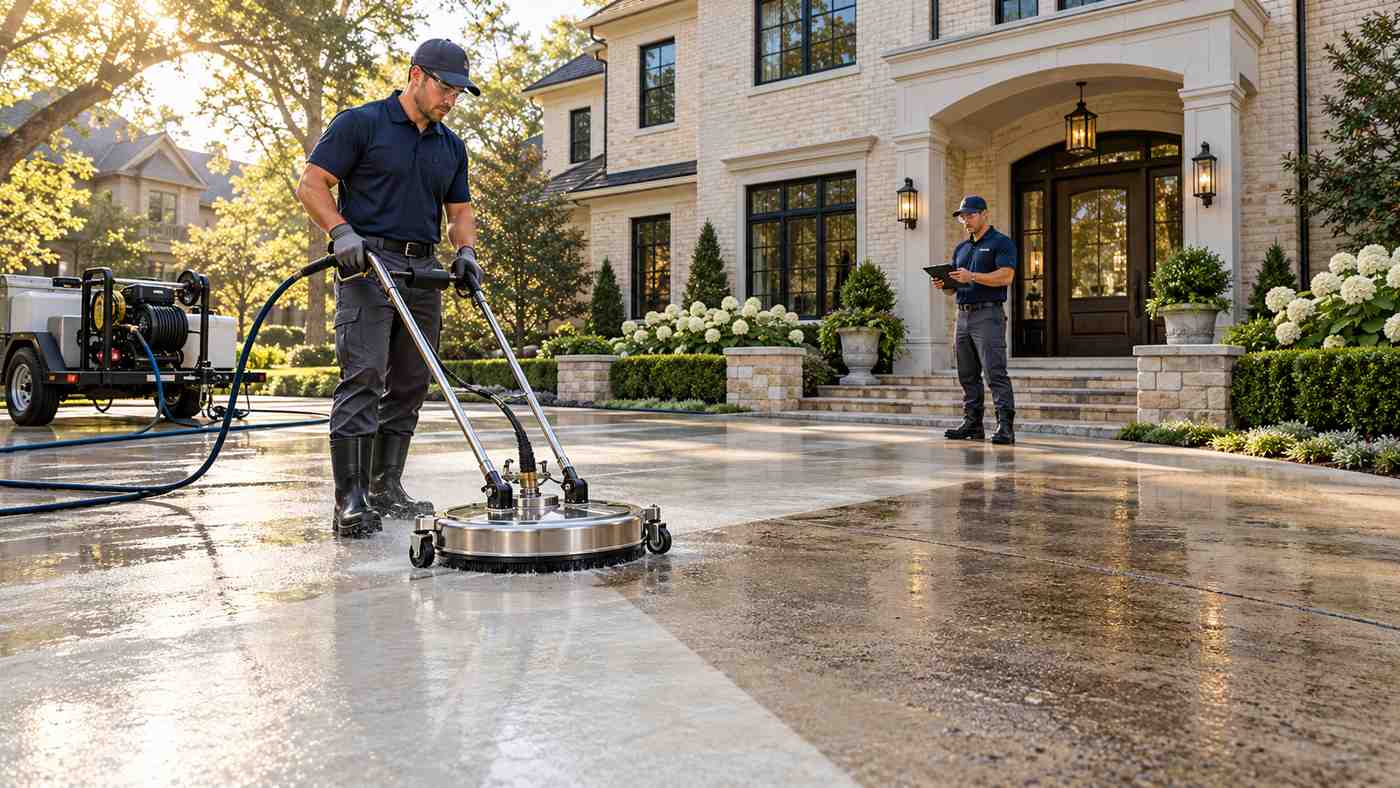
Pressure washing equipment can clean larger durable surfaces efficiently, particularly when the operator uses suitable accessories such as surface cleaners.
For example, driveway pressure washing can remove accumulated dirt across broad concrete areas more consistently than spot cleaning alone.
Professional technicians can also identify stains that require specialized treatment rather than simply increasing the water pressure.
The most efficient method is not necessarily the highest-pressure method. Proper equipment selection and technique are more important.
7. Helps Maintain a Professional Property Appearance
A clean exterior is valuable for both residential and commercial properties.
For businesses, tidy sidewalks, entrances, parking areas, and outdoor seating spaces can contribute to a positive customer experience.
For homeowners, clean exterior spaces create a more pleasant environment for everyday activities and gatherings.
Regular pressure washing may also help property owners identify maintenance concerns such as cracking, loose joints, or deteriorating coatings that were previously hidden under grime.
While cleaning cannot repair structural problems, it can make those issues easier to notice.
Which Surfaces Can Be Pressure Washed?
Not every exterior surface can withstand the same level of water pressure.
Choosing the right technique is essential to achieving effective cleaning without unnecessary damage.
Concrete Driveways and Sidewalks
Concrete is among the most common materials cleaned using pressure washing equipment.
Driveways and sidewalks frequently collect tire marks, mud, dirt, algae, and other deposits.
A suitable pressure setting and surface-cleaning attachment can help produce consistent results.
However, newly installed, weakened, decorative, or previously damaged concrete may require additional care.
Patios and Outdoor Living Spaces
Patios made from suitable concrete, stone, or pavers may benefit from periodic washing.
The correct cleaning approach depends on the material and installation.
Some natural stones are sensitive to high pressure or acidic cleaning products. Joint sand between pavers can also be displaced by aggressive washing.
A professional should assess the patio before selecting the technique.
Brick Walls and Walkways
Brick surfaces often accumulate dust, moss, and environmental staining.
Cleaning can improve their appearance, but high pressure may damage older bricks or weaken mortar joints.
Older masonry may require gentle cleaning methods and specialist assessment.
Decks and Wooden Fences
Wooden decks and fences can collect dirt, discoloration, and organic growth.
However, wood is particularly vulnerable to damage from concentrated pressure washer streams.
Excessive pressure may raise the wood grain, create grooves, or splinter the surface.
Low-pressure cleaning with compatible products is usually preferable.
House Siding and Exterior Walls
Many siding materials can be cleaned safely using appropriate low-pressure methods.
Vinyl, painted surfaces, stucco, and other exterior finishes require different approaches.
Directing high-pressure water toward window seals, electrical fixtures, ventilation openings, or siding joints can force moisture into unwanted areas.
This is why soft washing is often a better option for delicate building exteriors.
Pressure Washing vs. Soft Washing: Which Is Better?
Both methods are used for exterior property cleaning, but they serve different purposes.
When to Choose Pressure Washing
Pressure washing is generally suitable for durable surfaces that can tolerate controlled water pressure.
Common applications include concrete walkways, certain driveways, and appropriately assessed hardscape materials.
It is useful when physical water pressure is needed to loosen stubborn buildup.
When to Choose Soft Washing
Soft washing combines low-pressure water application with cleaning solutions selected for the surface and contaminant.
It is frequently used for siding and other delicate exterior materials.
The cleaning agents loosen or treat unwanted buildup, reducing the need for aggressive spraying.
Because some cleaning solutions can affect plants, finishes, and surrounding areas, they must be selected and handled carefully.
How Often Should You Pressure Wash Your Property?
There is no universal cleaning schedule for every home or commercial building.
The ideal frequency depends on weather, shade, landscaping, surface material, foot traffic, and the amount of dirt accumulating outdoors.
For many residential properties, inspecting exterior hard surfaces annually and cleaning them when needed is a practical starting point.
Properties in humid environments may require more frequent attention because moisture encourages algae and mildew growth.
Commercial areas with heavy pedestrian traffic or frequent spills may also need more regular cleaning.
Avoid unnecessary repeated high-pressure cleaning, which can accelerate wear on sensitive materials.
DIY vs. Professional Pressure Washing
Homeowners sometimes choose to rent or purchase pressure washing equipment for smaller cleaning projects.
However, professional services may be more suitable when the job involves delicate materials, extensive areas, difficult stains, or elevated surfaces.
Benefits of DIY Pressure Washing
DIY cleaning can be convenient for manageable jobs on appropriate surfaces.
It allows homeowners to work according to their schedules and address minor dirt buildup.
However, beginners need to understand equipment operation, pressure adjustment, safe nozzle distances, and water runoff management.
Pressure washers can cause severe injection injuries. Never direct a spray toward people or animals, and do not use ladders while operating a pressure washer.
Benefits of Hiring Professional Pressure Washing Services
Experienced exterior cleaning professionals understand how different surfaces respond to water pressure and cleaning agents.
They can select suitable equipment, identify potential damage risks, and use lower-pressure alternatives when necessary.
A qualified contractor should also follow appropriate electrical safety procedures and local wastewater disposal requirements.
For larger properties, professional services may reduce the time and equipment management required of the owner.
How to Choose the Right Pressure Washing Company
Selecting a reputable cleaning provider is important because incorrect techniques can result in costly surface damage.
Before hiring a company, consider its experience, insurance coverage, cleaning methods, and customer feedback.
Ask whether the contractor has experience with your particular exterior materials.
Check Experience and Equipment
A reliable professional should understand the difference between cleaning concrete, wood, stone, masonry, and siding.
The provider should be able to explain how the cleaning method will protect each material.
Ask About Insurance and Safety
Confirm that the company carries appropriate liability insurance and follows relevant safety requirements.
This is especially important when cleaning takes place near windows, electrical installations, landscaping, or occupied commercial areas.
Request a Clear Written Estimate
A written estimate should outline the surfaces to be cleaned, proposed cleaning methods, included services, and any limitations.
Ask about stain-removal expectations and whether certain discoloration may remain.
A professional contractor should avoid guaranteeing complete removal of every stain before examining the surface.
Common Pressure Washing Mistakes to Avoid
Even durable exterior materials can be damaged by incorrect cleaning techniques.
Common mistakes include using excessive water pressure, holding the nozzle too close, choosing an unsuitable cleaning solution, and spraying directly into vulnerable joints.
Another problem is using one pressure setting for every surface.
Certain stains, such as oil, rust, and deeply embedded discoloration, may require specialized cleaning products rather than stronger water pressure.
Improper runoff management can also create environmental concerns, particularly when wastewater contains detergents, grease, or other pollutants.
Always follow local requirements for collecting and disposing of contaminated wastewater.
Frequently Asked Questions
1. Is pressure washing safe for all exterior surfaces?
No. Pressure washing is suitable for many durable materials, but delicate siding, wood, older masonry, and certain stone surfaces may require low-pressure or alternative cleaning methods.
2. How often should I pressure wash my driveway?
Many driveways benefit from an annual inspection and cleaning when significant dirt or buildup is present. The ideal frequency depends on traffic, climate, staining, and surface condition.
3. Can pressure washing remove oil stains from concrete?
It can help remove some oil contamination, particularly when combined with suitable degreasers. Older or deeply absorbed stains may require specialized treatment and may not disappear completely.
4. Does pressure washing increase property value?
Pressure washing may improve curb appeal and contribute to a well-maintained appearance, but it does not guarantee a measurable increase in property value.
5. What is the difference between pressure washing and soft washing?
Pressure washing primarily relies on pressurized water to remove buildup. Soft washing uses lower water pressure and carefully selected cleaning solutions, making it more suitable for many sensitive surfaces.
6. Should I hire a professional for pressure washing?
Professional services are worth considering for large areas, delicate materials, difficult stains, and projects involving significant safety or property-damage risks.
Conclusion
Pressure washing is a valuable part of exterior property maintenance when performed using the correct equipment and techniques. It can improve curb appeal, remove stubborn dirt, reduce slippery buildup, and prepare suitable surfaces for renovation. Choosing an appropriate cleaning method for each material is essential to achieving lasting results without unnecessary damage. Whether you handle a small project yourself or hire an experienced professional, thoughtful exterior cleaning can help keep your property attractive, welcoming, and well maintained