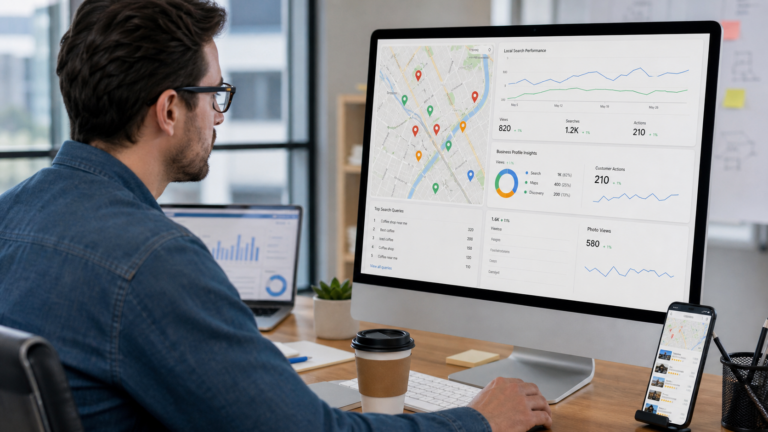
AI SEO Agency Strategies for Google, AI Search, and Sustainable Growth
An AI SEO agency helps businesses improve visibility across traditional search results and emerging AI powered discovery experiences by combining established search engine optimization with content strategy, technical SEO, entity clarity, digital authority, analytics, and Generative Engine Optimization. The role is not simply to produce large quantities of AI generated articles. Effective AI focused search optimization requires useful original information, technically accessible pages, clear topical relevance, trustworthy sourcing, strong user experience, and measurement across increasingly diverse search environments. Google states that foundational SEO best practices continue to apply to AI Overviews and AI Mode, while Microsoft now provides reporting that shows when publishers are cited across Bing and Copilot AI experiences.
Search behavior is evolving.
A potential customer may still type a short query into a traditional search box.
Another user may ask a complex question in an AI search interface.
Someone else may search using an image, voice, mobile camera, or conversational follow up.
Businesses therefore need a strategy that makes their information useful and discoverable across different search journeys.
The fundamentals remain surprisingly consistent.
Websites still need valuable content, reliable technical foundations, good internal linking, clear information architecture, real expertise, useful media, and a strong reputation.
AI search changes how those signals may be discovered and presented, but it does not eliminate the need for solid SEO.
What Is an AI SEO Agency?
An AI SEO agency is a search marketing company that combines conventional SEO expertise with strategies designed for AI assisted discovery and generative search experiences.
Services can include:
• Technical SEO
• Keyword and intent research
• Content strategy
• Generative Engine Optimization
• Entity optimization
• On page SEO
• Digital PR
• Internal linking
• Structured data
• Content audits
• Search performance analysis
• AI citation monitoring
• Image and video optimization
• Conversion focused SEO
• Competitive research
The exact service mix should depend on the client’s market, website, audience, business model, and growth goals.
How an AI SEO Agency Differs From a Traditional SEO Agency
A traditional SEO agency may focus heavily on:
• Organic rankings
• Clicks
• Backlinks
• Technical fixes
• Keyword positions
• Search traffic
An AI focused agency still cares about these metrics.
However, it may additionally monitor:
• Visibility in AI Overviews
• AI Mode appearances
• AI generated citations
• Brand mentions in AI answers
• Entity recognition
• Content referenced for complex questions
• Multimodal search visibility
• Generative search impressions
This wider perspective reflects how search has expanded beyond a single list of blue links.
Google introduced dedicated Generative AI performance reporting in Search Console in 2026, allowing eligible websites to review impressions, pages, countries, devices, and dates associated with generative AI features such as AI Overviews and AI Mode.
Why Businesses Are Looking for AI SEO Services
Search is becoming more conversational and contextual.
Users increasingly expect systems to interpret complex questions instead of matching only exact keywords.
For example, a buyer may search:
Best accounting software for a growing ecommerce company with international sales
That query contains several layers of intent.
A strong search strategy needs content capable of answering complex requirements clearly.
Businesses are therefore looking for agencies that understand:
• Traditional ranking systems
• Semantic search
• AI generated search experiences
• Entity relationships
• Search intent
• Topical authority
• Content quality
• Structured information
• Brand credibility
The objective is not to chase every new AI trend.
It is to create information that remains useful regardless of how the search interface changes.
7 Powerful Strategies an AI SEO Agency Should Use
A reliable agency should combine long established SEO principles with carefully selected AI search strategies.
1. AI SEO Agency Strategy Should Begin With Strong Technical SEO
AI search visibility still depends heavily on whether search engines can access, understand, and index the website.
Google states that pages shown as supporting links in AI Overviews or AI Mode must be indexed and eligible to appear in Google Search with a snippet. It does not require a separate technical system exclusively for AI search.
Technical work may include:
• Crawl analysis
• Indexation review
• Robots directives
• XML sitemaps
• Canonicalization
• Redirect management
• Internal linking
• JavaScript SEO
• Mobile usability
• Site speed
• Core Web Vitals
• Structured data validation
• Duplicate content control
A website with excellent content can still struggle if important pages cannot be crawled or indexed correctly.
AI SEO Agency Technical Audits Should Cover AI Accessibility
AI related visibility should not distract from core website accessibility.
Important content should exist in formats that search systems can process effectively.
Google’s guidance recommends ensuring that important information is available in textual form and that crawling is not accidentally blocked by robots rules, hosting infrastructure, or other technical restrictions.
This matters particularly for websites heavily dependent on JavaScript.
If essential content appears only after complicated client side interactions, technical implementation should be reviewed carefully.
2. Build Original, Non Commodity Content
Generic content is becoming less valuable.
If dozens of websites publish nearly identical summaries, there is little reason for users or AI systems to prefer one source.
Google’s 2026 guidance for generative AI search specifically emphasizes unique, useful, non commodity content with real perspective and expertise. It recommends adding value that goes beyond simply restating information already available elsewhere.
Strong content may include:
• Original research
• First hand experience
• Expert interviews
• Case studies
• Proprietary data
• Detailed comparisons
• Practical frameworks
• Product testing
• Industry insights
• Real examples
• Unique images
• Demonstrated expertise
An AI SEO agency should ask what information the business can contribute that competitors cannot easily reproduce.
3. Optimize for Search Intent Instead of Keyword Repetition
Exact keyword repetition is not a sustainable search strategy.
Modern search systems can understand synonyms, context, related concepts, and broader meaning.
Google explicitly says websites do not need to create separate content for every possible query variation or rewrite material only for AI systems.
A stronger approach begins with intent.
Search intent commonly includes:
• Informational
• Navigational
• Commercial research
• Transactional
A page should satisfy the purpose behind the query.
For example, someone searching for:
AI SEO agency pricing
probably wants information about cost, packages, or service models.
Someone searching:
What does an AI SEO agency do
has informational intent.
These queries may require different page structures.
4. Improve Entity and Brand Clarity
Search engines need to understand who a business is, what it offers, and how it relates to other entities.
Entity optimization may include:
• Consistent business naming
• Detailed About pages
• Expert author profiles
• Clear service descriptions
• Organisation structured data
• Accurate business profiles
• Consistent contact information
• Author credentials
• Relevant external mentions
• Strong topical relationships
This does not mean creating artificial mentions everywhere.
Google specifically warns against chasing inauthentic mentions simply to influence generative search systems.
Authentic recognition is more valuable.
Businesses should focus on earning visibility through useful work, expert commentary, partnerships, digital PR, customer experience, and credible publications.
5. Combine SEO With GEO
Generative Engine Optimization, commonly called GEO, focuses on making information useful and discoverable within generative AI search experiences.
However, GEO should not be treated as a replacement for SEO.
Google explicitly states that from its perspective, optimizing for generative AI search remains part of search optimization because AI features rely on core Search ranking and quality systems.
A strong GEO strategy may include:
• Clear answers
• Logical headings
• Useful definitions
• Original evidence
• Strong sourcing
• Expert commentary
• Comprehensive topic coverage
• Entity clarity
• Good internal linking
• Relevant supporting media
The goal is to make content easy to retrieve, interpret, and confidently reference.
6. Measure AI Search Visibility Properly
Traditional SEO reporting often focuses on:
• Rankings
• Clicks
• Impressions
• Organic traffic
• Conversions
AI search introduces additional visibility signals.
Microsoft launched AI Performance reporting in Bing Webmaster Tools in 2026, giving publishers information about how their content is cited across Microsoft Copilot, AI generated Bing summaries, and selected partner experiences.
Google also expanded Search Console with dedicated generative AI reporting in 2026.
An AI SEO agency can therefore monitor:
• AI search impressions
• Cited URLs
• Visibility changes
• Country performance
• Device performance
• Content themes that receive citations
These insights can help identify which content formats work effectively.
7. Connect Search Visibility With Business Results
Visibility alone is not the final objective.
Businesses need outcomes.
Depending on the website, meaningful conversions may include:
• Sales
• Qualified leads
• Demo requests
• Appointments
• Signups
• Calls
• Quote requests
• Downloads
• Subscriptions
An agency should connect organic and AI search visibility with conversion performance.
A page that receives thousands of impressions but produces no useful engagement may require improvement.
AI SEO Agency and Generative Engine Optimization
GEO has become a popular term as businesses adapt to AI search.
Some marketers present GEO as completely different from SEO.
That distinction can be exaggerated.
Google’s own guidance says established SEO best practices remain foundational for generative AI features.
This means businesses should avoid abandoning proven principles simply because AI interfaces have become more visible.
What GEO Should Focus On
A practical GEO program can improve:
• Content usefulness
• Factual precision
• Topic coverage
• Source quality
• Expert credibility
• Entity clarity
• Multimedia support
• Structured information
• Direct answers
• Original insights
The strategy should help people first.
Content created only to manipulate AI citations is unlikely to provide sustainable value.
AI SEO Agency Content Strategy
Content remains central to both traditional and AI driven search.
A strong agency should develop a content system rather than publishing random articles.
Build Topic Clusters
A topic cluster connects a primary subject with supporting pages.
For example, a cybersecurity company might create a central guide about cloud security supported by content on:
• Identity management
• Zero trust
• Cloud misconfiguration
• Encryption
• Incident response
• Compliance
These pages can link naturally to one another.
This helps users explore the subject and gives search engines clearer topical context.
Answer Complex Questions
AI search often supports longer, more detailed questions.
Businesses can create content addressing real customer concerns.
Sources for these questions include:
• Sales calls
• Customer support
• Search Console
• Internal site search
• Product reviews
• Community discussions
• Customer interviews
Real customer questions are usually more useful than mass generated keyword variations.
Keep Content Updated
Some topics change quickly.
Examples include:
• Software
• AI
• Tax
• Finance
• Regulation
• Technology
• Pricing
• Healthcare
Old content should be reviewed when information becomes outdated.
However, simply changing the publication date without meaningful updates does not make content better.
Google specifically discourages manipulating freshness dates without substantive changes.
AI Generated Content and SEO
AI can improve content workflows.
It can support:
• Research organisation
• Content outlines
• Topic discovery
• Editing
• Summaries
• Data categorisation
• Draft support
• Content refreshing
However, unrestricted automated publishing creates quality risks.
Google says generative AI can be useful for research and structure, but producing many pages without meaningful user value may violate its scaled content abuse policy.
Human Review Remains Important
AI output can contain:
• Factual errors
• Invented claims
• Weak examples
• Outdated information
• Repetition
• Missing context
• Incorrect citations
Every important page should receive editorial review.
This is especially important for:
• Healthcare
• Finance
• Law
• Safety
• Product specifications
• Technical guidance
An AI SEO agency should use automation to increase efficiency without lowering factual standards.
AI SEO Agency and E E A T
Experience, expertise, authoritativeness, and trustworthiness are important quality concepts when evaluating content.
Useful signals can include:
• Experienced authors
• Expert reviewers
• Clear sources
• About pages
• Contact details
• Transparent business ownership
• Real case studies
• Accurate claims
• Editorial policies
• Original evidence
Google’s people first content guidance encourages publishers to make expertise, sourcing, and author background clear when those details help readers evaluate trust.
An agency should therefore improve not only page text but also the trust framework surrounding the content.
Technical SEO for AI Search
Technical SEO remains foundational.
Google’s AI optimization guidance recommends maintaining crawlability, good page experience, duplicate content control, and proper JavaScript implementation.
Internal Linking
Internal links help users and search engines discover related pages.
Important commercial pages should not become isolated.
Links should connect:
• Articles to services
• Services to case studies
• Product pages to guides
• Guides to related topics
• Categories to products
Use descriptive anchors naturally.
Structured Data
Structured data can help search engines understand information and enable certain enhanced search experiences.
However, Google states there is no special schema markup required specifically for AI Overviews or AI Mode.
Structured data should accurately match visible page content.
LLMS.txt
Some AI SEO discussions promote LLMS.txt as essential for Google AI visibility.
Google clarified in 2026 that it does not use LLMS.txt for Search rankings or visibility. Maintaining one for other systems is acceptable, but it does not improve or damage Google Search visibility.
This is an important example of why agencies should verify AI SEO claims against primary sources.
AI SEO Agency and Multimodal Search
Search is increasingly visual.
People can search using:
• Images
• Screenshots
• Mobile cameras
• Text
• Voice
Google expanded Search Console reporting in September 2026 to provide web multimodal search data associated with experiences such as Lens, Circle to Search, uploaded images, and Chrome image search.
Businesses with visually important products or services should therefore consider:
• High quality images
• Descriptive alt text
• Relevant captions
• Image metadata
• Helpful video
• Fast media delivery
• Clear product photography
Visual search can be particularly relevant to ecommerce, travel, food, fashion, home improvement, and local businesses.
Link Building in an AI Search Environment
Links remain useful for discovery, authority, and referral traffic.
However, effective link acquisition should focus on relevance and credibility.
Strong approaches include:
• Digital PR
• Original research
• Expert commentary
• Industry studies
• Useful tools
• Data resources
• Strategic partnerships
• High quality editorial contributions
Avoid large scale low quality links designed only to manipulate rankings.
Authentic citations are more useful for building long term authority.
AI SEO Agency for Ecommerce
Ecommerce SEO requires additional specialization.
An agency may optimize:
• Product pages
• Category pages
• Merchant information
• Product structured data
• Images
• Reviews
• Faceted navigation
• Internal links
• Product feeds
• Buying guides
AI search can create new opportunities for detailed product comparisons and recommendation queries.
Product information should remain complete and accurate.
Businesses should never use AI to invent product benefits or specifications.
AI SEO Agency for Local Businesses
Local businesses need strong geographic signals.
These may include:
• Accurate Business Profile details
• Location pages
• Reviews
• Local citations
• Service area information
• Opening hours
• Contact information
• Local expertise
Businesses should keep these details consistent.
Google’s AI search guidance specifically recommends maintaining accurate Business Profile information where relevant.
How to Choose an AI SEO Agency
Businesses should evaluate agencies carefully.
Ask:
• How do you define AI SEO?
• How do you approach GEO?
• Which technical SEO audits do you perform?
• How do you measure AI search visibility?
• How do you create original content?
• How do you verify facts?
• How do you use AI in your workflow?
• How do you measure conversions?
• How do you build links?
• How do you handle Search Console?
• How do you avoid spam risks?
The agency should be able to explain its approach clearly.
Avoid Guaranteed AI Rankings
No agency can guarantee a particular position in Google Search, AI Overviews, AI Mode, or another generative search system.
Search outputs vary according to:
• Query
• User context
• Available sources
• Search systems
• Location
• Freshness
• Competition
• Algorithm changes
Be cautious when an agency promises guaranteed citations or guaranteed number one rankings.
Common AI SEO Agency Mistakes
Publishing Thousands of AI Articles
Scale without value can create low quality content.
Ignoring Technical SEO
AI search still depends on discoverable and indexable content.
Chasing Every GEO Hack
Many tactics are promoted without reliable evidence.
Using Fake Brand Mentions
Artificial mentions can damage credibility.
Ignoring Conversion Performance
Visibility has limited business value when visitors never become customers.
Depending Entirely on Third Party Metrics
Third party tools can be helpful, but Google warns that external tools do not have access to its internal ranking or AI systems.
Writing Only for AI Systems
Content should primarily serve users.
Search systems continue to reward helpful, reliable, people first information.
Measuring AI SEO Success
A modern reporting framework should combine traditional and emerging metrics.
Useful measurements include:
• Organic clicks
• Search impressions
• Search rankings
• Organic conversions
• Revenue
• Leads
• AI feature impressions
• AI citations
• Referenced pages
• Brand search growth
• Indexed pages
• Technical health
• Backlink quality
• Engagement
The correct metrics depend on the business.
An ecommerce website may prioritise organic revenue.
A professional services company may prioritise qualified enquiries.
A publisher may prioritise visibility and subscriptions.
Future of AI SEO Agencies
AI will continue changing how people discover information.
Search may become increasingly:
• Conversational
• Multimodal
• Personalized
• Agentic
• Task oriented
Google’s 2026 guidance has already begun discussing browser agents and emerging systems capable of interacting with websites on behalf of users.
This means future websites may need to serve both people and automated agents effectively.
However, the safest long term strategy remains familiar.
Create useful information.
Make it technically accessible.
Build genuine authority.
Provide a good user experience.
Measure actual outcomes.
Those principles are likely to remain valuable even as search interfaces evolve.
Frequently Asked Questions
What is an AI SEO agency?
An AI SEO agency combines traditional search optimization with GEO, AI search monitoring, content strategy, technical SEO, entity clarity, authority building, and analytics.
Can an AI SEO agency improve visibility in AI Overviews?
It can improve the foundations that support search visibility, but no agency can guarantee placement. Google states that standard SEO best practices remain relevant for AI Overviews and AI Mode.
Is GEO different from SEO?
GEO focuses on generative search visibility, but Google says optimizing for generative AI Search is still fundamentally SEO because its AI features rely on core Search systems.
Does an AI SEO agency need LLMS.txt for Google?
No. Google states that LLMS.txt does not affect visibility or rankings in Google Search, although businesses may maintain it for other services that use the file.
Is AI generated content safe for SEO?
AI assisted content can be useful when it is accurate, original, reviewed, and valuable. Mass producing low value pages primarily for rankings may violate Google’s spam policies.
How can an AI SEO agency measure AI search visibility?
Agencies can use tools such as Google’s Generative AI performance reporting in Search Console and Microsoft’s AI Performance reporting in Bing Webmaster Tools alongside traditional analytics.
Conclusion
An AI SEO agency should combine proven SEO foundations with modern GEO, AI visibility monitoring, strong technical infrastructure, original content, entity clarity, digital authority, and conversion measurement. Businesses do not need to abandon traditional SEO to compete in AI driven search because major search platforms continue to rely heavily on established search quality and indexing systems. The strongest strategy is to create trustworthy, distinctive information that serves real users while remaining easy for search and AI systems to discover and understand. As AI search continues evolving, agencies that prioritize evidence, quality, and measurable business outcomes will be better positioned for sustainable growth.