Gym Shirts Guide: How to Choose the Right Fit, Fabric and Style for Every Workout
The right gym shirts can make training more comfortable by helping manage sweat, reducing unnecessary bulk and allowing movement appropriate to the activity. While workout tops may look relatively simple, fabric construction, fit, seams, ventilation, stretch and care requirements can substantially affect how they feel during exercise. Understanding these characteristics makes it easier to choose workout clothing based on performance and comfort rather than branding or appearance alone.
What Are Gym Shirts and Why Does Your Choice Matter?
Gym shirts are tops designed or selected for physical activity. They range from lightweight synthetic performance tees and sleeveless tops to natural fibre shirts and more substantial training garments.
The best option depends on the activity.
Someone completing a high intensity cardio session may prioritize lightweight fabric and sweat management, while a strength athlete may care more about unrestricted shoulder movement and whether the material catches against equipment.
Outdoor training introduces additional considerations, including temperature, wind, sun exposure and layering.
No shirt will improve fitness by itself. Appropriate clothing can, however, remove sources of discomfort that might otherwise distract from training.
9 Important Features to Look for in Gym Shirts
Marketing terms such as performance, technical and athletic are used widely. Looking at specific product characteristics gives shoppers a better way to compare exercise shirts.
1. Breathable Fabric Construction
Breathability describes a fabric’s ability to allow heat and moisture vapour to pass through it.
During exercise, the body produces heat. Clothing that supports ventilation and moisture movement can feel more comfortable than heavy material that retains warmth and moisture.
Fabric composition is only part of the picture. Knit structure, thickness, ventilation panels and overall garment construction can also influence breathability.
2. Effective Sweat Management
Many synthetic workout fabrics are designed to move moisture away from the skin toward the outer surface of the garment, where it can spread and evaporate.
This is commonly described as moisture wicking.
Wicking does not mean a shirt will remain completely dry during intense activity. Sweat production, environmental humidity, temperature and training intensity all affect how quickly moisture can evaporate.
3. Comfortable Range of Motion
Exercise often involves repeated movement at the shoulders, chest and torso.
A shirt that feels comfortable while standing can become restrictive during overhead presses, pull ups, rowing movements or dynamic exercise.
Look at the cut around the shoulders and arms and consider whether the fabric stretches sufficiently for the intended activity.
Gym Shirts for Unrestricted Training
Strength and functional training can involve movements in multiple directions. A suitable shirt should allow these movements without repeatedly riding up, pulling across the shoulders or requiring adjustment.
Try performing a few basic movements when testing a shirt:
• Raise both arms overhead
• Reach across the body
• Rotate the torso
• Bend forward
• Perform a squat
• Mimic a pulling movement
These simple checks can reveal fit problems before the shirt reaches an actual workout.
4. Appropriate Fit
Workout shirts generally fall into fitted, regular and relaxed silhouettes, although terminology differs between brands.
A close fit can reduce loose fabric around equipment and make layering easier. A relaxed shirt can provide more airflow and may be preferred by people who dislike clothing sitting close to the body.
Neither fit is universally better.
The correct choice should provide enough room for natural movement without creating unwanted excess material.
5. Reduced Irritation During Movement
Repeated movement combined with moisture can make certain seams or fabric surfaces uncomfortable.
Flat or strategically positioned seams may reduce friction in areas that experience repeated contact. Some manufacturers also move shoulder seams away from locations affected by backpack straps or training movements.
Individual sensitivity differs, so athletes prone to chafing should pay particular attention to garment construction.
6. Suitable Stretch
Stretch can improve mobility in workout clothing, particularly during movements involving substantial shoulder or torso range.
Some fabrics achieve stretch through their knitted construction, while others incorporate elastane or similar fibres.
More stretch is not always better.
The garment still needs enough structure to retain its intended shape during repeated wear and laundering.
7. Lightweight Construction
A lightweight exercise shirt can feel less cumbersome during warm or intensive training.
However, fabric weight should not be evaluated independently of durability, opacity and intended use.
Very lightweight materials may suit running and cardio particularly well, while some lifters prefer slightly more substantial shirts that feel durable around barbells, benches and other equipment.
8. Practical Durability
Workout clothing experiences repeated stretching, sweating and laundering.
Durability therefore matters, especially for shirts worn several times each week.
Examine stitching, fabric quality and collar construction. If buying online, detailed material information and consistent customer feedback can provide additional context.
High price does not automatically mean greater durability, so product specifications remain important.
9. Easy Care
A shirt that requires complicated cleaning may be inconvenient for regular training.
Most workout wardrobes benefit from garments that can withstand frequent appropriate washing and drying procedures.
Always check the care label because heat, bleach, fabric softeners and machine drying can affect different performance fabrics in different ways.
Best Fabrics for Gym Shirts
There is no single best workout fabric for every person or activity. Each material has advantages and tradeoffs involving moisture, drying speed, softness, odour retention, stretch and durability.
Polyester Workout Shirts
Polyester is widely used in sportswear because it can be lightweight, durable and relatively quick drying.
Manufacturers can engineer polyester fabrics using different knits and finishes to influence stretch, ventilation and moisture movement.
Polyester garments can vary dramatically in feel and performance. Fibre name alone does not indicate overall quality.
Nylon Training Shirts
Nylon is another synthetic fibre commonly found in activewear.
Depending on construction, nylon fabrics can offer smoothness, durability and stretch. It is frequently blended with other fibres to achieve particular performance characteristics.
As with polyester, the finished textile matters more than the fibre label by itself.
Cotton Gym Shirts
Cotton is soft and familiar, making it comfortable for many people during light training.
However, cotton readily absorbs moisture and can remain wet longer than many synthetic performance materials. During intense exercise, a saturated cotton shirt can become heavier and feel less comfortable.
Cotton may still work well for lower intensity sessions or people who simply prefer its texture.
Merino Wool Workout Tops
Fine merino wool appears in some performance clothing, particularly for outdoor activities and temperature regulation.
Merino can manage moisture and may resist odour buildup differently from many synthetic fabrics. It can also require more careful washing and often costs more than basic polyester or cotton.
Product specific care instructions are especially important.
Choosing Gym Shirts by Fabric Blend
Blended fabrics can combine useful characteristics from different fibres.
A polyester and elastane blend, for example, may combine moisture management with additional stretch. Cotton blended with a synthetic fibre may dry differently from a 100 percent cotton garment.
Rather than choosing based solely on percentages, consider fabric weight, construction, fit and intended training environment.
Gym Shirts for Different Types of Workouts
Workout clothing should support the activity being performed. A top designed for outdoor running does not necessarily need the same characteristics as a shirt used primarily for weight training.
Gym Shirts for Weight Training
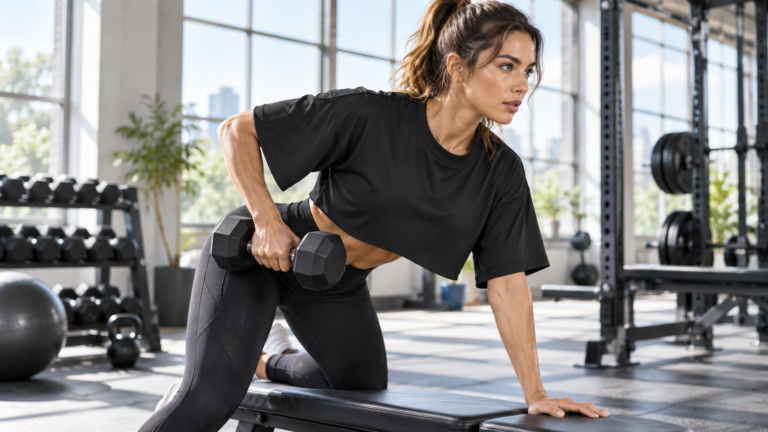
Strength training involves extensive shoulder and arm movement.
Choose a shirt that does not restrict pressing, pulling or lifting movements. Excess fabric may also become inconvenient around benches or certain equipment.
Durability deserves attention when shirts regularly come into contact with textured benches, bars or other surfaces.
Shirts for Cardio and HIIT
High intensity interval training and cardio sessions can generate substantial heat and sweat.
Lightweight construction, ventilation and efficient moisture movement may therefore be particularly valuable.
Fit should permit unrestricted movement during activities such as cycling, rowing, treadmill exercise or bodyweight intervals.
Gym Shirts for Running
Running places repeated movement demands on clothing.
Many runners favor lightweight shirts with smooth seams and moisture managing fabric. Outdoor runners may also consider visibility, weather conditions and sun protection.
If a garment advertises an ultraviolet protection factor, check the manufacturer’s stated rating rather than assuming all shirts provide equivalent protection.
Gym Shirts for Yoga and Mobility Work
Mobility focused sessions can involve deep bends, twists and overhead positions.
A shirt should remain comfortable through these movements without repeatedly shifting or restricting the torso.
Some people prefer fitted tops that stay in place, while others favor relaxed, stretchable designs. Personal preference plays a significant role.
How Should Gym Shirts Fit?
Fit can affect both comfort and confidence during training.
The shoulder seams, where applicable, should generally sit in a position appropriate to the shirt’s intended cut. The torso should provide enough room to move without excessive pulling.
Sleeves should also permit arm movement without digging into the upper arm.
Fitted vs Relaxed Workout Shirts
Fitted shirts follow the body’s shape more closely.
They can work well underneath additional layers and reduce loose fabric. Athletes who prefer more space around the torso may instead choose regular or relaxed cuts.
Relaxed does not need to mean oversized.
Excessively large shirts can shift substantially during dynamic movements and may become inconvenient around certain training equipment.
Choosing the Correct Size
Do not assume your normal size is identical across every sportswear brand.
Review the brand’s current size chart and compare measurements where available.
For online purchases, check whether the measurements describe the body or the actual garment. The distinction can materially affect size selection.
Testing Gym Shirts for Proper Fit
A fitting room test should involve movement rather than simply looking in a mirror.
Raise your arms, reach forward, bend and rotate.
If the shirt continually pulls, exposes areas you would prefer covered, restricts the shoulders or bunches excessively, a different size or cut may be more appropriate.
Gym Shirts for Men and Women
Workout clothing is commonly marketed through men’s and women’s collections, but practical performance requirements overlap considerably.
Both benefit from suitable fabric, comfortable seams, mobility, durability and moisture management.
Differences usually appear in garment proportions and styling.
Men’s Gym Shirts
Men’s training shirts are available in compression, athletic, regular, relaxed and oversized cuts.
Shoulder width, sleeve design and torso length can vary considerably even within the same labelled size.
Choose based on individual measurements and activity rather than relying only on the category printed on the label.
Women’s Gym Shirts
Women’s workout tops include fitted tees, relaxed shirts, crop styles, tanks and other silhouettes.
As with any training clothing, movement should remain the priority.
A design suitable for one exercise may be less convenient for another, particularly where equipment or substantial body movement is involved.
Moisture Wicking Gym Shirts Explained
Moisture wicking is one of the most common phrases in sportswear marketing.
The concept involves moving liquid moisture across or through fabric so it can spread over a larger surface area and evaporate more efficiently.
Performance depends on textile engineering as well as environmental conditions.
Does Moisture Wicking Keep You Dry?
Not necessarily.
During intense exercise, sweat production may exceed the rate at which moisture can evaporate. High humidity can further slow evaporation.
A moisture managing shirt can therefore improve how sweat behaves without guaranteeing completely dry skin or clothing.
Breathable vs Moisture Wicking
Breathability and moisture wicking are related but different concepts.
Breathability concerns movement of heat and water vapour, while wicking generally describes movement of liquid moisture through or across fabric.
A good training garment may be designed to provide both characteristics.
Why Gym Shirts Still Feel Wet
Even technical shirts can become saturated under demanding conditions.
Training intensity, sweat rate, humidity, fabric thickness and ventilation all affect drying.
This does not necessarily indicate a defective shirt. Expectations should reflect the conditions in which the garment is used.
How to Choose Gym Shirts for Hot Weather
Warm conditions increase the importance of heat management.
Lightweight, breathable fabrics can make outdoor and non climate controlled workouts more comfortable.
Loose or strategically ventilated construction may increase airflow for some activities.
Color can also influence heat absorption in sunlight, although fabric construction and environmental conditions remain important.
For outdoor exercise, clothing is only one component of heat safety. Hydration, training intensity, shade, acclimatisation and appropriate timing can also matter.
Gym Shirts for Cold Weather Training
Cold weather often requires layering rather than one heavy workout shirt.
A base layer can help manage moisture close to the body, while additional layers provide insulation and weather protection as conditions require.
Wet clothing can become uncomfortable quickly in cold environments.
Outdoor athletes should therefore consider drying performance along with temperature, wind and precipitation when planning clothing.
Odour Control in Gym Shirts
Exercise clothing can develop persistent odours as sweat, skin oils and microorganisms interact with fabric.
Some manufacturers use fabric treatments or specific fibres intended to manage odour. Performance and durability of these technologies vary.
Good laundering practices remain important regardless of fabric claims.
Remove damp clothing from a gym bag promptly rather than leaving it compressed for long periods.
How to Wash Gym Shirts Properly
Always begin with the garment’s care label.
Where compatible with the manufacturer’s instructions, washing workout clothing soon after use can help prevent buildup of sweat and oils.
Do not automatically add extra detergent. Excess detergent can leave residue when it is not properly rinsed.
Making Gym Shirts Last Longer
Appropriate care can help preserve fit and fabric performance.
Consider these practices when supported by the care label:
• Wash at the recommended temperature
• Separate items when required
• Avoid excessive detergent
• Use only compatible laundry products
• Dry according to label instructions
• Avoid storing shirts while damp
• Repair small damage before it spreads
Manufacturers’ instructions should take priority because fabric treatments and blends differ.
Sustainable Considerations When Buying Gym Shirts
Environmental impact is increasingly relevant to sportswear purchasing decisions.
Potential considerations include fibre source, recycled content, manufacturing processes, garment durability, packaging and how frequently clothing needs replacement.
No single sustainability claim tells the complete story.
A recycled fibre garment can still differ in quality and manufacturing impact from another product using the same broad fibre category.
Buying fewer shirts that meet your needs and caring for them properly can also reduce unnecessary replacement.
How Many Gym Shirts Do You Need?
There is no ideal number for every athlete.
Consider how often you train and how frequently you do laundry.
Someone exercising twice per week requires a different rotation from someone training daily.
Keeping enough clean workout clothing available can reduce the temptation to repeatedly wear damp garments, but purchasing a large wardrobe that receives little use provides limited practical benefit.
Prioritize versatile shirts that suit the activities you perform most often.
What to Look for When Buying Gym Shirts Online
Online shopping makes product comparison convenient but prevents buyers from feeling fabric and testing movement before purchasing.
Read specifications carefully.
Look for fabric composition, fit description, garment measurements, washing instructions and close photographs showing seams and construction.
Customer reviews can provide useful information about recurring sizing or durability issues, although individual experiences vary.
Price vs Quality
Expensive gym clothing is not automatically better.
Branding, design, production, materials and marketing can all influence price.
Likewise, the cheapest shirt is not necessarily the best value if it loses shape or becomes uncomfortable quickly.
Judge products on useful specifications and how well they meet your training requirements.
Check Return Policies Before Ordering
Sizing can differ considerably between manufacturers.
Review return periods, condition requirements and potential return shipping costs before purchasing, particularly when ordering an unfamiliar brand.
This is especially useful when buying several sizes to compare.
Common Gym Shirt Buying Mistakes
One common mistake is choosing a shirt solely because of its appearance.
An attractive design may still retain too much moisture, restrict shoulder movement or fit poorly for a particular exercise.
Other mistakes include:
• Ignoring fabric composition
• Assuming every performance fabric is identical
• Choosing the wrong fit for the activity
• Forgetting to check care requirements
• Buying exclusively by brand reputation
• Assuming a higher price guarantees quality
• Ignoring recurring comments about sizing
• Using ordinary size expectations instead of a brand’s chart
Function, comfort and durability should support style rather than compete with it.
Frequently Asked Questions
What are the best gym shirts for working out?
The best gym shirts offer suitable breathability, moisture management, movement and fit for your activity. The ideal fabric and design depend on training conditions and personal preference.
Are cotton gym shirts good for workouts?
Cotton can be comfortable for lighter training but absorbs significant moisture and may remain wet during intense sessions. Quick drying fabrics may be preferable for heavy sweating.
What fabric is best for gym shirts?
Polyester, nylon, blended synthetics, cotton and merino wool all have different advantages. Choose based on sweat management, comfort, activity, weather and care requirements.
Should gym shirts be tight or loose?
Neither is universally better. A gym shirt should allow unrestricted movement without creating unwanted bulk or repeatedly shifting during your chosen exercises.
How often should gym shirts be washed?
Workout shirts are generally best washed after sweaty use according to their care labels. Avoid leaving damp clothing stored in a closed gym bag for extended periods.
How can I make gym shirts last longer?
Follow the care label, use appropriate washing products and temperatures, avoid unnecessary heat, store shirts dry and address small areas of damage before they become larger.
Conclusion
Gym shirts work best when their fabric, fit and construction match the type of exercise you perform. Breathability, moisture management, freedom of movement, durability and straightforward care are generally more useful buying criteria than branding alone. By comparing materials, sizing and intended use carefully, you can build a workout wardrobe that remains comfortable across regular training sessions.