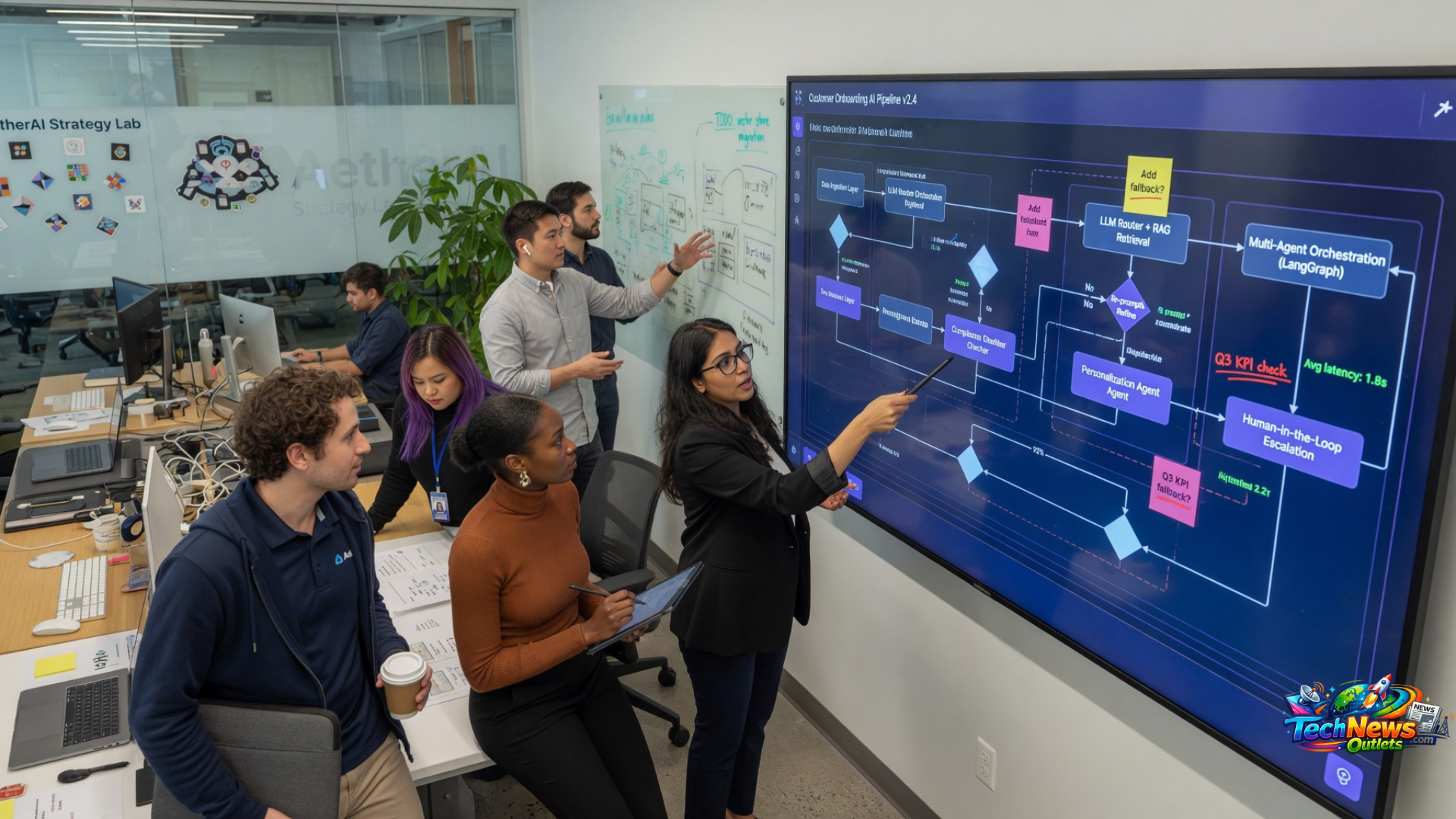
Integrate AI Solutions: Transforming Enterprise Workflows and Automation
Businesses today face immense pressure to modernize their digital infrastructure. Consequently, leaders constantly seek ways to enhance operational efficiency and maintain competitiveness. To achieve this, organizations integrate AI Solutions into their existing technical frameworks. Furthermore, this strategic integration automates routine tasks and unlocks predictive insights. Therefore, companies leveraging artificial intelligence scale faster and respond to market shifts more effectively. By adopting these technologies, enterprises transition from reactive problem-solving to proactive innovation. Thus, intelligent automation becomes a core driver of long-term business value.
The Strategic Drive to integrate AI Solutions
Adopting artificial intelligence requires more than just purchasing new software. It demands a fundamental shift in how organizations approach problem-solving. Therefore, executives must align AI initiatives with broad business objectives. They cannot treat machine learning as a disconnected IT experiment. Furthermore, successful adoption requires cross-functional collaboration between data scientists and operational teams. Consequently, companies that plan strategically avoid wasting resources on misaligned technology. Thus, clear goals dictate the success of the entire integration process.
Evaluating Business Readiness for AI Adoption
Before deploying machine learning models, organizations must assess their technical maturity. Legacy systems often lack the processing power required for real-time analytics. Therefore, IT teams must audit existing server infrastructure and cloud capabilities. Additionally, they need to evaluate staff readiness and digital literacy. If employees resist new technology, even the best algorithms will fail. Consequently, change management becomes a critical component of business readiness. Thus, evaluating both technical and human factors ensures a smooth transition.
How to integrate AI Solutions into Legacy Systems
Ripping out and replacing entire legacy systems costs too much time and money. Instead, companies prefer a phased integration approach. They build bridges between old databases and new AI platforms. Therefore, middleware acts as a translator between modern APIs and outdated protocols. Furthermore, this strategy preserves existing data while enabling new intelligent features. Consequently, businesses modernize gradually without halting daily operations. Thus, middleware provides a pragmatic path to digital transformation.
API Gateways and Middleware Architecture
Application programming interfaces serve as the connective tissue for modern software. When organizations integrate AI solutions, they rely heavily on API gateways. These gateways route requests between the user interface, the legacy database, and the AI model. Therefore, developers can update the AI logic without disrupting the frontend experience. Additionally, APIs enforce strict security and rate-limiting protocols. Consequently, the architecture remains stable even during high-traffic events. Thus, robust API management enables scalable and secure AI deployments.
Data Infrastructure Required to integrate AI Solutions
Artificial intelligence relies entirely on data. Without high-quality data, machine learning models produce inaccurate and biased results. Therefore, organizations must overhaul their data infrastructure before deploying AI. Data often sits siloed across different departments and incompatible databases. Furthermore, IT teams must break down these silos to create centralized data lakes. Consequently, algorithms can access a unified view of the business. Thus, a solid data foundation enables reliable predictive analytics.
Ensuring Data Quality and Accessibility
Garbage in, garbage out remains the golden rule of computer science. If a company feeds messy data into an AI model, the output will harm the business. Therefore, data engineers must implement strict data cleansing pipelines. They remove duplicates, standardize formats, and handle missing values. Additionally, they must ensure data accessibility for the algorithms while maintaining strict privacy controls. Consequently, clean and accessible data maximizes the accuracy of machine learning predictions. Thus, data governance directly impacts the success of AI initiatives.
Overcoming Challenges When You integrate AI Solutions
Integrating advanced technology introduces significant operational hurdles. Companies often underestimate the complexity of deploying machine learning models into production. Therefore, they must anticipate these challenges and plan mitigation strategies. One major hurdle involves the computational cost of running large models. Furthermore, finding qualified talent to build and maintain these systems proves difficult. Consequently, organizations often partner with specialized third-party vendors to bridge the skills gap. Thus, proactive planning prevents costly project delays.
Addressing Security and Compliance Risks
Feeding sensitive customer data into AI models creates severe security vulnerabilities. Hackers actively target machine learning pipelines to steal proprietary information. Therefore, security teams must encrypt data both in transit and at rest. Additionally, companies must comply with strict data privacy regulations like GDPR. AI models often act as black boxes, making audit trails difficult. Consequently, organizations must implement explainable AI frameworks to maintain regulatory compliance. Thus, embedding security early in the pipeline protects both the business and its customers.
Measuring ROI After You integrate AI Solutions
Executives demand proof that their technology investments yield tangible returns. Therefore, tracking the return on investment for AI projects is essential. Unlike traditional software, AI models improve over time. This makes initial ROI calculations complex. However, companies can measure specific metrics like reduced operational costs or increased sales conversions. Furthermore, they can track the time saved by automating manual processes. Consequently, quantifiable metrics justify further investment in AI technologies. Thus, continuous measurement ensures the AI strategy aligns with financial goals.
Key Performance Indicators for AI Automation
Organizations must define clear key performance indicators before launching an AI project. For customer service chatbots, KPIs might include resolution time and customer satisfaction scores. For predictive maintenance, metrics focus on reduced equipment downtime. Therefore, teams track these metrics closely during the first few months of deployment. If the model underperforms, data scientists retrain it with new data. Consequently, iterative improvements ensure the AI delivers sustained business value. Thus, targeted KPIs transform abstract AI potential into measurable business outcomes.
The Future of Enterprise AI Integration
The pace of artificial intelligence innovation shows no signs of slowing. Therefore, enterprises must build highly adaptable architectures. Future AI models will likely integrate directly into standard business software suites. Employees will use natural language prompts to query complex databases instantly. Furthermore, generative AI will automate content creation and software development. Consequently, businesses that establish flexible integration frameworks today will adapt fastest tomorrow. Thus, continuous technological adaptation defines the future of enterprise competitiveness.
Scaling from Pilot Programs to Enterprise-Wide Deployment
Many companies start with small, isolated AI pilot programs. However, scaling these pilots to enterprise-wide deployments poses massive logistical challenges. Therefore, IT teams must standardize machine learning operations, known as MLOps. This standardization automates the deployment, monitoring, and updating of models across the organization. Furthermore, centralized MLOps prevent different departments from building redundant systems. Consequently, standardized operations reduce infrastructure costs and streamline governance. Thus, effective scaling unlocks the true transformative power of enterprise AI.
FAQs
1. What does it mean to integrate AI solutions?
It means embedding machine learning models and algorithms into existing business systems to automate tasks and generate predictive insights.
2. How do companies integrate AI into legacy systems?
They use API gateways and middleware to connect modern AI platforms with older databases without requiring full system replacements.
3. What data infrastructure is needed for AI?
Organizations need centralized data lakes, strict data governance, and high-quality data pipelines to support accurate and reliable AI models.
4. What are the main challenges of AI integration?
Key challenges include high computational costs, talent shortages, data security risks, and maintaining regulatory compliance with black-box models.
5. How is ROI measured for AI projects?
ROI is measured using specific KPIs like reduced operational costs, increased conversion rates, and time saved through automated workflows.
6. What is MLOps in enterprise AI?
MLOps standardizes the deployment, monitoring, and maintenance of machine learning models across an organization to ensure scalable and reliable operations.
Conclusion
Modernizing digital infrastructure demands a strategic and phased approach to technology adoption. When organizations integrate AI solutions, they unlock unprecedented operational efficiency and predictive power. Furthermore, establishing robust data foundations and utilizing middleware architectures ensure smooth transitions from legacy systems. By prioritizing security, measuring clear ROI, and standardizing MLOps, businesses scale their AI initiatives effectively. Consequently, companies that embrace these intelligent frameworks today will lead their industries tomorrow. Ultimately, those who successfully integrate AI solutions secure the agility required to navigate an increasingly data-driven global marketplace.