Lab Grown Diamond Engagement Rings: The Complete Guide to Choosing the Right Diamond and Setting
Choosing lab grown diamond engagement rings gives buyers access to diamonds created through controlled technological processes rather than extracted from the earth. Lab grown diamonds have essentially the same crystal structure and closely corresponding chemical and optical properties as natural diamonds, but their origin, market pricing, supply chain, and resale dynamics are different. Understanding the 4Cs, grading reports, growth methods, treatments, cut quality, fluorescence, setting materials, warranties, and seller policies can help couples compare rings based on verifiable quality rather than marketing language alone.
What Are Lab Grown Diamond Engagement Rings?
Lab grown diamond engagement rings feature diamonds produced in a controlled manufacturing environment using technology designed to create diamond crystal material.
They are real diamonds in the mineralogical sense. They should not be confused with diamond simulants such as cubic zirconia or moissanite.
The principal distinction between a lab grown and natural diamond is origin.
Natural diamonds formed through geological processes within the Earth. Laboratory grown diamonds are produced using technological processes over a much shorter period.
After growth, laboratory created diamonds can be cut and polished using techniques similar to those used for natural stones.
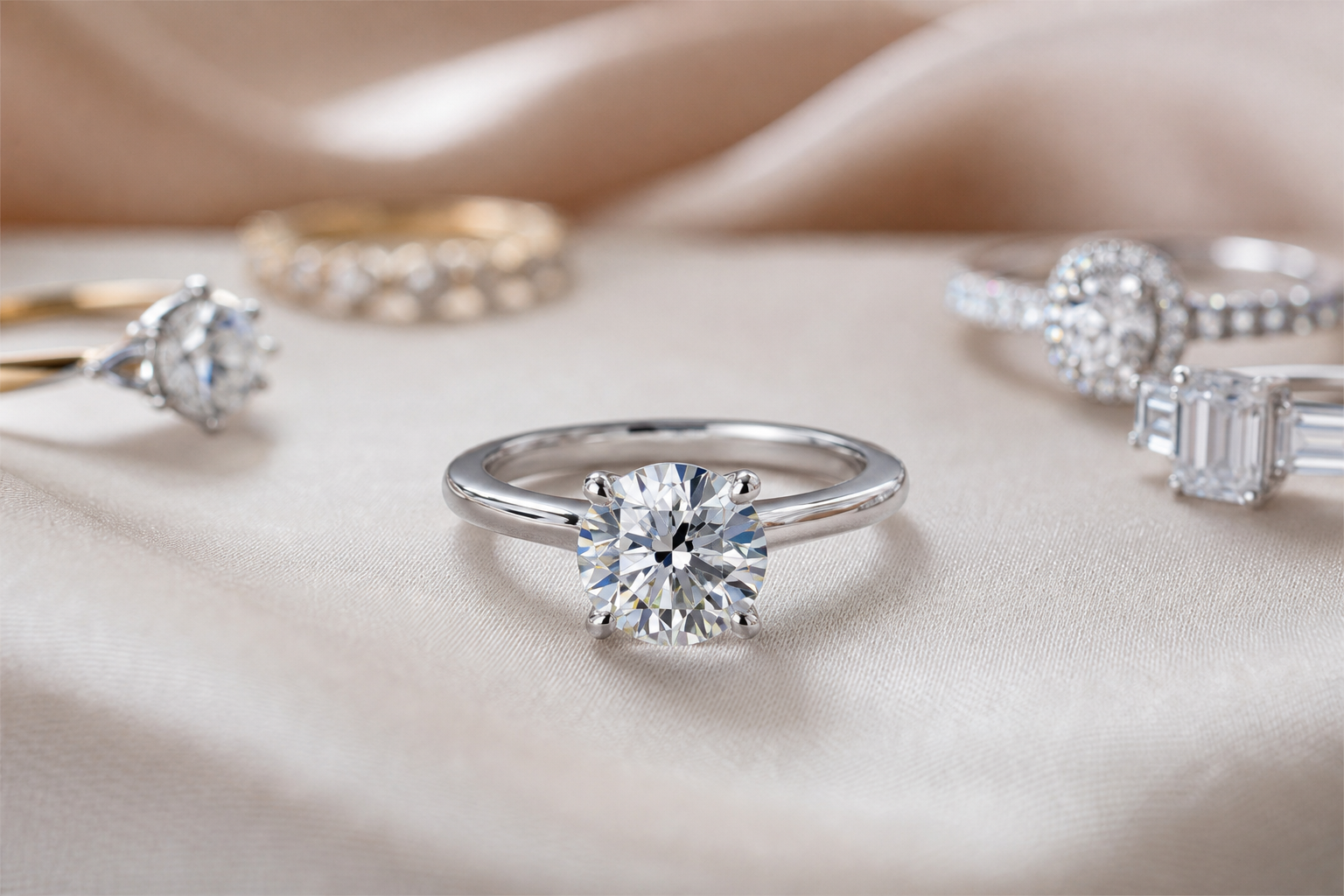
They can then be set into solitaire, halo, three stone, pavé, bezel, vintage inspired, or other engagement ring designs.
9 Smart Benefits of Lab Grown Diamond Engagement Rings
The advantages of a laboratory grown diamond need to be considered alongside its limitations. Buyers should choose according to personal priorities rather than assuming either laboratory or natural origin is universally superior.
1. They Are Actual Diamonds
One of the most common misconceptions is that laboratory grown diamonds are imitation diamonds.
They are not.
The U.S. Federal Trade Commission has recognized that laboratory created products with essentially the same optical, physical, and chemical properties as mined diamonds can fall within the definition of diamond, provided their origin is appropriately disclosed.
The laboratory grown origin remains material information for consumers and should be clearly communicated.
2. Buyers Can Often Access More Size for a Given Budget
Laboratory grown diamonds are generally priced differently from comparable natural diamonds.
This can allow buyers to consider larger carat weights or higher grades within a particular budget.
Actual prices vary considerably over time.
A lab diamond that costs a particular amount today should not be assumed to hold the same retail or resale value in the future.
Lab Grown Diamond Engagement Rings and Long Term Value
Purchase price and resale value are separate questions.
Lab grown diamond prices have experienced substantial changes as manufacturing capacity and competition have developed.
Consumers should therefore avoid buying primarily because a salesperson claims the diamond is an investment.
An engagement ring can have significant sentimental value without being a predictable financial asset.
3. They Are Available Across the 4Cs
Lab grown diamonds are evaluated using the familiar 4Cs:
• Cut
• Colour
• Clarity
• Carat weight
These characteristics influence appearance and price.
Lab origin does not mean every stone has identical quality.
Two one carat laboratory grown diamonds can look noticeably different because of cut proportions, colour, clarity, growth characteristics, and other features.
4. Numerous Shapes Are Available
Laboratory created diamonds are sold in many established shapes.
Popular options include:
• Round brilliant
• Oval
• Cushion
• Emerald
• Pear
• Radiant
• Princess
• Marquise
• Asscher
Shape should be distinguished from cut quality.
For example, oval describes the outline, while cutting quality influences light performance and appearance.
5. They Work With Most Engagement Ring Styles
A lab diamond can generally be mounted into the same types of jewellery settings used for natural diamonds, provided the dimensions and setting are compatible.
Buyers therefore do not need a particular style simply because the diamond is laboratory grown.
6. Their Origin Can Be Documented Through Grading
Reputable grading reports can identify a diamond as laboratory grown.
Reports can also provide information about carat weight, colour, clarity, dimensions, and other characteristics according to the grading laboratory’s methodology.
The report is useful but should be verified.
7. They Offer an Alternative Supply Chain
Some consumers prefer laboratory grown diamonds because they want an alternative to mined gemstone sourcing.
However, it is overly simplistic to label every laboratory diamond automatically ethical or environmentally friendly.
Manufacturing requires energy and industrial infrastructure, and environmental impact can vary according to energy source, facility, process, and supply chain.
8. They Can Be Visually Indistinguishable Without Specialized Testing
A high quality lab grown diamond and a comparable natural diamond can look extremely similar to an unaided observer.
Origin generally cannot be determined reliably using casual visual inspection alone.
Gemological laboratories and professionals use specialized equipment and analysis to distinguish origins.
9. Buyers Can Prioritize Appearance Over Rarity
Some buyers are primarily interested in brilliance, size, shape, and ring design rather than geological rarity.
A laboratory diamond can align well with those priorities.
Who Should Consider Lab Grown Diamond Engagement Rings?
They may appeal particularly to buyers who:
• Want a diamond rather than a simulant
• Prioritize visible size
• Want flexibility within a set budget
• Prefer laboratory origin
• Understand resale uncertainty
• Value third party grading
• Want traditional or contemporary ring settings
The best choice remains personal.
Are Lab Grown Diamonds Real Diamonds?
Yes, appropriately manufactured laboratory grown diamonds are diamonds.
That does not make them identical in origin to natural diamonds.
Chemical Composition
Diamond is composed primarily of carbon atoms arranged in a characteristic crystal structure.
Both natural and laboratory grown diamonds share this fundamental diamond structure.
Physical Properties
Diamond is known for exceptional hardness.
Laboratory origin does not make a diamond inherently soft or unsuitable for everyday jewellery.
Optical Properties
Lab grown diamonds can display brilliance, fire, scintillation, colour, and clarity characteristics associated with diamond.
Lab Grown Diamond Engagement Rings vs Fake Diamonds
The phrase fake diamond is misleading when applied to genuine laboratory grown diamond.
Simulants are different materials designed to resemble diamond visually.
Common alternatives include cubic zirconia and moissanite.
Retailers should clearly distinguish among natural diamonds, laboratory grown diamonds, and simulants.
How Are Lab Grown Diamonds Made?
Two primary technologies are widely associated with laboratory diamond production: Chemical Vapor Deposition and High Pressure High Temperature.
CVD Diamonds
Chemical Vapor Deposition, commonly called CVD, grows diamond material using a carbon containing gas environment under controlled conditions.
A diamond seed provides a foundation for crystal growth.
Manufacturing involves sophisticated equipment and process controls.
HPHT Diamonds
High Pressure High Temperature, abbreviated HPHT, creates conditions intended to reproduce aspects of the environment in which diamond can crystallize under high pressure and temperature.
Both methods can produce gem quality diamonds.
CVD vs HPHT Lab Grown Diamond Engagement Rings
Growth method alone should not determine the purchase.
Evaluate the finished polished diamond according to its:
• Cut
• Colour
• Clarity
• Carat
• Visual appearance
• Treatments
• Grading documentation
• Price
A well cut diamond from either process can be an attractive choice.
Understanding the 4Cs of Lab Grown Diamonds
The 4Cs provide a standardized framework for comparing many aspects of diamond quality.
Cut Quality
Cut is particularly important because proportions and finishing influence how a diamond interacts with light.
In round brilliant diamonds, established grading systems can provide formal cut grades.
Fancy shapes do not always receive equivalent overall cut grades from every laboratory.
Why Cut Matters
A poorly proportioned diamond can appear less lively even when it has high colour and clarity grades.
Prioritizing cut can sometimes provide more visible benefit than paying for microscopic clarity differences.
Lab Grown Diamond Engagement Rings and Cut
For round brilliant stones, review the cut grade along with measurements and visual performance.
For fancy shapes, use videos, images, measurements, and expert assessment because one simple grade may not describe every relevant characteristic.
Diamond Colour
Gem quality diamonds can range from colourless to increasingly noticeable body colour within conventional grading systems.
Higher colour grades typically appear more colourless.
How Much Colour Is Visible?
Perception depends on:
• Diamond shape
• Size
• Setting metal
• Lighting
• Individual sensitivity
• Viewing angle
A diamond does not need the highest possible colour grade to look attractive.
Metal Choice
Yellow or rose gold can interact visually with diamond colour differently from platinum or white gold.
Consider the complete ring.
Diamond Clarity
Clarity evaluates internal features called inclusions and external characteristics called blemishes.
Eye Clean Diamonds
Many buyers prioritize a diamond that appears clean to normal unaided observation rather than paying for the highest laboratory clarity grade.
The phrase eye clean is not a universal standardized grade.
Ask the retailer how they define it.
Inclusion Location
Where an inclusion sits can matter visually and structurally.
Lab Grown Diamond Engagement Rings and Clarity Grades
Higher clarity is not automatically better value if the difference is visible only under magnification.
Inspect the stone or high resolution media rather than shopping solely from the grade.
Carat Weight
Carat measures diamond mass rather than visual diameter.
One carat equals 200 milligrams.
Carat vs Visible Size
Two diamonds with identical carat weights can have different face up dimensions because their shapes and proportions differ.
Avoid Shopping by Carat Alone
A poorly cut large stone may look less attractive than a smaller, well cut diamond.
Choosing Lab Grown Diamond Engagement Rings by Size
Compare:
• Carat weight
• Millimetre measurements
• Finger size
• Setting
• Shape
• Cut quality
• Budget
Actual proportions matter more than a round number on a certificate.
Lab Grown Diamond Certification and Grading
The term certified diamond is commonly used in retail, although grading report is usually more precise.
Independent laboratories assess diamonds according to their own procedures.
GIA
The Gemological Institute of America provides laboratory services and educational resources and identifies laboratory grown origin in its reporting framework.
IGI
The International Gemological Institute is another widely encountered grading laboratory for lab grown diamonds.
Report formats and grading practices should be understood according to the issuing laboratory.
Verify Reports
Many laboratories offer online report verification.
Lab Grown Diamond Engagement Rings With Grading Reports
Before purchasing, confirm that:
• Report number exists
• Stone description matches
• Dimensions correspond
• Lab grown origin is disclosed
• Treatments are disclosed where relevant
• Seller documentation matches the report
A grading report does not itself guarantee seller integrity.
Diamond Laser Inscriptions
Many graded laboratory grown diamonds may carry microscopic laser inscriptions on the girdle.
These can identify a report number or laboratory grown status according to laboratory practice.
The inscription is generally too small to see without magnification.
It can help match a stone to documentation.
It should not be treated as the only authentication method because professional evaluation considers several characteristics.
Lab Grown Diamond Treatments
Some laboratory grown diamonds may undergo post growth treatment intended to modify colour or other characteristics.
Treatment is not automatically a defect.
Disclosure matters.
Ask About Treatments
Review the grading report and seller information.
A qualified jeweller or gemologist can explain what the treatment means for the particular stone.
Treatment Disclosure for Lab Grown Diamond Engagement Rings
Buyers should receive accurate information about:
• Laboratory origin
• Known treatments
• Grading
• Warranty
• Care
Transparency enables meaningful comparison.
Best Shapes for Lab Grown Diamond Engagement Rings
Shape is highly personal.
Round Brilliant
Round brilliant diamonds are designed around a well established brilliant cutting style and are valued for strong light performance when appropriately cut.
Oval
Oval diamonds provide an elongated outline and can appear visually large for their weight.
Bow tie effects can be present to varying degrees.
Emerald Cut
Emerald cut diamonds use broad step facets that create a different visual appearance from brilliant cuts.
Clarity characteristics may be easier to notice in some stones.
Radiant and Cushion
These shapes combine different outlines with brilliant style faceting arrangements.
Choosing a Diamond Shape
Try several shapes on the hand.
Online magnified photographs can make proportions feel very different from real world viewing distance.
Engagement Ring Setting Styles
The setting affects both appearance and everyday practicality.
Solitaire
A solitaire focuses attention on one center diamond.
It is simple, adaptable, and available in many prong configurations.
Halo
A halo surrounds the center stone with smaller diamonds.
This can create a larger overall visual footprint.
Three Stone
Three stone designs combine a center diamond with two side stones.
Pavé
Small diamonds set along the band add sparkle.
Setting Security for Lab Grown Diamond Engagement Rings
Prongs and other holding elements should be inspected periodically.
A hard diamond can still be lost if its setting is damaged.
Remove or protect rings during activities likely to cause significant impact or snagging.
Platinum vs Gold Engagement Ring Settings
Metal affects appearance, weight, maintenance, and price.
Platinum
Platinum is dense and naturally white.
It develops surface wear and patina over time.
White Gold
White gold uses gold alloyed with other metals and commonly receives a rhodium finish to enhance white appearance.
Rhodium plating can require renewal depending on wear.
Yellow and Rose Gold
Warm metal colours create contrast with the diamond.
Metal Allergies and Engagement Rings
Metal alloy composition matters for people with known sensitivities.
Ask the jeweller what alloys are used and discuss relevant allergies before purchasing.
Lab Grown vs Natural Diamond Engagement Rings
Both use diamond, but their origins and markets differ.
Natural Diamonds
Natural diamonds formed geologically and are mined.
Their rarity characteristics and established secondary market differ from laboratory grown products.
Lab Grown Diamonds
Laboratory grown diamonds are manufactured using technological processes.
Increased production capability influences availability and pricing.
Which Engagement Ring Is Better?
Neither origin is universally superior.
Choose natural diamond if geological origin, rarity, or particular collecting characteristics matter strongly to you.
Choose lab grown if diamond properties, size flexibility, and a different price structure better match your priorities.
Lab Grown Diamonds vs Moissanite
Moissanite is not diamond.
It is a distinct material with different optical and physical properties.
Appearance
Moissanite can display strong brilliance and colorful dispersion.
Some buyers appreciate this appearance.
Price
Moissanite generally occupies a different pricing category from diamond.
Choosing Between Moissanite and Lab Grown Diamond
Buyers wanting an actual diamond should choose natural or laboratory grown diamond.
Buyers primarily seeking durability and sparkle at another price point may also consider moissanite.
Both can be legitimate choices when clearly represented.
Lab Grown Diamond Engagement Ring Prices
Lab grown diamond prices can change rapidly.
For that reason, static price ranges can become outdated.
Factors Influencing Price
Price depends on:
• Carat
• Cut
• Colour
• Clarity
• Shape
• Grading
• Brand
• Setting
• Metal
• Retailer
• Market conditions
Compare Complete Rings
A lower diamond price can be offset by an expensive setting.
Lab Grown Diamond Engagement Rings and Resale Value
Secondary market value can be substantially below original retail pricing.
There is no guaranteed resale percentage.
Buy for the ring’s personal and practical value rather than an assumed financial return.
Ethical Considerations
Lab grown diamonds are often promoted as an ethical alternative to mined diamonds.
The issue deserves nuance.
Mining Concerns
Natural diamond supply chains can raise environmental and social questions depending on source and practices.
Responsible sourcing initiatives exist within the natural diamond industry.
Manufacturing Concerns
Lab diamond production requires energy and industrial resources.
Environmental impact can vary considerably by electricity source and facility.
Ethical Claims About Lab Grown Diamond Engagement Rings
Look for specific evidence rather than terms such as:
• Eco friendly
• Sustainable
• Ethical
• Carbon neutral
• Green
Ask what methodology or certification supports the claim.
Environmental Impact of Lab Grown Diamonds
Comparative environmental claims are complicated.
Energy use, electricity source, mining methods, land effects, transportation, manufacturing efficiency, and system boundaries all influence lifecycle assessments.
A blanket statement that every lab diamond has less environmental impact than every natural diamond is too broad without supporting evidence.
Consumers prioritizing sustainability should seek transparent, independently supportable data for the particular supplier.
How to Buy Lab Grown Diamond Engagement Rings Online
Online retailers can provide broad inventory and detailed grading filters.
Buyers should still perform due diligence.
Use High Resolution Media
Inspect actual diamond videos or images where available.
Stock photographs do not show the individual stone.
Verify the Grading Report
Use the issuing laboratory’s report verification system where available.
Review Returns
Ring sizing and diamond appearance can differ from expectations.
Online Lab Grown Diamond Engagement Rings Checklist
Check:
• Seller identity
• Diamond report
• Return period
• Resizing policy
• Warranty
• Shipping insurance
• Setting details
• Treatment disclosure
• Payment security
• Customer support
Understand whether the ring can be returned after resizing or customization.
Buying Lab Grown Diamond Rings in Store
Physical shopping provides the advantage of seeing stones on the hand and under different lighting.
Ask for Neutral Lighting
Jewellery display lighting can maximize sparkle.
View the diamond under ordinary indoor light and natural daylight where possible.
Compare Several Stones
Two diamonds with similar grades can look different.
Questions to Ask Before Buying
Ask:
• Is this diamond laboratory grown?
• Which method produced it?
• Has it received post growth treatment?
• Which laboratory graded it?
• Can I verify the report?
• What warranty applies?
• Is resizing included?
• What is the return policy?
• Is the setting insured during shipping?
• What maintenance is recommended?
A knowledgeable seller should answer clearly.
Ring Sizing
Correct size helps keep the ring comfortable and secure.
Finger dimensions change with temperature, time of day, pregnancy, weight changes, and other factors.
Measure More Than Once
A professional sizing can be useful.
Wider bands can fit differently from narrow rings.
Resizing Limitations
Some intricate or fully diamond set bands can be difficult to resize substantially.
Lab Grown Diamond Engagement Rings and Future Resizing
Ask about resizing before purchasing, especially if the design contains pavé diamonds around most or all of the band.
The diamond’s origin does not determine resizing; the ring construction does.
Caring for Lab Grown Diamond Engagement Rings
Laboratory grown diamonds are durable, but jewellery still requires care.
Routine Cleaning
Follow the jeweller’s cleaning guidance.
Mild cleaning methods can be suitable for many rings, but other gemstones or materials in the ring can impose different requirements.
Professional Inspection
A jeweller can check prongs, settings, and wear.
Avoid Harsh Impact
Diamond is extremely hard but can chip under certain impacts.
Protecting Your Engagement Ring
Consider removing the ring during:
• Heavy manual work
• Weight training
• Contact sports
• Certain cleaning tasks
• Activities involving strong impact
Store it securely when removed.
Insuring a Lab Grown Diamond Engagement Ring
Insurance can protect against risks such as loss, theft, or damage depending on policy terms.
Obtain Documentation
Keep:
• Purchase invoice
• Grading report
• Photographs
• Ring specification
• Valuation where required
• Serial or report information
Review Replacement Terms
Insurance settlement methods vary.
Lab Grown Diamond Price Changes and Insurance
Because market prices can change, review insurance valuation requirements periodically.
An inflated valuation does not necessarily result in a larger cash payout.
Understand the policy.
Common Lab Grown Diamond Buying Mistakes
Many mistakes come from focusing on one specification.
Avoid:
• Buying by carat alone
• Ignoring cut quality
• Assuming all lab diamonds are identical
• Confusing lab diamonds with simulants
• Believing a grading report guarantees seller integrity
• Paying for clarity differences you cannot appreciate
• Ignoring treatment disclosure
• Assuming guaranteed resale value
• Accepting unsupported sustainability claims
• Forgetting setting quality
• Skipping return policy review
• Choosing only under jewellery store lighting
A diamond should be evaluated as a complete stone within a complete ring.
Frequently Asked Questions
Are lab grown diamond engagement rings real diamonds?
Yes. Lab grown diamonds have essentially the same crystal structure and closely corresponding chemical and physical properties as natural diamonds, but they are created in laboratories.
Are lab grown diamond engagement rings cheaper than natural diamonds?
They are generally priced lower than comparable natural diamonds, although actual prices depend on size, quality, shape, grading, setting, retailer, and market conditions.
How long do lab grown diamonds last?
Diamond is a highly durable material. A laboratory grown diamond does not inherently expire, but the ring setting and metal require normal jewellery care and maintenance.
Do lab grown diamond engagement rings have resale value?
They can have resale value, but it may be substantially lower than the original retail price and is not guaranteed. Market prices can change as production and demand evolve.
What certification should a lab grown diamond have?
Independent grading reports from recognized gemological laboratories such as GIA or IGI can provide useful quality and origin information. Verify reports directly where possible.
Can a jeweller tell a lab grown diamond from a natural diamond?
Origin can be difficult or impossible to determine reliably by ordinary visual inspection alone. Gemological laboratories and equipped professionals use specialized testing methods.
Conclusion
Lab grown diamond engagement rings provide buyers with genuine diamond jewellery across a wide range of sizes, grades, shapes, and settings while offering a different origin and pricing structure from mined diamonds. The best purchase balances cut, colour, clarity, carat, visual appearance, setting quality, grading documentation, and realistic expectations about resale and environmental claims. Comparing individual stones and choosing a transparent, reputable jeweller can help couples find a ring that suits both their budget and personal priorities.