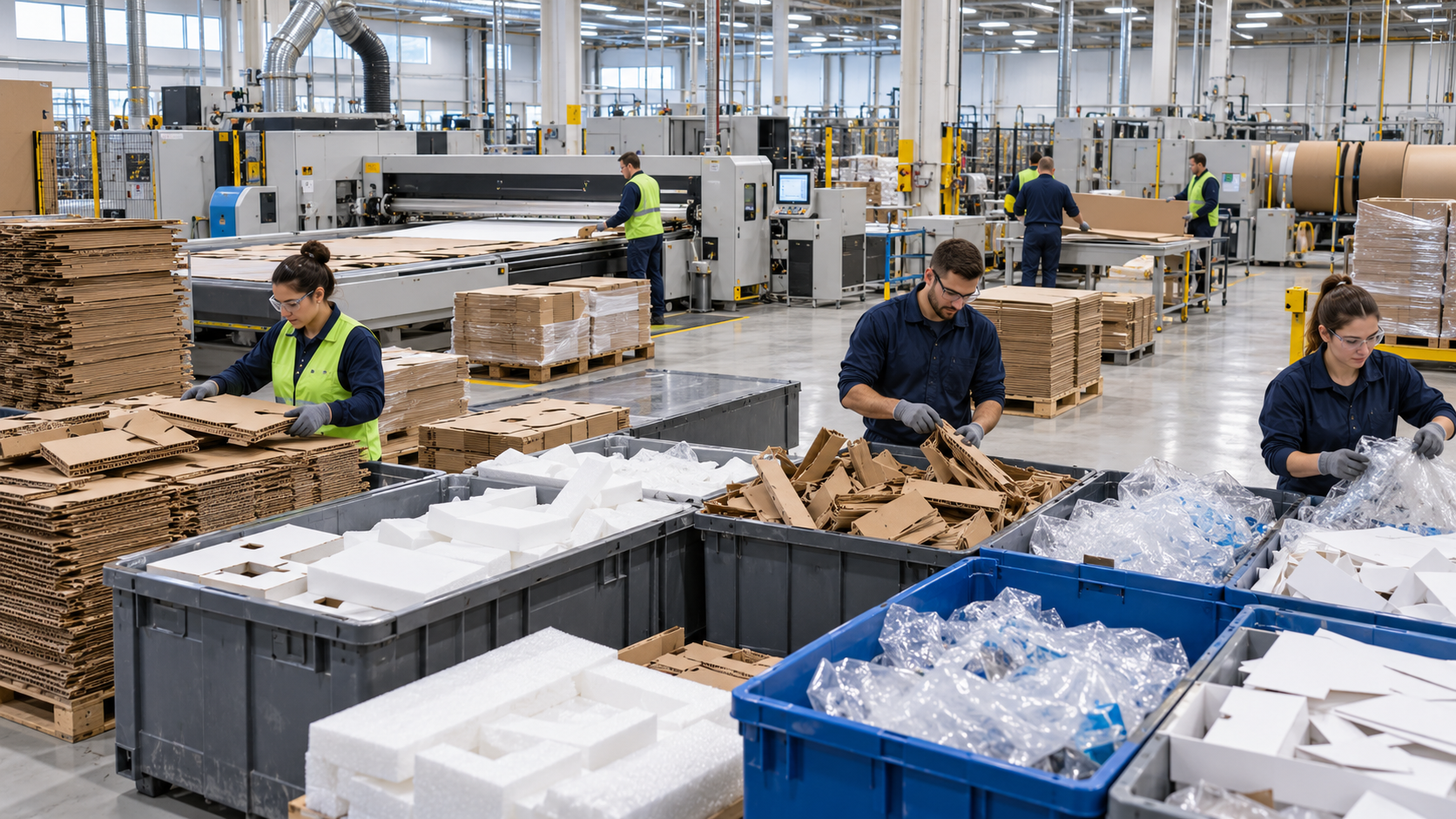
Packaging Offcuts Can Turn Manufacturing Waste Into Valuable Resources
packaging offcuts are leftover pieces of material created when packaging is cut, shaped, trimmed, punched, laminated, printed, or converted during manufacturing. They can come from cardboard, paperboard, corrugated board, foam, plastic film, fabric, protective materials, labels, and many other packaging substrates. Although these pieces are often treated as waste, many offcuts can still have useful value when they are sorted, stored, reused, recycled, or redirected into another production process.
Manufacturers, converters, fulfilment centres, printers, and packaging suppliers can all generate offcuts as part of normal production.
The amount produced depends on design, cutting layout, order size, machinery, material dimensions, and production accuracy.
Reducing unnecessary offcuts can lower material costs and disposal volumes.
At the same time, the offcuts that cannot be eliminated may still be suitable for secondary uses.
The most effective approach is therefore not simply to dispose of leftover material, but to understand why it is being created and what can be done with it.
What Are Packaging Offcuts?
Packaging offcuts are pieces of material left over after packaging components are manufactured.
For example, a sheet of cardboard may be die cut into several carton shapes.
The carton blanks become the finished product, while the sections between and around them become offcuts.
The same principle can apply to foam inserts, protective pads, printed sheets, flexible film, labels, and other packaging materials.
Common sources include:
• Die cutting
• Sheet trimming
• Slitting
• Punching
• Lamination
• Printing setup
• Folding and gluing
• Foam cutting
• Sample production
• Custom packaging manufacturing
Offcuts can vary from very small fragments to large clean sheets.
Their future value depends largely on material type, contamination, size, condition, and how they are stored.
Packaging Offcuts Are Not Always True Waste
The word waste can be misleading.
A clean piece of cardboard may no longer be useful for the original carton design, but it may still be suitable for protective packing, internal dividers, sample making, or recycling.
Likewise, clean foam remnants may sometimes be used for smaller inserts or protective applications.
This means offcuts should be evaluated before being discarded.
Why Packaging Offcuts Matter to Manufacturers
Packaging materials represent a direct production cost.
Every section removed from a sheet has already been purchased, transported, stored, and processed.
If a large proportion becomes unusable, the real cost of the finished packaging increases.
Material Efficiency
Better material utilisation means more finished products can be made from the same amount of raw material.
This can improve production economics.
Waste Handling Costs
Waste can also create additional costs.
Businesses may need to pay for:
• Bins
• Compactors
• Collections
• Transport
• Recycling services
• Disposal
• Warehouse handling
Reducing unnecessary waste can therefore improve efficiency beyond the cost of the material itself.
Environmental Considerations
Using materials more efficiently can reduce the amount of raw material required for a given production volume.
Recycling suitable offcuts can also return some materials to manufacturing streams instead of sending them to disposal.
The best environmental approach depends on the specific material and available local recovery options.
7 Brilliant Ways to Manage Packaging Offcuts
A structured waste reduction system can turn leftover material from a problem into a manageable resource.
1. Reduce Packaging Offcuts During Design
The most effective offcut is often the one that is never created.
Packaging design has a major influence on material utilisation.
Before production begins, designers can consider:
• Carton dimensions
• Cutting layout
• Sheet size
• Die position
• Nesting
• Orientation
• Material thickness
• Required tolerances
A small change in the shape or positioning of a package can sometimes allow more units to fit onto one sheet.
This reduces the unused space between components.
Nesting Can Improve Material Use
Nesting refers to arranging shapes efficiently on a sheet or roll.
The goal is to reduce empty space while maintaining safe production tolerances.
For simple rectangular packaging, this may be straightforward.
Irregular shapes can require more careful planning.
Digital design software can help manufacturers compare several layouts before committing to production.
2. Separate Packaging Offcuts by Material
Mixed waste is often harder to reuse or recycle.
A simple separation system can preserve more value.
Different containers can be used for:
• Corrugated cardboard
• Solid paperboard
• Clean paper
• Plastic film
• Foam
• Labels
• Composite materials
• Contaminated waste
The exact categories should reflect what the facility actually produces.
Clear labelling can reduce mistakes.
Packaging Offcuts Need Clean Sorting
Clean material is usually easier to handle than material contaminated by food, oil, adhesives, chemicals, or other substances.
Separating clean material at the point where it is generated can be more efficient than sorting it later.
Workers should know which materials belong in each collection stream.
3. Reuse Suitable Offcuts Inside the Business
Some offcuts can be reused before recycling is considered.
This can reduce the need to purchase secondary packing materials.
Possible internal uses include:
• Protective layers
• Box dividers
• Spacers
• Corner protection
• Void filling
• Sample making
• Test pieces
• Machine setup
• Training materials
• Temporary surface protection
The reuse option should be appropriate for the product being packed.
Food, pharmaceutical, cosmetic, medical, or other sensitive applications may have stricter material requirements.
4. Recycle Packaging Offcuts Where Appropriate
Materials that cannot be reused may still be recyclable.
Cardboard and paper based offcuts are commonly collected for fibre recovery when they are clean and suitable.
Certain plastics may also be recyclable depending on polymer type, contamination, local infrastructure, and recycler requirements.
Businesses should confirm what their waste contractor or recycling partner actually accepts.
Do not assume every material with a recycling symbol can be processed through every commercial recycling system.
5. Sell or Transfer Usable Packaging Offcuts
Large clean offcuts may still have commercial value.
Some businesses, schools, makers, workshops, craft companies, fulfilment centres, and small manufacturers may be able to use leftover sheets or pieces.
Possible users include:
• Prototype makers
• Craft businesses
• Model builders
• Small packaging companies
• Art departments
• Educational organisations
• Furniture protection companies
• Shipping operations
A material that is too small for one production line may be perfectly suitable for another application.
6. Track Offcut Volumes
Waste reduction becomes easier when it is measured.
Businesses can monitor:
• Material purchased
• Finished product output
• Offcut weight
• Scrap percentage
• Reuse volume
• Recycling volume
• Disposal volume
• Offcuts by machine
• Offcuts by product design
This can reveal patterns.
One particular packaging design may generate much more scrap than others.
A specific machine setup may consistently require excessive trimming.
Without measurement, these opportunities can remain hidden.
7. Improve Production Planning
Packaging offcuts can also result from planning problems.
Examples include:
• Incorrect sheet sizes
• Excess production
• Short runs
• Frequent colour changes
• Setup errors
• Poor registration
• Damaged material
• Incorrect specifications
Better scheduling and quality control can reduce these losses.
A manufacturer should distinguish unavoidable design offcuts from avoidable production scrap.
They are not always the same thing.
Packaging Offcuts From Cardboard
Cardboard is one of the most common packaging materials.
Offcuts can come from cartons, shipping boxes, dividers, displays, inserts, and protective components.
Reusing Cardboard Offcuts
Large clean sections can sometimes become:
• Layer pads
• Dividers
• Protective sheets
• Corner pieces
• Product separators
• Void fillers
• Sample templates
This is particularly useful when the offcuts are strong and consistent.
Recycling Cardboard Offcuts
Clean cardboard can often be baled or collected for recycling.
Keeping it dry is important.
Wet or heavily contaminated material can become more difficult to recover.
Warehouses generating significant amounts of cardboard may benefit from dedicated collection equipment.
Packaging Offcuts From Paperboard
Paperboard is widely used for retail cartons, sleeves, displays, luxury packaging, and printed packaging.
Because paperboard products are often die cut from larger sheets, offcuts can be generated around each carton blank.
Printed Offcuts
Printed offcuts may still be recyclable depending on coatings, inks, laminates, adhesives, and local recycling requirements.
Some highly laminated or composite materials can be more difficult to process.
Manufacturers should identify how decorative finishes affect end of life options during the design stage.
Packaging Offcuts From Foam
Protective foam is often cut into inserts that hold products securely.
This can create irregular leftover pieces.
Foam offcuts may be generated from materials such as:
• Polyethylene foam
• Polyurethane foam
• Expanded materials
• Specialist protective foams
The options for reuse and recycling depend strongly on the exact material.
Reusing Foam Packaging Offcuts
Clean foam pieces may sometimes be used for:
• Edge protection
• Spacers
• Cushioning
• Sample inserts
• Equipment protection
• Internal transport packaging
Only use offcuts when they provide reliable protection for the product.
Improvised protective packaging should not compromise safety or quality.
Packaging Offcuts From Plastic Film
Flexible packaging and film converting can generate trim during slitting, printing, bag making, and sealing.
Plastic film recovery can be more complex than cardboard recycling.
The film may contain:
• Multiple polymer layers
• Printed inks
• Adhesives
• Barrier coatings
• Aluminium layers
• Other materials
Single material film can be easier to recover than certain multilayer constructions.
This is one reason recyclability is increasingly considered during packaging design.
How Packaging Design Influences Offcut Waste
Waste prevention begins before the production line.
Designers can create visually attractive packaging while still considering manufacturing efficiency.
Standardise Dimensions Where Possible
Using dimensions that work efficiently with standard sheet or roll sizes can reduce trim.
Minimise Unnecessary Complexity
Unusual shapes can create more empty space around each component.
The visual benefit should be compared with the additional material requirement.
Consider Material Thickness
Using more material than required can increase cost and waste.
Using too little can reduce protection.
The correct specification should provide the necessary performance without unnecessary excess.
Design for Production
Packaging should be designed with actual manufacturing equipment in mind.
A shape that appears efficient on a computer may require additional spacing for cutting, folding, or machine handling.
Designers and production teams should communicate early.
Packaging Offcuts and Sustainability
Sustainable packaging is not only about replacing one material with another.
Material efficiency also matters.
A package made from a widely recyclable material can still waste resources if the manufacturing process produces excessive scrap.
A more complete approach considers:
• Raw material use
• Manufacturing efficiency
• Product protection
• Transport
• Reuse
• Recycling
• End of life
Reducing offcuts supports the manufacturing stage of this wider lifecycle.
Avoid Green Claims Without Evidence
Businesses should be careful when describing packaging as sustainable, zero waste, or environmentally friendly.
Claims should reflect actual processes.
If offcuts are recycled, it can be useful to document volumes and recycling routes.
If materials are reused internally, records can help demonstrate the scale of that activity.
How to Store Packaging Offcuts for Reuse
Offcuts lose value when they are badly stored.
Large sheets should remain clean, dry, and flat where possible.
Create Dedicated Storage Areas
Separate reusable material from general waste.
A simple rack or labelled container can prevent useful pieces from being crushed or contaminated.
Sort by Size
If offcuts are reused regularly, sorting by approximate dimensions can save time.
Workers should not need to search through a large mixed pile for one suitable piece.
Use a Maximum Storage Period
Not every offcut should be kept forever.
Excessive storage can create clutter and safety problems.
Set clear rules for when unused material should be moved to recycling.
Packaging Offcuts and Quality Control
Reusing material should never reduce packaging quality.
Before reuse, inspect offcuts for:
• Damage
• Moisture
• Dirt
• Incorrect print
• Contamination
• Weak edges
• Creasing
• Delamination
• Deformation
Material that fails inspection should not be used in a way that could affect the customer product.
Quality requirements should remain consistent.
How Technology Can Reduce Packaging Offcuts
Modern packaging production increasingly uses digital systems to improve material utilisation.
CAD Software
Computer aided design tools can optimise cutting layouts.
Designers can compare alternative shapes and arrangements before manufacturing begins.
Automated Cutting
Digital cutting systems can position jobs accurately and reduce setup errors.
Production Data
Manufacturers can analyse scrap rates by job, machine, material, and operator.
This helps identify where waste reduction efforts will have the greatest impact.
Machine Vision
Some production systems use cameras and sensors to detect alignment and quality problems.
Catching errors earlier can prevent large quantities of defective material.
Packaging Offcuts in Small Businesses
Waste reduction is not only for large factories.
Small packaging companies, online sellers, printers, and craft businesses can also benefit.
Simple steps may include:
• Keep clean cardboard separately
• Reuse larger pieces for protection
• Cut small inserts from leftover material
• Track how much material is discarded
• Order more appropriate sheet sizes
• Recycle unusable material
• Avoid unnecessary oversized packaging
Small improvements can become significant over hundreds or thousands of orders.
Packaging Offcuts and Cost Reduction
Offcut management can directly influence profitability.
Consider a company that purchases large sheets but uses only a portion effectively.
The unused area still contributes to the cost of every finished unit.
Reducing material loss may allow the business to produce more packaging from the same purchase volume.
Savings can also come from:
• Lower waste collection
• Reduced storage
• Lower secondary packaging purchases
• Less material handling
• Improved production efficiency
• Better purchasing decisions
For high volume manufacturers, even a small percentage improvement can matter.
Creating a Packaging Offcuts Management Process
A practical system can follow a simple sequence.
Identify
Determine where offcuts are being generated.
Measure
Record the amount and material type.
Reduce
Improve designs, layouts, and production settings.
Reuse
Find safe internal applications for suitable material.
Recycle
Send appropriate materials to recognised recycling streams.
Review
Check whether waste levels improve over time.
This approach turns waste management into an operational process instead of an occasional cleanup task.
Packaging Offcuts Should Have Clear Ownership
Someone should be responsible for monitoring the system.
Without ownership, sorting rules can quickly disappear.
The responsible person can review waste volumes, communicate with production teams, and coordinate recycling partners.
Common Packaging Offcuts Mistakes
Mixing Different Materials Together
Mixed materials can reduce recycling options.
Separate them early.
Keeping Every Scrap Piece
Saving all offcuts creates clutter.
Reuse only materials with a realistic future purpose.
Ignoring Contamination
Dirty or contaminated materials may not be suitable for reuse or recycling.
Focusing Only on Recycling
Recycling is useful, but preventing waste can be even more efficient.
Failing to Measure Waste
Without data, improvement is difficult to prove.
Using Offcuts Where Quality Matters
Do not reuse material when it could compromise product protection, hygiene, appearance, or regulatory requirements.
Can Packaging Offcuts Become New Products?
Yes, depending on the material and condition.
Some businesses intentionally design secondary products around manufacturing remnants.
Possible examples include:
• Protective inserts
• Small boxes
• Sample packs
• Craft materials
• Dividers
• Display pieces
• Shipping protectors
• Prototypes
This approach can work particularly well when offcuts are large, clean, consistent, and generated regularly.
However, creating a secondary product should not require more labour or energy than its practical value justifies.
Packaging Offcuts and Circular Manufacturing
Circular manufacturing aims to keep materials in useful circulation for longer.
Packaging offcuts can support this idea when they are:
• Reused internally
• Sold as secondary material
• Returned to a supplier
• Reprocessed
• Recycled
• Converted into another product
The exact route depends on the material.
Not every offcut can remain in a closed loop, but improving recovery is still valuable.
Frequently Asked Questions
What are packaging offcuts?
Packaging offcuts are leftover pieces of cardboard, paperboard, foam, plastic film, or other materials created when packaging is cut, trimmed, printed, punched, or converted.
Can packaging offcuts be recycled?
Many packaging offcuts can be recycled if the material is accepted by local recycling systems and remains sufficiently clean and separated. Options depend on material type and contamination.
Can businesses reuse packaging offcuts?
Yes. Suitable clean offcuts may be reused for dividers, protection, spacers, samples, machine setup, prototypes, or other internal packaging applications.
How can packaging offcuts be reduced?
Manufacturers can improve nesting, optimise sheet sizes, simplify packaging designs, reduce setup errors, monitor scrap rates, and coordinate design with production requirements.
Are cardboard packaging offcuts valuable?
Clean cardboard offcuts can have value for internal reuse or recycling, particularly when they are kept dry and separated from contaminated waste.
Why should companies track packaging offcuts?
Tracking offcuts helps identify expensive designs, inefficient production processes, recycling opportunities, and areas where material utilisation can be improved.
Conclusion
Packaging offcuts do not have to be treated as unavoidable waste. Better design, accurate production planning, clean sorting, practical reuse, recycling, and consistent measurement can help businesses recover more value from the materials they already purchase. By treating packaging offcuts as part of the manufacturing process rather than simply a disposal problem, companies can reduce waste, control costs, and improve overall material efficiency.