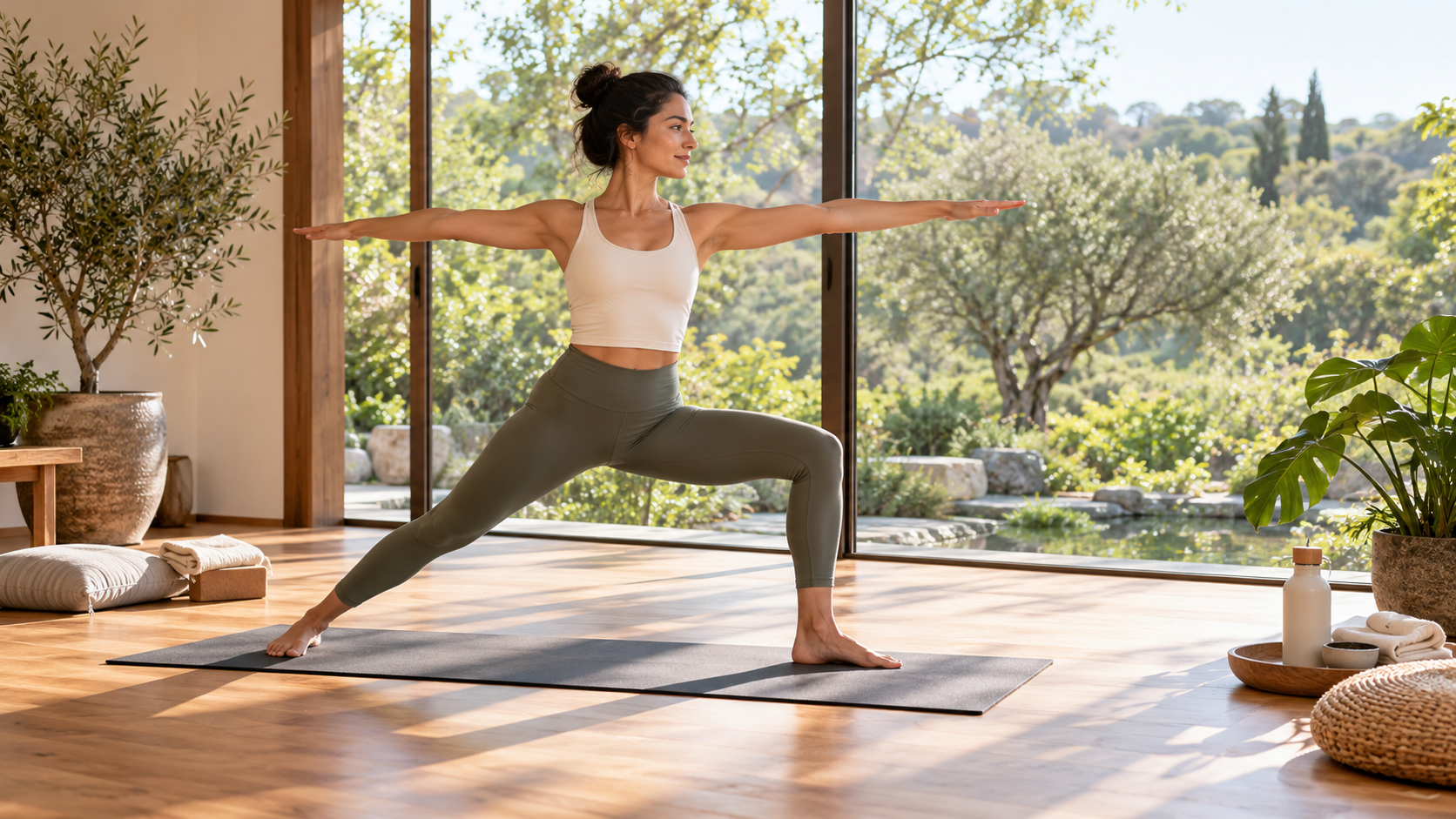
Yoga Practice: A Practical Guide to Building Strength, Balance, Flexibility, and Calm
A consistent Yoga Practice can provide a structured way to work on mobility, flexibility, balance, strength, breathing, relaxation, and body awareness without requiring complicated equipment. Yoga can be adapted for beginners, experienced practitioners, older adults, athletes, office workers, and people who simply want a calmer movement routine. The most useful approach is not to chase difficult poses or compare flexibility with other people. Sustainable progress comes from learning basic movements, breathing comfortably, respecting physical limits, and practicing often enough for the routine to become familiar.
Yoga is sometimes presented as if every session needs to be long, intense, or highly flexible.
It does not.
A useful session may last:
• 10 minutes
• 20 minutes
• 30 minutes
• An hour
The best duration is one that fits realistically into a person’s routine.
Consistency usually matters more than creating an ambitious schedule that becomes impossible to maintain.
What Is Yoga Practice?
Yoga is a broad movement and mind-body discipline that can include physical postures, breathing techniques, relaxation, concentration, and meditation.
Modern classes may focus more heavily on physical movement, while others place greater emphasis on breathing or mindfulness.
A session may include:
• Gentle warm-up
• Standing postures
• Seated movements
• Balance exercises
• Twists
• Backbends
• Hip movements
• Breathing exercises
• Relaxation
Different styles organize these elements differently.
Yoga Is Adaptable
One of the strongest features of yoga is that poses can often be modified.
A person does not need to touch the floor, perform a deep backbend, or hold a difficult balance to participate.
Props can make many movements more accessible.
Useful props may include:
• Yoga blocks
• Strap
• Cushion
• Bolster
• Blanket
• Chair
A modified pose is still a valid pose.
7 Powerful Tips for a Better Yoga Practice
A sustainable routine should support long-term movement rather than short-term performance.
1. Yoga Practice Should Begin With Simple, Comfortable Movements
Beginners often make the mistake of starting with poses that look impressive rather than movements that teach control.
Basic postures help develop:
• Alignment
• Balance
• Breathing
• Coordination
• Body awareness
• Confidence
Useful beginner-friendly movements can include:
• Mountain pose
• Cat and cow movements
• Child’s pose
• Gentle forward folds
• Low lunges
• Supported downward-facing dog
• Bridge pose
• Simple seated twists
• Supported balance poses
Learn the Position Before Deepening It
A shallow, controlled pose is generally more useful than forcing the body into a deeper position.
Depth should develop gradually.
The objective is not to create the largest possible range of motion.
It is to move comfortably and with control.
Use Props Early
Beginners sometimes treat props as signs of weakness.
They are tools.
A block can bring the floor closer.
A strap can make a stretch more accessible.
A chair can provide balance support.
Using the right support can improve technique and make a session more comfortable.
2. Breathing Should Remain Part of Every Yoga Practice
Yoga is not simply a collection of stretches.
Breathing creates rhythm and encourages awareness.
During many movement-based classes, practitioners coordinate inhalation and exhalation with transitions.
Avoid Holding Your Breath
If a pose becomes so difficult that breathing becomes strained or repeatedly stops, reduce the intensity.
Steady breathing can help indicate whether the body is working within a manageable range.
Simple Breathing Awareness
A beginner does not need an advanced breathing technique.
Start by noticing:
• Length of inhale
• Length of exhale
• Shoulder tension
• Jaw tension
• Whether breathing feels rushed
Slow, natural breathing can help create a calmer practice.
Do Not Force Breath Retention
Advanced breath-control techniques are not necessary for most beginners.
People with health concerns should be cautious about intensive breathing practices, particularly techniques involving prolonged breath holding or rapid breathing.
3. Focus on Consistency Instead of Long Sessions
A common pattern is to start enthusiastically and practice every day for a week.
Then the routine disappears.
A more sustainable strategy is to choose a schedule that fits normal life.
For example:
10 minutes on busy mornings
20 to 30 minutes several days per week
One longer class on the weekend
Small Sessions Still Count
A short session can include:
• Gentle spinal movement
• Hip mobility
• Shoulder opening
• Simple balance
• Breathing
• Relaxation
Not every session needs to be a complete one-hour class.
Create a Regular Time
Consistency becomes easier when the practice has a predictable place in the day.
Possible times include:
• Morning
• Lunch break
• After work
• Evening
The best time is the one you can maintain.
4. Yoga Practice Should Balance Flexibility With Strength
Yoga is often associated primarily with stretching.
However, many poses also require muscular strength and stability.
Examples include:
• Plank
• Chair pose
• Warrior variations
• Side plank
• Bridge
• Balance poses
Too Much Flexibility Without Control Can Be Unhelpful
Being able to move deeply into a joint position does not automatically mean the position is well controlled.
Strength helps support mobility.
A balanced routine should therefore include both:
• Range of motion
• Stability
Engage Muscles Rather Than Hanging Into Joints
During standing poses, avoid simply sinking into the lowest position possible.
Think about controlled muscle engagement.
This can create more stable movement and reduce unnecessary stress on passive structures.
5. Learn the Difference Between Effort and Pain
Some muscular effort is normal during exercise.
Sharp, sudden, or intense pain is different.
Stop or modify a movement if it causes:
• Sharp pain
• Joint pain
• Tingling
• Numbness
• Dizziness
• Significant discomfort
Do Not Push Through Pain for Progress
Pain is not proof that a stretch is working.
Forcing a pose can increase injury risk.
Progress may come through:
• Better control
• Easier breathing
• Improved balance
• Greater comfort
• Gradual range of motion
These changes are more useful than forcing flexibility quickly.
6. Yoga Practice Becomes More Effective With Body Awareness
Yoga can help practitioners notice how the body feels from one day to another.
A pose may feel easy on Monday and tight on Thursday.
That is normal.
Sleep, stress, exercise, work posture, and daily activity can all affect movement.
Check In Before Starting
Ask:
• How does my back feel?
• Are my shoulders tight?
• Are my legs tired?
• How is my energy?
• Do I need movement or relaxation today?
Use the answers to adjust the session.
Not Every Day Needs the Same Intensity
A high-energy day may suit:
• Strong standing sequences
• Balance work
• Flow-based practice
A tired day may suit:
• Gentle stretching
• Supported poses
• Breathing
• Relaxation
Adaptation supports long-term consistency.
7. Finish Your Yoga Practice With Relaxation
Many people rush through movement and skip the final resting phase.
Relaxation provides an opportunity to transition out of the session gradually.
A short resting period can help:
• Slow breathing
• Reduce muscular tension
• Notice how the body feels
• Create a clear end to practice
Savasana
Savasana is commonly practiced lying comfortably on the back.
People who find that position uncomfortable can modify it.
Options include:
• Cushion under knees
• Side-lying position
• Support under the head
• Seated relaxation
The goal is comfort, not achieving a particular appearance.
Yoga Practice for Beginners
Beginners should keep the first sessions simple.
A basic sequence may include:
- Comfortable breathing
- Cat and cow movements
- Child’s pose
- Gentle downward-facing dog
- Low lunge
- Mountain pose
- Warrior variation
- Supported balance
- Seated stretch
- Relaxation
The routine does not need to be fast.
Move slowly enough to understand each transition.
Morning Yoga Practice
Morning yoga can help the body move after several hours of sleep.
A gentle session may focus on:
• Spinal mobility
• Shoulder movement
• Hip opening
• Hamstring movement
• Light balance
Avoid assuming the body should be at maximum flexibility immediately after waking.
Move gradually.
Simple Morning Routine
Try:
Cat and cow
Child’s pose
Low lunge
Gentle standing forward fold
Mountain pose
Warrior pose
Short relaxation
Even 10 to 15 minutes can create a useful routine.
Evening Yoga Practice
Evening sessions may focus more on releasing tension.
A gentle routine can include:
• Hip stretches
• Seated forward movements
• Gentle twists
• Supported poses
• Slow breathing
• Relaxation
People who prefer calming exercise before sleep may find slower sessions more comfortable than vigorous flows.
Yoga for Flexibility
Flexibility develops over time.
Common areas people want to improve include:
• Hamstrings
• Hips
• Shoulders
• Chest
• Calves
• Spine
Avoid Forcing Range
Flexibility varies greatly between people.
Bone structure and joint anatomy influence how some poses look.
Two people may practice equally well while having very different ranges of motion.
The objective should be useful mobility rather than achieving a particular photograph.
Yoga Practice for Balance
Balance can be trained like other physical skills.
Begin with simple standing exercises.
Examples include:
• Tree pose with toes on the floor
• Single-leg balance near a wall
• Warrior III with support
• Heel-to-toe standing
Use a Wall
Practicing near a wall reduces fear of falling.
As confidence develops, support can gradually be reduced.
Focus Your Eyes
Looking at a fixed point can make balancing easier.
In yoga, this visual focus is often used to support concentration.
Yoga for Strength
Bodyweight yoga poses can challenge multiple muscle groups.
Areas commonly involved include:
• Core
• Legs
• Shoulders
• Arms
• Back
Examples include:
• Plank
• Side plank
• Chair pose
• Warrior poses
• Bridge
• Locust variations
Strength development should progress gradually.
Yoga Practice for Office Workers
Long periods of sitting can create stiffness and discomfort.
Office-based practitioners may appreciate movements targeting:
• Chest
• Shoulders
• Upper back
• Hips
• Hamstrings
• Neck
Desk-Friendly Movement
Short breaks can include:
• Shoulder rolls
• Gentle neck movement
• Standing chest opening
• Seated spinal twist
• Calf stretch
• Standing forward movement
Movement throughout the day can complement a formal yoga session.
Yoga and Stress Management
Yoga may help some people create a calmer routine through the combination of movement, breathing, concentration, and relaxation.
However, yoga should not be presented as a replacement for professional mental healthcare when someone is experiencing significant psychological distress.
It can instead be one supportive wellbeing activity.
The Environment Matters
A calm practice space may help reduce distraction.
It does not need to be elaborate.
A simple area with:
• Enough floor space
• Comfortable temperature
• Minimal clutter
can be sufficient.
Yoga Practice at Home
Home yoga offers flexibility and convenience.
You do not need a dedicated studio.
Basic requirements may include:
• Stable floor
• Non-slip mat
• Comfortable clothing
• Enough room to extend arms and legs safely
Remove Hazards
Move away:
• Furniture edges
• Loose rugs
• Breakable objects
• Slippery surfaces
A safe practice space is more important than a visually perfect one.
Yoga Classes Versus Home Practice
Both can be useful.
Classes
Potential benefits include:
• Instructor feedback
• Structured sessions
• Community
• Technique guidance
Home Practice
Potential benefits include:
• Convenience
• Flexible timing
• Privacy
• Ability to repeat favourite movements
Many people combine both.
Classes help develop technique.
Home practice supports consistency.
Choosing a Yoga Teacher
A good instructor should create an environment where participants can modify poses without pressure.
Look for someone who:
• Explains movements clearly
• Offers modifications
• Respects personal limits
• Does not force students physically
• Encourages gradual progress
• Understands when a student should seek medical advice
Hands-On Adjustments
Teachers should obtain appropriate consent before physical adjustments.
Students should feel comfortable declining touch.
Different Styles of Yoga Practice
Yoga includes many styles.
Hatha Yoga
Often used as a broad term for posture-based practice and may suit people looking for a slower introduction.
Vinyasa Yoga
Usually connects movement with breathing in flowing sequences.
It may be physically demanding depending on the class.
Restorative Yoga
Uses supported positions held for longer periods.
The focus is generally on comfort and relaxation.
Yin Yoga
Often involves longer passive holds.
It should still be approached carefully rather than forcing joints into extreme positions.
Hot Yoga
Practiced in a heated environment.
Heat may increase sweating and perceived flexibility.
Hydration and heat tolerance become especially important.
People with certain health conditions should seek appropriate medical guidance before participating in intense heated exercise.
Yoga Practice During Pregnancy
Pregnancy changes the body significantly.
People who are pregnant should choose appropriately modified prenatal practice and follow advice from qualified healthcare professionals when needed.
Certain poses, temperatures, and intensity levels may need modification.
A qualified prenatal instructor can help adapt the session.
Yoga for Older Adults
Yoga can be modified extensively for older practitioners.
Chair-supported practice may include:
• Seated movements
• Supported standing
• Gentle balance
• Breathing
• Mobility exercises
Individual health conditions and fall risk should be considered.
Yoga Practice and Existing Injuries
People with injuries or medical conditions should avoid assuming every yoga pose is automatically safe.
Examples requiring extra caution may include:
• Recent surgery
• Severe joint problems
• Acute back pain
• Significant balance problems
• Uncontrolled cardiovascular conditions
• Certain eye conditions
• Pregnancy-related complications
A qualified healthcare professional can advise on exercise restrictions where relevant.
What to Wear for Yoga
Clothing should allow comfortable movement.
It does not need to be specialized.
Choose clothing that:
• Allows bending
• Does not restrict breathing
• Stays reasonably secure during movement
• Matches room temperature
Bare feet are common because they provide grip, although individual needs vary.
Yoga Mats
A mat should provide:
• Grip
• Stability
• Enough cushioning for comfort
Very thick soft mats can sometimes make balance more difficult.
The ideal thickness depends on the person and type of practice.
How Often Should You Practice Yoga?
There is no universal schedule.
A realistic plan may include:
• Short daily sessions
• Three sessions per week
• Two longer classes plus short mobility work
The best schedule is one you can maintain without excessive fatigue.
Recovery Matters
More is not always better.
If muscles or joints feel unusually sore, reduce intensity.
Yoga can complement other training rather than compete with recovery.
Tracking Yoga Progress
Progress should not be measured only by flexibility.
Useful signs of improvement include:
• Better balance
• More controlled breathing
• Improved posture awareness
• Greater comfort in basic poses
• Stronger transitions
• Better consistency
• Reduced fear around difficult movements
These changes often matter more than achieving advanced poses.
Common Yoga Practice Mistakes
Comparing Yourself With Others
Bodies differ.
Focus on your own movement.
Holding Your Breath
Reduce intensity and return to steady breathing.
Forcing Flexibility
Progress gradually.
Skipping Warm-Up
Prepare the body before demanding movements.
Ignoring Pain
Modify or stop.
Practicing Advanced Poses Too Early
Build foundational strength and control first.
Treating Props as Failure
Props can improve accessibility and technique.
Practicing Inconsistently
Simple repeated sessions often create more progress than occasional extreme workouts.
Building a Sustainable Yoga Habit
Start with a small commitment.
For example:
Ten minutes three mornings each week.
Once that feels normal, increase gradually.
Keep the mat somewhere visible if practical.
Choose a simple routine.
Avoid making the practice dependent on perfect motivation.
Habits become easier when the starting point is manageable.
Frequently Asked Questions
What is the best Yoga Practice for beginners?
Beginners can start with basic standing, seated, mobility, balance, and relaxation poses while focusing on comfortable breathing and controlled movement rather than advanced flexibility.
How often should I do Yoga Practice?
Frequency depends on fitness, schedule, and recovery. Several short sessions each week can be more sustainable than occasional very long sessions.
Can Yoga Practice improve flexibility?
Regular yoga can help improve or maintain flexibility and mobility, but progress varies between individuals and poses should never be forced into painful ranges.
Does Yoga Practice build strength?
Yes. Poses such as plank, chair, bridge, and warrior variations can challenge the core, legs, shoulders, and other muscle groups using body weight.
Do I need special equipment for Yoga Practice?
No. A stable surface and comfortable clothing may be enough to begin, although a yoga mat, blocks, strap, cushion, or chair can make practice more comfortable.
Is Yoga Practice suitable for everyone?
Yoga can be highly adaptable, but people with injuries, pregnancy-related concerns, significant medical conditions, or severe pain should seek appropriate professional advice and use suitable modifications.
Conclusion
Yoga Practice can become a practical and adaptable part of a long-term wellbeing routine when it is built around consistency rather than extreme flexibility or difficult poses. Beginners benefit from learning foundational movements, breathing comfortably, using props, and increasing intensity gradually. Strength, mobility, balance, relaxation, and body awareness can all be included within the same practice. The most sustainable approach is the one that feels safe, realistic, and easy enough to return to week after week.