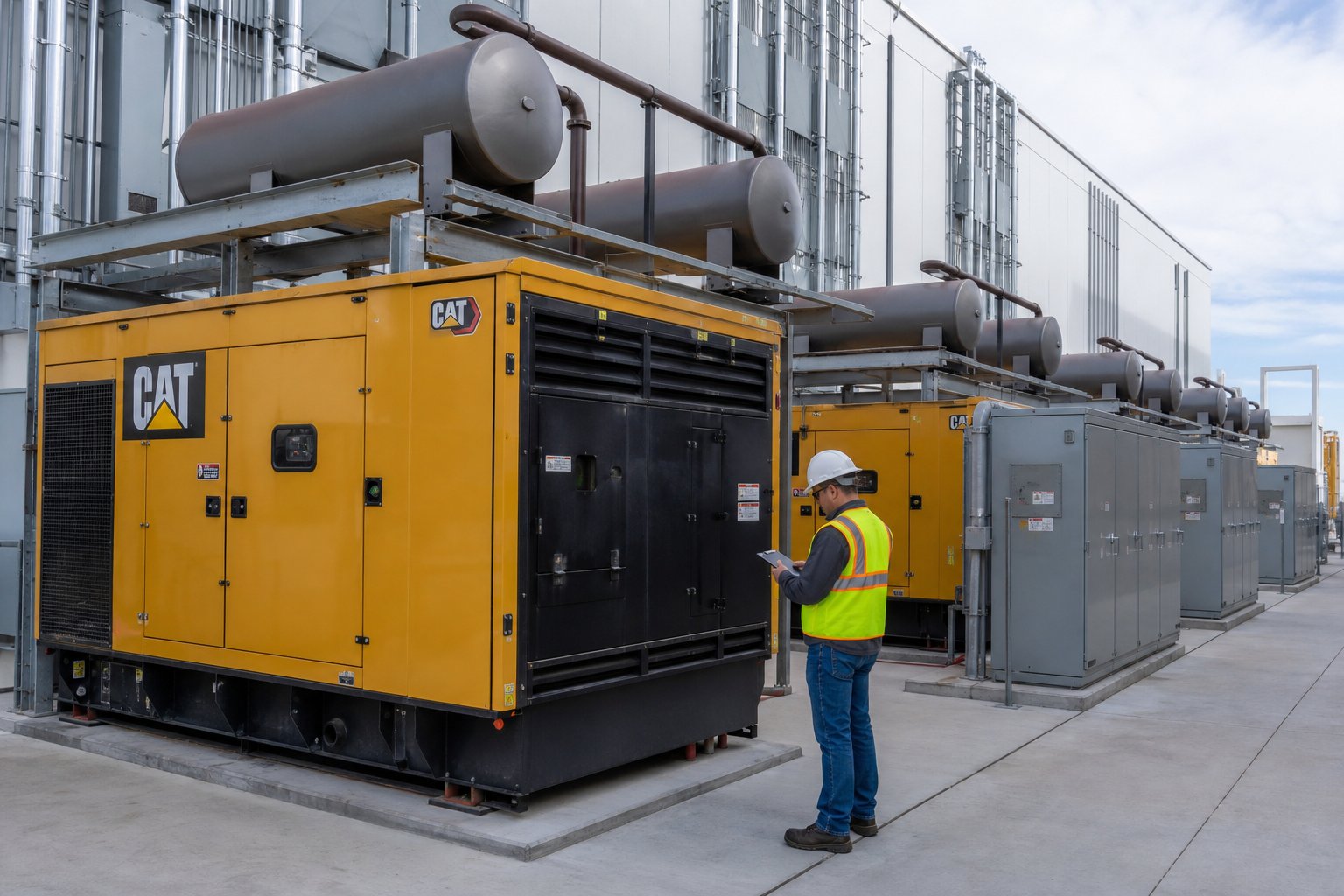
Specialist Generator Suppliers: 7 Proven Secrets to Secure Unbroken Emergency Power and Industrial Reliability
Unanticipated national grid disruptions, severe meteorological emergencies, substation transformer failures, and localized electrical surges threaten continuous commercial and industrial operations. Partnering with certified specialist generator suppliers guarantees that mission-critical infrastructure, healthcare facilities, high-density data centers, manufacturing plants, and utility assets maintain continuous electrical resilience when municipal power grids fail. Beyond merely selling boxed mechanical engine hardware, specialized power distributors provide end-to-end electrical engineering oversight—including precise acoustic attenuation modeling, thermodynamic thermal load calculations, synchronized parallel switchgear integration, and automatic transfer switch (ATS) commissioning. By sourcing industrial diesel, natural gas, or hybrid power generation assets through experienced engineering providers, commercial facilities protect expensive computational hardware, prevent millions in downtime losses, and maintain life-safety compliance across challenging operating environments.
The Engineering Demands of Mission-Critical Power Infrastructure
Commercial and institutional emergency power demands differ fundamentally from residential standby generation. When power drops in a tier-three data center, acute care hospital surgical suite, or continuous chemical processing facility, electrical transfer must occur within fractions of a second to prevent life-safety hazards and data corruption.
Understanding Electrical Load Topology and Step-Load Acceptance
Sizing an industrial generator requires precise analysis of electrical load profiles rather than simple nameplate wattage addition. Modern industrial facilities feature non-linear electrical loads, including variable frequency motor drives (VFDs), uninterruptible power supply (UPS) rectifiers, magnetic resonance imaging (MRI) equipment, and large chiller inductive motors.
Transient Voltage Dip and Subtransient Reactance (X”d)
When large electrical motors start, they demand inrush starting currents up to six times their steady-state full-load amperage. If an emergency alternator lacks sufficient subtransient reactance capability, this massive sudden inrush triggers severe transient voltage dips and frequency fluctuations. These electrical harmonics can cause sensitive server racks to trip offline or trigger UPS systems to reject generator power. Experienced specialist generator suppliers calculate ISO 8528 G3 transient performance standards, specifying oversized permanent magnet generator (PMG) excitation systems that absorb heavy motor step-loads without frequency destabilization.
Duty Classifications: Standby vs. Prime vs. Continuous Power
Specifying the correct engine duty cycle is essential for insurance compliance, warranty coverage, and thermal longevity:
- Emergency Standby Power (ESP): Engineered for providing emergency electrical power for the duration of a primary grid outage. Ratings assume variable electrical loads averaging up to seventy percent of maximum output, with annual run-time guidelines typically capped between two hundred and five hundred operational hours.
- Prime Rated Power (PRP): Designed for continuous utility duty in remote locations where no commercial grid exists (such as mining operations or civil infrastructure tunneling). Prime units handle variable electrical loads with unlimited annual run hours and provide a mandatory ten percent overload capacity for one hour in every twelve.
- Continuous Operating Power (COP): Formulated for non-stop, continuous baseload power supply at a constant one hundred percent load with zero permissible overload, commonly utilized in co-generation combined heat and power (CHP) installations.
Core Power Generation Technologies Sourced by Specialist Providers
Specialized engineering distributors evaluate facility site constraints, fuel supply logistics, and regional environmental emissions targets to specify the ideal mechanical powertrain.
Heavy-Duty Industrial Diesel Generator Sets
Diesel-fueled compression ignition internal combustion engines remain the global commercial standard for heavy emergency power. Diesel provides unmatched energy density, immediate black-start reliability, and safe long-term on-site fuel storage. Modern common-rail electronic fuel injection engines achieve full rated operational frequency and step-load acceptance within ten seconds of utility power collapse, fulfilling NFPA 110 Type 10 emergency life-safety mandates.
High-Efficiency Natural Gas and Bi-Fuel Solutions
For urban installations where on-site diesel fuel delivery is restricted by tight access roadways, natural gas spark-ignited generation provides an attractive, low-emission alternative. Connected directly to municipal natural gas pipeline distribution networks, these systems offer virtually indefinite continuous run times without requiring diesel delivery tankers during widespread regional disasters. Bi-fuel engine configurations blend natural gas with a diesel pilot charge, cutting operational fuel expenditures while maintaining diesel’s fast transient load response.
Hybrid Microgrids and Battery Energy Storage Systems (BESS)
Forward-thinking industrial facilities increasingly pair reciprocating generator sets with large lithium iron phosphate Battery Energy Storage Systems. In hybrid microgrid architectures, the battery storage system acts as an instantaneous shock absorber, handling momentary load spikes and providing zero-millisecond seamless bridge power while the generator engine warms to operational speed, reducing engine idling hours and fuel burn.
Industrial Powertrain Technical Specification Matrix
| Engineering Metric | Heavy Industrial Diesel | Spark-Ignited Natural Gas | Hybrid Diesel + BESS |
|---|---|---|---|
| Black-Start Transfer Time | 8 to 10 Seconds (NFPA 110) | 15 to 30 Seconds | Sub-Cycle (0 to 10 Milliseconds via BESS) |
| On-Site Fuel Storage Need | Dedicated bulk belly/day tanks | Zero (Pipeline utility feed) | Reduced diesel storage required |
| Carbon & Particulate Emissions | Stage V / Tier 4 Final aftertreatment | Low NOx, zero soot particulates | Lowest overall emissions footprint |
| Motor Inrush Capability | Exceptional step-load acceptance | Moderate (Requires larger alternator) | Superior (Battery buffers starting spikes) |
| Initial Capital Expenditure | Standard baseline investment | 20% to 35% higher initial cost | Highest initial capital outlay |
| Maintenance Overhead | Fuel polishing, lube oil, filters | Spark plugs, valve lash, gas train | Battery thermal management + engine service |
Custom Mechanical Packaging: Enclosures, Acoustics, and Fuel Systems
Industrial engines generate deafening acoustic sound pressure levels (often exceeding 105 dBA at one meter) alongside extreme exhaust heat. Specialized suppliers design bespoke auxiliary systems to meet strict municipal noise ordinances and safety standards.
Acoustic Attenuation and Weatherproof Canopies
Urban commercial developments, hospitals, and educational campuses enforce strict environmental noise limits, often mandating ambient noise levels below 65 to 75 dBA at the site boundary:
- Sound-Attenuated Canopies: Heavy-gauge galvanized steel or marine-grade aluminum enclosures lined with non-combustible rockwool acoustic insulation.
- Critical and Hospital-Grade Exhaust Silencers: Internal multi-chamber reactive and absorptive exhaust mufflers that reduce engine exhaust noise by thirty to forty-five decibels.
- Acoustic Splitter Louvers: Specially baffled airflow intake and discharge louvers that permit engine cooling airflow while trapping acoustic wave reflections inside the canopy.
Fuel Storage, Transfer Systems, and Fuel Polishing Infrastructure
Diesel fuel stored in static tanks for long periods is vulnerable to water condensation, particulate contamination, and bacterial microbial growth (often referred to as diesel bug). Specialist generator suppliers design sophisticated fuel handling infrastructure:
- Double-Skin Sub-Base Belly Tanks: Integrated bunded fuel tanks featuring interstitial leak-detection sensors that contain any internal fuel wall breach, preventing soil contamination.
- Automated Fuel Polishing Systems: Continuous filtration circuits that cycle stored fuel through water separators, magnetic fuel conditioners, and multi-stage particulate filters to ensure fuel remains pristine for emergency black-starts.
- Overhead Fuel Transfer Controls: Duplex fuel pumps and digital solenoid valving that automatically draw reserve diesel from remote underground bulk storage tanks to replenish the generator’s local day tank during extended multi-day outages.
Electrical Synchronization, Paralleling Switchgear, and Automatic Transfer
Operating multiple generator sets in parallel delivers operational redundancy and scalable power output that a single large engine cannot provide.
The Engineering of Generator Paralleling and Redundancy
In mission-critical installations (such as Tier IV data centers), power systems are configured with N+1 or 2N electrical redundancy. Specialist suppliers engineer digital paralleling switchgear that synchronizes multiple generator sets onto a common electrical busbar:
- Phase Synchronization: Digital engine governors align voltage amplitudes, frequencies, and phase angles across multiple running generators within milliseconds before closing generator circuit breakers.
- Dynamic Load Sharing: The paralleling controller continuously monitors facility electrical demand, automatically starting additional standby sets as load increases and shedding unneeded engines during low-demand periods to optimize engine fuel efficiency and prevent wet-stacking.
Automatic Transfer Switches (ATS) and Closed-Transition Bypass
The Automatic Transfer Switch represents the mechanical bridge between utility municipal power and emergency generator generation. Specialist suppliers provide open-transition (break-before-make) and closed-transition (make-before-break) ATS units. Closed-transition transfer switches momentarily synchronize the running generator with the restored utility grid before disconnecting the generator, allowing seamless power re-transfer back to municipal lines with zero power interruptions to facility equipment.
Lifecycle Commissioning, Load Banking, and Preventative Maintenance
A standby generator system is an insurance policy that must perform flawlessly when called upon. Reliable operation demands rigorous factory testing, on-site commissioning, and proactive preventative maintenance.
Full-Scale Resistive-Reactive Load Bank Testing
Simply running an emergency generator without electrical load during weekly maintenance tests fails to validate system integrity. In fact, extended no-load running causes wet-stacking—the accumulation of unburned fuel, carbon, and lubricating oil inside the exhaust manifolds and turbochargers. Specialist generator suppliers conduct annual resistive and reactive load bank testing, connecting portable high-capacity load banks to run the engine at one hundred percent full rated capacity for several hours. This burns out internal carbon deposits, validates cooling radiator efficiency, and confirms alternator thermal performance under full electrical stress.
24/7 Remote Telemetry and Preventative Service Service-Level Agreements (SLAs)
Modern industrial power installations integrate cellular IoT telemetry modems that stream live operating parameters to centralized network operations centers:
- Battery Float Voltage & Starter Health: Monitors battery charging health, flagging weak battery cells before they cause starting motor failure.
- Engine Coolant Temperatures: Verifies that jacket water block heaters maintain engine blocks at warm starting temperatures (typically 40°C to 50°C), ensuring immediate cold-weather ignition.
- Emergency Fuel Levels: Tracks live fuel volume, dispatching automated alerts to fuel delivery suppliers during prolonged utility outages.
Frequently Asked Questions About Specialist Generator Suppliers
Why should a commercial facility work with specialist generator suppliers rather than general equipment distributors?
Specialist suppliers provide comprehensive mechanical and electrical engineering support, including complex step-load sizing, acoustic modeling, parallel switchgear synchronization, and turnkey commissioning that generic distributors cannot provide.
What is the significance of the NFPA 110 Type 10 standard for emergency generators?
NFPA 110 Type 10 mandates that an emergency power supply system must automatically start, achieve rated voltage and frequency, and transfer critical life-safety electrical loads within ten seconds of utility power failure.
What is wet-stacking in diesel generators, and how is it prevented?
Wet-stacking occurs when diesel engines run at light loads (under thirty to forty percent capacity), leading to unburned fuel and soot collecting in the exhaust system; it is resolved by conducting regular full-load resistive load bank testing.
How often should an industrial standby generator be serviced?
Emergency generators require weekly or monthly automated exercising, comprehensive minor quarterly inspections (fluids, filters, batteries), and intensive annual servicing including oil sampling and full-capacity load banking.
Can multiple smaller generators be synchronized together to replace one large generator?
Yes, installing multiple smaller generators in an N+1 parallel configuration provides greater system redundancy, lower initial maintenance risk, and scalable operational flexibility during varied load conditions.
What is the role of an Automatic Transfer Switch (ATS) bypass-isolation design?
A bypass-isolation ATS features secondary manual switching contacts that allow electrical technicians to inspect, test, and service the primary automatic transfer switch without disconnecting power to the building.
Conclusion
Securing mission-critical industrial, healthcare, and commercial facilities against catastrophic electrical power outages requires specialized engineering expertise, high-durability hardware, and robust electrical design. Engaging certified specialist generator suppliers ensures that every stage of the emergency power lifecycle—from electrical load profile analysis and subtransient reactance calculations to acoustic sound attenuation, automated fuel polishing, and paralleling switchgear commissioning—is executed to the highest engineering standards. By pairing heavy-duty Tier 4 or Stage V diesel and gas powertrains with automated transfer switching, remote telemetry monitoring, and rigorous annual load bank testing, commercial enterprises eliminate downtime vulnerabilities, fulfill strict regulatory life-safety codes, and guarantee unbroken power reliability when the electrical grid fails.