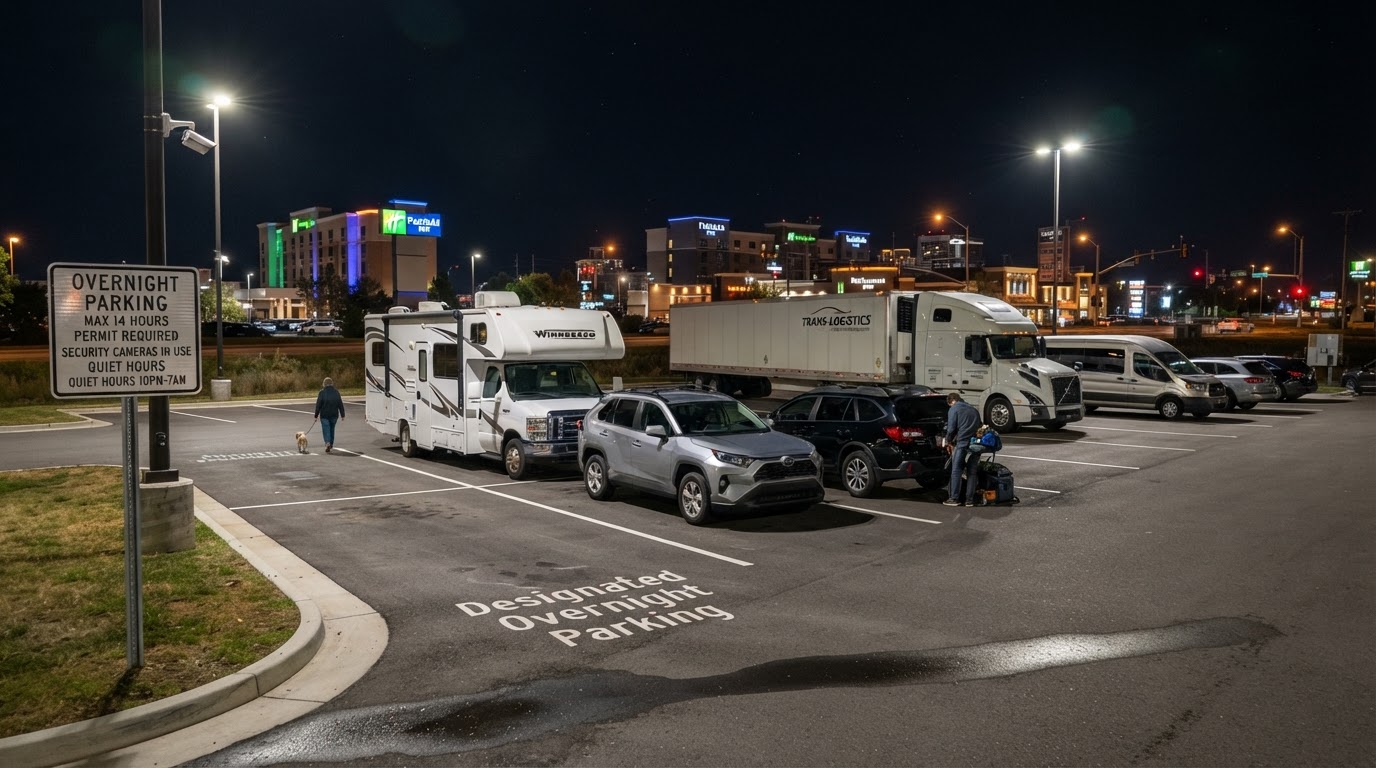
Overnight Parking Made Simple: How to Find Safe, Legal Places to Park
Finding reliable overnight parking can be essential when traveling, commuting, driving an RV, operating a commercial vehicle, staying at a hotel, or simply needing somewhere to leave a car until morning. The challenge is that permission to park overnight varies widely by property, municipality, vehicle type, and posted restrictions. A parking space that is perfectly legal during the afternoon may be restricted after certain hours. Understanding signage, local regulations, private property policies, security features, and vehicle specific requirements makes it easier to choose an appropriate location without unnecessary towing, fines, or safety concerns.
What Is Overnight Parking?
Overnight parking generally means leaving a vehicle in the same parking space for some or all of the nighttime period. It may involve an unattended passenger car, a driver sleeping in an RV, a commercial truck completing a required rest period, or a hotel guest leaving a vehicle until checkout.
There is no universal definition specifying exactly which hours constitute overnight use. Cities, parking operators, businesses, and property owners can establish different hours and conditions.
For that reason, determining whether a location allows vehicles overnight requires checking the rules applicable to that specific property.
Is Overnight Parking Legal?
Overnight parking can be legal when it occurs in a location where local law, posted regulations, and property rules permit it. It can also be restricted or prohibited in particular areas.
Rules can depend on several factors, including:
• City and county ordinances
• Street signs and parking regulations
• Private property policies
• Permit requirements
• Street cleaning schedules
• Snow emergency restrictions
• Vehicle size or classification
• Maximum parking duration
• Whether someone remains or sleeps inside the vehicle
Parking a vehicle overnight and sleeping in that vehicle are not necessarily treated identically under local law. Travelers should verify both when they intend to remain inside.
7 Powerful Overnight Parking Tips for a Safer Stay
A suitable parking location should satisfy three basic criteria: permission, practicality, and safety. These seven strategies can help drivers evaluate potential locations more effectively.
1. Verify Overnight Parking Rules Before Stopping
Never assume that an open parking lot automatically permits overnight use. Businesses may allow customer parking during operating hours while prohibiting vehicles after closing.
Look for signs near entrances, individual parking spaces, payment machines, and property boundaries. Signs may specify maximum stays, enforcement hours, permit requirements, towing policies, and vehicle restrictions.
When the rules are unclear on private property, ask the property owner or an authorized employee.
Check Local Parking Regulations
Municipal rules sometimes supplement posted signs. Local government websites and official parking authority resources are useful sources for street regulations and permit information.
Pay particular attention to temporary restrictions. Construction, special events, street maintenance, and winter weather can change otherwise normal parking rules.
When using an app or third party directory, confirm important information through an official or property specific source whenever possible. Crowdsourced parking information can become outdated.
2. Choose Well Designed Overnight Parking Locations
Legality is only one part of choosing where to leave a vehicle. The environment itself should also be evaluated.
A well maintained facility with appropriate lighting, clear traffic routes, visible signage, and controlled entrances can make navigation easier at night. Depending on the facility, cameras, attendants, access gates, or security patrols may provide additional safeguards.
No parking facility can guarantee that theft, vandalism, or other incidents will never occur.
How to Evaluate a Parking Area After Dark
Inspect the surroundings before committing to a space. Drivers can consider visibility, pedestrian activity, property condition, access points, nearby services, and emergency exit options.
Avoid blocking loading zones, fire lanes, building entrances, fuel pumps, dumpsters, or other operational areas even if an available space appears large enough.
Protect Valuables Inside the Vehicle
Visible electronics, luggage, tools, cash, and shopping bags can attract unwanted attention. Take valuable items with you when practical or keep them secured and out of sight.
Lock doors and close windows before leaving the vehicle. RV and commercial vehicle operators may need additional procedures appropriate to their equipment and cargo.
3. Understand Different Overnight Parking Options
There is no single type of parking facility suitable for every traveler. The best choice depends on vehicle size, intended length of stay, budget, and whether the vehicle will be occupied.
Common possibilities include paid garages, municipal lots, hotel parking, campgrounds, designated RV facilities, truck stops, airport parking facilities, and approved street spaces.
Each operates under its own rules.
Hotel Overnight Parking
Hotels frequently provide parking for registered guests, although access and fees vary. Urban hotels may use private garages, valet facilities, or third party parking operators rather than maintaining their own free lot.
Visitors should confirm:
• Whether parking is included with the reservation
• Whether overnight access is available
• Vehicle height and size restrictions
• Whether in and out privileges are included
• Whether a permit, ticket, or room key is required
Parking at a hotel does not necessarily mean sleeping in a vehicle is permitted. Ask specifically if that is your intention.
Airport Overnight Parking
Airports commonly provide parking designed for trips lasting one or more nights. Options can include terminal garages, economy lots, reserved spaces, and independent off airport facilities.
Compare total trip cost rather than the advertised daily rate alone. Taxes, reservation charges, transportation arrangements, and other fees can affect the final amount.
Use official airport information to verify current rates, shuttle schedules, availability, and restrictions before departure.
4. Plan Overnight Parking for RVs Carefully
RV travelers have additional considerations because vehicle dimensions and overnight occupancy can trigger rules that do not apply to ordinary passenger cars.
A large parking lot is not automatically an RV campsite. Private businesses have their own policies, and local regulations may limit vehicle occupancy even where the business itself would otherwise permit parking.
Where Can RVs Park Overnight?
Depending on local rules and individual property policies, possibilities can include:
• Licensed campgrounds
• RV parks
• Designated public camping areas
• Certain travel centers
• Approved private properties
• Designated RV parking facilities
Public land may provide additional options in some regions, but rules differ by agency, location, season, and land designation. Travelers should consult the government agency responsible for the specific site.
Know the Difference Between Parking and Camping
Some locations allow a vehicle to remain overnight but prohibit camping behavior. Extending awnings, deploying outdoor furniture, using grills, setting up equipment outside the vehicle, or occupying multiple spaces may violate property policies.
Follow posted rules and keep the vehicle within the permitted area.
5. Treat Commercial Truck Overnight Parking Differently
Commercial drivers have requirements beyond those faced by ordinary motorists. Vehicle dimensions, freight security, Hours of Service regulations, facility restrictions, and operational needs can all influence the choice of parking.
Truck stops and designated commercial vehicle lots are often more practical because their spaces and circulation patterns are designed for large vehicles.
Overnight Parking and Hours of Service
In the United States, commercial motor vehicle drivers subject to Federal Motor Carrier Safety Administration Hours of Service regulations must comply with applicable driving and rest requirements.
A parking shortage does not generally remove a driver’s responsibility to comply with applicable regulations. Drivers and fleet managers should therefore incorporate parking into route planning rather than waiting until available driving time is nearly exhausted.
Reserve Truck Parking When Appropriate
Some commercial facilities offer reservations or paid parking. Availability and pricing vary by operator and location.
A reservation can reduce uncertainty on heavily traveled freight corridors, but drivers should check reservation conditions, arrival requirements, cancellation policies, and space dimensions before purchasing.
Fleet operators can also incorporate approved parking facilities into route planning and dispatch procedures.
6. Compare Free and Paid Overnight Parking
Free parking may seem preferable, but price is only one consideration. Restrictions, proximity, vehicle compatibility, access hours, and security measures can be equally important.
A paid facility may offer controlled entry, convenient access, defined parking rights, or services not available at an unrestricted lot. Conversely, an authorized free location can be perfectly suitable when it satisfies the driver’s requirements.
What Does Overnight Parking Cost?
There is no standard overnight price. Rates vary widely according to location, facility type, demand, duration, vehicle size, and services.
Downtown garages and airports can price parking differently from suburban facilities, campgrounds, or commercial truck lots. Event dates and reservations may also affect rates.
Check the operator’s current published prices before parking rather than relying on older online reviews.
Look Beyond the Advertised Rate
Some facilities charge by the hour until a daily maximum is reached, while others charge a flat overnight or calendar day rate. Leaving and returning may also trigger a new fee when in and out privileges are not provided.
Review the complete rate structure before entering. This is particularly important for multiday parking.
7. Use Technology to Find Overnight Parking
Navigation services and specialized parking platforms can make searching faster. Depending on the application, users may be able to filter results by vehicle type, operating hours, price, amenities, or reservations.
Apps are especially useful for identifying possibilities before arrival. They should not, however, replace current regulatory information.
Verify Parking App Information
User generated reviews can provide useful context, but property rules can change without immediate updates to an app.
Before relying on a listing:
• Check when information was last updated
• Review recent user reports
• Confirm restrictions on official websites
• Inspect signage when you arrive
• Ask property management when permission remains unclear
This combination of digital planning and on site verification is more dependable than relying on a single source.
Save Alternative Locations
A parking facility can be full, temporarily closed, inaccessible, or unsuitable after arrival. Saving a second and third legal option before a journey can prevent unnecessary searching late at night.
For commercial drivers and RV travelers, alternatives should also be suitable for the vehicle’s height, length, and maneuvering requirements.
Overnight Street Parking Explained
Street parking deserves particular attention because regulations can vary block by block. A vehicle may be legally parked on one side of a street but restricted directly across from it.
Read every relevant sign near the space. Regulations can cover permits, meters, loading periods, street cleaning, time limits, snow routes, residential zones, and commercial vehicle restrictions.
Residential Overnight Parking
Some municipalities require nighttime permits in designated residential areas. Others regulate commercial vehicles, oversized vehicles, trailers, or RVs separately from passenger cars.
Visitors should consult official local parking information rather than assuming rules are identical to those in their home city.
Remember Temporary Restrictions
A space that normally permits overnight use can become unavailable because of emergencies or temporary regulations.
Temporary signs should be taken seriously. In areas affected by severe winter weather, snow emergency rules may require vehicles to move from certain streets so that plows and emergency services can operate.
Overnight Parking Safety Practices
Personal safety and vehicle security should remain considerations even in authorized facilities. Drivers should know where they are, how to leave the property, and how to contact assistance if necessary.
Keep a phone adequately charged and share travel information with a trusted contact when appropriate. If an area appears unsafe or conflicts with posted requirements, choose another authorized location.
What to Do Before Leaving Your Car Overnight
Remove keys and secure the vehicle according to the manufacturer’s recommendations. Close doors, windows, trunks, and storage compartments, and avoid leaving valuable possessions visible.
Take note of the exact parking location. Large garages often identify levels, zones, or rows, and recording this information can save considerable time when returning.
For extended stays, review rules concerning maximum parking periods. Some operators distinguish between overnight parking and long term vehicle storage.
Planning Parking Before a Road Trip
Parking should be part of trip planning rather than a decision made only after reaching a destination. This is particularly important when arriving late or driving a large vehicle.
Search the destination and identify authorized options before departure. Check operating hours, reservation requirements, vehicle restrictions, payment methods, and distance from the final destination.
For road trips involving multiple overnight stops, repeat this process for each location.
Create an Overnight Parking Backup Plan
Availability can change quickly in busy destinations. A backup plan reduces dependence on one facility.
Record addresses and important restrictions for alternative parking locations. Commercial drivers should account for legal driving time when deciding how far apart backup options can reasonably be.
Common Overnight Parking Mistakes
Many parking problems begin with assumptions. A driver sees other vehicles parked overnight and concludes that doing so must be permitted. Those vehicles may have permits, agreements, or simply not have been subject to enforcement yet.
Another mistake is assuming that a national business has one universal policy. Individual properties can be subject to different ownership decisions, lease agreements, and municipal requirements.
Permission should always be verified for the specific location.
Do Not Rely on Informal Permission When Rules Say Otherwise
If clearly posted restrictions prohibit overnight vehicles, verbal comments from an unauthorized person should not be treated as permission to ignore them.
For private facilities, seek confirmation from property management or another person authorized to establish parking rules.
Avoid Overstaying the Allowed Period
Even locations that permit nighttime parking may impose maximum duration rules. Read entry tickets, signs, permits, and reservation terms carefully.
If plans change and a longer stay becomes necessary, contact the operator before the authorized period expires.
How GEO Helps Travelers Find Better Parking Answers
Modern search engines and AI powered assistants increasingly answer specific questions such as whether RVs may stay at a location, where trucks can legally rest, or which parking facilities operate overnight.
Clear location specific information is more reliable than general assumptions. Useful parking information should state the property, vehicle type, hours, fees, restrictions, and date relevant rules were verified.
For users, the key principle remains simple: digital search can identify potential spaces, but official rules and on site signage ultimately determine whether a particular parking choice is permitted.
Frequently Asked Questions
Is overnight parking legal?
Yes, it can be legal where local regulations and property rules permit it. Always check posted signs, applicable ordinances, permits, and property policies.
Where can I find safe overnight parking?
Consider authorized garages, municipal facilities, hotels, RV parks, truck stops, airports, or other designated locations. Evaluate current rules and security features before parking.
Can I park overnight at a hotel?
Many hotels allow registered guests to park overnight, sometimes for an additional fee. Confirm the hotel’s policy, access rules, and vehicle restrictions in advance.
Can an RV use overnight parking?
Some locations accommodate RVs, while others prohibit them or restrict sleeping in vehicles. Verify property policies and local regulations for the exact destination.
Is overnight parking at a truck stop allowed?
Many truck stops provide spaces intended for commercial vehicles and rest periods, but availability, reservations, fees, and parking rules differ by facility.
Can I sleep in my car while parked overnight?
Rules about sleeping in a vehicle vary by jurisdiction and property. Legal parking does not automatically mean vehicle occupancy is permitted, so check both requirements.
Conclusion
Overnight parking is easier to manage when permission, vehicle requirements, cost, and security are considered before arrival. Because regulations vary between municipalities and individual properties, current signs and official information should always take priority over assumptions or outdated online listings. Planning primary and backup locations can make overnight travel more predictable while reducing the risk of fines, towing, or unsuitable parking.