Gravel Installation: 7 Proven Tips to Get the Best Results Fast
Whether you are upgrading a driveway, creating a functional pathway, improving drainage across your property, or enhancing your landscape design, gravel installation done correctly delivers results that are durable, attractive, and cost-effective for years to come. Gravel is one of the most versatile and widely used materials in both residential and commercial landscaping and construction applications, offering an exceptional combination of permeability, structural performance, and aesthetic flexibility that few other surfacing materials can match. However, the difference between a gravel installation that holds up beautifully through years of use and one that migrates, sinks, erodes, or becomes weed-choked within a single season comes down entirely to the quality of planning, material selection, and installation technique applied from the very beginning. This comprehensive guide provides the practical knowledge and expert guidance needed to achieve outstanding gravel installation results every time.
Understanding Gravel as a Versatile Landscaping and Construction Material
Gravel is a broad term that encompasses a wide range of crushed stone, natural stone, and aggregate materials used across an enormous variety of applications. Understanding the fundamental characteristics of different gravel types and how those characteristics relate to specific installation purposes is the essential starting point for any successful gravel project.
The Primary Categories of Gravel Used in Installation Projects
Gravel materials used in professional installation projects fall into several broad categories distinguished by their origin, processing method, particle size, and surface texture. Crushed stone is produced by mechanically breaking larger rock into angular fragments of specific sizes, creating a material with sharp edges that interlock under compaction to produce stable, load-bearing surfaces. Natural gravel consists of rounded particles worn smooth by water action over geological time, offering a softer aesthetic but less interlocking stability under load. Pea gravel, river rock, decomposed granite, and crushed limestone each represent distinct material types with specific performance characteristics suited to particular applications.
How Particle Size and Angularity Affect Installation Performance
The size and shape of individual gravel particles have profound effects on how a gravel installation performs over time. Angular crushed stone particles interlock when compacted, creating a stable matrix that resists displacement under traffic and load. Rounded natural gravel particles do not interlock in the same way, making them less suitable for high-traffic driveways but ideal for decorative applications, drainage layers, and garden pathways where their smooth appearance and gentle texture are desirable qualities. Particle size affects drainage rate, compactability, surface stability, and the ease with which the material is displaced by foot traffic, vehicle movement, or water flow.
Why Proper Gravel Installation Planning Matters
The most common reason gravel installations fail prematurely is inadequate planning before a single stone is placed. Skipping or shortcutting the planning phase leads to problems including insufficient depth, poor drainage design, inadequate edging, and material choices mismatched to the intended application. These problems are far more expensive to correct after installation than to prevent through thorough upfront planning.
Assessing Your Site Before Gravel Installation Begins
Every successful gravel installation begins with a thorough assessment of the site conditions that will affect material selection, preparation requirements, and drainage design. Key site assessment factors include the existing soil type and its drainage characteristics, the slope and grade of the installation area, the intended use and expected traffic load, the proximity of existing structures, trees, and landscape features that may affect gravel migration or drainage patterns, and any underground utilities that must be located before excavation begins.
Setting Realistic Goals and Performance Expectations
Different gravel installation applications demand different standards of performance, and establishing clear goals before the project begins ensures that material selection, depth specification, and installation technique are all calibrated to deliver the desired outcome. A decorative garden path has fundamentally different performance requirements than a commercial vehicle driveway, and the installation approach must reflect those differences to achieve results that meet expectations over the long term.
7 Proven Tips to Get the Best Gravel Installation Results
The following seven tips represent the collective wisdom of experienced gravel installation professionals and provide a comprehensive framework for achieving outstanding results across any gravel installation application.
Tip 1: Choose the Right Gravel Type for Your Specific Application
Material selection is the single most consequential decision in any gravel installation project. Using the wrong gravel type for a specific application is one of the most common and costly mistakes made in both DIY and professional installations. The right material choice depends on the intended use, the traffic load the surface will bear, the drainage requirements of the site, and the aesthetic outcome desired by the property owner.
Matching Gravel Types to Common Installation Applications
For driveways and areas subject to vehicle traffic, crushed stone in sizes ranging from three-quarter inch to one and a half inches provides the structural stability and load-bearing capacity required for reliable long-term performance. Pea gravel and river rock are well suited to decorative garden beds, pathways, and water features where their smooth, rounded appearance enhances visual appeal. Crushed limestone and decomposed granite compact well and are frequently used for pathways, patios, and stable yard surfaces. Clean washed gravel with minimal fine particle content is the preferred choice for drainage applications including French drains, dry wells, and subsurface drainage systems where permeability is the primary performance requirement.
Tip 2: Prepare the Base Thoroughly Before Placing Gravel
Thorough base preparation is the foundation of every successful gravel installation. The quality of the base determines the long-term stability, drainage performance, and appearance of the finished surface. Inadequate base preparation is responsible for the majority of gravel installation failures including sinking, rutting, weed infiltration, and poor drainage.
The Correct Excavation Depth for Different Applications
Excavation depth requirements vary based on the intended application and the load the gravel surface will bear. Decorative garden paths and low-traffic areas typically require a minimum excavation depth of four to six inches to accommodate a compacted base layer and finished gravel surface. Residential driveways require deeper excavation of eight to twelve inches to provide adequate structural depth for vehicle load distribution. Commercial vehicle areas may require even greater depth depending on the weight and frequency of vehicles using the surface. In all cases, the excavated area should be graded to promote positive drainage away from structures and toward appropriate drainage outlets.
Tip 3: Install a Quality Geotextile Fabric Barrier
Landscape fabric or geotextile barrier installation between the prepared subgrade and the gravel layer is a step that separates professional-quality gravel installations from those that fail prematurely due to weed infiltration and gravel migration into the underlying soil. A properly selected and installed geotextile fabric performs two critical functions simultaneously: it prevents weed growth from penetrating upward through the gravel layer, and it separates the gravel from the underlying soil to prevent the gradual downward migration of gravel particles that causes surface settlement over time.
Selecting the Right Geotextile for Gravel Installation
Not all landscape fabrics and geotextile materials perform equally in gravel installation applications. Woven geotextile fabrics offer superior tensile strength and separation performance compared to non-woven fabrics and are the preferred choice for driveway and high-traffic applications. Non-woven fabrics provide adequate performance for decorative and low-traffic applications. Avoid thin, lightweight plastic sheeting sometimes sold as landscape fabric, as it lacks the permeability required for proper drainage and degrades rapidly under the mechanical stress of gravel loading and temperature cycling.
Tip 4: Build a Proper Layered Base Structure
Professional gravel installation for driveways and load-bearing surfaces uses a layered approach to base construction that distributes load effectively, promotes drainage, and provides the structural depth required for long-term performance. This layered system consists of progressively finer material from the bottom of the excavation to the finished surface.
The Three-Layer Gravel Installation System
The foundation layer at the bottom of the excavation consists of large angular crushed stone, typically two to four inches in diameter, that provides structural stability and rapid drainage. The middle layer uses medium-sized crushed stone, typically three-quarter to one and a half inches, that bridges between the large foundation material and the finished surface layer while continuing to provide structural support and drainage. The finished surface layer uses appropriately sized gravel for the intended application, compacted to provide a stable, functional surface that meets the aesthetic and performance requirements of the project. Each layer should be compacted before the next is placed to ensure maximum stability of the completed installation.
Tip 5: Use Proper Edging to Contain Gravel and Define Borders
Gravel migration beyond the intended installation area is one of the most common maintenance challenges associated with gravel surfaces, and it is one that can be almost entirely prevented through the installation of appropriate edging systems at the perimeter of the gravel area. Without effective edging, gravel spreads gradually onto adjacent lawn areas, garden beds, and hardscape surfaces, creating a continuous maintenance burden and diminishing the visual appeal of the installation.
Edging Material Options for Gravel Installation
Several edging material options are available for gravel installation projects, each with distinct characteristics in terms of durability, aesthetic impact, and installation complexity. Steel landscape edging provides a clean, low-profile border that holds gravel effectively and resists displacement over time. Aluminum edging offers similar performance with superior corrosion resistance in wet environments. Concrete, brick, and natural stone edging creates a more substantial visual border that complements formal landscape designs. Plastic edging is the most economical option but offers inferior durability and resistance to displacement compared to metal alternatives, making it less suitable for high-traffic or load-bearing gravel applications.
Tip 6: Compact Gravel Layers Properly Using Appropriate Equipment
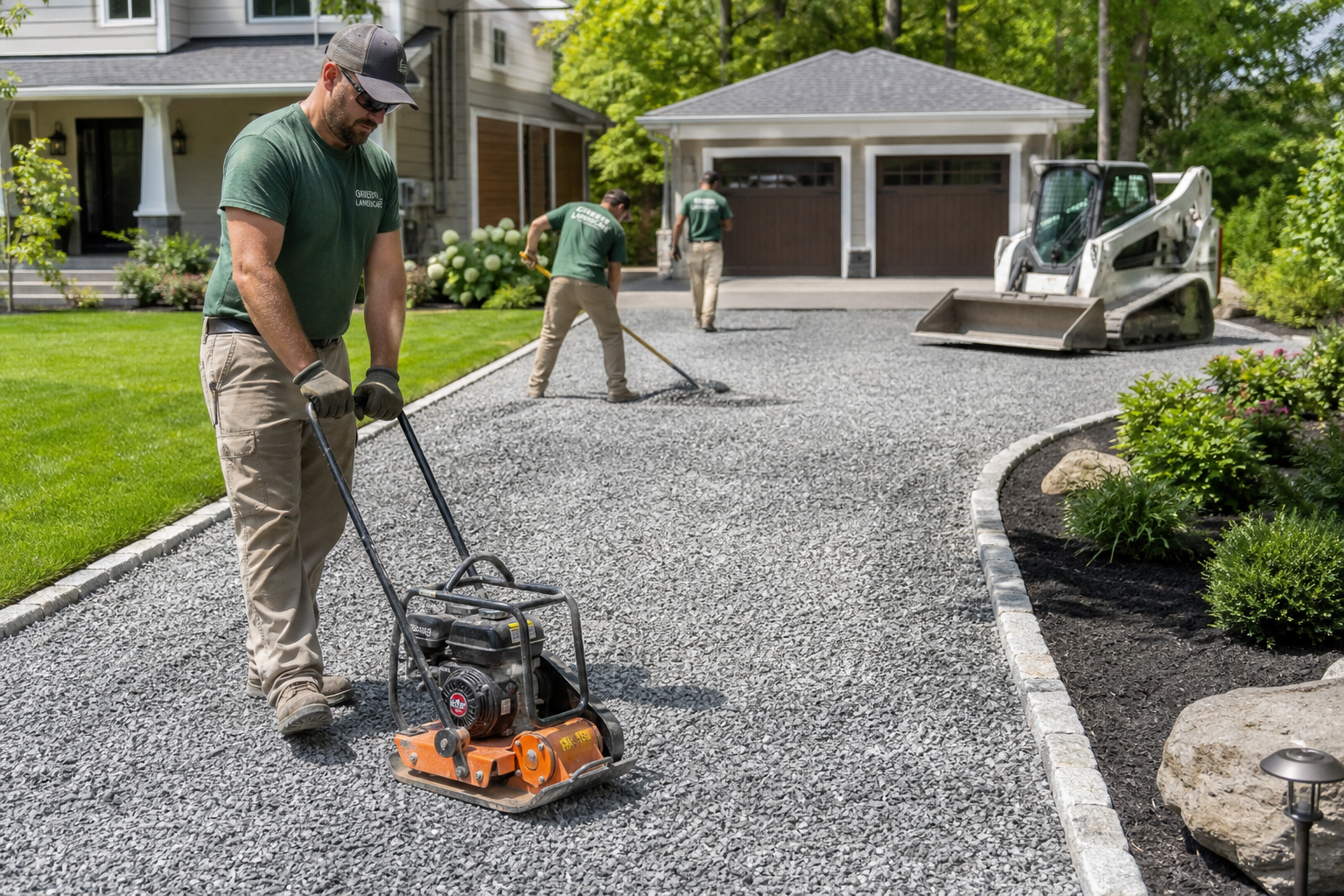
Compaction is the process that transforms a loose aggregate into a stable, load-bearing surface capable of withstanding the demands placed upon it. Inadequate compaction is a primary cause of surface instability, rutting, and gravel displacement in driveways and high-traffic gravel areas. Each layer of gravel in a properly constructed installation should be compacted before subsequent layers are placed, using equipment appropriate to the scale and nature of the project.
Compaction Equipment for Different Project Scales
Plate compactors are the standard tool for compacting gravel layers in residential driveway and pathway installations. They deliver effective compaction across a wide work area efficiently and are available for rental at most equipment rental providers. Hand tampers are suitable for small areas, tight spaces, and edging zones where power equipment cannot reach. Vibratory rollers are used for larger commercial gravel installations where the scale of the project justifies the use of heavier compaction equipment. Regardless of the equipment used, compaction should be performed in multiple passes covering the entire surface area to ensure uniform density throughout the layer.
Tip 7: Plan and Execute Drainage Design as an Integral Part of Installation
Drainage is not an afterthought in gravel installation but an integral design element that must be planned and executed with the same care as material selection and base preparation. Poor drainage leads to standing water, erosion, surface instability, and in cold climates, frost heave damage that can devastate a gravel installation within a single winter season. Every gravel installation should incorporate a deliberate drainage plan that accounts for the volume of water the surface will collect, the direction and rate at which that water must be moved, and the outlets or infiltration areas where collected water will be directed.
Integrating French Drains and Subsurface Drainage With Gravel Surfaces
In areas where surface drainage alone is insufficient to manage water volumes effectively, subsurface drainage systems including French drains and perforated pipe installations can be integrated into the gravel installation to provide additional drainage capacity. These systems collect water that infiltrates through the gravel surface and channels it to appropriate outlets away from structures and problem areas. The highly permeable nature of gravel makes it an excellent companion material for subsurface drainage systems, and the two are frequently designed and installed together as a comprehensive water management solution.
Common Gravel Installation Mistakes to Avoid
Understanding the most frequent errors made in gravel installation projects helps both homeowners and contractors avoid problems that compromise the performance and longevity of the finished work.
Insufficient Depth and Inadequate Base Preparation
The most prevalent mistake in residential gravel installations is insufficient depth, particularly for driveway applications where the temptation to minimize excavation and material costs leads to installations that lack the structural depth to withstand vehicle loading without rutting and sinking. Cutting corners on excavation depth and base layer preparation consistently produces installations that require significant remediation within a short period, negating any cost savings achieved during the original installation.
Using the Wrong Gravel for the Application
Placing rounded decorative gravel such as pea gravel in a driveway application is a common error that results in an unstable, shifting surface that is difficult and potentially hazardous to walk and drive on. Conversely, using coarse angular crushed stone in a barefoot garden path creates an uncomfortable and uninviting surface that defeats the purpose of the installation. Matching material characteristics precisely to application requirements is a fundamental installation principle that should never be compromised for reasons of material availability or cost.
Neglecting Weed Control Below the Gravel Layer
Installing gravel without an appropriate geotextile barrier beneath it creates a perpetual weed management problem as vegetation pushes up through the gravel from the underlying soil. Once established, weeds growing through a gravel surface are extremely difficult to eradicate completely without removing and replacing the entire gravel installation. Preventing this problem with a proper fabric barrier during initial installation is dramatically more cost-effective than attempting to manage it after the fact.
Maintaining Your Gravel Installation for Long-Term Performance
Even the highest-quality gravel installation requires periodic maintenance to sustain its appearance and functional performance over time. Establishing a regular maintenance routine from the beginning extends the service life of the installation and minimizes the cumulative cost of ownership.
Regular Raking and Surface Redistribution
Vehicle traffic, foot traffic, and water flow gradually redistribute gravel away from high-traffic zones and toward the edges of the installation area. Regular raking redistributes displaced material back to areas where surface coverage has thinned, maintaining uniform depth and surface stability throughout the installation. For driveways, this maintenance task is most effectively performed seasonally, with additional attention given after significant rain events that may cause localized erosion.
Periodic Gravel Top-Dressing to Replace Lost Material
Over time, gravel installations lose material through displacement, dust generation from fine particle breakdown, and gradual compaction of the base. Periodic top-dressing with fresh gravel material restores surface depth, refreshes the appearance of the installation, and compensates for material loss that occurs through normal use and weathering. The frequency of top-dressing depends on traffic intensity and exposure conditions, but most residential gravel driveways benefit from a top-dressing application every two to three years.
Hiring a Professional Gravel Installation Contractor
While many gravel installation projects are within the capability of motivated homeowners with access to appropriate equipment, larger projects and those involving complex drainage requirements or significant excavation are best entrusted to experienced professional contractors.
What to Look for in a Gravel Installation Contractor
When selecting a contractor for a gravel installation project, look for demonstrated experience with projects similar in scale and complexity to yours, the ability to provide references from completed local projects, access to professional-grade equipment including excavators, plate compactors, and material delivery vehicles, clear and detailed written proposals that specify material types, depths, and installation methods, and appropriate licensing and insurance coverage for the work being performed.
Frequently Asked Questions
How deep should gravel be installed for a residential driveway?
Residential driveways typically require a total gravel depth of eight to twelve inches, incorporating a compacted base layer of larger stone and a finished surface layer of appropriately sized gravel for vehicle traffic.
What is the best type of gravel for a driveway installation?
Crushed stone in three-quarter inch to one and a half inch sizes is widely regarded as the best choice for driveways due to its angular particle shape that interlocks under compaction to create a stable, load-bearing surface.
Do I need landscape fabric under gravel installation?
Yes, installing a quality geotextile fabric barrier beneath gravel is strongly recommended to prevent weed infiltration from below and to separate the gravel from the underlying soil to prevent downward migration and surface settlement.
How often does a gravel installation need to be maintained?
Most gravel installations benefit from seasonal raking to redistribute displaced material and a top-dressing application of fresh gravel every two to three years to restore surface depth lost through normal use and weathering.
Can gravel installation improve drainage on my property?
Yes, gravel is highly permeable and is frequently used in drainage applications including French drains and subsurface drainage systems that manage water infiltration and prevent standing water and erosion.
How do I prevent gravel from spreading beyond the installation area?
Installing appropriate edging materials such as steel or aluminum landscape edging along all perimeter boundaries of the gravel installation effectively contains the material and prevents migration onto adjacent lawn and garden areas.
Conclusion
Gravel installation is a highly practical and versatile solution for driveways, pathways, drainage systems, and landscape applications that delivers exceptional long-term value when planned and executed with care and expertise. By selecting the right material for each specific application, preparing the base thoroughly, incorporating proper drainage design, using appropriate geotextile barriers and edging systems, compacting each layer correctly, and committing to a consistent maintenance routine, property owners can enjoy a gravel installation that performs reliably, looks attractive, and serves its intended purpose effectively for many years. The investment of time and attention made during the planning and installation process pays dividends through every season of use that follows.