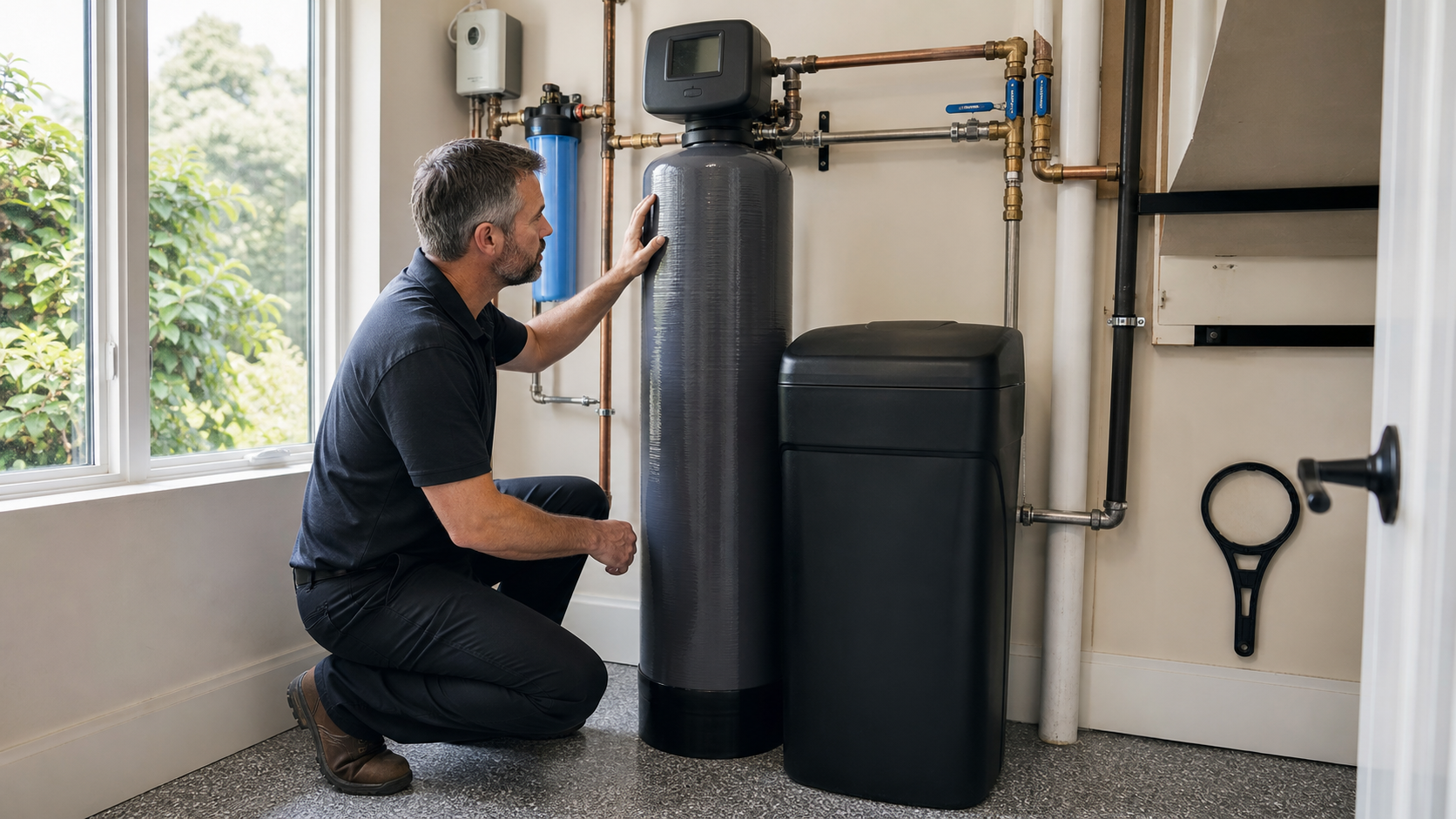
Salt Free Water Softeners: How They Work and When They Make Sense
Homeowners interested in reducing scale without storing salt often encounter products marketed as Salt free water softeners. The terminology can be confusing because most salt free systems do not soften water in the traditional ion exchange sense. Instead of removing the calcium and magnesium minerals responsible for hardness, many systems are intended to condition those minerals so they are less likely to form hard scale on certain surfaces or equipment. That distinction matters when comparing performance, maintenance, water chemistry, and expected results. Before purchasing a system, homeowners should test their water, identify the problem they actually want to solve, review independent product performance information where available, and understand what a salt free conditioner can and cannot reasonably accomplish.
What Are Salt Free Water Softeners?
Salt free water softeners are generally water treatment or conditioning devices marketed as alternatives to conventional salt based ion exchange softeners.
The category includes different technologies, so not every salt free product operates the same way.
Many products sold under this name are better described as scale control systems or water conditioners because they leave hardness minerals in the water.
Do Salt Free Water Softeners Actually Soften Water?
In the conventional technical meaning of water softening, usually not.
Traditional water softening reduces hardness by removing calcium and magnesium ions through processes such as ion exchange.
Most salt free conditioners do not remove those minerals.
Why Does This Terminology Matter?
A customer expecting laboratory measured hardness to drop after installing a conditioner can be disappointed when testing shows similar calcium and magnesium concentrations before and after treatment.
That does not necessarily mean the device has failed.
It may be designed to affect scale formation rather than reduce measured hardness.
Water Softening Versus Water Conditioning
Softening changes water chemistry by reducing hardness ions.
Conditioning is a broader term that can describe treatments intended to alter how minerals behave or reduce their tendency to create deposits.
Buyers should focus on documented function rather than the product name.
How Do Salt Free Water Softeners Work?
Several salt free technologies exist.
One common category uses media designed to encourage hardness minerals to form microscopic crystals that remain suspended rather than attaching as readily to surfaces.
This approach is often discussed using terms such as template assisted crystallization.
Template Assisted Crystallization
Template assisted crystallization, commonly abbreviated TAC, uses specialized media designed to transform dissolved hardness minerals into microscopic crystalline structures.
Those minerals remain present in the water.
The goal is scale reduction rather than mineral removal.
Does TAC Change Water Hardness?
A conventional hardness test can still measure hardness after TAC treatment because the calcium and magnesium have not simply disappeared.
This is an important distinction from an ion exchange softener.
Other Salt Free Technologies
The market also contains:
• Other media based conditioners
• Polyphosphate based scale control products
• Electromagnetic devices
• Electronic devices
• Magnetic products
• Catalytic media
The mechanisms, applications, and supporting evidence vary.
Do not assume that evidence for one type of conditioner validates every salt free product.
7 Powerful Salt Free Water Softeners Benefits and Considerations
Salt free conditioning can fit certain households well, but its advantages should be evaluated alongside its limitations. The following seven points provide a practical framework.
1. Salt Free Water Softeners Do Not Require Regeneration Salt
Traditional ion exchange softeners typically regenerate their resin using a sodium chloride or potassium chloride brine, depending on the system.
Many salt free conditioners do not require this process.
No Heavy Salt Bags
Homeowners who choose a salt free conditioner generally do not need to purchase and carry regeneration salt for the conditioner.
This can be convenient for people who prefer lower routine handling requirements.
No Brine Tank
Many salt free systems use a single treatment vessel or cartridge configuration without a separate brine tank.
This can reduce the amount of equipment occupying a utility area.
No Salt Regeneration Cycle
Because these systems are generally not regenerating ion exchange resin with brine, they do not perform the same salt based regeneration process.
That also means they do not need a regeneration drain for brine in the way conventional softeners commonly do.
Product specific plumbing requirements can still apply.
2. Salt Free Water Softeners Can Target Scale Formation
Scale is a common reason people investigate water treatment.
Hard water can leave mineral deposits on water heating equipment, plumbing fixtures, shower surfaces, and other locations.
What Is Hard Water Scale?
Hardness is primarily associated with dissolved calcium and magnesium.
Under suitable conditions, these minerals can form deposits.
Temperature, pH, alkalinity, mineral concentration, and other water characteristics influence scale behavior.
Scale Control Versus Scale Removal
A salt free conditioner is generally intended to reduce future scale formation rather than physically remove existing mineral deposits throughout a building.
Existing Scale May Remain
Old mineral deposits on shower doors, faucets, boilers, water heaters, and other surfaces may require appropriate cleaning or equipment maintenance.
Do not expect installation of a conditioner to instantly restore every scaled surface.
Hot Water Equipment
Scale can affect some water heating systems because elevated temperatures can encourage mineral precipitation.
Homeowners considering treatment specifically for a tankless heater or another appliance should review the appliance manufacturer’s water quality requirements.
3. Salt Free Water Softeners Keep Hardness Minerals in the Water
Some homeowners prefer treatment that does not exchange calcium and magnesium for sodium or potassium.
Salt free conditioning can meet that preference because the minerals generally remain.
Sodium Is Not Added Through Conventional Ion Exchange
A typical salt free conditioner does not perform sodium based ion exchange.
Therefore, it does not increase sodium through that softening mechanism.
This can matter to consumers specifically trying to avoid added sodium from conventional softening.
Do Not Make Medical Decisions Based on Marketing
People who must restrict sodium or manage another health condition should discuss drinking water concerns with an appropriate healthcare professional.
Water treatment should not be presented as medical treatment.
Mineral Content Is Not the Same as Water Quality
Leaving calcium and magnesium in water does not prove that every other aspect of water quality is acceptable.
Microorganisms, lead, arsenic, nitrates, disinfection byproducts, iron, manganese, and other contaminants are separate issues.
A scale conditioner is not a universal purification system.
4. Salt Free Water Softeners Can Require Less Routine Maintenance
Some salt free systems have relatively simple maintenance requirements compared with regenerating softeners.
The exact requirements depend on the product.
Media Replacement
Conditioning media can have a finite service life.
Manufacturers may specify replacement based on time, water volume, or water conditions.
Prefilters
Some installations use sediment or carbon prefiltration.
Filters require timely replacement to prevent excessive pressure drop and maintain intended performance.
Maintenance Is Not Zero
Salt free does not mean maintenance free.
Homeowners may need to:
• Replace filters
• Replace media
• Inspect valves
• Monitor pressure
• Check for leaks
• Review water conditions
• Service related treatment components
Follow the manufacturer’s schedule.
5. Salt Free Water Softeners Do Not Produce the Classic Soft Water Feel
People accustomed to traditional softened water may notice an important difference.
Since hardness minerals remain, water can feel different from water treated by ion exchange.
Soap and Hardness Minerals
Conventional softening can change how soap behaves because calcium and magnesium have been reduced.
A salt free conditioner generally does not produce the same chemical change.
Soap Scum May Not Disappear Completely
Scale control and soap performance are different issues.
If the homeowner’s main goal is improving soap lather or eliminating classic hardness interactions with soap, conventional softening may more directly address that objective.
Water Spots Can Still Occur
When water evaporates, dissolved minerals can remain behind.
Because salt free conditioning generally leaves minerals in the water, spotting can still be visible.
This is one of the most important expectations to establish before purchasing.
6. Salt Free Water Softeners Need the Right Water Chemistry
Treatment equipment should be matched to tested source water.
A system suitable for municipal water with moderate hardness may not be appropriate for a private well containing substantial iron, manganese, sediment, or other treatment challenges.
Test Water Before Buying
Useful testing can include:
• Hardness
• Iron
• Manganese
• pH
• Total dissolved solids where relevant
• Other parameters required by the system manufacturer
Private wells can warrant broader testing based on local health authority recommendations.
Iron Can Complicate Treatment
Certain conditioning media have limits for iron and manganese.
Exceeding those limits can interfere with treatment performance.
Pretreatment May Be Necessary
A well with sediment, iron, or another problem may require appropriate treatment upstream of the conditioner.
Pretreatment should be based on actual test results rather than an automatic package.
7. Compare Salt Free Water Softeners Using Verified Performance
Water treatment marketing is filled with broad claims.
Buyers should look for clear documentation about what the exact product is designed and tested to do.
Look for Appropriate Certifications
Independent standards and certifications can help consumers evaluate water treatment products.
NSF International, the Water Quality Association, and other recognized organizations provide certification services for products meeting particular standards or protocols.
The relevant certification depends on the technology and performance claim.
Understand What Certification Covers
A certification for material safety or structural integrity does not necessarily prove every performance claim in an advertisement.
Read the certification listing carefully.
Ask for Product Specific Documentation
Useful documents can include:
• Performance data
• Maximum water chemistry limits
• Flow rate information
• Pressure requirements
• Temperature limits
• Media service expectations
• Certification listings
• Warranty terms
• Maintenance requirements
Avoid relying exclusively on testimonials.
Salt Free Water Softeners Versus Traditional Water Softeners
The two categories solve overlapping but different problems.
The right choice depends on the desired outcome.
Traditional Ion Exchange Softening
A conventional softener uses ion exchange resin to reduce calcium and magnesium.
The resin eventually requires regeneration.
Brine is typically used to restore its treatment capacity.
Salt Free Conditioning
A conditioner generally leaves hardness minerals in the water while attempting to reduce their scale forming behavior.
It typically does not regenerate with salt.
Which Option Is Better?
Neither is universally better.
Choose traditional softening when actual hardness reduction is the primary goal.
Consider salt free conditioning when scale control is the main objective and retaining hardness minerals is acceptable.
Water chemistry and manufacturer requirements should also guide the decision.
Salt Free Water Softeners and Hard Water
Hard water is not defined simply by visible white residue.
Laboratory or field testing can quantify hardness.
Measuring Hardness
Hardness can be reported in measurements such as milligrams per liter as calcium carbonate or grains per gallon.
A water professional or appropriate test kit can provide useful information.
Why Test Before Treatment?
Knowing the hardness level helps determine whether a treatment technology is appropriate.
It can also provide a baseline for evaluating claims.
Do Not Expect a Lower Hardness Reading
If the conditioner does not remove calcium and magnesium, conventional hardness readings can remain similar after installation.
That is expected for many salt free systems.
Salt Free Water Softeners for Well Water
Private wells require special attention because water chemistry varies widely.
Well owners should not select treatment based solely on hardness.
Test Well Water
Depending on location and local health guidance, testing can address:
• Bacteria
• Nitrates
• Hardness
• Iron
• Manganese
• pH
• Arsenic in relevant regions
• Other local contaminants
The appropriate panel varies geographically.
Treat Health Related Contaminants Separately
A scale conditioner should not be expected to disinfect water or remove harmful contaminants unless the exact product has validated performance for those purposes.
Use treatment designed and certified for the specific contaminant.
Salt Free Water Softeners for Municipal Water
Municipal water suppliers provide treated water that must meet applicable drinking water requirements.
Hardness is generally an aesthetic and operational characteristic rather than something removed by every utility.
Check the Consumer Confidence Report
In the United States, many public water systems issue annual Consumer Confidence Reports containing water quality information.
Hardness may also be available directly from the utility.
Home Plumbing Can Affect Water
A utility report describes supplied water, not necessarily every condition that develops inside an individual building.
Older plumbing can introduce separate water quality concerns.
Do Salt Free Water Softeners Remove Chlorine?
Not automatically.
A scale conditioning system and a chlorine reduction system perform different functions.
Carbon Filtration
Activated carbon is commonly used in products designed to reduce chlorine or certain taste and odor concerns.
Performance varies by carbon type, flow rate, contact time, capacity, and product certification.
Combination Systems
Some treatment systems combine carbon filtration with scale conditioning.
Evaluate each treatment stage separately and verify its performance claims.
Do Salt Free Water Softeners Remove Iron?
Most scale conditioners should not automatically be treated as iron removal systems.
Some products may tolerate limited iron concentrations, while others require pretreatment.
Iron Staining Is a Separate Problem
Orange or brown staining can be associated with iron.
Treatment depends on iron type, concentration, water chemistry, and other factors.
Test Before Selecting Equipment
Installing a conditioner without addressing excessive iron can create disappointing results and potentially affect media performance.
Do Salt Free Water Softeners Remove PFAS or Lead?
A standard scale conditioning system should not be assumed to remove PFAS, lead, or other health related contaminants.
These require treatment technologies with demonstrated performance for the particular contaminant.
Use Certified Treatment for Specific Contaminants
When contaminant reduction is the goal, look for products certified to applicable standards for that claim.
The correct solution can involve point of use or point of entry treatment depending on the contaminant and household.
Salt Free Water Softeners and Tankless Water Heaters
Tankless heaters can be affected by scale where water is hard.
Manufacturers may specify water chemistry and maintenance requirements.
Follow Heater Requirements
Do not assume that installing a conditioner eliminates required descaling or other maintenance.
The water heater manufacturer should remain the primary source for maintenance instructions.
Monitor Performance
If scale protection is the reason for purchasing the conditioner, keep records of equipment maintenance before and after installation.
This can help evaluate whether the system is meeting practical expectations.
Salt Free Water Softeners Installation
Installation normally places the treatment system on the water line serving the intended fixtures.
Whole house systems are commonly installed near the point where water enters the building.
Professional Installation
A plumber or qualified water treatment professional can address:
• Pipe sizing
• Bypass valves
• Shutoff valves
• Flow direction
• Pressure
• Drain requirements where applicable
• Electrical requirements where applicable
• Equipment access
• Local plumbing rules
Keep the System Accessible
Media and filters eventually need maintenance.
Do not install equipment where future service requires removing walls or fixed cabinetry.
Provide a Bypass
Many treatment systems use bypass valves so the equipment can be isolated during maintenance.
Follow manufacturer requirements for valve configuration.
Flow Rate and Salt Free Water Softeners
A treatment system should provide adequate flow for household demand without excessive pressure loss.
This factor can be overlooked when buyers focus only on tank size.
Peak Household Flow
Multiple showers, faucets, appliances, and fixtures can operate simultaneously.
The selected system should be sized for expected peak demand.
Avoid Undersizing
An undersized conditioner can create excessive pressure drop or exceed the manufacturer’s rated operating conditions.
A water treatment professional can estimate household flow requirements.
How Much Do Salt Free Water Softeners Cost?
There is no universal price.
Cost depends on technology, capacity, flow rate, pretreatment, plumbing modifications, brand, installation, and local labor.
Cost Factors
Expenses can include:
• Treatment equipment
• Installation
• Prefilters
• Plumbing modifications
• Bypass valves
• Water testing
• Media replacement
• Filter replacement
• Future service
Compare total ownership cost rather than purchase price alone.
Get Itemized Quotes
Ask the provider to specify the exact model, treatment media, rated flow, certifications, maintenance schedule, warranty, and installation scope.
This makes competing proposals easier to compare.
How Long Do Salt Free Water Softeners Last?
The treatment tank, valves, filter cartridges, and conditioning media can have different service lives.
There is no universal lifespan for a complete system.
Media Life
Manufacturers can specify expected media replacement intervals based on time or water use.
Actual conditions can affect performance.
Water Quality Changes
Well chemistry can change over time, and municipal utilities may modify treatment practices.
Retesting can be useful when water characteristics or treatment performance noticeably change.
Maintaining Salt Free Water Softeners
Maintenance is typically simpler than repeatedly adding regeneration salt, but it still requires attention.
Replace Filters
If the system includes sediment or carbon cartridges, change them according to manufacturer requirements and actual conditions.
Clogged filters can reduce flow.
Inspect for Leaks
Check accessible fittings, valves, and equipment periodically.
Any leak should be repaired promptly.
Record Maintenance
Keep dates for:
• Filter replacement
• Media replacement
• Water testing
• Service visits
• System installation
This makes long term ownership easier.
Salt Free Water Softeners and Wastewater
Many salt free conditioners do not perform brine regeneration.
This can eliminate the brine discharge associated with conventional ion exchange softeners.
Why This Can Matter
Some locations regulate water softener discharge because of wastewater or septic considerations.
Local rules vary.
Verify Local Requirements
Do not assume every salt based or salt free system faces identical plumbing requirements.
Consult local authorities or qualified installers when discharge restrictions apply.
Salt Free Water Softeners for Septic Systems
A salt free conditioner that does not regenerate with brine does not create the same regeneration discharge as a conventional softener.
That can be relevant on properties with septic systems.
Septic Performance Depends on More Than Water Treatment
A septic system’s condition depends on design, loading, maintenance, soil, and wastewater characteristics.
Choosing a conditioner does not replace septic maintenance.
Environmental Considerations
Salt free systems are sometimes marketed as environmentally superior.
The comparison depends on the specific equipment and local conditions.
Potential Advantages
Certain systems can avoid:
• Regeneration salt
• Brine discharge
• Regeneration water use
These are meaningful differences from conventional regenerating ion exchange equipment.
Consider the Whole Product Lifecycle
Replacement media, cartridges, manufacturing, shipping, and disposal also have environmental impacts.
Avoid broad claims that one technology is universally sustainable in every situation.
Common Salt Free Water Softeners Mistakes
Many disappointments result from purchasing a system for a task it was never designed to perform.
Expecting True Soft Water
If the goal is reducing measured calcium and magnesium hardness, a typical salt free conditioner may not satisfy that expectation.
Skipping Water Testing
Treatment should be selected around known water chemistry.
Buying first and testing later can result in equipment incompatible with the water supply.
Ignoring Iron or Manganese
Well water containing excessive levels of these substances may require pretreatment.
Expecting Water Spots to Vanish
Because minerals generally remain, evaporated water can still leave residue on fixtures and glass.
Treating Conditioning as Purification
A scale conditioner does not automatically remove pathogens or chemical contaminants.
Different problems require different treatment.
How to Choose Salt Free Water Softeners
Begin by defining the objective.
Is the household trying to reduce scale, lower measured hardness, remove chlorine, address iron, improve taste, or reduce a specific contaminant?
The answer determines the appropriate technology.
Questions to Ask a Water Treatment Company
Consider asking:
• Does this system remove calcium and magnesium?
• What exactly does it do to hardness minerals?
• What testing supports the scale reduction claim?
• Is the product independently certified?
• What water chemistry limits apply?
• What is its rated flow?
• Is pretreatment necessary?
• What maintenance is required?
• When is media replaced?
• What does the warranty cover?
Clear answers can prevent confusion between softening and conditioning.
Frequently Asked Questions
Do Salt free water softeners actually soften hard water?
Most do not reduce calcium and magnesium like traditional ion exchange softeners. They are generally designed to condition water and reduce scale formation.
Do Salt free water softeners remove calcium?
Most salt free conditioners leave calcium in the water. A conventional hardness test can therefore continue to show similar mineral levels after treatment.
Are Salt free water softeners effective for scale?
Some established conditioning technologies are designed specifically for scale control. Effectiveness depends on technology, water chemistry, flow, installation, and product performance.
Do Salt free water softeners prevent water spots?
Not necessarily. Because dissolved minerals generally remain in the water, residue can still be left behind after droplets evaporate.
Do Salt free water softeners need maintenance?
Yes. Depending on the system, maintenance can include replacing prefilters, carbon cartridges, conditioning media, and inspecting valves and plumbing connections.
Are Salt free water softeners better than salt based systems?
Neither is universally better. Salt based ion exchange is designed to reduce hardness, while many salt free systems focus on scale control without removing hardness minerals.
Conclusion
Salt free water softeners can be a practical option when scale control is the primary objective and homeowners do not need the calcium and magnesium removed from their water. Their main advantages can include avoiding regeneration salt, brine discharge, and the routine handling associated with conventional softeners, but they should not be confused with universal water purification or true ion exchange softening. Water testing, product specific performance data, appropriate sizing, and realistic expectations are the best foundations for choosing the right treatment system.