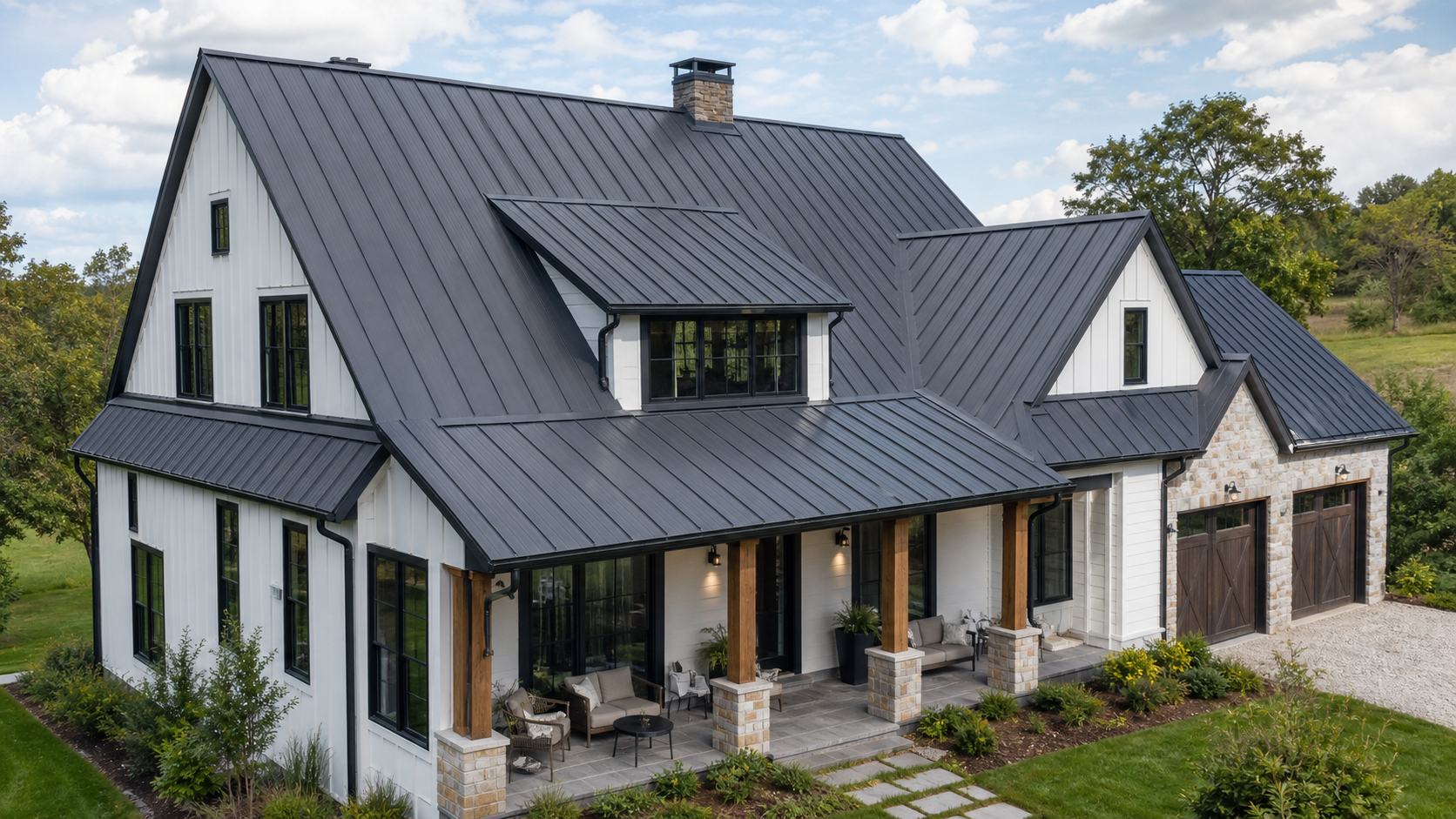
Durable Metal Roofing: How to Build a Strong, Long Lasting Roof
Choosing Durable Metal Roofing involves much more than selecting metal panels for a house. Long term performance depends on the base metal, protective coating, panel profile, fasteners or clips, roof deck, underlayment, flashing, local weather exposure, and installation quality. Steel, aluminum, copper, and zinc each behave differently, while standing seam and exposed fastener systems have different maintenance characteristics. A carefully specified system can provide reliable weather protection and architectural versatility, but no metal roof is automatically maintenance free or guaranteed to last for a particular number of years. This guide explains how homeowners can evaluate durability using documented product performance and sound roofing practices.
What Makes Durable Metal Roofing Different?
Metal roofing is an exterior roof covering manufactured from steel, aluminum, copper, zinc, or another suitable metal. Products are available as long panels, modular shingles, tile inspired profiles, and specialty architectural systems.
Durability results from the complete roof assembly rather than metal alone.
A properly designed roof typically coordinates:
• A suitable structural roof deck
• Compatible underlayment
• Metal panels or shingles
• Correct fasteners or concealed clips
• Flashing
• Roof edge details
• Valleys
• Penetrations
• Drainage
• Appropriate ventilation or roof assembly design
Weakness in one important component can affect the performance of an otherwise premium system.
Why Metal Can Be a Durable Roofing Material
Roofing metals can tolerate substantial outdoor exposure when they are appropriately protected and installed.
Steel systems frequently use metallic and paint coatings to protect the underlying metal. Aluminum naturally develops a protective oxide layer and is frequently considered in corrosive environments. Copper and zinc weather differently and can develop characteristic protective patinas.
No material is immune to unsuitable environmental conditions, installation mistakes, impact, or neglect.
Durability Does Not Mean Damage Proof
This distinction is important.
Severe hail can dent some panels. Extreme wind can damage improperly designed assemblies. Incompatible metals can contribute to galvanic corrosion, and poor flashing can allow water into the building even when the main panels remain intact.
Durability should therefore be evaluated as system performance, not merely panel strength.
7 Powerful Durable Metal Roofing Benefits and Considerations
Homeowners often compare metal with asphalt shingles, tile, wood, slate, and synthetic products. The following seven considerations explain where a well designed metal system can offer advantages and where careful planning remains essential.
1. Durable Metal Roofing Can Provide Long Service Potential
Metal is often selected for buildings where owners want to reduce the frequency of complete reroofing.
Exact service life varies too substantially to guarantee a universal figure.
What Determines Metal Roof Longevity?
Important variables include:
• Base metal
• Metal thickness
• Protective coating
• Paint system
• Local climate
• Salt exposure
• Roof slope
• Fastener design
• Flashing
• Installation quality
• Maintenance
• Tree exposure
• Physical damage
A professionally installed premium system in a suitable environment may perform very differently from an inexpensive panel installed with incompatible fasteners.
Avoid Universal Lifespan Claims
Statements promising that every metal roof lasts a fixed number of decades oversimplify roofing performance.
Manufacturer warranties also should not be interpreted as guaranteed physical service life. Warranties contain specific coverage terms, exclusions, maintenance requirements, and sometimes prorated provisions.
Evaluate the exact product rather than relying on category wide claims.
Climate Matters
Roofing in a dry inland climate faces different exposure from roofing close to saltwater.
Snow, ice, hail, ultraviolet radiation, humidity, pollutants, and temperature cycling can influence different materials in different ways.
Choose products with documentation appropriate to the project’s environmental conditions.
2. Choose the Right Metal for Durable Metal Roofing
There is no single metal that performs best everywhere.
Material selection should account for environment, budget, appearance, roof design, and system requirements.
Steel Metal Roofing
Steel is widely used in residential and commercial roofing.
Because unprotected steel can corrode, roofing steel is generally manufactured with protective metallic coatings and, for painted products, additional finish systems.
The precise coating specification is important.
Galvanized and Metallic Coated Steel
Different metallic coating technologies are available.
Performance can vary according to coating composition, thickness, environmental conditions, cut edges, fabrication, and maintenance.
Ask for the manufacturer’s technical documentation rather than purchasing based only on the phrase coated steel.
Aluminum Metal Roofing
Aluminum offers strong corrosion resistance and can be particularly relevant in certain coastal environments.
However, its relative softness can affect impact and dent characteristics depending on product design and thickness.
Coastal suitability should still be confirmed through manufacturer documentation because finishes, fasteners, accessories, and warranties can have location specific restrictions.
Copper Metal Roofing
Copper is used for full roofs as well as architectural accents, flashing, gutters, bays, and historic properties.
Its surface changes naturally over time as a patina develops.
Copper requires careful detailing around other metals because material compatibility and water runoff can create corrosion concerns.
Zinc Roofing
Zinc is used in specialty architectural roofing and develops its own weathered surface over time.
The material requires fabrication and installation knowledge specific to zinc systems.
Homeowners considering zinc should select contractors experienced with the product rather than assuming all metal roofing installation skills are interchangeable.
3. Standing Seam Can Enhance Durable Metal Roofing Performance
Standing seam is one of the best known architectural metal roofing systems.
Panels are connected at raised vertical seams while primary fasteners are generally concealed underneath or incorporated into the seam system.
Why Concealed Fasteners Matter
Concealing primary fasteners reduces direct exposure of many roof attachments to sun and precipitation.
Certain standing seam systems also allow panels to move through clips or other attachment designs as temperatures change.
This can reduce some challenges associated with long term thermal cycling when the system is correctly engineered.
Standing Seam Systems Are Not Identical
Seam height, panel width, fastening, clips, metal thickness, structural performance, and panel fabrication vary among systems.
A roof should be evaluated according to the exact panel product and assembly rather than assuming every standing seam roof provides identical performance.
Exposed Fastener Metal Roofing
Exposed fastener panels use screws that penetrate the roof panels.
These systems can be practical and economical, but fasteners and their sealing washers remain directly exposed.
Periodic inspection is especially useful because fasteners can be affected by weather, thermal movement, installation conditions, and aging.
4. Durable Metal Roofing Can Perform Well in Severe Weather
A well designed metal roof can provide strong performance in challenging weather, but ratings must match local risks.
The complete assembly determines performance.
Wind Performance
High wind resistance depends on more than heavy panels.
Important factors include:
• Roof deck attachment
• Panel or shingle attachment
• Clip spacing
• Fastener type
• Roof edges
• Corners
• Building height
• Roof geometry
• Local wind exposure
Applicable building codes establish project specific requirements.
Choose Tested Assemblies
Manufacturers may provide testing or approvals relevant to wind performance.
Homeowners in hurricane prone or high wind regions should ask contractors for documentation appropriate to the property and jurisdiction.
Do not assume a generic marketing wind claim applies to every installation configuration.
Hail Resistance
Metal can resist many ordinary impacts, but hail can damage roofing.
Depending on storm conditions and product characteristics, damage can be cosmetic or functional.
Material type, thickness, profile, substrate, hail characteristics, and installation all influence the result.
Impact Ratings Have Limits
Some products carry standardized impact classifications.
A high classification should not be interpreted as a guarantee that the roof cannot dent or be damaged during a severe storm.
Insurance treatment of cosmetic damage can also vary by policy.
Snow Performance
Metal’s smooth surface can allow accumulated snow and ice to slide from a sloped roof.
That can create hazards above doors, sidewalks, decks, driveways, landscaping, and equipment.
Where appropriate, a professionally designed snow retention system can manage movement.
5. Durable Metal Roofing Can Support Energy Efficient Design
Metal roofing can be part of an energy conscious building envelope, but it should not be marketed as a guaranteed utility bill solution.
Roof color and finish can influence solar heat absorption.
Solar Reflectance
Some coatings are designed to reflect a relatively high portion of incoming solar energy.
A light colored product is often more reflective than a dark version within a comparable coating family, although measured product values should guide comparisons.
Thermal Emittance
Thermal emittance describes a surface’s ability to release absorbed heat as thermal radiation.
When energy performance matters, compare verified product specifications rather than relying only on visual color.
Will Metal Roofing Lower Cooling Costs?
It may contribute to lower roof related heat gain under appropriate circumstances, but actual household savings depend on the entire building.
Important factors include:
• Climate
• Roof color
• Insulation
• Air sealing
• Attic conditions
• Windows
• HVAC efficiency
• Building orientation
• Occupant behavior
No responsible contractor should guarantee a universal percentage reduction in electricity bills solely from switching roofing materials.
6. Professional Installation Protects Durable Metal Roofing
Installation quality has a major influence on roof performance.
A premium metal product cannot compensate for unsuitable flashing, incorrect fasteners, poor panel alignment, or inadequate attachment.
Start With the Roof Deck
During replacement projects, the existing deck should be evaluated for damage and suitability.
Deteriorated or structurally inadequate decking should be addressed before the new roof hides it.
Deck requirements depend on the metal system and building design.
Install Compatible Underlayment
Underlayment requirements vary according to manufacturer, roof slope, climate, local code, and assembly design.
Some installations may incorporate synthetic underlayment, self adhering membranes, or other specified materials.
High temperature suitability can matter under certain metal roof assemblies.
Flash Every Transition Correctly
Areas requiring careful attention include:
• Valleys
• Chimneys
• Skylights
• Plumbing vents
• Sidewalls
• Dormers
• Eaves
• Rakes
• Ridges
• Roof penetrations
Each detail should direct water onto the exterior drainage plane.
Thermal Expansion Needs Accommodation
Metal expands when heated and contracts when cooled.
Long panels can experience meaningful movement during temperature cycles.
Clips, fasteners, seams, and flashing need to accommodate the expected movement according to system design.
Incorrect restriction can contribute to distortion or stress.
7. Durable Metal Roofing Still Requires Maintenance
Low maintenance should not be confused with zero maintenance.
Routine observation can identify damage while repairs remain relatively localized.
What Should Metal Roof Maintenance Include?
Depending on system type, inspections can check:
• Flashing
• Seams
• Fasteners
• Surface coatings
• Corrosion
• Debris
• Gutters
• Valleys
• Sealants where specified
• Penetrations
• Snow retention components
• Rooftop attachments
Inspection frequency should reflect manufacturer recommendations, climate, building conditions, and significant storm exposure.
Keep Debris From Accumulating
Leaves, branches, and other organic material can trap moisture and obstruct drainage.
Roof valleys and drainage points deserve particular attention.
Cleaning should be performed safely without damaging coatings or panels.
Avoid Unnecessary Foot Traffic
Metal roofs can be slippery, especially when wet.
Some panels can also dent if walked on incorrectly.
Roof access should be limited to people who understand safe access and the manufacturer’s approved walking locations where applicable.
Durable Metal Roofing Versus Asphalt Shingles
Asphalt shingles remain widely used because of their broad availability, familiar appearance, and relatively accessible initial cost.
Metal often represents a higher initial investment.
Initial Cost Versus Long Term Planning
A homeowner planning to move relatively soon may evaluate the cost differently from someone intending to remain in a property for decades.
Long term value depends on actual roof longevity, maintenance, repairs, financing, and future material costs.
Appearance
Modern metal is available in traditional and contemporary designs.
Asphalt shingles also offer numerous colors and architectural styles.
Neither is universally more attractive. The choice depends on the building and homeowner preferences.
Repair Considerations
Asphalt shingles can sometimes be straightforward to repair locally when matching materials remain available.
Metal panel replacement can be more specialized, particularly with long mechanically seamed panels or discontinued finishes.
Ask contractors about repairability before selecting a system.
Durable Metal Roofing Versus Tile
Tile and metal can both offer long service potential when appropriate for the building.
They differ substantially in structural loading and installation.
Roof Weight
Many metal systems are relatively lightweight compared with clay or concrete tile.
Changing from one roofing category to another still requires confirmation that the structure and deck are suitable for the proposed system.
Architectural Style
Tile can be strongly associated with Mediterranean, Spanish, and regional architecture.
Metal can range from agricultural inspired profiles to highly contemporary standing seam roofs.
Modular metal products can also imitate tile shapes where that appearance is desired.
Durable Metal Roofing in Coastal Areas
Salt laden air creates demanding conditions for many building materials.
Material and coating selection becomes especially important near coastlines.
Choose Products for Coastal Exposure
Ask whether the manufacturer approves the exact metal, coating, fasteners, accessories, and warranty for the property’s distance and exposure to saltwater.
Do not assume every metal roof qualifies for identical coastal warranty coverage.
Material Compatibility
Fasteners, flashing, gutters, and rooftop accessories should be compatible with the primary roofing metal.
Water runoff between dissimilar metals can sometimes contribute to corrosion.
The complete roof should be specified as a coordinated material system.
Durable Metal Roofing in Hot Climates
Roof surfaces can become very hot under intense solar exposure regardless of material category.
Reflective finishes can help manage solar absorption.
Choose Color Strategically
When heat performance is a priority, compare documented solar reflectance and thermal properties.
Two visually similar products may have different tested values.
Insulation Still Matters
The roof covering is only one part of thermal performance.
Proper insulation and air sealing can be critical to controlling heat transfer into conditioned spaces.
Roof replacement can be an appropriate time to evaluate accessible attic conditions.
Durable Metal Roofing in Cold and Snowy Climates
Cold climate design should account for snow, ice, condensation, and roof edge conditions.
Metal alone does not eliminate ice dam risks.
Ice Dam Prevention
Ice dams are influenced by snow cover, roof temperature, indoor heat loss, insulation, air leakage, and outdoor conditions.
Addressing attic air leakage and insulation can be as important as the roof covering.
Snow Retention
Snow guards can help control sudden release from smooth metal surfaces.
Their type, spacing, and attachment need to be designed for expected snow loads and the roofing system.
Attaching a generic snow guard without engineering or manufacturer compatibility can damage panels.
Metal Roofing Coatings and Finishes
The finish protects appearance and, for many products, contributes to weather resistance.
Different paint and coating technologies have different characteristics.
Factory Applied Finishes
Factory coating provides controlled application conditions and is common on steel and aluminum panels.
Color retention and chalking performance differ by finish chemistry and exposure.
Read Finish Warranty Terms
A long finish warranty does not necessarily mean there will be no visual change for the entire period.
Coverage can define acceptable levels of fading, chalking, or film failure and contain environmental exclusions.
Read the actual warranty rather than relying on the advertised term alone.
Durable Metal Roofing and Corrosion Prevention
Corrosion control begins during design.
Appropriate material combinations, drainage, coatings, cutting practices, and maintenance all matter.
Avoid Trapping Water
Roof details should allow water to drain rather than remain in contact with vulnerable surfaces.
Debris accumulation can interfere with drainage and retain moisture.
Protect the Surface During Installation
Dragging tools or panels across coated roofing can damage finishes.
Installers should use handling and cutting procedures approved for the system.
Metal debris from drilling and cutting should be removed because small particles can rust and stain finished surfaces.
Is Durable Metal Roofing Noisy?
A residential metal roof does not necessarily produce the loud rain sound associated with an uninsulated barn or open framed structure.
Interior sound depends heavily on the roof assembly.
Decking and Insulation Affect Sound
Solid sheathing, underlayment, attic space, insulation, and interior ceilings can all influence noise transmission.
Discuss sound concerns before construction if they are a priority.
Rain and Hail Can Still Be Audible
No roofing system eliminates all exterior noise.
Actual acoustic performance depends on construction details rather than material stereotypes.
Does Durable Metal Roofing Attract Lightning?
A metal roof does not inherently make lightning choose a building as a strike location.
Factors such as building location, height, surrounding topography, and storms influence strike risk.
Conductivity and Attraction Are Different Concepts
Metal is electrically conductive, but conductivity does not mean it attracts lightning.
A building that requires lightning protection should use an appropriately designed lightning protection system.
Consult Specialists When Necessary
Lightning protection is a technical field.
Buildings with unusual exposure, critical equipment, or specific code requirements may warrant evaluation by qualified specialists.
Durable Metal Roofing and Solar Panels
Metal roofing can integrate well with solar photovoltaic equipment.
Certain standing seam roofs permit compatible mounting clamps to attach to seams without penetrating the primary panel.
Verify Clamp Compatibility
A clamp suitable for one standing seam profile may not be approved for another.
Solar mounting should be verified against:
• Roof manufacturer requirements
• Clamp manufacturer requirements
• Structural loads
• Wind loads
• Snow loads
• Roof warranties
Coordination between roofing and solar contractors can prevent installation conflicts.
Consider Roof Condition Before Solar Installation
Solar equipment can remain in place for many years.
Installing it over a deteriorated roof can lead to additional labor when roofing later needs replacement.
Inspect the roof before adding a photovoltaic system.
Can Durable Metal Roofing Be Installed Over Shingles?
Sometimes.
Whether an overlay is appropriate depends on existing roof condition, number of layers, building codes, manufacturer requirements, deck condition, moisture conditions, and system design.
Advantages of Tear Off
Removing existing roofing permits direct inspection of the deck.
Hidden deterioration can be repaired before the new roof is installed.
Overlay Limitations
Leaving existing roofing in place can conceal conditions and alter installation details.
Homeowners should ask the contractor to explain why an overlay is suitable for their property rather than choosing it simply to reduce initial cost.
How Much Does Durable Metal Roofing Cost?
There is no meaningful universal installed price.
Material category alone cannot determine cost because roofing projects differ substantially.
Factors Affecting Durable Metal Roofing Cost
Pricing can depend on:
• Metal type
• Panel profile
• Coating
• Material specification
• Roof area
• Slope
• Building height
• Roof complexity
• Valleys
• Dormers
• Penetrations
• Tear off
• Deck repair
• Underlayment
• Flashing
• Local labor rates
• Permits
• Snow retention where required
Copper and specialty zinc roofs generally occupy a different price category from common coated steel.
Compare Complete Quotes
Ask contractors to identify the exact panel manufacturer, material, finish, attachment system, underlayment, flashing, tear off work, warranties, and exclusions.
A low quote may simply contain a narrower scope.
Durable Metal Roofing Installation Process
Installation begins before the first panel reaches the roof.
A contractor should inspect the existing system and determine the appropriate scope.
Removal and Deck Inspection
Where tear off is included, existing material is removed and the substrate inspected.
Damaged decking can then be repaired.
Underlayment and Flashing
Required membranes, underlayment, roof edge components, and flashing are installed in the proper sequence.
Water should always have a path toward the exterior.
Panel Installation
Panels or modular units are installed using fasteners, clips, seams, and spacing required by the manufacturer.
Accurate alignment is both an aesthetic and technical issue.
Final Inspection
Completed work should be evaluated for seams, flashing, penetrations, edges, surface damage, drainage, and debris.
Required municipal inspection may also apply.
Permits and Codes for Durable Metal Roofing
Roofing projects may require building permits depending on jurisdiction and scope.
Local authorities determine applicable requirements.
Regional Requirements Matter
High wind, wildfire, snow, and coastal jurisdictions may impose requirements relevant to roof assemblies.
The selected system should satisfy the rules applicable to the property.
Ask Who Handles the Permit
Professional contractors often manage roofing permits, but this should be confirmed in the written agreement.
Keep permit and final inspection documentation with other property records.
Choosing a Durable Metal Roofing Contractor
Metal roofing requires specialized detailing.
Experience with asphalt shingles does not necessarily establish expertise with standing seam fabrication or specialty metals.
Questions to Ask a Roofer
Consider asking:
• Which exact system do you recommend?
• Why is it suitable for this climate?
• What base metal is used?
• Which coating or finish is included?
• What underlayment will be installed?
• How will thermal movement be handled?
• How will penetrations be flashed?
• What happens if damaged decking is discovered?
• What material warranty applies?
• What workmanship warranty applies?
Clear answers make contractors easier to compare.
Verify Qualifications
Check licensing where required, insurance, references, and experience with similar roofs.
Manufacturer training or certification can be relevant for certain systems, though it should not replace broader contractor evaluation.
Common Durable Metal Roofing Mistakes
Poor detailing can shorten the effective life of otherwise excellent material.
Several mistakes are particularly important to avoid.
Using Incorrect Fasteners
Fasteners need to be compatible with the panel system, substrate, and environmental exposure.
Incorrect fasteners can contribute to leakage, corrosion, or attachment problems.
Overlooking Dissimilar Metals
Incompatible metal combinations can create galvanic corrosion under suitable conditions.
Accessories, gutters, fasteners, flashing, and rooftop equipment should be reviewed for compatibility.
Improper Panel Cutting
Some cutting methods can damage protective coatings or leave hot metal particles on the roof surface.
Follow manufacturer approved fabrication procedures.
Relying Excessively on Sealant
Sealant has legitimate uses in metal roofing, but it should not replace correctly designed mechanical laps and flashing.
The roof should primarily shed water through durable construction details.
Maintaining Durable Metal Roofing
Owners should keep roof documentation and establish a reasonable inspection program.
Particular attention is worthwhile following severe storms or work by other trades on the roof.
Inspect Rooftop Equipment
Satellite dishes, solar arrays, HVAC components, antennas, or other equipment can introduce penetrations or concentrated loads.
Any additions should use attachments compatible with the roof.
Correct Small Damage Promptly
Scratches, coating damage, loose flashing, or unusual corrosion should be evaluated before deterioration spreads.
Use repair products approved for the roofing system rather than generic coatings or sealants.
Frequently Asked Questions
What makes Durable Metal Roofing long lasting?
Longevity comes from appropriate metal and coatings combined with sound decking, underlayment, flashing, fastening, drainage, installation, and maintenance.
What is the most durable metal roofing material?
There is no universal best material. Steel, aluminum, copper, and zinc have different strengths, costs, corrosion characteristics, and environmental suitability.
Is Durable Metal Roofing good for severe weather?
Properly tested and installed metal assemblies can perform well in challenging conditions, but wind, hail, snow, and fire performance depends on the exact roof system.
Is Durable Metal Roofing energy efficient?
Reflective metal finishes can help reduce solar heat absorption, but whole home energy performance also depends on insulation, air sealing, climate, HVAC equipment, and building design.
Can Durable Metal Roofing be installed over shingles?
Sometimes, when local codes, manufacturer instructions, roof condition, and deck requirements allow it. Tear off provides better access for inspecting hidden conditions.
Does Durable Metal Roofing require maintenance?
Yes. Periodic inspection of panels, coatings, flashing, drainage, fasteners, penetrations, and other components helps identify issues before they become more extensive.
Conclusion
Durable Metal Roofing achieves its best performance when every part of the roof works as an integrated system. Selecting the appropriate metal and finish is important, but deck condition, underlayment, flashing, attachment, thermal movement, climate compatibility, and workmanship are equally significant. By comparing technical product documentation and detailed contractor proposals, homeowners can choose a metal roofing system based on verified performance, practical maintenance, and the actual needs of their property.