Gutter Installation: Why Every Home Needs a Proper Water Management System
A home’s exterior protection depends on many different systems working together, and one of the most important yet commonly overlooked components is the drainage system. Rainwater that falls onto the roof must be controlled and directed away from the structure to prevent moisture-related problems. Without proper water management, homeowners may experience foundation damage, landscape erosion, basement leaks, damaged siding, and expensive repairs. Professional Gutter Installation provides an effective solution by creating a structured pathway that collects rainwater from the roof and safely moves it away from vulnerable areas of the property.
Many homeowners think gutters are simply decorative additions attached to the edge of a roof. However, a properly designed gutter system performs an essential protective function. It controls water movement, reduces pressure on the foundation, protects exterior surfaces, and helps maintain the overall condition of the home.
Over time, old, damaged, or incorrectly installed gutters can lose their ability to manage rainfall effectively. Cracks, sagging sections, blocked channels, and poor drainage patterns can allow water to accumulate around the property. Therefore, investing in a professional gutter solution is not only about improving appearance but also about preventing long-term structural problems.
A quality gutter system should be designed according to the home’s roof size, local weather conditions, and drainage requirements. When installed correctly, it provides reliable performance throughout changing seasons while reducing the need for frequent repairs.
Understanding the Importance of a Functional Gutter System
Every home experiences rainfall, but the impact of that water depends on how effectively it is managed. When rain falls directly from the roof without proper control, it can create several issues around the property.
A gutter system collects water from roof surfaces and transfers it through channels and downspouts. The goal is simple: move water away from the home before it can cause damage.
One of the biggest concerns with uncontrolled rainwater is foundation exposure. Water pooling near the foundation can weaken surrounding soil and increase the possibility of cracks or structural movement. Over time, repeated moisture exposure may lead to costly restoration work.
Additionally, excess water can damage landscaping. Heavy runoff from roofs can wash away soil, affect plants, and create uneven areas around the property. A properly designed drainage system helps maintain a healthier outdoor environment.
Gutters also protect exterior walls. Without proper drainage, rainwater may run down siding, brick, or painted surfaces. This constant moisture exposure can contribute to staining, deterioration, and reduced curb appeal.
Furthermore, effective gutters support roof protection. When water cannot flow away properly, it may collect near roof edges and contribute to moisture issues. A well-installed system helps maintain better overall exterior performance.
How Professional Gutter Installation Protects Your Property
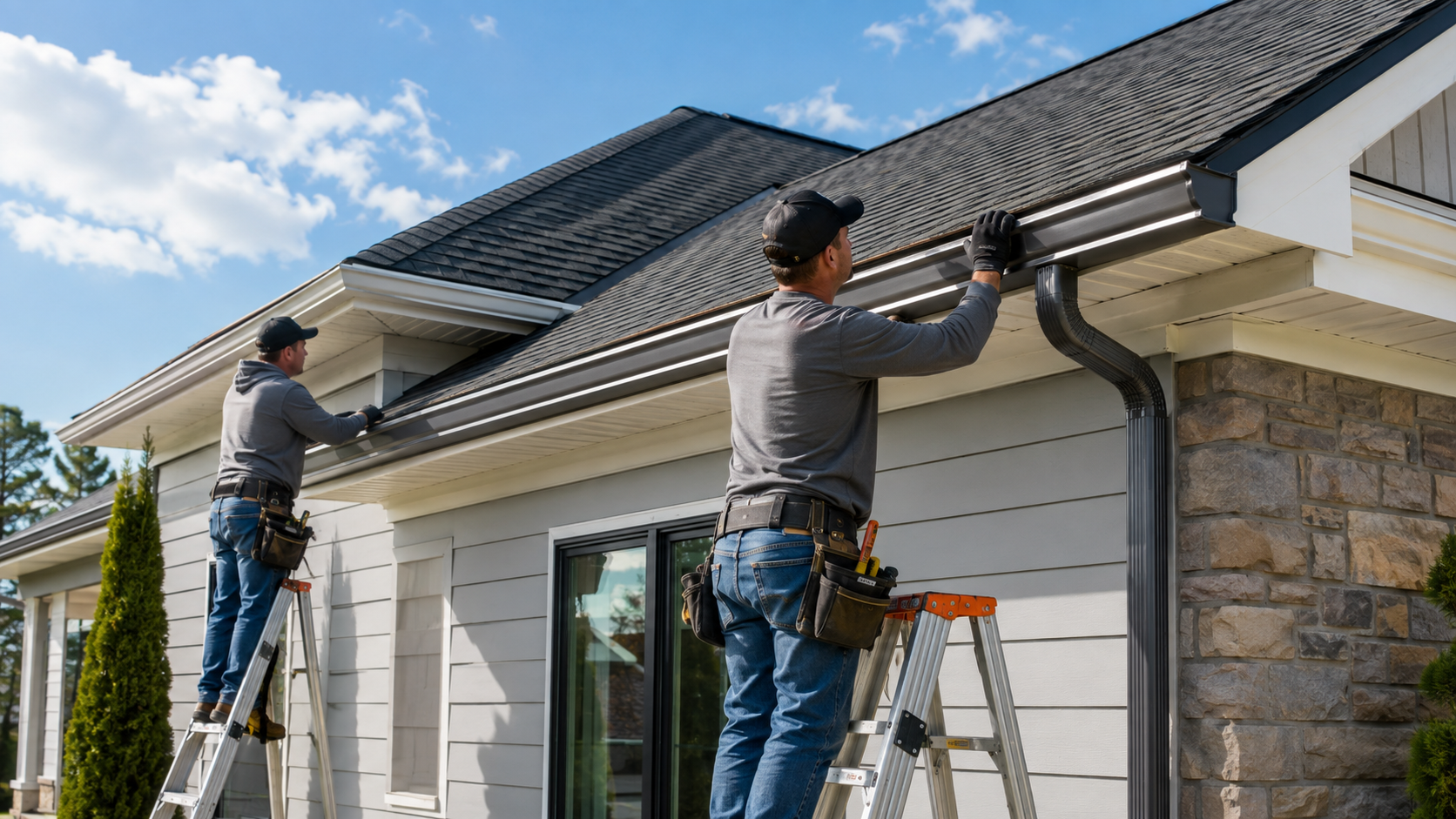
Professional installation involves much more than attaching gutters to the roofline. Experts evaluate multiple factors to ensure the system works efficiently.
The first step is understanding the property’s drainage requirements. Professionals consider roof dimensions, slope, rainfall patterns, and the best locations for downspouts. This planning helps create a system that handles water flow effectively.
During installation, gutters must be positioned at the correct angle. Proper slope allows water to move naturally toward downspouts instead of collecting in certain sections. Incorrect positioning can lead to standing water, overflow, and premature damage.
Professional installers also use suitable fastening methods. Secure attachment prevents gutters from pulling away from the home during heavy rainfall or strong winds.
Another important factor is selecting the appropriate gutter capacity. Homes located in areas with frequent or heavy rainfall may require larger systems designed to handle increased water volume.
Because of these details, professional Gutter Installation helps homeowners achieve better performance compared with temporary or incorrect DIY solutions.
Key Benefits of Installing New Gutters
Prevents Foundation Problems
One of the primary benefits of a reliable gutter system is protecting the foundation. By directing rainwater away from the home’s base, gutters reduce unnecessary moisture exposure.
This protection is especially important because foundation repairs can be complex and expensive. A properly installed drainage system helps reduce these risks before major problems develop.
Reduces Exterior Damage
Rainwater can gradually affect siding, paint, windows, and doors when it is not controlled. New gutters create a controlled route for water movement, helping preserve exterior materials.
As a result, homeowners can maintain a cleaner appearance and reduce maintenance requirements.
Improves Property Safety
Overflowing gutters can create slippery areas around walkways and entrances. They may also contribute to standing water where insects and other issues can develop.
A properly functioning system supports a safer environment by preventing uncontrolled water accumulation.
Enhances Curb Appeal
Modern gutter systems are available in various styles and finishes. Homeowners can select options that complement their property’s architectural design.
Seamless gutters, in particular, provide a cleaner appearance because they minimize visible joints and create a more polished exterior look.
Provides Long-Term Savings
Although gutter replacement requires an initial investment, it can reduce future repair costs. Preventing water damage is often more affordable than repairing foundation, siding, or landscaping problems later.
Different Types of Gutters for Residential Properties
Homeowners have several gutter options depending on their needs, budget, and design preferences.
Seamless Gutters
Seamless gutters are created from a continuous piece of material, which reduces the number of joints. Since many leaks occur at connection points, fewer seams can improve reliability.
These gutters are popular among homeowners who want a cleaner appearance and reduced maintenance requirements.
Sectional Gutters
Sectional gutters are manufactured in separate pieces and connected during installation. They are often easier to find and may be suitable for smaller projects.
However, connection points require regular inspection because they may become weak over time.
K-Style Gutters
K-style gutters are widely used in modern residential construction. They have a decorative shape that can blend well with contemporary home designs.
They also provide good water capacity, making them suitable for many residential properties.
Half-Round Gutters
Half-round gutters feature a curved design and are commonly selected for traditional or historic homes. They provide a distinctive appearance while effectively managing water flow.
Choosing the Right Gutter Material for Your Home
The material selected during installation affects durability, maintenance, and appearance.
Aluminum Gutters
Aluminum is one of the most common choices because it is lightweight, resistant to corrosion, and available in many colors.
It provides a practical balance between affordability and performance.
Copper Gutters
Copper gutters offer a premium appearance and exceptional durability. They develop a natural finish over time, creating a unique architectural style.
They are often chosen for luxury homes or properties with specific design requirements.
Steel Gutters
Steel provides excellent strength and durability. However, it may require more maintenance to prevent rust depending on environmental conditions.
Vinyl Gutters
Vinyl gutters are lightweight and affordable. They can be suitable for certain applications, although extreme weather conditions may affect their lifespan.
Choosing the correct material depends on climate, budget, home design, and maintenance expectations.
Step-by-Step Process of Professional Gutter Installation
A professional installation usually follows a structured process.
Property Inspection
The process begins with evaluating the roofline, existing drainage issues, and property layout.
Measurement and Planning
Accurate measurements determine the required gutter length, downspout placement, and system design.
Material Selection
Homeowners choose materials and styles based on performance needs and visual preferences.
Installation and Securing
Professionals install gutters using appropriate supports and ensure proper alignment for effective water movement.
Testing Water Flow
After installation, the system is checked to confirm that water moves correctly without leaks or overflow.
Signs Your Existing Gutters Need Replacement
Knowing when gutters require replacement can prevent serious damage.
Common warning signs include:
- Frequent overflowing during rainfall
- Cracks or holes in gutter sections
- Rust development
- Gutters separating from the roofline
- Water collecting near the foundation
- Damaged landscaping below roof edges
- Peeling exterior paint
- Repeated repair requirements
If these problems appear regularly, replacing the system may be more practical than continuing temporary fixes.
Common Gutter Installation Mistakes Homeowners Should Avoid
Incorrect installation can reduce the effectiveness of even high-quality materials.
One common mistake is choosing the wrong gutter size. A system that cannot handle rainfall volume may overflow frequently.
Another issue is poor downspout placement. Water should be directed away from the foundation rather than released directly beside the home.
Improper slope is also a major concern. Gutters must have enough angle to encourage water movement while maintaining a clean appearance.
Finally, using low-quality materials or incorrect installation techniques can shorten the lifespan of the system.
Working with experienced professionals helps avoid these problems.
Maintenance Tips to Extend Your Gutter System Lifespan
Regular maintenance keeps gutters functioning properly.
Cleaning debris such as leaves and dirt prevents blockages. Even small amounts of buildup can restrict water flow over time.
Homeowners should inspect gutters after storms to identify loose sections, leaks, or damage.
Downspouts should also be checked regularly. A blocked downspout affects the entire drainage system.
Installing gutter guards may help reduce debris accumulation, although periodic inspections are still recommended.
How Gutters Improve Home Value and Exterior Appearance
A well-maintained exterior contributes to overall property value. Potential buyers often consider drainage systems when evaluating a home because water-related issues can create significant future expenses.
New gutters improve both function and appearance. They create cleaner rooflines, protect exterior materials, and demonstrate that the property has been properly maintained.
For homeowners planning future resale, a reliable gutter system can become an attractive feature.
Frequently Asked Questions About Gutter Installation
How much does gutter installation cost?
The cost depends on factors such as home size, gutter material, design, labor requirements, and installation complexity.
How long do new gutters usually last?
Lifespan depends on material quality, weather exposure, and maintenance. Proper care can significantly extend gutter performance.
Can homeowners install gutters themselves?
Some small projects may be possible for experienced homeowners, but professional installation provides better accuracy and long-term reliability.
Are seamless gutters worth the investment?
Many homeowners choose seamless gutters because they have fewer joints, which may reduce potential leak points.
How often should gutters be cleaned?
Cleaning frequency depends on surrounding trees, weather conditions, and debris levels. Regular inspections help determine the right schedule.
Conclusion: Invest in Reliable Gutter Protection for Your Home
A properly designed drainage system is one of the most important investments a homeowner can make for long-term property protection. Professional Gutter Installation helps control rainwater, reduce structural risks, improve exterior appearance, and prevent costly repairs caused by poor drainage. From selecting suitable materials to ensuring accurate installation and regular maintenance, every step contributes to better performance. By choosing a reliable gutter solution, homeowners can protect their property while maintaining a cleaner, safer, and more durable home environment.