HVAC: 7 Vital Secrets for Maximum Energy Efficiency, Superior Indoor Air Quality, and Year-Round Comfort
Modern residential and commercial architecture relies on complex mechanical climate engineering to maintain healthy, stable, and comfortable indoor environments across severe seasonal weather extremes. Optimizing your HVAC (Heating, Ventilation, and Air Conditioning) infrastructure represents the single most significant factor in managing household energy expenditures, preserving structural building envelope integrity, and safeguarding indoor air quality. Heating and cooling systems account for over fifty percent of total residential energy consumption, according to the U.S. Department of Energy. However, millions of properties operate with improperly sized equipment, leaky sheet-metal ductwork, incorrect refrigerant charges, and neglected ventilation controls. By understanding the thermodynamic principles, system configurations, high-efficiency ratings, and preventative maintenance protocols behind contemporary climate systems, homeowners, architects, and facility managers can slash utility expenses, eliminate hot and cold spots, and ensure pristine indoor air for decades to come.
The Thermodynamic Engineering of Heating, Ventilation, and Air Conditioning
HVAC systems do not simply add cold air to a room; rather, they operate on fundamental laws of thermodynamics to extract heat energy, manage moisture vapor, and exchange stale indoor air with filtered outdoor air.
The Refrigeration Cycle: Phase Transitions and Heat Exchange
Mechanical cooling and heat pump operation rely on the closed-loop vapor-compression refrigeration cycle, which circulates specialized chemical refrigerants through four primary stages:
- The Compressor: Serves as the mechanical heart of the system, pressurizing low-temperature, low-pressure vapor refrigerant into a high-temperature, high-pressure gas.
- The Condenser Coil (Outdoor Unit): High-temperature gas flows through exterior finned aluminum coils while a fan pulls ambient outdoor air across them. The refrigerant releases its latent heat energy to the outdoor atmosphere, condensing into a high-pressure liquid.
- The Thermal Expansion Valve (TXV): Restricts refrigerant flow, causing a sudden drop in pressure. This rapid pressure drop flashes the liquid into an ultra-cold, low-pressure liquid-vapor mixture.
- The Evaporator Coil (Indoor Unit): Cold refrigerant absorbs thermal heat energy directly from the warm indoor air blowing across the coil. As heat is absorbed, the refrigerant boils back into a low-pressure vapor, returning to the compressor to repeat the cycle indefinitely.
Dehumidification and Latent Heat Removal
Air conditioning performs two distinct thermodynamic functions: sensible cooling (lowering the actual dry-bulb thermometer temperature) and latent cooling (removing moisture vapor from the air). As warm, humid indoor air passes across the cold evaporator coil, water vapor condenses into liquid droplets on the coil fins, draining away through a condensate line. If an air conditioner is oversized, it cools the room so quickly that it shuts down before running long enough to remove humidity, leaving indoor spaces feeling damp, clammy, and prone to toxic mold growth.
The Vital Role of Mechanical Ventilation (The “V” in HVAC)
Modern building codes demand tightly sealed building envelopes to prevent energy dissipation. However, tightly sealed buildings trap indoor pollutants:
- Accumulation of Volatile Organic Compounds (VOCs): Paints, synthetic carpeting, furniture adhesives, and cleaning sprays off-gas harmful chemicals into stagnant indoor air.
- Carbon Dioxide (CO2) Buildup: In unventilated bedrooms and offices, metabolic respiration causes CO2 levels to surge above 1,200 parts per million, causing cognitive fatigue, headaches, and poor sleep quality.
- Energy Recovery Ventilators (ERVs) and Heat Recovery Ventilators (HRVs): Balanced mechanical ventilation systems continuously exhaust stale indoor air while introducing fresh, filtered outdoor air. Crucially, they pass the two air streams through a micro-thin thermal core that transfers heat and moisture between them, capturing up to eighty percent of the outgoing energy to pre-condition incoming fresh air.
Core System Architectures: Finding the Right Climate Configuration
Different architectural structures, regional climate zones, and energy sources demand distinct mechanical equipment layouts.
High-Efficiency Air-Source Heat Pumps and Inverter Technology
Air-source heat pumps have emerged as the premier choice for modern, all-electric decarbonized heating and cooling:
- Reverse-Cycle Operation: During summer, heat pumps extract heat from inside the home and reject it outdoors; in winter, a reversing valve reverses the refrigerant flow, extracting ambient heat from freezing outside air and pumping it inside.
- Variable-Capacity Inverter Compressors: Traditional systems operate on a binary cycle—they are either running at 100% full blast or completely turned off. Modern inverter heat pumps modulate motor speeds continuously between 20% and 100%, matching real-time heating and cooling demands, eliminating noisy start-stop cycles, and consuming up to forty percent less electricity.
- Cold-Climate Performance: Advanced cold-climate heat pumps utilize vapor-injection compressors that provide 100% heating capacity down to sub-zero temperatures (-15°F to -22°F) without requiring inefficient electric resistance heat strips.
Ductless Mini-Split Systems: Multi-Zone Precision
For historic homes lacking ductwork, modern room additions, or multi-family residences, ductless mini-splits offer localized comfort:
- Independent Room Zoning: Each room or zone features its own wall-mounted, floor-mounted, or concealed ceiling cassette air handler connected to a single outdoor inverter unit via small refrigerant line sets.
- Eliminating Ductwork Losses: Traditional ducted systems lose twenty to thirty percent of their conditioned air through leaks and unconditioned attic spaces. Mini-splits deliver conditioned air directly into the room, maximizing thermal efficiency.
Traditional Split-System Central Air and Gas Furnaces
Widely prevalent across colder North American regions:
- Modulating Gas Furnaces: Modern condensing furnaces utilize secondary stainless steel heat exchangers that extract latent heat from water vapor in combustion exhaust gases, achieving Annual Fuel Utilization Efficiency (AFUE) ratings between 95% and 98%.
- Paired Split-System AC: Combines an indoor furnace and evaporator coil with an exterior condensing unit, distributing conditioned air through a network of sheet metal or fiberglass ducts.
System Comparison Matrix
| System Architecture | Primary Energy Source | Cooling Efficiency (SEER2) | Heating Efficiency (HSPF2 / AFUE) | Best Suited Application |
|---|---|---|---|---|
| Inverter Heat Pump | 100% Electric | 18 to 24+ SEER2 | 8.5 to 11.5 HSPF2 | Moderate to cold climates, all-electric homes |
| Ductless Multi-Split | 100% Electric | 20 to 30+ SEER2 | 9.0 to 12.5 HSPF2 | Homes without ducts, room additions, zoning |
| Gas Furnace + Central AC | Natural Gas / Electric | 14 to 18 SEER2 | 95% to 98% AFUE | Extremely cold northern winters, existing ducted homes |
| Geothermal (Ground-Source) | Electric / Earth Thermal | 25 to 40+ EER | 3.5 to 5.0+ COP | Long-term luxury estates, rural acreage parcels |
| Dual-Fuel Hybrid System | Electric + Natural Gas | 16 to 20 SEER2 | Auto-switches based on outdoor temp | Regions with freezing winters and low electric rates |
Understanding Efficiency Metrics: SEER2, HSPF2, and AFUE
Evaluating equipment efficiency ratings ensures consumers make informed investments that yield substantial long-term utility savings.
The New DOE Standards: SEER2 and HSPF2 Explained
In 2023, the U.S. Department of Energy enacted updated testing protocols (M1 standards) that more accurately reflect real-world duct static pressure resistance:
- Seasonal Energy Efficiency Ratio 2 (SEER2): Measures total cooling output divided by total electrical energy consumed over an entire cooling season. Higher SEER2 numbers indicate greater efficiency. Baseline minimums range from 13.4 to 14.3 SEER2 depending on region, while premium inverter models exceed 20 to 24 SEER2.
- Heating Seasonal Performance Factor 2 (HSPF2): Measures heat pump heating efficiency over an entire winter season. High-efficiency units achieve ratings of 8.5 HSPF2 or higher.
- Annual Fuel Utilization Efficiency (AFUE): Measures the percentage of fossil fuel converted into usable indoor heat by a furnace. An 80% AFUE furnace wastes twenty cents of every fuel dollar out the exhaust flue, whereas a 96% condensing unit wastes only four cents.
Air Distribution Engineering: Duct Design, Airflow, and Static Pressure
The highest-efficiency heating and cooling equipment will fail to perform if paired with a poorly designed air distribution network.
The Physics of External Static Pressure (ESP)
Duct systems act as lungs for your home. If ducts are undersized, restricted, or kinked, external static pressure surges:
- Blower Motor Strain: High static pressure forces electronically commutated (ECM) blower motors to run hotter and consume more electricity, leading to premature motor failure.
- Inadequate Airflow (CFM): Air conditioning systems require approximately 350 to 400 cubic feet per minute (CFM) of airflow per ton of cooling capacity. Restricted airflow causes evaporator coils to freeze into solid blocks of ice, potentially causing liquid refrigerant floodback that destroys the compressor.
Proper Duct Sealing with Mastic vs. Duct Tape
Despite its name, standard cloth adhesive “duct tape” dries out, degrades, and falls off duct seams within two to three years. Professional installations require:
- Fiber-Reinforced Mastic Paste: Applied with a brush over all sheet metal joints, seams, and collar takeoffs, curing into a flexible, permanent rubber seal.
- R-8 Duct Insulation: Insulating all duct runs located in unconditioned spaces (such as attics and crawl spaces) with R-8 fiberglass or foil-faced insulation prevents thermal conduction losses and summer duct sweating.
Indoor Air Quality: Filtration, Humidity, and Sanitization
Achieving total indoor comfort requires managing microscopic particulates, biological pathogens, and relative humidity.
MERV Ratings and Air Filtration Technology
Air filters are rated using the Minimum Efficiency Reporting Value (MERV) scale, which ranges from MERV 1 to MERV 16:
- MERV 1 to 4: Cheap fiberglass throwaway filters that only protect the blower motor from large dust bunnies, offering zero filtration for human lungs.
- MERV 8 to 11: The residential sweet spot, capturing mold spores, pet dander, dust mite debris, and pollen without causing excessive static pressure drop.
- MERV 13 to 16: Hospital-grade media filters capable of capturing bacteria, smoke particles, and virus carriers. When installing MERV 13 filters, duct sizing must be expanded to provide adequate filter surface area (such as deep 4-inch or 5-inch media cabinets).
Whole-Home Dehumidifiers and Steam Humidifiers
- Summer Dehumidification: In humid coastal or southern climates, installing a dedicated whole-home dehumidifier maintains indoor relative humidity between 40% and 50% without overcooling the home, suppressing dust mite populations and preventing mold growth.
- Winter Humidification: Cold outdoor air holds minimal moisture; heating this air drops indoor humidity below 20%, causing dry skin, irritated respiratory passages, and static shocks. Whole-home steam humidifiers introduce controlled moisture vapor into supply ducts to maintain healthy 35% to 45% winter humidity.
Essential Preventative Maintenance Protocols
Regular professional maintenance extends mechanical service life, preserves factory warranties, and prevents emergency breakdowns during peak heatwaves or winter freezes:
- Filter Replacements: Inspect and replace standard 1-inch air filters every thirty to sixty days (or 4-inch media filters every six to twelve months).
- Cleaning Evaporator and Condenser Coils: Spraying outdoor condenser coils clean of grass clippings, cottonwood fuzz, and dirt every spring ensures unrestricted heat dissipation.
- Clearing Condensate Drain Lines: Pouring a cup of white distilled vinegar down the condensate line every month prevents algae and slime colonies from clogging the drain line and causing emergency water pan overflows that damage ceilings.
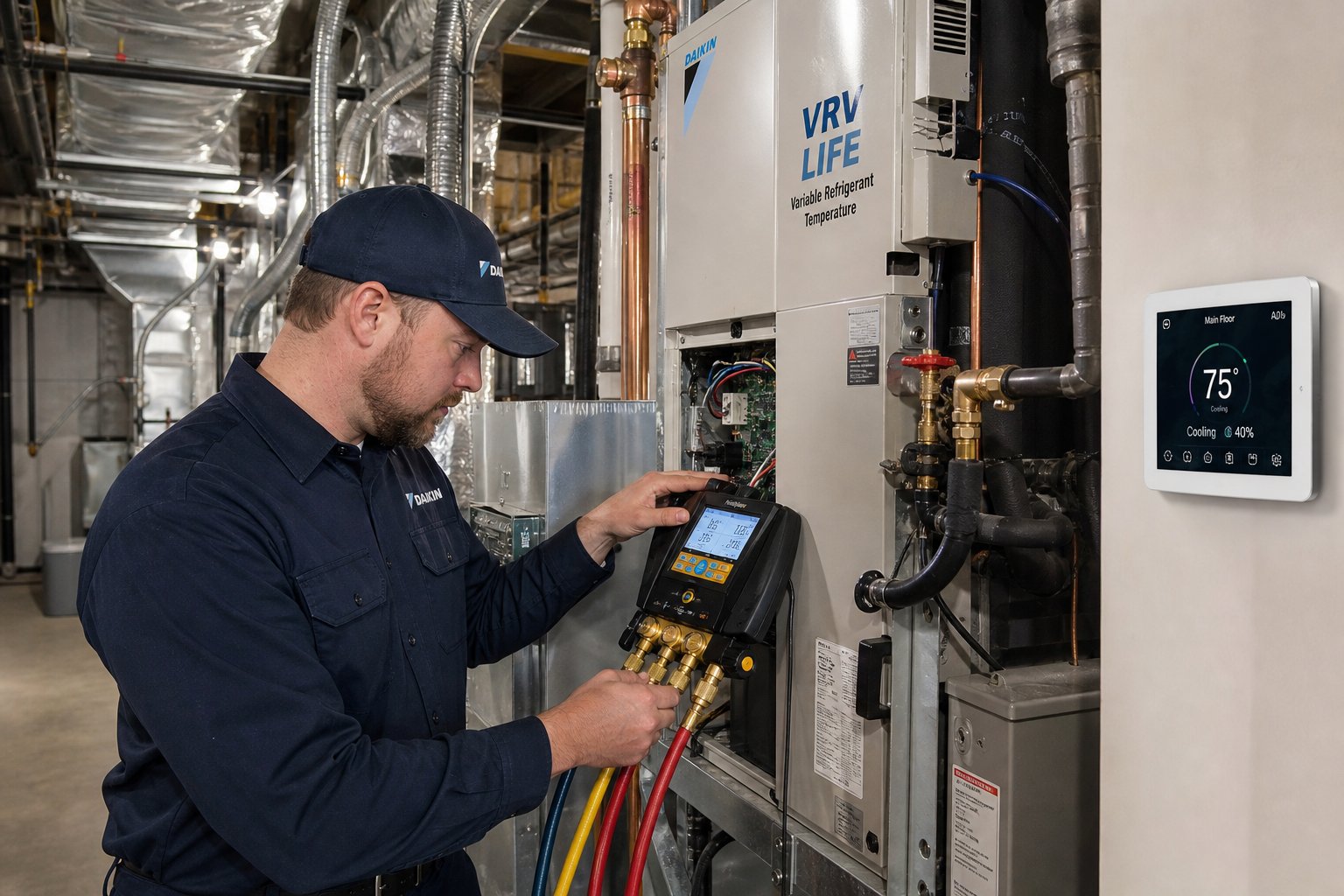
- Professional Electrical & Refrigerant Audits: Annual professional tune-ups include measuring compressor operating amperage, testing starting capacitors, tightening electrical lugs, and checking subcooling/superheat refrigerant levels using precision digital gauges.
Frequently Asked Questions About HVAC
How often should home HVAC air filters be replaced?
Standard 1-inch pleated filters should be replaced every 30 to 60 days; thicker 4-inch to 5-inch media filters typically last 6 to 12 months depending on household pet density and dust levels.
What is the ideal thermostat setting for balancing comfort and energy savings?
The Department of Energy recommends setting thermostats to 78°F (26°C) in summer and 68°F (20°C) in winter when occupants are home, adjusting 7 to 10 degrees higher or lower when away.
What is the expected lifespan of a modern residential HVAC system?
With routine semi-annual professional maintenance, modern heat pumps and air conditioning systems typically last 12 to 17 years, while gas furnaces can last 15 to 20 years.
What are the warning signs that an air conditioner or heat pump is low on refrigerant?
Warning signs include extended run times, warm air blowing from vents, ice forming along the refrigerant copper lines or indoor coil, and hissing or bubbling noises near the unit.
Why is an oversized HVAC unit bad for a home?
An oversized unit cools rooms too quickly without running long enough to remove humidity, leading to short-cycling, higher electric bills, uneven temperatures, and indoor mold growth.
Can an electric heat pump really heat a home in freezing sub-zero winter temperatures?
Yes, modern cold-climate inverter heat pumps utilize advanced variable-speed compressors that reliably extract ambient heat from outdoor air down to -15°F (-26°C) or lower.
Conclusion
A high-performance HVAC system is the mechanical backbone of modern residential and commercial buildings, silently governing thermal comfort, energy expenditures, and respiratory health every single day. By understanding the thermodynamic principles of the refrigeration cycle, balancing seasonal heating with continuous mechanical ventilation, and sizing equipment according to rigorous Manual J load calculations, property owners create indoor spaces that remain comfortable through extreme weather. Transitioning to variable-capacity inverter heat pumps, sealing distribution ductwork with mastic, maintaining ideal 40% to 50% relative humidity levels, and adhering to disciplined seasonal maintenance routines preserves mechanical equipment lifespans while slashing monthly utility bills. Investing in modern, high-efficiency climate engineering transforms your property into an energy-efficient, healthy, and restorative sanctuary for years to come.