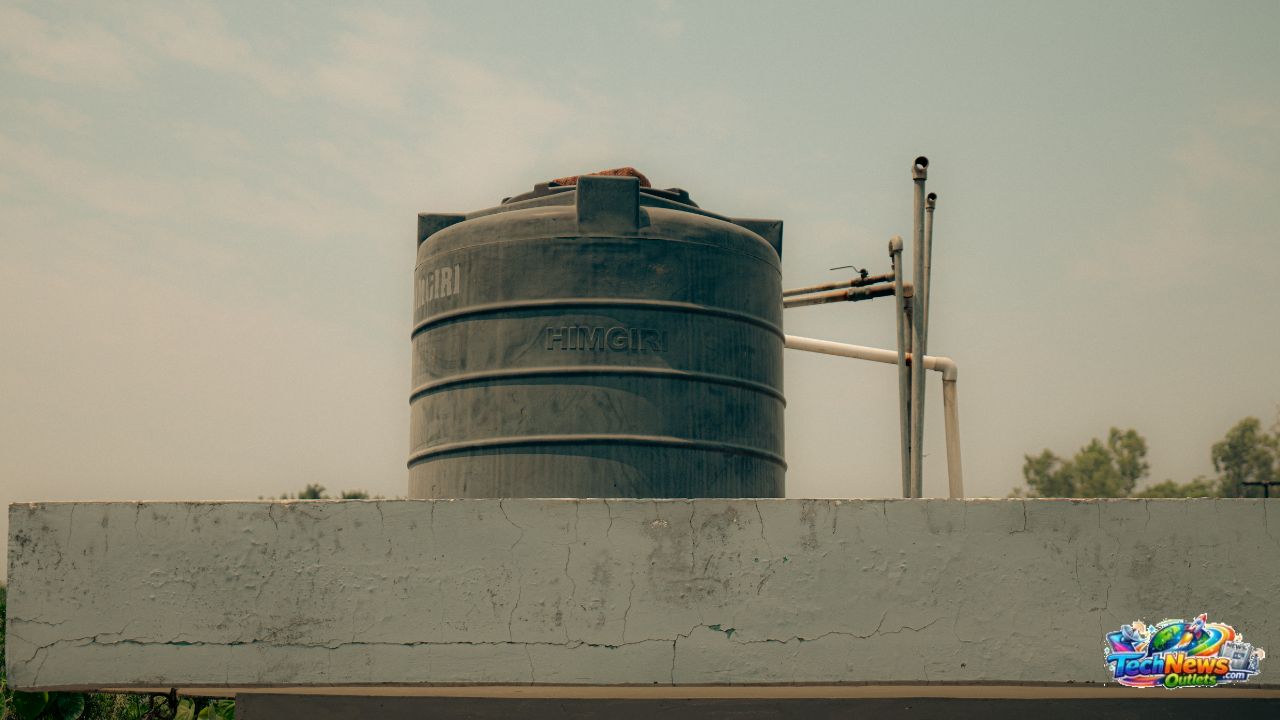
Rooftop or Underground Storage Which Water System Makes More Sense for Your Property
Reliable water storage can protect a household or property from interruptions, balance periods of high demand, and support uses such as rainwater harvesting where permitted. Choosing the right water tank location is just as important as choosing capacity. Rooftop installations can use elevation to provide gravity-fed pressure, while underground systems preserve usable surface and roof space and can accommodate substantial storage without placing the same load high on a building.
Neither design is automatically better. The right water tank depends on building structure, available land, soil and groundwater conditions, required capacity, water source, plumbing design, maintenance access, pumping requirements, local climate, intended water quality, budget, and applicable building or plumbing rules. Comparing these factors before construction is far safer and usually less expensive than trying to correct a poorly planned installation later.
What Is a Water Tank
A water tank is a container designed to store water for later use. Residential, agricultural, commercial, and industrial systems use tanks for many purposes, ranging from drinking-water storage to irrigation, firefighting reserves, process water, rainwater harvesting, and emergency supply.
The tank itself is only one component of a complete storage system.
A functional installation may also require inlet plumbing, isolation valves, overflow arrangements, vents, screens, level controls, pumps, filters, treatment equipment, drains, backflow protection, structural supports, and access for inspection and cleaning.
The exact requirements depend on the intended use.
A potable water tank needs particular attention to materials, hygiene, contamination control, and applicable drinking-water standards, while a tank used only for landscape irrigation may have different requirements.
Why tank location matters
Water is heavy. One liter of water has a mass of approximately one kilogram under ordinary practical conditions.
A 1,000-liter tank therefore holds roughly 1,000 kilograms of water before the weight of the tank, support structure, plumbing, and related equipment is included.
That fact strongly influences where a water tank can be installed.
On a roof, the building must safely support the imposed loads. Underground, the vessel and surrounding structure must withstand soil loads, groundwater forces, traffic loads where applicable, and other site conditions.
Rooftop Water Tank vs Underground Water Tank
The fundamental difference is straightforward.
A rooftop water tank is installed at an elevated point on or above a building. An underground tank is installed below ground level, generally in an excavated and appropriately prepared location.
Each arrangement changes how water reaches users.
Elevation can allow a rooftop water tank to distribute water by gravity. An underground system generally needs a pump to deliver water to fixtures located above the tank’s water level.
That difference affects electricity use, plumbing design, resilience during power interruptions, maintenance, and equipment costs.
9 Powerful Differences Between Rooftop and Underground Water Tanks
The most useful comparison considers the entire lifetime of the system rather than only the purchase price of the vessel.
These nine factors can help property owners understand which water tank arrangement is more appropriate.
1. Water Pressure and Delivery
A rooftop water tank can use gravity to create static water pressure.
The available pressure is primarily influenced by the vertical difference in height between the water surface and the outlet being supplied, with practical losses occurring through pipes, valves, fittings, and flow.
A commonly used approximation is that 10 meters of water head corresponds to roughly 1 bar of static pressure.
Actual delivered pressure can be lower because of system losses.
Rooftop tanks can work during some power outages
If a rooftop water tank is already full and the plumbing system is designed for gravity supply, water may remain available at certain outlets even when electrical power is unavailable.
The tank may still require an electric pump to refill from a lower-level source.
Therefore, a power outage can eventually affect water availability once stored rooftop capacity is consumed.
Underground tanks normally require pumping
An underground water tank cannot generally deliver useful water to fixtures above it through gravity alone.
A pump and suitable controls are normally required.
The system may include pressure vessels, variable-speed pumps, level sensors, dry-run protection, or other components depending on the application.
Where water supply must continue through electrical outages, backup power or another resilience strategy may be needed.
2. Structural Requirements
A rooftop installation places a significant load high on the structure.
This is one of the most important considerations in any rooftop water tank project.
The roof should not be assumed capable of supporting a tank simply because there is enough physical space.
Structural loads can involve the full tank weight, supporting platform, equipment, people performing maintenance, and forces associated with environmental conditions such as wind or seismic activity.
Structural engineering may be necessary
A qualified structural professional can determine whether an existing or proposed building can safely support a rooftop water tank and how loads should be transferred into the building structure.
Improvised platforms or placement on an unsuitable roof can create serious failure risks.
Large tanks deserve particular caution because water weight accumulates rapidly.
Structural design requirements vary according to building type, tank size, jurisdiction, and local environmental conditions.
Underground tanks face different structural forces
Buried tanks must resist loads from surrounding soil and other forces specified for the installation.
Groundwater can create buoyancy forces that may cause an empty or partially filled underground water tank to move or float if it is not appropriately designed and anchored.
If vehicles can pass above or near the installation, traffic loading becomes another consideration.
A tank designed for above-ground use should never simply be buried unless the manufacturer specifically approves it for that application.
3. Space and Property Use
A rooftop water tank uses space that might otherwise have limited everyday value.
For dense urban properties where land is scarce, that can be a major advantage.
The tank still requires safe access and suitable clearance around equipment.
It may also affect rooftop use for solar equipment, terraces, HVAC systems, or other services.
Underground tanks preserve visible space
An underground water tank leaves more of the property surface available after installation, depending on the access covers and associated equipment.
This can be valuable where appearance or usable outdoor area is important.
However, the ground above the tank is not automatically available for every purpose.
Landscaping, buildings, vehicles, trees, and heavy structures may be restricted by tank design, access requirements, loading limits, and pipe routes.
Maintenance access must remain available.
4. Installation Cost and Complexity
Rooftop and underground systems distribute costs differently.
A rooftop water tank may require structural assessment, reinforced supports, lifting equipment, pipework, safety access, and a pump to fill the elevated tank.
An underground installation can involve excavation, bedding, structural works, groundwater management, backfilling, pumps, electrical equipment, access chambers, and site restoration.
The cheaper option depends on the property.
Excavation can reveal surprises
Underground conditions are not always obvious before work begins.
Rock, high groundwater, unstable soil, buried utilities, restricted access, contaminated ground, or poor drainage can increase installation complexity.
A site assessment can reduce uncertainty.
Before choosing an underground water tank because the vessel itself appears inexpensive, obtain a realistic estimate for the complete installed system.
Rooftop lifting can add expense
Moving a large tank onto a roof can require cranes or other appropriate lifting equipment.
Site access can influence the price significantly.
Never improvise lifting methods for large tanks.
The water tank should also be empty during positioning unless an engineered handling procedure explicitly specifies otherwise.
5. Maintenance Accessibility
Every water storage system needs inspection and maintenance.
Rooftop access can be inconvenient or hazardous if stairs, ladders, guardrails, walkways, or working areas are inadequate.
Maintenance personnel need safe access to the water tank, valves, cover, overflow, level controls, and associated equipment.
Fall protection and workplace rules may apply.
Underground access creates different hazards
An underground tank may be accessible through a hatch or inspection opening, but nobody should enter the vessel casually.
Water tanks can qualify as confined spaces under applicable safety frameworks and may contain dangerous atmospheres or other hazards.
Cleaning should use appropriate methods and professionals where required.
A buried water tank should be designed so routine inspection and servicing can occur without unsafe entry.
6. Water Temperature and Environmental Exposure
A rooftop water tank can experience substantial solar exposure.
Dark surfaces and direct sun can increase stored-water temperature depending on climate, tank material, insulation, color, ventilation, and placement.
Higher temperatures can influence water quality and user comfort.
Ultraviolet exposure can also affect materials not designed for long-term outdoor service.
Underground storage has greater temperature stability
Soil can buffer temperature fluctuations, giving an underground water tank a more stable thermal environment than an exposed rooftop installation.
This does not automatically make the water safe or eliminate biological growth.
Water quality depends on the source, storage duration, tank hygiene, material suitability, contamination control, and treatment.
Temperature is only one variable.
Freezing climates require special planning
A rooftop water tank and exposed pipework can be vulnerable to freezing in cold climates.
Underground storage may gain some protection from soil temperatures when installed below relevant frost levels and designed appropriately.
Pipes, pumps, vents, and access points still require consideration.
Local climate and building practices should guide freeze protection.
7. Water Quality and Contamination Control
Neither location is automatically hygienic.
A water tank can become contaminated if openings are not protected, the inlet water is unsafe, vents allow insects or debris to enter, the tank material is unsuitable, or maintenance is neglected.
Potable storage requires particularly careful design.
The tank should be specified for drinking-water use where required.
Rooftop contamination risks
A poorly sealed rooftop water tank can be exposed to dust, insects, animals, debris, and environmental contamination.
The cover should be secure and appropriate vents or overflows should be protected in accordance with local requirements.
Sunlight penetration can encourage algae under suitable conditions.
Opaque, appropriate materials can help limit light exposure.
Underground contamination risks
An underground water tank must be protected from groundwater intrusion, surface runoff, sewage contamination, soil, insects, and other potential sources.
Access covers should prevent inappropriate entry while remaining serviceable.
Drainage around the installation can also matter.
Never assume that being underground automatically protects stored water from contamination.
8. Pumping and Energy Requirements
A rooftop water tank commonly requires energy to move water upward during filling, but gravity may then distribute it.
An underground system generally requires pumping whenever water must be delivered above the tank level.
Energy use depends on pump efficiency, pressure requirements, flow, system design, elevation, and usage.
A simple statement that one design always uses less energy would therefore be unreliable.
Pump sizing matters
An oversized pump can create unnecessary expense or operational issues, while an undersized pump may fail to deliver required flow or pressure.
Pump selection should consider:
- Required flow
- Required pressure
- Static head
- Pipe losses
- Number of simultaneous outlets
- Pump efficiency
- Water source
- Tank level variation
- Intended duty cycle
A properly designed water tank system treats the pump and pipe network as one hydraulic system.
9. Capacity and Expansion
A rooftop water tank is constrained by structural capacity and available roof space.
Increasing storage may require substantial structural modification.
An underground tank may offer more flexibility for large capacities where sufficient land, soil conditions, excavation access, and budget exist.
However, larger buried storage also means larger excavation and greater structural considerations.
Bigger is not automatically better
Oversizing a water tank can increase purchase and installation costs while allowing water to remain stored longer than necessary.
Undersizing creates frequent shortages or excessive pump cycling depending on system design.
Capacity should be based on expected demand, supply reliability, refill rate, emergency requirements, rainfall where harvesting is involved, and intended reserve duration.
Rooftop Water Tank Advantages
A rooftop installation can be particularly effective where gravity supply is desirable.
Potential advantages include:
- Gravity-fed distribution
- Some continued supply during power outages when the tank is full
- No major ground excavation
- Efficient use of rooftop space
- Easier visual inspection in suitably accessible installations
- Potentially simpler discharge arrangements
These benefits depend on proper structural and plumbing design.
A rooftop water tank should never be selected solely because gravity supply sounds inexpensive.
Rooftop Water Tank Disadvantages
The most significant disadvantage is structural loading.
The building must support the full system safely.
Other disadvantages can include high solar exposure, visual impact, difficult maintenance access, vulnerability of exposed plumbing to weather, lifting requirements during installation, and limited expansion capacity.
Water pressure may also be insufficient for some fixtures when elevation is low.
A rooftop water tank can consequently require booster pumping in certain properties despite being gravity fed.
Underground Water Tank Advantages
Underground storage can preserve visual appearance and valuable surface space.
It can accommodate larger capacities in suitable sites and often experiences less direct temperature fluctuation than exposed rooftop storage.
Potential advantages include:
- Minimal visual impact
- Better use of limited visible property space
- Reduced direct sunlight exposure
- More stable temperatures
- Potential for substantial capacity
- No major storage load placed high on the building
The suitability of an underground water tank depends heavily on site conditions.
Underground Water Tank Disadvantages
Excavation is the clearest challenge.
Installation may require significant earthwork, structural preparation, groundwater control, anchoring, drainage, and restoration.
Pumping is generally required for useful supply above tank level.
Leaks may also be harder to notice than with some exposed installations.
Maintenance access needs careful design.
An underground water tank can be excellent when planned from the beginning of a project but expensive to retrofit in a constrained developed property.
Comparing Water Tank Materials
Location is only one decision.
The vessel material must also suit the intended installation and water use.
Common tank materials include certain plastics, steel, fiberglass-reinforced materials, and concrete.
Each has different structural, corrosion, weight, installation, maintenance, and water-quality characteristics.
No single material is universally best.
Plastic water tanks
Polyethylene and other purpose-designed plastic tanks are common because they can be relatively lightweight before filling and resistant to certain forms of corrosion.
They must be appropriate for the installation environment.
An above-ground plastic water tank should not be buried unless specifically engineered and approved for burial.
Potable applications also require suitable materials and certification according to relevant local standards.
Concrete water tanks
Concrete is often used for large or underground storage.
Its substantial construction can suit permanent installations, but design and waterproofing are important.
Cracking, joints, access, water chemistry, structural reinforcement, and maintenance all deserve consideration.
A concrete water tank should be designed and constructed for its actual site conditions rather than treated as a simple underground box.
Steel water tanks
Steel tanks can provide substantial structural capability.
Depending on the type of steel and system, corrosion protection or internal linings may be required.
Material suitability depends on stored water chemistry and intended use.
Maintenance recommendations should be followed carefully.
The water tank manufacturer’s specifications should guide installation rather than assumptions based on material name alone.
How to Calculate Water Tank Capacity
Capacity planning begins with demand.
Estimate how much water the property uses for the applications supplied by the storage system.
Then consider how frequently the tank can be replenished.
A household with reliable daily mains supply but intermittent pressure may need a different reserve from an off-grid property relying on rainfall.
Domestic storage considerations
Relevant factors can include:
- Number of occupants
- Typical daily water demand
- Length of expected supply interruptions
- Refill rate
- Potable versus non-potable uses
- Garden demand
- Local climate
- Fire-storage requirements where applicable
- Available installation space
- Local regulations
A water tank should be sized for the defined purpose rather than an arbitrary number of days.
Rainwater harvesting calculations
For rainwater collection, potential yield depends on rainfall, roof catchment area, runoff characteristics, and system losses.
Historical rainfall can help estimate potential supply, but actual rainfall varies.
Storage should also reflect demand.
A huge water tank provides limited value if the catchment rarely generates enough water to fill it or if the property has little use for the stored supply.
Water Tank Pressure Explained
Pressure is frequently misunderstood when comparing tank locations.
A large tank does not automatically create high pressure.
For a gravity system, static pressure depends primarily on vertical water head.
The tank’s volume determines how much water is stored, while height contributes to pressure.
Why rooftop height matters
If a shower head is only slightly below the water surface of a rooftop water tank, gravity pressure may be relatively modest.
Fixtures designed around higher pressures may not perform as expected.
A taller building can provide more water head to lower floors.
Plumbing design must still account for pressure differences between floors, pipe losses, and fixture requirements.
Why underground systems use pressure pumps
A pump adds energy to the water.
Pressure controls can maintain a usable distribution range even though the water tank sits below the fixtures.
This can provide strong and predictable service when properly designed.
The tradeoff is dependency on pumping equipment and electricity, along with maintenance requirements.
Installation Safety for Rooftop Tanks
The roof must be evaluated for the full installed load.
The supporting platform should transfer weight safely into appropriate structural elements and provide a level base suited to the tank.
The installation must also account for local wind and seismic requirements where applicable.
Never place a large water tank on improvised blocks or a lightly built roof without professional assessment.
Overflow needs a safe discharge route
Every filling system needs a strategy for overfilling.
A rooftop overflow that simply releases water onto the roof can cause moisture problems, structural damage, erosion, or flooding depending on the building.
Overflow should discharge safely according to local plumbing and drainage requirements.
The water tank should also have controls appropriate to the filling method.
Installation Safety for Underground Tanks
Excavation itself presents hazards.
Soil collapse can be deadly, and underground utilities may be present.
Large excavations should be carried out using appropriate professional methods and regulatory requirements.
The water tank manufacturer will normally specify bedding, backfill, anchoring, and groundwater requirements.
Ignoring these instructions can damage the tank.
Consider groundwater buoyancy
An empty underground vessel can behave differently from a full one.
In high groundwater conditions, buoyancy can exert significant upward force.
Appropriate anti-flotation measures may be necessary.
This is a site-specific engineering question, not something to solve by simply placing extra objects on top of the water tank.
Potable Water Tank Requirements
If stored water will be used for drinking, food preparation, or other potable purposes, the system must meet applicable health standards.
Use a water tank and components documented as suitable for potable use.
Protect inlets, vents, overflows, access openings, and plumbing from contamination.
Water quality may also require treatment and periodic testing depending on source and jurisdiction.
Clear water is not necessarily safe water
Microorganisms and chemical contaminants are not always visible.
Water that looks and smells normal can still be unsuitable for consumption.
This is particularly important with rainwater, private sources, or tanks that have been unused for extended periods.
Follow local public-health guidance rather than determining safety through appearance alone.
Rainwater Storage in Rooftop and Underground Tanks
Both locations can potentially form part of a rainwater-harvesting system.
A rooftop water tank generally still needs a mechanism to receive collected water at that elevation unless the catchment is higher.
An underground system naturally suits gravity drainage from many roof gutters but then needs pumping for distribution.
Pre-filtration, overflow, treatment, and intended use should guide design.
First-flush and debris management
Roof runoff can carry leaves, dust, animal waste, and other contamination.
Screens and appropriate first-flush or pretreatment arrangements may reduce some contamination entering the water tank.
They do not automatically make rainwater safe to drink.
Potable rainwater systems require additional consideration according to public-health guidance and local regulation.
Cleaning a Water Tank
Maintenance intervals depend on water source, tank design, water quality, sediment load, intended use, and local guidance.
Inspect the system periodically for sediment, contamination, damage, insects, leaks, and malfunctioning components.
Cleaning should follow manufacturer and public-health recommendations.
Never enter a water tank casually.
Confined-space hazards
Tank entry can expose a person to oxygen deficiency, toxic atmospheres, entrapment, falls, biological contamination, and other hazards.
Professional confined-space procedures may be legally required.
Many tanks can be maintained without human entry using suitable equipment and procedures.
When entry is required, use appropriately trained professionals operating under applicable safety standards.
Protecting Stored Water From Algae
Algae requires conditions that support growth, including light.
Preventing sunlight from entering a water tank can therefore help reduce algae problems.
Purpose-designed opaque tanks or appropriate construction can limit light exposure.
Keeping debris and nutrients out also matters.
A rooftop installation exposed to strong sunlight deserves particular attention to material opacity and UV suitability.
Underground storage naturally limits light but can still experience biological contamination if the system is poorly sealed or maintained.
Mosquito and Pest Protection
Tank openings can provide breeding or entry opportunities for insects if they are not appropriately protected.
Vents and overflows may require suitable screens according to local standards.
Covers should remain secure.
A water tank should not have unnecessary openings that allow animals, insects, leaves, or dust to enter.
In areas affected by mosquito-borne disease, follow specific public-health requirements for rainwater and household storage.
Water Tank Pumps and Controls
Pump reliability is central to underground systems and can also matter for filling or boosting rooftop systems.
Controls may include float switches, pressure switches, level sensors, dry-run protection, and variable-speed drives.
The appropriate arrangement depends on system complexity.
A water tank pump should not be selected only by horsepower or maximum pressure.
System flow and head calculations provide a more useful basis.
Consider maintenance access
Pumps eventually require inspection or replacement.
Install them where technicians can reach them safely without dismantling large portions of the property.
The same principle applies to filters, valves, sensors, and electrical controls.
A beautifully concealed water tank system can become expensive if every service visit requires excavation or structural removal.
Power Outages and Water Storage
Resilience is a major reason many properties install tanks.
A gravity-fed rooftop water tank can provide an advantage because distribution may continue without a running pump while usable water remains.
An underground tank generally depends more directly on electrical pumping.
Backup power can reduce this limitation.
Design for the actual emergency
If outages commonly last only a few hours, requirements differ from a property preparing for multi-day disruptions.
Water storage should account for both capacity and access.
Thousands of liters in an underground water tank provide limited emergency value if the only pump has no power and there is no safe alternative way to obtain water.
Which Water Tank Is Better for Small Properties
Dense urban properties may have little available ground for excavation.
A structurally suitable rooftop installation can therefore use space efficiently.
However, older buildings may not have been designed for the additional load.
A small property should compare structural reinforcement costs with the feasibility of underground construction before deciding.
Neither solution wins purely on footprint.
Which Water Tank Is Better for Large Properties
Properties with more land may have greater freedom to install underground tanks.
Large rainwater or irrigation systems can benefit from buried capacity where site conditions are appropriate.
Rooftop storage may still be useful as a smaller header tank supplying gravity pressure while bulk storage remains at ground level or underground.
Hybrid systems illustrate why water tank design does not need to be reduced to a simple either-or decision.
Hybrid Water Tank Systems
Some properties combine lower-level bulk storage with a smaller rooftop tank.
A pump transfers water upward, and the elevated tank then supplies certain fixtures by gravity.
This approach can combine substantial storage with limited gravity-fed reserve.
It also introduces additional equipment and controls.
A hybrid water tank system should be designed according to actual demand, pressure requirements, water quality, and local rules.
Complexity should provide a clear operational benefit.
Rooftop vs Underground Water Tank Cost Over Time
Initial construction is only part of lifetime cost.
Consider pump electricity, pump replacement, structural maintenance, cleaning, access, waterproofing, filters, sensors, valves, and eventual tank replacement.
An underground system with frequent pump use may have higher ongoing mechanical dependency.
A rooftop system may require greater structural investment and weather-related maintenance.
The lower lifetime cost depends on the specific property.
Common Water Tank Installation Mistakes
One serious mistake is ignoring the weight of stored water.
Another is burying a tank not designed for underground loads.
Owners also underestimate overflow, maintenance access, sunlight exposure, pump sizing, groundwater, and contamination control.
Choosing capacity based only on available space is another problem.
A water tank installation should be planned as an integrated system rather than purchased first and engineered afterward.
How to Choose Between Rooftop and Underground Storage
Start with the reason for storage.
Then assess the building and site.
If gravity supply, limited land, and power-outage resilience are priorities, a rooftop water tank may deserve consideration where structural conditions permit.
If large capacity, reduced visual impact, stable temperatures, and preservation of rooftop space matter more, underground storage may be attractive.
The final decision should be tested against complete installation and lifetime costs.
Questions to answer before buying
Consider the following:
- What will the stored water be used for?
- How much capacity is genuinely required?
- Is the building structurally suitable for rooftop storage?
- Is excavation practical?
- Is groundwater present?
- What pressure do fixtures require?
- Will pumping be necessary?
- What happens during a power outage?
- Can maintenance personnel reach every component safely?
- Is the tank suitable for potable use if required?
- How will overflow be managed?
- What local permits and standards apply?
- How will the system be cleaned and inspected?
- What is the expected lifetime cost?
Answering these questions before selecting a water tank prevents the location decision from being based solely on purchase price.
FAQ’s
Is a rooftop or underground water tank better?
Neither is universally better. Rooftop tanks can provide gravity-fed supply, while underground tanks preserve visible space and can suit large capacities. Site conditions determine the best choice.
Does a rooftop water tank need a pump?
It may provide water by gravity, but a pump is often needed to fill the tank from a lower source. Some properties also need boosting when gravity pressure is insufficient.
Does an underground water tank always need a pump?
If water must travel to fixtures above the stored water level, pumping is generally required. Exact requirements depend on the plumbing system and intended use.
Can any water tank be installed underground?
No. A tank must be specifically designed for burial and the expected soil, groundwater, and surface loads. Ordinary above-ground tanks should not simply be buried.
How large should a water tank be?
Capacity depends on demand, refill rate, number of users, intended reserve period, water source, rainfall where relevant, available space, and applicable regulations.
Can stored tank water be used for drinking?
Only when the complete water tank system, source, materials, treatment, hygiene, and maintenance meet applicable potable-water requirements. Clear-looking water is not proof of safety.
Conclusion
Choosing between a rooftop and underground water tank requires more than comparing two containers. Rooftop storage can provide useful gravity-fed distribution and some resilience when electricity fails, but it places substantial weight on the building and is exposed to outdoor conditions. Underground storage can preserve usable space, accommodate significant capacity, and reduce direct environmental exposure, but excavation, groundwater, pumping, and maintenance access add complexity.
The best water tank is the one designed around the property rather than forced into it afterward. Determine actual water demand, obtain structural or geotechnical expertise where appropriate, plan pumping and overflow, protect stored water from contamination, and make inspection possible throughout the installation’s life. When those factors are considered together, both rooftop and underground systems can provide dependable storage while avoiding many of the expensive problems caused by choosing solely on location or upfront price.